Animal language
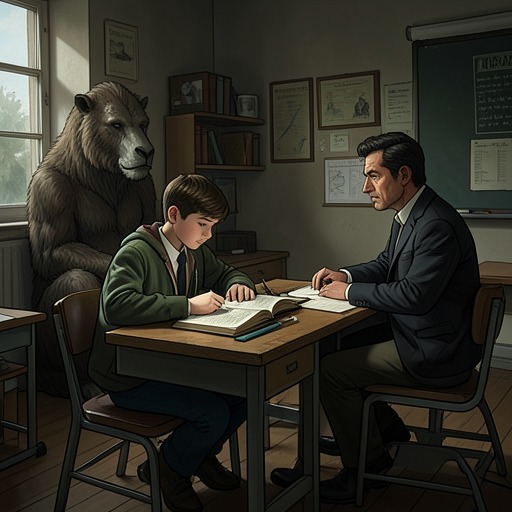
WoodwalkersAnimal language is the capacity of woodwalkers to understand animals’ communications, allowing Carag to move between human and animal worlds without treating every sound as mere noise. The ability can reveal what an animal is expressing, but it also depends on attention to context: a squirrel’s complaint can be understood as speech, while a bear’s growl and hunting dogs’ changing barks carry meaning through vocal signals and the circumstances around them.
Definition and Scope
For woodwalkers, animal languages are comparable to foreign languages for humans. Carag understands some of them better than others, suggesting that comprehension is not automatic or equally complete across species. The concept therefore joins his animal and human experiences: animal communication can become intelligible to him, but it remains specific to the animals and situations he encounters.
Understanding does not mean that every animal sound is rendered as a clear verbal message. Carag can interpret the squirrel’s remarks during a woodland walk, and he recognizes the warning in a mother bear’s growl without needing to know her language. The scenes distinguish direct comprehension from reading a signal whose meaning is apparent from its tone and context.
Encounters in the Forest
During a walk with Melody, Carag listens to a squirrel complaining about a competitor in its territory. He understands enough to find the complaint amusing, until the squirrel insults him as a human; he answers by throwing a pinecone. The exchange makes animal language more than a practical skill for identifying danger: it brings an animal’s local concerns and judgment into Carag’s awareness, and his response shows that understanding does not prevent him from taking offense.
Later, when Carag approaches a mother bear and her cub, he initially assumes the bears are refusing to move because they may pose a threat to his adoptive family. He then notices the red-berry bushes they have found and realizes that they are feeding. The mother periodically watches him warily and growls; even without understanding her words, Carag recognizes the warning to leave. The cub’s curiosity brings the bears closer, but the encounter is shaped by their immediate behavior and circumstances, not by a conversation with Carag.
While being pursued by hunting dogs, Carag also attends to changes in their barks. At one point he hears the excited pursuit falter into sounds that seem like discussion, and infers that the dogs have reached the place where he left the trail with a long bound. Their vocal shift tells him that the trick has slowed them, though they soon find his track again. Here, attention to animal communication helps him assess the chase, but it does not make the dogs’ intentions harmless or stop them from hunting him.
Communication, Context, and Risk
These encounters give animal language several distinct roles. It can disclose an animal’s concern, as with the squirrel’s territorial complaint; signal a boundary, as with the bear’s growl; or help Carag track a change in an unfolding pursuit, as with the hounds. In each case, communication is tied to animal life: territory, food, vigilance, or following a trail. The meaning Carag gains is practical as well as social.
The scenes also preserve a distinction between understanding and control. Carag can hear what the squirrel is expressing without resolving the disagreement, and he can recognize the bear’s warning without making the bear retreat. Against the hunting dogs, listening gives him information about their progress, not mastery over the chase. Animal language makes the forest more legible to a woodwalker, while leaving its inhabitants free to act according to their own immediate needs.