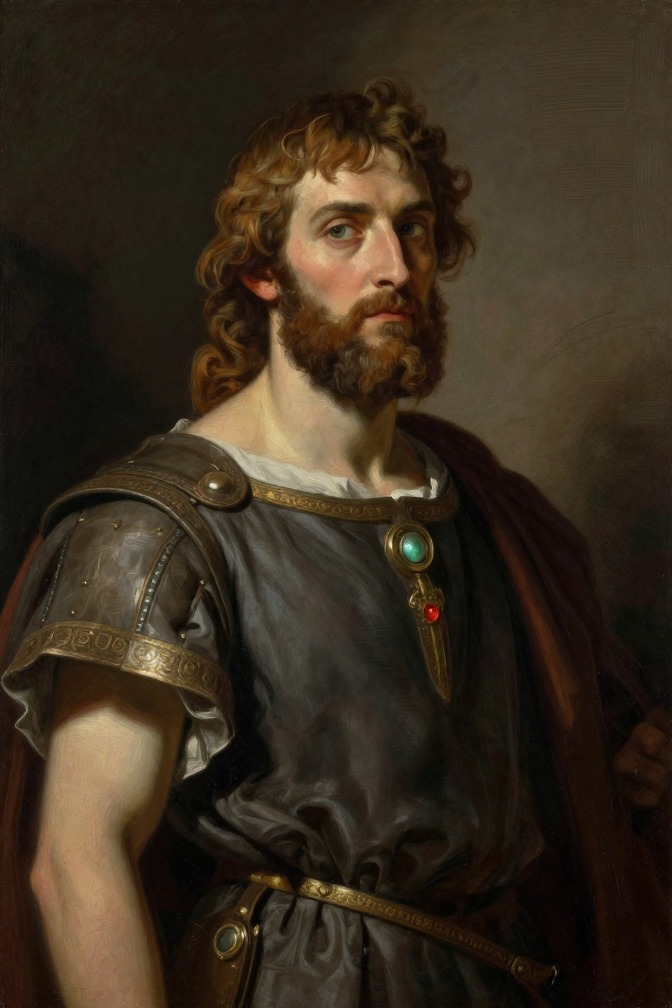
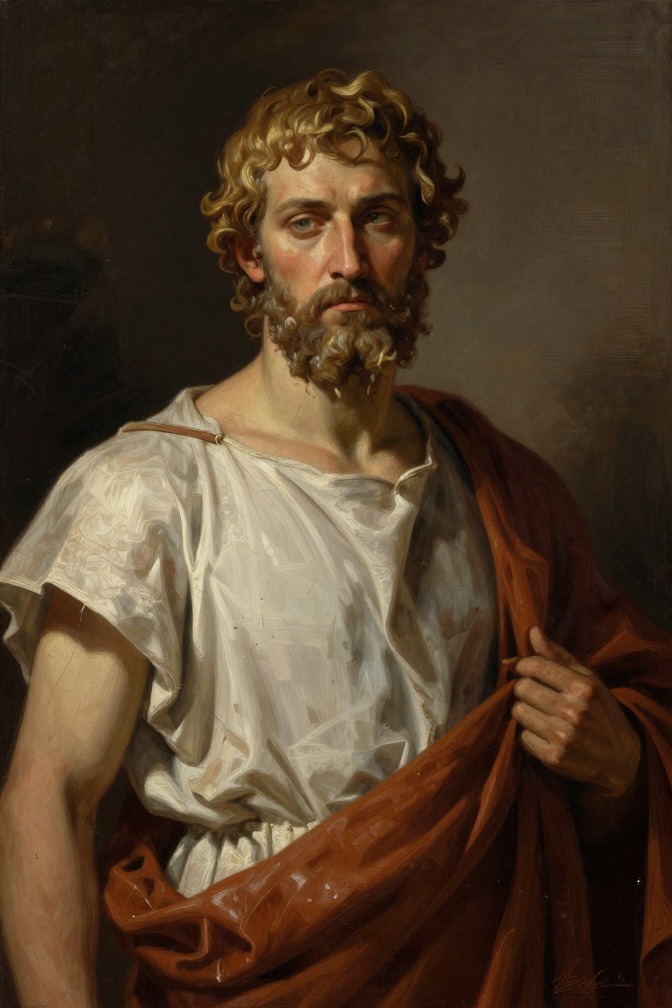
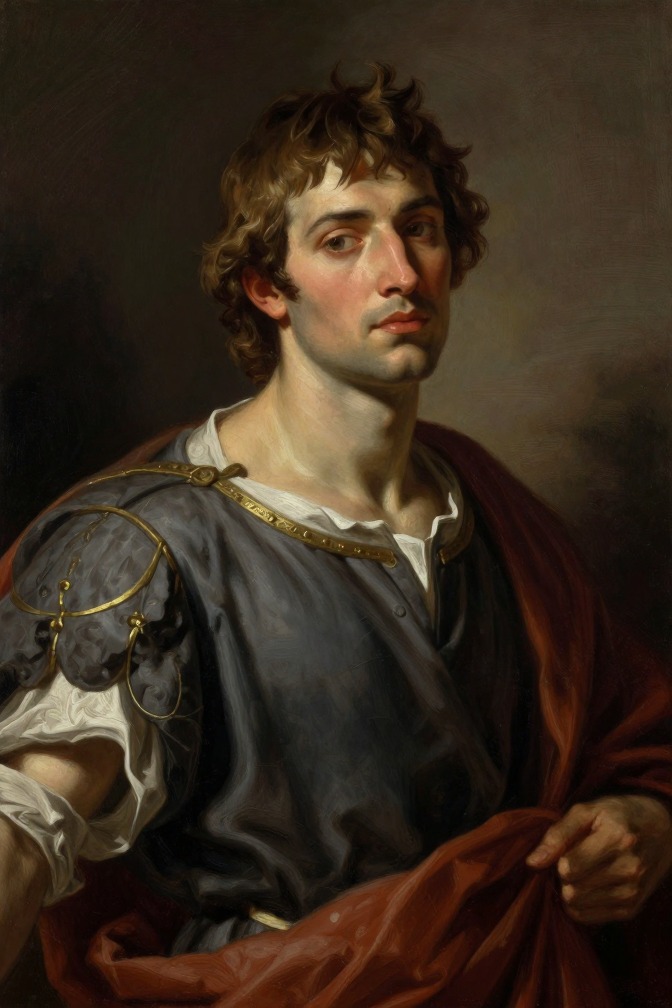
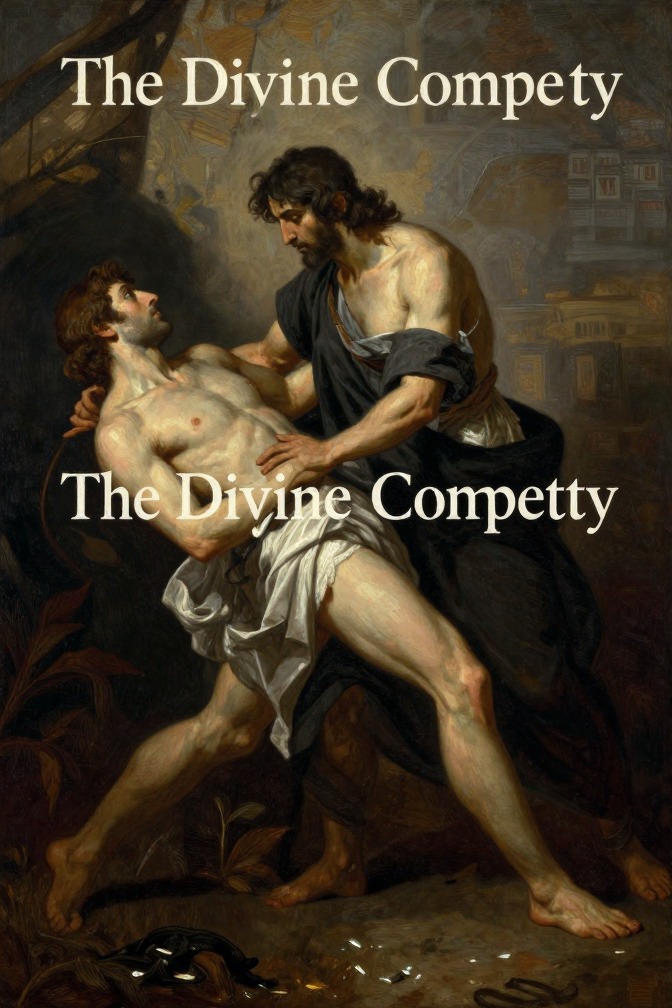
Ganelon is a minor but symbolically charged figure in Dante's Inferno, appearing among the traitors in the frozen lake of Cocytus, where his presence serves to crystallize the poem's condemnation of treachery against kin and country.
Homer, the sovereign poet of antiquity, appears in Limbo as the foremost figure among the four great classical poets who welcome Virgil and Dante, and his epic works are later cited by Statius as the inspiration for his own conversion to Christianity.
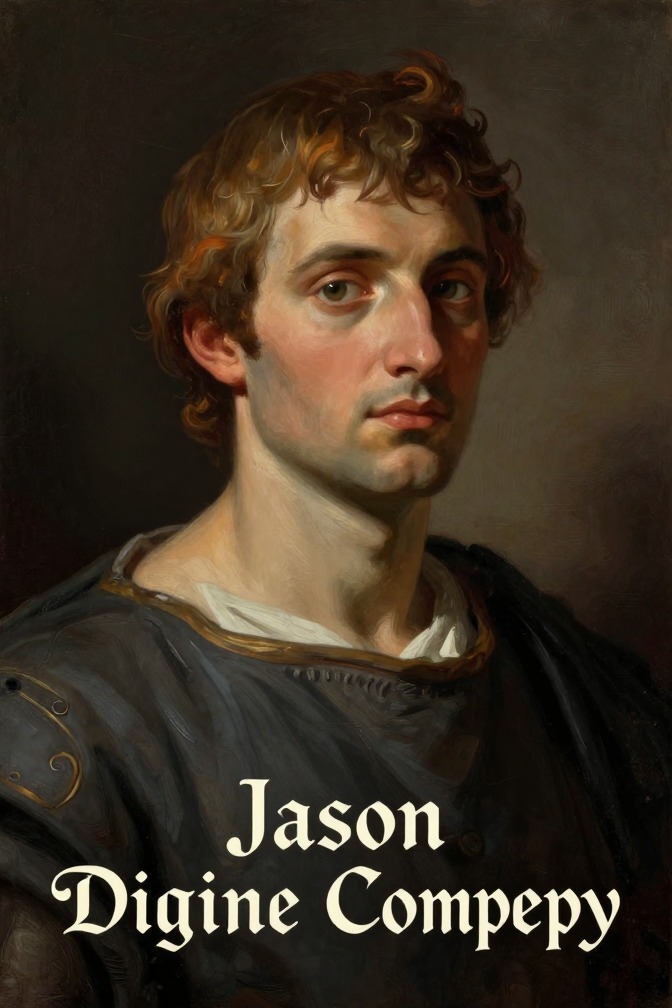
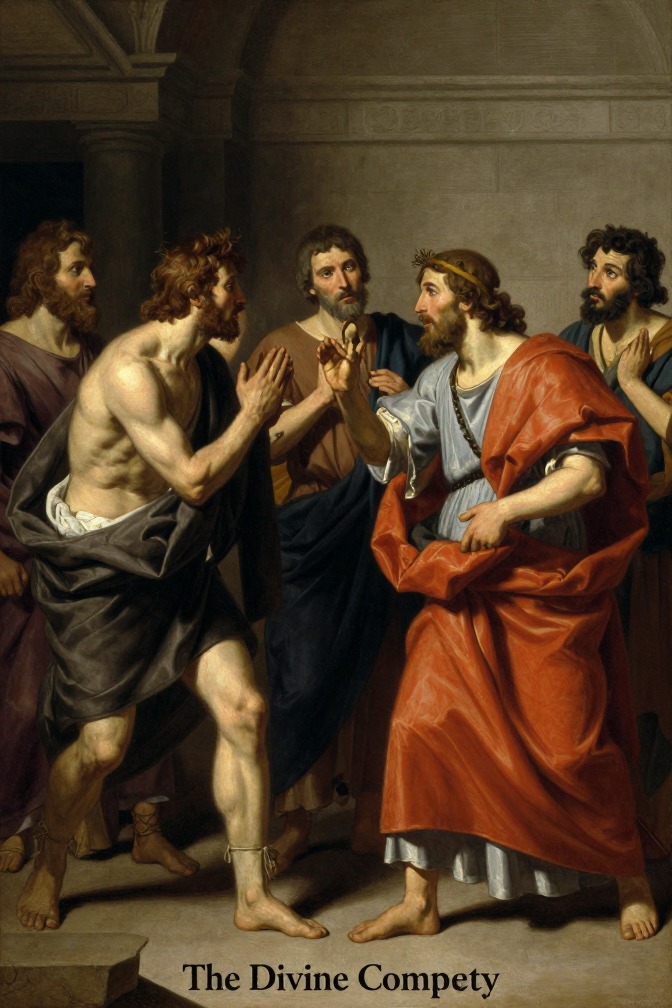
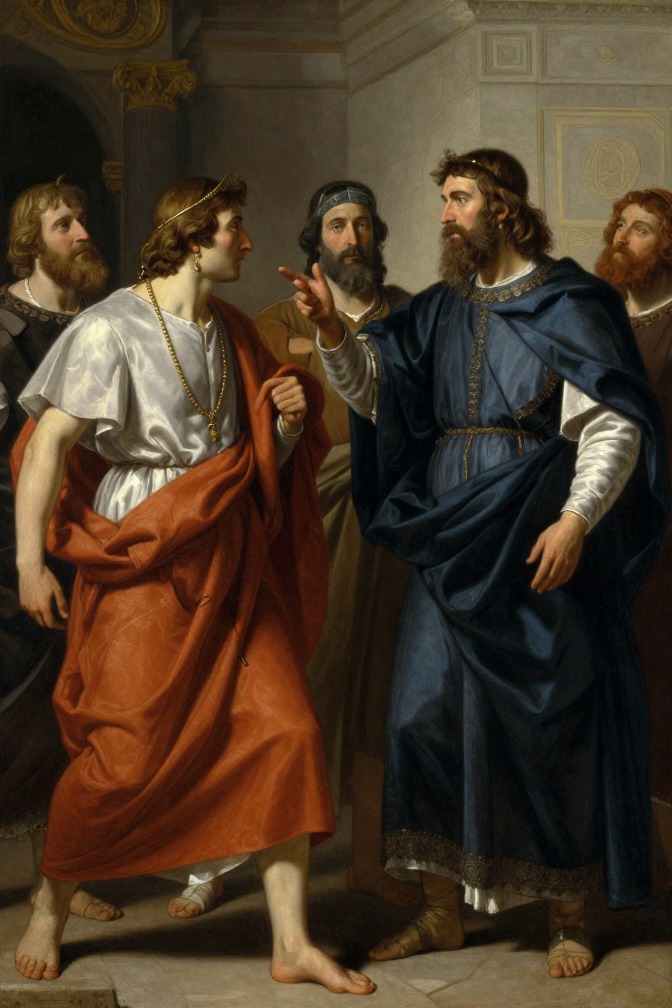
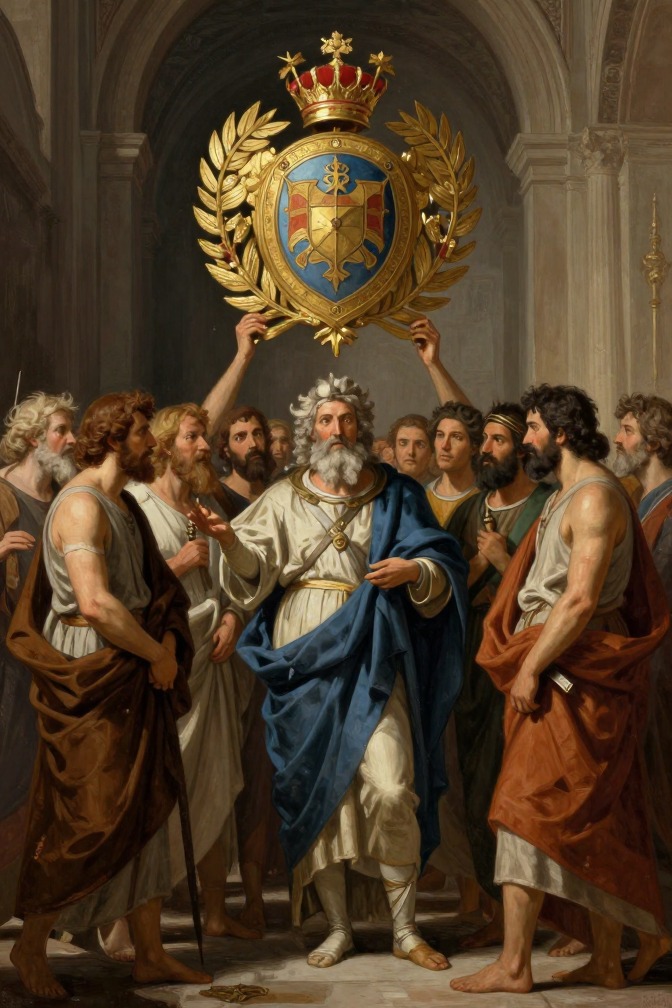
Jason, the ancient Greek hero of the Argonautic quest, appears in Dante's Inferno as a condemned seducer and deceiver in the first bolgia of Malebolge, where horned demons scourge the fraudulent. His punishment reflects the contrapasso of his own legendary acts of betrayal against Hypsipyle and Medea, and Virgil points him out to Dante as a figure whose regal bearing contrasts with his shameful torment.
Joshua is a biblical figure who appears in the Heaven of Jupiter in Dante's Paradiso, where he is depicted as a blazing light moving across the celestial Cross of Mars, representing the ideal of righteous leadership and divine justice.
Judas Maccabeus is a Jewish military leader from the 2nd century BCE who appears in the Heaven of Mars in Dante's Paradiso, where he is celebrated as a warrior for the faith and a defender of the Holy Land, his name invoked among the crusaders and martyrs who shine on the celestial cross.
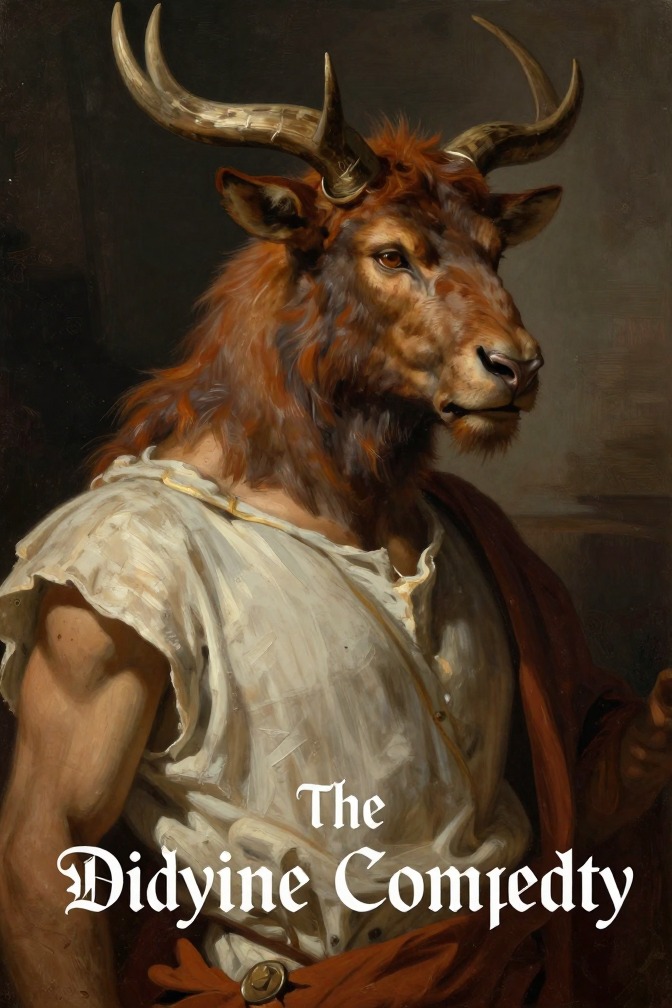
The Minotaur, the half-bull, half-man monster of Cretan myth, appears in Dante's Inferno as the guardian of the Seventh Circle of Hell, where the violent are punished. Stationed at the broken precipice that leads down to the river of blood, Phlegethon, the Minotaur embodies the bestial rage of the violent, and his presence marks a crucial transition in Dante's descent, from the sins of incontinence to the graver sins of malice and brutality.
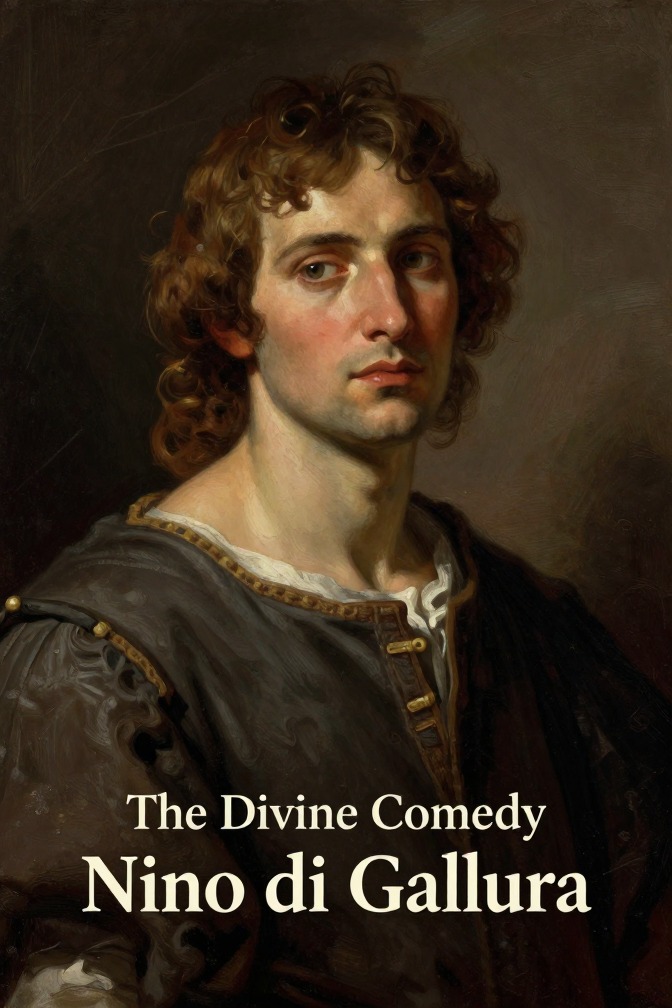
Nino di Gallura is a noble judge from Sardinia whom Dante encounters among the negligent princes in the Valley of Flowers on Mount Purgatory. His brief but emotionally charged appearance reveals his continued concern for his daughter Giovanna, his bitterness toward his widow's remarriage, and his joyful recognition of Dante's living presence as a sign of divine grace.
Oderisi d' Agobbio is a penitent soul on the first terrace of Purgatory, where the sin of pride is purged. A celebrated manuscript illuminator from Agobbio (modern Gubbio), he appears in Canto XI of the Purgatorio to deliver a profound meditation on the transience of earthly fame and the vanity of artistic ambition, using his own superseded reputation as a case study. His encounter with Dante Alighieri provides the poem's most explicit critique of worldly glory and a key lesson in humility.
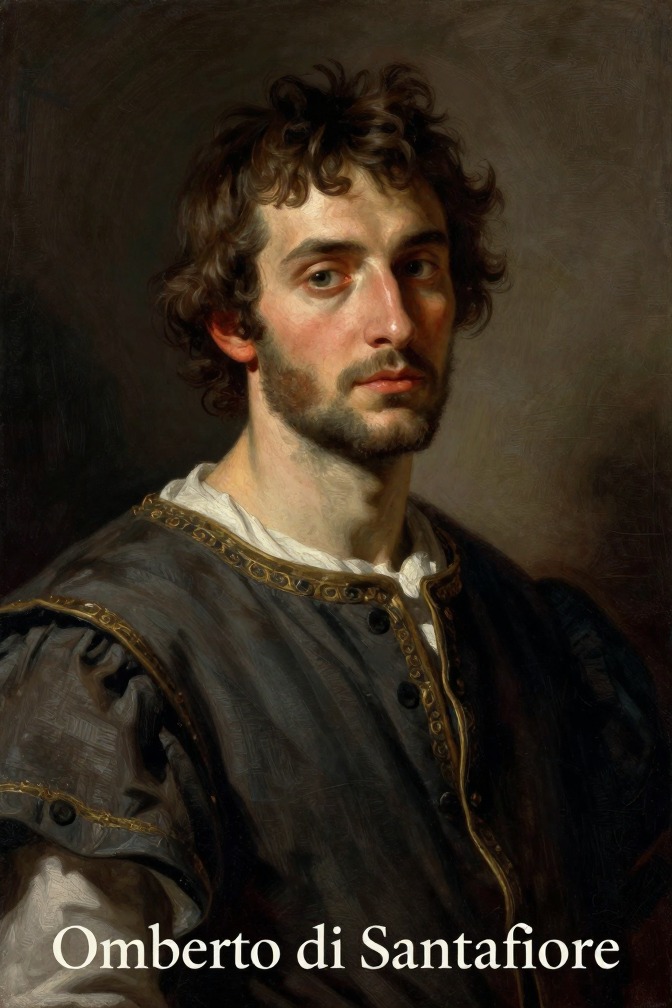
Omberto di Santafiore is a penitent encountered by Dante on the First Terrace of Mount Purgatory, where the sin of Pride is purged. A member of the powerful Aldobrandeschi family, Omberto embodies the destructive arrogance of noble lineage, and his confession reveals how pride not only damned him but also dragged his entire kin into ruin. His brief but intense encounter with Dante serves as a stark warning against the vanity of worldly honor and the necessity of humility before God.
Rahab is a biblical figure from the Book of Joshua who appears in the Heaven of Venus in Dante's Paradiso, where she is celebrated as the first soul redeemed by Christ's triumph to be admitted into that sphere, serving as a symbol of the victorious power of faith and divine grace.
Renier da Calboli is a minor but significant figure in Dante's Purgatorio, appearing in Canto XIV as a penitent soul on the Second Terrace, where the sin of Envy is purged. He is identified by his companion Guido del Duca as the last worthy heir of the once-noble Calboli family, and his presence serves as a focal point for a lament on the moral decay of Romagna and the loss of chivalric virtue.
Thais is a minor figure in Dante Alighieri's Inferno, appearing in the second bolgia of the eighth circle as a flatterer. Her brief but vivid presence serves as a stark emblem of the sin of flattery, reduced to a grotesque, scratching figure in a sewer of filth, and her punishment exemplifies the poem's principle of contrapasso.
The Beatific Vision is the ultimate goal of Dante's journey through the afterlife, the direct, unmediated contemplation of God that constitutes the final and highest bliss of the soul in Paradise. It is the culmination of the entire Divine Comedy, the moment toward which all the pilgrim's trials, purgations, and intellectual preparations have been directed, and it is represented in the final cantos of the Paradiso as a vision of the Triune God that transcends all human language and memory.
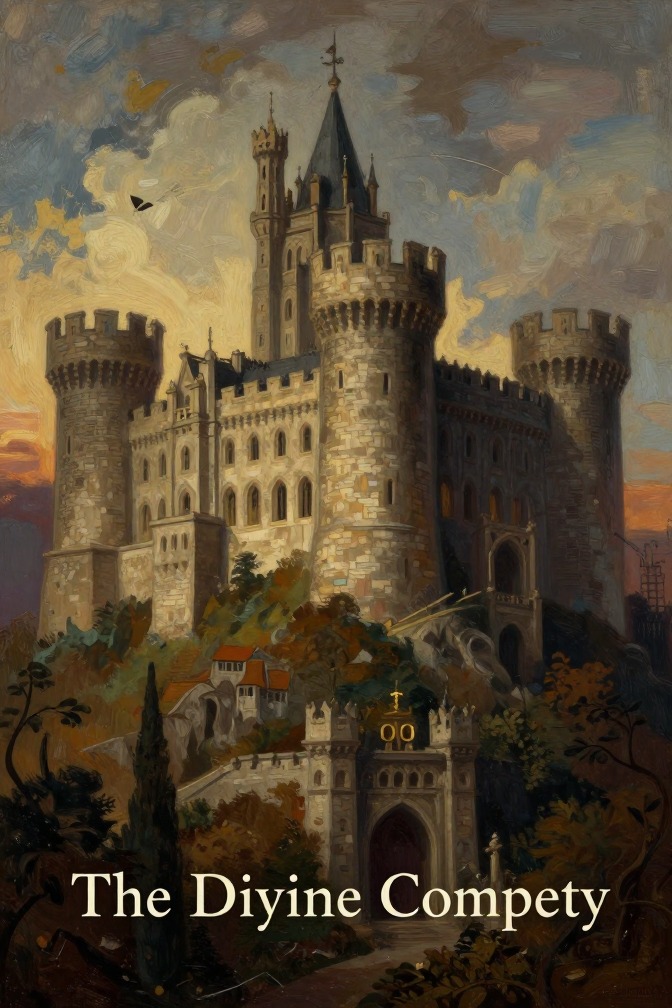
The Noble Castle is a luminous, walled fortress within Limbo, the first circle of Hell, where the great poets, philosophers, and virtuous pagans of antiquity dwell in a state of dignified but hopeless desire. It represents the highest honor human reason and virtue can achieve without Christian faith, serving as a poignant emblem of the limits of pre-Christian wisdom and the tragedy of unredeemed excellence.
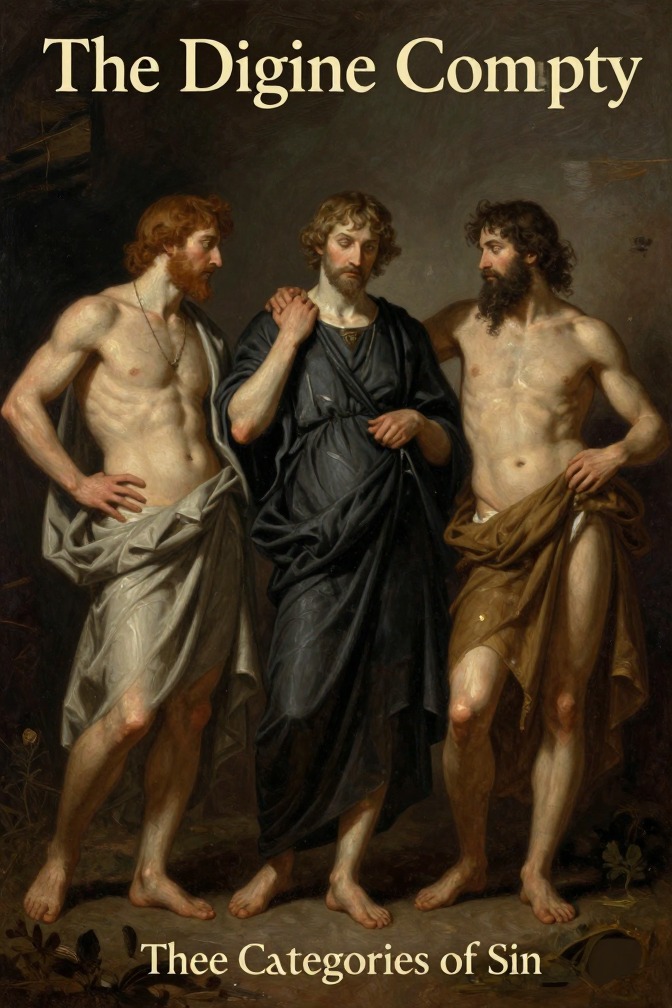
The Three Categories of Sin is the moral framework that structures Dante's Inferno, dividing all punishable offenses into Incontinence, Violence, and Fraud, with Fraud placed lowest as the most offensive to God because it is uniquely human and involves the corruption of intellect and trust.
The Appearance of Beatrice and Dante's Confession is the climactic event of the Purgatorio, in which Beatrice descends from the celestial chariot to confront Dante on the far side of Lethe, rebuking him for his infidelity after her death and forcing him to confess his sins before she will permit him to enter the Earthly Paradise. This scene constitutes the poem's central anagnorisis: Dante's long-deferred recognition of his own moral failure, the departure of Virgil, and the transfer of his soul's guidance from classical reason to revealed truth.
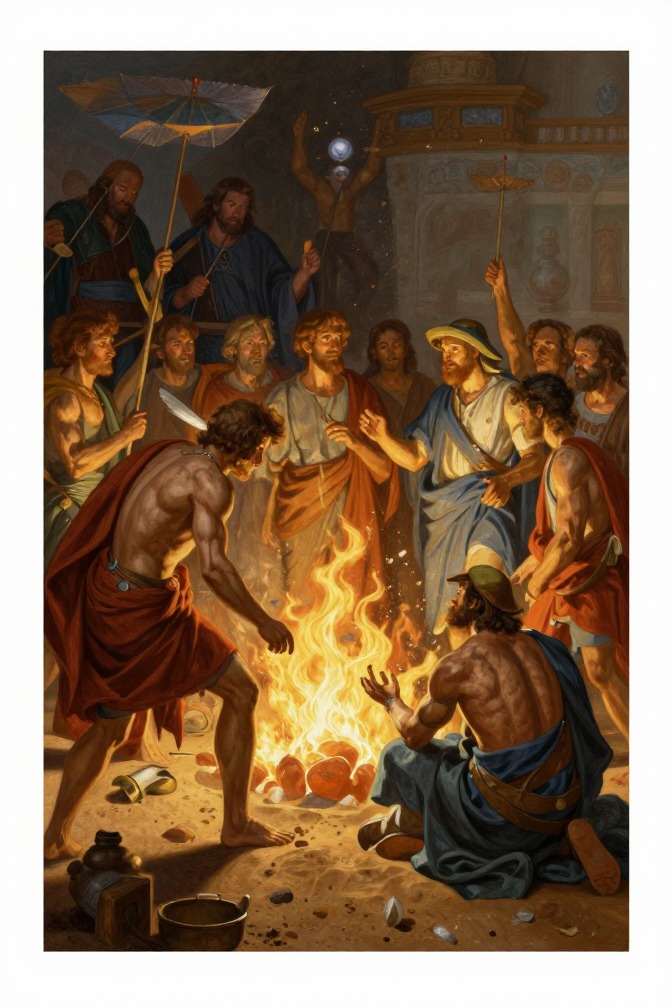
The Burning Sands and Capaneus is a pivotal event in Dante's Inferno, Canto XIV, where the poet and Virgil enter the third round of the seventh circle, a vast plain of scorching sand upon which flakes of fire eternally rain down, punishing the violent against God. Here, Dante encounters Capaneus, one of the seven kings who besieged Thebes, who lies supine and defiant, blaspheming against Jove even as the flames torment him, embodying the sin of blasphemy and the contrapasso of eternal, unyielding pride.
The Encounter with Peter Damiano and the Contemplatives is the pivotal event in Paradiso Canto XXI where Dante, guided by Beatrice, ascends to the seventh heaven of Saturn, the sphere of the contemplative souls. There he meets the fiery spirit of St. Peter Damiano, who descends a celestial ladder to speak with him, revealing the nature of divine predestination, the corruption of the modern Church, and the contrast between the apostolic poverty of the early Church and the opulence of contemporary prelates. This encounter deepens Dante's understanding of the limits of human reason before God's inscrutable will and provides a searing critique of ecclesiastical decadence.
On the Fifth Terrace of Purgatory, Dante encounters Pope Adrian V and Hugh Capet, two souls purging the sin of avarice. Their stories—Adrian's brief, disillusioned papacy and Capet's dynastic rise and the subsequent corruption of the French crown—form a powerful diptych on the spiritual and political costs of greed, while the terrace's unique penitential posture and the subsequent earthquake that signals a soul's liberation deepen the canticle's moral and structural themes.
The Ganges appears in Dante's Divine Comedy as a geographical marker of the eastern horizon, used to establish the time of day and the cosmic orientation of the pilgrim's journey, particularly at the dawn of Purgatory.
Mars, the fifth heaven of Paradise in Dante's Divine Comedy, is the sphere of martyrs and crusaders who died fighting for the true faith, where the souls of the blessed form a celestial cross and sing a hymn of resurrection.
Phlegethon is the river of boiling blood in the seventh circle of Dante's Hell, where the violent against their neighbors are eternally punished, its depth varying according to the severity of their sins.
Pisa is the Tuscan city that appears in Dante's Inferno as the site of Count Ugolino's imprisonment and starvation, and is denounced by the poet as a place of profound cruelty and moral corruption.
Ptolomaea is the third division of the Ninth Circle of Hell in Dante Alighieri's Inferno, reserved for traitors to their friends and guests, where souls are punished by being frozen in the ice of Cocytus with only their faces visible, and where the unique phenomenon of the soul descending to Hell before the body's death occurs.
The Sand Waste is the third and final round of the Seventh Circle of Hell, a vast, arid plain of burning sand where the Violent against God, Nature, and Art are eternally punished by a rain of fire. It is a landscape of absolute sterility and torment, where the very ground rejects all plant life and the souls suffer according to their specific form of violence.
The Church of Rome is a central institution in Dante's Divine Comedy, depicted as a sacred body corrupted by temporal ambition and avarice, whose deviation from its spiritual mission is a primary cause of the world's disorder and a frequent target of the poem's prophetic condemnation.
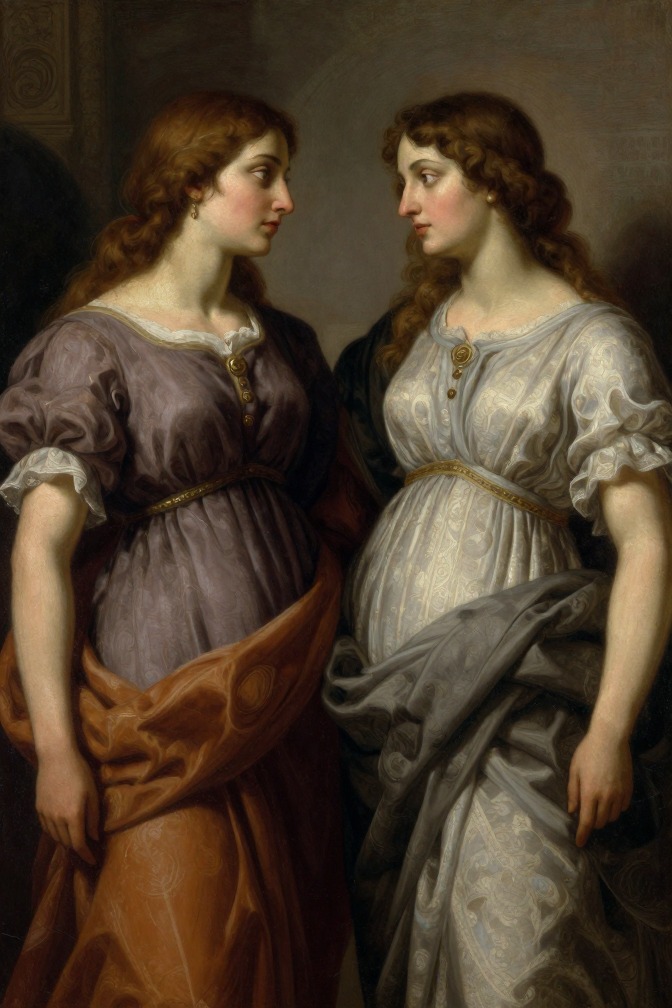
Piccarda Donati and Empress Constance are two blessed souls encountered by Dante in the Heaven of the Moon, the lowest sphere of Paradise, where they appear as faint reflections within a pearl. Both were nuns who were forcibly removed from their convents and compelled into marriages, yet they reside in the slowest heaven not as a punishment but because their wills, though not entirely broken, yielded to the violence done to them. Their serene acceptance of their lowly station and their explanation that "In His will is our peace" articulate a foundational principle of Dante's Paradise: that perfect beatitude consists in the complete alignment of one's own will with the divine order, and that every soul in heaven is perfectly content with its allotted degree of glory.
Damnation in Dante's Divine Comedy is the eternal state of souls who have irrevocably rejected God's grace, characterized by the complete loss of hope, the experience of contrapasso punishments tailored to each sin, and an eternal separation from the divine presence that constitutes the ultimate misery.
Lust is the sin of carnal excess, punished in the Second Circle of Hell and purged on the Seventh Terrace of Purgatory, where it is defined as the subjugation of reason to appetite and is purified through the fire of chaste love.
Paradise is the third and final realm of Dante Alighieri's afterlife, depicted as a series of nine concentric celestial spheres culminating in the Empyrean, where the blessed dwell in eternal contemplation of God. It represents the ultimate fulfillment of the soul's journey from sin to salvation, structured around the theological virtues and the vision of divine love.