The Roke-wind is a magical barrier that protects Roke Island, the Isle of the Wise, from evil powers and uninvited beings, and it actively repels Ged when the shadow he loosed draws too near, demonstrating that the island's defenses recognize and reject the darkness he carries.
Snowden's death over Avignon is the traumatic core of Catch-22, the event that shatters Yossarian's psyche and reveals the novel's central truth: man is matter, and the spirit gone, man is garbage. It occurs when Dobbs, panicking mid-air, wrests the controls from Huple, plunging the plane into a terrifying dive; Yossarian, after restoring his headset, hears Snowden whimpering that he is cold. Crawling back to treat what he believes is a leg wound, Yossarian discovers the true horror: a massive flak chunk has torn through Snowden's side, spilling his entrails across the floor. The morphine has been stolen by Milo, replaced with a note. Yossarian's futile efforts—bandaging the wrong wound, offering aspirin, uttering empty reassurances—culminate in Snowden's secret spilling out: the spirit gone, man is garbage. This revelation, which Yossarian later calls 'Snowden's secret,' becomes the lens through which he sees the war and the world, driving his subsequent nakedness, his refusal to fly, and his desperate flight toward life.
Yossarian's second bomb run over Ferrara is a pivotal action in which he deliberately takes his flight of six planes back over the target after missing it on the first pass, destroying the bridge but losing the plane of Kraft and his crew. This event encapsulates the novel's central paradox: an act of tactical success that is also a moral and emotional catastrophe, and it becomes the basis for the cynical award of a medal and promotion that Yossarian later comes to see as a corrupt bargain.
Aarfy (Captain Aardvaark) is Yossarian's plump, pipe-smoking navigator whose serene incompetence and moral vacuity make him one of the most disturbing figures in Catch-22. He navigates with cheerful inaccuracy, gets lost on nearly every mission, and remains utterly unperturbed by flak, death, or the suffering of others. His defining act is the rape and murder of the innocent maid Michaela, after which he expects no punishment because she was "only a servant girl." Aarfy embodies the novel's darkest theme: the banality of evil dressed in fraternity-boy affability.
Captain Flume is the squadron's haunted, reclusive public-relations officer who, after being threatened with throat-slitting by Chief White Halfoat, abandons his trailer and lives as a fugitive in the Pianosa woods, emerging only to scavenge food and clean laundry, and whose eventual return to the squadron signals the fulfillment of his bizarre prophecy.
Corporal Snark is Milo Minderbinder's mess sergeant, an intellectual snob who believes he is twenty years ahead of his time and who once poisoned the entire squadron by mashing GI soap into the sweet potatoes to prove that people cannot tell good food from bad.
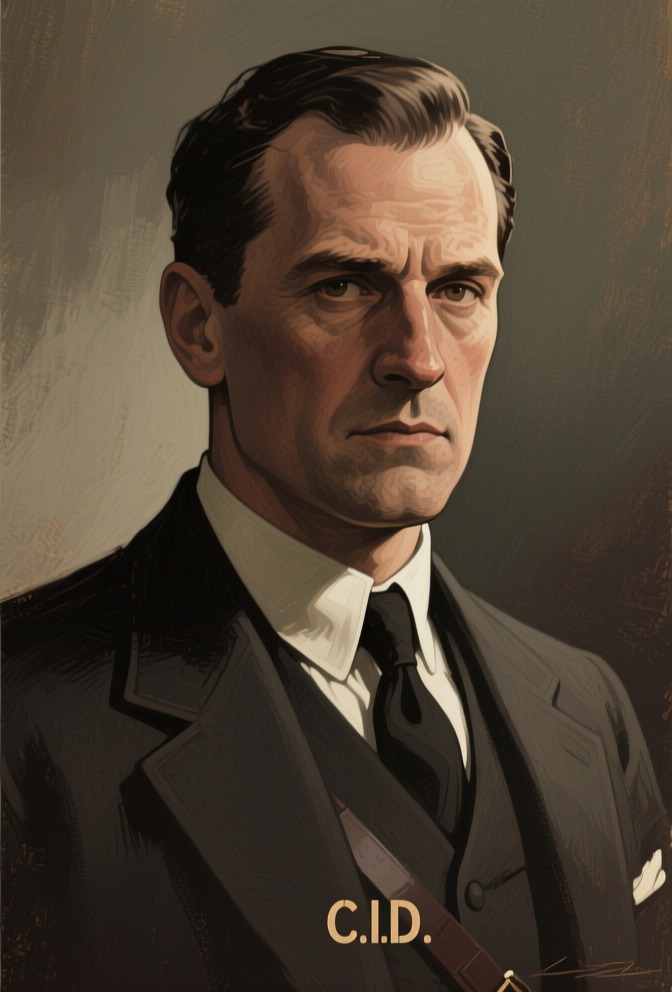
The First C.I.D. Man is a minor but structurally significant figure in Catch-22, an investigator who enters the hospital ward posing as a patient to track down the officer who has been signing 'Washington Irving' on censored letters. His presence triggers a chain of bureaucratic absurdity that draws in Major Major, the chaplain, and a second C.I.D. man, and his own physical deterioration—from a cold caught from a fighter pilot to pneumonia—mirrors the novel's theme that institutional logic is indifferent to individual survival.
Huple is the fifteen-year-old pilot who lied about his age to join the Army, a boyish figure whose extreme youth and inexperience make him a dangerously inadequate pilot in Yossarian's eyes, yet whose presence in the cockpit during the catastrophic Avignon mission is directly linked to Snowden's death and Yossarian's psychological collapse.
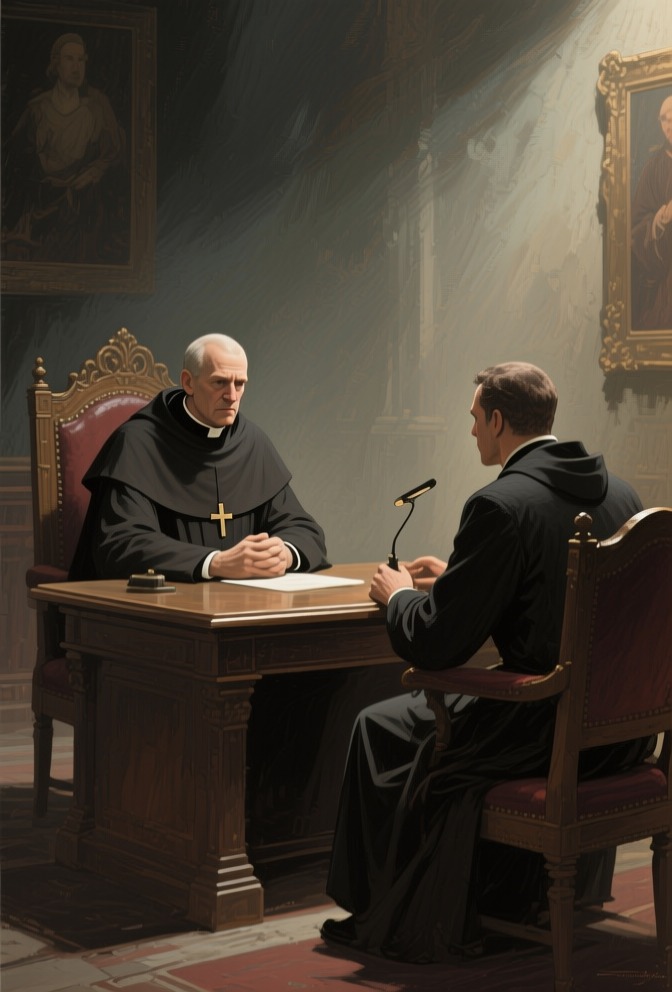
The Chaplain's interrogation is a pivotal event in which Chaplain Shipman is abducted by three government officers after the mid-air collision that kills Nately, subjected to a Kafkaesque interrogation in the basement of Group Headquarters, and charged with being Washington Irving, stealing a plum tomato, and unspecified crimes, before being released with a threat of future punishment.
Scheisskopf's promotion to general is a sudden, absurd, and devastating reversal that caps the novel's satire of military bureaucracy. Having been transferred overseas against his will, the parade-obsessed Colonel Scheisskopf is inexplicably promoted to lieutenant general and placed in command of all combat operations, a move that instantly undoes General Peckem's carefully orchestrated rise to power and replaces him with a man whose only qualification is a fanatical devotion to marching.
Mudd's death is a minor but symbolically potent event in Catch-22: a replacement pilot is killed in combat over Orvieto less than two hours after arriving on Pianosa, before he can officially report to his squadron. Because he never formally entered the unit, his belongings remain in Yossarian's tent for months, an unburied administrative ghost that no one has the authority to remove. The incident crystallizes the novel's themes of bureaucratic absurdity, the anonymity of mass death, and the way the military system can render a human being both present and nonexistent at the same time.
Avignon is a French city that serves as the target of a devastating combat mission in Joseph Heller's Catch-22, the site where the young radio-gunner Snowden is mortally wounded and where Yossarian suffers a psychological breakdown that becomes the novel's emotional and philosophical core.
Spezia is the Italian port city where the climactic mid-air collision of Nately's and Dobbs's planes occurs during the mission to bomb a disabled Italian cruiser, a disaster that kills Nately and twelve other men and precipitates Yossarian's final refusal to fly more missions.
The relationship between Yossarian and Colonel Cathcart is the central antagonism of Catch-22, a conflict between a man who wants to live and a commander who wants to be a general. Cathcart, obsessed with his own advancement, repeatedly raises the number of required combat missions, directly threatening Yossarian's life. Yossarian's desperate attempts to escape this death sentence—through feigned illness, refusal to fly, and ultimately desertion—define the novel's plot and its critique of institutional power.
The relationship between Yossarian and Milo Minderbinder is a complex, evolving bond of mutual trust, moral compromise, and eventual disillusionment, set against the backdrop of Milo's all-consuming syndicate. It begins with Yossarian's initial distrust of Milo's mess-hall innovations, deepens into a partnership based on Yossarian's proven honesty, and ultimately fractures as Milo's profit-driven logic collides with Yossarian's desperate fight for survival, culminating in Milo's betrayal by helping Colonel Cathcart raise the mission count.
Yossarian and Nurse Duckett share a physical, emotionally charged relationship that provides Yossarian with temporary solace from the war's horrors, yet ultimately fails to offer lasting escape or understanding, as Nurse Duckett's priorities and the demands of the military system pull them apart.
Yossarian and Orr are tentmates whose relationship is defined by a profound, often exasperating asymmetry: Yossarian, the fearful and perceptive bombardier, is alternately irritated, baffled, and ultimately humbled by Orr, the seemingly simple-minded pilot whose cheerful tinkering and absurd stories conceal a methodical plan for survival that Yossarian fails to recognize until it is too late.
The pursuit of general rank is a central, obsessive ambition that drives Colonel Cathcart's every administrative and tactical decision throughout Catch-22, shaping the group's dangerously high mission quotas and exposing the self-serving logic of military hierarchy. Cathcart measures his worth entirely by comparison to other officers his age, oscillating between smug satisfaction at outranking thousands and agonizing despair that men younger than himself have already made general. This relentless hunger for promotion leads him to volunteer his men for the most dangerous targets, raise the number of required missions repeatedly, and scheme endlessly for favorable notice from superiors like General Dreedle and General Peckem, all while remaining blind to the human cost of his ambition. The narrative ultimately reveals that Cathcart's drive is futile: his correspondence is sabotaged by ex-P.F.C. Wintergreen, his schemes are manipulated by Colonel Korn, and his chance at advancement is destroyed when the command structure shifts and the despised Colonel Scheisskopf is promoted over him. The general's star remains forever out of reach, a mocking symbol of the absurdity of a system in which personal advancement is the only recognized virtue.
Belch Huggins, whose real name is Reginald Huggins, is a brutish, slow-witted bully and a loyal follower of Henry Bowers in Derry, Maine. He is defined by his immense size, his comically loud belches, and his role as an enforcer in Bowers's gang, participating in the relentless harassment of the Losers' Club. His death in the sewers under Derry in August 1958, at the hands of the shape-shifting entity It, marks a turning point in the cycle of violence, and his corpse is later discovered by the adult Losers in 1985, serving as a grim reminder of their shared past.
Atlanta, Georgia, is the home of Stanley Uris and his wife Patricia in 1985, a city that represents the successful, assimilated life Stanley has built far from Derry. It is also the place where Stanley receives Mike Hanlon's fateful phone call, which triggers his psychological collapse and eventual suicide, marking Atlanta as the site of the Losers' Club's first casualty in the renewed cycle of horror.
The Costello Avenue Market is a small corner grocery store in Derry, Maine, that serves as a recurring landmark in the childhoods of the Losers' Club. It is where Ben Hanscom cashes in bottles for candy, where Eddie Kaspbrak buys chocolate milk to hide bloodstains, and where Henry Bowers and his gang ambush Eddie, leading to his broken arm. The market represents a mundane, everyday space that becomes a site of both small pleasures and sudden violence.
Derry Elementary School is the primary school attended by the Losers' Club and their tormentors in the town of Derry, Maine, serving as the setting where the children's social hierarchies, cruelties, and first alliances are established before the summer of 1958.
Fleet is the small English village in the south of England where Bill Denbrough and his wife Audra Phillips are living in a rented cottage during the spring of 1985 while Bill works on the screenplay for the film Attic Room. It is the location from which Bill receives Mike Hanlon's phone call summoning him back to Derry, and it serves as the setting for Bill's final conversation with Audra before he leaves to confront the entity that killed his brother.
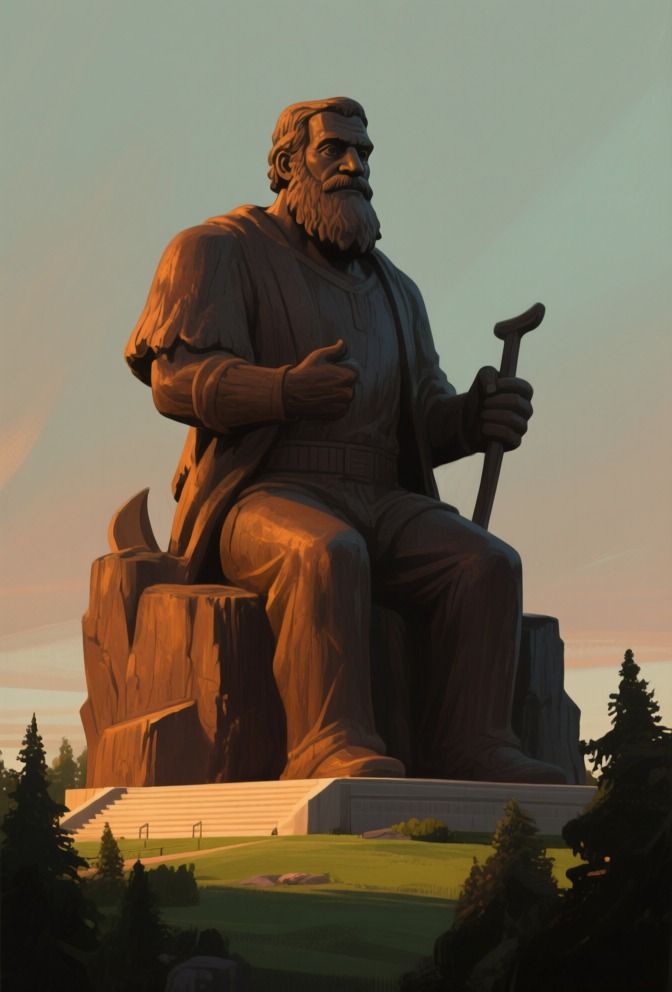
The Paul Bunyan Statue, a twenty-foot-tall plastic monument erected in front of Derry's City Center in 1956, is a garish landmark of the town's civic pride and a site of childhood terror. For Richie Tozier, the statue becomes a vessel for the malevolent entity It, which animates the plastic giant in a terrifying hallucination that prefigures the summer's horrors and marks the beginning of Richie's personal confrontation with the creature.
The Clubhouse is the underground hideout built by the Losers' Club in the Barrens during the summer of 1958. Designed by Ben Hanscom and constructed by all seven members, it was a camouflaged dugout with a sod-covered roof, a trapdoor, and a small window. It served as their secret meeting place, the site of the smoke-hole ceremony that triggered shared visions of It's arrival on Earth, and the refuge where Beverly hid from Henry Bowers. The clubhouse physically shrank back to normal size after the confrontation at 29 Neibolt Street, and by 1985 it had been reclaimed by the Barrens, leaving only the mahogany door as a relic.
The Derry Police Department is the municipal law enforcement agency of Derry, Maine, a small city with a violent-crime rate six times the New England average for comparable towns. Throughout the novel, the department is portrayed as institutionally compromised: its officers enforce a curfew during the child-murder cycles but consistently fail to apprehend the killer, dismiss supernatural testimony, and participate in a town-wide pattern of willful forgetting. Chief Andrew Rademacher, who leads the force during the 1984-85 cycle, is killed when a four-hundred-pound iron tramp-chair falls through the attic floor onto his desk, a death that symbolically completes the town's collapse.
Adam's final blessing is the climactic moment of East of Eden, in which the paralyzed and dying Adam Trask, after being implored by Lee to free his son Cal from the crushing weight of guilt, whispers the Hebrew word "Timshel"—meaning "Thou mayest"—and thereby grants Cal the choice to triumph over sin, affirming the novel's central philosophy of human free will.
Adam Trask suffers a massive stroke after learning of his son Aron's death in World War I, leaving him paralyzed and nearly speechless, and the event becomes the final crisis through which his surviving son Caleb must seek forgiveness and his own moral identity.
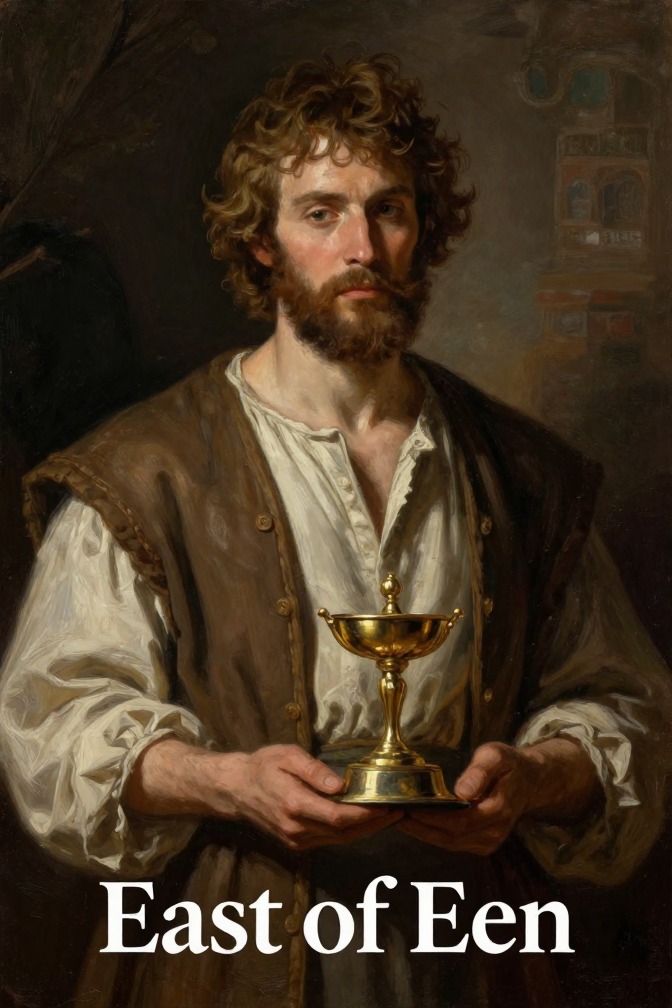
East of Eden is the central symbolic concept of John Steinbeck's novel, referring both to the geographical land of Nod where Cain dwelt after killing Abel and to the novel's overarching theme of moral choice, inherited guilt, and the possibility of redemption. The phrase appears in the biblical story of Cain and Abel, which the characters Samuel Hamilton, Adam Trask, and Lee discuss at length, and it becomes the lens through which the novel examines the human condition—the struggle between good and evil, the burden of ancestry, and the power of individual choice encapsulated in the Hebrew word timshel ('thou mayest').
Connecticut is the New England state where Adam Trask and his half-brother Charles were born and raised on a farm outside a small town, a setting that shapes their early lives through their father Cyrus Trask's harsh military discipline, the violent fraternal conflict, and the legacy of Cyrus's fraudulent war record and unexplained fortune.