The Costello Avenue Market is a small corner grocery store in Derry, Maine, that serves as a recurring landmark in the childhoods of the Losers' Club. It is where Ben Hanscom cashes in bottles for candy, where Eddie Kaspbrak buys chocolate milk to hide bloodstains, and where Henry Bowers and his gang ambush Eddie, leading to his broken arm. The market represents a mundane, everyday space that becomes a site of both small pleasures and sudden violence.
Derry Elementary School is the primary school attended by the Losers' Club and their tormentors in the town of Derry, Maine, serving as the setting where the children's social hierarchies, cruelties, and first alliances are established before the summer of 1958.
Fleet is the small English village in the south of England where Bill Denbrough and his wife Audra Phillips are living in a rented cottage during the spring of 1985 while Bill works on the screenplay for the film Attic Room. It is the location from which Bill receives Mike Hanlon's phone call summoning him back to Derry, and it serves as the setting for Bill's final conversation with Audra before he leaves to confront the entity that killed his brother.
The Paul Bunyan Statue, a twenty-foot-tall plastic monument erected in front of Derry's City Center in 1956, is a garish landmark of the town's civic pride and a site of childhood terror. For Richie Tozier, the statue becomes a vessel for the malevolent entity It, which animates the plastic giant in a terrifying hallucination that prefigures the summer's horrors and marks the beginning of Richie's personal confrontation with the creature.
The Clubhouse is the underground hideout built by the Losers' Club in the Barrens during the summer of 1958. Designed by Ben Hanscom and constructed by all seven members, it was a camouflaged dugout with a sod-covered roof, a trapdoor, and a small window. It served as their secret meeting place, the site of the smoke-hole ceremony that triggered shared visions of It's arrival on Earth, and the refuge where Beverly hid from Henry Bowers. The clubhouse physically shrank back to normal size after the confrontation at 29 Neibolt Street, and by 1985 it had been reclaimed by the Barrens, leaving only the mahogany door as a relic.
The Derry Police Department is the municipal law enforcement agency of Derry, Maine, a small city with a violent-crime rate six times the New England average for comparable towns. Throughout the novel, the department is portrayed as institutionally compromised: its officers enforce a curfew during the child-murder cycles but consistently fail to apprehend the killer, dismiss supernatural testimony, and participate in a town-wide pattern of willful forgetting. Chief Andrew Rademacher, who leads the force during the 1984-85 cycle, is killed when a four-hundred-pound iron tramp-chair falls through the attic floor onto his desk, a death that symbolically completes the town's collapse.
Adam's final blessing is the climactic moment of East of Eden, in which the paralyzed and dying Adam Trask, after being implored by Lee to free his son Cal from the crushing weight of guilt, whispers the Hebrew word "Timshel"—meaning "Thou mayest"—and thereby grants Cal the choice to triumph over sin, affirming the novel's central philosophy of human free will.
Adam Trask suffers a massive stroke after learning of his son Aron's death in World War I, leaving him paralyzed and nearly speechless, and the event becomes the final crisis through which his surviving son Caleb must seek forgiveness and his own moral identity.
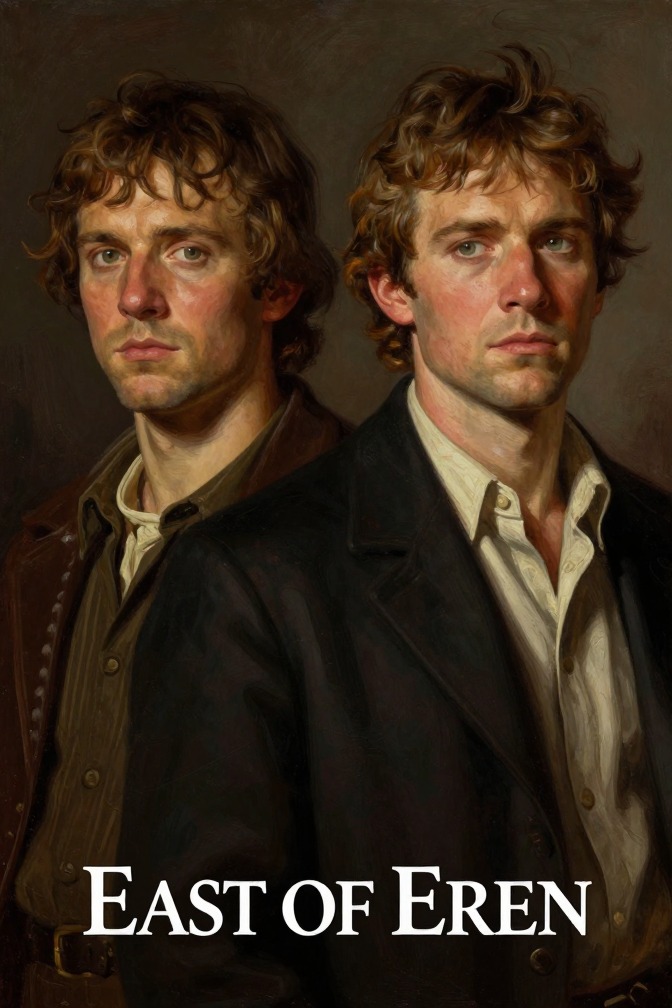
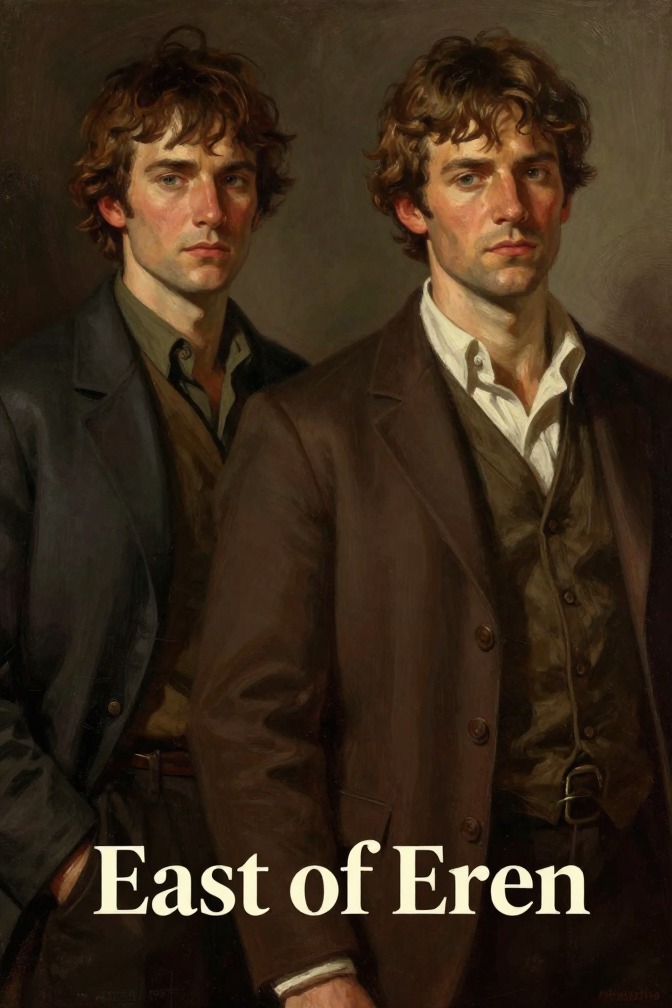
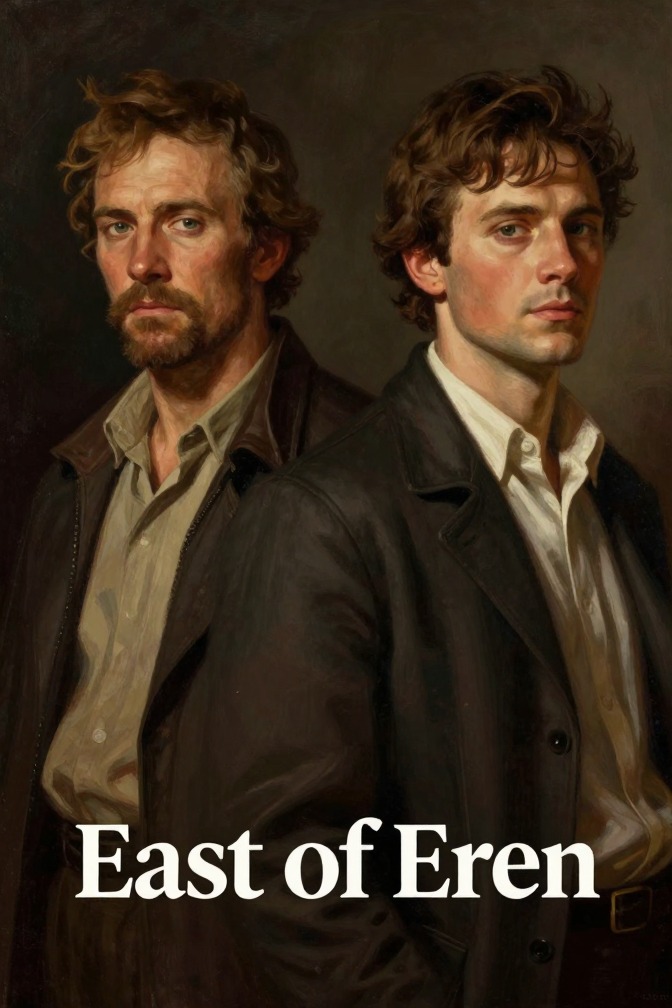
East of Eden is the central symbolic concept of John Steinbeck's novel, referring both to the geographical land of Nod where Cain dwelt after killing Abel and to the novel's overarching theme of moral choice, inherited guilt, and the possibility of redemption. The phrase appears in the biblical story of Cain and Abel, which the characters Samuel Hamilton, Adam Trask, and Lee discuss at length, and it becomes the lens through which the novel examines the human condition—the struggle between good and evil, the burden of ancestry, and the power of individual choice encapsulated in the Hebrew word timshel ('thou mayest').
Dr. Wilde's office is the medical consulting room of the Salinas physician who treated Cathy Trask after her failed abortion attempt and later became entangled in the slow poisoning of Faye. The office, located in the Monterey County Bank Building, serves as a site where professional medical authority collides with Cathy's calculated deceptions and where the doctor's own ethical vigilance is tested and ultimately evaded.
Jenny's, also known as Fartin' Jenny's, was one of the three principal brothels in Salinas during the late nineteenth and early twentieth centuries, distinguished by its raucous, tavern-like atmosphere and its celebrated madam, who was remembered as a philanthropist, keeper of secrets, and giver of secret loans.
Salinas, the county seat of Monterey County, is the central town of the Salinas Valley and the primary setting for the later parts of East of Eden. It is a fast-growing frontier town that serves as the hub for commerce, culture, and vice, and it is where the Trask family relocates after Adam's failed lettuce venture. The town's geography, social institutions, and underworld—particularly the brothel district known as the Row—are integral to the novel's exploration of good and evil, as Salinas becomes the stage for the final acts of the Trask and Hamilton families.
The West End School is the Salinas grammar school that Cal and Aron Trask attend after their family moves from the ranch to town. It is a large, two-story yellow building divided into separate play yards for boys and girls, with grades three through eight. The school becomes the setting where the twins' contrasting personalities emerge sharply: Cal quickly establishes a cold, manipulative leadership among his classmates, while Aron's angelic beauty and quiet steadiness draw affection and respect. It is also at the West End School that Aron re-encounters Abra Bacon, the girl who will become the central romantic figure in his life, and where Cal first begins to deploy the psychological tactics that define his relationship with his brother.
Aron Trask's Gold Watch is a symbolic object in John Steinbeck's *East of Eden*, purchased by Adam Trask as a gift to celebrate his son Aron's academic achievement of passing college entrance examinations a year early. The watch represents Adam's pride, his desire for connection with his sons, and the painful gap between his expectations and the family's tragic reality. It ultimately becomes an ungiven token of a fractured relationship, left behind when Aron flees his family and enlists in the army.
Lee's Ng-Ka-Py Bottle is a stoneware vessel of Chinese brandy infused with wormwood that appears at pivotal moments of philosophical discussion and emotional communion in East of Eden, serving as a ritual object that dissolves social masks and enables the novel's deepest explorations of choice, guilt, and the human soul.
The Sanchez House, also known as the old adobe house and later the Trask house, is the central domestic structure on Adam Trask's ranch in the Salinas Valley. Originally built by the Spanish grantee Sanchez in the early nineteenth century, it is a thick-walled adobe structure with rawhide-tied rafters, designed around a perennial spring in a small foothill draw. After decades of use as a cow barn by the Bordoni family, Adam Trask purchases the property in 1900 and undertakes a thorough renovation, intending it as a permanent seat for his dynasty. The house becomes the stage for the birth of his twin sons, Cathy's shooting of Adam and her subsequent abandonment, and Adam's long withdrawal from life. Its unfinished state—half-plastered walls, crated fixtures, and glassless windows—after Cathy's departure stands as a physical monument to Adam's arrested life and the collapse of his Edenic dream.
Abra Bacon and Aron Trask share a childhood romance that begins when Abra's family takes shelter at the Trask ranch during a rainstorm, but the relationship is gradually undermined by Aron's inability to accept reality and Abra's growing recognition that she loves an idealized image rather than the actual person.
Lee and Adam Trask share a relationship that transcends the conventional bond of servant and master, evolving into a profound intellectual companionship and mutual dependence that shapes the emotional and moral core of the Trask household. Lee, a Chinese immigrant who initially speaks pidgin as a protective veil, becomes the de facto parent to Adam's twin sons, the household's moral compass, and the only person who can reach Adam during his deepest despair. Their connection is built on years of shared solitude, philosophical dialogue, and a quiet, unspoken love that ultimately allows Adam to find a measure of peace before his death.
Samuel Hamilton and Adam Trask form one of the novel's central friendships, a relationship that begins with practical business—Samuel's well-digging and windmill-building—and deepens into a profound spiritual and moral mentorship. Samuel, the Irish-born inventor and philosopher, repeatedly intervenes in Adam's life, shaking him out of paralyzing grief, forcing him to name his twin sons, and ultimately revealing the truth about Cathy's whereabouts, an act that shocks Adam into reclaiming his own life. Their bond is defined by Samuel's relentless, often confrontational compassion and Adam's gradual awakening from a long emotional sleep, making Samuel the catalyst for Adam's belated journey toward freedom and responsibility.
The Rule of Naming in East of Eden is the principle, articulated by the narrator in Chapter 1, that the first duty of any explorer is to name a thing before it can be noted on a map. The rule governs the naming of places in the Salinas Valley, first by Spanish explorers and later by American settlers, and it establishes that names carry a charge of the people who gave them—reverent or irreverent, descriptive or poetic or disparaging. The rule also resonates thematically throughout the novel, as characters struggle with the act of naming their children, their land, and their own identities.
The Truth-Telling Principle, articulated by Lee and internalized by the Trask family, holds that a known lie, even one told in kindness, inflicts a slow, eating agony that corrupts all subsequent truth, while the quick pain of truth, however harsh, passes and leaves no running sore. This ethical axiom governs the novel's central moral conflicts, from Adam's decision to conceal Cathy's identity from his sons to Cal's eventual confession of his role in Aron's destruction, and it ultimately shapes the narrative's insistence that human beings must face reality without the anesthetic of falsehood.
New Year's Day in the world of East of Eden is a time of reckoning, a cultural and personal deadline that forces characters to confront debts, guilt, and the possibility of renewal. It functions as a narrative hinge, marking the passage of time and the weight of inherited obligations, particularly within the Chinese tradition of settling all accounts before the new year begins.
Kamaswami is the wealthy merchant of the city who becomes Siddhartha's employer and business partner during his worldly phase, representing the materialistic, anxious, and spiritually empty world of commerce that Siddhartha must experience and ultimately reject.
The Eightfold Path is the core Buddhist doctrine of right conduct and mental discipline that Gotama teaches in Siddhartha, presented as the way to relieve suffering but ultimately rejected by Siddhartha as a teachable formula that cannot convey the unteachable mystery of enlightenment.
The Freshly Cracked Fig is a recurring simile in Hermann Hesse's Siddhartha, first used to describe Kamala's mouth and later transformed into a symbol of love, transience, and the cycle of life and death. It appears at key moments in Siddhartha's journey, marking his entry into the world of sensual pleasure and his final understanding of the oneness of all existence.
The High Castle is the fortified mountain retreat of Hawthorne Abendsen, author of the banned alternate-history novel The Grasshopper Lies Heavy, and the site of the novel's climactic revelation. Though rumored to be an impregnable fortress bristling with weapons and charged wire, the house Juliana Frink actually finds is an ordinary, well-tended stucco home in Cheyenne, Wyoming, where Abendsen has abandoned his defenses in a fatalistic acceptance of his fate. It is here that Juliana confronts the author, forces him to consult the I Ching, and extracts the truth that his book was written by the oracle itself—a revelation that confirms the reality of the world he imagined and shatters the novel's central illusion.
Japan, in Philip K. Dick's alternate history novel The Man in the High Castle, is one of the two victorious Axis powers that divided the world after World War II. It rules the Pacific States of America (PSA) through a complex colonial administration, including the Trade Missions and the puppet government in Sacramento, while maintaining a tense and unequal relationship with its ally, the German Reich. Japan's cultural influence, its legalistic and moral framework, and its internal political dynamics are central to the novel's exploration of power, identity, and the nature of reality.
The Abwehr, the German military intelligence service, operates as a shadowy counterweight to the Nazi Party's security apparatus in the novel's alternate-history world. Its agent Rudolf Wegener, traveling under the cover name Baynes, risks his life to expose Operation Dandelion, a planned nuclear attack on Japan, and to forge a desperate alliance between anti-Nazi factions and the Japanese government.
The Imperial Japanese Army is the military force of the Empire of Japan that, after winning World War II, occupies the Pacific States of America and maintains a colonial hierarchy through cultural and legal mechanisms. Its officers serve as collectors of American historical artifacts, its authority underpins the social system of "Place" that humiliates white Americans like Robert Childan, and its retired generals—such as General Tedeki—engage in secret diplomacy with German defectors to prevent a Nazi nuclear attack on Japan.
The Sacramento puppet government is the collaborationist white administration installed by the Japanese occupation authorities over the Pacific States of America, serving as a key instrument of indirect rule in Philip K. Dick's alternate-history novel. It is the political body through which the Japanese exercise control over the white American population, while remaining subordinate to the real power of the Japanese Trade Missions and the Imperial Government. The puppet government's role is paradoxical: it provides a semblance of native governance and legal process, yet its authority is hollow, its officials are often contemptuous of the Japanese they serve, and its legal machinery can be overridden by Japanese fiat, as demonstrated when Nobusuke Tagomi releases Frank Frink from its custody.