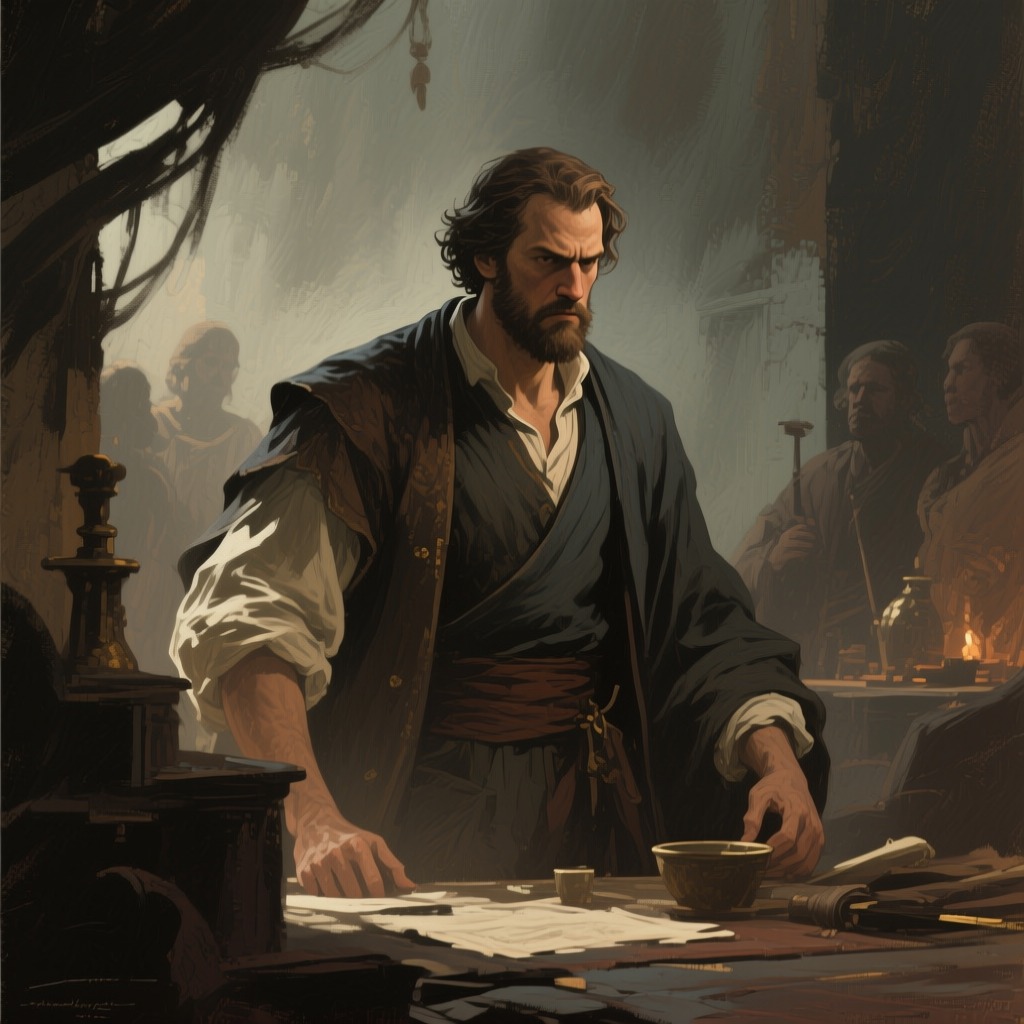
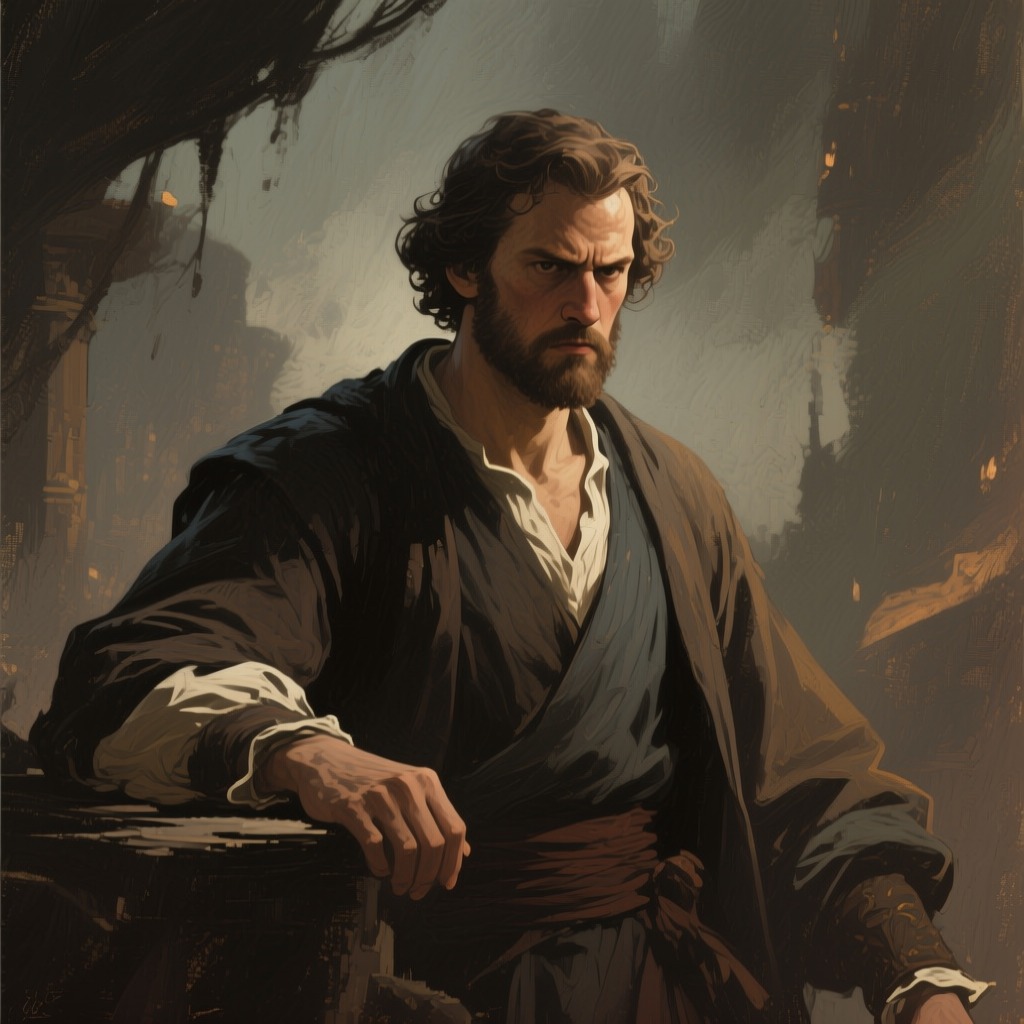
Aarfy
Aarfy — Captain Aardvaark, as he introduces himself — is Yossarian's navigator and one of the most morally grotesque figures in Catch-22. A plump, pipe-smoking, relentlessly cheerful man who attended a good college and loves fraternity reunions, he combines professional incompetence with a serene, impenetrable self-regard. He gets lost on nearly every combat mission, leading his plane over concentrations of antiaircraft fire without a flicker of concern, and he is utterly incapable of fear. His presence in the nose of the B-25 during the second Bologna mission is a study in surreal obliviousness: while Yossarian screams evasive commands and flak tears through the floor, Aarfy lights his pipe, marvels at the "snow" of shredded paper maps, and grins. When Yossarian, wounded in the thigh over Leghorn, begs for help, Aarfy cups his ear and says, "I still can't hear you," with a bland, quizzical smile. He is not malicious in any active sense; he is simply sealed inside a bubble of complacency that no external reality can penetrate.
Identity and Background
Aarfy is a dedicated fraternity man who loves cheerleading and class reunions and does not have brains enough to be afraid. He wears a pipe in his face and asks new arrivals what college they went to. He is a lead navigator who has never been able to find himself since leaving college, and he gets lost on the streets of Rome as readily as he gets lost in the air. His physical presence is soft and round — Yossarian describes punching him as like sinking his fists into a limp sack of inflated rubber, with no resistance, no response at all. He is a man without edges, without friction, and therefore without any purchase for conscience.
Key Actions and Moral Vacuum
Aarfy's most chilling act occurs in Rome. He rapes Michaela, the plain, simple-minded maid who works in the officers' apartment, and then, to prevent her from "saying bad things about us," throws her out the window. Her dead body lies on the pavement when Yossarian arrives. Aarfy paces about uneasily with a pompous, slightly uncomfortable smile and assures Yossarian that everything is going to be all right. "I only raped her once," he explains. When Yossarian shouts that he has murdered a human being and will go to jail, Aarfy chuckles and replies, "Oh, I hardly think they'll do that. She was only a servant girl." The military police who burst in moments later arrest Yossarian — for being in Rome without a pass — and apologize to Aarfy for intruding. His expectation of impunity is not delusional; the system validates it.
Earlier, in the officers' apartment in Rome, Aarfy demonstrates the same moral logic on a smaller scale. He picks up a drunken, willing girl in an orange satin blouse — exactly the kind of debauched, amoral slattern Yossarian has longed for — and then, instead of sleeping with her, gives her a talking-to and throws her salmon-colored cameo ring out the car window. He boasts that he never prods nice girls. He knows what kind of girls to prod and what kind not to prod. The distinction is entirely social: a girl from a family with money is off-limits; a servant girl is not. When Nately begs him to take one of the three prostitutes he has paid for, Aarfy refuses with a smirk: "Nobody has to pay for it for good old Aarfy. I can get all I want any time I want it." He then suggests they threaten to push the girls out the window unless they give up their money, recalling with fondness how his fraternity used to trap high-school girls and "smack their faces a little when they started to complain."
Relationships and Conflict
Yossarian's relationship with Aarfy is one of helpless, exasperated antagonism. He cannot make Aarfy hear him, cannot make Aarfy afraid, cannot make Aarfy understand that they are trying to be killed. In the nose of the plane over Bologna, Aarfy creeps up behind Yossarian and jabs him in the ribs with his pipe stem, asking, "What's eating him?" about McWatt's frantic piloting. Yossarian breaks into tears and begins punching Aarfy in the body with both hands as hard as he can, but there is no response from the soft, insensitive mass. After the Leghorn mission, when Yossarian is bleeding from a wound in the thigh, Aarfy's only contribution is to hold up a shattered paper map and murmur, "Will you look at this?" with sublime joy. Yossarian concludes that Aarfy is a raving lunatic — but the novel suggests something worse: Aarfy is not insane; he is perfectly sane within a moral framework that recognizes no obligation to anyone beneath him in class, rank, or nationality.
Change and Ending
Aarfy does not change. After Michaela's murder, after the M.P.s arrest Yossarian instead of him, he remains exactly what he has always been: a smug, untouchable mediocrity protected by the very system Yossarian is fighting. He is the novel's proof that evil does not require malice — only a complete absence of empathy combined with an unshakable conviction that one belongs to the right club. When Yossarian, in the hospital after being stabbed by Nately's whore, learns that Aarfy will swear he and McWatt lied in their official report about the Ferrara mission, he is not surprised. "I'll bet the bastard would," he says. Aarfy is the character who will always land on his feet because he has no moral weight to drag him down.
Thematic Significance
Aarfy embodies the banality of evil in its most socially acceptable form. He is not a monster in the obvious sense; he is a fraternity brother, a college man, a "regular guy" who will go far in the world because he knows which rules to follow and which people do not count. His navigational incompetence is a metaphor for his entire existence: he is lost, but he does not know it, and his ignorance is his armor. Against the chaos of war, the terror of flak, and the reality of death, Aarfy offers only a pipe, a cheerful grin, and the unshakable conviction that nothing bad can happen to good old Aarfy. The novel's final verdict on him is delivered not by Yossarian but by the M.P.s who arrest the wrong man: the system that Aarfy serves so complacently will always protect him, because he is its perfect product.