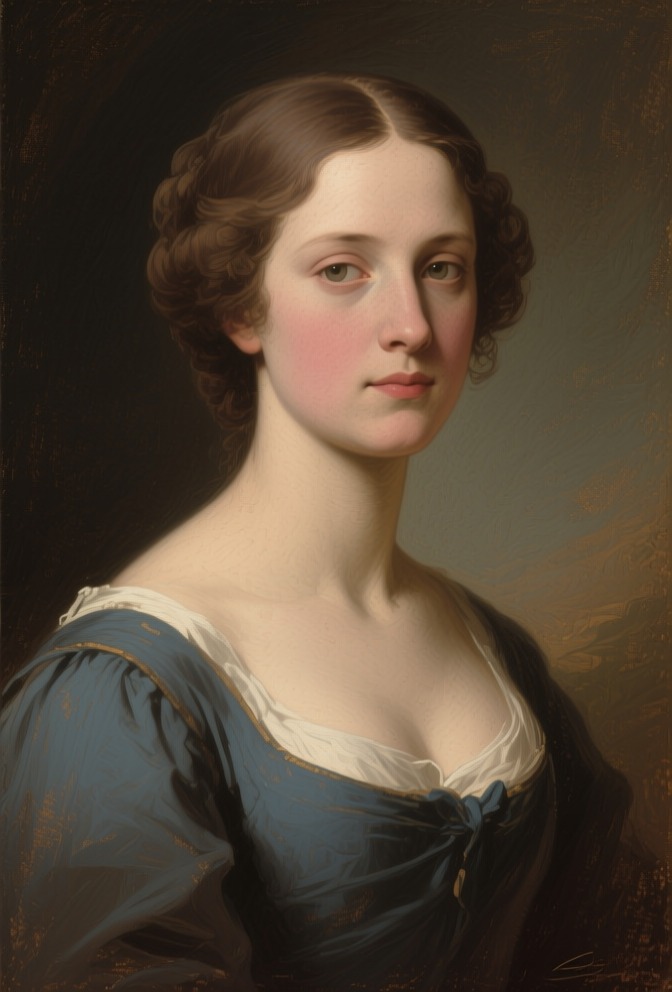
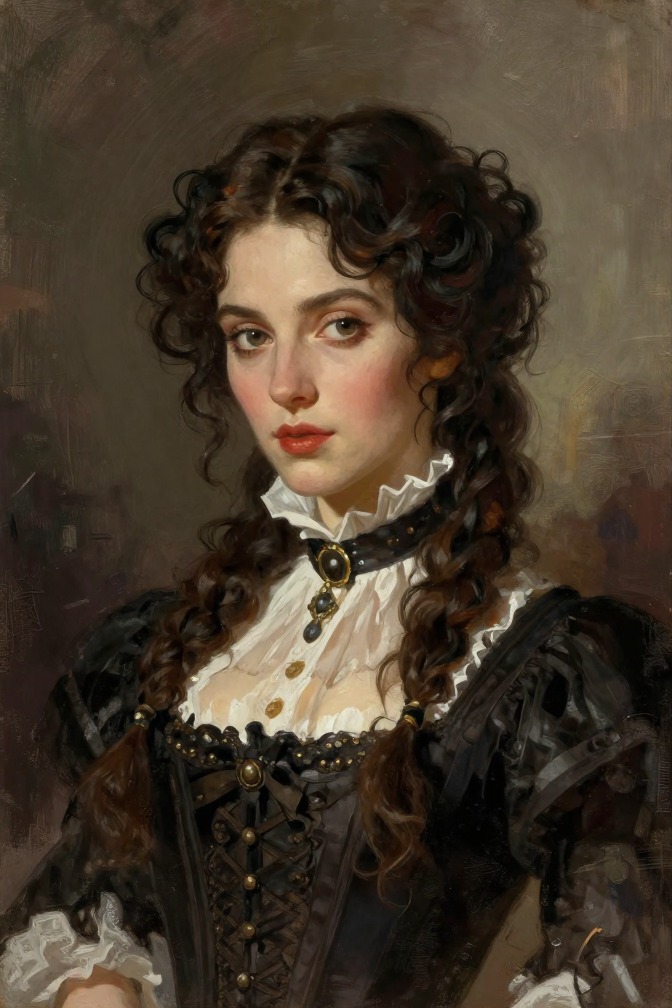
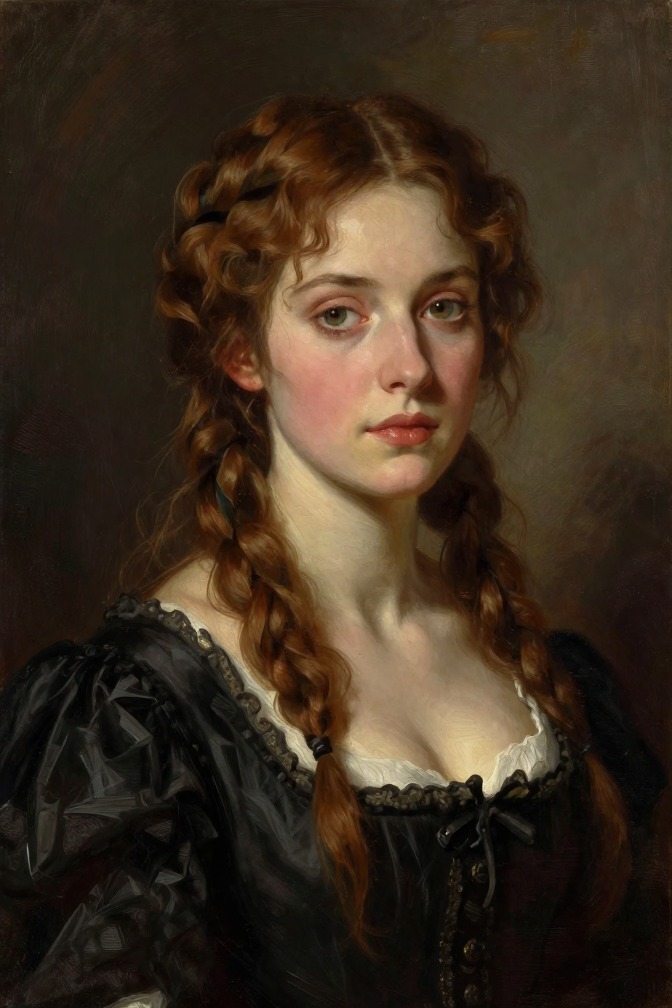
Mary Musgrove, née Elliot, is the youngest daughter of Sir Walter Elliot, a woman of petty self-importance, constant complaints, and limited understanding, whose marriage to Charles Musgrove places her in the comfortable but unremarkable society of Uppercross, where her hypochondria, social jealousy, and Elliot pride create a persistent undercurrent of domestic friction.
Actor is a minor but structurally significant figure in the Odyssey, known only as the father of the maidservant who keeps the door of Odysseus and Penelope's bedchamber, and thus the sole mortal witness—apart from the couple themselves—to the secret of the olive-tree bed that becomes the ultimate proof of Odysseus's identity.
Alcmaeon is a minor figure mentioned in the Odyssey as the son of the seer Amphiaraus and a member of the doomed prophetic lineage descended from Melampus. His name appears in a genealogical list that traces the family of the seer Theoclymenus, who joins Telemachus on his return from Pylos. Though Alcmaeon himself plays no active role in the poem, his inclusion anchors Theoclymenus within a storied tradition of Argive prophecy and violent family fate, linking the poem's present action to the wider mythic history of the house of Melampus.
Antilochus, the son of Nestor, is a minor but significant figure in the Odyssey, remembered for his valor, his close friendship with Achilles, and his early death at Troy, which serves as a poignant contrast to the homecomings of other heroes and a catalyst for grief among his family and comrades.
Ephialtes is a giant son of Aloeus and Iphimedeia who, with his brother Otus, attempted to storm Olympus by piling mountains on one another, only to be killed by Apollo before reaching adulthood.
Eurylochus is Odysseus's second-in-command during the homeward voyage from Troy, a cautious and often insubordinate officer whose repeated defiance of his captain's orders brings disaster upon the crew. He refuses to enter Circe's palace, persuades the starving men to slaughter the Cattle of the Sun against divine prohibition, and embodies the tension between prudent survival and reckless mutiny that destroys nearly every man under Odysseus's command.
Eurytus is a legendary archer from Oechalia whose bow, passed to his son Iphitus and then to Odysseus, becomes a central object in the Odyssey, and whose hubristic challenge to Apollo results in his own death.
Iphimedeia is a minor but striking figure in the Odyssey, known only through Odysseus's catalogue of famous women in the underworld, where she appears as the wife of Aloeus who boasted of the embrace of Poseidon and bore the giant twins Otus and Ephialtes, whose doomed rebellion against the gods marks a cautionary tale of youthful hubris and divine punishment.
Pandareus is a minor but symbolically potent figure in the Odyssey, remembered not through his own actions but through the tragic fate of his daughters and the use of his name as a byword for divinely inflicted ruin. His story, embedded in Penelope's desperate prayer to Artemis, provides a dark mythological parallel to the queen's own suffering and underscores the poem's preoccupation with the arbitrary destruction of innocent families by the gods.
Polycaste, the youngest daughter of Nestor, appears in a single but vividly detailed scene in Book III of the Odyssey, where she performs the ritual washing and anointing of Telemachus after his arrival at Pylos. This brief encounter, rendered with the intimacy of a domestic rite, marks the only moment in the epic where a high-born maiden personally attends to a guest's bath, and it serves as a quiet emblem of the hospitality, grace, and coming-of-age themes that structure Telemachus's journey.
Telemachus's Journey to Pylos and Sparta is the first major quest of the Odyssey, in which the young prince, guided by Athena, sails from Ithaca to seek news of his long-lost father Odysseus from the heroes Nestor and Menelaus. The journey transforms Telemachus from a passive, helpless youth into a confident speaker and leader, establishes the poem's central themes of hospitality and heroic legacy, and sets in motion the suitors' plot to ambush him upon his return.
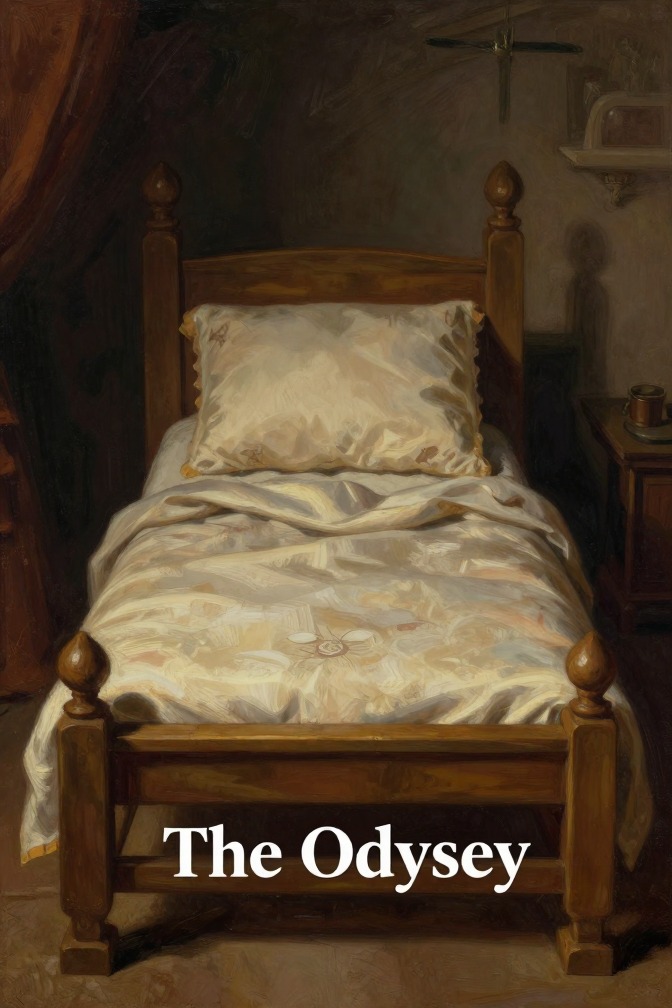
Odysseus' bed is the fixed, immovable marriage bed he built around a living olive tree, serving as the ultimate token of identity and fidelity in the recognition scene with Penelope.
Mr. Kirwin is the Irish magistrate who presides over Victor Frankenstein's detention and trial after the murder of Henry Clerval, and whose compassionate yet pragmatic handling of the case provides a rare instance of institutional justice in a novel otherwise consumed by private vengeance.
Justine Moritz is a young servant in the Frankenstein household who becomes the tragic scapegoat for the monster's murder of William Frankenstein, and whose wrongful conviction and execution deepen Victor Frankenstein's guilt and despair.
M. Waldman is a professor of chemistry at the University of Ingolstadt whose inspiring lectures and personal mentorship redirect Victor Frankenstein's scientific ambitions from obsolete alchemy toward modern natural philosophy, setting him on the path to creating the monster.
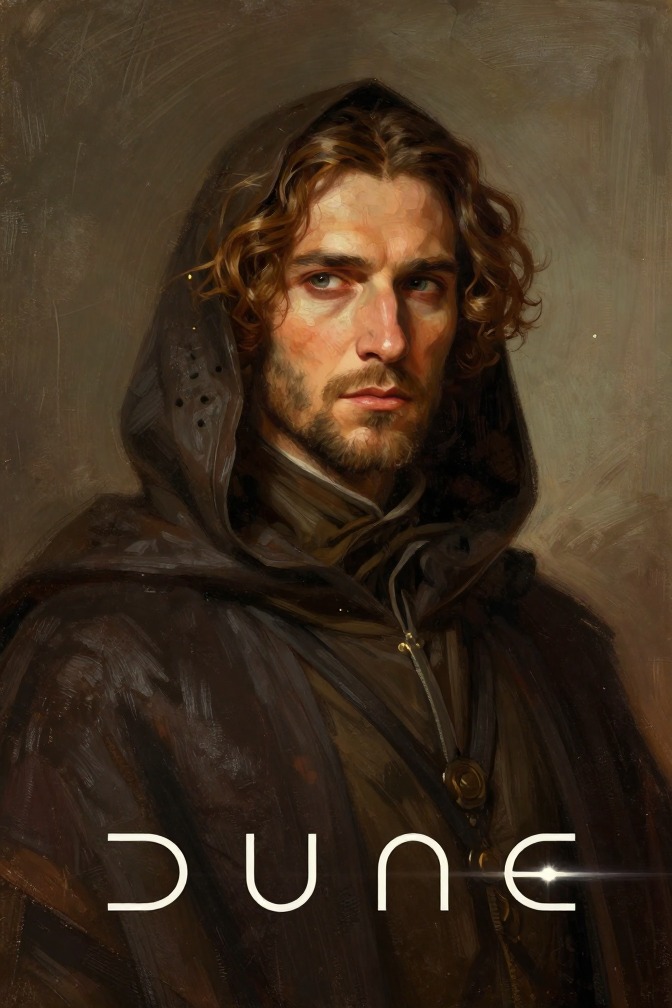
Anirul is the wife of Padishah Emperor Shaddam IV and the mother of Princess Irulan, a Bene Gesserit of Hidden Rank whose death in 10,176 is recorded in the Almanak en-Ashraf. Though she never appears as a speaking character in the events of Dune, her role is defined by the political and genetic machinations of the Bene Gesserit breeding program, which sought to produce the Kwisatz Haderach. Her absence from the narrative is itself significant, as it underscores the tension between the Emperor's public dynasty and the secretive, long-term plans of the Sisterhood, a tension that shapes the fate of House Corrino and the rise of Paul Atreides.
Glossu Rabban, also known as Beast Rabban and Count Rabban, is the eldest nephew of Baron Vladimir Harkonnen and the brutal governor of Arrakis. He embodies the Harkonnen policy of ruthless oppression, serving as the instrument of his uncle's will and the primary antagonist to the Fremen and House Atreides. His reign is marked by extreme cruelty and exploitation, which ultimately sets the stage for the Fremen uprising and Paul Atreides' rise to power.
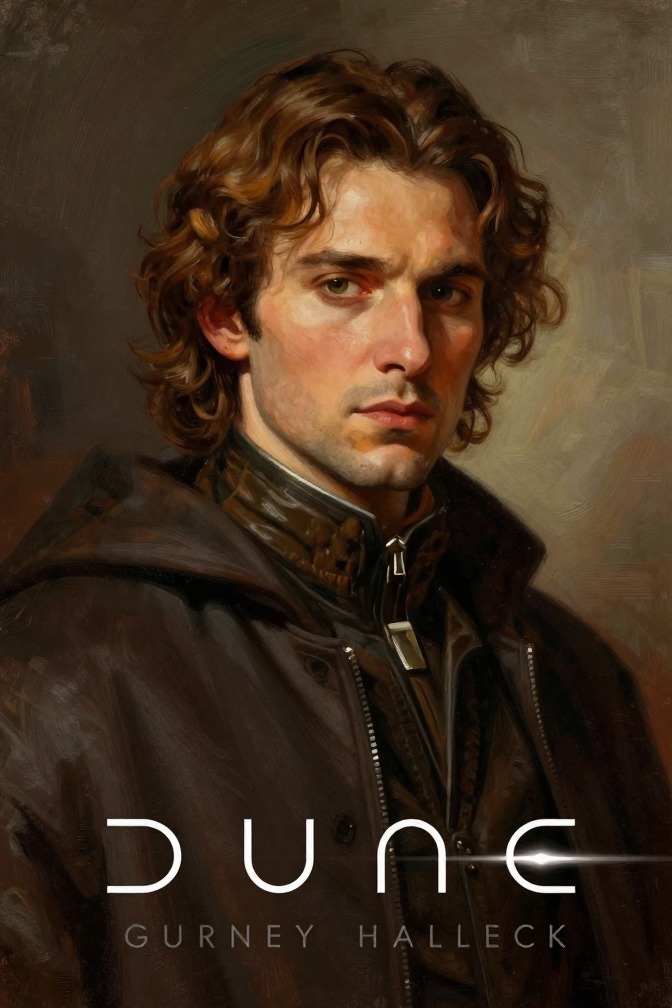
Gurney Halleck is the troubadour-warrior of House Atreides, a man of dual nature: a master of the baliset and a deadly fighter. He serves as Paul Atreides' weapons master and closest friend among his father's men, surviving the fall of the House to become a smuggler before reuniting with Paul and playing a crucial role in the final battle for Arrakis.
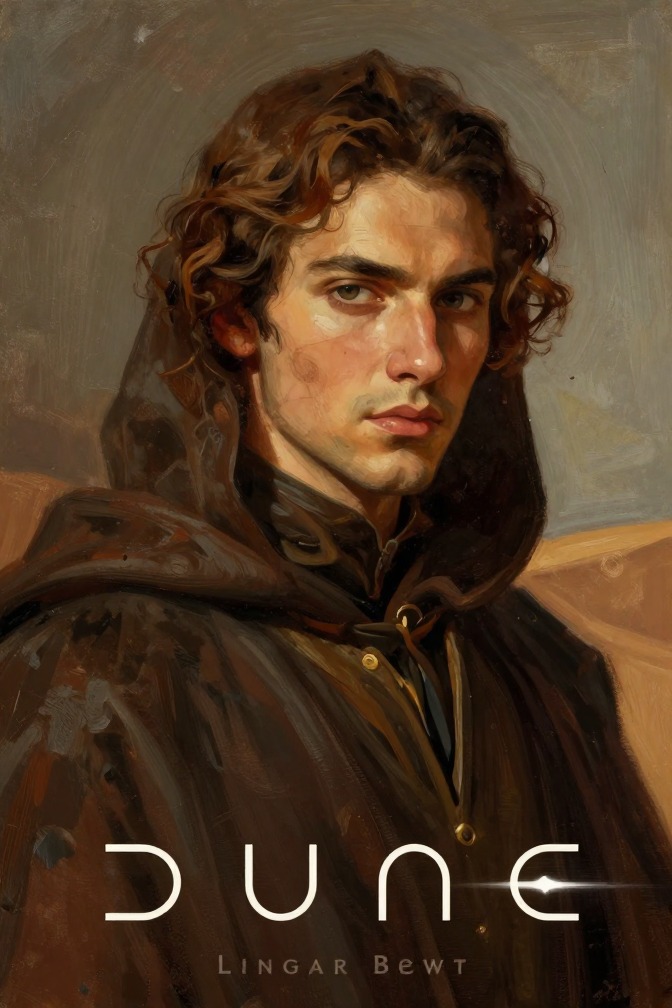
Lingar Bewt is a water-shipper and water magnate on Arrakis, a man of considerable power and influence whose wealth is tied to the planet's most precious resource. He is a figure of suspicion and political maneuvering, a Harkonnen creature who challenges the new Duke Leto Atreides at his own dinner table, yet also a man whose actions reveal the deep economic and ecological tensions of the planet. His presence at the ducal banquet is a key moment of confrontation, exposing the fragility of Atreides rule and the complex web of interests that will shape the struggle for Arrakis.
Thufir Hawat, the Master of Assassins for House Atreides, is a Mentat of formidable reputation whose life is defined by his service to three generations of the Atreides family. His story in Dune is one of profound loyalty, devastating failure, and a final, tragic act of redemption. He is the architect of the Atreides' defensive strategies, the guardian of Paul Atreides, and a man whose suspicions are manipulated by the Harkonnens to sow discord within the House he serves. His arc culminates in his capture by the Baron Vladimir Harkonnen, his forced service to his family's greatest enemy, and his ultimate sacrifice to protect the young Duke Paul, revealing the depth of his unwavering devotion.
Arrakis, known as Dune, is the third planet of Canopus and the central setting of Frank Herbert's 1965 novel. It is a desert planet of extreme aridity, the sole source of the geriatric spice melange, and the homeworld of the Fremen. The planet's harsh environment, its unique ecology centered on the sandworms, and its political significance as a fief contested by the Great Houses shape the entire narrative, from the Atreides' arrival to Paul-Muad'Dib's ascension.
Tony is Danny Torrance's 'invisible playmate,' a psychic projection of his older self who serves as a guide through precognitive visions. Initially a source of comfort and wonder, Tony becomes a harbinger of terror as the Overlook Hotel's malevolent influence grows, ultimately revealing that he is a part of Danny's own mind, a fusion of his past and future selves, who must be left behind for Danny to survive.
Antoine is a turnkey at the Château d'If, the jailer assigned to Edmond Dantès during his early imprisonment. He is the first guard to report Dantès' violent behavior to the governor, describing him as a 'devil' after Dantès attempted to kill him. His testimony during the inspector-general's visit in 1816 directly leads to Dantès being classified as a dangerous madman and relegated to a dungeon, a decision that shapes the course of Dantès' fourteen-year captivity.
Jacopo is a Corsican sailor who becomes the first loyal friend and devoted follower of Edmond Dantes after Dantes' escape from the Chateau d'If, embodying the themes of gratitude, devotion, and the possibility of redemption through human connection.
King Louis XVIII, the Bourbon monarch restored to the French throne after Napoleon's abdication, appears in the novel as a shrewd, bookish ruler whose complacent confidence in his intelligence network is shattered by the sudden news of Napoleon's landing from Elba, a moment that exposes the fragility of his restored monarchy and sets in motion the chain of events that will allow Edmond Dantes' enemies to entrench their power.
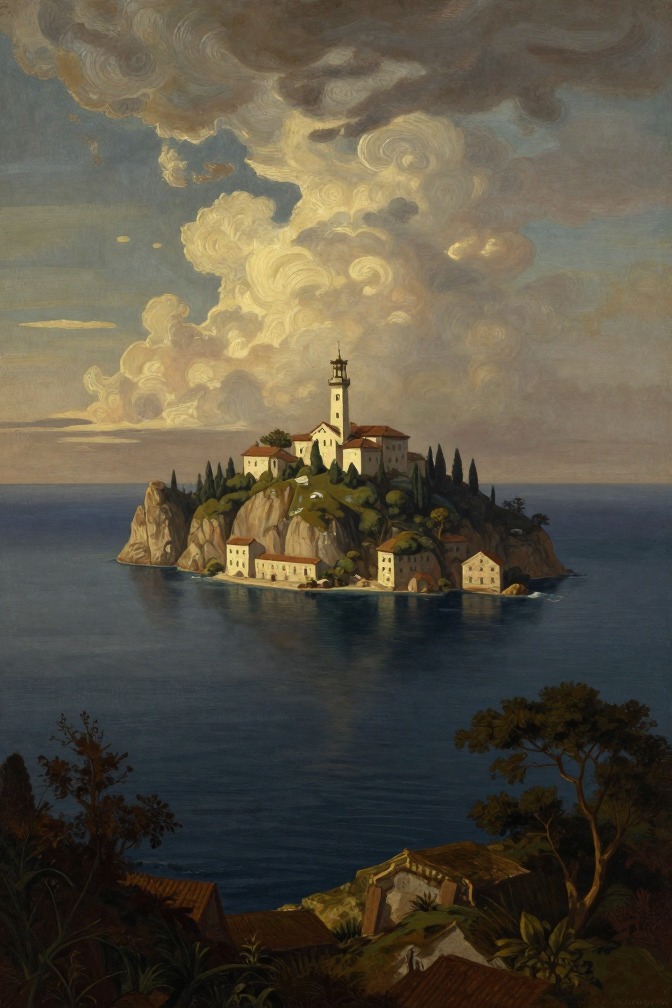
The Island of Monte Cristo is a small, uninhabited island in the Mediterranean Sea that serves as the hiding place for the immense treasure of Cardinal Spada, discovered by Edmond Dantes after his escape from the Chateau d'If. The island becomes the symbolic and literal foundation of Dantes' new identity as the Count of Monte Cristo, providing the vast wealth that enables his elaborate plan of vengeance and reward.
The master-servant relationship between the Count of Monte Cristo and his steward Bertuccio is one of absolute authority, profound mutual dependence, and a shared, terrible secret that binds them together. Bertuccio, a Corsican with a past steeped in vendetta, is not merely a servant but a man whose life was saved and whose dark history was fully known and manipulated by the count. This relationship is the operational backbone of Monte Cristo's intricate plans, yet it is also a source of deep, unspoken tension, as Bertuccio's past is literally and figuratively buried in the very house the count purchases at Auteuil.
Carmilla, also known as Millarca and Mircalla, Countess Karnstein, is the vampire antagonist of Sheridan Le Fanu's 1872 novella. She preys on young women, including the narrator Laura and General Spielsdorf's ward Bertha Rheinfeldt, through a seductive and parasitic relationship that blends romantic obsession with predatory violence. Her identity is gradually revealed through a series of supernatural events, culminating in her exhumation and destruction.
Laura is the nineteen-year-old narrator and protagonist of Sheridan Le Fanu's Carmilla, whose first-person account of her childhood encounter with a vampire and her subsequent seduction and near-destruction by the vampire Carmilla forms the entire story. As the sole daughter of an English father and a deceased Styrian mother, she lives a solitary life in a remote schloss, and her gradual physical and psychological decline under Carmilla's influence drives the novel's central horror.
Cato is the male tribute from District 2 in the Seventy-fourth Hunger Games, a Career Tribute who serves as the primary physical antagonist to Katniss Everdeen and Peeta Mellark. Trained from birth for the Games, he embodies the brutal, arrogant, and strategically ruthless ethos of the Career pack, yet his narrative arc—from dominant predator to a broken, pleading victim of the Gamemakers' muttations—reveals the dehumanizing cost of the Capitol's entertainment machine.