Laura
CarmillaLaura is the first-person narrator and central figure of Sheridan Le Fanu's Carmilla, a young woman whose isolated life in a remote Styrian castle becomes the stage for a vampire's predatory seduction. Her account, written years after the events, traces her passage from a lonely but contented girlhood through a harrowing supernatural ordeal that nearly claims her life, and it is through her eyes that the reader encounters the beautiful and monstrous Carmilla. Laura's narrative is not merely a record of external events but a document of her own changing consciousness, as the vampire's influence gradually erodes her health, her will, and her sense of self.
Identity and Background
Laura is the daughter of an English father who served in the Austrian army and, upon retirement, purchased a feudal schloss in Styria with his pension and patrimony. Her mother, a Styrian lady, died when Laura was an infant, leaving her to be raised by a good-natured governess, Madame Perrodon, a native of Berne, and a finishing governess, Mademoiselle De Lafontaine. At the time of her story, Laura is nineteen years old, though eight years have passed since the events she recounts. She describes her life as "rather a solitary one," with her father, the two governesses, and occasional young lady friends as her regular social resources. The family speaks a mixture of English, French, and German, a Babel at which strangers used to laugh. Laura's father is the kindest man on earth but growing old, and she is a rather spoiled girl whose only parent allows her pretty much her own way in everything.
Life and Plot Trajectory
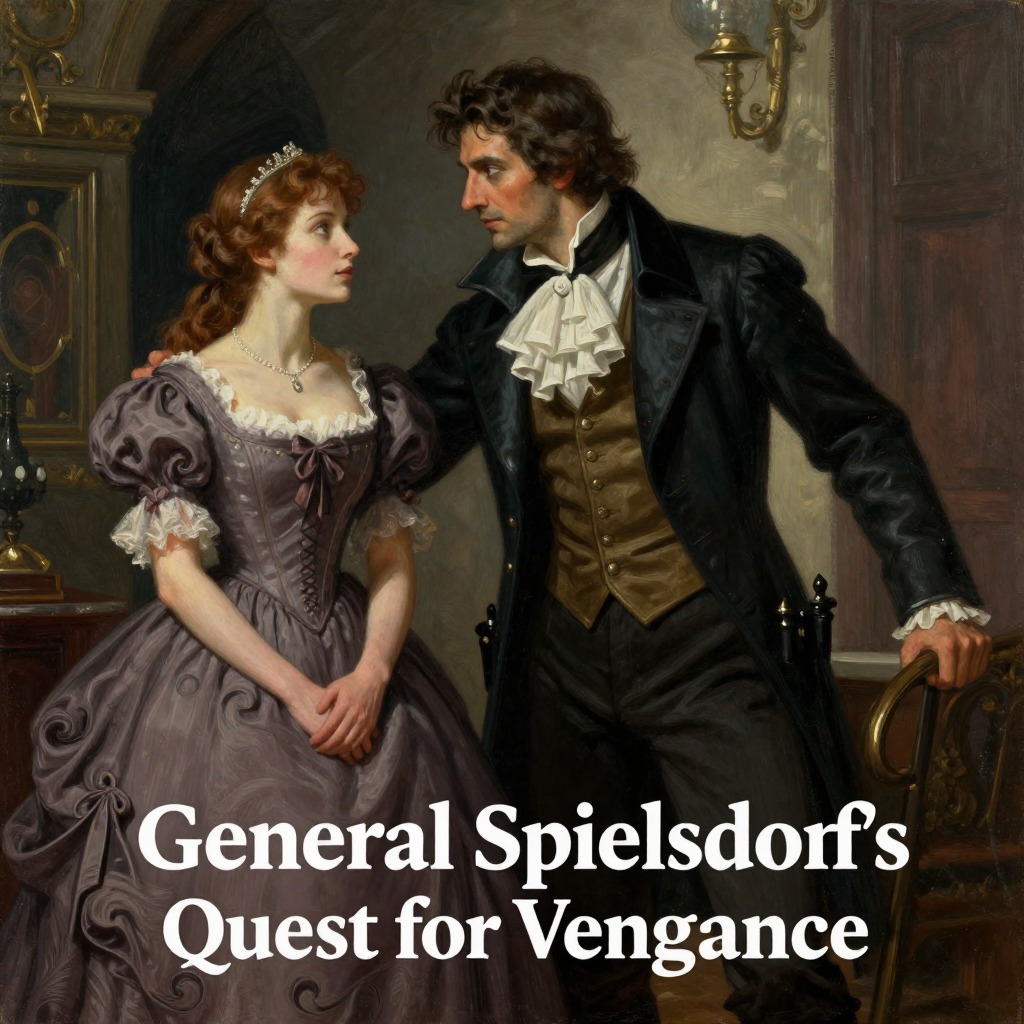
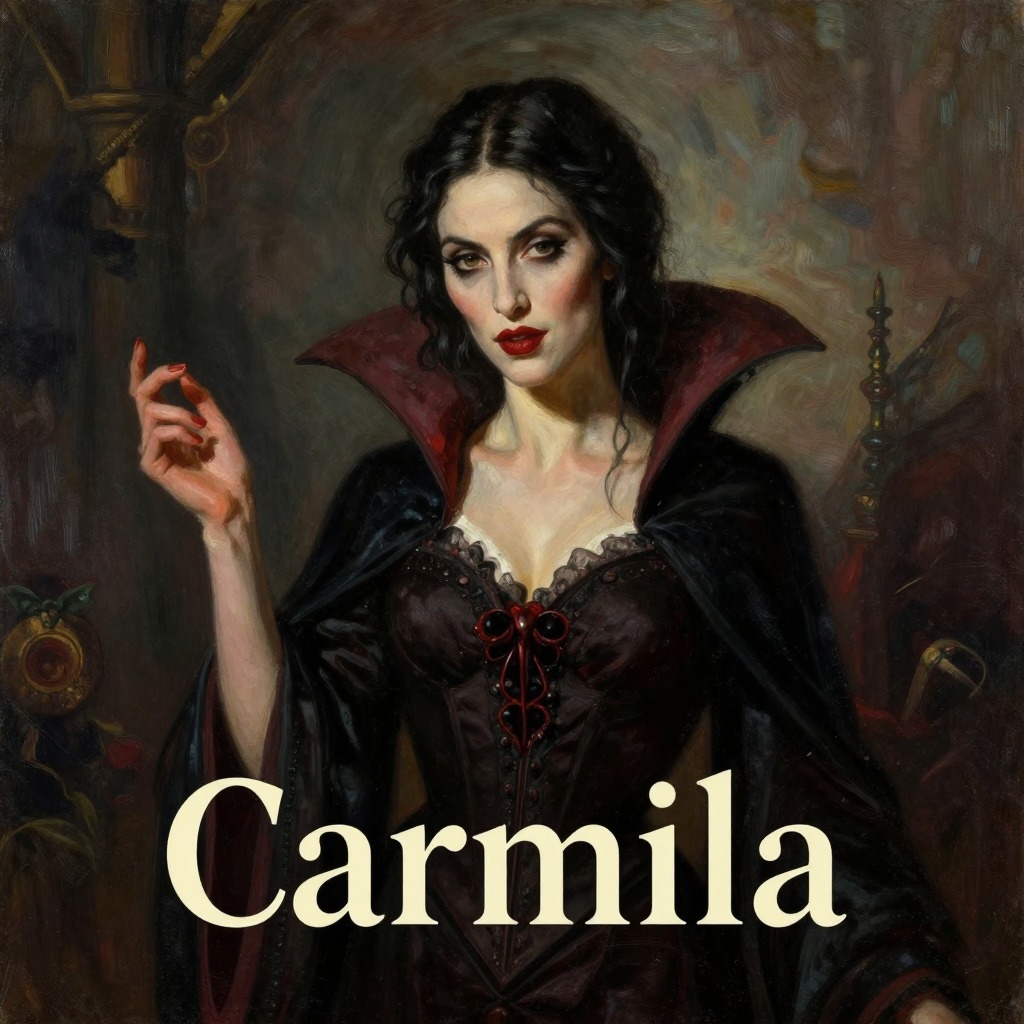
Laura's life is marked from early childhood by a traumatic encounter that "never has been effaced." At about six years old, she awoke in her nursery to find a solemn, pretty young lady kneeling at her bedside. The lady caressed her and lay down beside her, and Laura fell asleep, only to be wakened by a sensation "as if two needles ran into my breast very deep at the same moment." The lady vanished, and though the servants tried to soothe her, Laura knew the visit was not a dream. This event left her nervous for a long time and required a servant to sit up in her nursery until she was fourteen. Years later, when a carriage accident brings a young stranger named Carmilla to the schloss, Laura is struck dumb with horror: she recognizes the very face that had visited her in childhood. Carmilla claims to have had a corresponding vision of Laura, and the two form an intense, ambiguous bond. As Carmilla's strange habits and passionate declarations grow more frequent, Laura's health begins to decline. She experiences terrifying dreams of a black, cat-like creature, sensations of needles piercing her breast, and a gradual, languorous weakening that she at first finds almost pleasant. A doctor discovers two small puncture marks on her throat, and the full horror of her situation only becomes clear when General Spielsdorf arrives and recounts how a vampire, under the name Millarca, destroyed his ward, Bertha Rheinfeldt, with symptoms identical to Laura's. The vampire is identified as Carmilla, who is in truth Mircalla, Countess Karnstein, dead for a hundred and fifty years. After a confrontation in the ruined Chapel of Karnstein, Carmilla vanishes, and Laura's sufferings cease. The vampire's body is exhumed, staked, decapitated, and burned, and Laura eventually recovers, though the terror of the events lingers for years.
Key Actions and Objectives
Laura's primary action in the story is to narrate her own experience, a task she undertakes with great reluctance, writing that it has "unstrung my nerves for months to come, and reinduced a shadow of the unspeakable horror." Within the narrative, her key actions are those of a curious and affectionate hostess who gradually becomes a victim. She presses Carmilla for information about her past, but is met with an "ever wakeful reserve." She adopts Carmilla's habit of locking her bedroom door and searching the room for intruders. She buys a charm against the oupire from a mountebank. She dreams of a black animal and wakes to find a female figure at the foot of her bed. She dreams again and sees Carmilla standing in a white nightdress bathed in blood, which leads to the discovery of Carmilla's mysterious disappearance from her locked room. Laura's objectives are simple: to understand her strange guest, to enjoy her company, and, as her health fails, simply to survive. She is largely passive in the face of the supernatural threat, her will and perceptions benumbed by what she later calls "the narcotic of an unsuspected influence."
Relationships and Conflict
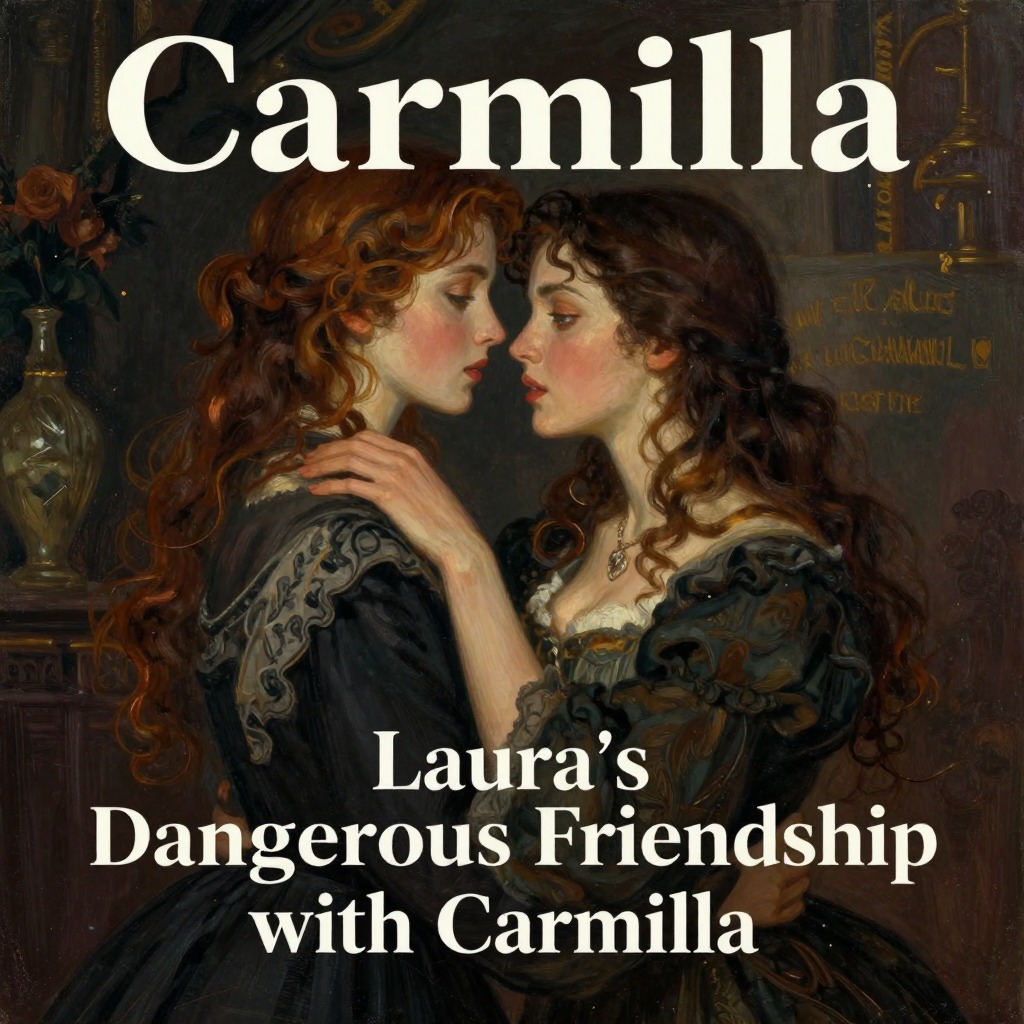
The central relationship of Laura's life is with Carmilla, a bond that is at once deeply affectionate and profoundly destructive. Laura feels "unaccountably drawn towards her, but there was also something of repulsion." Carmilla's embraces are both pleasurable and hateful, and Laura experiences "a love growing into adoration, and also of abhorrence." Carmilla declares, "I live in you; and you would die for me, I love you so," and Laura finds herself unable to resist the vampire's languid, passionate advances. The conflict is internal as much as external: Laura struggles to understand her own feelings and to reconcile her growing affection with her instinctive fear. Her relationship with her father is one of trust and affection, but she conceals her worsening condition from him, afraid of alarming him or of having her story treated as a jest. She is also close to her governesses, Madame Perrodon and Mademoiselle De Lafontaine, to whom she confides her fears. The arrival of General Spielsdorf introduces a new dynamic: he is a hunter who recognizes Carmilla for what she is, and his story of Bertha's death provides the key to Laura's own ordeal.
Change and Ending
Laura undergoes a profound physical and psychological transformation over the course of the story. From a healthy, spirited girl, she becomes pale, languid, and subject to terrifying nocturnal visions. She describes a "strange melancholy" stealing over her, and "dim thoughts of death" taking "gentle, and, somehow, not unwelcome, possession of me." Her soul acquiesces in her own decline. The turning point comes with the doctor's examination, which reveals the puncture marks on her throat, and the subsequent revelation of Carmilla's true nature. After Carmilla's destruction, Laura's nightly sufferings cease. Her father takes her on a tour through Italy, and they remain away for more than a year. Yet the ending is not one of simple recovery. Laura writes that "to this hour the image of Carmilla returns to memory with ambiguous alternations—sometimes the playful, languid, beautiful girl; sometimes the writhing fiend I saw in the ruined church." She still starts from reveries, fancying she hears Carmilla's light step at the drawing room door. The trauma is permanent, and the horror, though years in the past, remains "unspeakable."
Narrative Role and Evaluation
Laura is the sole narrator of Carmilla, and her account is framed by a prologue from Doctor Hesselius, who presents her narrative as a document illuminating a strange subject. Her voice is that of an intelligent, sensitive young woman who is at once a participant in and a retrospective analyst of her own ordeal. She writes with a trembling hand, her memory of the main current of the story vivid but the emotional scenes "vaguely and dimly remembered." This narrative position creates a powerful tension: the reader experiences the events through Laura's immediate perceptions, which are often confused, benumbed, or seduced, while also being aware of the horror that the older Laura, writing years later, still cannot fully articulate. Laura is a classic example of an unreliable narrator not because she lies, but because her understanding is systematically compromised by the vampire's influence. Her story is a testament to the power of the vampire to distort perception and will, and her survival is a narrow escape that leaves her permanently marked. She is the witness whose testimony, however agonizing, is necessary to expose the truth of the vampire's existence.