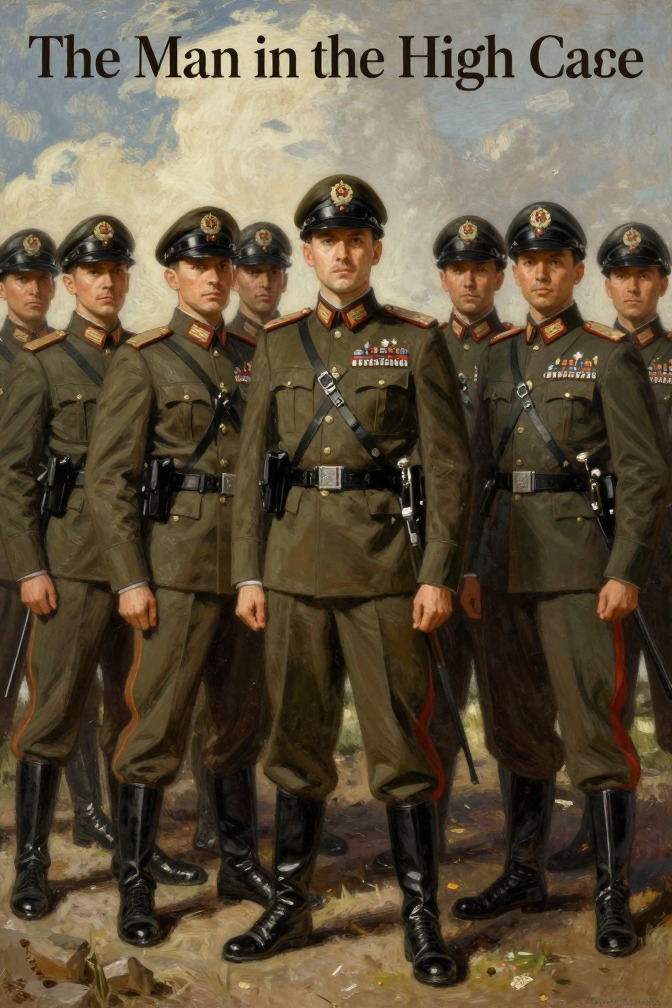
The Imperial Japanese Army is the military force of the Empire of Japan that, after winning World War II, occupies the Pacific States of America and maintains a colonial hierarchy through cultural and legal mechanisms. Its officers serve as collectors of American historical artifacts, its authority underpins the social system of "Place" that humiliates white Americans like Robert Childan, and its retired generals—such as General Tedeki—engage in secret diplomacy with German defectors to prevent a Nazi nuclear attack on Japan.
The Sacramento puppet government is the collaborationist white administration installed by the Japanese occupation authorities over the Pacific States of America, serving as a key instrument of indirect rule in Philip K. Dick's alternate-history novel. It is the political body through which the Japanese exercise control over the white American population, while remaining subordinate to the real power of the Japanese Trade Missions and the Imperial Government. The puppet government's role is paradoxical: it provides a semblance of native governance and legal process, yet its authority is hollow, its officials are often contemptuous of the Japanese they serve, and its legal machinery can be overridden by Japanese fiat, as demonstrated when Nobusuke Tagomi releases Frank Frink from its custody.
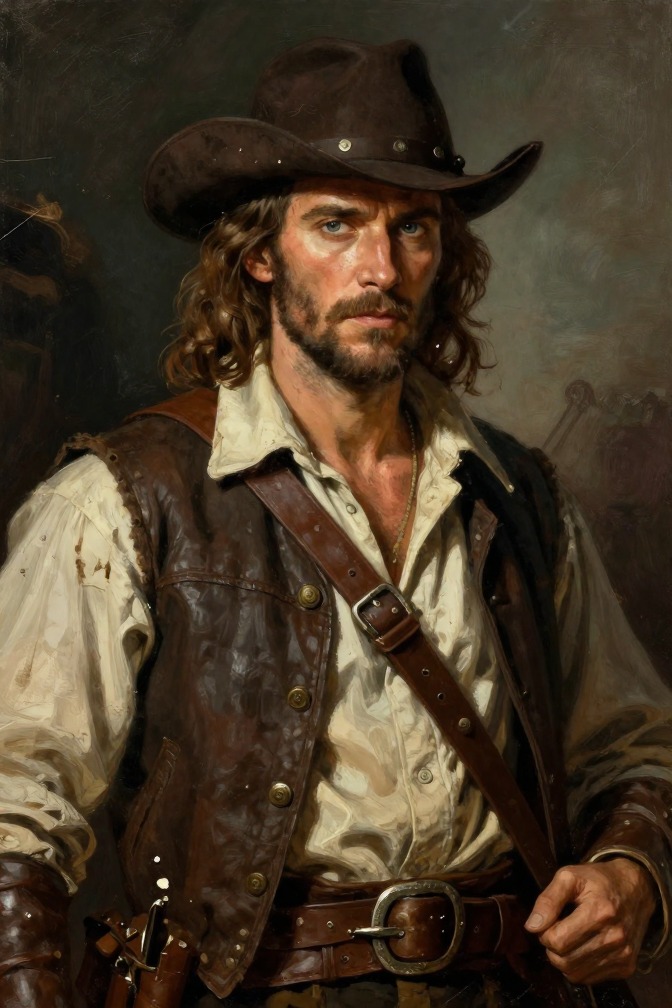
Long John Silver's escape from the Hispaniola at the end of Treasure Island is the final act of the sea-cook's career, a quiet, cunning departure that underscores his survival instinct and the moral ambiguity of the novel's conclusion.
Dr. Livesey is the physician and magistrate of the Admiral Benbow district who becomes the moral and strategic anchor of the voyage to Treasure Island. He confronts Billy Bones, diagnoses his fatal condition, and later serves as the ship's doctor, a key member of the loyal party, and the architect of the plan that ultimately secures the treasure and saves the survivors.
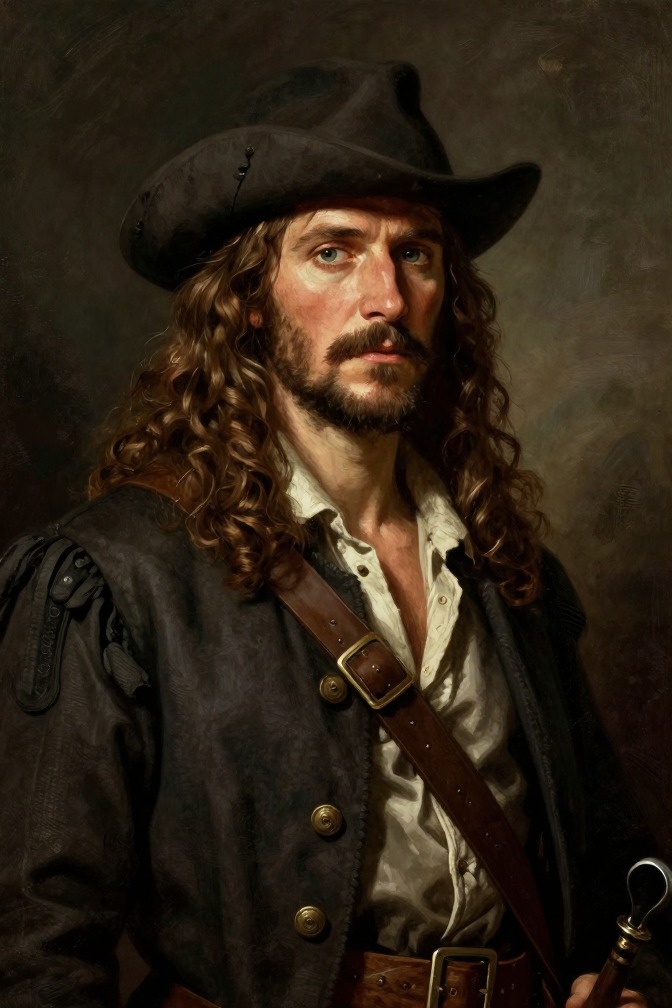
Israel Hands is the coxswain of the Hispaniola and a key member of the mutiny led by Long John Silver. A former gunner under Captain Flint, Hands is a wily, experienced seaman who becomes Jim Hawkins's most dangerous adversary during the boy's solo recapture of the ship. His death in the duel with Jim marks a turning point in the story, eliminating the last serious threat aboard the vessel and enabling the loyal party to reclaim it.
The Battle of the Stockade is the pivotal armed confrontation of Treasure Island, in which the seven loyal members of the Hispaniola's company—Captain Smollett, Squire Trelawney, Dr. Livesey, Abraham Gray, John Hunter, Richard Joyce, and Jim Hawkins—defend their log-house fort against an assault by the mutineers led by Job Anderson. The battle decisively shifts the balance of power on the island, reducing the pirates' numerical superiority and costing the lives of two loyal men, yet it also exposes the vulnerability of the defenders and sets the stage for the subsequent sea adventure and the final recovery of the treasure.
The Deposition of Long John Silver is the pivotal mutiny within the mutiny, when the pirate crew, led by George Merry, formally deposes Silver by presenting him with the Black Spot, a paper cut from a Bible, only for Silver to reclaim his authority through a masterful display of rhetoric and the revelation of the treasure map.
Cape of the Woods is a prominent geographical feature on Treasure Island, a heavily wooded promontory on the island's west coast that serves as a key landmark in the treasure hunt and a site of significant narrative events, including Jim Hawkins's desperate landing and the final ambush of the mutineers.
Dr. Livesey's relationship with the mutineers is a study in moral authority and professional duty, as the physician-magistrate treats his enemies with clinical detachment and strategic compassion, ultimately using his medical role to undermine their cohesion and secure the loyal party's survival.
Squire Trelawney and Dr. Livesey form the expedition's civilian leadership, a partnership of impulsive enthusiasm and steady judgment that drives the voyage to Treasure Island and shapes its outcome. Their contrasting temperaments—Trelawney's open-handed bluster and Livesey's cool pragmatism—create both the expedition's greatest risks and its most reliable safeguards, from the initial decision to seek Flint's treasure to the final negotiations that save Jim Hawkins and secure the prize.
The Black Spot is the pirates' formal summons of doom in Treasure Island, a small paper token that serves as the buccaneers' legal instrument for deposing or condemning a captain. It appears twice in the novel—first delivered to Billy Bones by Blind Pew, and later to Long John Silver by his mutinous crew—and in both cases it precipitates a violent crisis. More than a plot device, the Black Spot embodies the pirates' inverted legal system, their superstition, and the constant threat of betrayal that defines their world.
The Voigt-Kampff test on Phil Resch is the pivotal scene in which Rick Deckard, after retiring Luba Luft with Resch's help, administers the empathy test to the other bounty hunter to determine whether he is human or android, and then turns the test on himself, discovering his own capacity for empathy toward androids.
Buster Friendly and His Friendly Friends is a ubiquitous, twenty-three-hour-a-day television and radio talk show hosted by the immortal-seeming comedian Buster Friendly, which serves as the primary mass entertainment and propaganda medium on post-apocalyptic Earth and its colony worlds. The show is a central instrument of the culture industry, providing relentless distraction, promoting the U.N.'s emigration program, and ultimately delivering a meticulously researched exposé that reveals the Mercerite religion to be a fraud, thereby shattering the foundational belief system of the human population.
Do Androids Dream of Electric Sheep? is the title of Philip K. Dick's 1968 novel, which serves as the book's central interrogative motif, encapsulating its exploration of the boundaries between human and android, the nature of empathy, and the value of life in a post-apocalyptic world.
The Ascent is the central symbolic action of Mercerism, the dominant religion of Earth and the colony worlds in Philip K. Dick's novel. It is the endless climb up a barren hill undertaken by the archetypal figure Wilbur Mercer, an experience shared by every follower who grasps the twin handles of an empathy box. The Ascent represents the fusion of all human consciousness into a single suffering and striving entity, the core of the empathic faith that distinguishes humans from androids.
True fusion with Mercer is the central spiritual experience of Mercerism, the dominant religion of post-apocalyptic Earth. It is a technologically mediated, non-rational merging of consciousness achieved by grasping the twin handles of an empathy box, through which the participant simultaneously shares the physical and emotional journey of the archetypal figure Wilbur Mercer and the collective mind of all other fused humans. This fusion is the ultimate test of humanity, as it requires an empathic faculty that androids, despite their superior intelligence, fundamentally lack, and its authenticity is thrown into crisis by Buster Friendly's exposé that Mercer is a fraud.
The Voigt-Kampff test is the primary psychological instrument used by bounty hunters in Philip K. Dick's novel to distinguish humanoid androids from humans, measuring involuntary empathic responses to morally provocative scenarios. Its reliability becomes the central technical and ethical crisis of the story when the Rosen Association attempts to discredit it using a specially programmed android, forcing bounty hunter Rick Deckard to confront the test's limitations and his own moral certainties.
Sidney's Animal & Fowl Catalogue is the definitive price guide and market authority for all living and extinct animals in the post-apocalyptic world of *Do Androids Dream of Electric Sheep?*, functioning as both a commercial directory and a moral compass that quantifies the value of life in a society where genuine animals have become rare and precious status symbols.
The World Police Organization (W.P.O.) is the Soviet-led international law enforcement body that coordinates android detection and bounty hunting across Earth and the colonies, playing a pivotal role in the novel's central conflict by attempting to regulate the Nexus-6 threat and by deploying its own operative, Sandor Kadalyi, to assist Rick Deckard.
The genuineness taboo is a pervasive social etiquette in post-apocalyptic San Francisco that forbids inquiring whether another person's animal is real or electric, reflecting a culture where owning a living animal is a marker of moral worth and empathy, and where the boundary between authentic life and simulation is both fragile and fiercely protected.
Susanne was the French nursery-maid in the Armstrong household whose tragic suicide after being wrongly suspected of complicity in the kidnapping of Daisy Armstrong became a central emotional and motivational force driving the conspiracy of twelve passengers to execute Ratchett on the Orient Express.
The Tokatlian Hotel in Constantinople (Stamboul) is the pivotal location where Hercule Poirot first encounters the murdered man, Samuel Edward Ratchett, and where the detective's decision to board the Simplon Orient Express sets the entire investigation in motion.
Antonio Foscarelli, the Italian-American Ford car agent who shared a second-class compartment with Ratchett's valet Masterman, was in fact the Armstrong family's former chauffeur, a connection he concealed during the initial investigation. His presence on the train was part of the elaborate conspiracy of twelve passengers—all linked to the Armstrong tragedy—who jointly executed Ratchett (Cassetti) as a self-appointed jury.
Cassetti kidnapped and murdered three-year-old Daisy Armstrong, triggering a chain of deaths that destroyed the Armstrong family and ultimately led to his own execution by a jury of twelve passengers on the Orient Express.
Colonel Arbuthnot is Colonel Armstrong's close friend from the war, a relationship that provides the personal motive for his participation in the conspiracy to execute Ratchett.
Helena Goldenberg, who travels under the married name Countess Andrenyi, is the younger sister of Sonia Armstrong and the daughter of the celebrated actress Linda Arden. Her presence on the Orient Express is not coincidental: she is one of the twelve conspirators who have organized the murder of Samuel Edward Ratchett, the man who kidnapped and killed her niece Daisy Armstrong, destroyed her sister's family, and escaped legal punishment. Her role in the plot is the most protected of all the participants, and her husband, Count Andrenyi, takes her place in the actual stabbing to shield her from direct involvement.
Mary Debenham and Colonel Arbuthnot are secretly in love, a relationship that develops during their journey from Baghdad and is concealed from the other passengers as part of their involvement in the conspiracy to murder Ratchett.
Pierre Michel, the Wagon Lit conductor on the Orient Express, was the father of Susanne, the French nursemaid who died by suicide after being wrongly suspected of complicity in the Armstrong kidnapping case, and this familial connection motivated his participation in the conspiracy to murder Samuel Edward Ratchett.
Ratchett hired Hector MacQueen as his secretary, a relationship that placed MacQueen in a position of intimate access to the murderer and made him a key figure in the conspiracy to kill Ratchett.
Susanne was the French nursery-maid of Daisy Armstrong, whose tragic death by suicide after being wrongly suspected of complicity in the kidnapping became a driving emotional and narrative force behind the conspiracy to murder Samuel Edward Ratchett.