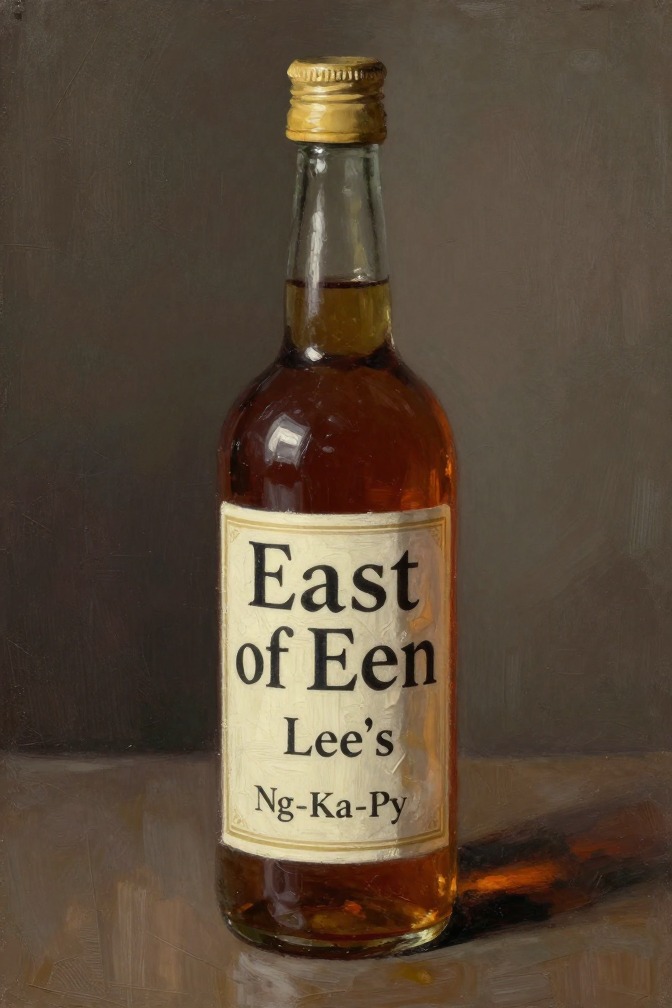
Lee's Ng-Ka-Py Bottle is a stoneware vessel of Chinese brandy infused with wormwood that appears at pivotal moments of philosophical discussion and emotional communion in East of Eden, serving as a ritual object that dissolves social masks and enables the novel's deepest explorations of choice, guilt, and the human soul.
The Sanchez House, also known as the old adobe house and later the Trask house, is the central domestic structure on Adam Trask's ranch in the Salinas Valley. Originally built by the Spanish grantee Sanchez in the early nineteenth century, it is a thick-walled adobe structure with rawhide-tied rafters, designed around a perennial spring in a small foothill draw. After decades of use as a cow barn by the Bordoni family, Adam Trask purchases the property in 1900 and undertakes a thorough renovation, intending it as a permanent seat for his dynasty. The house becomes the stage for the birth of his twin sons, Cathy's shooting of Adam and her subsequent abandonment, and Adam's long withdrawal from life. Its unfinished state—half-plastered walls, crated fixtures, and glassless windows—after Cathy's departure stands as a physical monument to Adam's arrested life and the collapse of his Edenic dream.
Abra Bacon and Aron Trask share a childhood romance that begins when Abra's family takes shelter at the Trask ranch during a rainstorm, but the relationship is gradually undermined by Aron's inability to accept reality and Abra's growing recognition that she loves an idealized image rather than the actual person.
Lee and Adam Trask share a relationship that transcends the conventional bond of servant and master, evolving into a profound intellectual companionship and mutual dependence that shapes the emotional and moral core of the Trask household. Lee, a Chinese immigrant who initially speaks pidgin as a protective veil, becomes the de facto parent to Adam's twin sons, the household's moral compass, and the only person who can reach Adam during his deepest despair. Their connection is built on years of shared solitude, philosophical dialogue, and a quiet, unspoken love that ultimately allows Adam to find a measure of peace before his death.
Samuel Hamilton and Adam Trask form one of the novel's central friendships, a relationship that begins with practical business—Samuel's well-digging and windmill-building—and deepens into a profound spiritual and moral mentorship. Samuel, the Irish-born inventor and philosopher, repeatedly intervenes in Adam's life, shaking him out of paralyzing grief, forcing him to name his twin sons, and ultimately revealing the truth about Cathy's whereabouts, an act that shocks Adam into reclaiming his own life. Their bond is defined by Samuel's relentless, often confrontational compassion and Adam's gradual awakening from a long emotional sleep, making Samuel the catalyst for Adam's belated journey toward freedom and responsibility.
The Rule of Naming in East of Eden is the principle, articulated by the narrator in Chapter 1, that the first duty of any explorer is to name a thing before it can be noted on a map. The rule governs the naming of places in the Salinas Valley, first by Spanish explorers and later by American settlers, and it establishes that names carry a charge of the people who gave them—reverent or irreverent, descriptive or poetic or disparaging. The rule also resonates thematically throughout the novel, as characters struggle with the act of naming their children, their land, and their own identities.
The Truth-Telling Principle, articulated by Lee and internalized by the Trask family, holds that a known lie, even one told in kindness, inflicts a slow, eating agony that corrupts all subsequent truth, while the quick pain of truth, however harsh, passes and leaves no running sore. This ethical axiom governs the novel's central moral conflicts, from Adam's decision to conceal Cathy's identity from his sons to Cal's eventual confession of his role in Aron's destruction, and it ultimately shapes the narrative's insistence that human beings must face reality without the anesthetic of falsehood.
New Year's Day in the world of East of Eden is a time of reckoning, a cultural and personal deadline that forces characters to confront debts, guilt, and the possibility of renewal. It functions as a narrative hinge, marking the passage of time and the weight of inherited obligations, particularly within the Chinese tradition of settling all accounts before the new year begins.
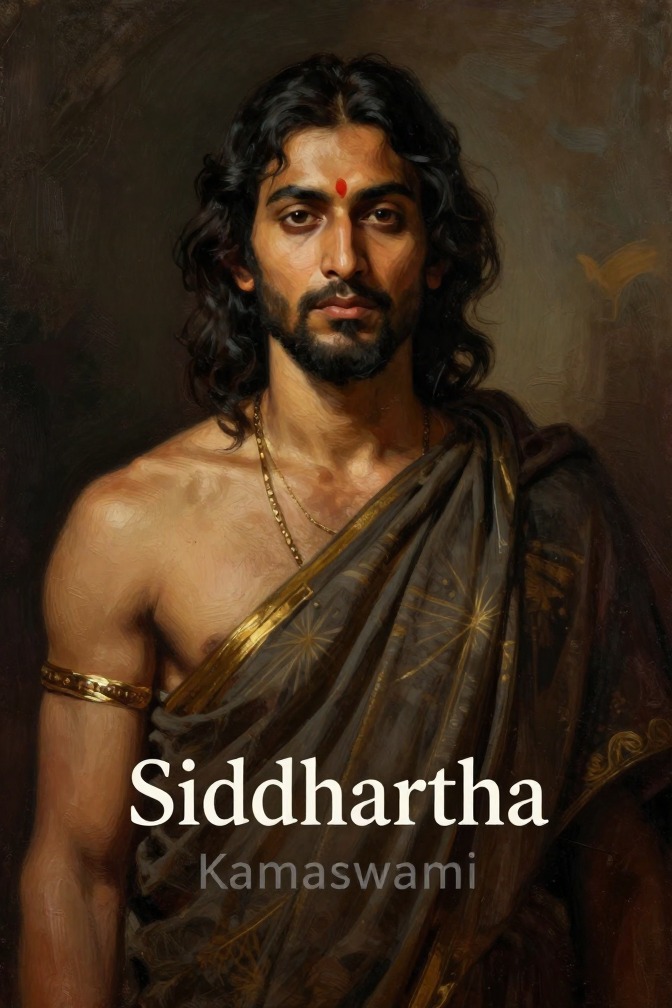
Kamaswami is the wealthy merchant of the city who becomes Siddhartha's employer and business partner during his worldly phase, representing the materialistic, anxious, and spiritually empty world of commerce that Siddhartha must experience and ultimately reject.
The Eightfold Path is the core Buddhist doctrine of right conduct and mental discipline that Gotama teaches in Siddhartha, presented as the way to relieve suffering but ultimately rejected by Siddhartha as a teachable formula that cannot convey the unteachable mystery of enlightenment.
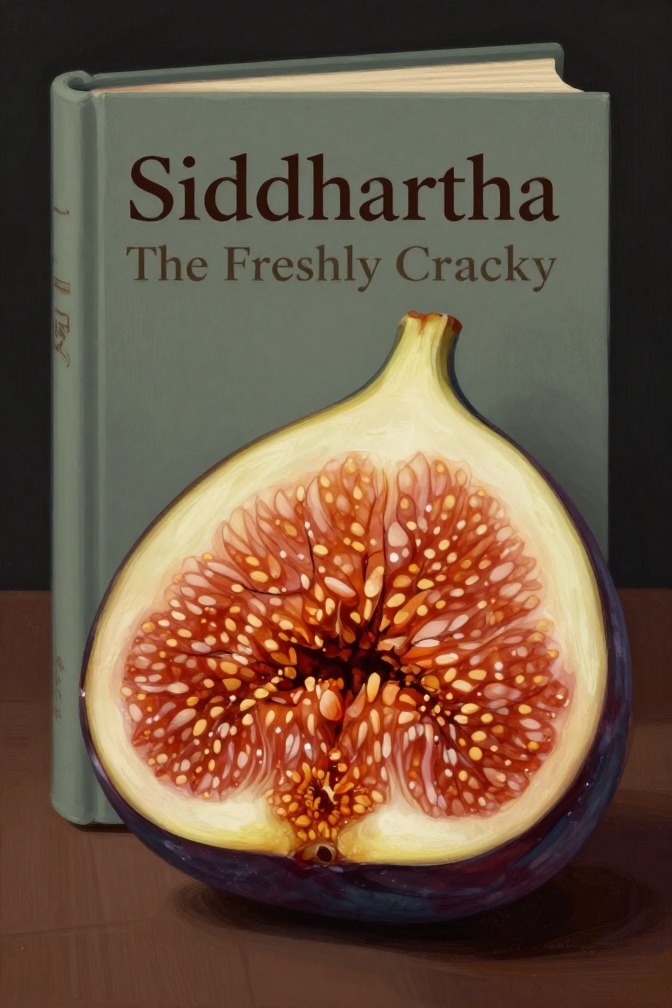
The Freshly Cracked Fig is a recurring simile in Hermann Hesse's Siddhartha, first used to describe Kamala's mouth and later transformed into a symbol of love, transience, and the cycle of life and death. It appears at key moments in Siddhartha's journey, marking his entry into the world of sensual pleasure and his final understanding of the oneness of all existence.
The High Castle is the fortified mountain retreat of Hawthorne Abendsen, author of the banned alternate-history novel The Grasshopper Lies Heavy, and the site of the novel's climactic revelation. Though rumored to be an impregnable fortress bristling with weapons and charged wire, the house Juliana Frink actually finds is an ordinary, well-tended stucco home in Cheyenne, Wyoming, where Abendsen has abandoned his defenses in a fatalistic acceptance of his fate. It is here that Juliana confronts the author, forces him to consult the I Ching, and extracts the truth that his book was written by the oracle itself—a revelation that confirms the reality of the world he imagined and shatters the novel's central illusion.
Japan, in Philip K. Dick's alternate history novel The Man in the High Castle, is one of the two victorious Axis powers that divided the world after World War II. It rules the Pacific States of America (PSA) through a complex colonial administration, including the Trade Missions and the puppet government in Sacramento, while maintaining a tense and unequal relationship with its ally, the German Reich. Japan's cultural influence, its legalistic and moral framework, and its internal political dynamics are central to the novel's exploration of power, identity, and the nature of reality.
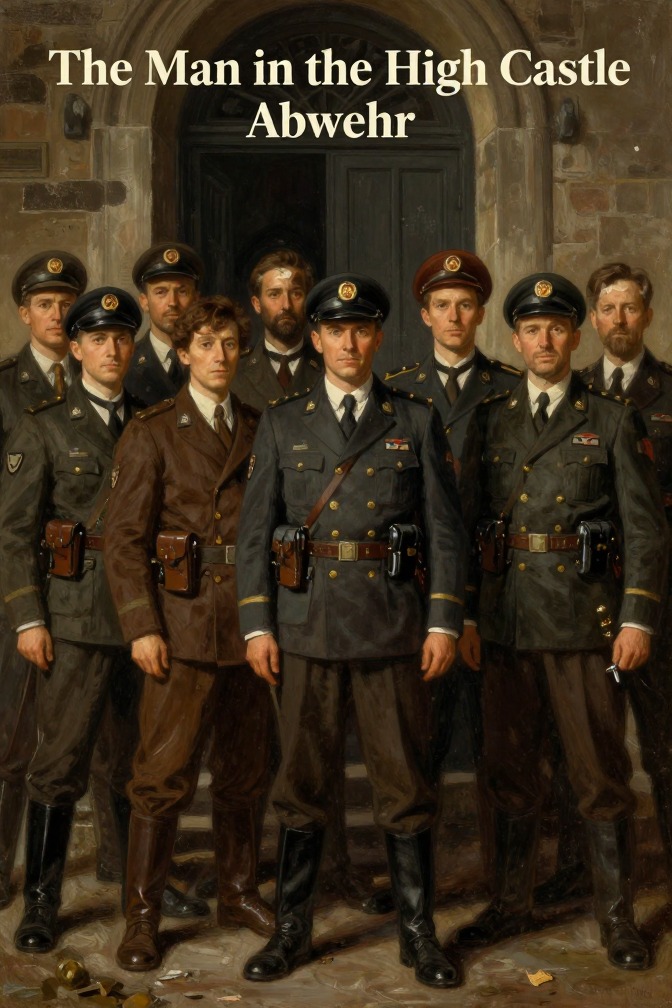
The Abwehr, the German military intelligence service, operates as a shadowy counterweight to the Nazi Party's security apparatus in the novel's alternate-history world. Its agent Rudolf Wegener, traveling under the cover name Baynes, risks his life to expose Operation Dandelion, a planned nuclear attack on Japan, and to forge a desperate alliance between anti-Nazi factions and the Japanese government.
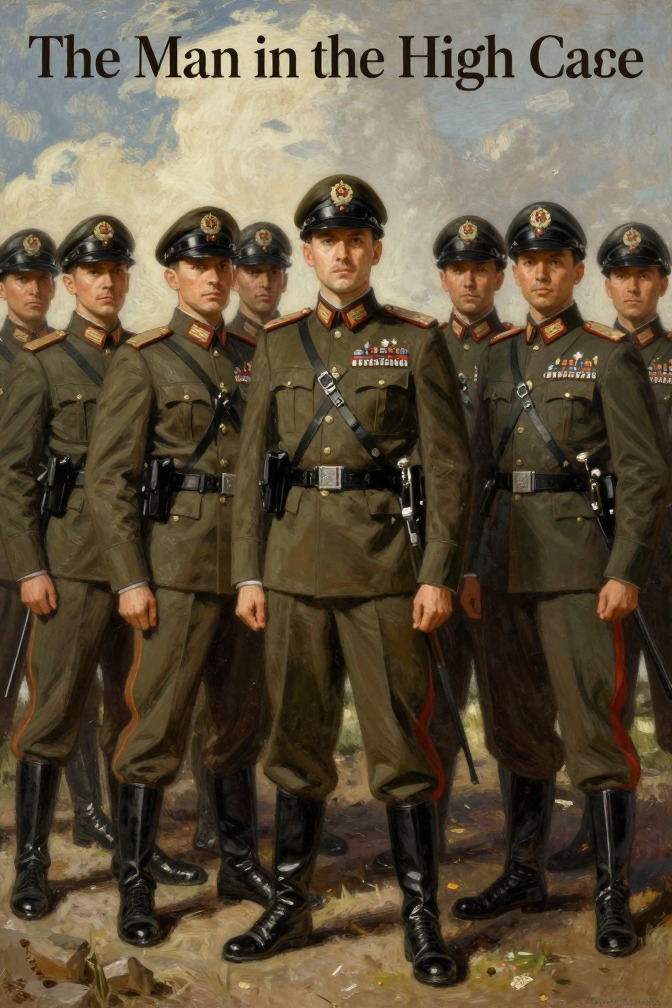
The Imperial Japanese Army is the military force of the Empire of Japan that, after winning World War II, occupies the Pacific States of America and maintains a colonial hierarchy through cultural and legal mechanisms. Its officers serve as collectors of American historical artifacts, its authority underpins the social system of "Place" that humiliates white Americans like Robert Childan, and its retired generals—such as General Tedeki—engage in secret diplomacy with German defectors to prevent a Nazi nuclear attack on Japan.
The Sacramento puppet government is the collaborationist white administration installed by the Japanese occupation authorities over the Pacific States of America, serving as a key instrument of indirect rule in Philip K. Dick's alternate-history novel. It is the political body through which the Japanese exercise control over the white American population, while remaining subordinate to the real power of the Japanese Trade Missions and the Imperial Government. The puppet government's role is paradoxical: it provides a semblance of native governance and legal process, yet its authority is hollow, its officials are often contemptuous of the Japanese they serve, and its legal machinery can be overridden by Japanese fiat, as demonstrated when Nobusuke Tagomi releases Frank Frink from its custody.
Long John Silver's escape from the Hispaniola at the end of Treasure Island is the final act of the sea-cook's career, a quiet, cunning departure that underscores his survival instinct and the moral ambiguity of the novel's conclusion.
Dr. Livesey is the physician and magistrate of the Admiral Benbow district who becomes the moral and strategic anchor of the voyage to Treasure Island. He confronts Billy Bones, diagnoses his fatal condition, and later serves as the ship's doctor, a key member of the loyal party, and the architect of the plan that ultimately secures the treasure and saves the survivors.
Israel Hands is the coxswain of the Hispaniola and a key member of the mutiny led by Long John Silver. A former gunner under Captain Flint, Hands is a wily, experienced seaman who becomes Jim Hawkins's most dangerous adversary during the boy's solo recapture of the ship. His death in the duel with Jim marks a turning point in the story, eliminating the last serious threat aboard the vessel and enabling the loyal party to reclaim it.
The Battle of the Stockade is the pivotal armed confrontation of Treasure Island, in which the seven loyal members of the Hispaniola's company—Captain Smollett, Squire Trelawney, Dr. Livesey, Abraham Gray, John Hunter, Richard Joyce, and Jim Hawkins—defend their log-house fort against an assault by the mutineers led by Job Anderson. The battle decisively shifts the balance of power on the island, reducing the pirates' numerical superiority and costing the lives of two loyal men, yet it also exposes the vulnerability of the defenders and sets the stage for the subsequent sea adventure and the final recovery of the treasure.
The Deposition of Long John Silver is the pivotal mutiny within the mutiny, when the pirate crew, led by George Merry, formally deposes Silver by presenting him with the Black Spot, a paper cut from a Bible, only for Silver to reclaim his authority through a masterful display of rhetoric and the revelation of the treasure map.
Cape of the Woods is a prominent geographical feature on Treasure Island, a heavily wooded promontory on the island's west coast that serves as a key landmark in the treasure hunt and a site of significant narrative events, including Jim Hawkins's desperate landing and the final ambush of the mutineers.
Dr. Livesey's relationship with the mutineers is a study in moral authority and professional duty, as the physician-magistrate treats his enemies with clinical detachment and strategic compassion, ultimately using his medical role to undermine their cohesion and secure the loyal party's survival.
Squire Trelawney and Dr. Livesey form the expedition's civilian leadership, a partnership of impulsive enthusiasm and steady judgment that drives the voyage to Treasure Island and shapes its outcome. Their contrasting temperaments—Trelawney's open-handed bluster and Livesey's cool pragmatism—create both the expedition's greatest risks and its most reliable safeguards, from the initial decision to seek Flint's treasure to the final negotiations that save Jim Hawkins and secure the prize.
The Black Spot is the pirates' formal summons of doom in Treasure Island, a small paper token that serves as the buccaneers' legal instrument for deposing or condemning a captain. It appears twice in the novel—first delivered to Billy Bones by Blind Pew, and later to Long John Silver by his mutinous crew—and in both cases it precipitates a violent crisis. More than a plot device, the Black Spot embodies the pirates' inverted legal system, their superstition, and the constant threat of betrayal that defines their world.
The Voigt-Kampff test on Phil Resch is the pivotal scene in which Rick Deckard, after retiring Luba Luft with Resch's help, administers the empathy test to the other bounty hunter to determine whether he is human or android, and then turns the test on himself, discovering his own capacity for empathy toward androids.
Buster Friendly and His Friendly Friends is a ubiquitous, twenty-three-hour-a-day television and radio talk show hosted by the immortal-seeming comedian Buster Friendly, which serves as the primary mass entertainment and propaganda medium on post-apocalyptic Earth and its colony worlds. The show is a central instrument of the culture industry, providing relentless distraction, promoting the U.N.'s emigration program, and ultimately delivering a meticulously researched exposé that reveals the Mercerite religion to be a fraud, thereby shattering the foundational belief system of the human population.
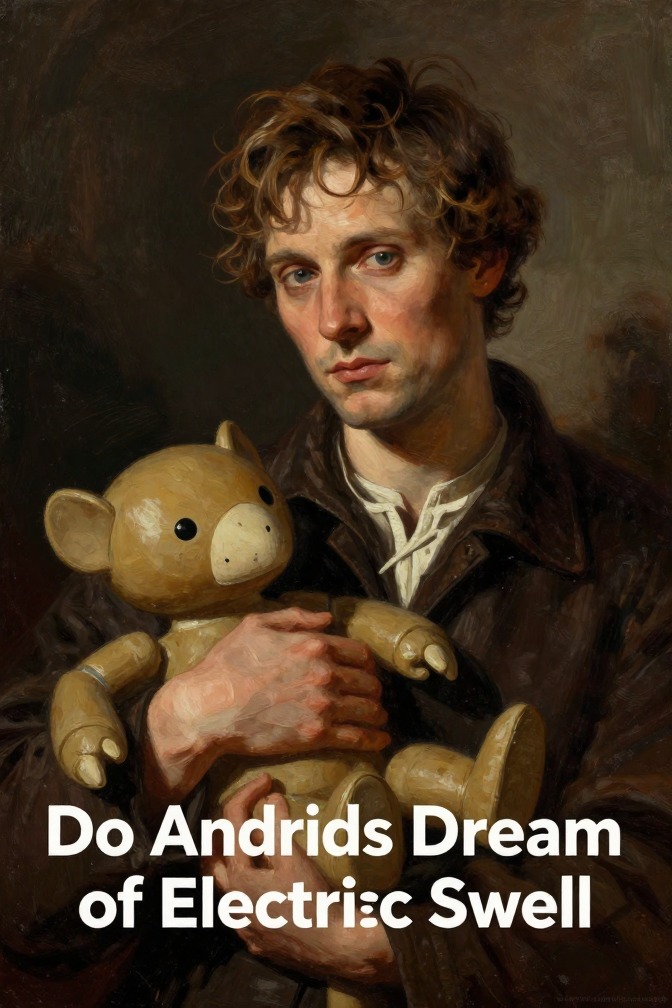
Do Androids Dream of Electric Sheep? is the title of Philip K. Dick's 1968 novel, which serves as the book's central interrogative motif, encapsulating its exploration of the boundaries between human and android, the nature of empathy, and the value of life in a post-apocalyptic world.
The Ascent is the central symbolic action of Mercerism, the dominant religion of Earth and the colony worlds in Philip K. Dick's novel. It is the endless climb up a barren hill undertaken by the archetypal figure Wilbur Mercer, an experience shared by every follower who grasps the twin handles of an empathy box. The Ascent represents the fusion of all human consciousness into a single suffering and striving entity, the core of the empathic faith that distinguishes humans from androids.
True fusion with Mercer is the central spiritual experience of Mercerism, the dominant religion of post-apocalyptic Earth. It is a technologically mediated, non-rational merging of consciousness achieved by grasping the twin handles of an empathy box, through which the participant simultaneously shares the physical and emotional journey of the archetypal figure Wilbur Mercer and the collective mind of all other fused humans. This fusion is the ultimate test of humanity, as it requires an empathic faculty that androids, despite their superior intelligence, fundamentally lack, and its authenticity is thrown into crisis by Buster Friendly's exposé that Mercer is a fraud.