Rasheed's bicycle is a modest, practical object that appears throughout the novel as a marker of his daily routines, his declining fortunes, and the constrained domestic world he imposes on Mariam and Laila.
The bicycle spoke is a salvaged metal object that Laila briefly considers using to abort her pregnancy by Rasheed, before she rejects the act and later reflects on it with relief and gratitude that she did not go through with it.
The suede coat is a small, embroidered winter coat that Rasheed buys for the baby he is certain Mariam is carrying, a symbol of his premature and gendered hopes that becomes an object of grief after her miscarriage and is later buried in a makeshift funeral ritual.
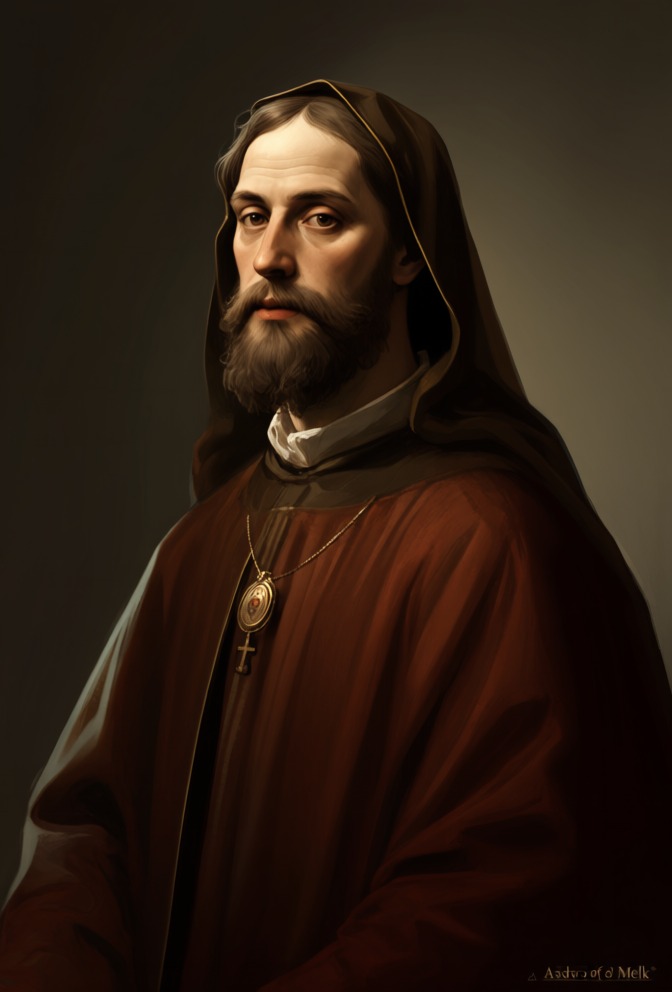
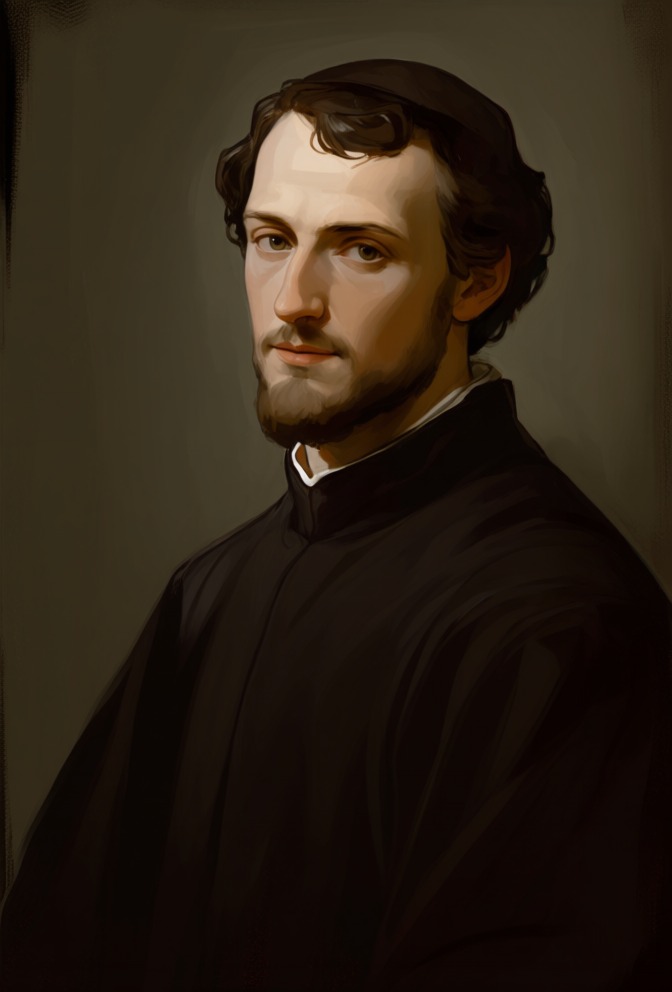
Adso of Melk is the elderly Benedictine novice who narrates the entire novel as a memoir written in his old age, recounting the seven days he spent in a wealthy Italian abbey in November 1327 as the young scribe and disciple of the Franciscan friar William of Baskerville. His first-person account, framed by a preface describing the manuscript's discovery, transforms a series of murders into a meditation on truth, doubt, and the limits of human knowledge.
Angela of Foligno is a revered mystic and saint whose life and writings profoundly influenced the Franciscan Spiritual movement, particularly through her intense, embodied visions of Christ's passion and her role as a spiritual mentor to Ubertino of Casale, who saw in her a model of sanctity that blurred the line between ecstatic love and carnal temptation.
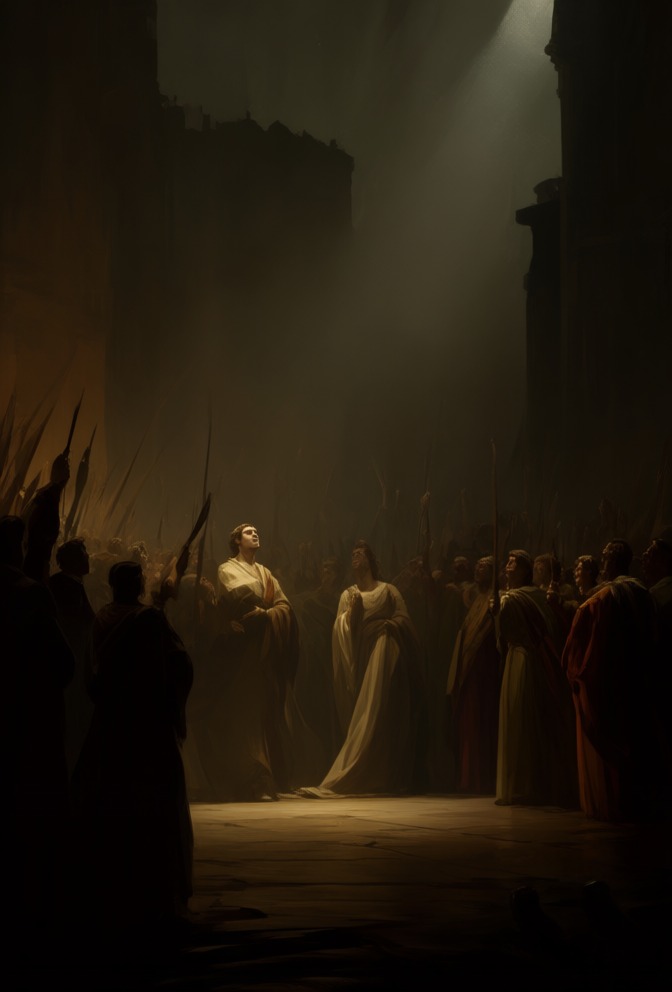
Christ is the central theological figure of the novel, whose nature and teachings are the subject of the deadly conflict over Aristotle's lost book on comedy. The debate over whether Christ owned property, and whether he ever laughed, drives the political and philosophical arguments between the Franciscans and the Papacy, and ultimately motivates Jorge of Burgos to murder in order to suppress a text that would, in his view, legitimize laughter and undermine the fear-based authority of the Church.
Frederick of Sicily is a historical figure invoked in Umberto Eco's The Name of the Rose as a key political and eschatological symbol. He appears not as a character in the abbey but as the Emperor whom the heretical leader Fra Dolcino prophesied would destroy the corrupt clergy and usher in a new age, and as a ruler who historically offered refuge to Spiritual Franciscans persecuted by Pope John XXII. His name crystallizes the novel's central tension between imperial power, apocalyptic expectation, and the struggle over evangelical poverty.
Joachim of Fiore (c. 1135–1202) was a Cistercian abbot and mystic whose prophetic writings on the three ages of history—the Age of the Father, the Son, and the Holy Spirit—profoundly influenced the Spiritual Franciscans and heretical movements such as the Apostolic Brethren of Fra Dolcino. In Umberto Eco's The Name of the Rose, Joachim's ideas are repeatedly invoked by characters on both sides of the orthodoxy–heresy divide, serving as a contested authority that blurs the line between legitimate reform and dangerous millenarian revolt.
Margaret of Trent is the beautiful young woman who becomes the lover and lieutenant of the heretic Fra Dolcino, leading the Apostolic Brethren in their violent rebellion and ultimately dying a gruesome death at the stake alongside him.
Pacificus of Tivoli is a minor but revealing character in the abbey, a monk devoted to pagan poetry and rhetoric whose presence in the scriptorium and whose casual remarks illuminate the intellectual tensions, the forbidden book, and the political undercurrents that drive the novel's mystery.
Peter of Sant'Albano is a minor but recurring Italian monk in the abbey, associated with the faction of Italian monks who resent the foreign domination of the library and who are writing a monumental history of heresy. He appears in the scriptorium, in the chapter house, and in the tense discussions following the deaths of Malachi and the abbot, where he voices the Italian monks' desire for a change in the abbey's governance.
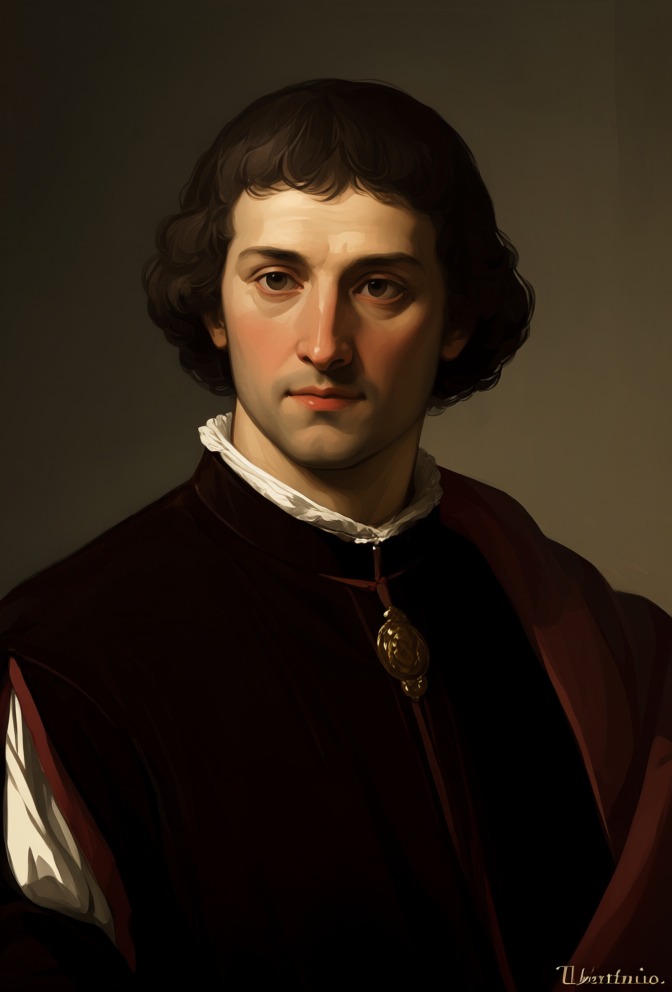
Ubertino of Casale is a fervent Franciscan Spiritual, mystic, and former inquisitor whose passionate advocacy for evangelical poverty and apocalyptic vision of the Antichrist make him a central figure in the theological and political conflicts of the abbey. His intense, often contradictory nature—capable of both profound spiritual love and ruthless condemnation of heretics—embodies the dangerous proximity between sanctity and fanaticism that lies at the heart of the novel's inquiry into truth and power.
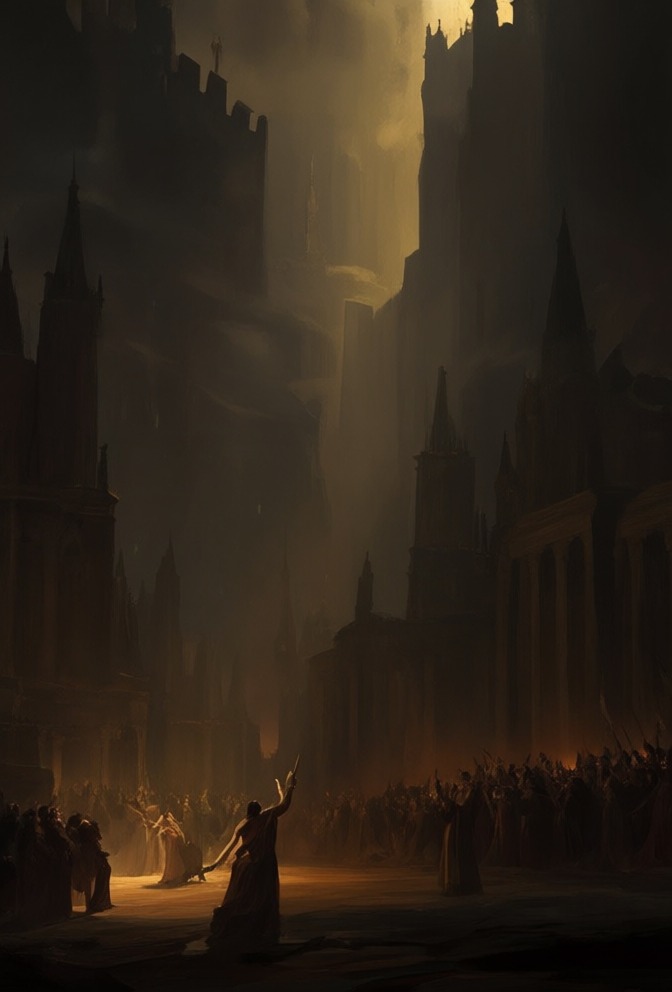
The Destruction of the Library by Fire is the catastrophic climax of the novel, in which the blind librarian Jorge of Burgos, having been confronted by William of Baskerville in the secret finis Africae chamber, devours the sole surviving copy of Aristotle's Poetics II and then deliberately starts a conflagration that consumes the entire library and most of the abbey. This event simultaneously destroys the forbidden book Jorge had guarded for decades, kills the old man himself, and annihilates the greatest Christian library of the age, realizing Jorge's apocalyptic prophecy and leaving William and Adso to confront the ruin of both the physical building and the ideal of a knowable, ordered universe.
The Questioning of Benno and Berengar is a pivotal event on the second day of the abbey's crisis, in which William of Baskerville extracts two contrasting confessions that reveal the hidden dynamics of lust, blackmail, and despair behind the first two deaths. Benno of Uppsala, driven by intellectual curiosity, discloses the debate on laughter and Berengar of Arundel's secret barter of forbidden knowledge for sexual favors, while Berengar, terrified and guilt-ridden, offers a hallucinatory account of Adelmo of Otranto's ghost, which William interprets as a confession of Berengar's role in Adelmo's suicide.
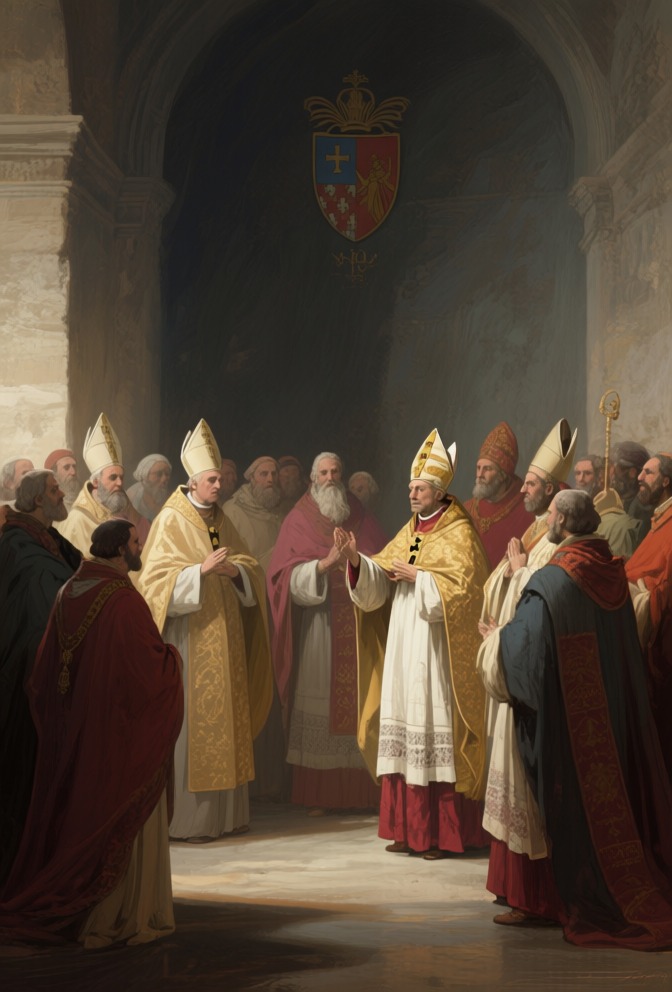
The Avignon Papacy, established when Pope Clement V moved the apostolic seat to Avignon in the early 14th century, serves as the central political and ecclesiastical antagonist in the novel. Under Pope John XXII, it becomes a symbol of worldly corruption, simony, and ruthless power, directly opposing Emperor Louis the Bavarian and the Franciscan Spirituals over the doctrine of evangelical poverty, and its inquisitorial arm, led by Bernard Gui, ultimately crushes the abbey's secrets through terror and fire.
Imperial law in the novel refers to the temporal legal authority claimed by the Holy Roman Emperor, particularly Louis the Bavarian, in opposition to the papal decrees of John XXII. It is a central axis of the political conflict that frames the entire narrative, shaping the mission of William of Baskerville and the theological debates within the abbey.
The Rule of the Labyrinth is the architectural and navigational principle governing the library of the unnamed abbey, a vast and deliberately disorienting structure designed to protect its books from unauthorized access. It is a system of perfect mathematical order—fifty-six rooms arranged around four heptagonal towers and an octagonal central well—that is experienced as maximum confusion, achieved through the cunning placement of doors, blank walls, mirrors, and vision-inducing herbs. The rule is not a single written law but a set of spatial and symbolic codes that William of Baskerville must reconstruct from the outside in, using geometry and deduction, to solve the murders.
Anouk is a key figure in the Parisian Resistance network that Isabelle Rossignol joins. A stern, chain-smoking woman with a dour demeanor, she serves as a courier and contact for the group, initially testing Isabelle's resolve and later becoming a trusted colleague and friend. Her presence in the narrative underscores the constant danger and the personal sacrifices demanded by the underground war against the Nazi occupation.
Jean Georges Ruelle is a four-year-old Jewish boy whose mother, Hélène Ruelle, thrusts him into Vianne Mauriac's arms during a roundup in Carriveau, forcing Vianne to hide him under a false identity and ultimately deliver him to the convent orphanage, where he becomes one of nineteen children she saves.
Madeleine Rossignol is the deceased mother of Vianne and Isabelle Rossignol, whose death from illness when Isabelle was four and Vianne fourteen precipitates the family's collapse: their father Julien abandons his daughters to a cold caretaker, and the sisters' lifelong estrangement begins. Though she appears only in memory, Madeleine's absence shapes every major relationship in the novel—Vianne's desperate need for security, Isabelle's lifelong hunger for love, and Julien's descent into alcoholism and emotional paralysis. Her remembered words and gestures become the emotional standard against which both sisters measure their own capacity for love and sacrifice.
Rittmeister Schmidt is the Gestapo Kommandant in Amboise who interrogates and tortures Isabelle Rossignol after her arrest in Urrugne, and who later executes her father, Julien Rossignol, after the old man falsely confesses to being the Nightingale.
Concentration camps, particularly Ravensbrück, are the ultimate expression of Nazi brutality in the novel, serving as the site where Isabelle Rossignol is systematically dehumanized, tortured, and nearly killed for her work in the Resistance. The camps transform her from a defiant, impulsive young woman into a skeletal, fever-ridden survivor who must cling to memory and love to stay alive, and they become the final, horrific test of the resilience she has cultivated throughout the war.
The maxim 'If you're going through hell, keep going' serves as the epigraph to Chapter 32 of The Nightingale, attributed to Winston Churchill, and crystallizes the novel's central imperative: that survival and resistance demand relentless forward motion through the worst of human suffering. The phrase is not merely a piece of wartime rhetoric but a thematic anchor for both Vianne and Isabelle, whose separate ordeals—occupation, rape, torture, deportation, and the loss of everyone they love—test the limits of endurance. The novel proves the maxim not by showing characters who emerge unscathed, but by showing characters who, broken and changed, continue to place one foot in front of the other, and in doing so, discover that the act of continuing is itself a form of victory.
The town hall in Carriveau is the central administrative building that, under Nazi occupation, becomes the headquarters of the German command, the site of the occupation's first public assembly, and a place of interrogation and terror for the local population.
Spain is the neutral country across the Pyrenees that serves as the ultimate destination of the Nightingale escape route, the goal of Isabelle Rossignol's repeated mountain crossings to deliver downed Allied airmen to the British consulate in San Sebastián, and the site of her final liberation from Ravensbrück.
The Seine River flows through the heart of Paris and serves as a recurring geographical and symbolic presence in The Nightingale, marking moments of danger, escape, memory, and reflection for both Vianne and Isabelle Rossignol. It is the site where Isabelle disposes of incriminating evidence after hiding an RAF pilot, where Vianne recalls her family's lost summer home, and where, fifty years later, the elderly Vianne walks with her son before the passeurs' reunion. The river thus binds the novel's wartime and present-day narratives, embodying both the city's enduring beauty and the hidden, often violent acts of resistance that occurred along its banks.
Ravensbrück was a Nazi concentration camp for women, located in northern Germany, where Isabelle Rossignol was imprisoned after her arrest for aiding the Resistance. It became the site of her most extreme suffering and the crucible in which her will to survive was tested to its limits.
The Loire River is a major river in France that flows through the Loire Valley, the central setting of the novel. It serves as a geographic and symbolic boundary, a site of leisure and memory before the war, and a strategic obstacle during the German occupation. The river's presence marks the transition from peacetime innocence to wartime danger, and its crossing becomes a desperate act of survival.
Belgium is a neighboring country of France that is invaded and occupied by Nazi Germany during World War II, serving as a key example of the expansion of Hitler's war across Europe and a reference point for the characters' understanding of the conflict's scope and the threat to France.
Saint-Jean-de-Luz is a coastal town in the Basque Country of southwestern France that becomes the critical gateway for the Nightingale escape route, the point where Isabelle Rossignol and her Basque guides lead downed Allied airmen across the Pyrenees into Spain. Its proximity to the Spanish border, its rugged mountain hinterland, and the network of local resisters centered on Micheline Babineau's farmhouse make it the indispensable launching point for the most dangerous phase of Isabelle's wartime work.