The Pyrenees mountain range forms the central geographical and symbolic axis of the Nightingale escape route, the treacherous barrier that Isabelle Rossignol and her network of passeurs repeatedly crossed to guide downed Allied airmen from occupied France into neutral Spain. More than a physical obstacle, the Pyrenees represent the extreme cost of resistance—freezing cold, exhaustion, injury, and the constant threat of capture—and become the landscape against which Isabelle transforms from an impulsive girl into a legendary figure known as the Nightingale.
Boston is the American city where Ariel de Champlain's relatives live and where he is sent after the war to be raised by his mother's first cousin, a relocation that severs his bond with Vianne Mauriac and her family.
Place de la Bastille is a historic Parisian square that, during the German occupation of World War II, becomes a site of Nazi military presence and a symbol of the city's subjugation, while also serving as a navigational landmark for Isabelle Rossignol as she moves through the occupied city on her resistance missions.
Gare de Lyon is the central Paris railway station where Isabelle Rossignol arrives and departs multiple times during the war, serving as a threshold between the occupied capital and the rest of France. It is the site of her first reunion with her father after her expulsion from finishing school, the point of departure for her exile to Carriveau, and later the arrival point for her clandestine resistance work as the Nightingale. The station embodies the paradox of a familiar space transformed by occupation: the same platforms where she once traveled as a schoolgirl become the stage for her passage into the underground, where German soldiers patrol and the ordinary rhythms of travel are overlaid with the constant threat of document checks and arrest.
Canada appears in The Nightingale as a distant, symbolic homeland for one of the downed Allied airmen whom Isabelle Rossignol guides across the Pyrenees, and as a place of refuge for the orphaned Jewish child Ari de Champlain after the war. Though never visited by the main characters, Canada represents the far-reaching network of the Allied war effort and the postwar diaspora of displaced children.
The Abbaye de la Trinité is a convent and orphanage in Carriveau run by the Sisters of St. Joseph under Mother Superior Marie-Therese. During the German occupation of France, it becomes a critical safe haven for Jewish children hidden by Vianne Mauriac, who uses her position as a part-time teacher there to shelter and protect them from deportation.
Pau is a city in southwestern France that serves as a key waypoint on the Nightingale escape route, a network of safe houses and guides used to smuggle downed Allied airmen across the Pyrenees into neutral Spain. In the novel, it is one of the locations where Isabelle Rossignol, operating under the code name the Nightingale, coordinates the movement of evaders, and where a contact named Eliane is prepared to shelter airmen if the primary plan fails.
Oradour-sur-Glane is a small village in the Limousin region of France that, in June 1944, became the site of one of the most notorious Nazi massacres on French soil, when the SS murdered 642 men, women, and children and razed the town to the ground. In the novel, the atrocity is reported as a rumor that reaches Carriveau, serving as a terrifying benchmark of Nazi brutality and a catalyst for Vianne Mauriac's deepening commitment to resistance.
Vehicle confiscation was a key Nazi occupation policy in Carriveau, announced by Sturmbannführer Weldt at the town hall meeting on the day of the German takeover. The order required all operational vehicles to be impounded immediately, enforced by the threat of execution for any act of sabotage or resistance. This rule stripped the French population of mobility and resources, deepening their dependence on the occupiers and symbolizing the loss of autonomy.
Willy Loman's suicide attempt via the gas pipe is a central, recurring action in Arthur Miller's Death of a Salesman, revealing the depth of his despair and the family's complicity in his self-destruction. Linda Loman discovers the rubber hose attached to the water heater, and her secret, daily management of this evidence—removing it when Willy is home and replacing it when he leaves—becomes a haunting ritual that underscores the play's tension between love, denial, and the unbearable weight of a failed dream.
Howard Wagner is the young, pragmatic boss of the Wagner Company who fires the aging salesman Willy Loman, embodying the impersonal, profit-driven corporate ethos that replaces the personal loyalty of an earlier business era.
Stanley is a young waiter at Frank's Chop House who serves the Loman family dinner on the night of Willy's firing and Biff's failed meeting with Bill Oliver, and his brief appearances underscore the family's public humiliation and the gap between their self-image and reality.
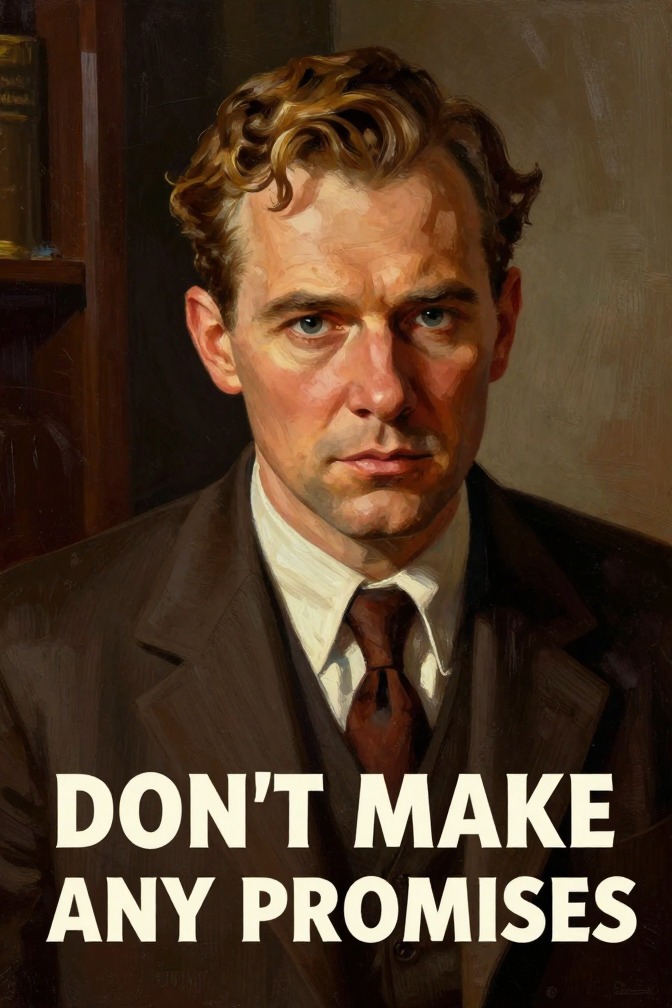
Willy Loman's repeated instruction to his sons, "Don't make any promises," is a central rule of his personal philosophy, reflecting his belief in the power of personal charm and the importance of maintaining an unencumbered, attractive image in the pursuit of success. This rule, articulated during a memory of his sons' youth, encapsulates the salesman's code of superficial engagement that ultimately contributes to the family's tragic dysfunction.
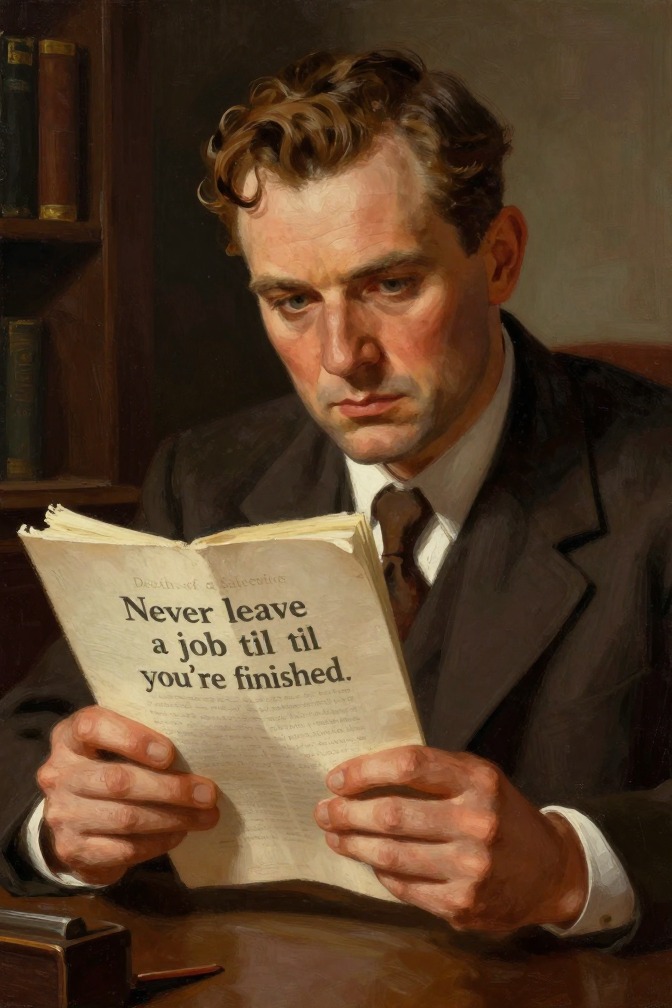
Never leave a job till you're finished is a rule Willy Loman repeatedly imparts to his sons, Biff and Happy, during a memory scene in Act One of Death of a Salesman. It encapsulates his belief in discipline, completion, and the work ethic he associates with success, yet the play's action consistently shows the rule being broken or hollowed out by the very man who preaches it.
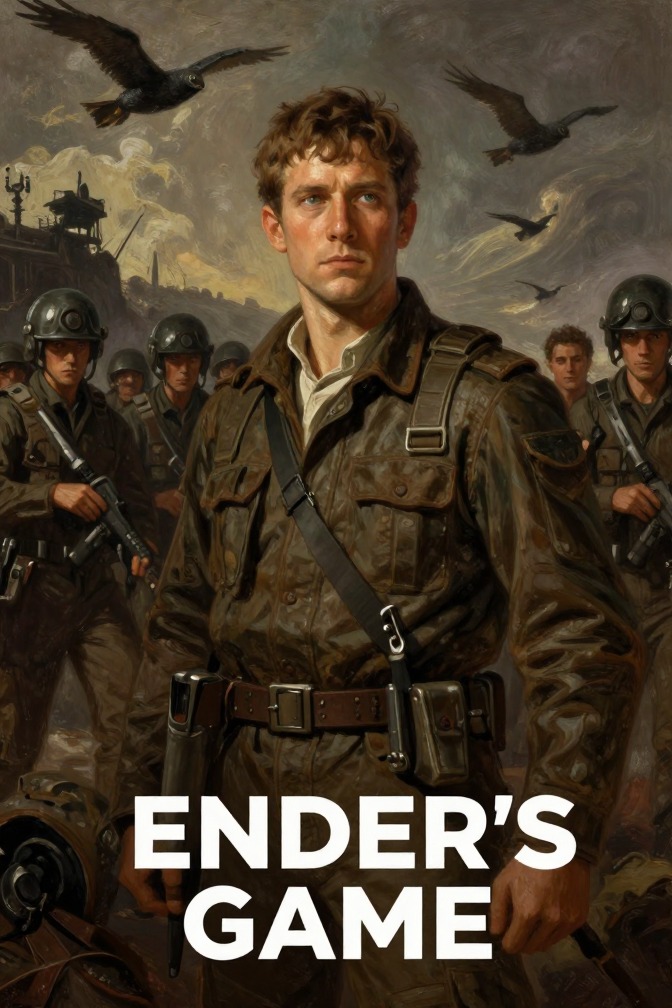
Ender defeats Phoenix Army, commanded by his former friend and mentor Petra Arkanian, in his second battle as commander of Dragon Army. This victory, coming just one day after his first triumph over Rabbit Army, demonstrates the effectiveness of his innovative, flexible tactics against a more adaptable opponent, while also straining his personal relationships and deepening the isolation that comes with his rapid rise.
Ender fights older boys in battleroom is a pivotal event in Orson Scott Card's Ender's Game, where Ender and his small group of Launchies defend their unauthorized practice session against a coordinated attack by older boys from Salamander and other armies. This violent skirmish, which leaves four boys injured, reveals Ender's capacity for brutal self-defense, his tactical ingenuity in null gravity, and the teachers' deliberate refusal to intervene, deepening his isolation and his fear that he is becoming like his brother Peter.
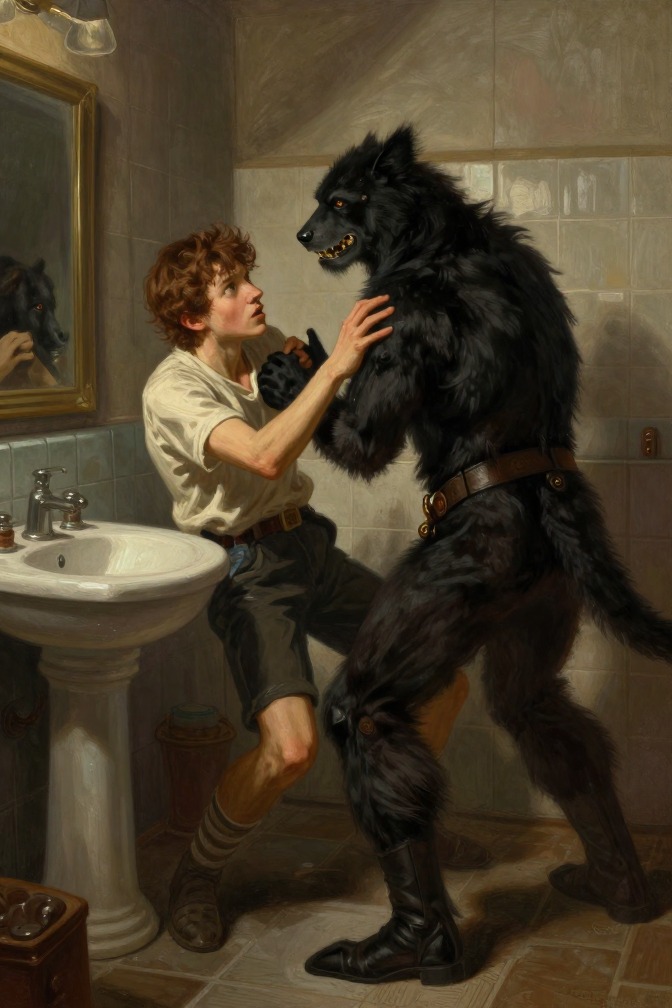
Ender's fight with Bonzo in the shower is the climactic physical confrontation of Ender's Battle School career, where he defeats and unintentionally kills his rival, an act that becomes a turning point in his psychological and moral development.
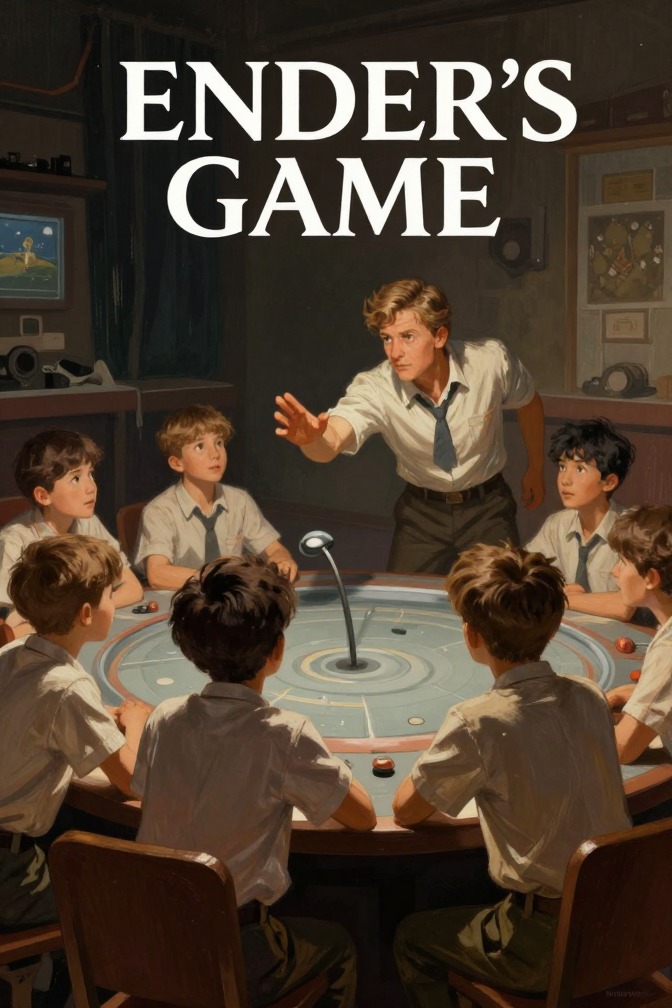
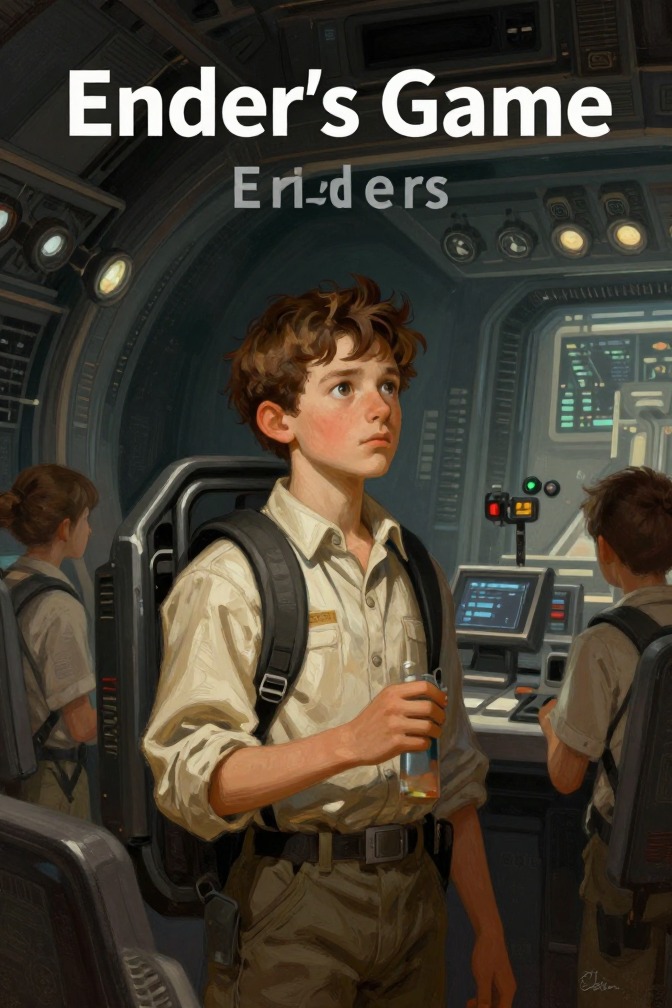
Ender's first time in the battleroom marks his initial encounter with null gravity and the flash suit, where he learns to reorient himself and control his movement, setting the stage for his tactical innovations and his understanding of the enemy's gate being down.
Bean is a brilliant, underage soldier in Ender Wiggin's Dragon Army who rises from an insolent newcomer to a trusted toon leader and eventually commander of Rabbit Army, playing a crucial role in Ender's victories and the final battle of the Third Invasion.
Bernard is a French-accented boy at Battle School who becomes Ender Wiggin's first major antagonist after Ender breaks his arm in a shuttle accident, leading a campaign of petty harassment that Ender ultimately undermines through a clever computer prank, and who later reappears as one of Bonzo Madrid's accomplices in the shower attack.
Stilson is the schoolyard bully whose beating at the hands of six-year-old Ender Wiggin on the day his monitor is removed serves as the catalyst for Ender's recruitment into the International Fleet's Battle School. His death, which Ender never learns about, becomes a central moral burden in the novel, symbolizing the cost of Ender's strategic violence and the ethical compromises of the war effort.
The Bathroom Fight with Bonzo is the climactic physical confrontation in Ender's Game, where the ten-year-old Ender Wiggin, cornered naked in a shower by his former commander Bonzo Madrid and six older boys, is forced to fight for his life. The fight ends with Ender brutally kicking Bonzo in the groin, an act that leaves Bonzo unconscious and ultimately results in his death, a fact hidden from Ender. This event marks a turning point in Ender's psychological arc, crystallizing his fear that he is a killer like his brother Peter, and it directly precipitates his final battle in the Battle School, where he is given two armies to fight simultaneously as punishment and as a test.
Dr. Device, also known as the Little Doctor or the Molecular Detachment Device, is the ultimate weapon of the International Fleet in Orson Scott Card's Ender's Game. It is a device that, at the focal point of two beams, sets up a field that causes molecules to lose cohesion, effectively disintegrating any matter it touches. Its power is so great that it can destroy entire planets, and it is the weapon Ender Wiggin uses to annihilate the bugger homeworld, unknowingly ending the Third Invasion. The weapon's name, a joke on its initials, belies its devastating capability and its central role in the novel's climax and moral reckoning.
The End of the World is a recurring location in the mind game played by Ender Wiggin at Battle School, a place beyond Fairyland that he discovers after killing the Giant. It is a beautiful but deadly landscape, featuring a castle tower with a mirror that reflects Peter's face, and it becomes a symbol of Ender's psychological struggles, isolation, and eventual breakthrough. The place also foreshadows the bugger homeworld and the final revelation of the hive-queen's cocoon, making it a central motif in Ender's journey.
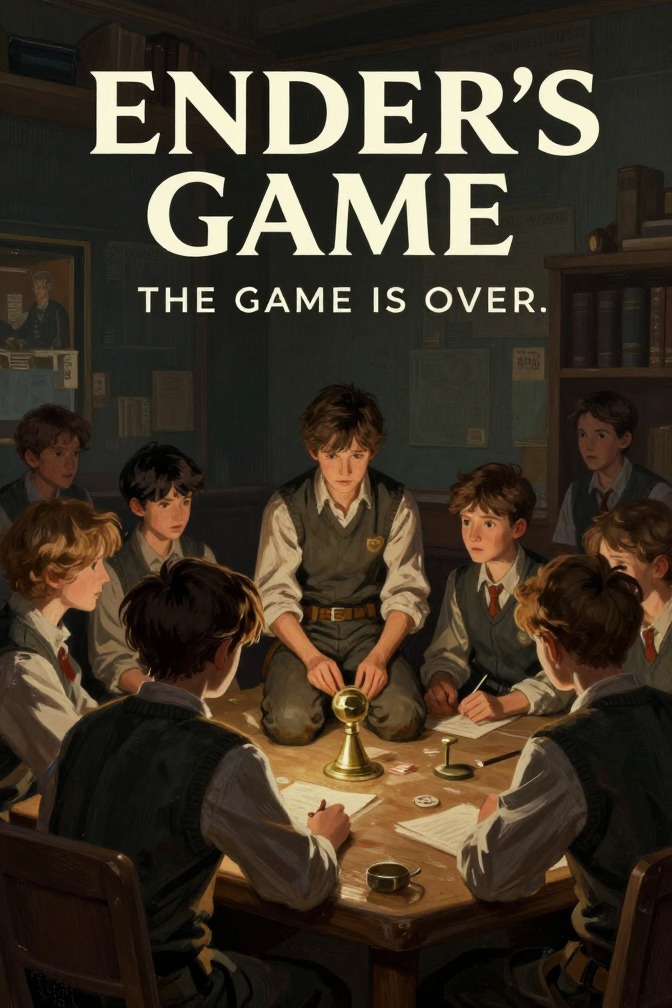
The game is over is a recurring phrase in Orson Scott Card's Ender's Game that marks the collapse of the distinction between training and reality, and the protagonist's final rejection of the manipulative systems that have controlled his life. It first appears as Ender's defiant refusal to continue playing the Battle School's rigged war games, and later becomes the chilling revelation that the 'game' he thought he was playing was in fact the real Third Invasion against the buggers, culminating in the destruction of their homeworld. The phrase encapsulates the novel's central theme: that the adults' simulation of war was never a game at all, and that Ender's childhood was sacrificed to a deception that he could only escape by refusing to play any longer.
In Orson Scott Card's Ender's Game, the term "Third" is the official designation for a third child born under the International Fleet's population limitation laws, a status that marks Ender Wiggin as an anomaly and a social outcast from birth. The word carries the weight of illegality, shame, and government-sanctioned exception, yet it also becomes the very reason Ender is recruited into Battle School, transforming a label of stigma into a badge of destiny. Throughout the novel, "Third" functions as both a slur hurled by bullies and a secret source of pride, ultimately redefined by Ender's sister Valentine as "the most noble title any child can have."
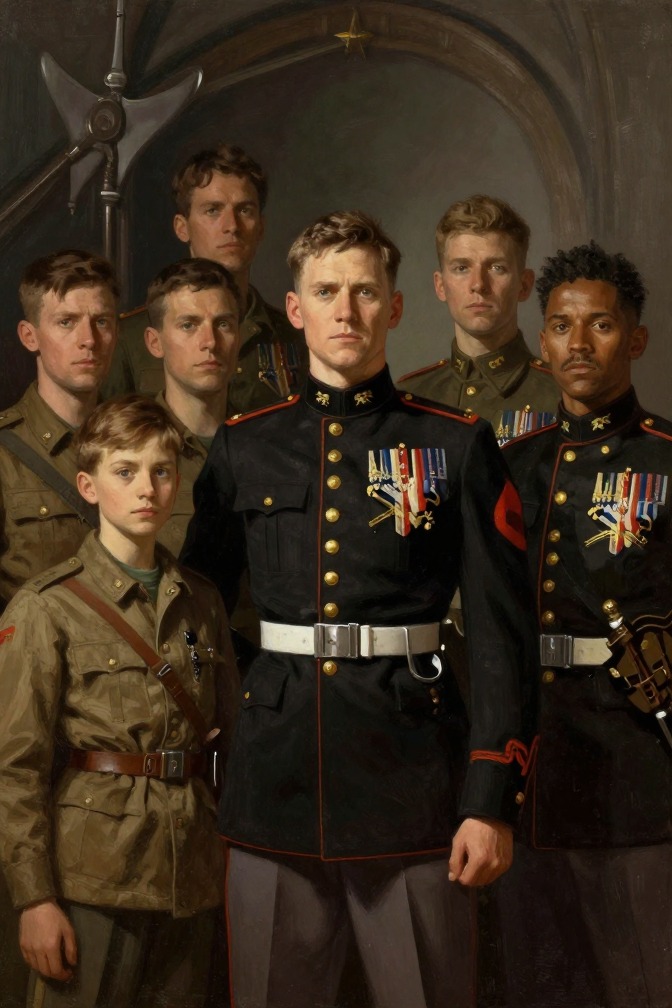
The I.F. Marines are the elite ground-combat branch of the International Fleet, depicted in Ender's Game as the shock troops who board and clear enemy vessels and installations. Though they appear only at the margins of the story, they serve as the brutal, visceral face of humanity's war against the Buggers, embodying the physical violence that Ender's remote, strategic command makes possible. Their presence—from the propaganda videos that shape public fear to the soldiers who guard Valentine and the marines who witness Ender's final simulated battle—anchors the novel's central tension between abstract command and concrete killing.
The International Fleet (I.F.) is the supranational military organization that recruits, trains, and commands the forces defending humanity against the Buggers. It is the institution that takes Ender Wiggin from his family, subjects him to the rigors of Battle School and Command School, and ultimately uses him—without his knowledge—as the commander of the Third Invasion, the campaign that destroys the Bugger homeworlds. The I.F. embodies the novel's central tension between individual humanity and collective survival, manipulating children as tools while claiming to save the world.
Phoenix Army is one of the Battle School's most formidable armies, commanded by Petra Arkanian, the only girl in the school's army system. It becomes a key opponent and later ally of Ender Wiggin, testing his tactical genius and contributing to his development as a commander.
Rabbit Army is one of the oldest and most storied armies in the Battle School, known for its veteran composition and respectable standings, yet it becomes a key early opponent for Ender Wiggin's newly formed Dragon Army. Its defeat at Ender's hands in his first battle as commander marks the beginning of Dragon Army's legendary rise and demonstrates the obsolescence of traditional formation-based tactics against Ender's flexible, improvisational style. Later, Rabbit Army is also the army to which Ender's protégé Bean is transferred and given command, symbolizing the systemic upheaval that follows Ender's unprecedented success.