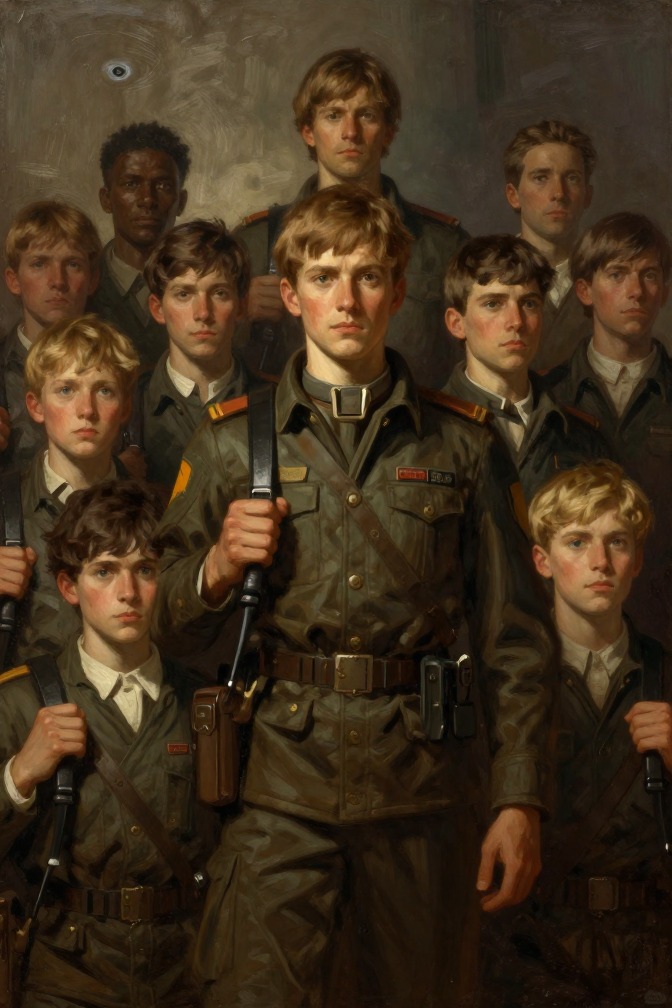
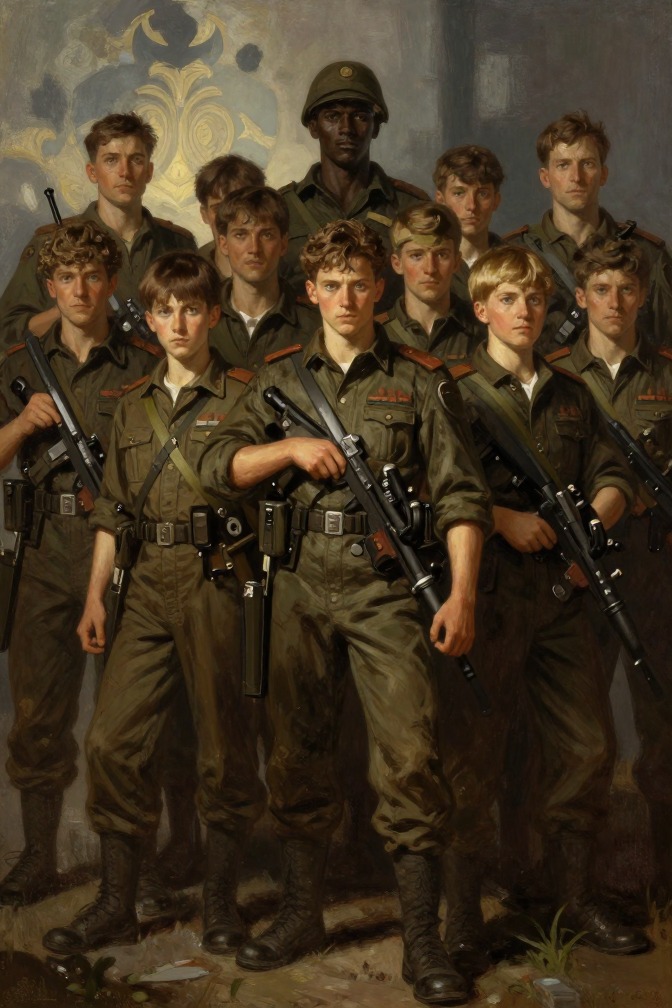
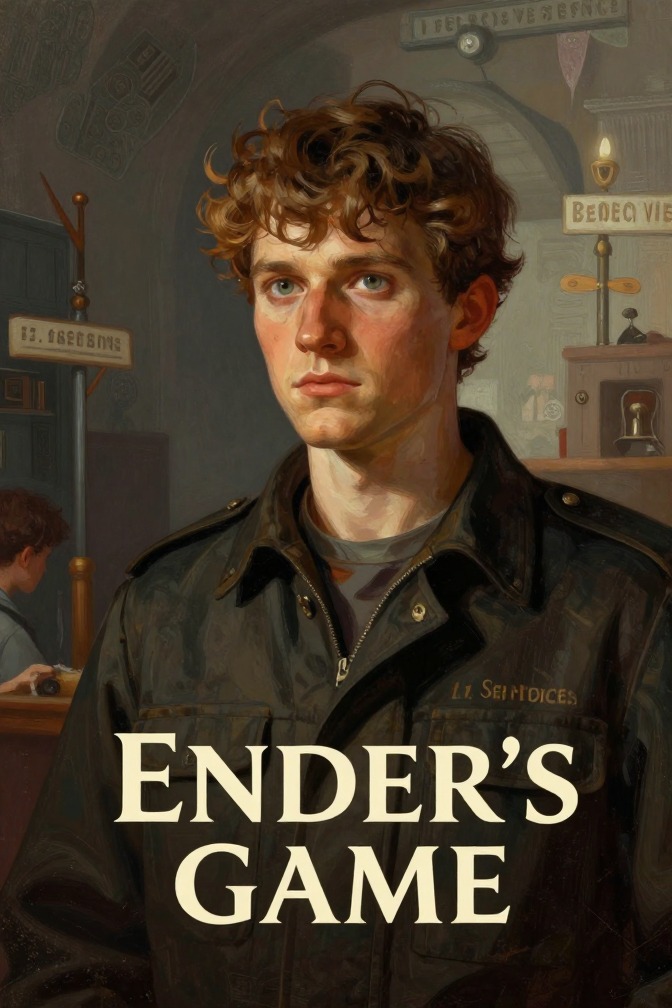
Bean is a brilliant, underage soldier in Ender Wiggin's Dragon Army who rises from an insolent newcomer to a trusted toon leader and eventually commander of Rabbit Army, playing a crucial role in Ender's victories and the final battle of the Third Invasion.
Stilson is the schoolyard bully whose beating at the hands of six-year-old Ender Wiggin on the day his monitor is removed serves as the catalyst for Ender's recruitment into the International Fleet's Battle School. His death, which Ender never learns about, becomes a central moral burden in the novel, symbolizing the cost of Ender's strategic violence and the ethical compromises of the war effort.
The Bathroom Fight with Bonzo is the climactic physical confrontation in Ender's Game, where the ten-year-old Ender Wiggin, cornered naked in a shower by his former commander Bonzo Madrid and six older boys, is forced to fight for his life. The fight ends with Ender brutally kicking Bonzo in the groin, an act that leaves Bonzo unconscious and ultimately results in his death, a fact hidden from Ender. This event marks a turning point in Ender's psychological arc, crystallizing his fear that he is a killer like his brother Peter, and it directly precipitates his final battle in the Battle School, where he is given two armies to fight simultaneously as punishment and as a test.
Dr. Device, also known as the Little Doctor or the Molecular Detachment Device, is the ultimate weapon of the International Fleet in Orson Scott Card's Ender's Game. It is a device that, at the focal point of two beams, sets up a field that causes molecules to lose cohesion, effectively disintegrating any matter it touches. Its power is so great that it can destroy entire planets, and it is the weapon Ender Wiggin uses to annihilate the bugger homeworld, unknowingly ending the Third Invasion. The weapon's name, a joke on its initials, belies its devastating capability and its central role in the novel's climax and moral reckoning.
The End of the World is a recurring location in the mind game played by Ender Wiggin at Battle School, a place beyond Fairyland that he discovers after killing the Giant. It is a beautiful but deadly landscape, featuring a castle tower with a mirror that reflects Peter's face, and it becomes a symbol of Ender's psychological struggles, isolation, and eventual breakthrough. The place also foreshadows the bugger homeworld and the final revelation of the hive-queen's cocoon, making it a central motif in Ender's journey.
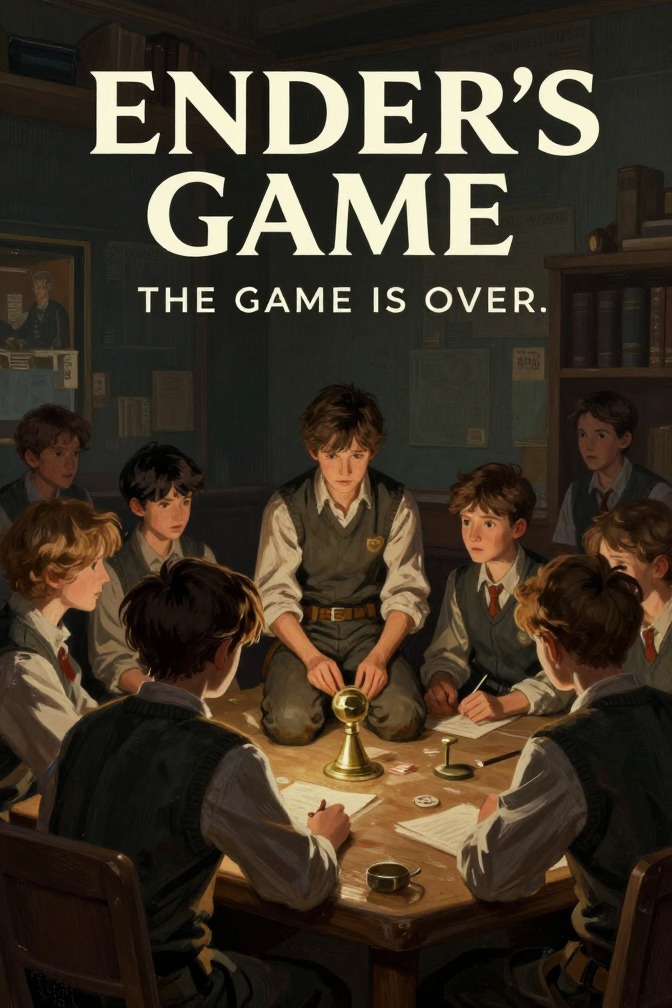
The game is over is a recurring phrase in Orson Scott Card's Ender's Game that marks the collapse of the distinction between training and reality, and the protagonist's final rejection of the manipulative systems that have controlled his life. It first appears as Ender's defiant refusal to continue playing the Battle School's rigged war games, and later becomes the chilling revelation that the 'game' he thought he was playing was in fact the real Third Invasion against the buggers, culminating in the destruction of their homeworld. The phrase encapsulates the novel's central theme: that the adults' simulation of war was never a game at all, and that Ender's childhood was sacrificed to a deception that he could only escape by refusing to play any longer.
In Orson Scott Card's Ender's Game, the term "Third" is the official designation for a third child born under the International Fleet's population limitation laws, a status that marks Ender Wiggin as an anomaly and a social outcast from birth. The word carries the weight of illegality, shame, and government-sanctioned exception, yet it also becomes the very reason Ender is recruited into Battle School, transforming a label of stigma into a badge of destiny. Throughout the novel, "Third" functions as both a slur hurled by bullies and a secret source of pride, ultimately redefined by Ender's sister Valentine as "the most noble title any child can have."
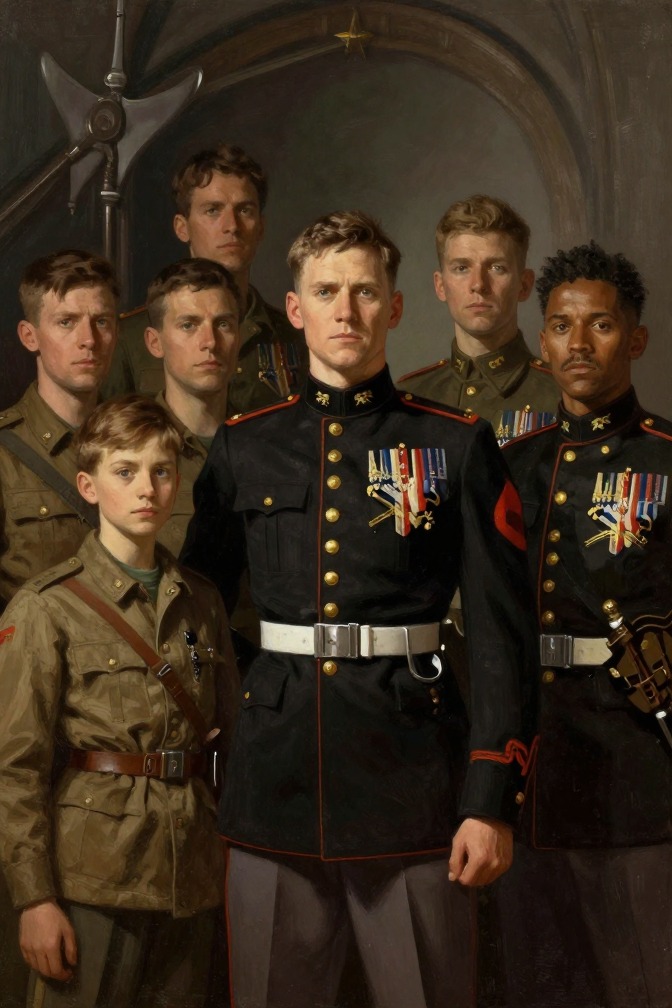
The I.F. Marines are the elite ground-combat branch of the International Fleet, depicted in Ender's Game as the shock troops who board and clear enemy vessels and installations. Though they appear only at the margins of the story, they serve as the brutal, visceral face of humanity's war against the Buggers, embodying the physical violence that Ender's remote, strategic command makes possible. Their presence—from the propaganda videos that shape public fear to the soldiers who guard Valentine and the marines who witness Ender's final simulated battle—anchors the novel's central tension between abstract command and concrete killing.
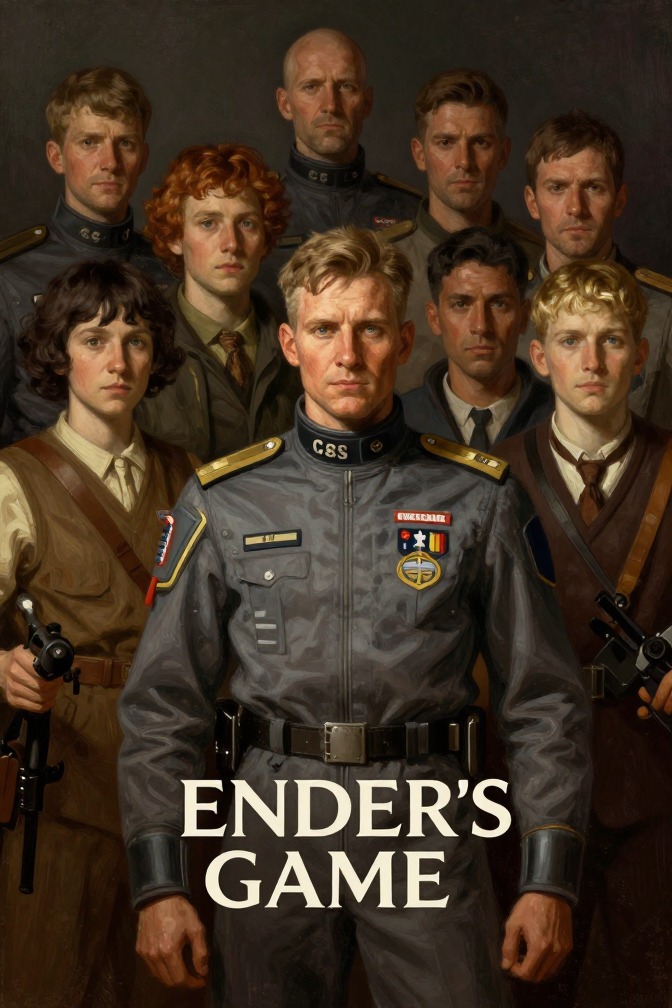
The International Fleet (I.F.) is the supranational military organization that recruits, trains, and commands the forces defending humanity against the Buggers. It is the institution that takes Ender Wiggin from his family, subjects him to the rigors of Battle School and Command School, and ultimately uses him—without his knowledge—as the commander of the Third Invasion, the campaign that destroys the Bugger homeworlds. The I.F. embodies the novel's central tension between individual humanity and collective survival, manipulating children as tools while claiming to save the world.
Phoenix Army is one of the Battle School's most formidable armies, commanded by Petra Arkanian, the only girl in the school's army system. It becomes a key opponent and later ally of Ender Wiggin, testing his tactical genius and contributing to his development as a commander.
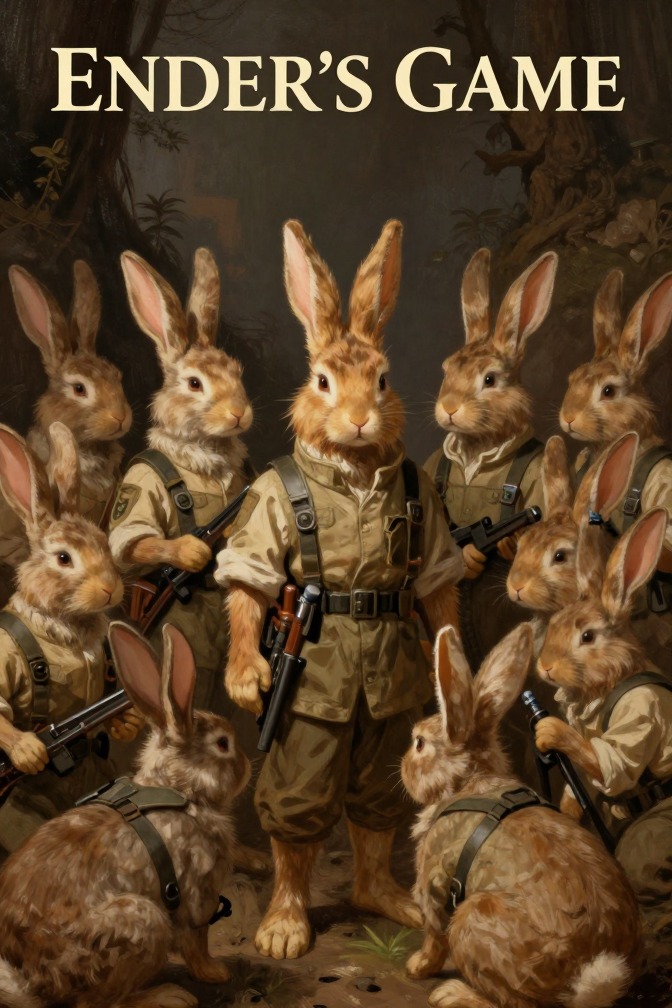
Rabbit Army is one of the oldest and most storied armies in the Battle School, known for its veteran composition and respectable standings, yet it becomes a key early opponent for Ender Wiggin's newly formed Dragon Army. Its defeat at Ender's hands in his first battle as commander marks the beginning of Dragon Army's legendary rise and demonstrates the obsolescence of traditional formation-based tactics against Ender's flexible, improvisational style. Later, Rabbit Army is also the army to which Ender's protégé Bean is transferred and given command, symbolizing the systemic upheaval that follows Ender's unprecedented success.
Salamander Army is the Battle School army to which Ender Wiggin is assigned at age six, commanded by the proud and honor-obsessed Bonzo Madrid. It is the setting for Ender's first experiences of army life, his initial battles, and his first major conflicts with authority, ultimately shaping his tactical philosophy and his reputation as a brilliant but insubordinate soldier.
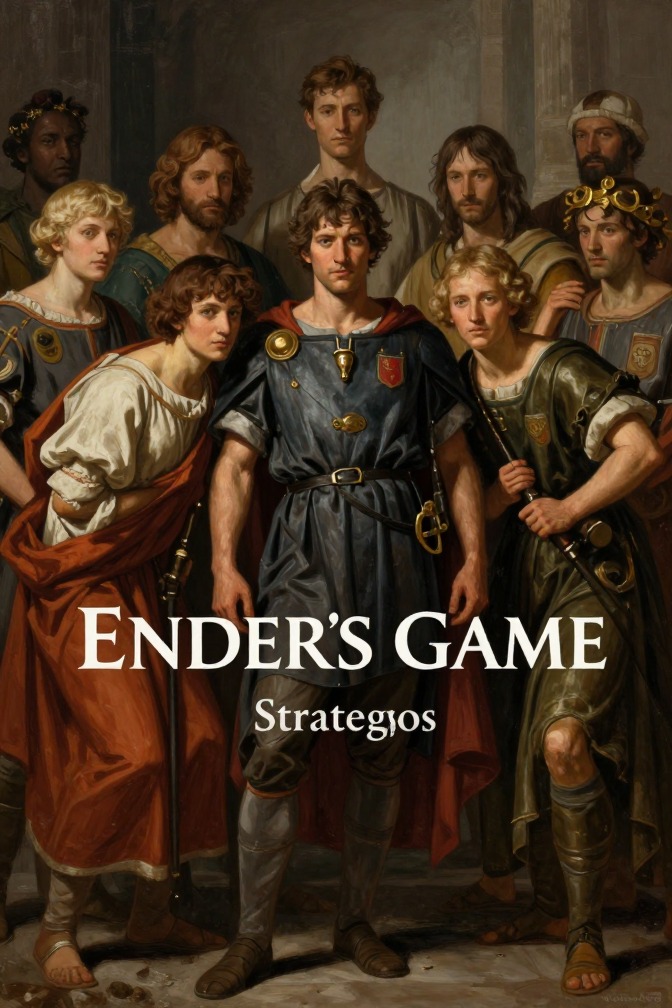
The Strategos is the supreme military commander of the International Fleet, a position traditionally held by a Jew, and is responsible for overall strategic direction in the war against the Buggers. The Strategos is a distant authority figure whose decisions shape Ender's training and the final battle, and who ultimately awards Valentine a medal for her role in Ender's psychological recovery.
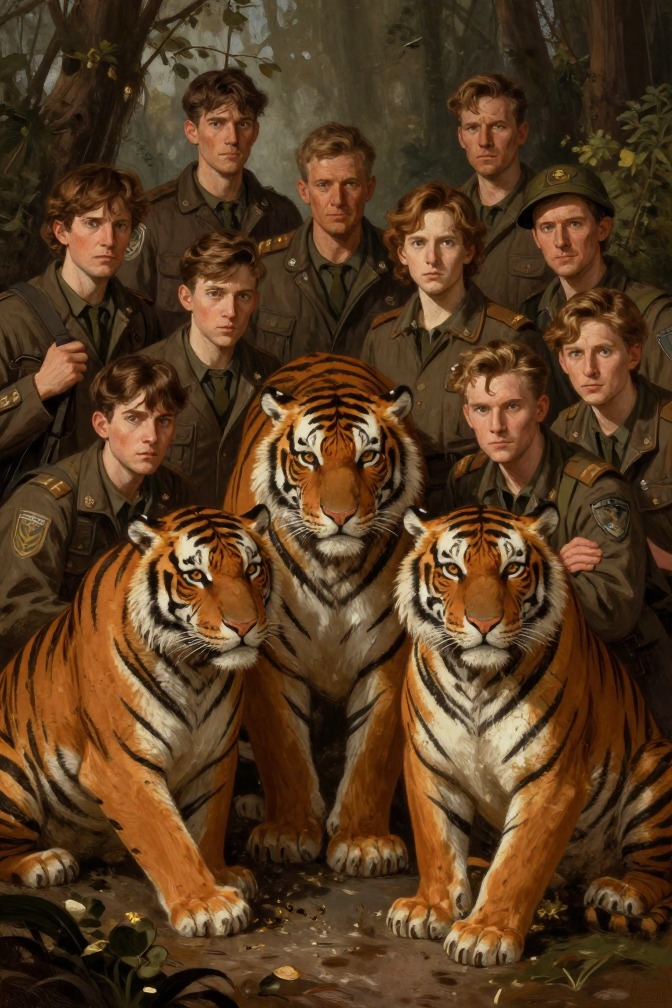
Tiger Army is one of the Battle School's military units, notable for its role in the rigged final battle against Ender Wiggin's Dragon Army, where it was defeated by a daring gate-rush tactic. Its commander, Talo Momoe, and his counterpart William Bee of Griffin Army, are forced to confront Ender's unconventional strategies, highlighting the theme of unfairness in the training game.
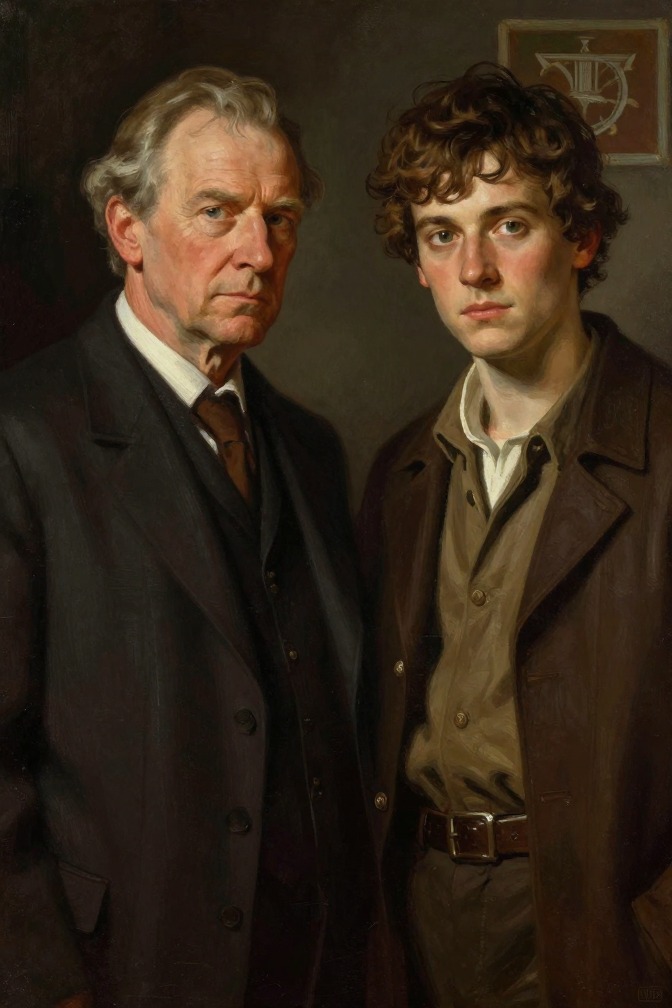
The working relationship between Colonel Hyrum Graff and Major Anderson is the administrative engine of the Battle School, a partnership defined by mutual respect, sharp ideological conflict, and a shared burden of manipulating children for the survival of humanity. Graff, the visionary and ruthless strategist, drives Ender Wiggin's isolation and accelerated training, while Anderson, the guardian of the game's integrity and the boys' welfare, repeatedly challenges Graff's methods. Their dynamic evolves from tense collaboration to outright confrontation over the rigging of the war games, culminating in Graff's reassignment and Anderson's promotion to command the school, a transition that ultimately leads to their reunion and reconciliation after the war.
The I.F. Selective Service is the military conscription system of the International Fleet that identifies and requisitions exceptionally gifted children, including Ender Wiggin, for training at Battle School and Command School. It operates through a combination of legal authorization, psychological manipulation, and the suspension of normal childhood protections, ultimately transforming children into tools for humanity's survival against the Buggers.
The Box Hill picnic is a pivotal event in which Emma Woodhouse, in a moment of thoughtless wit, publicly humiliates the kind and impoverished Miss Bates, prompting a severe rebuke from Mr. Knightley that forces Emma to confront her own cruelty and begins her moral reformation.
Frank Churchill rescues Harriet Smith from a group of threatening gypsies on a secluded road near Highbury, an event that deepens Harriet's romantic attachment to him and fuels Emma Woodhouse's renewed matchmaking schemes.
Mrs. Dixon, formerly Miss Campbell, is the only daughter of Colonel and Mrs. Campbell and the close friend of Jane Fairfax. Though she appears only through reported letters and conversation, her marriage to Mr. Dixon and her family's subsequent move to Ireland serve as a crucial catalyst for Jane Fairfax's return to Highbury, her secret engagement to Frank Churchill, and the web of suspicion and jealousy that Emma Woodhouse weaves around Jane's motives and affections.
Mrs. Weston, formerly Miss Taylor, is Emma Woodhouse's beloved governess and friend whose marriage to Mr. Weston opens the novel, creating a void in Emma's life that sets the plot in motion. She serves as a maternal figure, confidante, and moral touchstone for Emma, and her steady, perceptive presence throughout the story provides both emotional support and quiet guidance, culminating in her own happiness as a wife and mother.
Self-deception is a central theme and driving mechanism in Emma, manifesting as the protagonist's persistent misreading of her own emotions and the motives of those around her, a flaw that generates the novel's comedy, suspense, and moral education.
Frank Churchill and Jane Fairfax's long-secret engagement is dramatically revealed to Emma Woodhouse by Mrs. Weston, shattering Emma's assumptions about Frank's attentions to herself and about Jane's character, and precipitating a profound re-evaluation of her own judgment and feelings.
Harriet Smith accepts Robert Martin's second proposal of marriage, a resolution that reverses the earlier refusal Emma Woodhouse engineered and brings the novel's central romantic subplot to a happy, socially appropriate conclusion.
The narrator's reflection on the rarity of complete truth in human disclosures, occurring at a pivotal moment in Emma's story when she and Mr. Knightley have just confessed their love but each still holds back a full account of their feelings and motives.
Abbey Mill Farm is the home of the Martin family, tenants of Mr. Knightley, and a place that represents the rural, respectable, but socially inferior world from which Emma Woodhouse seeks to elevate her friend Harriet Smith. It is the site of Harriet's happiest visit before her introduction to Hartfield, and later becomes the emblem of the marriage she initially rejects but ultimately accepts.
The Dreams are a shared, telepathic phenomenon that guides the survivors of the superflu epidemic across the United States, drawing them toward either the Boulder Free Zone or the Las Vegas stronghold of Randall Flagg. They serve as the novel's central supernatural mechanism, replacing rational decision-making with a prophetic, dream-driven quest that ultimately frames the apocalyptic conflict as a cosmic struggle between good and evil.
Buffalo, also known as American bison, appear in the post-plague landscape as a symbol of the wild's resurgence and the collapse of human dominion. Their presence, observed by Nick Andros and Tom Cullen in Kansas and later discussed by Glen Bateman, underscores the ecological shifts following the superflu, where domestic animals perished but wild species thrived, and hints at a future where nature reclaims the world.
Mother Abagail's withdrawal into the wilderness is the pivotal event in which the 108-year-old spiritual leader of the Boulder Free Zone, convinced she has committed the sin of pride by presuming to know the mind of God, leaves her home without warning to undergo a self-imposed ordeal of penance and purification, an act that both tests the community's faith and sets the stage for the final confrontation with Randall Flagg.
The Black jet stone amulet is a small stone of black jet, flawed with a single red mark, that Randall Flagg distributes to his inner circle in Las Vegas as a mark of allegiance and a channel of his power. It functions as a talisman of belonging, a badge of rank, and a symbol of the dark man's dominion over his followers, appearing in key moments of recruitment, loyalty, and betrayal.
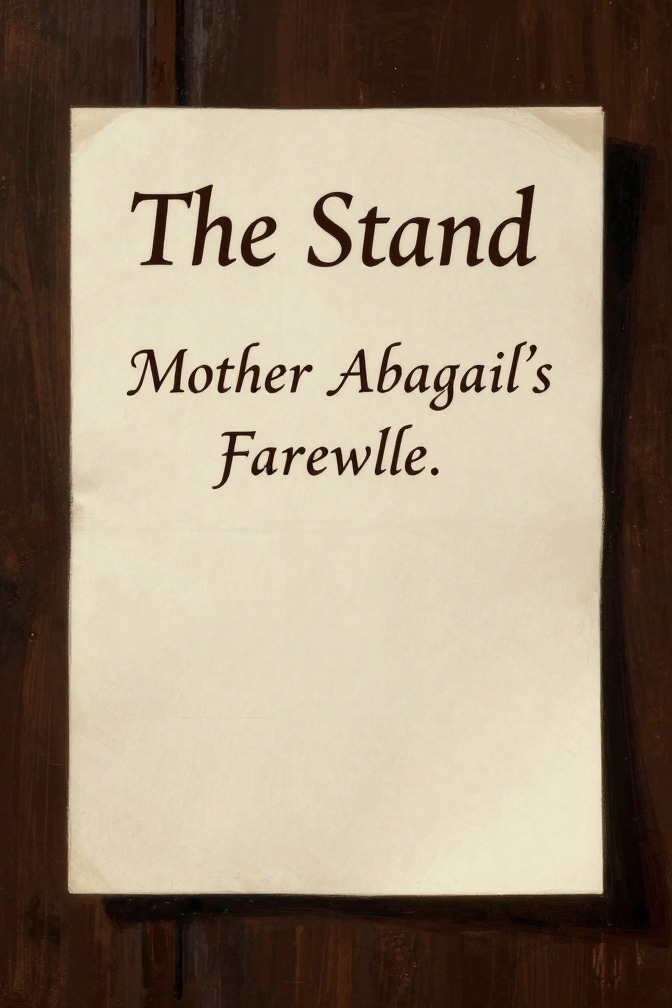
Mother Abagail's farewell note is the brief, handwritten message she left on her pillow before withdrawing into the wilderness west of Boulder in late August 1990. The note confesses that she has sinned through pride and presumed to know the mind of God, and states that she must go away for a time to find her place in His work again. It promises she will return soon if it is God's will, and is signed with her full name, Abby Freemantle. The note becomes a central document in the Free Zone, sparking debate about her spiritual authority and the community's future, and its promise of return is fulfilled when she reappears in a dying state just in time to save the Free Zone Committee from Harold Lauder's bomb.