The windtrap is a moisture-precipitation device central to the Fremen terraforming project on Arrakis, capturing atmospheric humidity from the planet's prevailing winds and converting it into liquid water. Its concealed operation, hidden from Harkonnen and Imperial surveillance, represents the technological and ecological foundation of the Fremen's centuries-long plan to transform Arrakis into a habitable world.
Duke Not Marry for Love is a political and personal rule in Frank Herbert's Dune, articulated by Duke Leto Atreides to his son Paul. It holds that a ruler's marriage must serve strategic alliances rather than personal affection, a principle that shapes the fates of the Atreides and Harkonnen houses and ultimately defines Paul's own dynastic marriage to Princess Irulan.
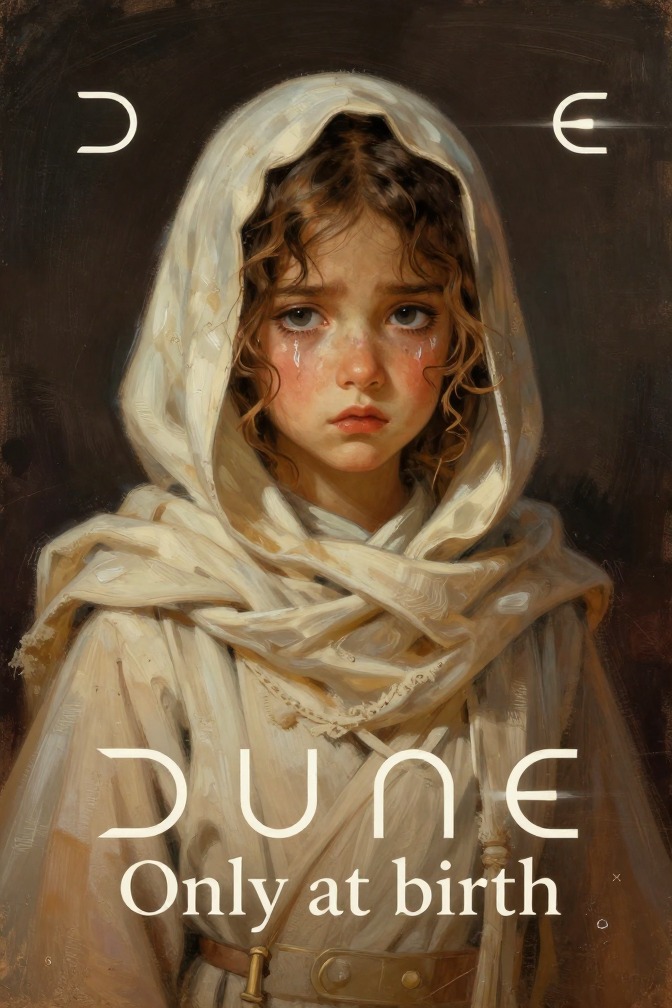
Fremen Child Cry Only at Birth is a strict cultural rule on Arrakis that forbids Fremen babies from crying after their first moments of life, because any sound could betray the tribe's hidden sietch locations to enemies during the dangerous hajr, or desert journey. This rule is so deeply ingrained that it shapes the entire Fremen approach to child-rearing, discipline, and survival, and it is dramatically illustrated in the novel when Alia Atreides, a child with adult awareness, stops a newborn from crying, causing both wonder and unease among the tribe.
The Landsraad Balance is the political equilibrium between the Padishah Emperor, the Great Houses of the Landsraad, and the Spacing Guild, a tripod structure that underpins the Imperium's feudal order. Its instability is a central driver of the novel's plot, as the Emperor's fear of a rising House Atreides leads him to conspire with the Harkonnens, shattering the balance and precipitating the Arrakis crisis.
Mentat Not Emotional is a core principle of the Mentat discipline in Frank Herbert's Dune, demanding that a Mentat—a human trained to perform as a living computer—suppress emotion to achieve pure logical computation. The rule is articulated by the Baron Vladimir Harkonnen in his critique of Piter de Vries, and it shapes the behavior of Thufir Hawat, the Atreides Master of Assassins, whose loyalty and analytical rigor are tested throughout the novel.
Mentat Training from Infancy is a foundational rule of the Imperium's intellectual culture, stipulating that the rigorous conditioning of a human computer, or Mentat, must begin during infancy and that the subject must not be told of the training until it is well underway, lest the knowledge inhibit the early development of the necessary neural and cognitive pathways. The rule is first articulated to Paul Atreides by his father, Duke Leto Atreides, who reveals that Paul himself has been undergoing this secret training under the guidance of Thufir Hawat and Lady Jessica. This revelation marks a pivotal moment in Paul's development, as he retroactively understands the purpose of his lifelong education and is given the choice to continue or abandon the path toward becoming a Mentat Duke.
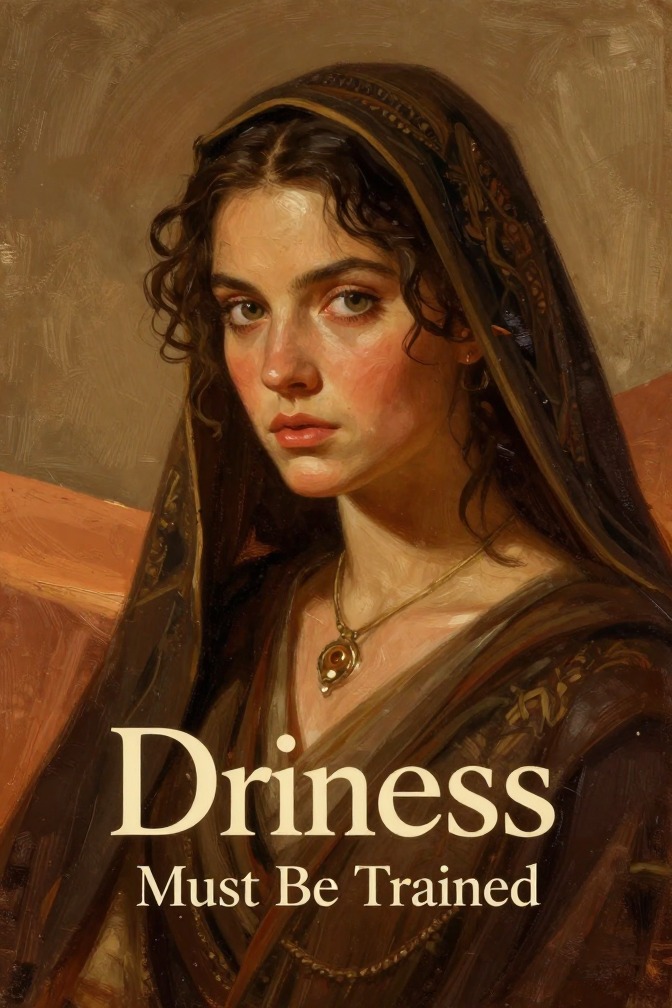
Princess Must Be Trained is a rule in the Dune universe, particularly associated with the Bene Gesserit, stating that royal princesses, especially those destined for political marriages, must undergo rigorous Bene Gesserit training. This training includes physical and mental conditioning, observation skills, and the ability to navigate court intrigue, as exemplified by Princess Irulan.
The Sayyadina Test is a Fremen rite of passage in which a woman, typically a Bene Gesserit or a candidate of the Sayyadina, consumes the Water of Life, a poisonous liquid exhalation of a dying sandworm, and must transform it within her body to survive and gain the heightened awareness of a Reverend Mother. This test is central to Fremen religious and social structure, as it determines who can become a Reverend Mother, a figure of spiritual authority and communal memory. The test is first depicted when Lady Jessica undergoes it, transforming her into a Reverend Mother and altering her relationship with her son Paul and the Fremen tribe.
Bashar is a military rank in the Imperium of Frank Herbert's Dune, positioned above Colonel and below Burseg, and is used both as a standardized military classification and as a title for the military ruler of a planetary subdistrict. The rank is most prominently associated with the Sardaukar, the Emperor's elite soldier-fanatics, and is held by officers who command legions and carry out the Emperor's will, as seen in the Arrakis campaign against House Atreides.
The Eyes of Ibad are the deep blue eyes, without any white, that mark the Fremen of Arrakis and signify addiction to the spice melange. This physical trait, caused by the saturation of the blood with melange, becomes a symbol of the Fremen's unique identity and their deep connection to the desert planet, and it also serves as a marker of the cultural and physiological transformation that Paul Atreides undergoes as he becomes Muad'Dib.
Atticus Finch shoots a rabid dog, Tim Johnson, in a single, expert shot that reveals his hidden marksmanship to his children and the neighborhood, transforming his children's perception of him and establishing a key lesson about courage and humility.
Eula May is Maycomb's leading telephone operator and a central figure in the town's communication network, entrusted with issuing public announcements, wedding invitations, setting off the fire siren, and giving first-aid instructions when Dr. Reynolds is away. She is the voice of official news in the community, and her role becomes pivotal during the crisis of Miss Maudie's house fire, when she relays the warning of a mad dog and announces the snow day that brings the Finch children their first experience of snow.
Francis Hancock is Scout Finch's priggish, gossipy cousin who serves as a foil to Scout's spirited nature and as a conduit for the family's disapproval of Atticus Finch's defense of Tom Robinson, culminating in a violent confrontation at Christmas.
Mr. Avery is a minor but memorable neighbor in Maycomb whose physical appearance, superstitious pronouncements, and dramatic actions during Miss Maudie's house fire mark him as a comic and grotesque figure in the children's world.
Mr. Heck Tate, the sheriff of Maycomb County, is a steady, professional lawman who, despite his own limitations as a marksman, defers to Atticus Finch's hidden talent to dispatch a rabid dog, and later serves as a key witness and authority figure during the trial of Tom Robinson.
Mrs. Henry Lafayette Dubose is a formidable, elderly neighbor of the Finch family in Maycomb, Alabama, who initially appears as a vicious, racist, and cantankerous figure but is ultimately revealed to be a morphine addict who, with Jem Finch's unwitting help, conquers her addiction before dying, embodying a profound and unconventional form of courage that redefines the novel's central moral theme.
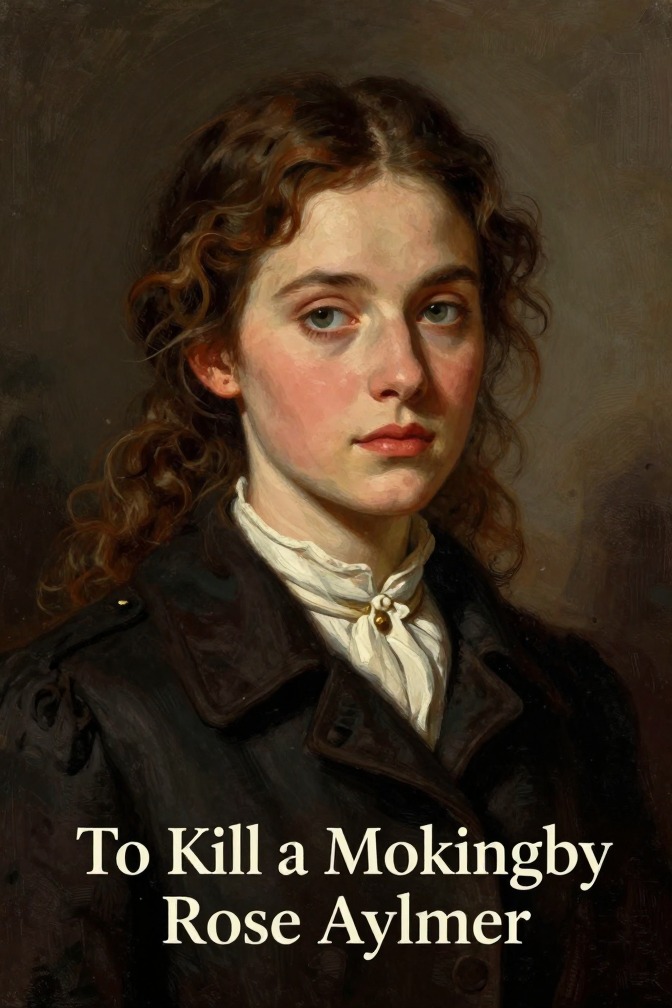
Rose Aylmer is Uncle Jack Finch's yellow female cat, a minor but memorable character in Scout's narration who serves as a comic foil and a marker of Uncle Jack's eccentric bachelor personality.
Scout and Jem attend Sunday service at First Purchase African M.E. Church with Calpurnia, where they witness the congregation's lined hymn-singing, a collection for Tom Robinson's family, and the community's complex response to their presence.
Atticus Finch's definition of courage, articulated after Mrs. Dubose's death, reframes bravery not as physical prowess but as the moral resolve to persist in a hopeless struggle, knowing defeat is certain, and it becomes the novel's central ethical principle.
It's a sin to kill a mockingbird is the central moral principle of the novel, articulated by Atticus Finch and elaborated by Miss Maudie Atkinson, which defines the innocent and harmless as sacred and inviolable, and serves as the ethical touchstone against which the actions of Maycomb's citizens are measured.
Abbottsville is a neighboring town whose fire truck responds to Miss Maudie Atkinson's house fire, playing a crucial role in the emergency that reveals Boo Radley's secret protection of Scout and Jem.
Buford Place is a historic plantation property near Finch's Landing in Maycomb County, Alabama, best known as the childhood home of Miss Maudie Atkinson's aunt, Miss Buford, who taught Calpurnia to read using Blackstone's Commentaries, and as a landmark that anchors the Finch family's deep roots in the region.
The Maycomb Courthouse is the central legal and civic institution of Maycomb County, Alabama, and the physical stage for the trial of Tom Robinson, the novel's pivotal event. Its proud architecture and graciously wide streets reflect the town's origin as a government seat, yet within its walls the formal promise of justice collides with the entrenched racial and social hierarchies that govern the community. The courthouse is both a symbol of civic order and the site where that order is most starkly tested, revealing the gap between legal ideals and the prejudices that determine their application.
Atticus Finch and Cousin Joshua St. Clair are relatives whose connection reveals the Finch family's complex legacy of eccentricity, intellectual ambition, and moral failure, serving as a counterpoint to Atticus's own principles of conscience and integrity.
Atticus Finch and Heck Tate share a professional acquaintance rooted in mutual respect and a shared commitment to justice, most vividly demonstrated during the mad dog incident, where Tate defers to Atticus's superior marksmanship.
Bob Ewell and Atticus Finch are the central adversaries in the trial of Tom Robinson, representing a direct confrontation between the racist social order of Maycomb and the principle of legal justice. Their conflict defines the moral stakes of the novel, as Atticus's decision to defend a black man against Ewell's false accusation of rape forces the town to choose between racial solidarity and the rule of law.
Boo Radley and Scout Finch share a relationship of secret, silent protection that transforms from neighborhood legend into intimate, tangible care, culminating in Boo's life-saving intervention during Miss Maudie's house fire and the revelation of his long-hidden gifts.
Jem Finch and Dill Harris are close childhood friends whose bond defines the summers of Maycomb, marked by shared adventures, imaginative schemes, and a deep mutual loyalty that endures even across long separations.
The relationship between Jem Finch and Mrs. Henry Lafayette Dubose begins in violent conflict and is transformed through a forced reading punishment into a profound lesson about courage, moral integrity, and the nature of true strength.
Jem Finch and Scout Finch are brother and sister, and their evolving relationship forms the emotional and moral backbone of the novel, charting a course from childhood solidarity through the strains of adolescence and the shared crucible of Maycomb's racial injustice.