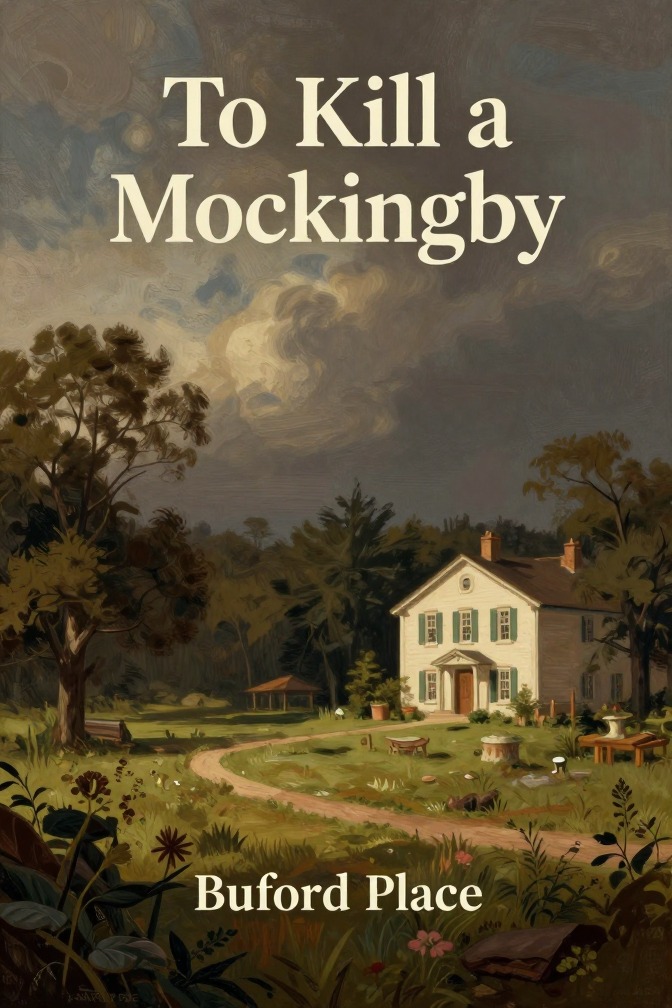
Buford Place is a historic plantation property near Finch's Landing in Maycomb County, Alabama, best known as the childhood home of Miss Maudie Atkinson's aunt, Miss Buford, who taught Calpurnia to read using Blackstone's Commentaries, and as a landmark that anchors the Finch family's deep roots in the region.
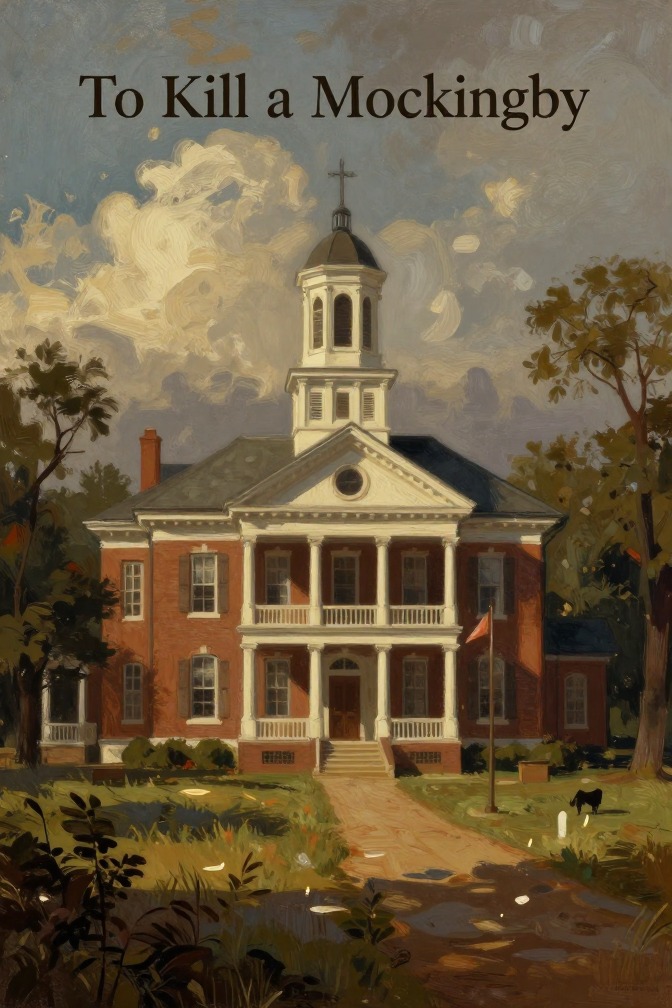
The Maycomb Courthouse is the central legal and civic institution of Maycomb County, Alabama, and the physical stage for the trial of Tom Robinson, the novel's pivotal event. Its proud architecture and graciously wide streets reflect the town's origin as a government seat, yet within its walls the formal promise of justice collides with the entrenched racial and social hierarchies that govern the community. The courthouse is both a symbol of civic order and the site where that order is most starkly tested, revealing the gap between legal ideals and the prejudices that determine their application.
Atticus Finch and Cousin Joshua St. Clair are relatives whose connection reveals the Finch family's complex legacy of eccentricity, intellectual ambition, and moral failure, serving as a counterpoint to Atticus's own principles of conscience and integrity.
Atticus Finch and Heck Tate share a professional acquaintance rooted in mutual respect and a shared commitment to justice, most vividly demonstrated during the mad dog incident, where Tate defers to Atticus's superior marksmanship.
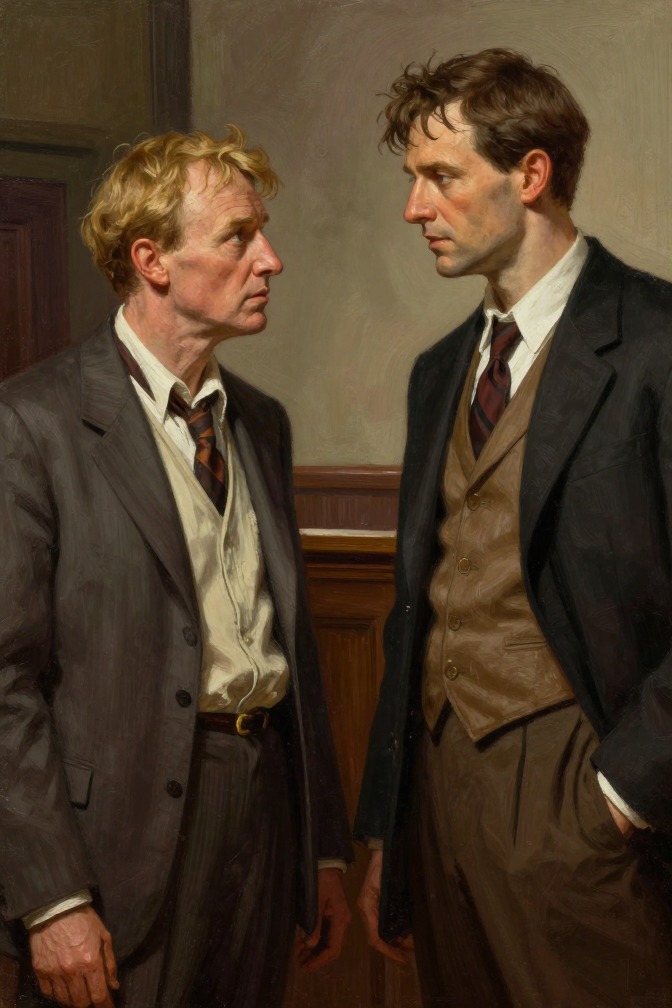
Bob Ewell and Atticus Finch are the central adversaries in the trial of Tom Robinson, representing a direct confrontation between the racist social order of Maycomb and the principle of legal justice. Their conflict defines the moral stakes of the novel, as Atticus's decision to defend a black man against Ewell's false accusation of rape forces the town to choose between racial solidarity and the rule of law.
Boo Radley and Scout Finch share a relationship of secret, silent protection that transforms from neighborhood legend into intimate, tangible care, culminating in Boo's life-saving intervention during Miss Maudie's house fire and the revelation of his long-hidden gifts.
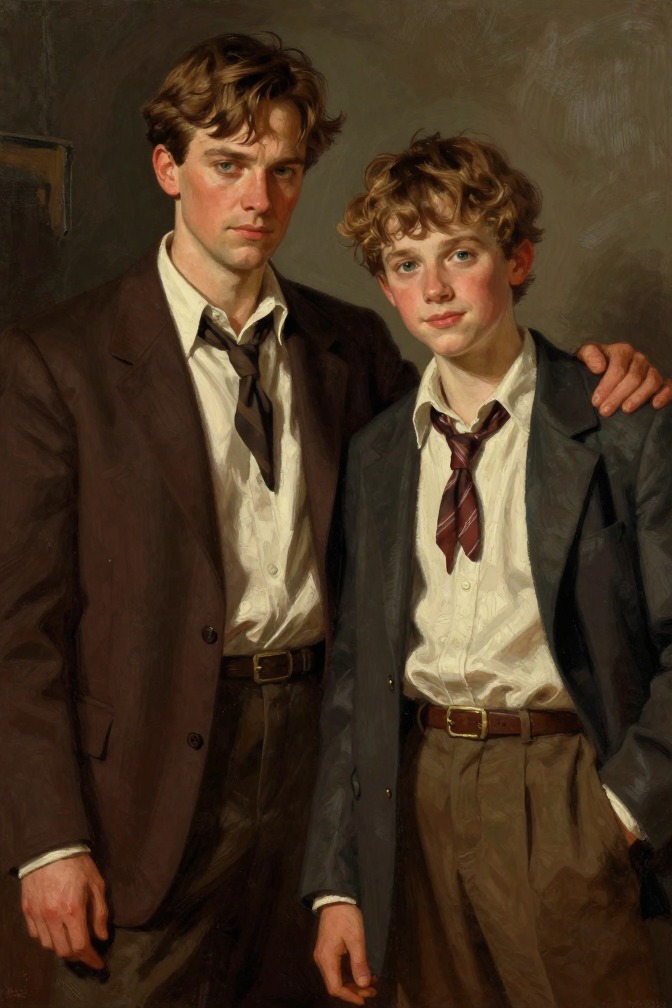
Jem Finch and Dill Harris are close childhood friends whose bond defines the summers of Maycomb, marked by shared adventures, imaginative schemes, and a deep mutual loyalty that endures even across long separations.
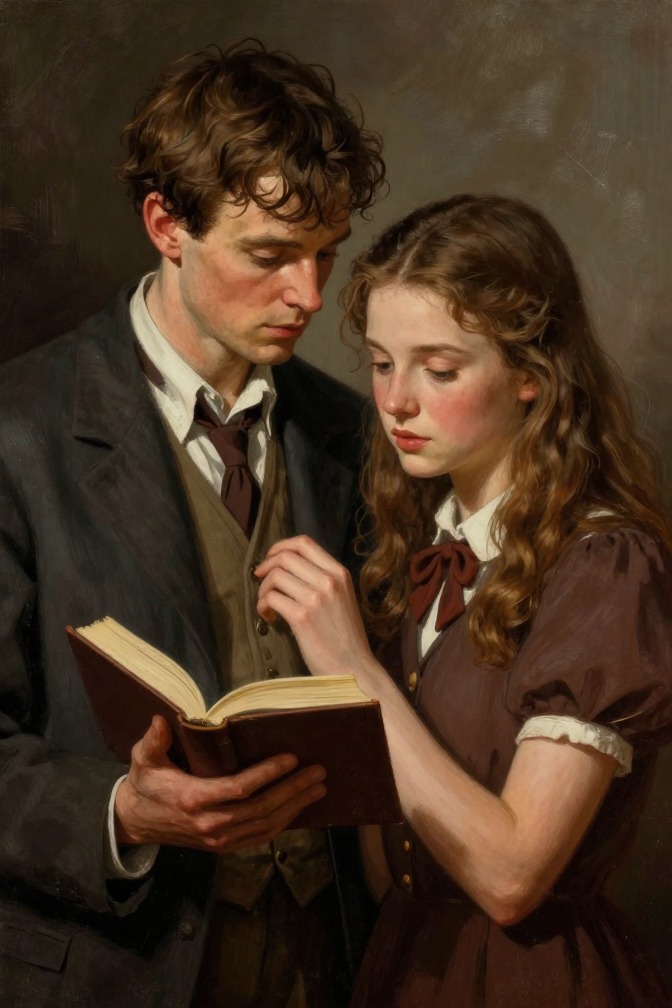
The relationship between Jem Finch and Mrs. Henry Lafayette Dubose begins in violent conflict and is transformed through a forced reading punishment into a profound lesson about courage, moral integrity, and the nature of true strength.
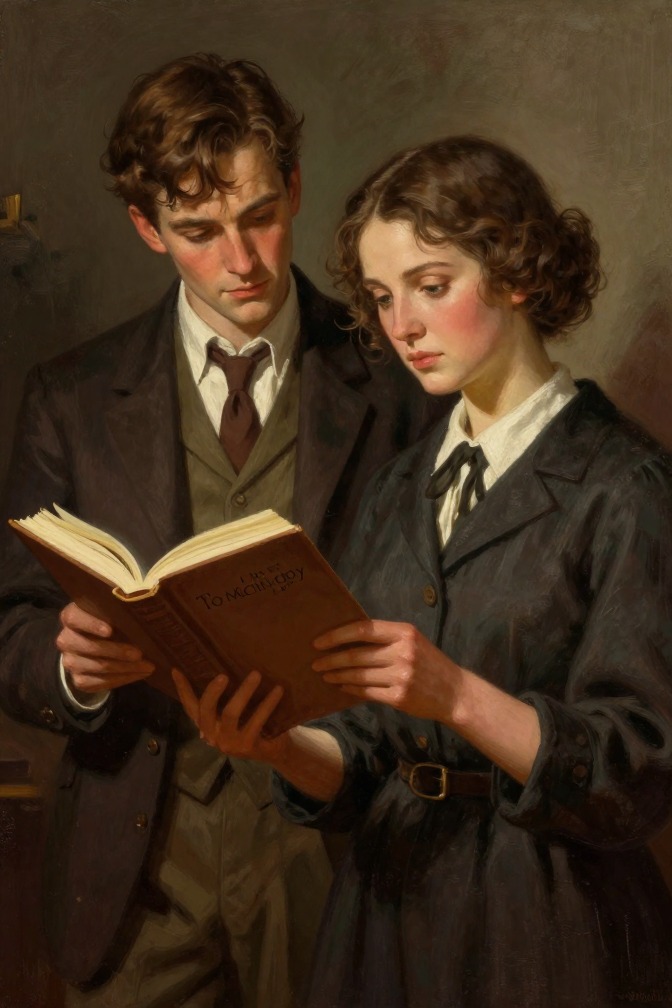
Jem Finch and Scout Finch are brother and sister, and their evolving relationship forms the emotional and moral backbone of the novel, charting a course from childhood solidarity through the strains of adolescence and the shared crucible of Maycomb's racial injustice.
Mr. Avery is a portly, superstitious neighbor of the Finch family in Maycomb, whose primary narrative function is to serve as a comic, moralizing figure whose pronouncements about children causing seasonal changes and whose physical resemblance to a snowman provide both humor and a foil for the children's growing understanding of the world.
Scout Finch and Cecil Jacobs are schoolmates whose relationship introduces Scout to the public hostility surrounding Atticus Finch's defense of Tom Robinson, marking her first conscious choice to restrain her temper for her father's sake and the beginning of her moral education in the face of community prejudice.
The No Bad Language Rule is a family rule imposed by Uncle Jack Finch during his Christmas visit, forbidding Scout from using profanity like "damn" and "hell" except under extreme provocation, and it becomes a test of Scout's understanding of fairness and adult hypocrisy.
The No Racial Slurs Rule is a principle established by Atticus Finch that prohibits his children, Scout and Jem, from using the word "nigger," a term he considers common and degrading. This rule serves as a foundational element of the Finch family's moral code, directly challenging the deeply ingrained racism of Maycomb and setting the stage for the children's moral education amidst the town's prejudice.
Being a 'Nigger-Lover' is the central social stigma in Maycomb, a label that defines the town's racial boundaries and tests the moral integrity of Atticus Finch and his family as he defends Tom Robinson.
The Caste System in Maycomb is the unwritten social hierarchy that governs every aspect of life in the town, determining a person's worth, behavior, and destiny based on family lineage, race, and length of residence. Scout's narration reveals a rigid structure where 'Fine Folks' are defined by how long a family has occupied the same land, where racial segregation is absolute, and where even white families are ranked from the respected Finches to the despised Ewells. This system is the fundamental context for the novel's central conflict, as Atticus Finch's defense of Tom Robinson challenges the racial and social order that the caste system is designed to protect.
The year 1864 functions as a recurring historical reference point in To Kill a Mockingbird, invoked by Cousin Ike Finch to frame the Confederate defeat and by Atticus Finch to articulate a principle of moral perseverance against overwhelming odds.
The Aunts are the female enforcers of Gilead's patriarchal regime, responsible for the indoctrination, surveillance, and punishment of Handmaids at the Rachel and Leah Re-education Center (the Red Center). They wield cattle prods, control reading and writing, and administer brutal discipline, yet they are themselves a controlled class, granted limited power in exchange for enforcing the system that subordinates all women.
Jezebels is the clandestine brothel-club where Gilead's male elite—Commanders, senior officials, and foreign trade delegations—consume forbidden alcohol, cigarettes, and sex with women who have been deemed unfit for the regime's reproductive system or who have chosen this life over the Colonies. Housed in a former hotel that Offred once visited with Luke, Jezebels functions as a pressure valve for the regime's own contradictions: it officially outlaws the very pleasures it secretly provides, and it turns women who cannot or will not be Handmaids into costumed performers whose bodies are available for purchase. The place is at once a site of relative freedom—makeup, drink, drugs, even lesbian relationships are tolerated—and a prison from which no woman leaves except in a black van. Moira's presence there, reduced to a rabbit-costumed waitress, crystallizes the regime's capacity to absorb and neutralize rebellion, while Offred's single visit reveals the theatrical, degrading, and ultimately hollow nature of the "freedom" Jezebels offers.
Offred's Daughter is the child Offred lost when the Gilead regime confiscated her, and her absence haunts every moment of Offred's narrative, functioning as the central wound that drives Offred's will to survive and her desperate hope for reunion.
Ofglen (original) is Offred's shopping partner and a member of the Mayday resistance network, whose quiet piety masks a dangerous secret life. She becomes Offred's first point of contact with the underground, and her suicide after the Salvaging—hanging herself to avoid capture by the Eyes—marks a turning point in Offred's own will to survive.
The Wives are the elite married women of Gilead, occupying a position of sanctioned domestic authority that is simultaneously privileged and deeply constrained. They oversee the households of Commanders, manage the Handmaids who bear their children, and enforce the regime's patriarchal order, yet they are themselves confined to a narrow sphere of ornamental and supervisory duties, stripped of genuine power and often consumed by envy, bitterness, and a sense of personal failure.
Gender Treachery is a capital crime in the Republic of Gilead, punishable by execution on the Wall, and it functions as a legal category for any sexual or romantic relationship that violates the regime's rigid heterosexual, procreative norms. The term appears on purple placards hung around the necks of the condemned, marking them as traitors not merely to a partner but to the state's foundational gender ideology. Its enforcement reveals the regime's deepest anxieties: that desire, when unregulated, can unravel the entire social order.
The border escape attempt is the failed flight of Offred, Luke, and their daughter from the Republic of Gilead, a desperate bid for freedom that ends in betrayal and capture, shattering the family and condemning Offred to the life of a Handmaid. This event is the catastrophic hinge on which the entire narrative turns, transforming a woman with a name, a husband, and a child into the property of the state, and its memory haunts every moment of her subsequent existence.
Moira's escape from the Rachel and Leah Re-education Center is the most audacious act of defiance in the novel, a meticulously planned and violently executed breakout that exposes the regime's vulnerabilities and becomes a legend among the Handmaids, embodying both the possibility of resistance and the terrible cost of failure.
The Prayvaganza is a mass wedding ceremony in the Republic of Gilead, a state-orchestrated ritual that simultaneously celebrates military victory and enforces patriarchal control by marrying young women to Angels, while also serving as a site of covert communication and resistance among the Handmaids.
The phrase "Context is all" serves as a recurring philosophical touchstone in Offred's narrative, crystallizing her understanding that the meaning of any action, relationship, or object is entirely determined by the circumstances in which it occurs. It emerges at two critical junctures—first as she reflects on the absurdity of the Commander's request to kiss her as if she meant it, and later as she weighs her feelings for Nick against her memories of Luke—and functions as a key to the novel's moral and emotional logic, where the same act can be trivial or profound, permissible or deadly, depending entirely on the framework that contains it.
Every baby a wanted baby is a slogan from the pre-Gilead feminist movement, seen on a protest banner in a documentary film shown to the Handmaids at the Red Center. It represents the reproductive-choice ideals that the Gilead regime has violently replaced with compulsory fertility, and its reappearance in Offred's memory underscores the chasm between the world she lost and the one she now inhabits.
Unwoman is the Gileadean designation for women who have been stripped of reproductive and social value, condemned to exile in the toxic Colonies as expendable labor. The term functions as a state-imposed category of non-personhood, marking the ultimate punishment for Handmaids who fail to conceive, resist the regime, or otherwise fall outside the system's narrow definition of female utility.
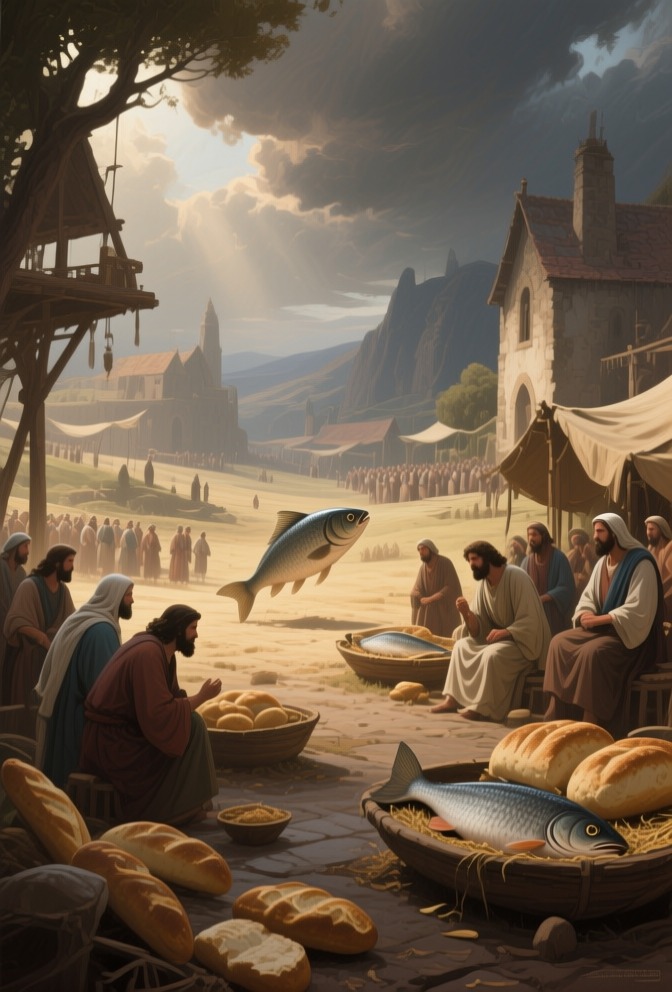
Loaves and Fishes is a Gileadean food store, marked by a wooden sign of a smiling fish with eyelashes, that rarely opens because the sea fisheries have been defunct for years and the few fish available come from muddy-tasting fish farms.
The doctor's office is a site of monthly medical examinations for Handmaids, where the protagonist Offred undergoes mandatory fertility tests and encounters a proposition from the doctor that reveals the regime's hidden hypocrisies and the desperate choices available to women within Gilead.