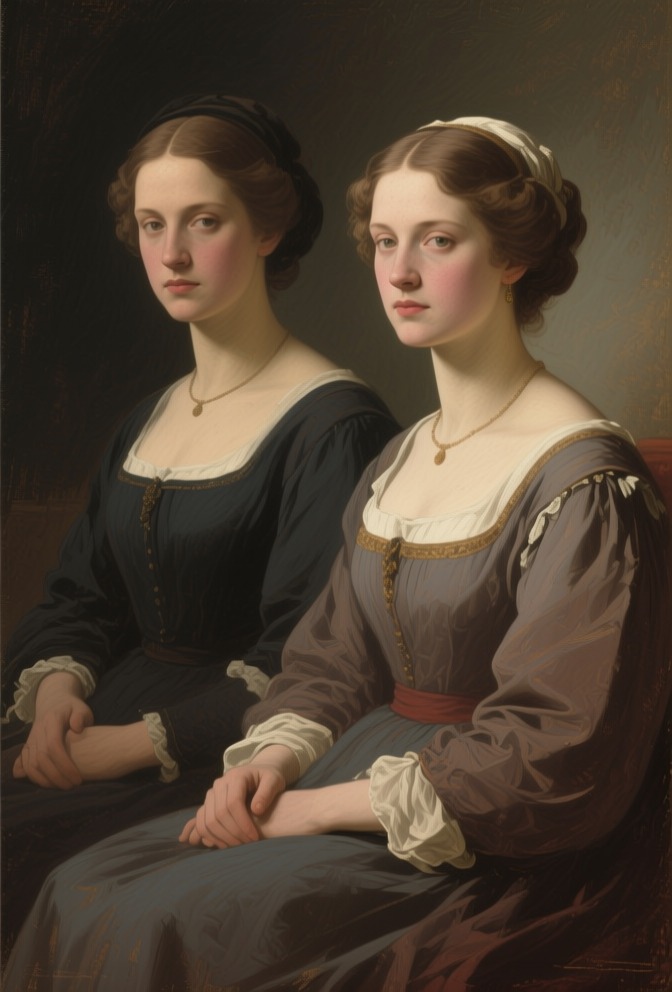
The Wives are the elite married women of Gilead, occupying a position of sanctioned domestic authority that is simultaneously privileged and deeply constrained. They oversee the households of Commanders, manage the Handmaids who bear their children, and enforce the regime's patriarchal order, yet they are themselves confined to a narrow sphere of ornamental and supervisory duties, stripped of genuine power and often consumed by envy, bitterness, and a sense of personal failure.
Gender Treachery is a capital crime in the Republic of Gilead, punishable by execution on the Wall, and it functions as a legal category for any sexual or romantic relationship that violates the regime's rigid heterosexual, procreative norms. The term appears on purple placards hung around the necks of the condemned, marking them as traitors not merely to a partner but to the state's foundational gender ideology. Its enforcement reveals the regime's deepest anxieties: that desire, when unregulated, can unravel the entire social order.
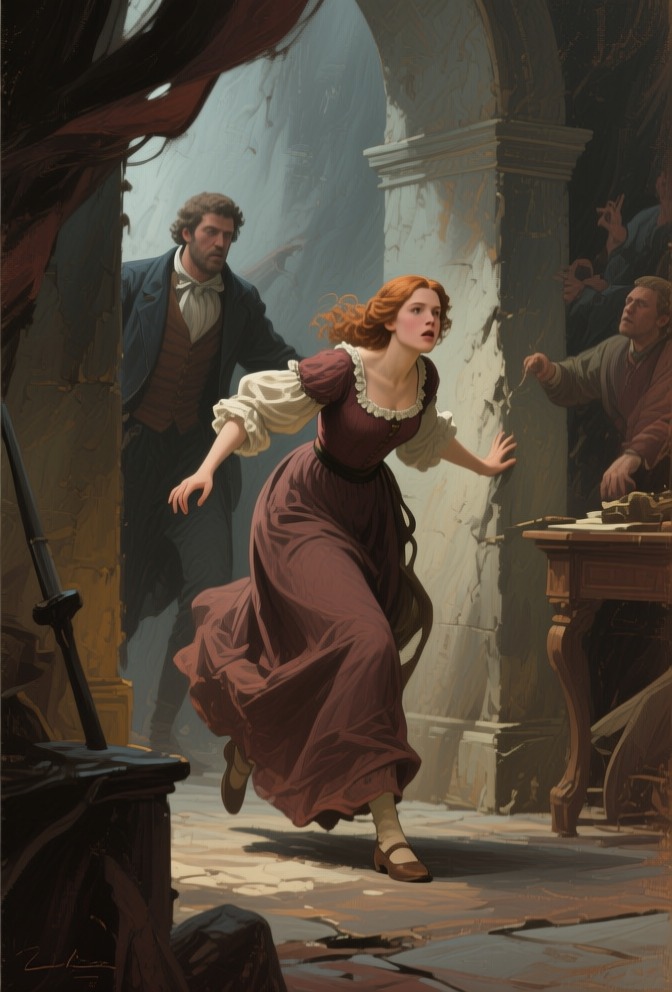
The border escape attempt is the failed flight of Offred, Luke, and their daughter from the Republic of Gilead, a desperate bid for freedom that ends in betrayal and capture, shattering the family and condemning Offred to the life of a Handmaid. This event is the catastrophic hinge on which the entire narrative turns, transforming a woman with a name, a husband, and a child into the property of the state, and its memory haunts every moment of her subsequent existence.
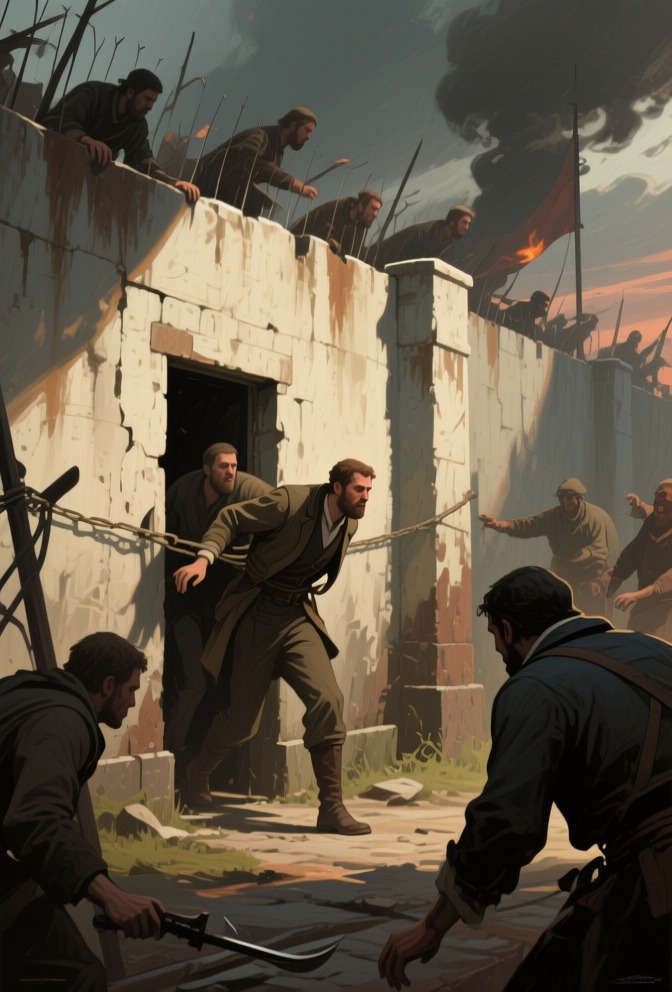
Moira's escape from the Rachel and Leah Re-education Center is the most audacious act of defiance in the novel, a meticulously planned and violently executed breakout that exposes the regime's vulnerabilities and becomes a legend among the Handmaids, embodying both the possibility of resistance and the terrible cost of failure.
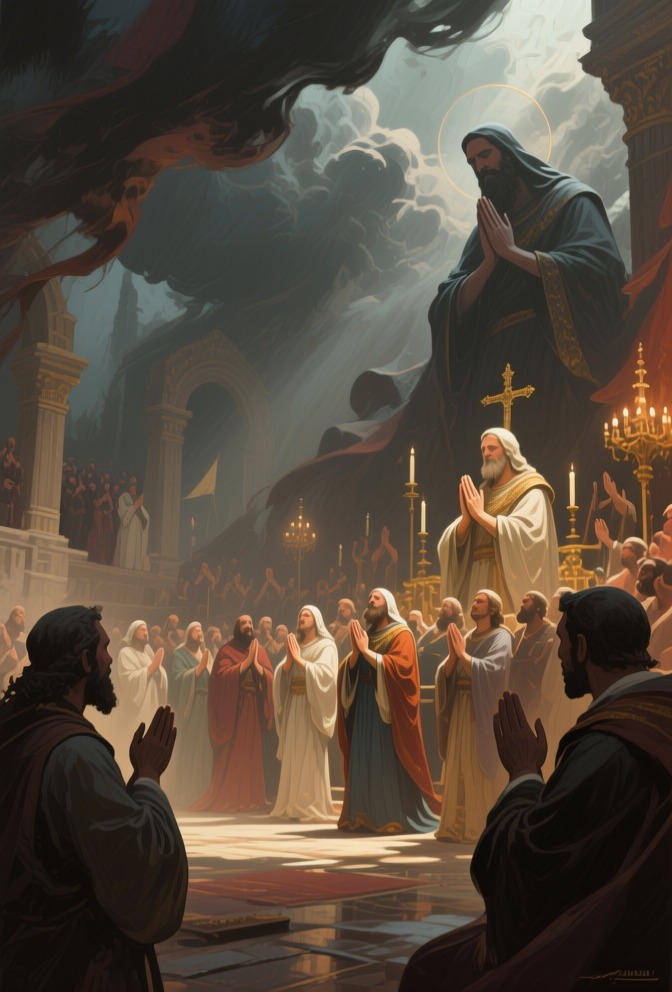
The Prayvaganza is a mass wedding ceremony in the Republic of Gilead, a state-orchestrated ritual that simultaneously celebrates military victory and enforces patriarchal control by marrying young women to Angels, while also serving as a site of covert communication and resistance among the Handmaids.
The phrase "Context is all" serves as a recurring philosophical touchstone in Offred's narrative, crystallizing her understanding that the meaning of any action, relationship, or object is entirely determined by the circumstances in which it occurs. It emerges at two critical junctures—first as she reflects on the absurdity of the Commander's request to kiss her as if she meant it, and later as she weighs her feelings for Nick against her memories of Luke—and functions as a key to the novel's moral and emotional logic, where the same act can be trivial or profound, permissible or deadly, depending entirely on the framework that contains it.
Every baby a wanted baby is a slogan from the pre-Gilead feminist movement, seen on a protest banner in a documentary film shown to the Handmaids at the Red Center. It represents the reproductive-choice ideals that the Gilead regime has violently replaced with compulsory fertility, and its reappearance in Offred's memory underscores the chasm between the world she lost and the one she now inhabits.
Unwoman is the Gileadean designation for women who have been stripped of reproductive and social value, condemned to exile in the toxic Colonies as expendable labor. The term functions as a state-imposed category of non-personhood, marking the ultimate punishment for Handmaids who fail to conceive, resist the regime, or otherwise fall outside the system's narrow definition of female utility.
Loaves and Fishes is a Gileadean food store, marked by a wooden sign of a smiling fish with eyelashes, that rarely opens because the sea fisheries have been defunct for years and the few fish available come from muddy-tasting fish farms.
The doctor's office is a site of monthly medical examinations for Handmaids, where the protagonist Offred undergoes mandatory fertility tests and encounters a proposition from the doctor that reveals the regime's hidden hypocrisies and the desperate choices available to women within Gilead.
The ambulance at the Rachel and Leah Re-education Center is the vehicle Moira uses in her failed escape attempt, a ruse that ends in her capture, torture, and eventual disappearance, marking a turning point in Offred's understanding of resistance and the regime's brutality.
Butter is a scarce, contraband commodity in Gilead that the Handmaids secretly use as a substitute for banned hand lotion and face cream, transforming a mundane kitchen staple into a covert tool of bodily preservation, a small act of defiance, and a fragile emblem of hope for a future in which they might be touched again in love or desire.
The Cat is a minor but symbolically charged presence in Offred's memories of her former life, representing domestic comfort, the ethical weight of sacrifice, and the irreversible losses imposed by the Gileadean regime. Its most significant appearance occurs on the night before Offred, Luke, and their daughter attempt to flee across the border, when Luke kills the cat to avoid drawing attention to their departure—an act that forces Offred to confront how the regime compels even those it persecutes to become agents of destruction.
Hand Lotion is a scarce commodity in Gilead, forbidden to Handmaids as a vanity, yet secretly obtained by Offred from the Commander and used as a small act of bodily self-preservation and defiance.
The Lighter is a small but potent object in Gilead, appearing as a tool of privilege, a token of illicit exchange, and a symbol of the fragile power held by those who can bend the regime's rules. Serena Joy uses her ivory-colored lighter openly, a luxury that marks her status and her access to the black market; for Offred, the lighter represents a forbidden pleasure and, more crucially, a potential instrument of destruction when she hoards a single match.
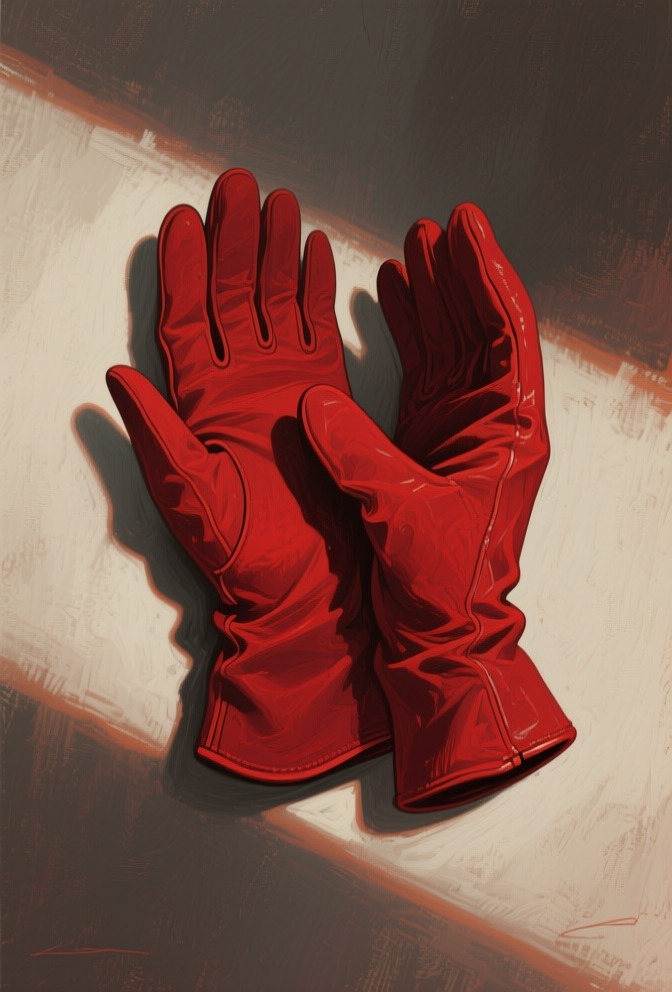
The Red Gloves are a prescribed item of the Handmaid uniform in Gilead, serving as both a marker of the wearer's function and a tool for maintaining the regime's enforced modesty and invisibility.
The Red Shoes are the prescribed flat-heeled footwear issued to Handmaids in Gilead, a vivid emblem of their uniformed subjugation and a recurring object through which Offred registers her body, her constrained movement, and her small acts of private resistance.
The Shopping Basket is the red basket carried by Offred on her daily shopping walks, a mundane object that becomes a charged symbol of her constrained existence, her small acts of defiance, and the material deprivations of life in Gilead.
The Sneakers with Hearts are a pair of children's sneakers worn by Offred's daughter during the family's failed escape attempt across the border, and they function as a poignant symbol of lost childhood, maternal love, and the devastating consequences of the regime's oppression.
The Whirlwind Car is the Commander's official black sedan, a symbol of his high status within the Republic of Gilead. It appears in the narrative as a polished object of prestige and as a vehicle for clandestine journeys, including the trip to Jezebel's. Its material presence—being washed by Nick, its gleaming chrome—serves as a signal for Offred's secret summons to the Commander's study and as a stage for the charged, silent exchanges between Offred and Nick.
The Angels of the Apocalypse are a military division within the Republic of Gilead, deployed in combat operations against rebel forces such as Baptist guerillas. They are depicted in state-controlled news broadcasts as instruments of the regime's military power, and their presence is a constant, threatening backdrop to the lives of the Handmaids.
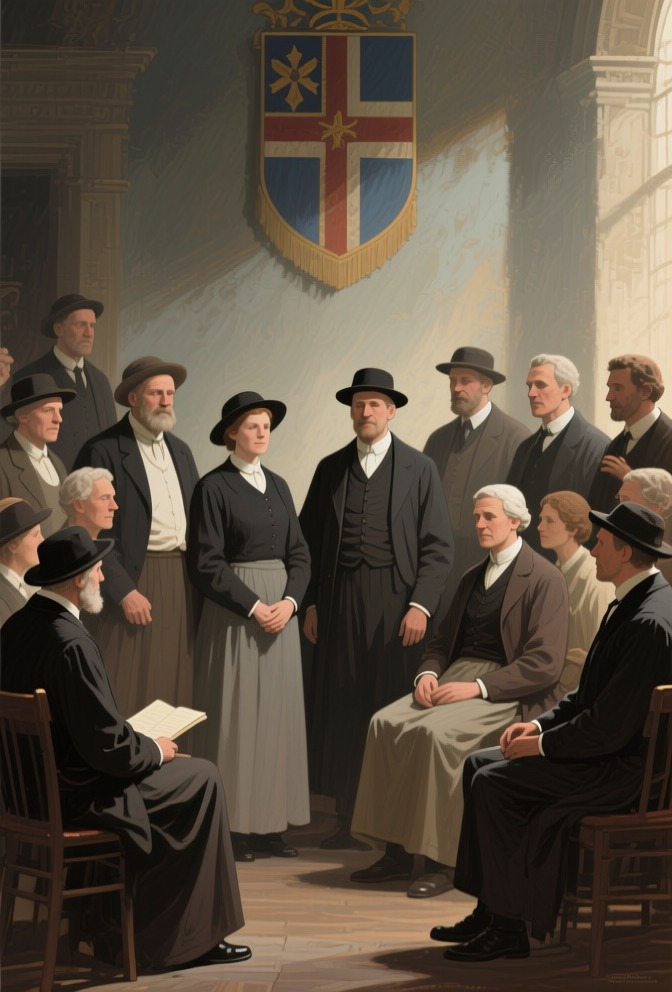
The Quakers, or Society of Friends, appear in The Handmaid's Tale as a persecuted religious sect whose members are arrested for smuggling precious national resources over the border into Canada, and whose homes serve as stations on the Underground Femaleroad, the clandestine network that helps women escape the Republic of Gilead.
The Bath Day Requirement is a mandatory weekly ritual imposed on Handmaids in the Republic of Gilead, serving as a state-sanctioned act of bodily purification that simultaneously enforces vulnerability, surveillance, and the reduction of the female body to a mere reproductive vessel.
The patronymic naming system for Handmaids in Gilead strips them of their former identities and binds them to the Commanders they serve, functioning as a tool of control, erasure, and redefinition.
The Great Purge was a middle-period internal cleansing within the Republic of Gilead that discredited and liquidated many of the original architects of the regime, including the Commander, Frederick R. Waterford, and fundamentally altered the power structure of the state.
The Manhattan Cleanup was a state-orchestrated public destruction of sexually explicit and luxury women's clothing and materials in New York City, staged as a televised spectacle of purification that marked the early Gilead regime's consolidation of power over women's bodies and appearances.
The Sons of Jacob Think Tanks were the secret, high-level planning sessions at which the philosophy, social structure, and key policies of the Republic of Gilead were designed and debated before the regime's takeover. Drawing on a range of historical precedents and pseudoscientific theories, these meetings produced the blueprint for Gilead's totalitarian system, including its reproductive policies, its system of social control, and its symbolic apparatus.
After discovering that the Taumoeba-82.5 strain he bred can penetrate xenonite and has contaminated Rocky's ship, Ryland Grace abandons his own return to Earth and turns the Hail Mary around to rescue his alien friend, knowing it means he will starve to death on Erid.
Annie Shapiro is a brilliant microbiologist and DNA-splicing specialist who serves as the backup science specialist for the Hail Mary mission. She is known for inventing the Shapiro method of DNA splicing, a groundbreaking technique that creates entirely new enzymes from scratch. Alongside her professional partner and lover Martin DuBois, she perishes in a catastrophic Astrophage explosion at the Baikonur research center just days before launch, an event that forces Eva Stratt to conscript Ryland Grace as the mission's science specialist against his will.
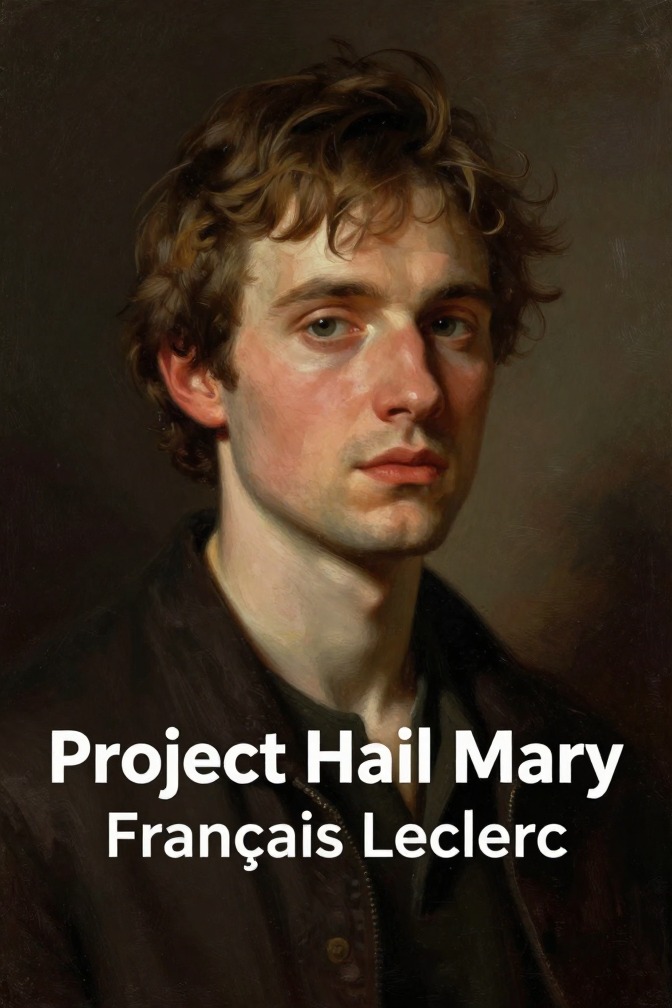
François Leclerc is a world-renowned French climatologist recruited by Eva Stratt to lead the climate-effects analysis of the Astrophage crisis. He is the reluctant architect of the nuclear strike on Antarctica, a desperate measure to release methane and buy humanity a few extra years before the sun's dimming triggers mass starvation.