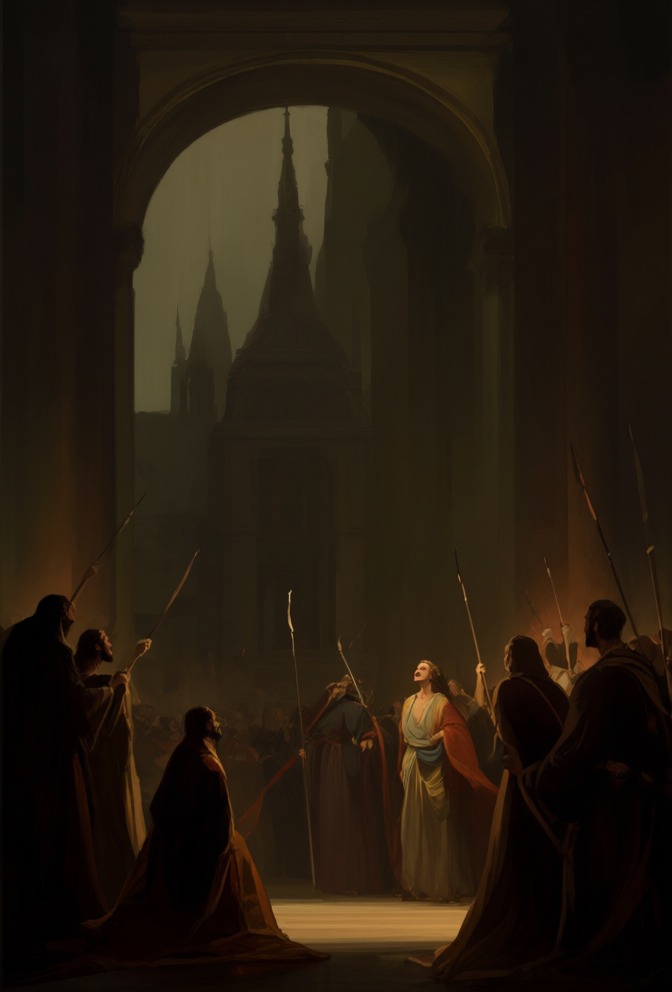
Complaint leads to punishment is a rule within the court system of Franz Kafka's The Trial, stating that any complaint made by a defendant against court officials will result in the flogging of those officials, regardless of the merits of the complaint or the defendant's intentions.
Alameda was the Decker family's housekeeper during Theo's early childhood in New York, remembered for rescuing him from a dangerous entrapment inside a Murphy bed and for her presence in the household before his father's departure forced her dismissal.
Cosmo is the elderly, grizzled gray terrier belonging to Welty Blackwell, who becomes a loyal companion to Pippa Blackwell after Welty's death in the museum bombing. His presence in the household underscores themes of loyalty, loss, and the quiet continuity of love across generations.
Denese is the Greyhound bus driver who, during Theo Decker's cross-country escape from Las Vegas to New York with his dog Popper, discovers the animal on board but chooses to allow it to remain, a small act of mercy that keeps Theo from being stranded in rural Illinois.
Hadley is a minor character in Theo Decker's Las Vegas high school years, a talkative, letter-jacket-wearing army brat who serves as a foil to Theo's drug-addled, transient social circle. She represents the normal, disciplined life Theo might have led, and her brief interactions with him highlight his alienation and the social chasm between them.
Horst is a German-born, New York-based art dealer and junkie who moves in the same black-market circles as Boris Pavlikovsky. A cultivated connoisseur of Dutch and Flemish painting, he lives in a decaying Fifth Avenue townhouse filled with valuable artworks and a shifting crowd of addicts and trust-fund kids. He is the man who first handled The Goldfinch after Boris stole it, and his associate Sascha later double-crosses him by taking the painting to Amsterdam. Horst’s relationship with Boris is one of wary mutual respect, and his deep knowledge of the painting—which he first saw as a boy in the Mauritshuis—makes him a key figure in the story’s art-world underworld.
Kitsey Barbour, the youngest daughter of the wealthy Park Avenue Barbour family, is a beautiful, socially adept, and emotionally detached young woman who becomes Theo Decker's fiancée. Their engagement, born from mutual convenience and a shared desire to please her grieving mother, masks a deeper incompatibility and Kitsey's ongoing, secret relationship with Theo's childhood acquaintance Tom Cable, ultimately revealing the transactional and fragile nature of their bond.
Margaret Blackwell Pierce, Welty Blackwell's half-sister, is a formidable and manipulative figure who, after the museum bombing, takes custody of the injured Pippa and moves her to Texas, overriding Hobie's wishes and severing the girl's connections to New York.
Moira DeFrees is a dealer in nineteenth-century watercolors, a close friend of James Hobart, and a fixture in the New York antiques and society world who becomes a maternal figure and confidante to Theodore Decker after his return from Las Vegas.
Saffi Caspersen is a minor character in Theo Decker's Las Vegas high school years, a Danish student who stands out for her beauty, intelligence, and a brief, unrequited interest in Boris Pavlikovsky. She represents a path of normalcy and high achievement that Theo and Boris, in their self-destructive spiral, cannot reach.
Samantha Barbour, the cool and composed matriarch of the Barbour family, is a figure of immense social grace and emotional restraint. Her life is defined by a series of profound losses—the drowning of her husband and son, and the earlier death of her son Andy's friend, Theo Decker's mother—which she navigates with a stoicism that masks a deep, private grief. Her relationship with Theo, who she takes in after the museum bombing, evolves from a formal arrangement into a genuine, if understated, maternal bond, offering him a stability he desperately needs while she herself retreats from the world.
Larry Decker, Theo's estranged father, reappears in New York with his girlfriend Xandra Terrell and takes Theo to live with them in Las Vegas, a move that uproots Theo from the Barbours and plunges him into a world of gambling, drugs, and neglect.
Laughter is light, and light is laughter is a revelatory epiphany experienced by Theo Decker and Boris Pavlikovsky during their acid trip at the abandoned community center playground in Las Vegas, a moment that crystallizes their bond and offers a fleeting, transcendent escape from their shared trauma and despair.
The secret of the universe is a phrase that crystallizes a moment of shared epiphany between Theo Decker and Boris Pavlikovsky during a drug-fueled night in Las Vegas, when they perceive that laughter is light and light is laughter. This insight, though born of intoxication, becomes a touchstone for the novel's deeper meditation on how meaning, beauty, and connection can emerge from chaos, suffering, and moral failure, and it echoes in Theo's later reflections on art, fate, and the possibility of redemption.
The abandoned community center playground in the Las Vegas suburb of Canyon Shadows is a desolate, half-finished recreational space that becomes the primary social and emotional refuge for Theo Decker and Boris Pavlikovsky during their teenage years in the desert. More than a mere setting, this liminal, decaying playground—with its padlocked doors, dead palm trees, and dry fountain—serves as the symbolic and literal stage for their friendship, their drug experiments, their confessions, and their shared escape from violent, neglectful homes.
Sutton Place, the East Fifty-Seventh Street apartment building where Theo Decker lived with his mother Audrey, is the novel's primary domestic setting before the museum bombing and a recurring symbol of lost home, stability, and the irrecoverable past. After Audrey's death, the apartment is stripped and sold, and its physical destruction during a condo conversion mirrors the permanent erasure of Theo's childhood world.
Pippa Blackwell and Welty Blackwell share a profound, quasi-parental bond that transcends their formal relationship as half-uncle and half-niece. Welty, Pippa's mother Juliet's much older half-brother, effectively raised Pippa after Juliet's death, becoming her primary guardian and emotional anchor. Their relationship is defined by mutual devotion, shared artistic sensibility, and a deep, unspoken understanding that shapes Pippa's identity and her later connections with Theo Decker and Hobie.
Theo Decker and Xandra Terrell have a strained, antagonistic relationship defined by mutual resentment and a lack of genuine care. Xandra, the girlfriend of Theo's father Larry, is a shallow and self-absorbed woman who resents Theo's presence in her life. Theo, in turn, views her as a vulgar and untrustworthy interloper. Their interactions are marked by petty conflicts, accusations, and a fundamental failure to form any kind of familial bond, culminating in Theo stealing from her and fleeing after his father's death.
The friendship between Theodore Decker and Boris Pavlikovsky is the most vital and transformative relationship in the novel, a bond forged in the wasteland of Las Vegas that survives betrayal, violence, and years of separation to ultimately redeem them both.
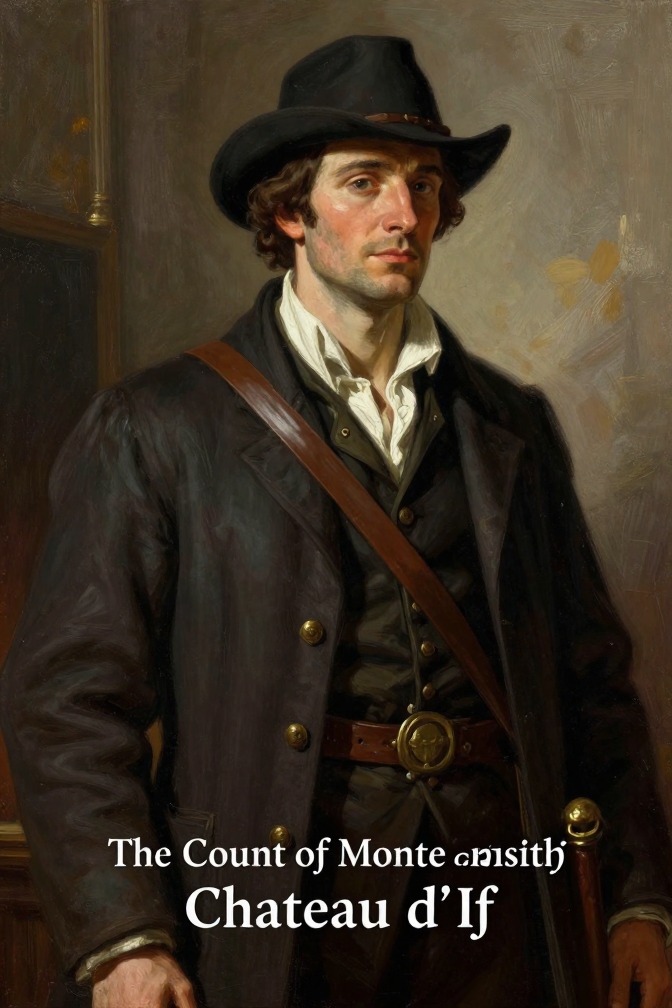
Edmond Dantes' escape from the Chateau d'If is the pivotal action that transforms a despairing prisoner into the wealthy and vengeful Count of Monte Cristo, achieved through a daring substitution of his own body for the corpse of his friend and mentor, Abbe Faria.
Joannes is a Parisian jeweller who appears in the Pont du Gard inn episode, where he purchases the diamond left by Edmond Dantes from Gaspard Caderousse and his wife, La Carconte, for 45,000 francs, a transaction that exposes the greed and moral corruption of the innkeeper and his wife.
Providence is the central theological concept in *The Count of Monte Cristo*, serving as the ultimate justification for Edmond Dantes' elaborate revenge. The novel frames Dantes not as a mere avenger but as an agent of divine will, a living instrument through which a higher moral order punishes the wicked and rewards the good. This concept is explicitly invoked by the protagonist himself, who repeatedly claims to act as the hand of God, and it is tested and ultimately reaffirmed in the novel's final resolution, where vengeance gives way to mercy and the limits of human judgment are acknowledged.
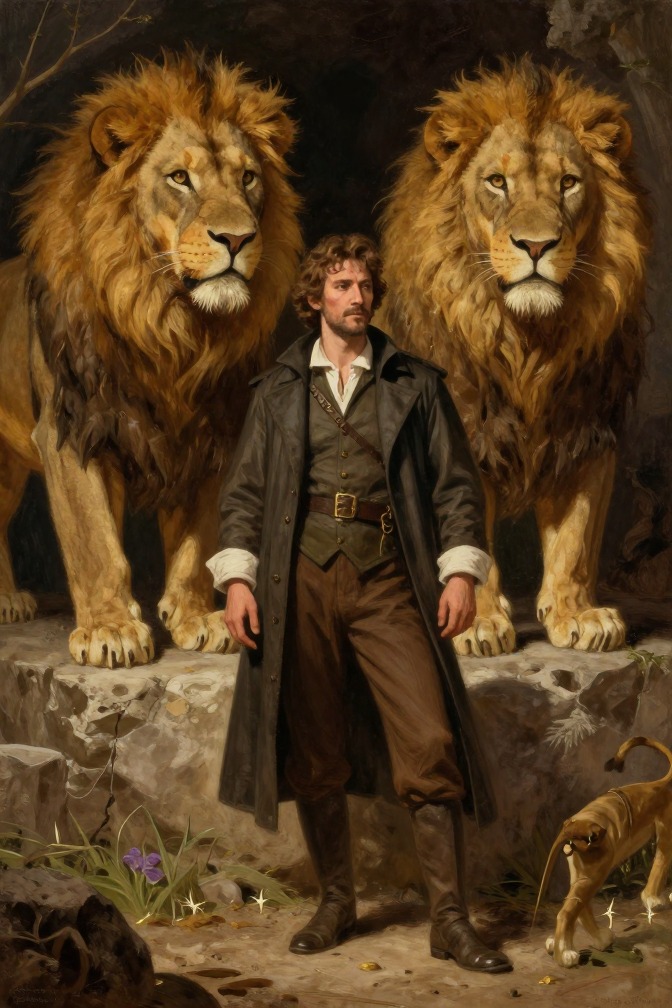
The lions' den is a colloquial name for the Saint-Bernard division of La Force prison in Paris, reserved for the most dangerous and desperate inmates. The term appears in the novel as the setting for Andrea Cavalcanti's imprisonment, where the expression's literal and figurative meanings converge to underscore the theme of human savagery and the precariousness of social identity.
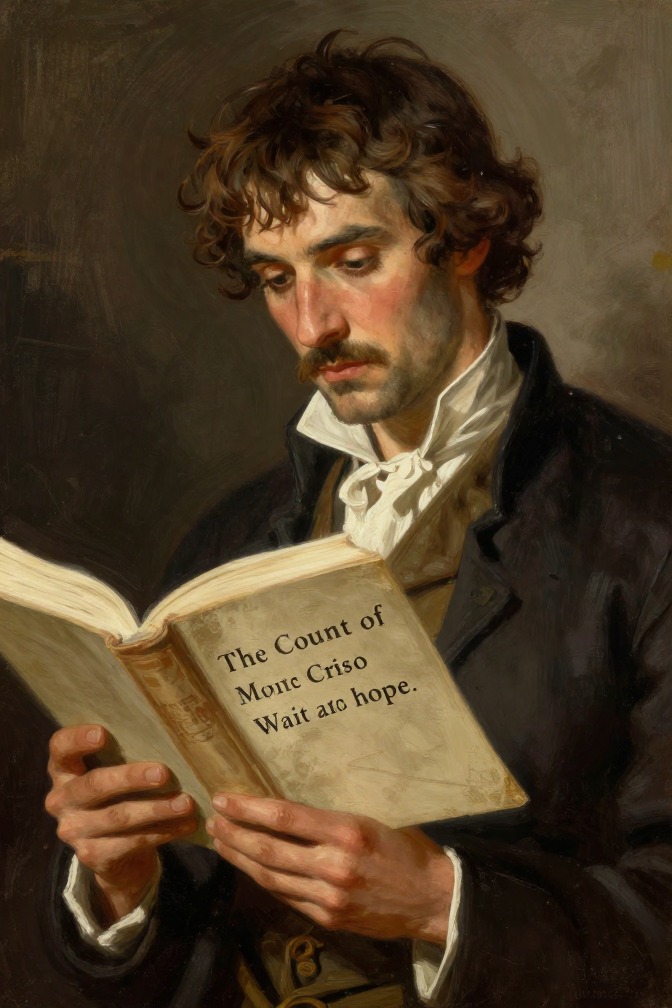
The phrase "Wait and hope" (French: "Attendre et espérer") is the final, climactic maxim of Alexandre Dumas's *The Count of Monte Cristo*, appearing in the letter Edmond Dantes leaves for Maximilian Morrel and Valentine de Villefort at the novel's close. It condenses the entire moral and philosophical trajectory of the work, transforming the narrative from a tale of implacable vengeance into a meditation on the limits of human justice and the necessity of faith in divine providence. The words are not merely a sentimental farewell but a hard-won philosophical conclusion, representing the Count's final renunciation of his role as an agent of retribution and his acceptance of a more humble, Christian understanding of the world.
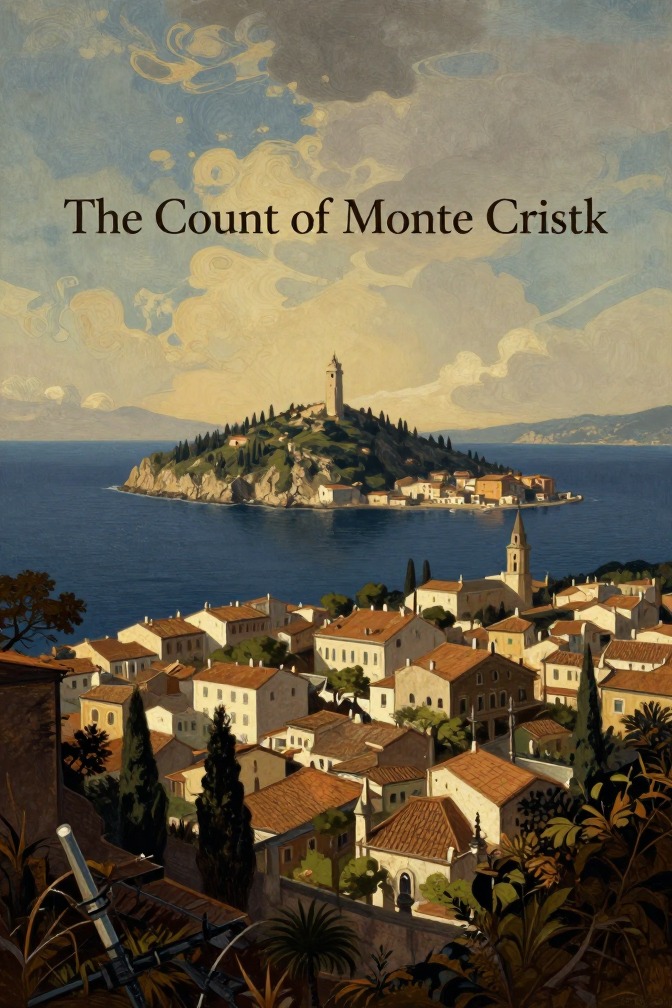
The Island of Elba is the Mediterranean island where Napoleon Bonaparte was exiled after his first abdication in 1814, and it serves in the novel as the crucial geographical pivot where Edmond Dantes, then mate of the Pharaon, stops to deliver a packet from the dying Captain Leclere to the grand marshal, an act that provides the pretext for his arrest and fourteen-year imprisonment.
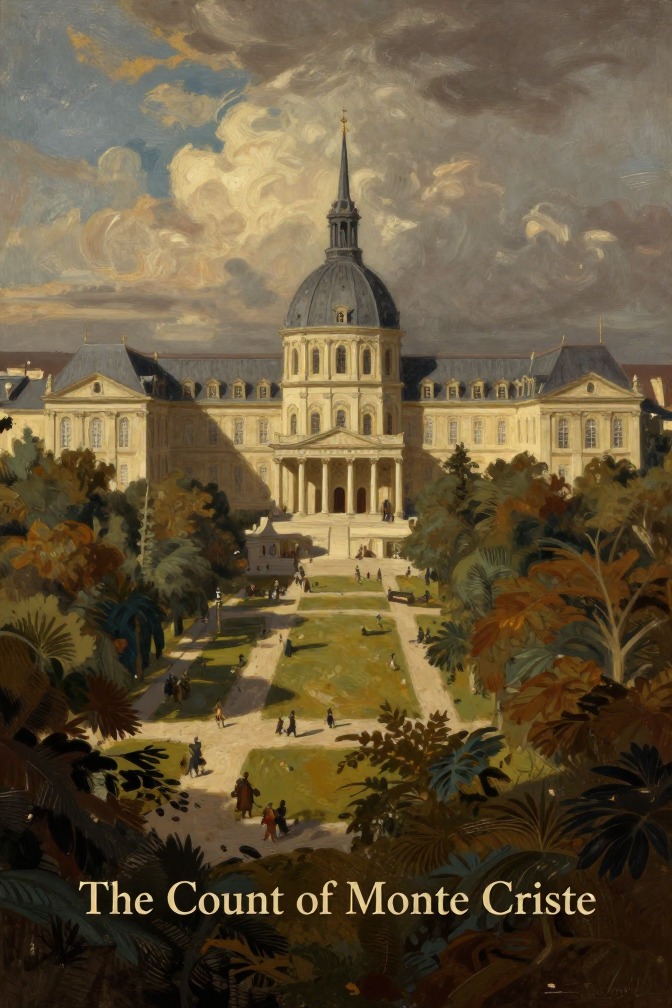
The Luxembourg Palace (Palais du Luxembourg) in Paris serves as the seat of the French Chamber of Peers during the Restoration and July Monarchy, functioning in the novel as the institutional stage where the Count of Morcerf's public disgrace unfolds and where the aristocratic and political elite gather to debate, judge, and enforce the codes of honor and class that drive the plot's climactic confrontations.
The Catacombs of St. Sebastian serve as the underground headquarters of the bandit chief Luigi Vampa and his gang, a labyrinthine network of ancient Roman burial chambers beneath Rome where Albert de Morcerf is held captive after being kidnapped during the Carnival, and where the Count of Monte Cristo demonstrates his extraordinary influence by securing Albert's release.
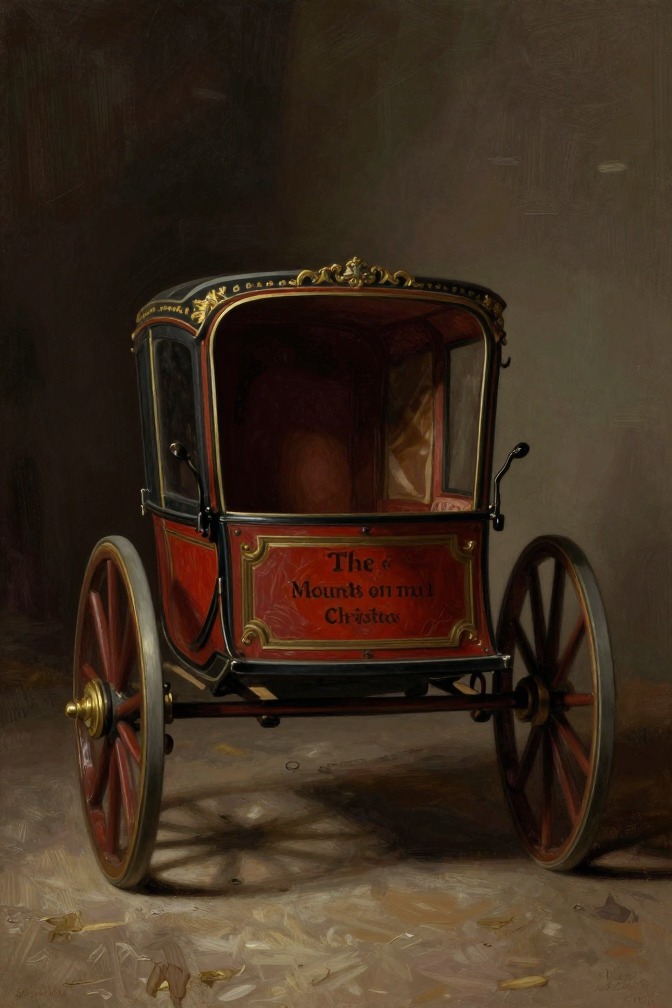
The post-chaise is a recurring vehicle in The Count of Monte Cristo, used for rapid, often clandestine travel across France and Italy. It serves as a key instrument in Danglars' flight from Paris, Monte Cristo's swift journeys, and the bandits' abduction of the banker, symbolizing both the mobility of wealth and the vulnerability of those who rely on it.
The Bank of France (Banque de France) is the central bank of France, established in 1800. In *The Count of Monte Cristo*, it serves as the ultimate repository of financial trust and the stage for the climactic collapse of Baron Danglars' credit. When Danglars issues five sight drafts for a million francs each, drawn on his account at the Bank of France, the Count of Monte Cristo immediately presents them for payment, forcing the banker to honor them on the spot. This transaction, occurring just as the receiver-general of charities arrives to collect a five-million-franc deposit, precipitates Danglars' ruin and flight. The Bank thus functions as the concrete embodiment of the abstract power of money, the institution whose imprimatur alone can convert paper promises into gold, and whose refusal to honor a draft signals absolute financial death.
The Chamber of Deputies is the lower house of the French parliament during the Bourbon Restoration and July Monarchy, serving as a central arena for political conflict, class ambition, and the public exposure of private crimes in *The Count of Monte Cristo*. Danglars, a newly enriched banker and member of the Chamber, uses his position to advance his financial schemes and social standing, while the institution itself becomes the stage where the hidden pasts of the novel's antagonists are publicly dismantled.