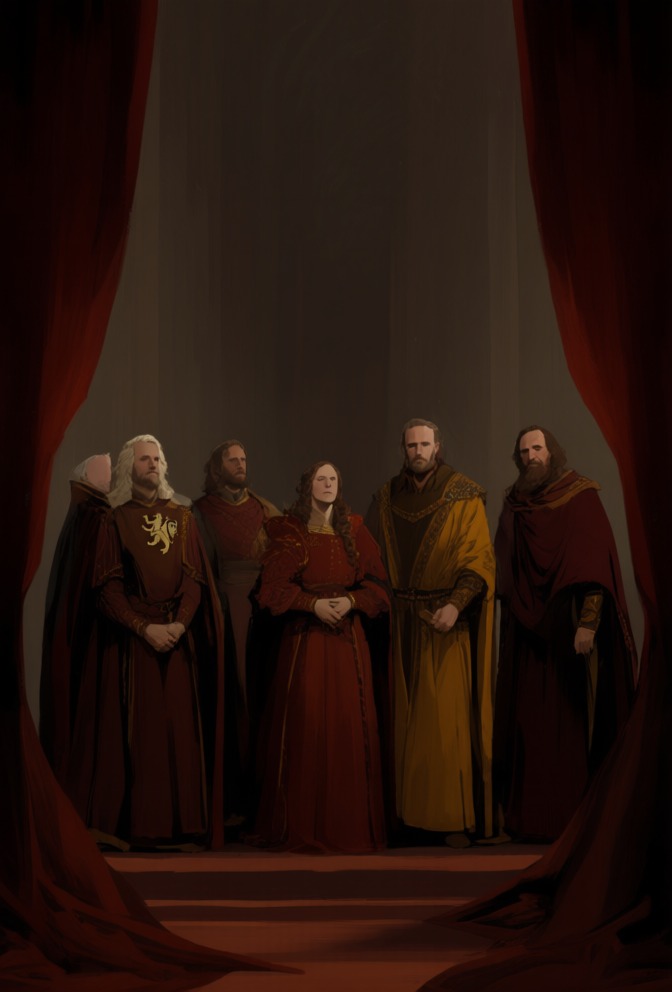
House Lannister is the wealthiest and most powerful of the Great Houses of Westeros, ruling from Casterly Rock and wielding immense influence through gold, marriage, and political cunning. By the events of A Dance with Dragons, the house has suffered catastrophic blows: its patriarch Tywin Lannister has been murdered by his dwarf son Tyrion, its twin heirs Jaime and Cersei are estranged and broken, and its hold on the Iron Throne through the boy king Tommen is increasingly precarious, challenged by rivals, the Faith, and the rise of Targaryen claimants.
Carl Decker is the father of protagonist Charles Decker, a retired Navy recruiter whose rigid, authoritarian parenting and violent temper shape his son's psychological collapse. His brutal masculinity, expressed through hunting, discipline, and contempt for weakness, becomes the primary model Charlie both internalizes and rebels against, culminating in a physical confrontation in the garage that marks the final rupture between them.
Polina is the wife of Gennady and mother of Kostya, a vampire family living in the same building as Anton Gorodetsky. She is a registered vampire who, along with her family, reveals her registration tag to Anton when he first discovers their true nature, demonstrating the uneasy coexistence between the Night Watch and law-abiding vampires in Moscow.
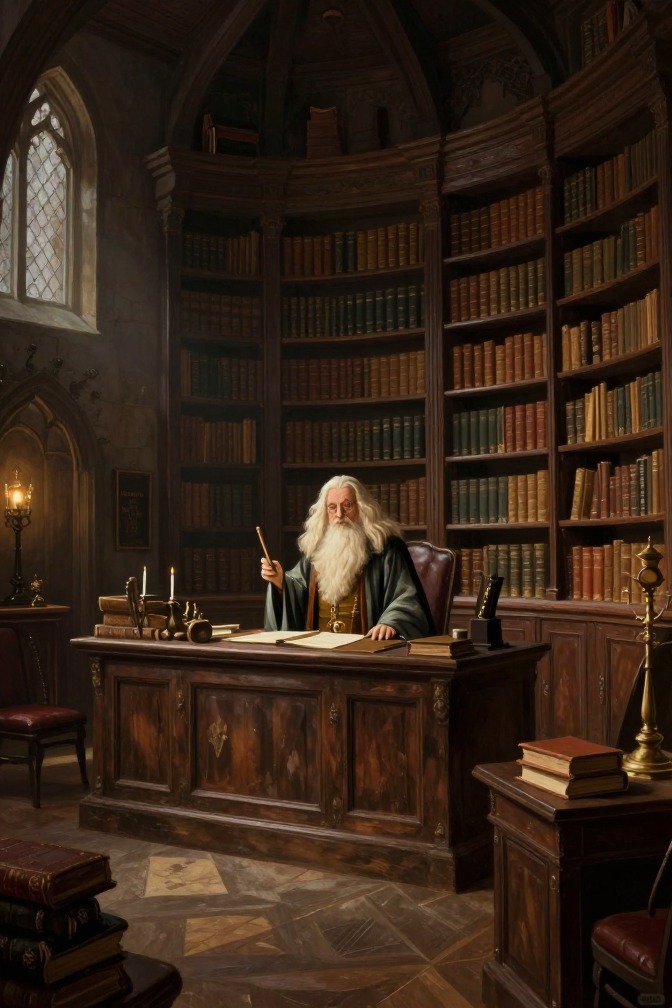
Dumbledore's office is a large, circular room at the top of a moving spiral staircase, guarded by a stone gargoyle and accessible only with a password. It is the headmaster's private sanctum, filled with curious silver instruments, portraits of past headmasters, the Sorting Hat, and the phoenix Fawkes. The office serves as the setting for pivotal moments in the story, including Harry's first visit when he is suspected of attacking Justin Finch-Fletchley and Nearly Headless Nick, and the final confrontation where Dumbledore reveals the truth about Harry's connection to Voldemort and the nature of his choices.
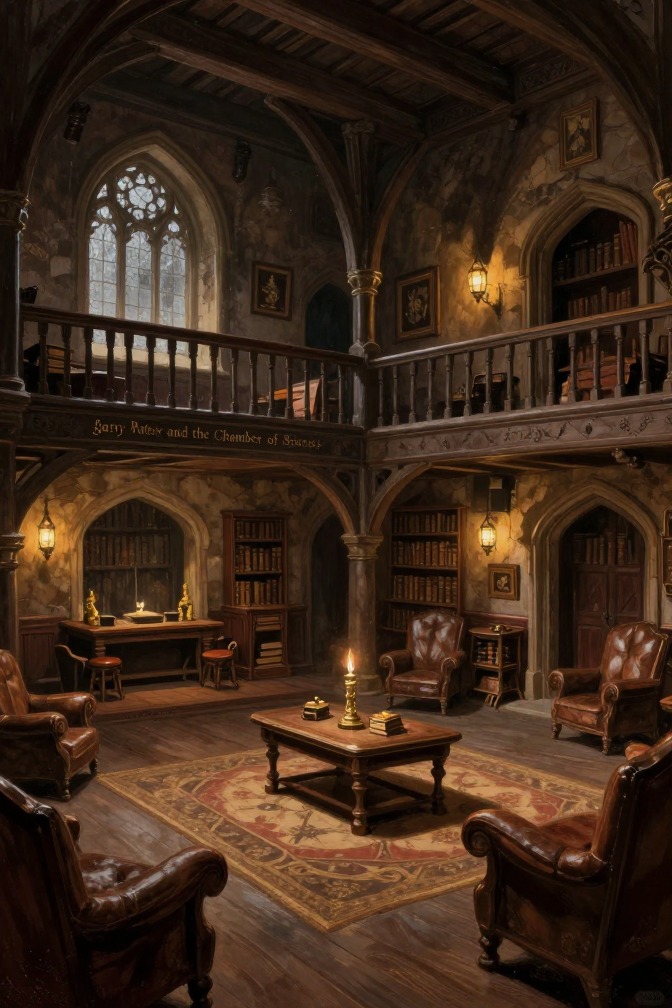
The Gryffindor common room is the central gathering space for Gryffindor House at Hogwarts, a circular, warmly lit tower room that serves as a sanctuary, a site of celebration and mourning, and a symbolic stage for the house's collective identity and moral choices throughout the crises of Harry Potter's second year.
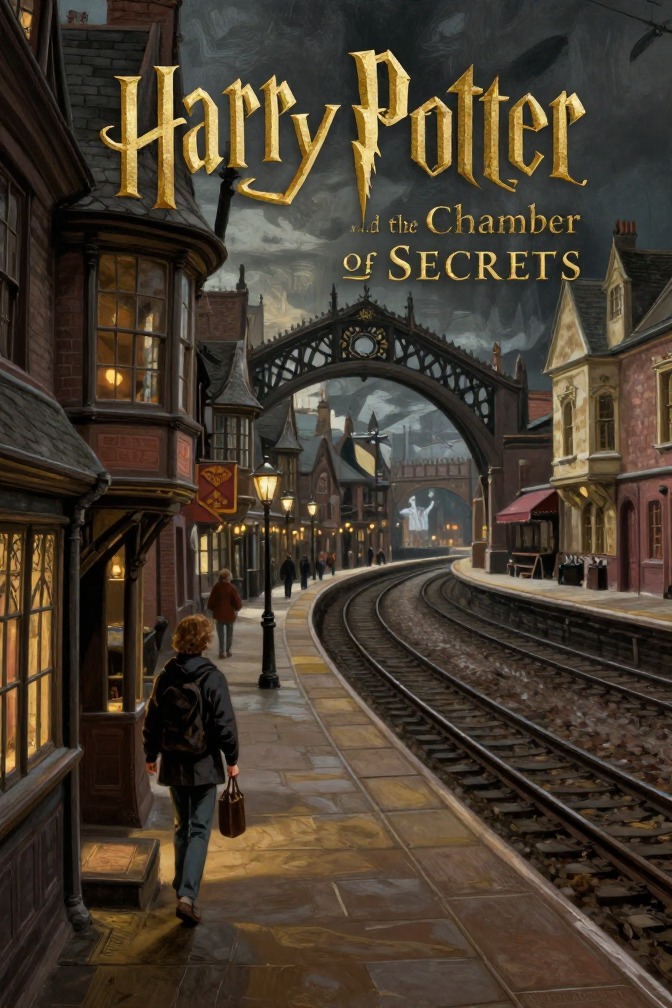
Platform 9¾ is the hidden railway platform at King's Cross Station from which the Hogwarts Express departs each term, accessible only to witches and wizards who walk through the solid barrier between platforms nine and ten. It serves as the crucial threshold between the Muggle world and the wizarding world, and its failure to admit Harry Potter and Ron Weasley at the start of their second year sets off a chain of events that nearly gets them expelled and leads to the flying car incident.
The Persian, a mysterious figure known to all Paris as the 'Persian' and a former daroga (chief of police) of Mazenderan, is the only person who fully understands Erik's secrets and the true nature of the Opera Ghost. He becomes Raoul de Chagny's guide through the Opera's cellars, leading him into the torture-chamber and ultimately helping to save Christine Daae, while his own past with Erik—including saving Erik's life—shapes his unique moral position in the tragedy.
Madam Rosmerta is the landlady of the Three Broomsticks inn in Hogsmeade, a warm and shrewd figure whose pub serves as a social and informational hub for the wizarding community. Her significance in the story lies in her role as a confidante and witness to the revelations about Sirius Black's past, as she listens to Cornelius Fudge, Minerva McGonagall, and Rubeus Hagrid discuss the betrayal of the Potters and Black's escape from Azkaban.
Vincent Crabbe is a Slytherin student at Hogwarts and one of Draco Malfoy's two primary henchmen, distinguished by his great physical size, thick neck, and pudding-bowl haircut, but notable for his near-total lack of independent initiative or intelligence. Throughout Harry Potter and the Prisoner of Azkaban, Crabbe functions almost exclusively as an extension of Malfoy's will, appearing in scenes of intimidation, bullying, and failed sabotage, yet his presence is so passive that he rarely speaks or acts without direct orders, making him a textbook example of a flat character built around a single idea of brutish, unquestioning loyalty.
Agelaus, son of Damastor, is a minor but strategically significant suitor of Penelope who emerges as a leader among the wooers during the final battle in Odysseus' hall. He attempts to negotiate a settlement after Antinous falls, then organizes the surviving suitors for a last stand, only to be killed by Odysseus himself.
Amphinomus, son of Nisus of Dulichium, is the most decent and perceptive of Penelope's suitors in the Odyssey. He alone speaks against the plot to murder Telemachus, shows kindness to the disguised Odysseus, and receives a direct warning to flee before the coming slaughter—yet he remains among the suitors and is killed by Telemachus during the massacre, making him a figure of tragic, wasted decency.
Amphitryon is a mortal king of Thebes and the husband of Alcmena, best known in the Odyssey as the mortal husband whose wife bore the hero Hercules to Zeus, a relationship that frames the poem's treatment of divine and mortal paternity.
Artemis, the virgin goddess of the hunt, wild animals, and childbirth, appears in the Odyssey as a distant but potent figure whose name is invoked in oaths, similes, and prayers, marking moments of beauty, death, and female virtue.
Castor, the mortal son of Tyndareus and Leda and brother of Pollux, appears in the Odyssey as a figure of the heroic past, remembered for his horsemanship and for the unique divine privilege that allows him and his brother to alternate between life and death.
Clytius is a minor but structurally significant character in the Odyssey, known primarily as the father of Piraeus, the loyal Ithacan who accompanies Telemachus on his journey to Pylos and later shelters the seer Theoclymenus. His name appears in the poem as a patronymic marker that establishes Piraeus's lineage and, through the actions of his son, reinforces the theme of xenia (hospitality) and the network of trustworthy allies that supports Telemachus during his father's absence.
Ctesippus, a suitor from Same, is a minor but vividly drawn character whose gratuitous violence and ignominious death illustrate the suitors' collective hubris and the justice of Odysseus's revenge.
Eteoneus, the servant of King Menelaus, is a minor but revealing character in the Odyssey whose brief appearances illuminate the protocols of Homeric hospitality and the character of his master. He first appears at the gate of Menelaus's palace in Lacedaemon, where his hesitation about whether to admit the strangers Telemachus and Pisistratus draws a sharp rebuke from Menelaus, who insists on the sacred duty of welcoming guests. This single scene establishes Eteoneus as a conscientious but cautious functionary, one whose actions serve primarily to highlight the king's own adherence to the code of xenia.
Iphicles is a minor figure in the Odyssey, mentioned in the underworld narrative as the owner of the cattle that the seer Melampus was forced to raid as a bride-price for Neleus's daughter Pero, a story that illustrates the heroic age's system of impossible trials and the power of prophetic knowledge.
Irus is a minor but memorable character in the Odyssey, a common beggar in Ithaca who challenges Odysseus (disguised as an old tramp) to a fistfight and is brutally defeated, serving as a comic foil and a prelude to the suitors' own downfall.
Laertes, the aged father of Odysseus, is a figure of profound grief and withdrawal, whose re-emergence in the final book of the Odyssey completes the hero's homecoming and the restoration of the Ithacan royal house. Living in isolation on his farm, worn down by sorrow and neglect, he is the last member of Odysseus's family to be reunited with the hero, and his recognition scene—triggered by the proof of the scar and the remembered orchard—provides the poem's final, deeply personal anagnorisis before the resolution of the civil conflict.
Lampus is one of the two immortal horses that draw the chariot of Dawn (Eos), mentioned in the Odyssey as part of the divine machinery that governs the transition from night to day.
Maron, the priest of Apollo at Ismarus, is a minor but pivotal figure whose gifts to Odysseus—especially the exceptionally strong, sweet wine—enable the hero to outwit and blind the Cyclops Polyphemus, an act that sets the entire second half of the Odyssey in motion.
Oedipus, the Theban king who unwittingly killed his father and married his mother, appears in the Odyssey as a cautionary figure whose catastrophic fate is recounted among the ghosts of famous women in the underworld, illustrating the poem's themes of hidden identity, divine revelation, and the inescapable consequences of transgression.
Patroclus, the beloved companion of Achilles, is a figure whose death and funeral are recounted in the Odyssey as a touchstone of heroic glory and grief, serving both as a model for the proper treatment of fallen warriors and as a contrast to the inglorious ends suffered by other characters.
Pelias is a minor but significant figure in the Odyssey, appearing in Odysseus's catalogue of famous women in the Underworld as the son of Tyro and the sea-god Poseidon, and as a king of Iolcus known for his wealth in sheep. His mention serves to illustrate the heroic lineages of the past and to contrast the fates of mortal women, while also providing a genealogical link to the house of Nestor and other major figures of the epic tradition.
Perimedes is one of Odysseus's crew members, a minor but recurring figure who appears in several key episodes of the Odyssey, including the encounter with the Cyclops Polyphemus, the visit to the Underworld, and the passage past the Sirens. Though he never speaks or acts independently, his presence in these critical scenes marks him as a steady, reliable companion who participates in the most dangerous moments of the voyage.
Persephone, the queen of the underworld, is a pivotal figure in Odysseus's journey to the land of the dead, where she controls the access of ghosts to the sacrificial blood and thus enables the prophecy that guides his return.
Pirithous is a legendary king of the Lapiths, a companion of Theseus, and a figure whose attempted abduction of Persephone from the underworld is briefly glimpsed in Odysseus's catalogue of the dead during his nekyia. Though he never appears in the living action of the Odyssey, his name marks the boundary of Odysseus's own descent narrative and serves as a foil for the hero's restraint and piety.
Pisander, son of Polyctor, is a minor suitor from Ithaca who participates in the contest of the bow and is killed by the stockman Philoetius during the slaughter of the suitors. His brief appearance underscores the collective guilt and violent end of those who wasted Odysseus's estate and courted Penelope against her will.
Pollux, the mighty boxer and son of Tyndareus and Leda, appears in the Odyssey only as a name in Odysseus's catalogue of famous women he saw in the Underworld, where he and his brother Castor are described as lying under the earth yet still alive, alternating between death and life every other day by a special dispensation of Zeus, and holding the rank of gods.