Eurymedon is a minor but structurally significant figure in the Odyssey, appearing only in genealogical and mythological references that link the Phaeacian royal house to the divine and monstrous realms. He is the father of Periboea, who bears Nausithous to Poseidon, making him the great-grandfather of King Alcinous and Queen Arete. His story—a giant king who destroyed his own people—serves as a cautionary tale about hubris and dynastic ruin, and his name recurs in the poem's allusions to the Cyclopes and the giants, reinforcing the thematic opposition between civilized order and savage violence.
Evenor is a minor figure in the Odyssey, known only as the father of Leiocritus, one of the suitors of Penelope. His sole appearance in the poem occurs during the Ithacan assembly, where his son speaks dismissively of Telemachus's plans and of the possibility of Odysseus's return, embodying the arrogance of the suitors.
Hermione, the only daughter of Menelaus and Helen of Troy, is a minor but symbolically significant figure in the Odyssey, whose marriage to Neoptolemus is announced during Telemachus's visit to Sparta, serving as a backdrop that underscores the themes of dynastic continuity, the lingering consequences of the Trojan War, and the complex domestic life of the Atreid household.
Iasion is a mortal man from Greek mythology who appears in the Odyssey only as a brief exemplum in Calypso's angry speech to Hermes, where she accuses the gods of hypocritical jealousy toward goddesses who take mortal lovers. His story—loving Demeter in a thrice-ploughed field and being killed by Zeus's thunderbolt—serves as a precedent for Calypso's own situation with Odysseus and illustrates the poem's thematic concern with divine double standards regarding immortal-mortal unions.
Iasus is a minor figure in the Odyssey, mentioned as the father of Amphion, king of Minyan Orchomenus, and the grandfather of Chloris, who married Neleus and became queen of Pylos. His name appears in the catalogue of heroines that Odysseus recounts during his visit to the underworld, where he lists the wives and daughters of famous men. Iasus himself has no direct role in the narrative, but his inclusion in this genealogical list helps establish the lineage of Nestor, a key figure in Telemachus's journey, and connects the world of the poem to the broader mythological tradition of Boeotia.
Icmalius is a minor but symbolically significant craftsman in the Odyssey, known for fashioning Penelope's distinctive inlaid seat, which becomes a key prop in the recognition scene between Odysseus and his wife.
Mantius is a minor figure in the Odyssey, mentioned only in the genealogy of the seer Theoclymenus, but his lineage establishes the prophetic tradition that runs through the poem and connects the world of the suitors to the divine knowledge that foretells their doom.
Megapenthes is the illegitimate son of Menelaus, born to a bondwoman after Helen had ceased to bear children, who appears briefly in the Odyssey as a participant in his father's household rituals and gift-giving, serving as a minor figure who underscores the complexities of royal lineage and the domestic order of Sparta.
Megara, daughter of King Creon of Thebes and wife of the hero Heracles, appears in the Odyssey only as a name in Odysseus's catalogue of famous women he saw in the Underworld, but her story—of marriage to the greatest of Greek heroes and the catastrophic destruction of her children—serves as a paradigm of the suffering that befalls even the most illustrious families, reinforcing the poem's themes of mortality, divine cruelty, and the fragility of human happiness.
Periboea is a minor but genealogically crucial figure in the Odyssey, the beautiful youngest daughter of the giant-king Eurymedon who, after her father's ruin, became the mother of Nausithous by Poseidon and thus the ancestress of the Phaeacian royal line.
Pheres is a minor figure in the Odyssey, mentioned only in the catalog of heroines during Odysseus's visit to the underworld. He is the son of Cretheus and Tyro, and the brother of Aeson and Amythaon, appearing as part of a genealogical list that connects the epic's world to the broader mythological tradition.
Philoctetes, the son of Poeas and the master archer of the Trojan War, is a figure whose bow—inherited from Heracles—is essential to the fall of Troy, yet whose own fate is marked by abandonment, suffering, and a belated return to honor. In the Odyssey he appears only in report, but his story frames the poem's central themes of justified revenge, the power of inherited weapons, and the moral calculus of suffering.
Phronius is a minor figure in the Odyssey, the father of Noemon, the young Ithacan who lends Telemachus his ship for the voyage to Pylos. Though he never appears directly, his name enters the story at a crucial moment of revelation, when Noemon's casual inquiry about his vessel exposes to the suitors that Telemachus has slipped away, triggering their murderous ambush plot.
Polydamna is a minor but pivotal figure in the Odyssey, the Egyptian wife of Thon who gives Helen the potent drug nepenthe, a substance that erases grief and enables the epic's most sustained act of storytelling.
Salmoneus is a minor figure in the Odyssey, mentioned only in the underworld catalogue as the father of Tyro, but his name carries significant mythological weight as a king punished for hubris, a story that the poem invokes to reinforce its own themes of divine justice and the limits of mortal ambition.
Thon is a minor but significant Egyptian figure in the Odyssey, mentioned as the husband of Polydamna, who gave Helen the nepenthe drug that banishes sorrow. His brief appearance serves to anchor the poem's connection to Egypt, a land of exotic knowledge and potent herbs, and to highlight Helen's access to extraordinary resources.
Thrasymedes is a son of Nestor, king of Pylos, who participates in the sacrificial rituals and athletic contests that mark Telemachus's visit, and later fights alongside his father and brothers in the final conflict between Odysseus's party and the Ithacan rebels.
Cyprus is a significant location in the Odyssey, appearing both as a destination in Menelaus's travels and as a place of exile and refuge in Odysseus's fabricated autobiography, serving as a marker of wealth, cultural exchange, and the far-reaching consequences of the Trojan War.
The relationship between Odysseus and Alcinous, king of the Phaeacians, is the paradigmatic example of Homeric xenia (guest-friendship) in the Odyssey, transforming a shipwrecked stranger into an honored guest who receives lavish gifts, a safe escort home, and the king's offer of his daughter's hand in marriage.
De Lacey is the blind, benevolent patriarch of the exiled French family whose cottage the monster secretly observes, and the only human being who ever treats the monster with kindness before learning his identity.
Beaufort is a Genevan merchant whose financial ruin and proud retreat to Lucerne set in motion the chain of events that brings Caroline Beaufort into the life of Alphonse Frankenstein, ultimately shaping the family into which Victor Frankenstein is born.
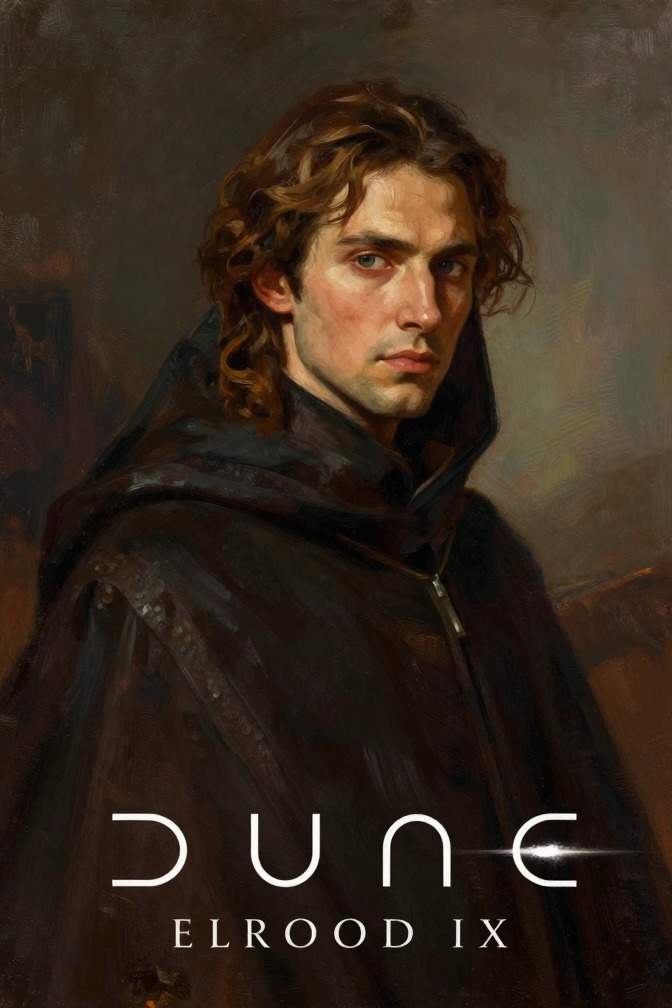
Elrood IX is the 80th Padishah Emperor of the Known Universe, father of Shaddam IV, and a pivotal figure in the dynastic history of House Corrino. His reign, which ended with his death by chaumurky (poison in a drink) in 10,156, set the stage for the events of Dune, as his son's subsequent rule and the political machinations of the Great Houses all trace back to the legacy of his rule and the manner of his passing.
Kinet is a deaf Harkonnen trooper who, along with his companion Czigo, is tasked with transporting the captured Lady Jessica and Paul Atreides into the desert to be killed. His deafness is a crucial plot point, as the Baron Vladimir Harkonnen specifically chose him to guard the Bene Gesserit-trained captives, knowing that Jessica's formidable 'Voice' would be useless against a man who cannot hear it. Kinet's role in the escape sequence is pivotal; his inability to hear Paul's command to remove Jessica's gag allows the plan to unfold, and his subsequent death at the hands of Czigo, who is manipulated by Jessica's Voice, marks a turning point in the captives' flight to freedom.
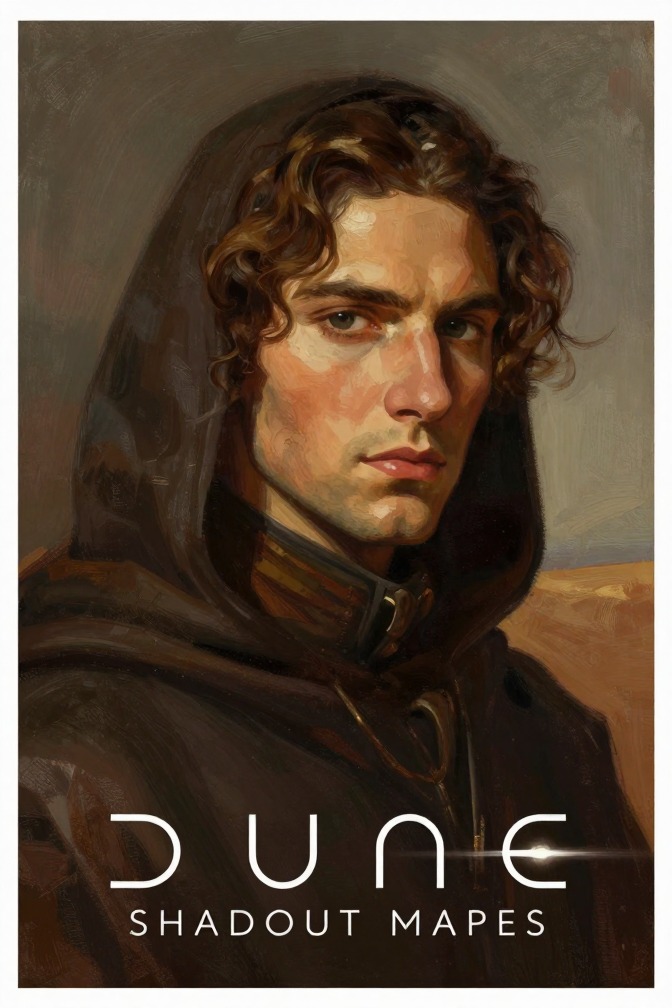
Shadout Mapes is the Fremen housekeeper of the Atreides household on Arrakis, a pivotal figure who tests Lady Jessica and presents her with a crysknife, thereby fulfilling a prophecy and forging a bond between the Fremen and the Atreides. Her actions and warnings—including the revelation of a traitor—set in motion key events of the novel's first half.
Duke Leto Atreides and Lady Jessica form the central romantic and political partnership of Frank Herbert's Dune, a bond that shapes the novel's entire trajectory. Their relationship—a formal concubinage rather than a marriage—is defined by deep mutual love, political calculation, and the tragic consequences of the Emperor's conspiracy against House Atreides. Jessica's defiance of Bene Gesserit orders to bear a son, Leto's protective deception regarding a suspected traitor, and their final separation through his death at the hands of the traitorous Dr. Yueh establish the emotional and narrative core of the story, ultimately shaping Paul Atreides into the leader he becomes.
Yueh's betrayal of Duke Leto Atreides is the pivotal act of treachery in Frank Herbert's Dune, a carefully engineered subversion of the Suk School's Imperial Conditioning that shatters the Atreides defense and delivers the Duke into the hands of Baron Vladimir Harkonnen. The betrayal is not a simple act of malice but a desperate, tragic bargain: Yueh, a man of profound inner conflict, sacrifices his honor and his life to avenge his wife, Wanna Marcus, and to plant a hidden weapon of vengeance within the Duke himself. This single act precipitates the fall of House Atreides, the capture and death of Duke Leto, and the exile of Paul and Lady Jessica into the desert, setting the entire saga of Muad'Dib into motion.
Maycomb's Economic Depression is the pervasive poverty and economic stagnation that defines the town of Maycomb, shaping its social hierarchies, moral judgments, and the daily lives of its inhabitants during the Great Depression era.
Dr. Lamai is the Thai scientist who developed the medically induced coma technology used for the Hail Mary mission, having led the research that isolated the genetic markers for coma resistance and designed the automated medical care system that sustained the crew during interstellar travel.
Queems is the manager of the Surf-Sand Resort in Fort Lauderdale, Florida, where Dick Hallorann works as a cook during the off-season. He is a minor character whose primary function is to be manipulated by Hallorann into granting him emergency leave to travel to the Overlook Hotel, a deception that underscores Hallorann's desperate commitment to answering Danny Torrance's psychic call for help.
Carlos is a doorman at Theo's childhood apartment building on East Fifty-Seventh Street, a big, handsome Dominican man with a springy walk and a warm, protective manner. He is one of the few stable, affectionate figures from Theo's past, and his loyalty to Theo and his mother, Audrey, endures long after the bombing, the move to Las Vegas, and the building's eventual demolition.