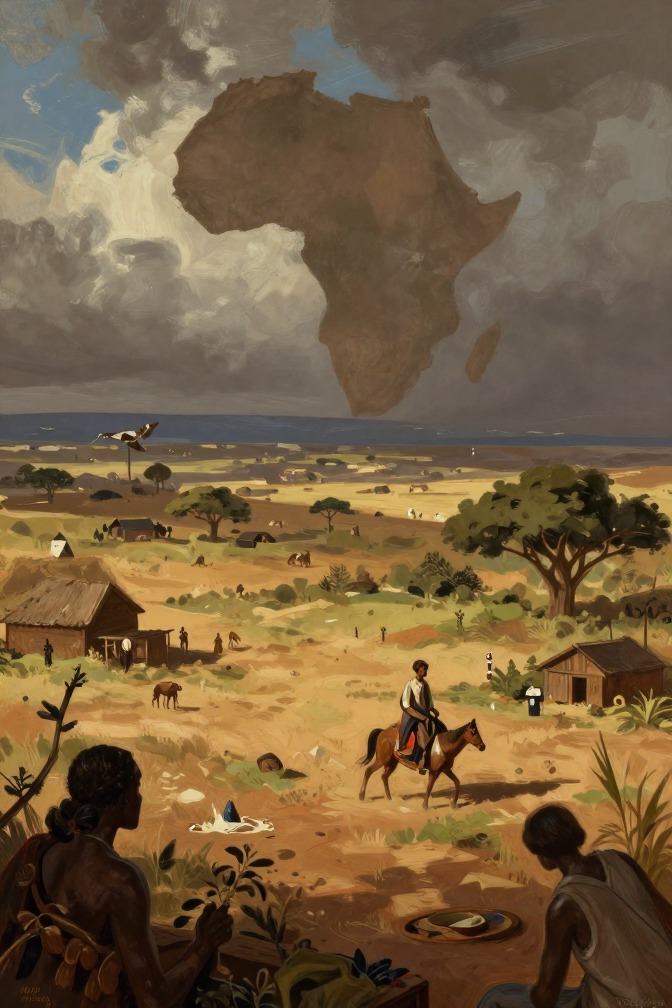
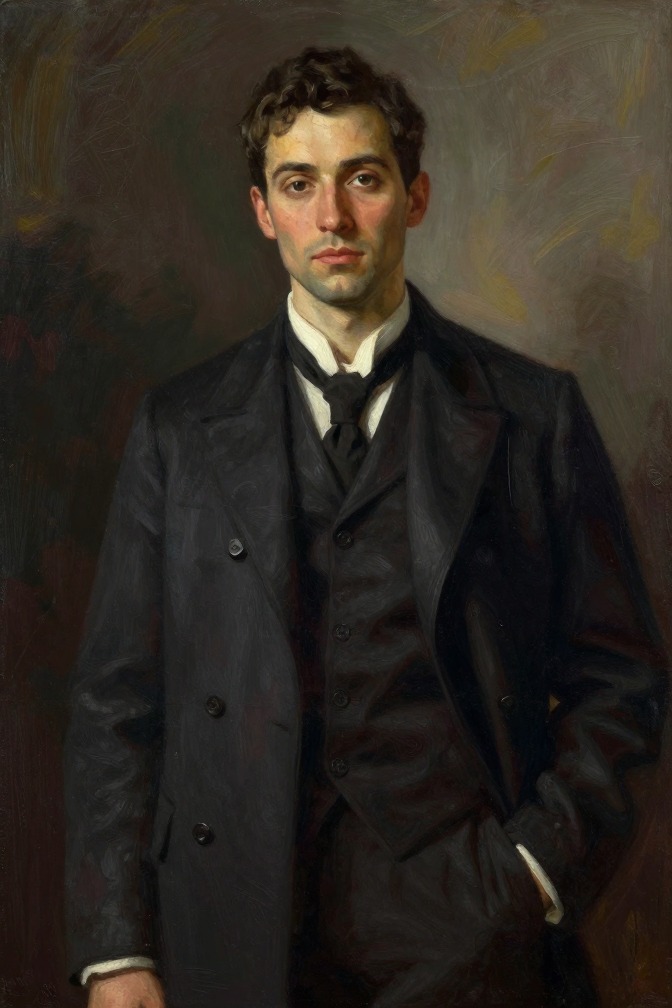
Africa is a continent that serves as a crucial, yet ambiguous, backdrop in Jean-Baptiste Clamence's narrative, a place where he evades direct involvement in war, is interned in a prison camp, and is elected as a mock pope, an experience that deepens his understanding of guilt, power, and the human condition.
Cipango is a distant, mythic island in Jean-Baptiste Clamence's imagination, representing an exotic, unattainable paradise that contrasts with the stagnant, fog-bound reality of Amsterdam and serves as a central symbol of escape, desire, and the dream of domination.
Marken is a small Dutch island in the Zuider Zee that Jean-Baptiste Clamence visits with his interlocutor, using its bleak, horizontal landscape as a stage for his philosophical revelations about guilt, judgment, and the human condition.
Our Lord in the Attic is a clandestine Catholic church hidden in the attic of a canal house in Amsterdam, which Clamence invokes as a symbol of the degraded, hidden, and judged state of modern faith.
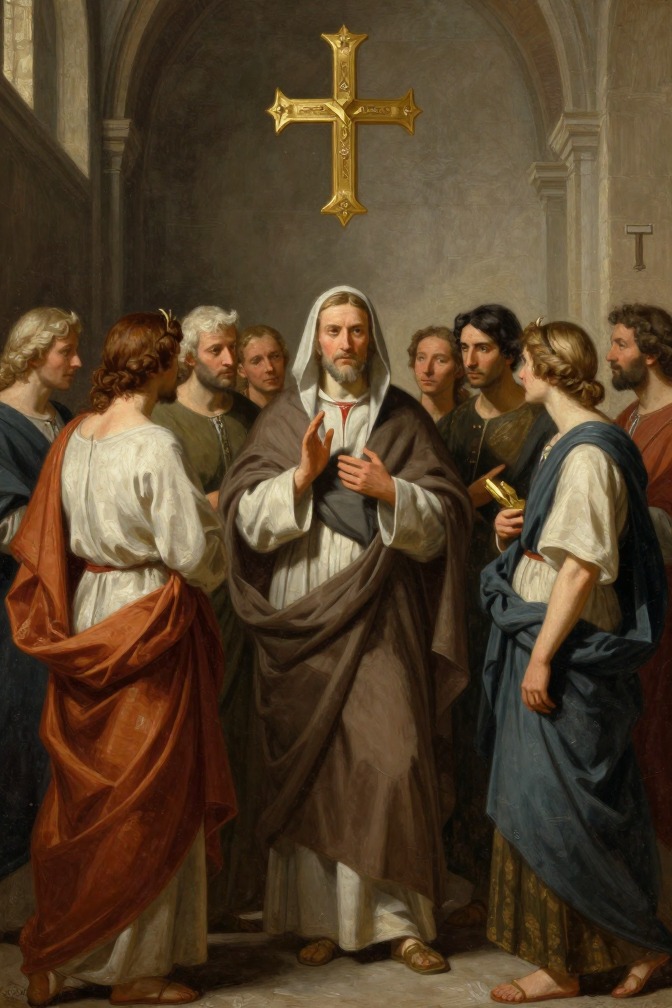
The Catholic Church appears in Jean-Baptiste Clamence's monologue as a historical institution whose authority has been hollowed out, leaving only the impulse to judge without the grace to absolve. Clamence reinterprets Christian figures and events—Christ, Peter, the Slaughter of the Innocents, the Last Judgment—to argue that the Church's moral framework has collapsed into a universal, self-serving condemnation that mirrors his own practice as a judge-penitent.
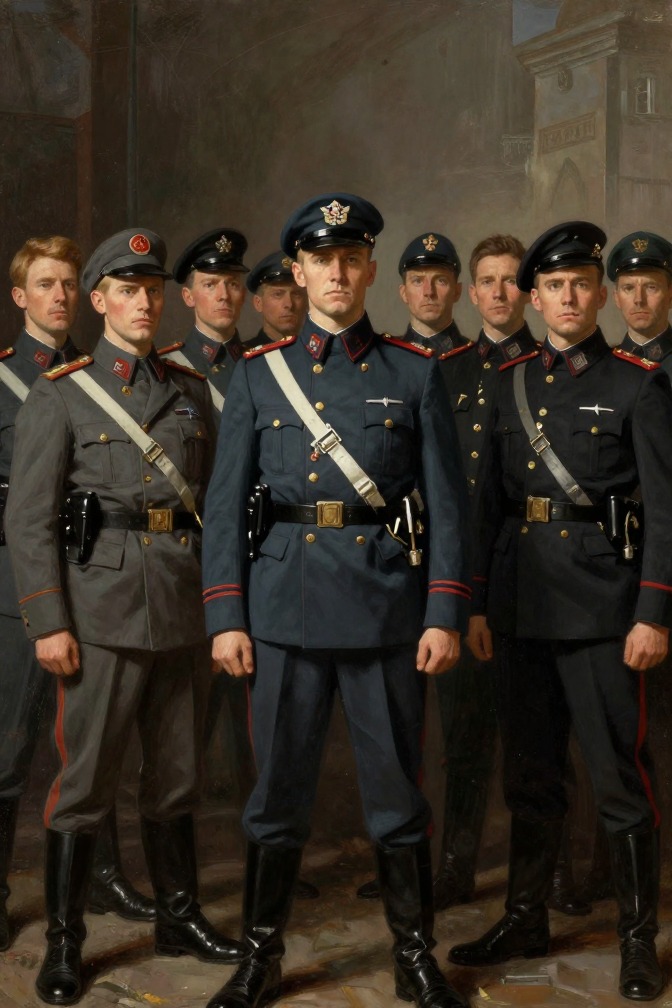
The Nazi Party, referred to by Clamence as "our Hitlerian brethren," is the historical political force whose systematic genocide in Amsterdam—the deportation and assassination of seventy-five thousand Jews—provides the moral and geographical backdrop for Clamence's self-imposed exile and his philosophical monologue. The party's methods of "vacuum-cleaning" and its capacity for organized atrocity serve as a constant, unspoken reference point for Clamence's reflections on guilt, judgment, and the human capacity for evil.
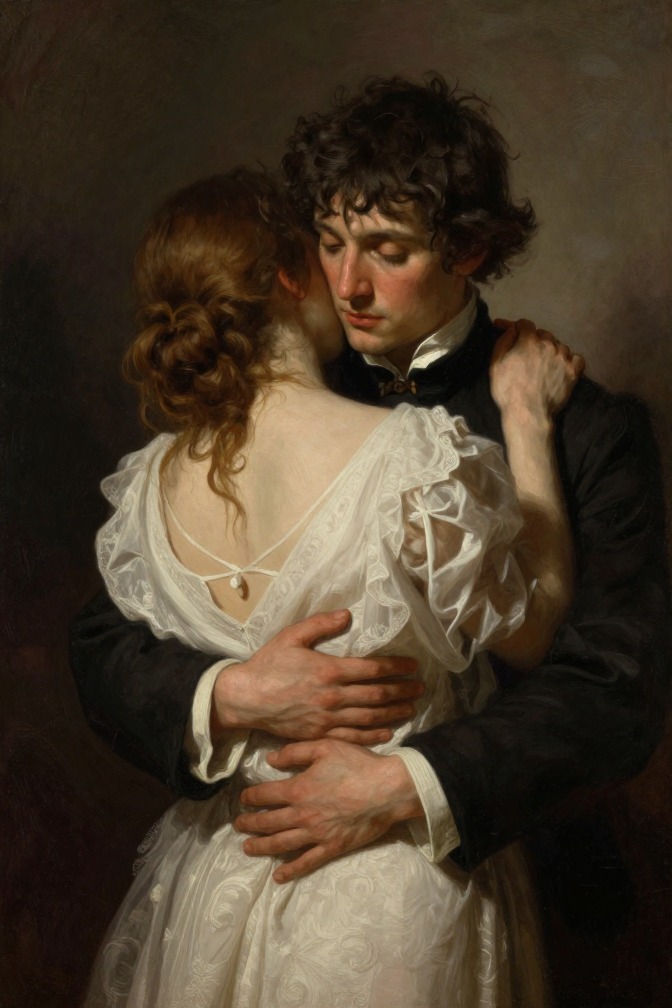
In Albert Camus's *The Fall*, love is a central, paradoxical state that Jean-Baptiste Clamence both craves and systematically corrupts. It is not a genuine, selfless connection but a tool for domination, a source of vanity, and a performance that ultimately reveals his profound self-love and inability to escape the judgment he so fears.
Limbo, in Albert Camus's *The Fall*, is the vestibule of Hell where neutral angels reside, and Jean-Baptiste Clamence uses it as a metaphor for the moral and existential condition of modern humanity—caught between guilt and innocence, unable to commit fully to either good or evil, and perpetually awaiting a judgment that never comes.
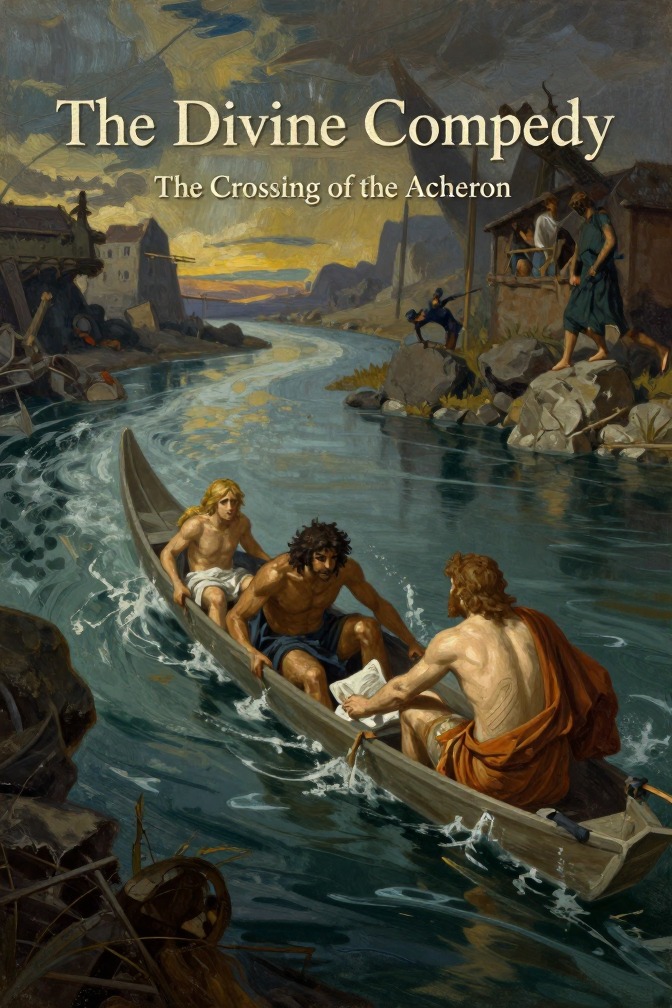
The Crossing of the Acheron is the first major threshold in Dante's journey through Hell, where the poet and his guide Virgil are ferried across the infernal river by the demon Charon, marking the definitive passage from the world of the living into the realm of the damned.
The Final Vision of God is the climactic event of Dante Alighieri's Paradiso, in which the pilgrim, after traversing the entire cosmos, is granted a direct, ineffable vision of the Triune God and the unity of all creation, an experience that simultaneously fulfills and transcends every human desire and intellect.
The Passage through the Gate of Purgatory is the ritual threshold of Dante Alighieri's purgatorial journey, where an angelic gatekeeper inscribes seven P's (peccata) on his forehead with a sword, opens the door with two keys, and warns that those who look back will not return, marking the formal beginning of the penitential ascent.
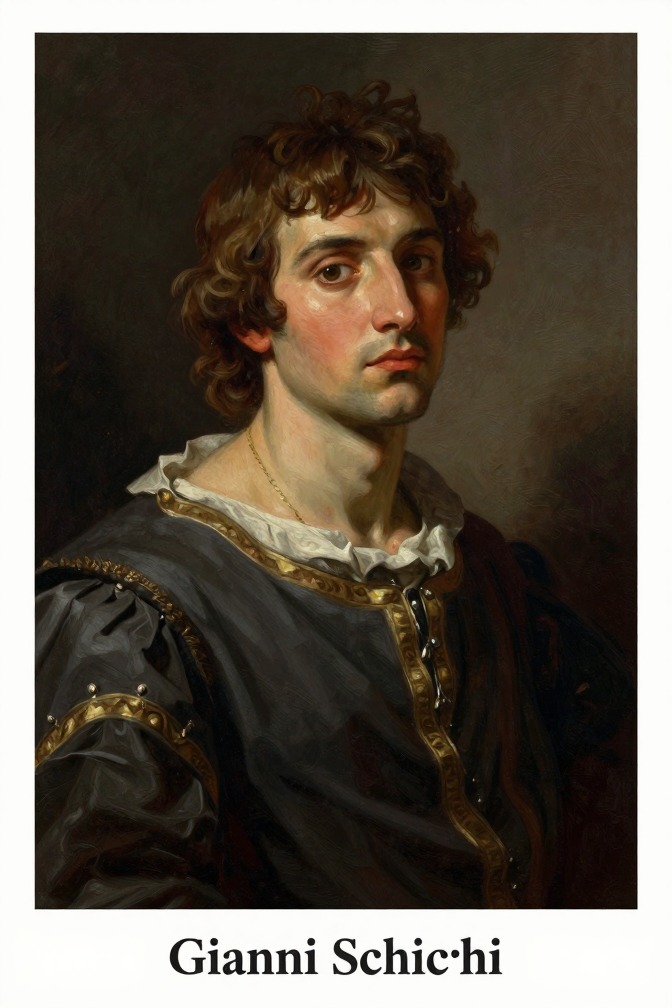
Gianni Schicchi is a damned soul in the Eighth Circle of Dante's Inferno, punished among the Falsifiers for his fraudulent impersonation of a dead man to forge a will. He appears in Canto XXX as a raving, bestial figure who attacks another sinner, embodying the contrapasso of identity theft through his own monstrous transformation.
La Pia is a minor but deeply poignant figure in Dante Alighieri's Purgatorio, a soul among those who died by violence but repented at the last moment. Her brief, haunting speech in Canto V crystallizes the themes of sudden death, unfulfilled love, and the mystery of divine grace, making her one of the most memorable and human voices in the entire Comedy.
Pope Martin IV appears briefly in Purgatorio, Canto XXIV, among the gluttonous on the Sixth Terrace, where his punishment is identified by Forese Donati as a consequence of his earthly indulgence in eels from Lake Bolsena and Vernaccia wine.
The Sweet New Style (Dolce Stil Novo) is a literary movement in 13th-century Italian poetry that Dante Alighieri explicitly identifies and defines in Purgatorio, Canto XXIV, distinguishing his own poetics from those of earlier vernacular poets through a theory of love-inspired, spontaneous composition.
The Three Ladies Benedight are the three heavenly women—the Virgin Mary, Saint Lucia, and Beatrice—whose intercession sets in motion Dante's journey through the afterlife. They form a chain of grace that descends from the highest heaven to the depths of Hell, each acting at a crucial moment to rescue the pilgrim from spiritual ruin. Their coordinated intervention is the theological engine of the entire poem, demonstrating how divine love and mercy operate through a hierarchy of willing intermediaries.
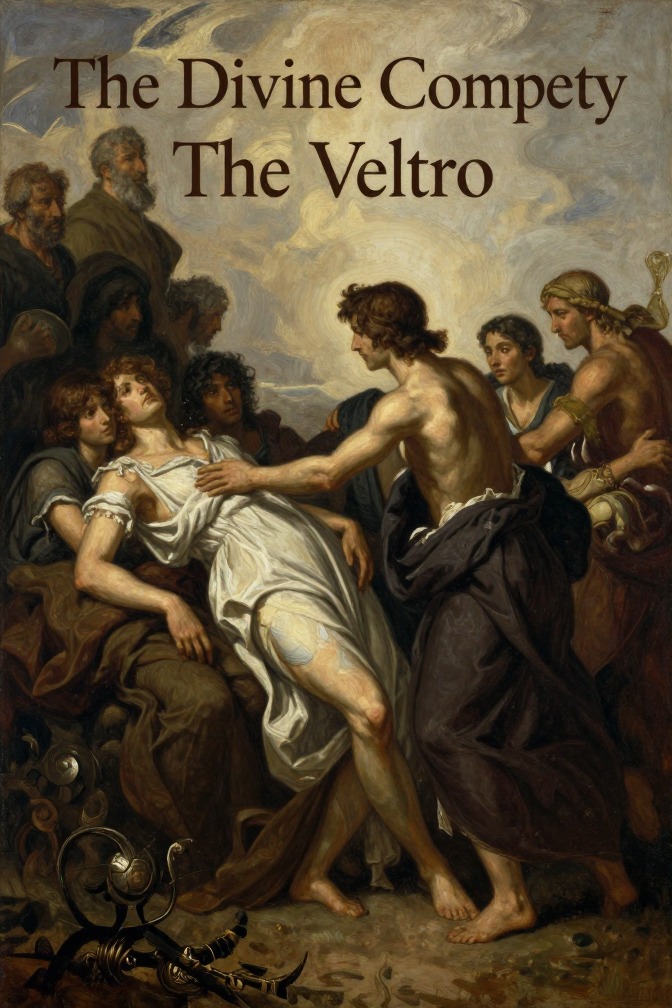
The Veltro is a prophetic figure in Dante's Inferno, introduced by Virgil as a future savior who will hunt down the she-wolf of avarice and restore justice to Italy, embodying the poem's political and spiritual hope.
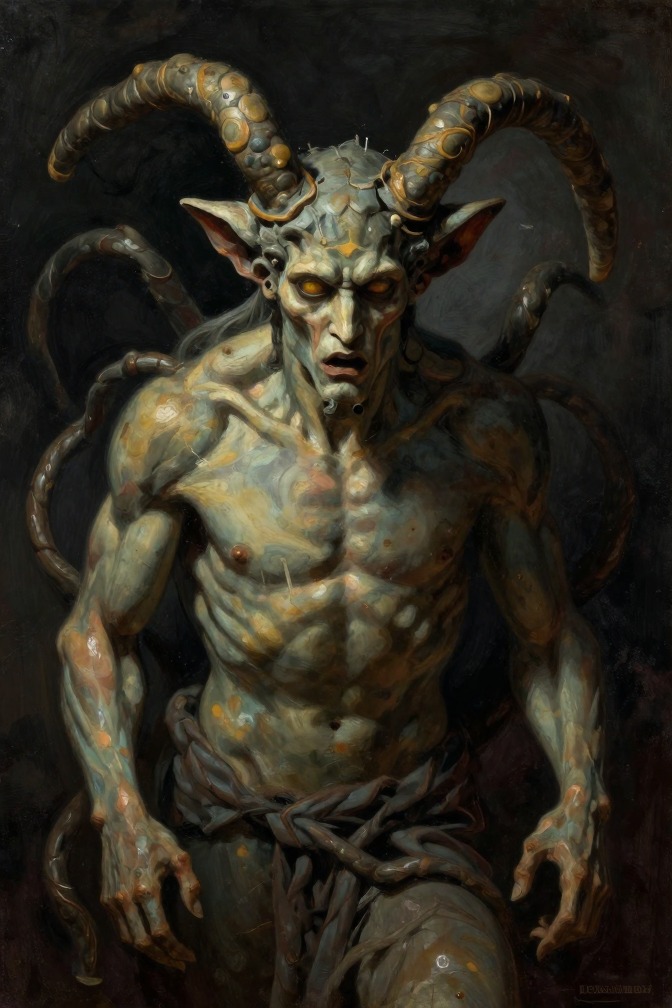
The Gorgon is a monstrous figure from classical mythology who appears in Dante's Inferno as a threat at the gates of the City of Dis, embodying the petrifying power of despair and the danger of looking directly at ultimate evil.
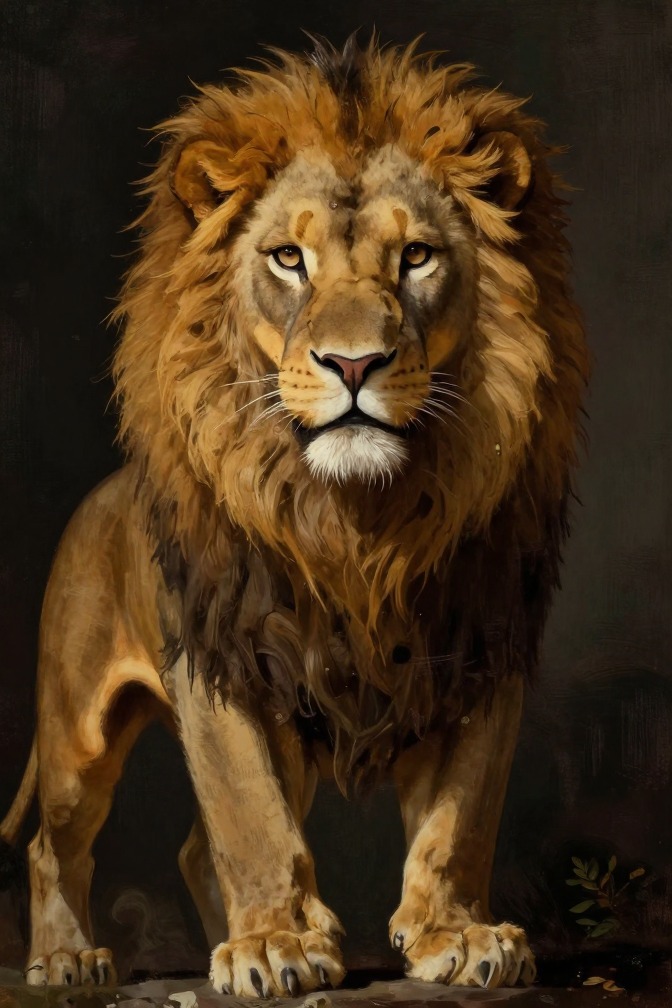
The Lion is the second of the three beasts that block Dante's path in Canto I of the Inferno, embodying violent ambition and pride, and it forces the poet to retreat further into the dark valley, precipitating the intervention of Virgil.
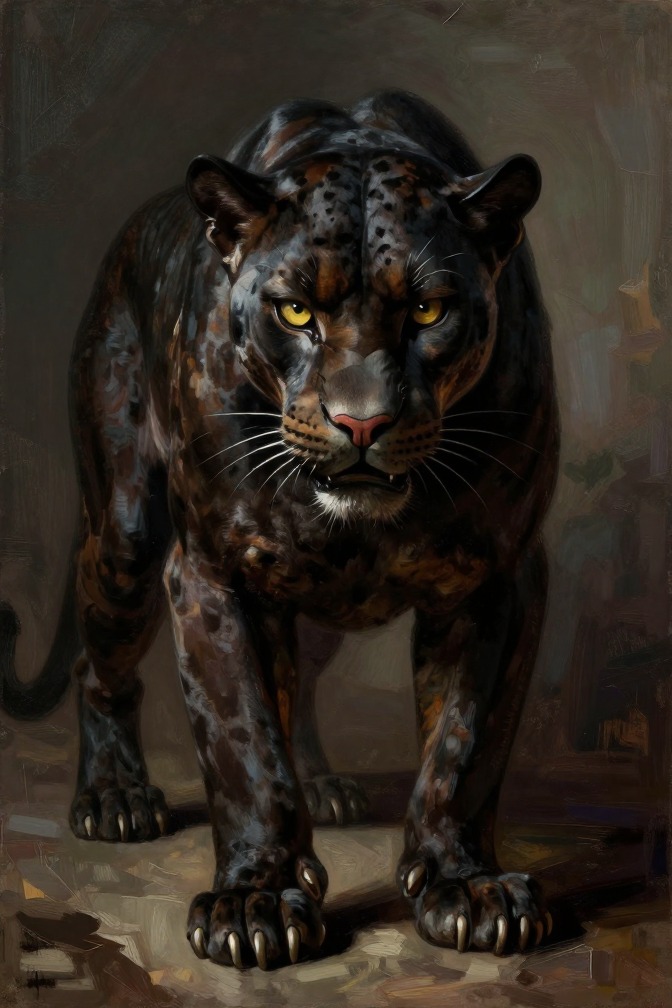
The Panther is the first of the three beasts that block Dante's path in the Dark Forest, representing a specific category of sin and initiating the crisis that leads to his journey through the afterlife.
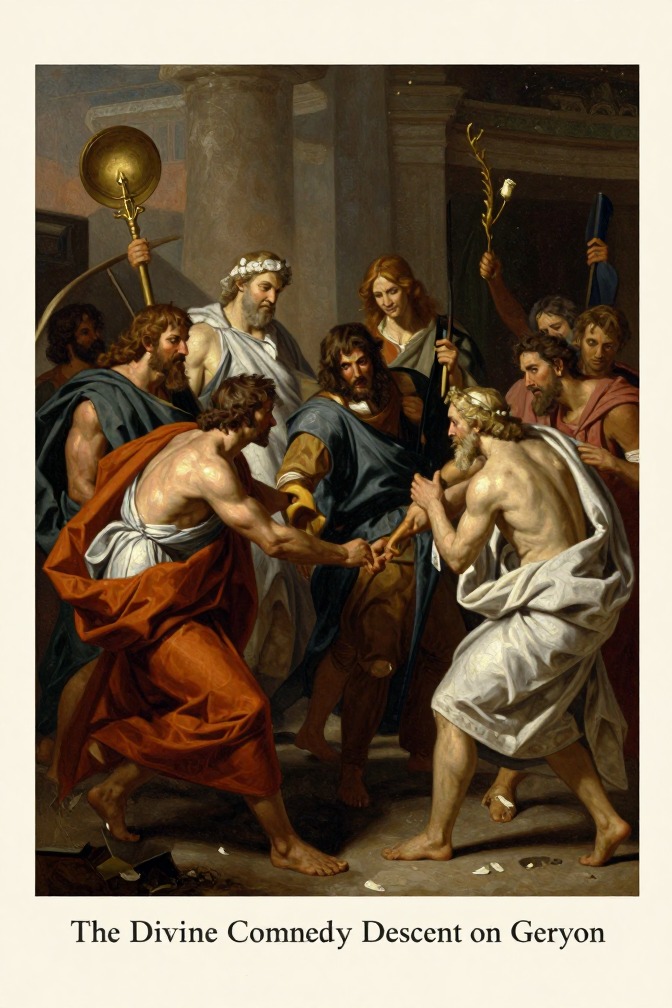
The Descent on Geryon is the pivotal aerial crossing from the seventh to the eighth circle of Hell in Dante's Inferno, in which the poets Virgil and Dante Alighieri ride the monstrous fraud-symbol Geryon down a vast abyss, marking the poem's most vertiginous and psychologically charged transition between the circles of violence and the deeper realm of fraud.
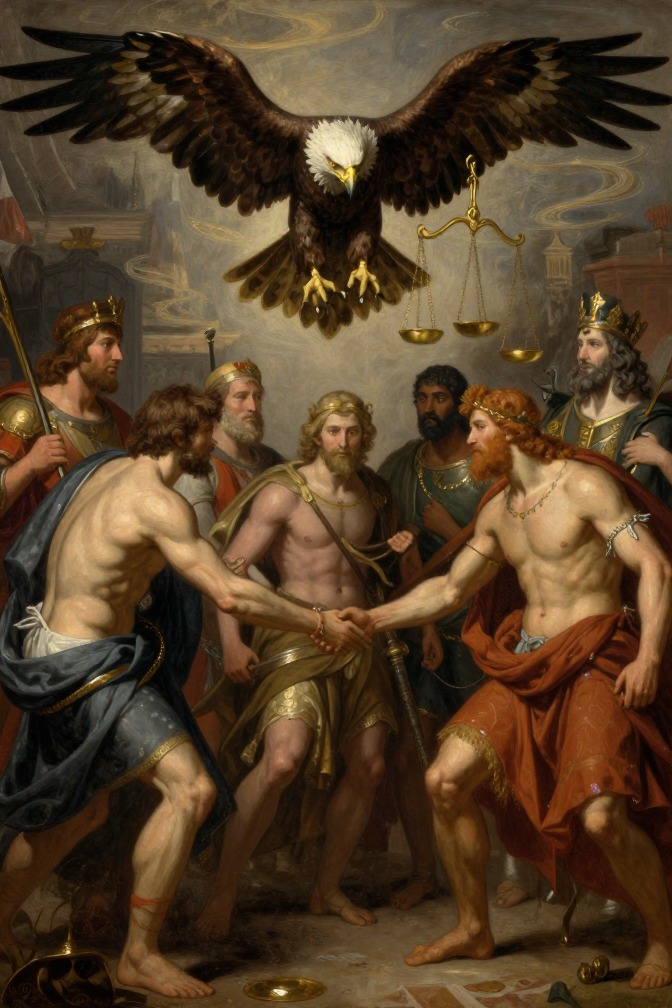
The Eagle of Justice and the Righteous Kings is a central event in Dante's Paradiso, Cantos XVIII–XX, where the poet ascends to the sixth heaven, Jupiter, and witnesses the formation of a celestial eagle from the lights of just rulers. This eagle, a living symbol of divine justice, speaks to Dante, resolving his doubts about the salvation of virtuous pagans and the justice of God's judgments, while also delivering a sweeping condemnation of corrupt contemporary monarchs. The event marks a crucial theological and political turning point in the poem, blending allegorical vision with prophetic denunciation.
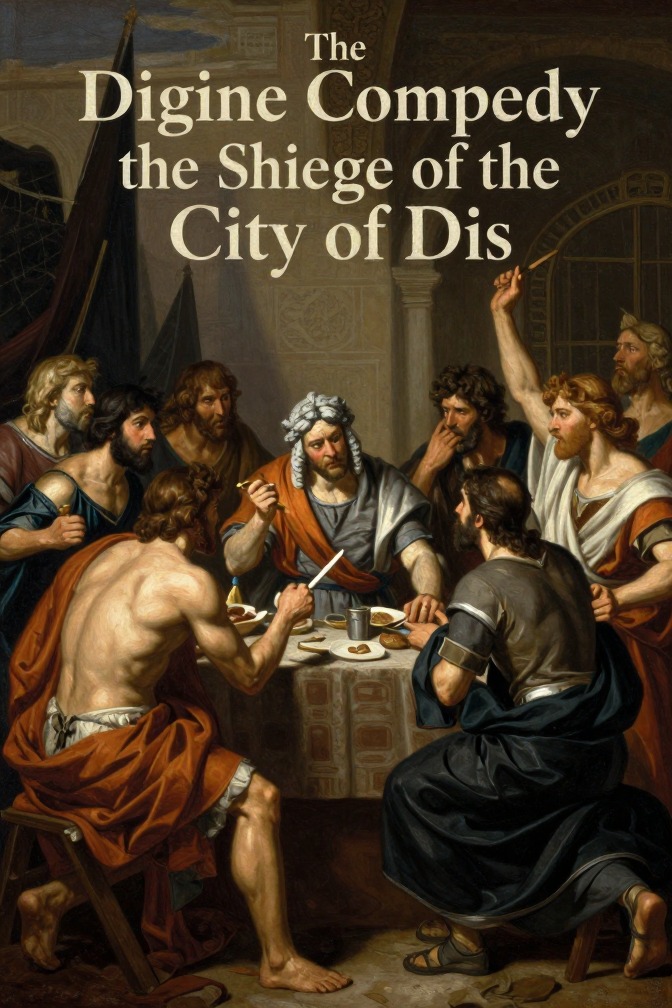
The Siege of the City of Dis is the pivotal crisis of Dante's Inferno, where the poets' journey is violently halted at the gates of the infernal capital by fallen angels, Furies, and the Gorgon Medusa, requiring a heavenly messenger to force entry and revealing the limits of Virgil's power and the necessity of divine grace.
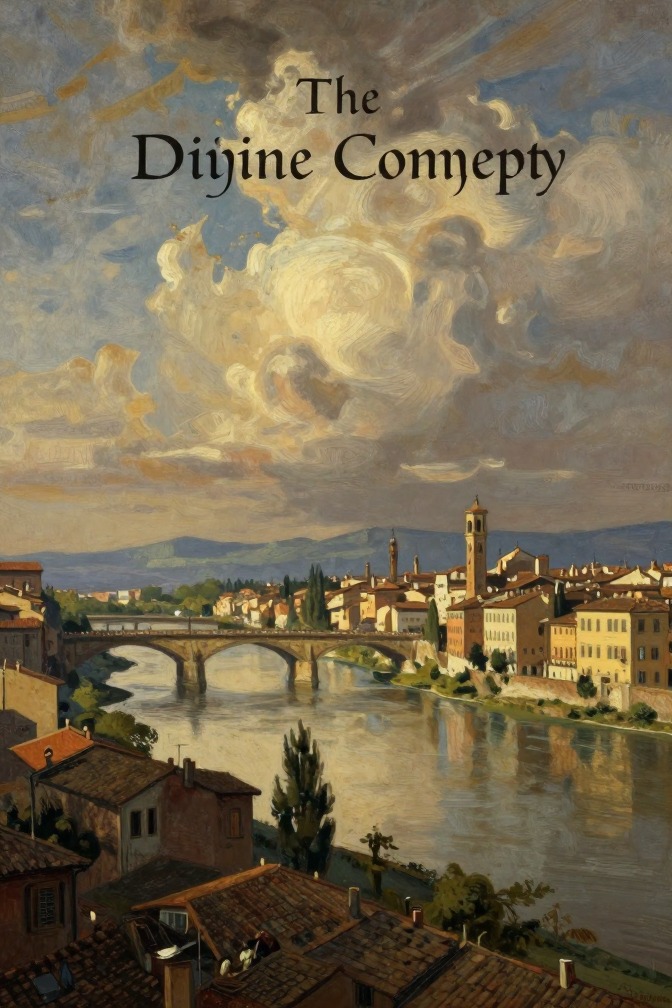
The Arno is the river that flows through Florence, central to the city's identity and repeatedly invoked in Dante's Divine Comedy as a symbol of the moral decay of its inhabitants. It serves as a geographical marker for Dante's birthplace, a target of prophetic denunciation, and a boundary between the virtuous past and the corrupt present.
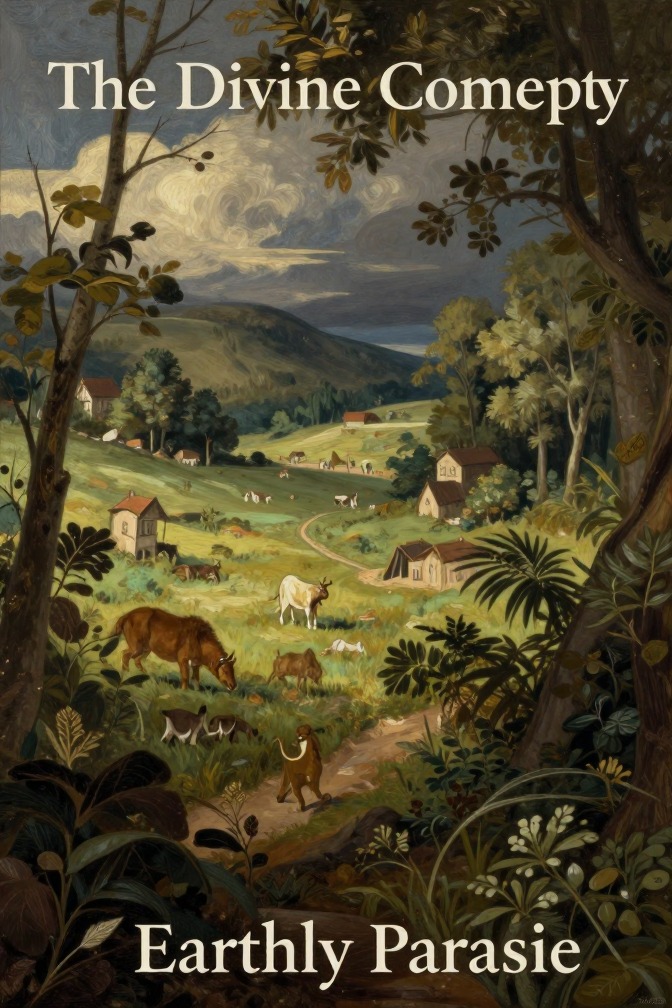
The Earthly Paradise, also known as the Terrestrial Paradise or Garden of Eden, is the summit of Mount Purgatory and the final destination of Dante's purgatorial journey before his ascent to Heaven. It is a sacred, self-sustaining forest untouched by earthly weather, where the innocence of humanity before the Fall is restored, and where Dante is reunited with Beatrice, undergoes confession and purification in the rivers Lethe and Eunoe, and witnesses the allegorical pageant of the Church Triumphant.
The Fourth Terrace of Mount Purgatory is the circle where the sin of Sloth (Accidia) is purged. It is a narrow, smoke-filled ledge where penitent souls run ceaselessly, crying out examples of zeal and condemning sloth, as they work to correct their former spiritual negligence. The terrace is governed by the Angel of Zeal, who blesses the peacemakers and marks the transition to the next stage of purification.
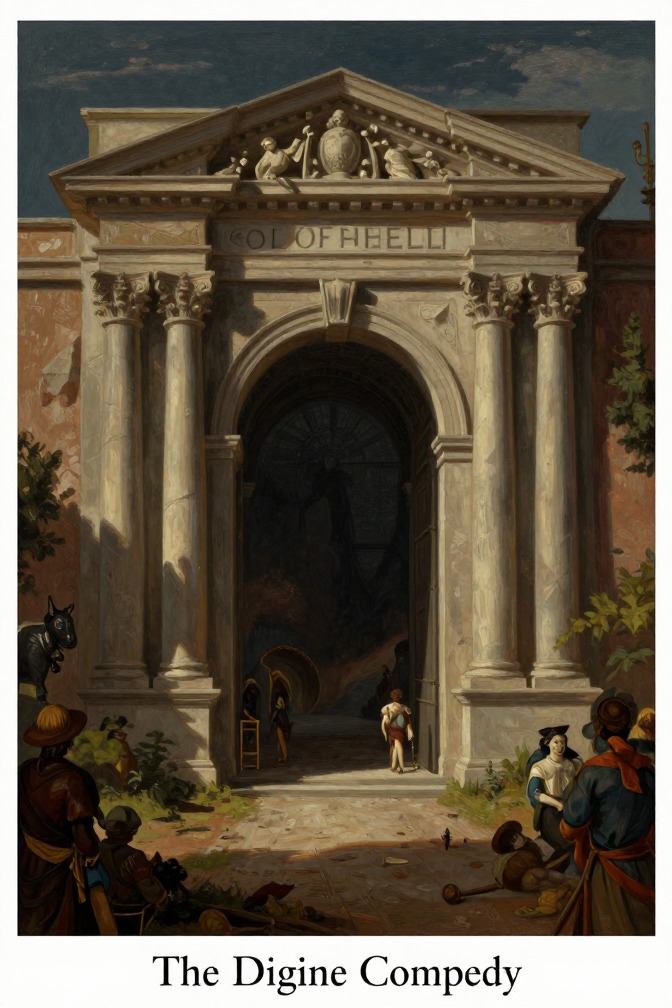
The Gate of Hell is the entrance to the infernal realm in Dante Alighieri's Divine Comedy, marked by the terrifying inscription that warns all who enter to abandon hope. It is the threshold between the world of the living and the eternal punishment of the damned, and its appearance and the events surrounding it establish the moral and emotional stakes of the entire journey.
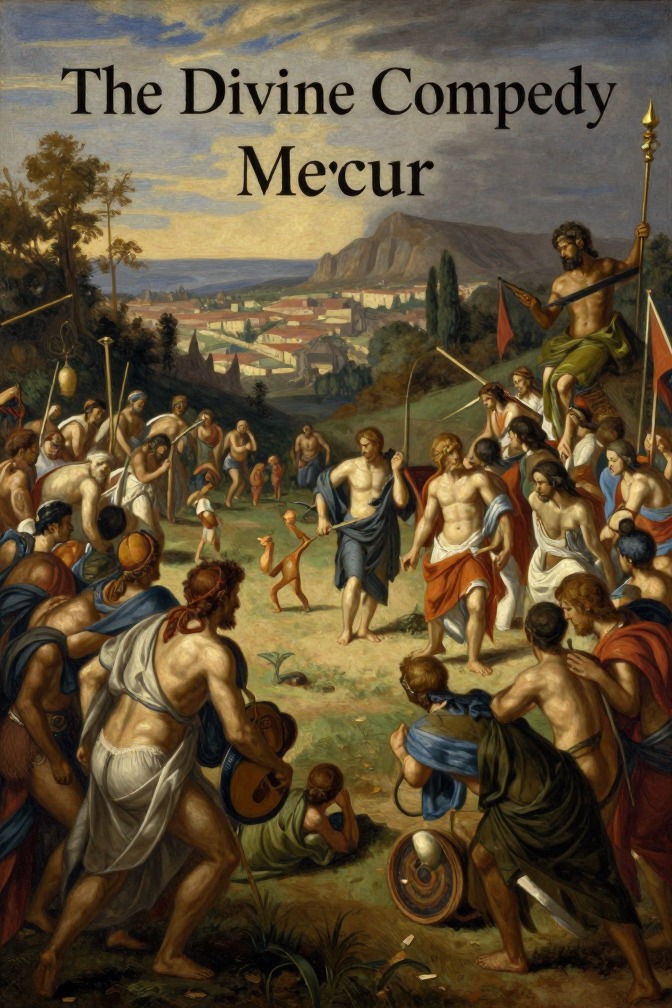
Mercury, the second heaven of Paradise, is the sphere where the blessed spirits who achieved great deeds for the love of fame dwell. It is here that the pilgrim Dante encounters the soul of the Emperor Justinian, who recounts the history of the Roman Eagle and delivers a discourse on the nature of fame, justice, and the divine will.
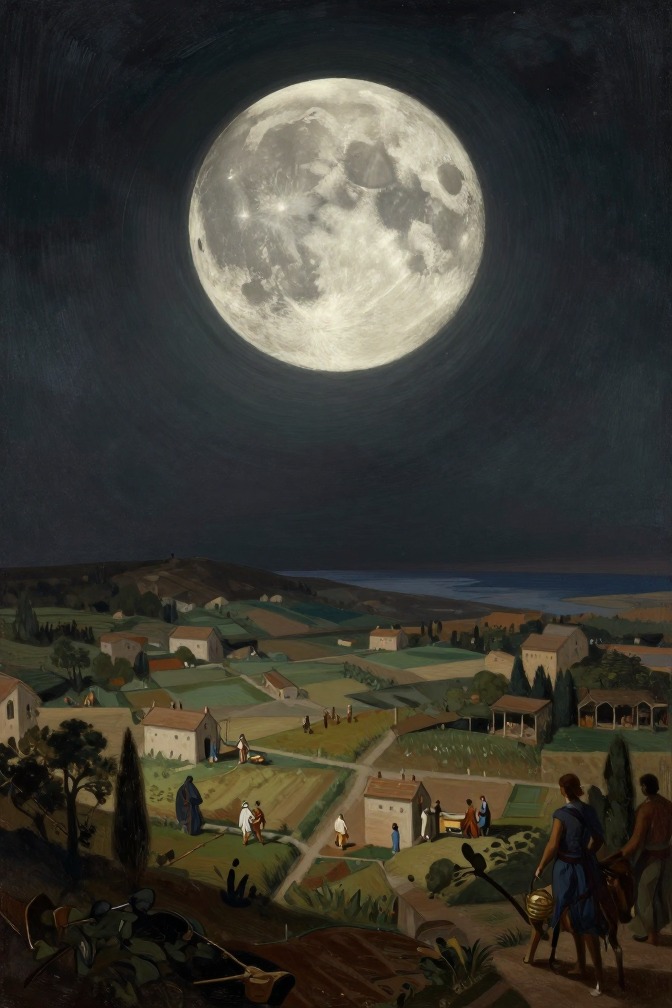
The Moon, or First Heaven, is the lowest sphere of Paradise in Dante's cosmos, where souls who were forced to break their sacred vows reside. It serves as the initial stage of Dante's celestial journey, introducing the principle that all souls in Heaven are content with their assigned rank, as their will is perfectly aligned with God's.
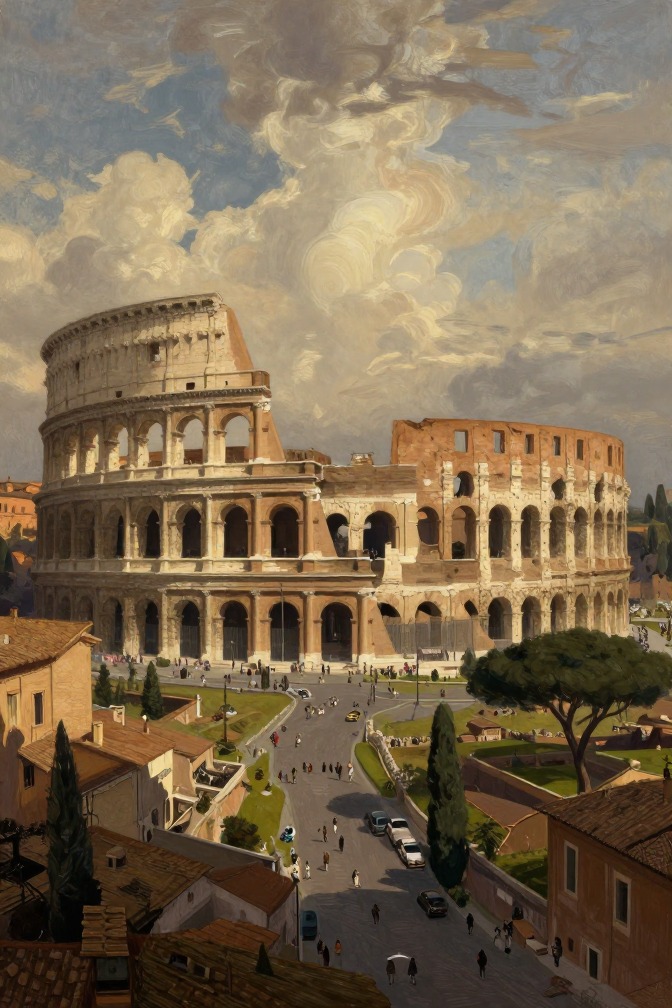
Rome is the eternal city that serves as the political and spiritual center of Dante's world, the seat of both the Roman Empire and the Papacy, and the ultimate earthly symbol of the divinely ordained authority whose corruption Dante condemns throughout the Divine Comedy.