The poetry reading rule is a formative practice in Noah Calhoun's life, originating from his father's method to cure his childhood stutter by reading poetry aloud, which later becomes a lifelong habit and a central ritual in his relationship with Allie Nelson, especially during her battle with Alzheimer's disease.
World War II is a decisive historical backdrop in The Notebook, shaping Noah Calhoun's character, his separation from Allie Nelson, and the moral and emotional landscape of their reunion. The war provides the context for Noah's enlistment, his service with Patton's Third Army, the trauma of witnessing friends die, and the economic opportunity that allows him to return to New Bern and restore the house that becomes the setting for their second chance.
After waking from a twelve-hour sleep in the bar of the Castle Inn, K. listens to Pepi, the deposed barmaid, who pours out a bitter, detailed account of her brief rise and fall, blaming Frieda's calculated scheming and K.'s own obliviousness for her ruin. K. responds with a long, measured rebuttal, defending Frieda's character and experience while gently exposing Pepi's naivety and unsuitability for the post. The conversation deepens the novel's exploration of ambition, social status, and the elusive nature of truth in the village, ending with Pepi's invitation for K. to hide with the chambermaids and K.'s subsequent, strange interview with the landlady about her dresses.
Bratmeier is a minor clerk at the Castle Inn whose brief, unrequited admiration for Pepi during her four days as barmaid reveals the social dynamics and the transient nature of favor in the village.
Henriette is one of the two chambermaids at the Castle Inn who, along with Emilie, share a cramped room with Pepi. She is mentioned by Pepi as a potential companion for K. if he were to join them in their secret life, and her existence highlights the hidden, communal world of the inn's lower staff.
Pinzgauer is a minor but revealing official of the castle, glimpsed only once in the novel, sitting outside his room in the corridor of the Castle Inn in his nightclothes, reading a newspaper. His brief appearance, noted by the servant and Gerstäcker, underscores the castle's inaccessibility and the peculiar, nocturnal rhythms of its officials' lives.
The Messenger is a role within the castle's bureaucratic apparatus, serving as the primary intermediary between the castle authorities and the village. The position is fraught with ambiguity, as the messenger's duties, status, and even the authenticity of his interactions with officials like Klamm are subject to constant doubt and interpretation by both the messenger himself and those who rely on him.
The corridor chaos is the climactic scene in which K., after his nocturnal hearings, lingers in the Castle Inn's corridor at dawn, inadvertently disrupting the morning file distribution and provoking the officials' unprecedented, collective protest. This event crystallizes the novel's central themes of exclusion, the unbridgeable gap between the individual and the castle's authority, and the profound, almost sacred sensitivity of the officials, marking a definitive low point in K.'s struggle.
K. is taken away by Gerstäcker, the carrier, after the landlady's interrogation about her dresses, marking a decisive shift in his fortunes as he abandons the school and follows the man who once refused to drive him to the castle.
K.'s conversation with Hans Brunswick, the young son of the shoemaker Otto Brunswick, is a pivotal scene in which the land surveyor, newly installed as school janitor, seeks to forge a connection with the boy's ailing mother, a woman he believes comes from the castle. The dialogue reveals Hans's precocious gravity and his protective devotion to his mother, and it culminates in a secret plan for K. to visit her, a scheme that exposes K.'s strategic ambitions and his willingness to use the child as a means to reach the castle.
As like as two snakes is a simile used by K. to describe his two assistants, Artur and Jeremias, whom he cannot tell apart. The phrase captures the assistants' indistinguishability and their unsettling, almost reptilian quality, and it becomes a recurring motif in K.'s struggle with the castle's authority.
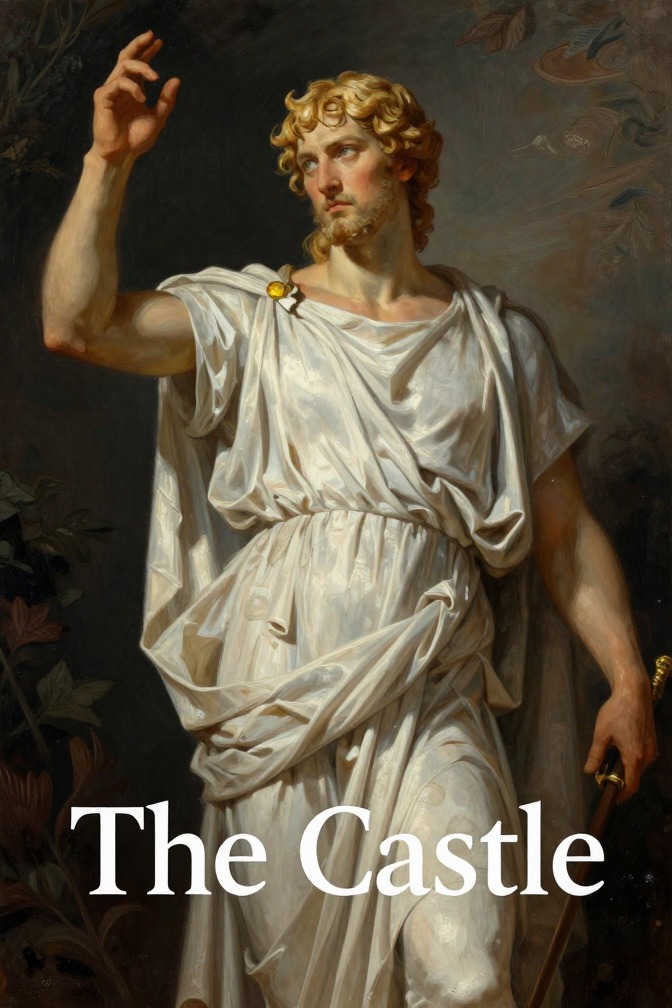
The Dream of the Greek god is a pivotal dream sequence in Franz Kafka's The Castle, occurring while K. sleeps in the room of the castle secretary Bürgel. In the dream, K. fights a naked secretary who resembles a statue of a Greek god, ultimately defeating him. The dream functions as a symbolic inversion of K.'s waking powerlessness, offering a moment of imagined triumph over the castle's authority, and it directly influences his subsequent actions and interpretations of his situation.
Messages from Barnabas are the only direct, tangible communications K. receives from the castle, yet they are deeply ambiguous: they arrive through a messenger whose own status is uncertain, contain contradictory signals about K.'s position, and ultimately prove to be old, possibly random documents that reveal more about the castle's inscrutable bureaucracy than about any genuine interest in K. These messages shape K.'s hopes and strategies, but they also expose the fundamental unreliability of all communication with the castle.
Nocturnal hearings are a recurring institutional practice in Franz Kafka's novel The Castle, whereby castle officials conduct official business with villagers during the night, often in their bedrooms at the Castle Inn. These hearings are presented as a necessary but problematic procedure, reflecting the novel's themes of bureaucratic inaccessibility, the erosion of official boundaries, and the profound alienation of the individual. The practice is most fully articulated by the secretary Bürgel, who explains its rationale, its dangers, and the rare opportunity it presents for a member of the public to exploit the officials' nocturnal weakness.
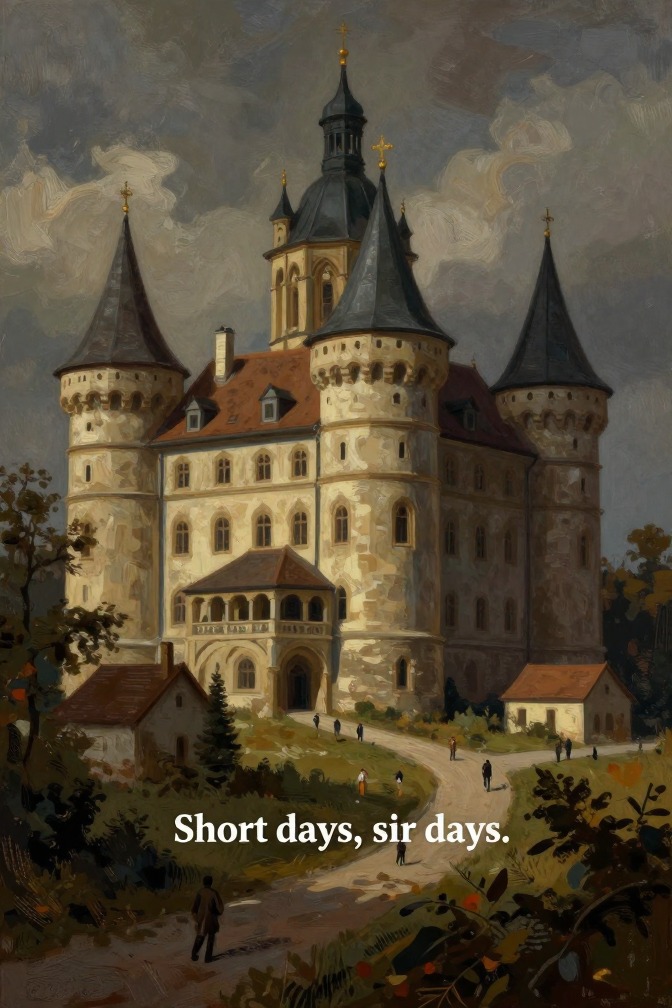
K.'s murmured observation "Short days, short days" is a quiet but pivotal expression in Franz Kafka's The Castle, marking his first conscious reckoning with the village's oppressive temporality and his own dwindling agency. Uttered as he returns to the Bridge Inn after his failed attempt to reach the castle, the phrase crystallizes the novel's pervasive atmosphere of exhaustion, delay, and thwarted purpose, and it recurs as a motif that underscores the characters' entrapment in a world where time itself seems to conspire against progress.
The supervisory authorities are a recurring concept in Kafka's The Castle, representing the castle's self-correcting yet ultimately inscrutable bureaucratic mechanism. They are introduced by the village mayor as a higher layer of oversight that checks the work of lower departments, but their existence raises more questions than answers, embodying the novel's theme of inaccessible and paradoxical authority.
The father's petitioning is the doomed, years-long campaign by the father of Barnabas, Olga, and Amalia to obtain forgiveness from the castle after Amalia tore up Sortini's summons, a campaign that exhausts the family's resources, breaks the father's health, and ultimately fails, revealing the castle's impenetrable bureaucracy and the family's social ostracism.
The fire-brigade festival is the pivotal event in the Barnabas family's tragic history, where the official Sortini first sees Amalia and sends her a degrading summons, setting off the family's social ostracism and ruin.
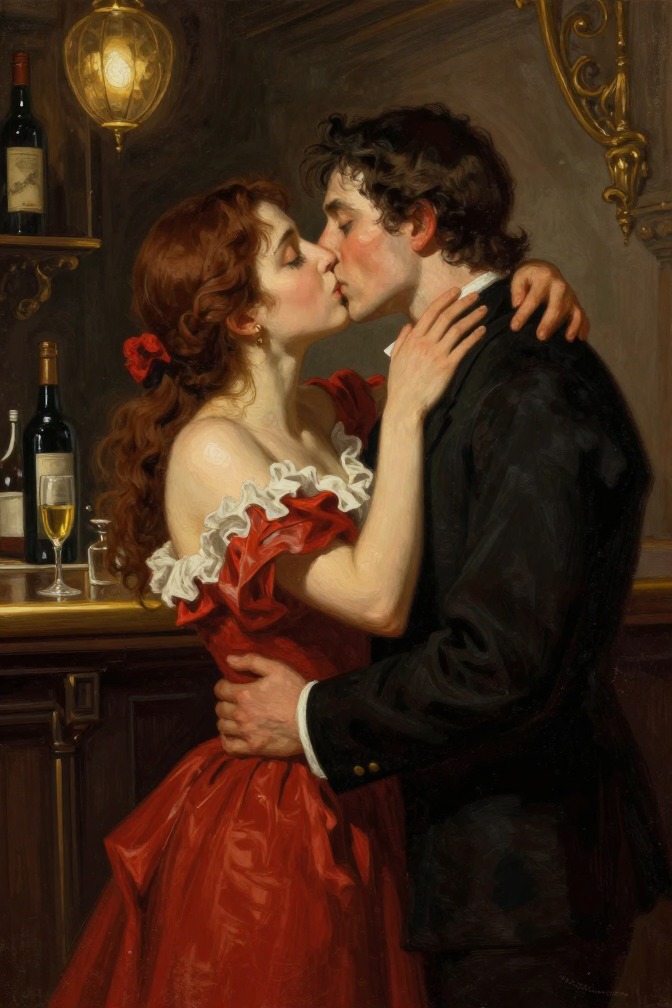
The kiss under the bar is the pivotal, scandalous moment in Franz Kafka's The Castle when K. and Frieda, the barmaid and former lover of the castle official Klamm, consummate their relationship in the Castle Inn's bar, hidden beneath the counter. This act, which begins with Frieda's playful concealment of K. from the landlord and culminates in a night of intimacy in the beer puddles, transforms K.'s standing in the village, severs Frieda's connection to Klamm, and sets in motion the central conflicts of the novel—K.'s struggle for recognition, his fraught engagement, and his eventual loss of Frieda.
The opportunity is a rare, almost never occurring chance for a member of the public to exploit the nocturnal weakness of a castle secretary, as described by Bürgel in his room at the Castle Inn. It represents the possibility of gaining a hearing or favor through an unannounced, midnight arrival, a concept that tantalizes K. but ultimately proves elusive.
The peephole is a small observation hole in the door of Klamm's room at the Castle Inn, through which K. first sees the castle official Klamm. It functions as a symbol of the villagers' limited, mediated access to the castle's power, and its use marks a turning point in K.'s relationship with Frieda, leading to their affair and his subsequent entanglement with the castle's bureaucracy.
The puddle of beer is a recurring, charged image in Franz Kafka's The Castle, marking the physical and emotional low point of K.'s relationship with Frieda and symbolizing the degradation, loss of self, and the strange allure of the castle's world. It first appears during their night under the bar at the Castle Inn, where they lie in the beer and rubbish, and later becomes a metaphor for K.'s despair and the impossibility of his quest.
The story of Barnabas's family is a tragic narrative of social ostracism and bureaucratic punishment triggered by Amalia's refusal of an obscene summons from the official Sortini, a story that reveals the castle's power to destroy a family through communal exclusion rather than formal decree, and that becomes a crucial counterpoint to K.'s own struggle for recognition.
The torn letter is the pivotal object in the Barnabas family's tragic history, written by the castle official Sortini to Amalia after the fire-brigade festival. Its crude summons and Amalia's defiant refusal to obey it trigger the family's social ostracism and ruin, making it the central symbol of the arbitrary power of the castle and the catastrophic consequences of resistance.
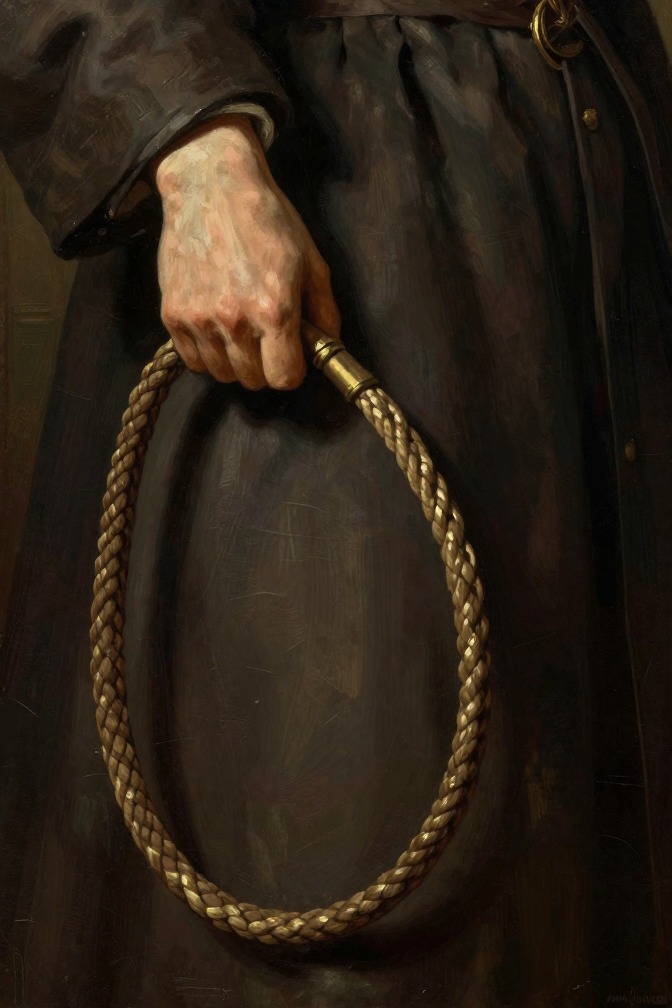
The whip is a recurring object in Franz Kafka's novel The Castle, wielded by Frieda to drive Klamm's servants from the bar and later sought by K. as a tool of control and punishment. It symbolizes the fragile authority of those who serve the castle and the violent, arbitrary power that permeates the village.
Barnabas's house is the modest, dimly lit home of the Barnabas family in the village, a place that becomes a focal point of K.'s hopes and disappointments in his struggle to reach the castle. It is here that K. first realizes the messenger Barnabas is not the castle official he imagined, and where he later learns the tragic story of the family's ostracism, centered on Amalia's defiance of the official Sortini. The house embodies the family's social exclusion and their desperate, ambiguous connection to the castle, serving as a counterpoint to the official spaces K. tries to navigate.
The Bridge Inn is the first and most important lodging in the village, where K. arrives late at night, is challenged by Schwarzer, and later meets Frieda, becoming her lover. It serves as the initial site of K.'s confrontation with the castle's authority and his first taste of the village's hospitality and exclusion.
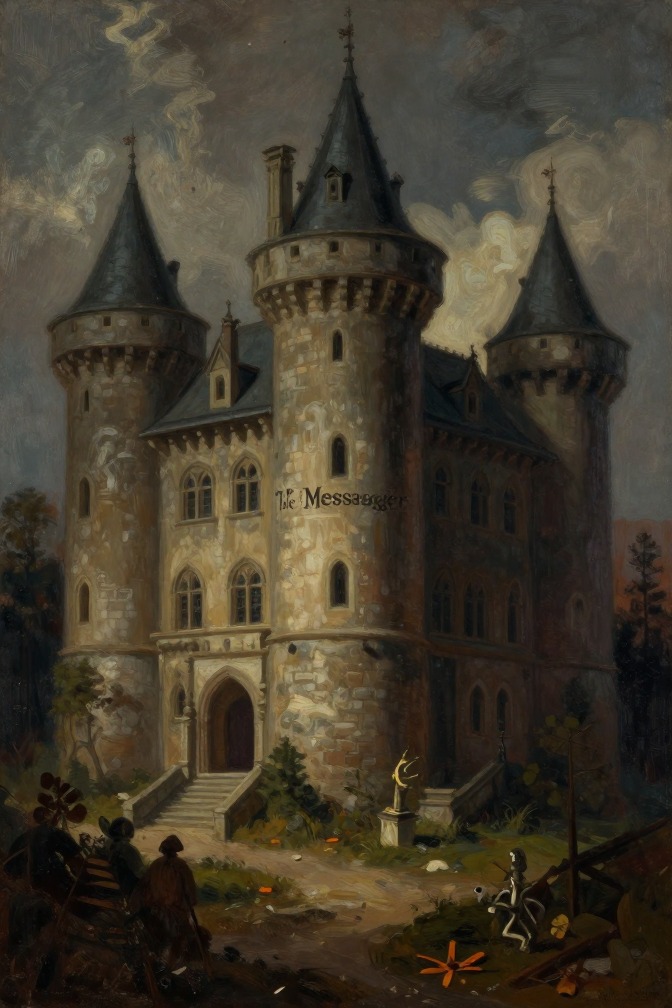
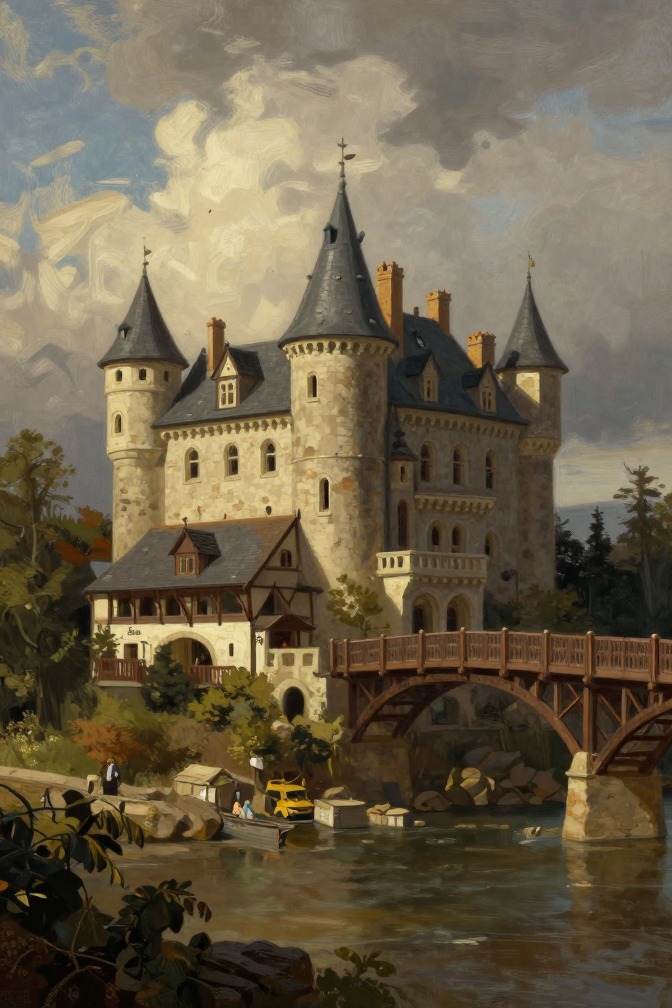
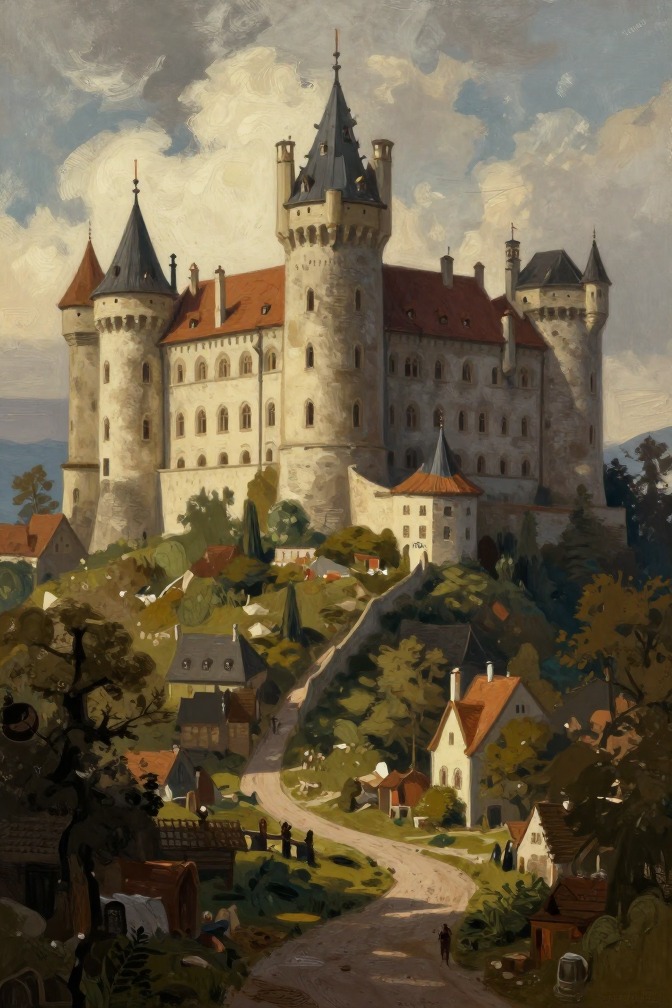
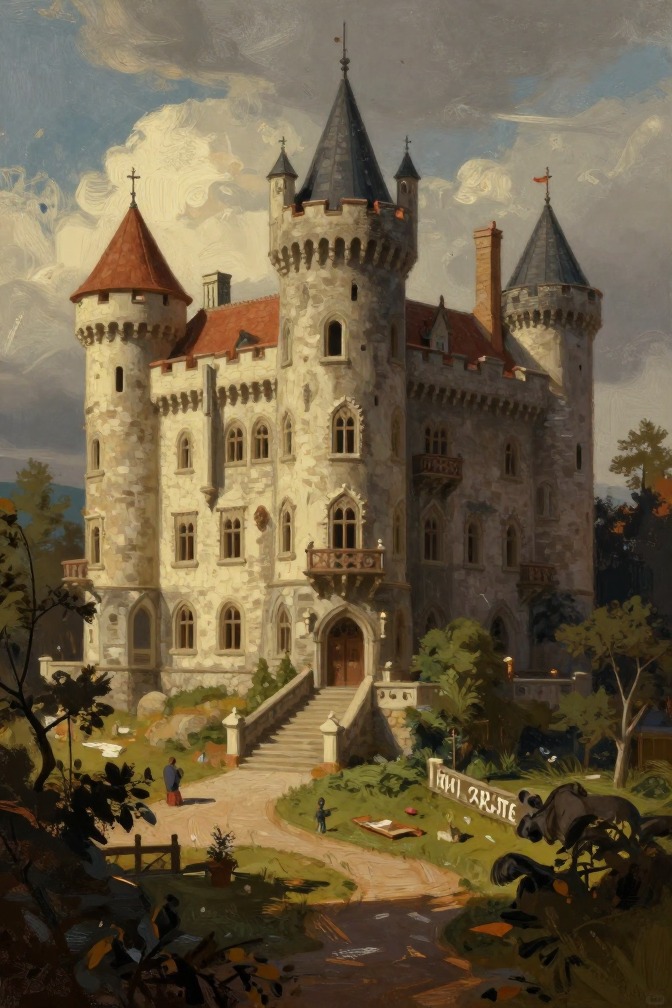
The Castle is the central, enigmatic authority in Franz Kafka's novel, a vast, inaccessible bureaucratic complex that dominates the village and governs every aspect of life through an impenetrable web of rules, officials, and communications. It represents an ultimate, distant, and often arbitrary power that K. desperately seeks to reach and understand, yet which remains perpetually out of reach, defining the novel's core conflict between the individual and an inscrutable system.
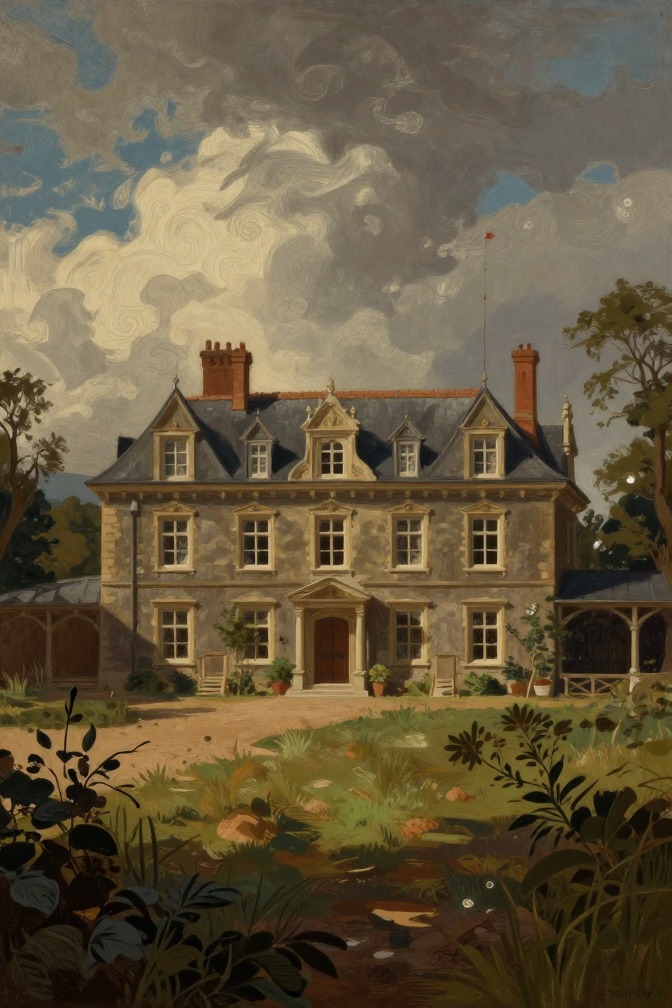
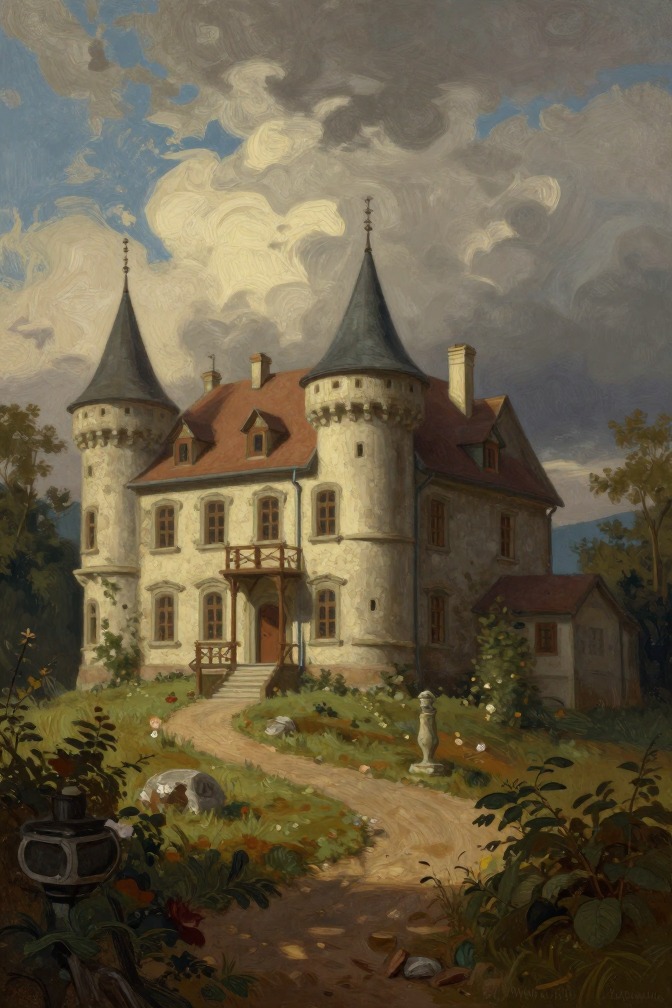
The Castle Inn is the exclusive village lodging for gentlemen from the castle, a place of strict rules, official hearings, and the setting for K.'s pivotal encounters with Klamm, Frieda, and the castle's bureaucracy.
Lasemann's house, the home of the master tanner Lasemann, is a pivotal location in Franz Kafka's The Castle, serving as the site of K.'s first involuntary encounter with the village's social dynamics and his initial, humiliating rejection. It is here that K. first meets the enigmatic woman from the castle, witnesses the family's domestic life, and is forcibly expelled, an event that underscores his status as an outsider and foreshadows his ongoing struggle for acceptance.