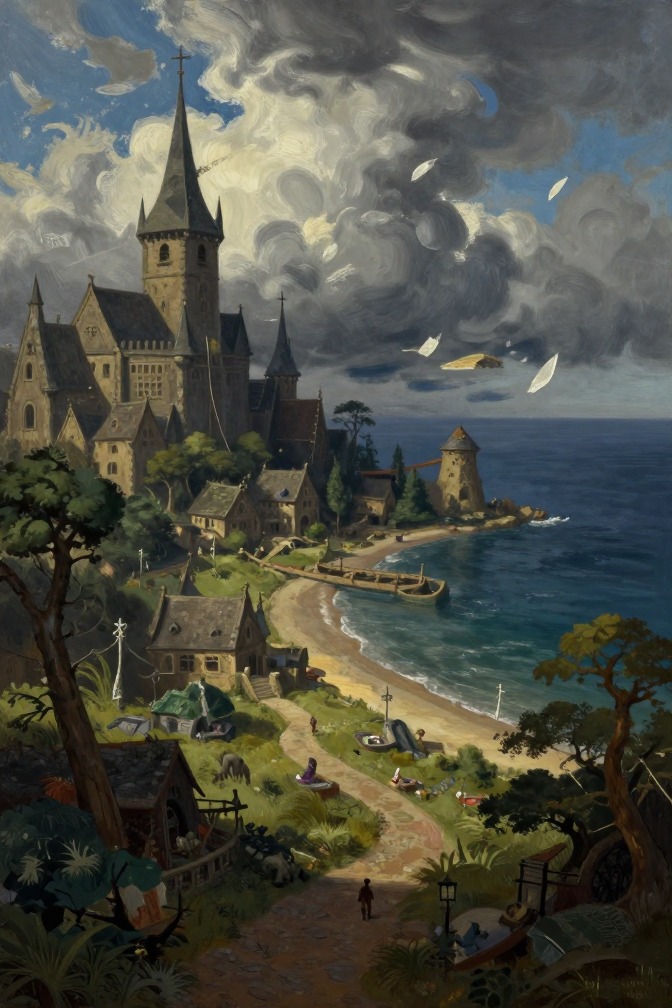
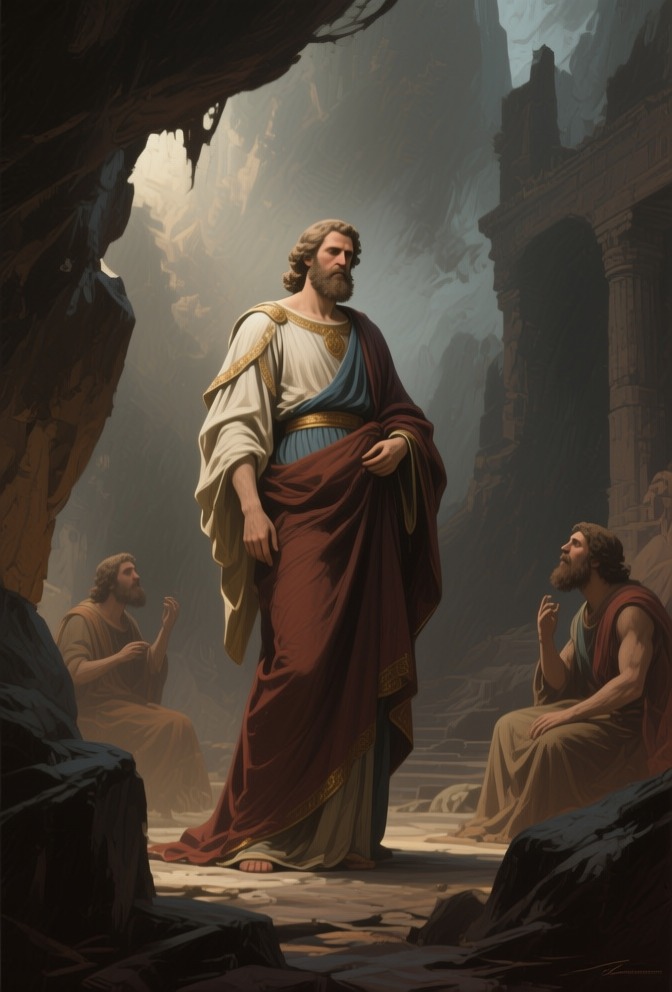
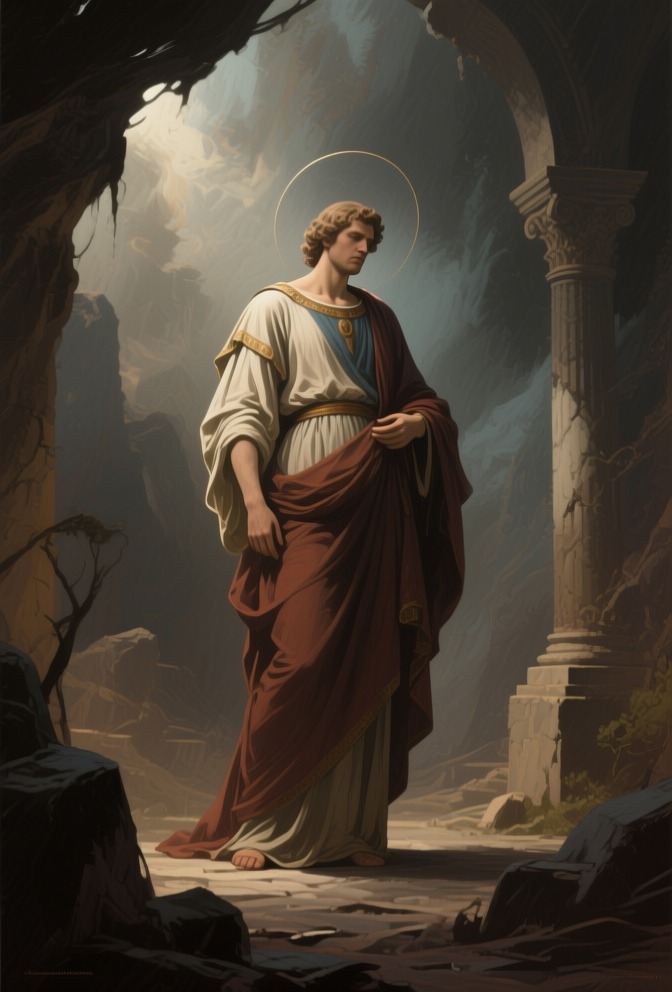
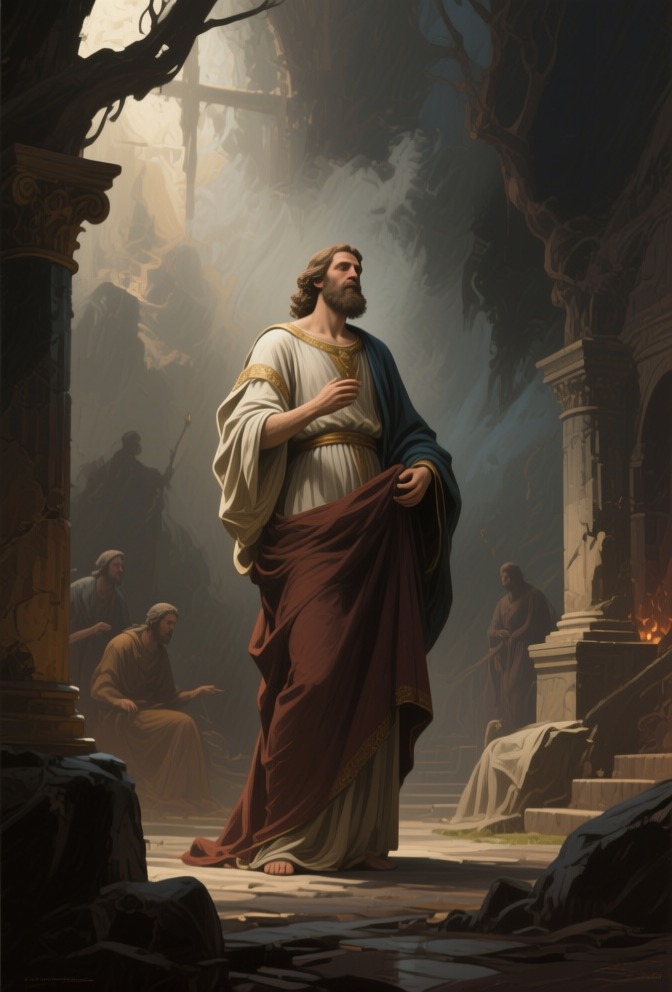
The Port of Gont is the principal seaport of the island of Gont, a bustling city of cut stone towers and crowded waterfronts that serves as the gateway between the mountainous interior and the wider world of Earthsea. It is the place where Ged first leaves his homeland, where he later returns seeking passage for his hunt, and where the island's power and commerce converge under the shadow of the great mountain.
Soders Island is a remote island in the East Reach of Earthsea, serving as a brief but significant waypoint for Ged and Vetch during their voyage into the Open Sea to confront the shadow. It marks the last known land before the companions venture into the uncharted waters of the East Reach, a place where the familiar rules of the Archipelago begin to fade and the true peril of their quest becomes undeniable.
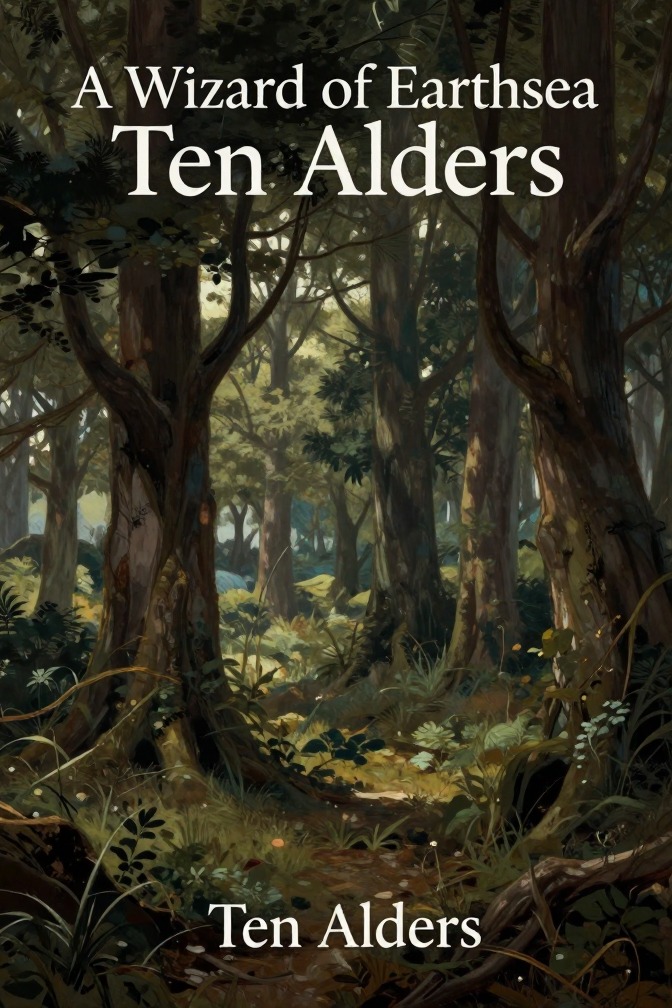
Ten Alders is the remote mountain village on the island of Gont where Ged was born and spent his early childhood, and it is the site of his first great act of wizardry—the fog-weaving that repelled a Kargish raid—as well as the place where he received his true name from the mage Ogion, setting him on the path to becoming the greatest wizard of Earthsea.
Tesk Isle is a small island in the Ninety Isles of the East Reach, notable as the home of the witchwoman who attempted to heal Pechvarry's son Ioeth during his fatal illness, and as a location where Ged's healing attempt led to his first crossing of the boundary between life and death.
Tok is a small island in the East Reach of Earthsea, mentioned in the context of local legends about Ged's final confrontation with the shadow, where the tale is told as a story of two fishermen blown far out to sea rather than a wizard's quest.
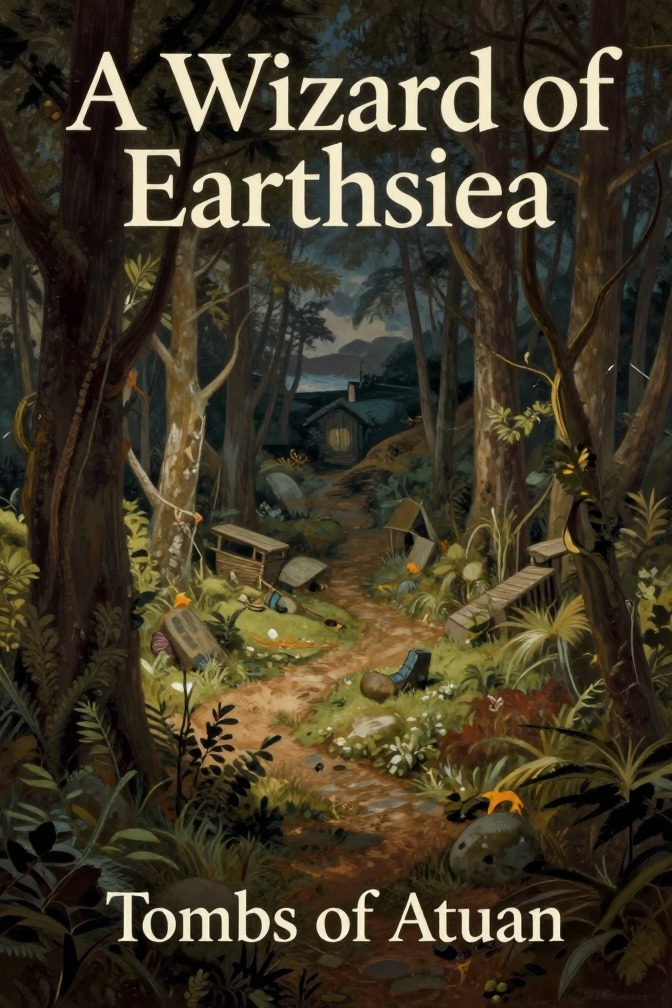
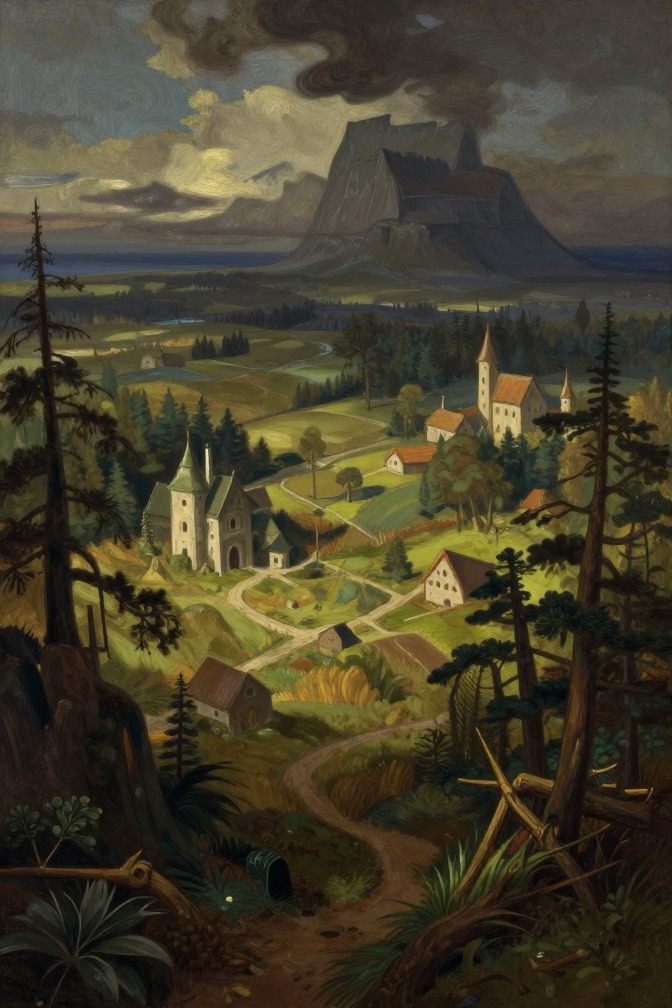
The Tombs of Atuan are the most ancient and sacred site in the Kargad Empire, a desolate hilltop enclosure on the island of Atuan containing nine standing stones that predate human civilization and are the tombs of the Nameless Ones, the Old Powers of Earth. The site is served by a single priestess, the Eaten One, who is taken from her family as a child, stripped of her name, and dedicated to a life of ritual service within a strictly segregated, self-sufficient community of priestesses, eunuch wardens, and slaves. The Tombs are the central location of the second book of the Earthsea Cycle, *The Tombs of Atuan*, and are the setting where Ged, now a young wizard, seeks the lost half of the Ring of Erreth-Akbe.
Vemish is a small island in the East Reach of Earthsea, notable as the place where Ged first receives a clear report that the shadow he loosed has begun to take on his own likeness, a development that deepens his understanding of the bond between them and forces him to confront the creature's growing power and cunning.
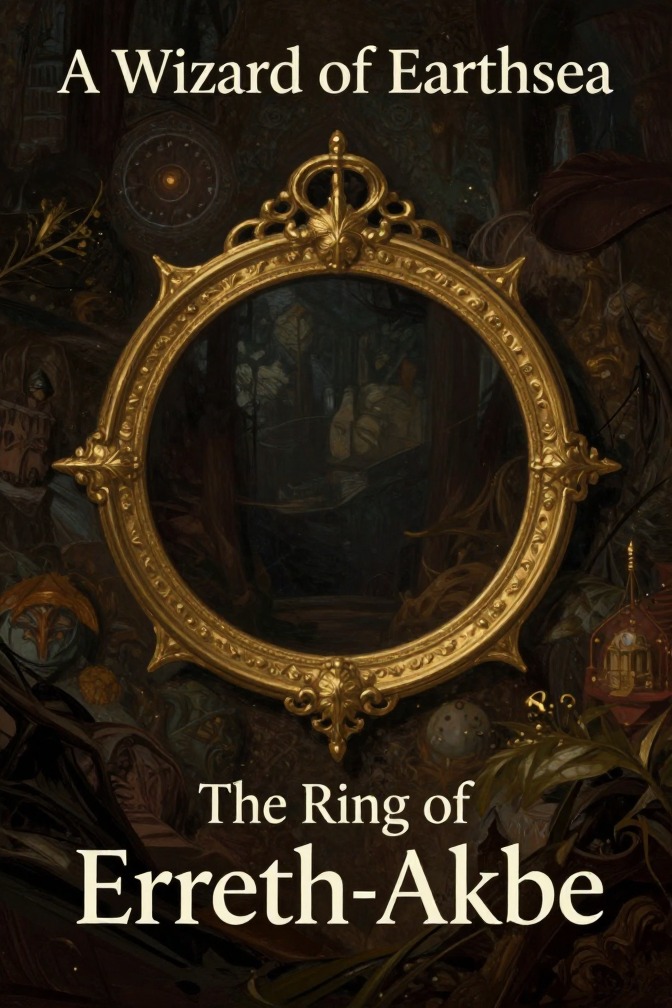
The Ring of Erreth-Akbe is a legendary artifact of immense power and significance in Earthsea, a broken half-ring that appears as a gift from a castaway princess and whose eventual recovery and restoration becomes a central quest in Ged's later career as Archmage.
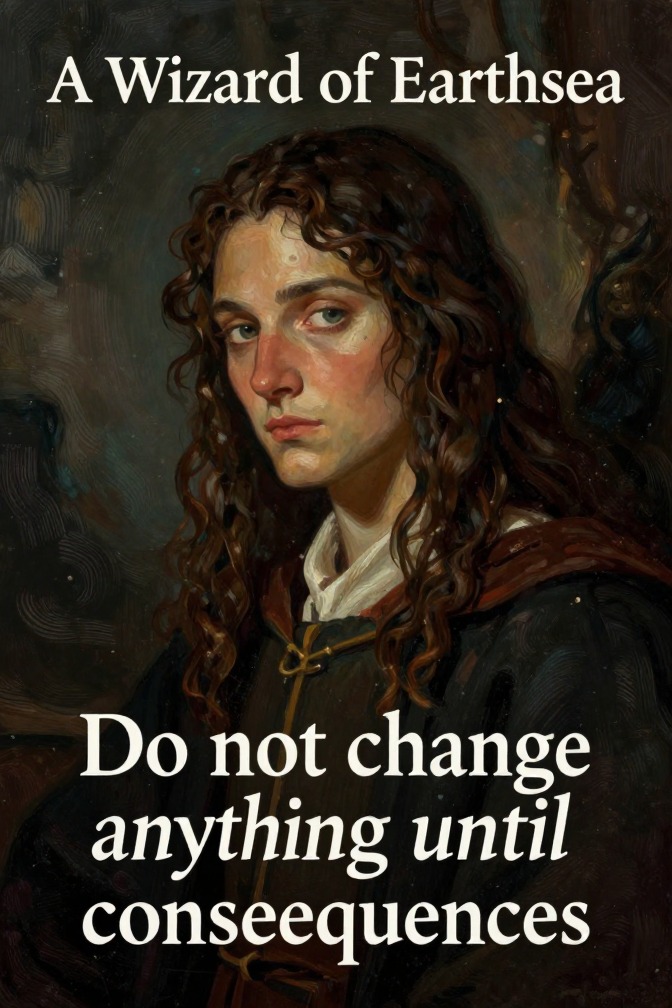
The rule "Do not change anything until you know the consequences" is a foundational ethical principle of wizardry in Earthsea, articulated by the Master Hand on Roke. It warns that every act of true magic, especially Changing and Summoning, alters the world's Equilibrium and carries unforeseen repercussions, and that a wizard must therefore act only from knowledge and genuine need, never from pride or whim.
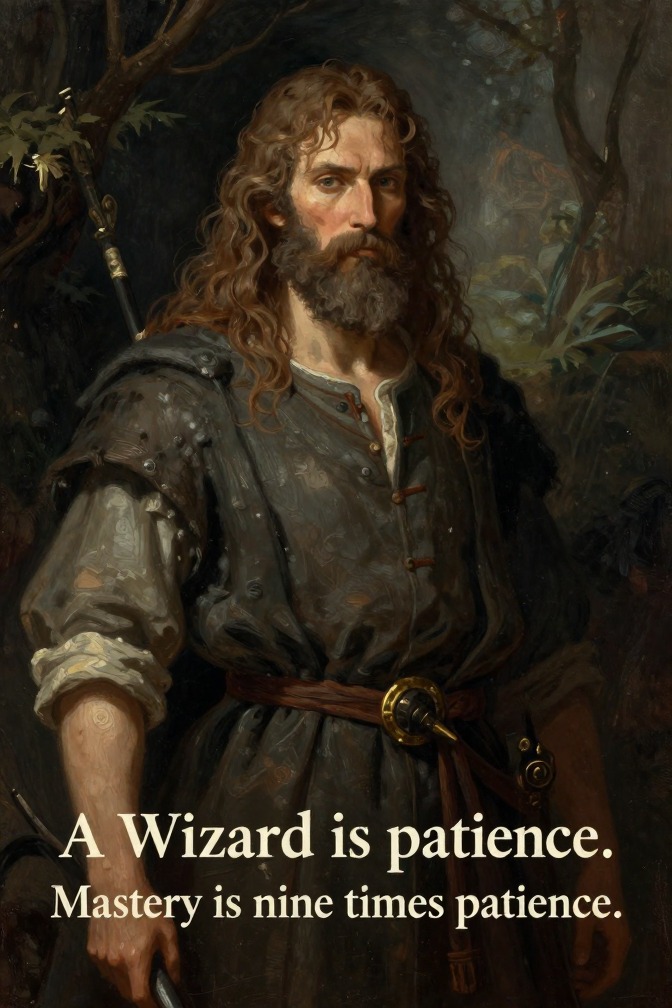
Manhood is patience. Mastery is nine times patience. is a foundational principle of wizardry in Earthsea, articulated by the mage Ogion to his impatient young apprentice Ged. It encapsulates the novel's central theme that true power and wisdom are not achieved through haste or pride but through patient observation, silence, and a deep understanding of the world's balance.
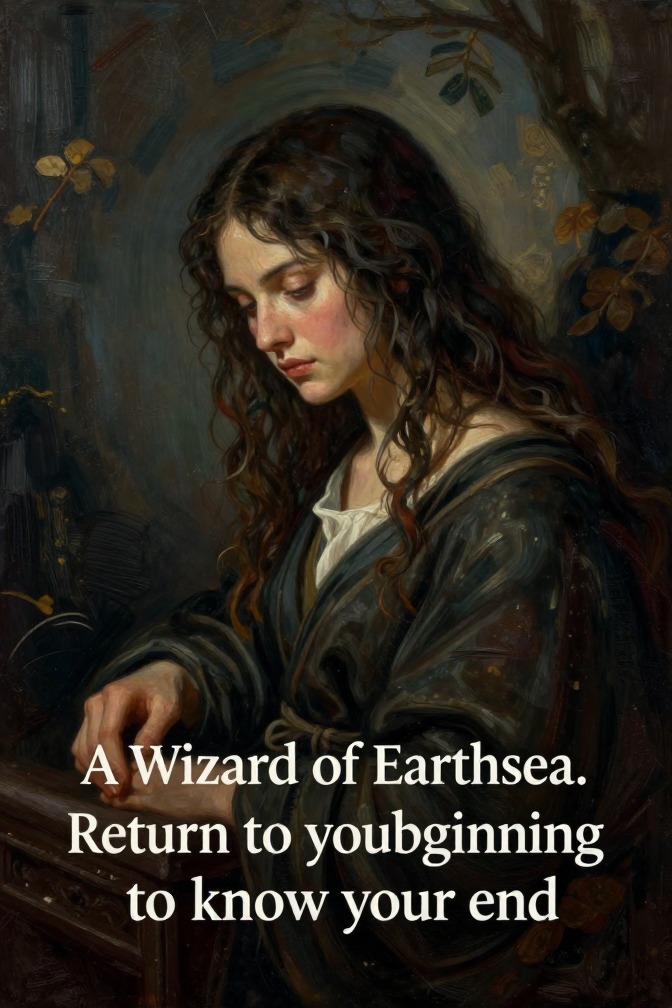
The rule "Return to your beginning to know your end" is a central philosophical and magical principle in *A Wizard of Earthsea*, articulated by the mage Ogion to his apprentice Ged. It teaches that a person cannot understand their destiny or achieve true mastery without turning back to confront their origins and the source of their being, a lesson Ged must learn to defeat the shadow he has loosed.
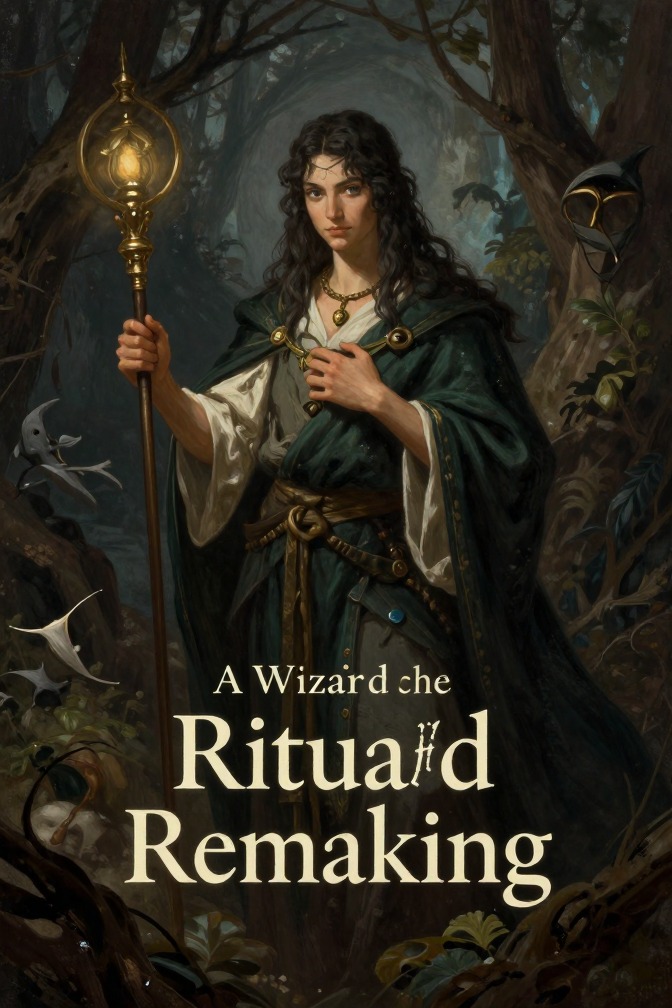
The Ritual formula of the Remaking is the central liturgical act of the Kargish cult of the Nameless Ones at the Place of the Tombs of Atuan, a ceremony that transforms a living child into the nameless, living vessel of the Priestess Ever Reborn, the Eaten One. The formula consists of a solemn invocation and a ritual response, and its performance marks the absolute severance of the child from her former identity and her absorption into the service of the dark, pre-human powers that dwell in the Tombs.
The Godking cannot enter among the Tombstones is a sacred prohibition that defines the ultimate limit of temporal power at the Place of the Tombs of Atuan, marking the boundary between the authority of the Kargish Empire and the older, darker powers that the Tombs serve.
The Priestess must be taken from her family is a foundational rule of the Kargish religious system governing the Tombs of Atuan, dictating that the girl chosen as the One Priestess, the Eaten One, must be removed from her birth family at a young age and raised in isolation at the Place of the Tombs, severing all prior ties to ensure her complete dedication to the Nameless Ones.
The rule that the use of the Old Speech binds a man to truth is a fundamental principle of magic in Earthsea, establishing that when a human speaker utters the ancient language of dragons and creation, he is compelled to speak truthfully, a constraint that does not apply to dragons themselves, who can lie in it. This rule governs the most critical magical acts in the story, from the naming of beings to the swearing of oaths, and its violation or exploitation drives the central conflicts of Ged's journey.
The Archmage is the supreme wizard of Earthsea, the head of the School for Wizards on Roke Island, and the ultimate authority in the balance of magic and the world. The office is held by a succession of powerful mages, most notably Nemmerle, who sacrifices his life to save Ged from the shadow he looses, and Gensher, who succeeds him and guides Ged's recovery. The Archmage embodies the highest ideals of wizardry: wisdom, restraint, and the service of Equilibrium.
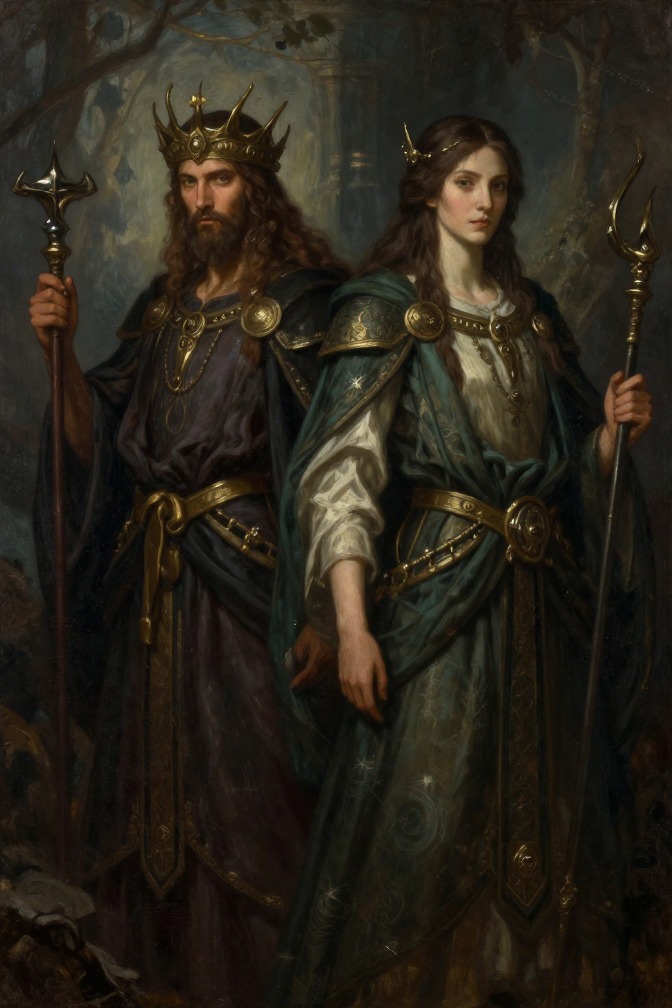
The Godking is the absolute ruler of the Kargad Empire, a white-skinned, yellow-haired people who worship him as a living deity and who are depicted as savage raiders in the early chapters of the book, standing in stark contrast to the brown-skinned peoples of the Archipelago.
The Twin Gods, Atwah and Wuluah, are the central deities of the Kargad Empire, a white-skinned, yellow-haired, warlike people who worship them as the White Godbrothers of Atuan. Their cult is a pillar of Kargish identity, invoked in battle cries and represented by a temple at the Place of the Tombs, where a High Priestess oversees rites that contrast with the older, darker worship of the Nameless Ones. The Twin Gods embody the Kargad Empire's savage, expansionist ethos, serving as a cultural and religious counterpoint to the Archipelago's wizardry.
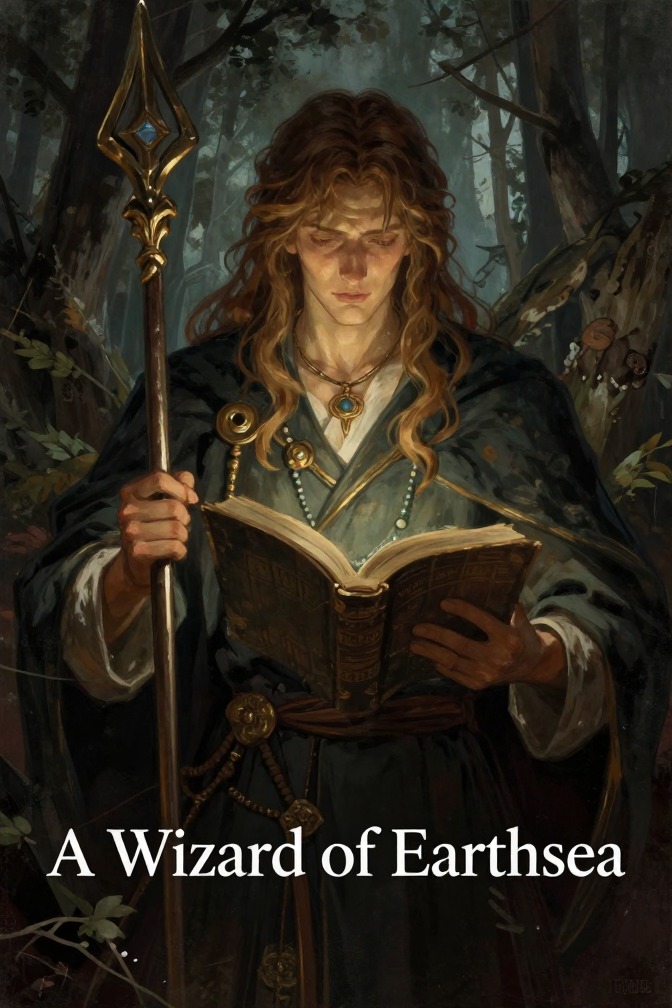
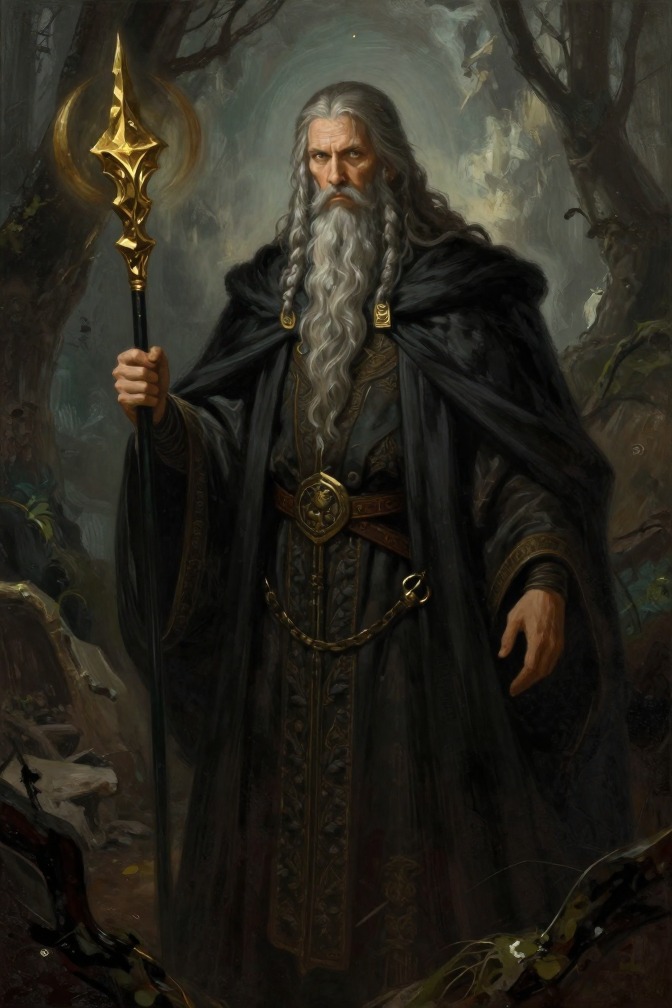
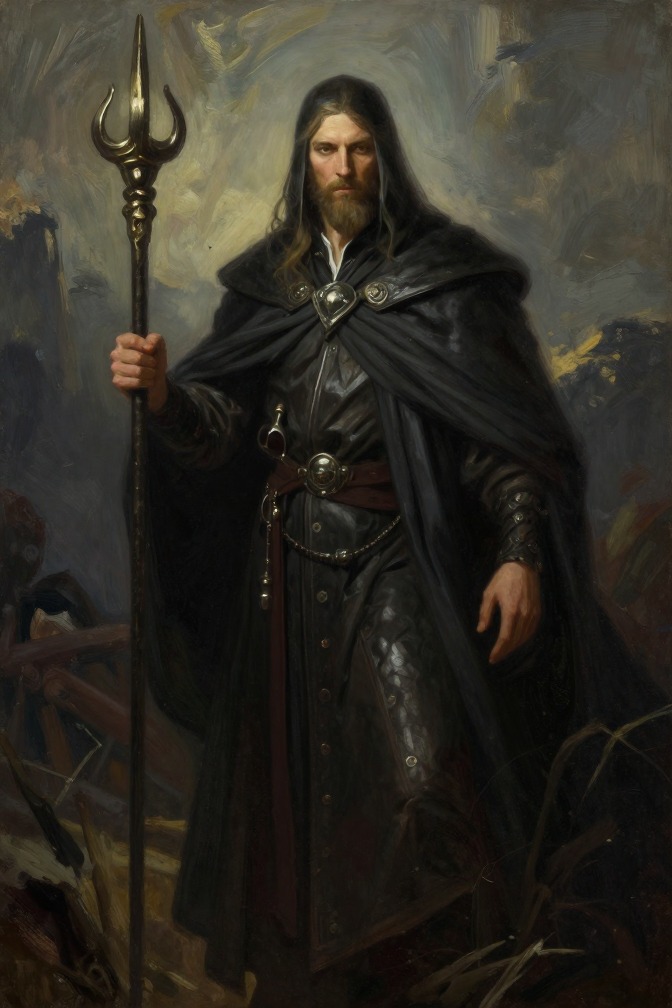
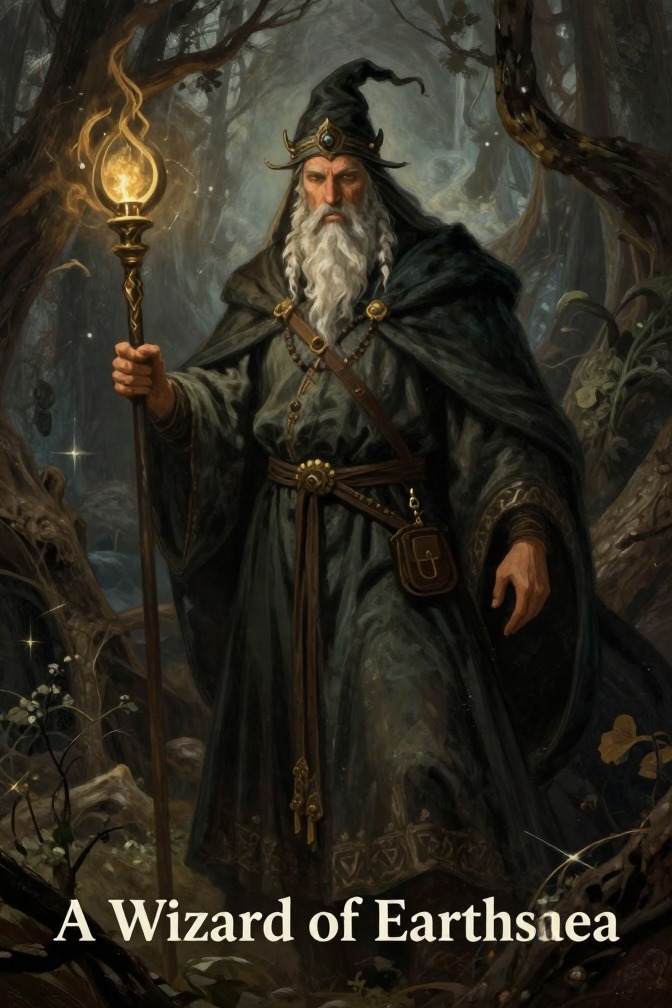
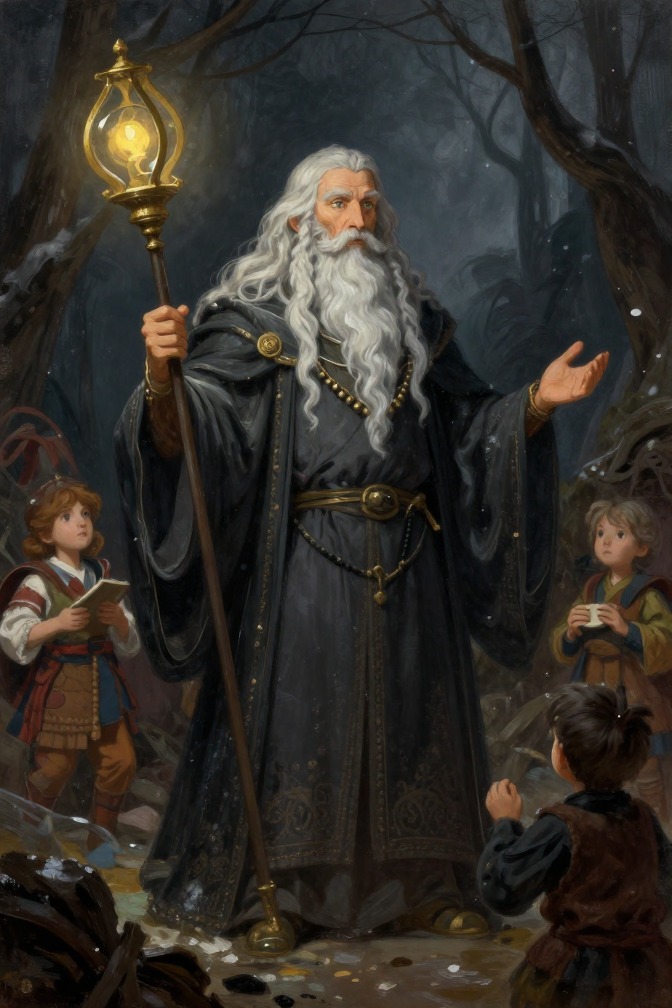
In Earthsea, a wizard is a practitioner of high magic who has undergone formal training, typically at the School for Wizards on Roke, and who carries a staff as a symbol of his mastery. Wizards command the True Speech, the language of creation, and their power is fundamentally tied to the knowledge of true names, the equilibrium of the world, and the perilous responsibility that comes with their art.
The Winter Festival is a recurring seasonal celebration in Earthsea, marking the winter solstice and the beginning of the new year, and serves as a key temporal marker for Ged's journey and the narrative's cyclical structure.
Corporal Kolodny is a minor but recurring administrative figure in Captain Black's intelligence tent, notable for his role in relaying the news of the Bologna mission and for his participation in the Glorious Loyalty Oath Crusade, where he signed hundreds of loyalty oaths daily to prove his superior patriotism. His character illustrates the absurd, bureaucratic machinery of the squadron, where even the most trivial tasks are inflated into rituals of loyalty and fear.
General P. P. Peckem is a suave, self-absorbed, and intellectually pretentious Special Services officer who schemes relentlessly to expand his authority over combat operations, viewing the war as a vehicle for personal advancement and bureaucratic intrigue. His polished, epigrammatic manner and obsession with style over substance mask a ruthless ambition that ultimately backfires when his own protégé, Colonel Scheisskopf, is promoted above him, leaving Peckem undone by the very system of memo-driven self-promotion he perfected.
Lieutenant Engle is a minor officer in Colonel Cathcart's bomb group who appears in the officers' club and is among the casualties of Milo Minderbinder's bombing raid on the squadron. He is a foil to Lieutenant Travers, with whom he debates the merits of Lieutenant Scheisskopf's military genius versus his failure to whip his wife, and he is one of the officers wounded when fragmentation bombs explode in the officers' club.
Lieutenant Travers is a minor officer in the Santa Ana Army Air Force Base who appears in the cadet-training flashback, notable for his brief but revealing commentary on Lieutenant Scheisskopf's character and for his role in the novel's critique of military absurdity through his detached, analytical observations about flagellation and parade competence.
The Young Lieutenant with Convulsions is a minor but symbolically charged figure in Joseph Heller's Catch-22, appearing in two brief scenes during Yossarian's nightmarish walk through Rome. In the first, he is a young Allied officer suffering a violent seizure on the street, surrounded by helpless soldiers who struggle to hold him still; in the second, he reappears as a menacing specter in the hospital, taunting Yossarian with the cryptic phrase "We've got your pal, buddy." Though he has no name, dialogue beyond groans, or plot function, the lieutenant embodies the novel's central themes of bodily vulnerability, the failure of institutional care, and the haunting presence of death. His convulsions mirror the uncontrollable spasms of a world at war, and his transformation from victim to tormentor enacts the traumatic repetition that structures Yossarian's psychological collapse.
The syndicate, also known as M & M Enterprises, is Milo Minderbinder's sprawling, amoral economic organization that begins as a mess-hall supply cooperative and expands into a multinational cartel trading with both Allied and Axis powers. It embodies the novel's central critique of unchecked capitalism, transforming war itself into a profit-making enterprise where every individual holds a 'share' and where bombing one's own squadron becomes a lucrative business deal.
Doc Daneeka is declared dead after McWatt's plane crash, a bureaucratic fiction that becomes official reality when his name appears on the flight manifest. Despite being alive and present, he is treated as a corpse by the squadron, stripped of pay and medical authority, and ultimately abandoned by his own wife, who collects his insurance money and moves away.
The colors of the day are a recurring military security protocol in Catch-22, a set of changing identification signals that must be communicated to aircrews before each mission. The phrase functions as a symbol of the arbitrary, bureaucratic, and often absurd systems of control that govern the characters' lives, highlighting how meaningless procedures are enforced with deadly seriousness while genuine threats are ignored or manipulated.
The dead man in Yossarian's tent, also known as Mudd, is a replacement pilot killed in combat before he officially reported for duty, whose unclaimed belongings remain in Yossarian's tent for months as a haunting symbol of the absurdity and waste of war.
The milk run is a recurring term in Catch-22 that denotes a combat mission considered so safe and easy that it is likened to a routine delivery of milk. The term embodies the novel's central irony: the military's euphemistic language masks the ever-present danger of death, and what is promised as a milk run can turn lethal without warning, exposing the absurd gap between official rhetoric and lived reality.