Plum tomatoes are a recurring object in Catch-22, serving as a symbol of the corrupt, self-serving economic schemes of Colonel Cathcart and Colonel Korn, and as a marker of the absurdity and moral decay within the military hierarchy. They appear in Cathcart's office, are used in a fraudulent business deal with Milo Minderbinder, and are even offered as a bribe to the chaplain, highlighting the pervasive commodification of everything within the system.
The 256th Squadron is the combat unit on Pianosa to which Yossarian, Orr, Nately, and many other central characters belong. It is a microcosm of the absurd and lethal bureaucracy of war, where the men live in tents, fly combat missions from a nearby airfield, and are subject to the arbitrary and escalating mission quotas set by Group Headquarters. The squadron is the primary setting for much of the novel's action, from the daily life in the tent area to the chaos of Milo's bombing raid and the Thanksgiving revelry.
M & M Enterprises, also known as the syndicate, is Milo Minderbinder's vast, international business cartel that operates within and beyond the U.S. Army Air Corps during World War II. It begins as a mess-hall supply operation and expands into a global network of planes, contracts, and commodities, embodying the novel's central critique of unchecked capitalism and moral relativism. The syndicate's principle that "everybody has a share" is used to justify any action, including bombing its own squadron, trading with the enemy, and stealing medical supplies, ultimately revealing how profit-driven logic can subsume all ethical and patriotic considerations.
The F.B.I. appears in Catch-22 as a shadowy, bureaucratic force that opens a file on Major Major for his choice of academic major, reflecting the novel's satire of institutional paranoia and the arbitrary exercise of power.
The Red Cross appears in Catch-22 as a mundane, bureaucratic setting that underscores Yossarian's emotional isolation and the absurdity of military life. It is the site where Yossarian, after being attacked by Nately's whore, seeks refuge to clean his wounds, and where he later eats breakfast while grappling with the loss of Luciana. The organization itself is never a source of aid or comfort; instead, it functions as a hollow institutional backdrop against which personal crises unfold.
The U.S.O. (United Service Organizations) is a recurring institutional presence in Catch-22, used by General Peckem as a tool in his bureaucratic war against General Dreedle and by Colonel Cargill as a vehicle for his trademark incompetence. The organization's shows and performers are deployed not for troop morale but as pawns in the power struggles among high-ranking officers, and the men's response to them is uniformly one of sullen, coerced attendance. The U.S.O. thus becomes a symbol of the military's hollow, self-serving institutional machinery.
Nately and his whore share a deeply asymmetrical relationship that begins with Nately's infatuation and her indifference, transforms when she falls in love after a good night's sleep, and ends tragically with her grief-driven attempt to murder Yossarian after Nately's death.
Desertion, or going absent without official leave (AWOL), is a recurring act of defiance and survival in Catch-22, most notably embodied by Yossarian's final decision to flee to Sweden. It represents the ultimate rejection of the military's absurd logic and the institutional machinery that demands men sacrifice their lives for the ambitions of commanders like Colonel Cathcart and Colonel Korn. The novel explores desertion not as simple cowardice but as a rational, moral response to an irrational and murderous system, contrasting it with the false patriotism and self-serving 'duty' of the hierarchy.
In Joseph Heller's Catch-22, love is a recurring and often destructive force that manifests in various forms—romantic obsession, misplaced affection, and the commodification of intimacy—ultimately serving as a lens through which the novel critiques the absurdity and moral bankruptcy of war and institutional power.
In Catch-22, 'madness' is not a clinical diagnosis but a contested, paradoxical category that the military system weaponizes to keep men flying. The novel's central logical trap—Catch-22—defines sanity as rational self-interest, so that anyone who wants to stop flying combat missions is ipso facto sane and must continue. This inversion makes 'madness' a site of philosophical struggle: characters like Yossarian, who see the war's absurdity clearly, are labeled crazy by those who enforce it, while the truly insane—those who embrace death or profit—are deemed perfectly rational. The concept thus becomes the novel's primary tool for exposing the irrationality of institutional power.
Easter is a Christian holiday mentioned in Catch-22 as a target date for Sergeant Whitcomb's form-letter campaign, reflecting the novel's satirical treatment of institutional hypocrisy and the commodification of grief.
November in Catch-22 is a month of administrative and narrative significance, marking the official publication of the novel itself and serving as a temporal backdrop for key events involving Milo Minderbinder's syndicate, Colonel Cathcart's ambitions, and the oppressive machinery of Catch-22. It is a period when the war's absurdities are laid bare through bureaucratic maneuvers, commercial profiteering, and the relentless escalation of combat missions.
Summer in Catch-22 is the season of the novel's main action, a time of heat, stasis, and intensifying dread on Pianosa. It is the season in which Yossarian first meets the chaplain in the hospital, the Texan drives everyone back to duty, the Great Big Siege of Bologna unfolds with its rain and diarrhea, and the missions to Ferrara and Avignon occur, culminating in Snowden's death. Summer is not a backdrop but an active force: its oppressive heat and clear skies enable the missions that the men dread, while its thunderstorms and rain provide the only reprieves. The season is also the time of Milo's syndicate's rise, the Glorious Loyalty Oath Crusade, and the first appearance of the soldier in white. Summer's end brings the deaths of Kid Sampson and McWatt, and the raising of missions to sixty-five, marking a turning point into the colder, more desperate autumn.
Beverly Marsh's escape from her abusive father, Al Marsh, is a pivotal event in the summer of 1958 that forces her to fully commit to the Losers' Club and their fight against It. After her father, possessed by the malevolent entity, attacks her in their apartment, Beverly flees through the streets of Derry, narrowly escaping his murderous rage. This violent rupture from her home life solidifies her bond with the other Losers and drives her to join them in their final confrontation with the monster that has been terrorizing the town.
The Blood from the Drain is a pivotal event in the summer of 1958, in which Beverly Marsh, after returning home from a date with Richie Tozier and Ben Hanscom, hears voices speaking to her from the bathroom sink drain. The voices, which identify themselves as murdered children, taunt her and then cause a gout of blood to erupt from the drain, splattering the bathroom. Her father, Al Marsh, sees nothing, and Beverly is left terrified and isolated, an experience that ultimately draws her closer to the Losers' Club and confirms the supernatural nature of the evil haunting Derry.
The Losers' Club—Bill Denbrough, Richie Tozier, Beverly Marsh, Ben Hanscom, Eddie Kaspbrak, Stan Uris, and Mike Hanlon—armed with two silver slugs cast from Ben's silver dollar and Beverly's slingshot, confront the shape-shifting entity It at 29 Neibolt Street. The creature manifests as the Teenage Werewolf, the form Richie saw in a horror movie, and nearly disembowels Ben before Beverly fires a silver slug into its snout, driving it back into the drainpipe. The confrontation proves that the children can hurt It, but they fail to kill It, and the encounter deepens their resolve and their understanding of the enemy they face.
Al Marsh is the abusive father of Beverly Marsh, a janitor at Derry Home Hospital whose violent, controlling behavior toward his daughter is amplified by the malevolent influence of It, the entity haunting Derry. His physical and psychological abuse—ranging from beatings to sexualized threats—shapes Beverly's lifelong pattern of seeking out violent partners, most notably her husband Tom Rogan, and her eventual rebellion against patriarchal authority.
Chief Andrew Rademacher is the Derry Police Chief during the 1985 cycle of murders, a skeptical and pragmatic official who dismisses supernatural explanations for the town's violence and focuses on conventional police work, but whose death in a bizarre accident underscores the lingering malevolence of Derry.
Egbert Thoroughgood, a centenarian Derry native interviewed by Mike Hanlon in 1985, is the last living witness to the 1905 Claude Heroux axe-murders at the Silver Dollar saloon and the subsequent lynching. His testimony, recorded in Mike's notebook, provides a crucial link in the town's cycle of violence, confirming the presence of a mysterious clown-like figure at both events and revealing the pattern of communal forgetting that has allowed It to feed on Derry for generations.
Gard Jagermeyer is a minor antagonist in Stephen King's *It*, a hulking, dim-witted bully who serves as an enforcer for Henry Bowers's gang during the summer of 1958. His single significant act is a surprise attack on Richie Tozier outside the Derry Ice Cream Bar, which shatters Richie's glasses and precipitates a chase through Freese's Department Store. Jagermeyer's brief appearance underscores the pervasive, low-level threat that Bowers and his followers pose to the Losers' Club, and his casual cruelty—combined with his lack of any personal motive beyond following orders—marks him as a typical, thoughtless instrument of the town's ambient violence.
Mrs. Starrett, the head librarian of the Derry Public Library's Children's Library, was a kind and perceptive woman who genuinely liked Ben Hanscom and recognized the hidden treasures within him. She was a fixture of Ben's childhood summers, overseeing the summer reading program and offering gentle guidance, and her death from a stroke three years before the 1985 reunion deeply saddened Ben upon his return to Derry.
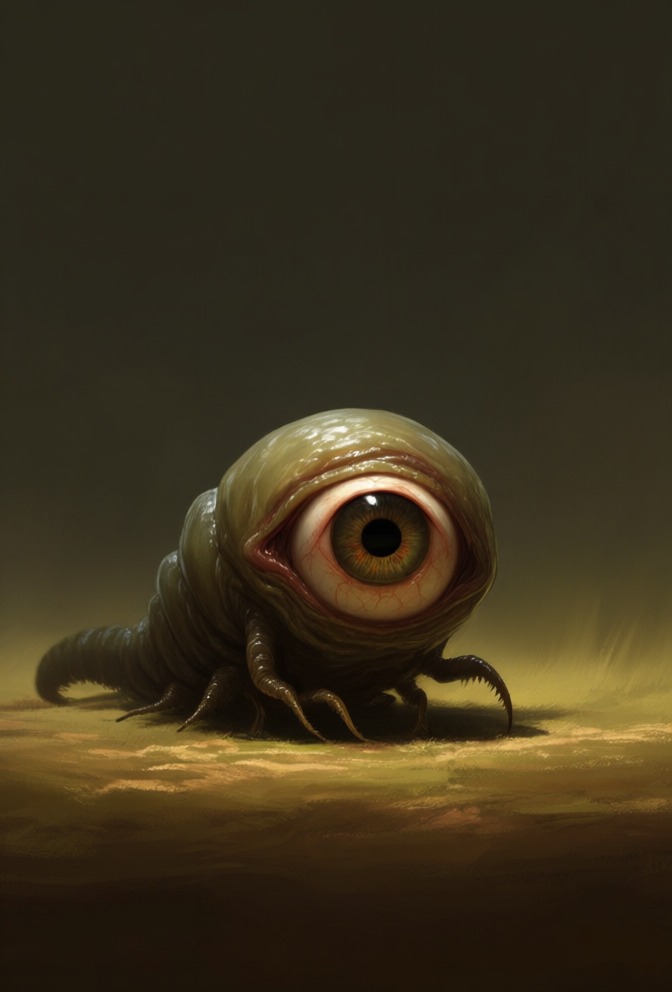
The Crawling Eye is a monstrous form assumed by It during the Losers' Club's 1958 journey through the Derry sewer system. It appears as a gigantic, lidless eyeball that moves on a bed of tentacles, embodying Richie Tozier's deepest childhood fear, inspired by the 1958 horror film The Crawling Eye. The creature attacks the group in a dark tunnel, dragging them toward its gelatinous body, but is repelled when Eddie Kaspbrak, using his aspirator as a weapon, pretends the mist is battery acid and kicks the Eye, breaking the group's paralysis and forcing It to retreat.
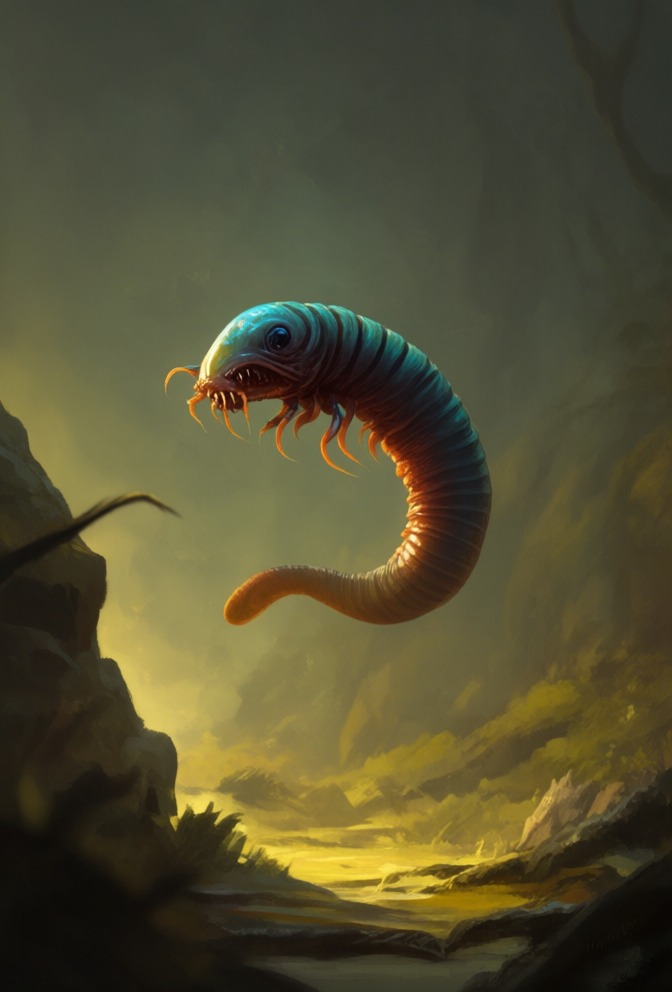
The flying leeches are a monstrous manifestation of It, appearing in the Barrens near the dump in July 1958. They emerge from a discarded Amana refrigerator that Patrick Hockstetter has been using as a killing-bottle for small animals. When Patrick opens the refrigerator, the leeches swarm him, draining his blood and driving him into the Barrens, where It finishes him. Beverly Marsh witnesses the attack, is herself bitten by one of the leeches, and kills it with a silver ball from Bill Denbrough's Bullseye slingshot. The leeches represent It's ability to assume forms drawn from the children's fears and to use the town's discarded objects and hidden spaces as hunting grounds.
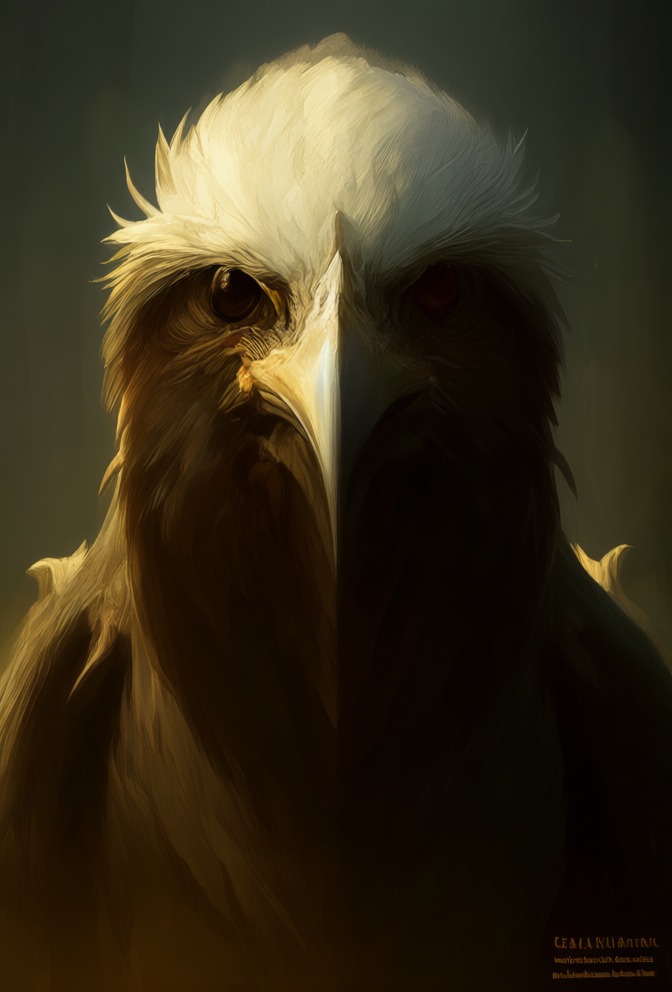
The giant bird is a monstrous manifestation of It, the shape-shifting entity beneath Derry, Maine. It appears to Mike Hanlon in the spring of 1958 as a colossal, hybrid creature—part robin, part sparrow—with an orange chest and a silver tongue, emerging from the ruins of the Kitchener Ironworks. The bird embodies the cosmic horror of It, linking Mike’s childhood trauma to the entity’s ancient, predatory nature and serving as a key revelation that unites the Losers’ Club against their common enemy.
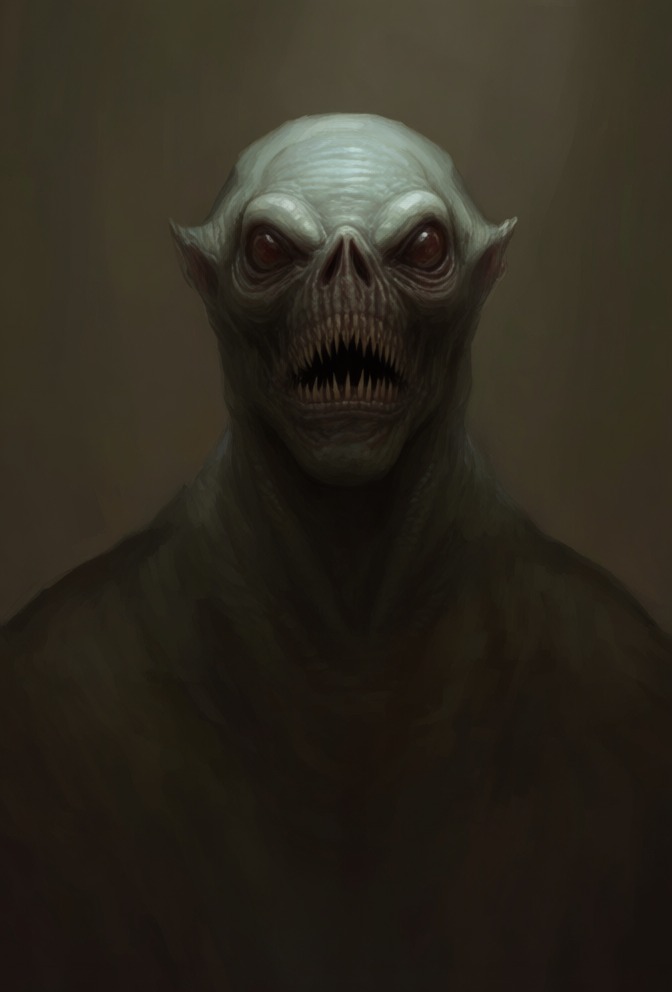
The Leper is one of the many terrifying forms assumed by the entity known as It, specifically manifesting to Eddie Kaspbrak. It first appears as a rotting, disease-ridden figure crawling from the cellar of the abandoned house at 29 Neibolt Street, embodying Eddie's deepest fears of illness, contamination, and the monstrous potential hidden within the familiar. This form is a key part of It's strategy to terrorize the Losers' Club, preying on each member's unique vulnerabilities.
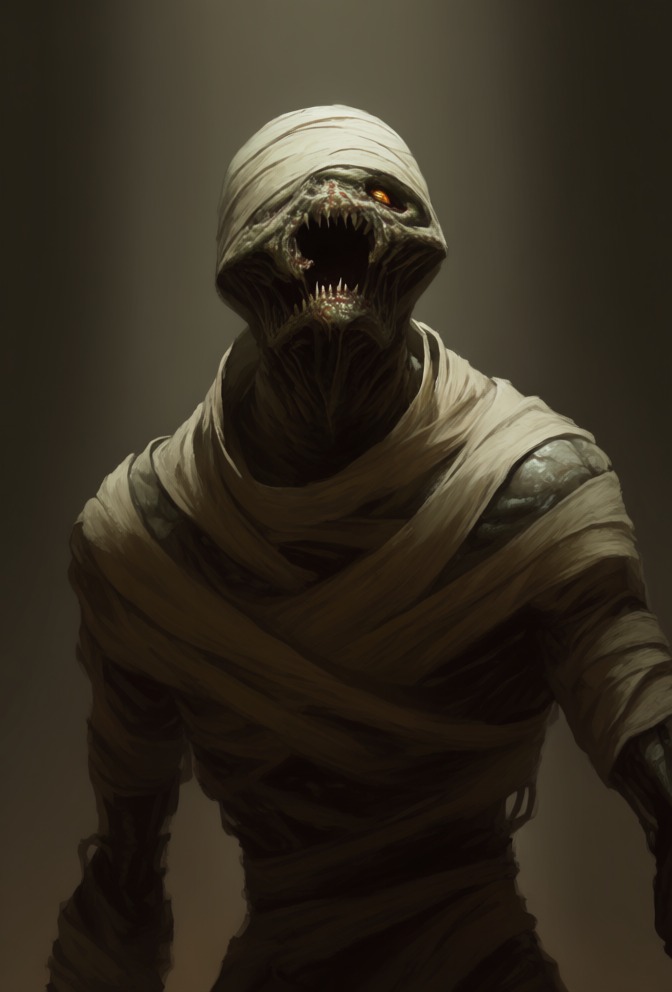
The Mummy is one of the many terrifying forms assumed by the ancient, shape-shifting entity known as It in Stephen King's novel. It first appears to Ben Hanscom in the winter of 1958, manifesting as a desiccated, bandage-swaddled figure on the frozen Canal, and later reappears in the 1985 confrontation, representing the specific childhood fear that It weaponizes against its victims.
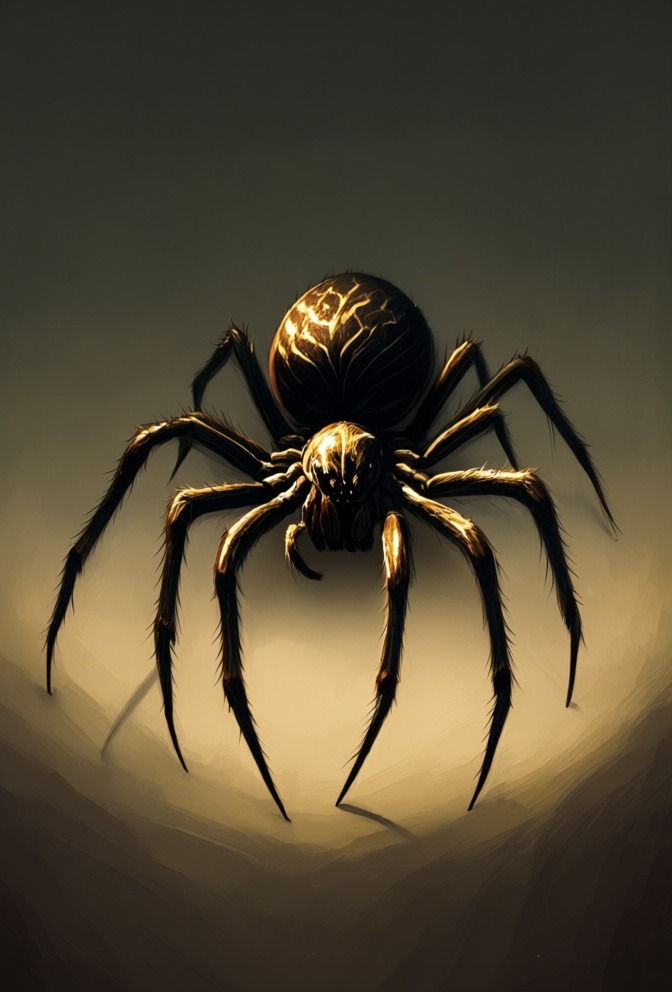
The Spiders are the final physical manifestation of It, the ancient cosmic entity that has haunted Derry for millennia. In the 1958 confrontation, the Losers' Club faced It in the form of a gigantic, pregnant Spider, which they wounded but failed to destroy. In 1985, the adult Losers returned to Its lair and killed the Spider, crushing Its heart and ending Its reign of terror.
Bill Denbrough cures his wife Audra Phillips's catatonia by taking her on a high-speed bicycle ride through Derry on his childhood bike, Silver, an act of reckless faith that breaks the spell of the deadlights and restores her to full consciousness, simultaneously ending his lifelong stutter.
On July 25th, 1958, the seven members of the Losers' Club—Bill Denbrough, Beverly Marsh, Ben Hanscom, Richie Tozier, Eddie Kaspbrak, Stanley Uris, and Mike Hanlon—entered the abandoned house at 29 Neibolt Street, a known access point for the entity they called It. Armed with two silver slugs cast from Ben's silver dollar and Beverly's slingshot, they confronted the creature in its werewolf form. Beverly shot the werewolf in the snout, driving it back into the drainpipe from which it had emerged. The confrontation marked the first time the children successfully wounded It, but they failed to kill it, setting the stage for their final battle weeks later.
The murder of George Denbrough, a six-year-old boy, by the entity known as Pennywise the Dancing Clown in the fall of 1957 is the inciting event of the novel, setting in motion the cycle of terror that defines the summer of 1958 and the adult reunion of 1985. The murder occurs when George, chasing a paper boat made by his brother Bill, encounters a clown in a storm drain who seizes and kills him, tearing off his arm. This event not only traumatizes Bill Denbrough and his family but also establishes the pattern of child murders that the Losers' Club will eventually confront.