Rudolf Wegener and General Tedeki are the central figures in a covert meeting in San Francisco where Wegener, a German Abwehr captain posing as a Swedish businessman, reveals Operation Dandelion—a planned nuclear attack on Japan—to Tedeki, a retired Japanese general traveling incognito. Their encounter, facilitated by Nobusuke Tagomi, exposes the fragile alliance between factions in the Reich and Japan, and sets in motion a desperate attempt to avert catastrophe.
The Ban on The Grasshopper Lies Heavy is a sweeping prohibition enforced across the German Reich and its territories, including the East Coast of the United States, against Hawthorne Abendsen's alternate-history novel in which the Axis loses World War II. The ban reflects the Nazi regime's fear of the book's subversive power: its depiction of a world where Germany and Japan are defeated, its implicit critique of Nazi ideology, and its potential to inspire resistance. The novel is classified as forbidden to all racial groups, though enforcement varies by the armband system, and its very existence provokes anxiety and fascination among German officials, including Consul Hugo Reiss, who contemplates assassinating Abendsen.
The Nuremberg Law, a Nazi racial statute transplanted into the United States after the Axis victory, is a central instrument of oppression in Philip K. Dick's alternate history. It defines Jewish identity by blood, strips Jews of citizenship and legal protection, and enables their systematic persecution, deportation, and extermination. The law's reach extends into the Pacific States of America, where it shapes the lives of characters like Frank Frink, a Jew living under Japanese rule, and fuels the racism and complicity of figures like Robert Childan. Its presence underscores the novel's exploration of how legal and social structures enforce racial hierarchy and the moral compromises of those who live within them.
Wabi is a central Japanese aesthetic concept in Philip K. Dick's The Man in the High Castle, denoting a beauty found in simplicity, imperfection, and austerity. It is first invoked by Robert Childan as he perceives the Kasouras' apartment, and later explicitly contrasted with the related concept of wu by Paul Kasoura when he evaluates the Edfrank jewelry. Wabi represents a mode of perception and value that stands in opposition to the novel's dominant theme of historicity, offering a glimpse of harmony and the Tao that both fascinates and eludes the white American characters.
Jim Hawkins's daring night expedition to cut the Hispaniola adrift is a pivotal act of individual initiative that cripples the mutineers' escape plans and sets the stage for the final confrontation over the treasure.
Captain Smollett is the disciplined, cautious, and principled commander of the Hispaniola whose early warnings about the crew's trustworthiness prove prophetic, and who leads the loyal party through the mutiny with tactical skill and unwavering authority.
Tom Morgan is a minor but recurring pirate in Robert Louis Stevenson's Treasure Island, first seen at Long John Silver's Spy-glass Tavern in Bristol and later among the mutineers on the island. He is an old, grey-haired, mahogany-faced sailor who serves as a loyal follower of Silver, though he is notably superstitious and easily frightened. Morgan's appearances trace the arc of the pirate crew from recruitment to defeat, and his fate—left behind on Treasure Island—underscores the grim consequences of the treasure hunt.
Tom Redruth is the loyal gamekeeper of Squire Trelawney who accompanies the expedition to Treasure Island as one of the squire's trusted servants. He is the first member of the loyal party to die, shot by the mutineers during the Battle of the Stockade, and his death marks a turning point in the struggle, underscoring the cost of the treasure hunt and the steadfastness of the old servant.
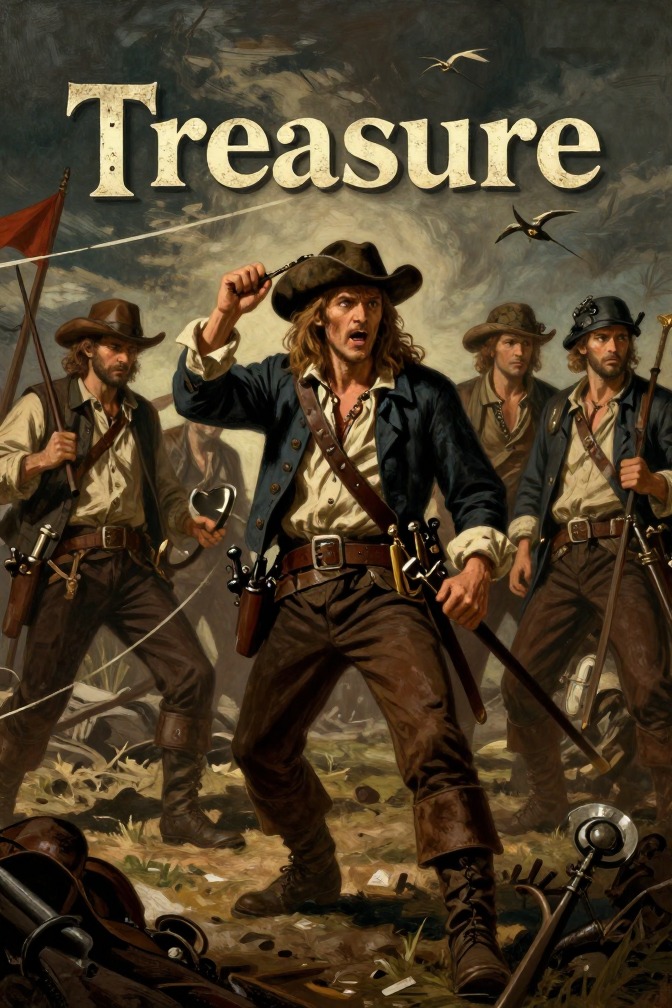
The treasure hunt on Treasure Island is the climactic expedition in which Long John Silver leads the mutineers and Jim Hawkins to the site of Captain Flint's buried gold, only to discover the cache has already been rifled by Ben Gunn, triggering a violent ambush that shatters the pirates' power and resolves the central conflict of the novel.
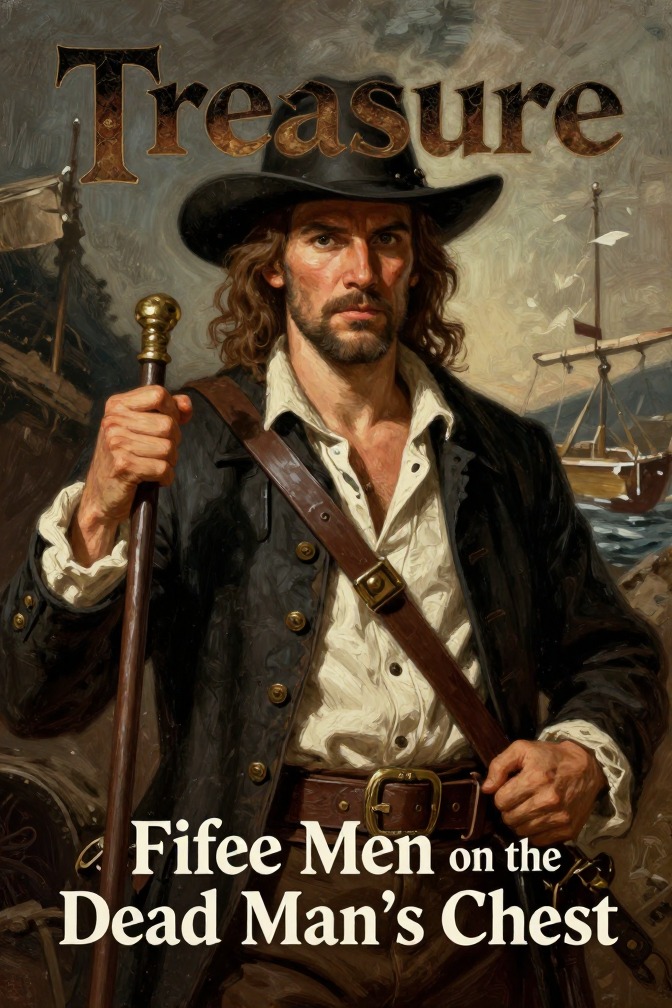
Fifteen Men on the Dead Man's Chest is the recurring sea song in Robert Louis Stevenson's Treasure Island, first sung by the old buccaneer Billy Bones at the Admiral Benbow Inn and later adopted by Long John Silver and the mutineers. Its refrain, 'Yo-ho-ho, and a bottle of rum,' becomes a leitmotif of piracy, death, and the lure of treasure, echoing through key moments of the narrative from the inn to the island's final hunt.
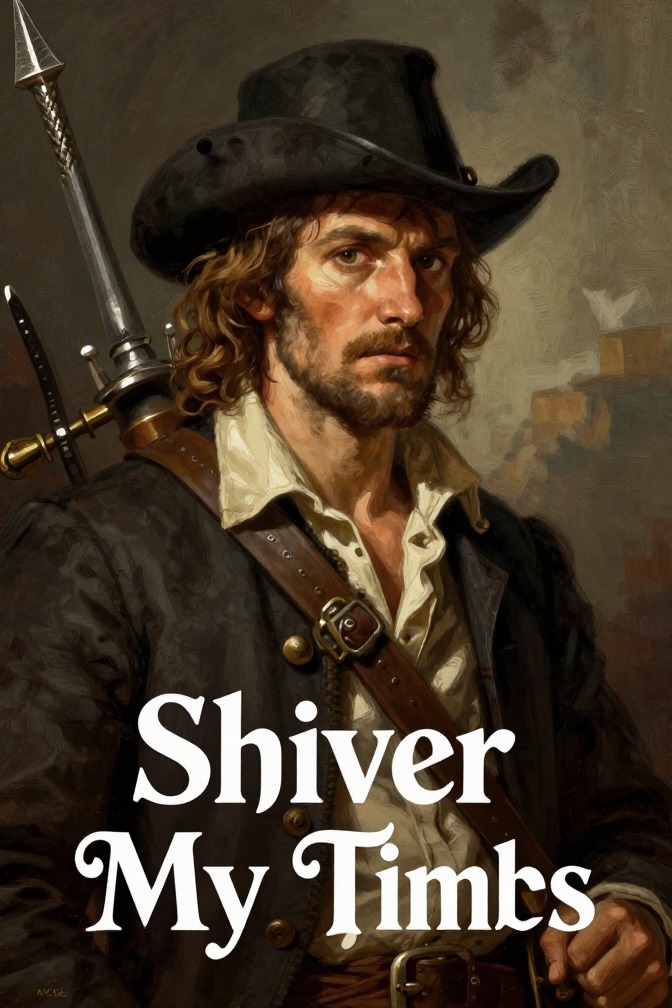
Shiver My Timbers is a recurring nautical oath in Treasure Island, used most famously by Long John Silver and other pirates to express surprise, frustration, or emphasis. It appears throughout the novel, from Silver's tavern to the treasure hunt, and becomes a verbal signature of the pirate world, contrasting with the more formal speech of the gentlemen.
The relationship between Billy Bones and Dr. Livesey is a study in contrasts—the filthy, rum-soaked buccaneer versus the neat, authoritative magistrate—whose single violent confrontation establishes the moral and legal order that will govern the rest of Treasure Island. Their interactions, from the doctor's warning to his life-saving treatment, reveal the tension between lawlessness and civilization, and set the stage for the captain's downfall and the quest for the treasure.
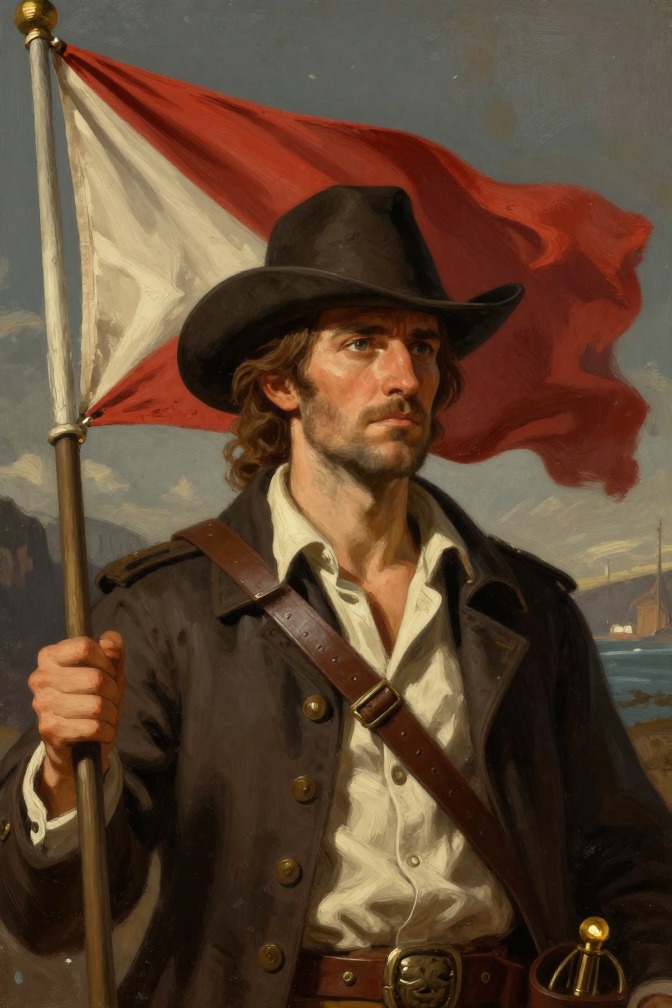
The flag of truce is a pivotal convention in Treasure Island, governing the tense negotiations between Captain Smollett's loyal party and the mutineers led by Long John Silver. Its use marks a critical shift from open combat to strategic dialogue, revealing the fragile codes of honor that even pirates observe, and ultimately shaping the fate of the treasure hunt.
Sealed orders are a maritime command system in Treasure Island, where a captain is given written instructions to be opened only at a specified time or place, ensuring secrecy. In the novel, Captain Smollett invokes this practice to highlight the breach of trust and secrecy that threatens the voyage, contrasting the legitimate, orderly command structure with the mutinous crew's knowledge of the expedition's true purpose.
Rick Deckard, having just killed the android Pris Stratton and learned that Rachael Rosen murdered his goat, drives north into the desert, experiences a solitary ascent that merges him with Wilbur Mercer, and then finds a toad he believes is real—only to discover at home that it is electric. The episode crystallizes his moral exhaustion, his fusion with Mercer's suffering, and the ambiguous consolation of ersatz life.
Pris Stratton mutilates the spider is a pivotal action in which the android Pris, using Irmgard Baty's cuticle scissors, systematically cuts off the legs of a living spider that John Isidore has found, while Buster Friendly's televised exposé of Mercerism plays in the background. The scene crystallizes the androids' incapacity for empathy, their casual cruelty toward animal life, and the moral collapse that accompanies the revelation that Mercerism is a fraud. Isidore's horrified response and his eventual drowning of the mutilated creature mark his final break from the androids and his descent into the tomb world, while the spider's restoration by Mercer becomes a fragile symbol of hope and continuity.
Rachael Rosen's seduction of Rick Deckard is a pivotal event in which the android Rachael, acting on behalf of the Rosen Association, uses sexual intimacy to neutralize Deckard's resolve as a bounty hunter, ultimately leading to his inability to retire the remaining Nexus-6 androids and to the death of his goat.
Pre-colonial fiction is a genre of stories written before the advent of space travel but set in space, which becomes a prized and smuggled commodity on Mars, offering its colonists an imaginative escape from their barren reality and serving as a key cultural artifact that reveals the psychological deprivation of life in the colonies.
Anthead is a derogatory slang term in the world of Do Androids Dream of Electric Sheep? for a person classified as a "special" due to severe mental deterioration from radiation exposure, ranking below even a "chickenhead" on the social hierarchy. The term encapsulates the contempt and dehumanization directed at those whose cognitive faculties have been degraded by the radioactive dust of World War Terminus, marking them as biologically and socially unacceptable.
Chickenhead is the derogatory colloquial term in the post-apocalyptic world of Do Androids Dream of Electric Sheep? for a human being who has failed the minimum mental faculties test and is thus classified as a 'special,' a biologically and intellectually degraded individual who cannot emigrate and is treated with contempt by the regular population.
Kipple drives out nonkipple is the First Law of Kipple, a universal principle articulated by John Isidore in Philip K. Dick's Do Androids Dream of Electric Sheep? It describes the tendency of useless objects to proliferate and displace functional ones, mirroring the entropic decay of Earth after World War Terminus.
Mercerism is the dominant religious and ethical system in the post-apocalyptic world of Do Androids Dream of Electric Sheep?, centered on the fusion of consciousness through an empathy box with the suffering figure of Wilbur Mercer. It provides the moral framework that distinguishes humans from androids, defines the sanctity of all life, and ultimately survives a devastating exposé that reveals its physical origins as a fraud.
The Regular is the legal and biological classification for a human being on post-apocalyptic Earth who has not been degraded by radioactive dust to the point of genetic or mental defect, and who therefore retains the right to reproduce, emigrate, and participate fully in society. This status, defined by monthly police medical exams and enforced by law, creates a rigid hierarchy that divides the dwindling human population into the viable Regulars and the outcast Specials, and it underpins the moral and existential stakes of the novel by making biological fitness the sole criterion for full humanity.
The Special is a legal and social classification in post-apocalyptic Earth, designating individuals deemed biologically or mentally unfit due to radiation-induced genetic damage or intellectual impairment. This category, which includes derogatory terms like 'chickenhead' and 'anthead,' strips its members of full citizenship, bars them from emigration, and subjects them to systemic contempt, yet they remain on Earth as a permanent underclass.
World-silence is the overwhelming, palpable absence of life that pervades the abandoned urban landscape of post-apocalyptic Earth, experienced as a visible, almost sentient force by those who remain, particularly the special John Isidore.
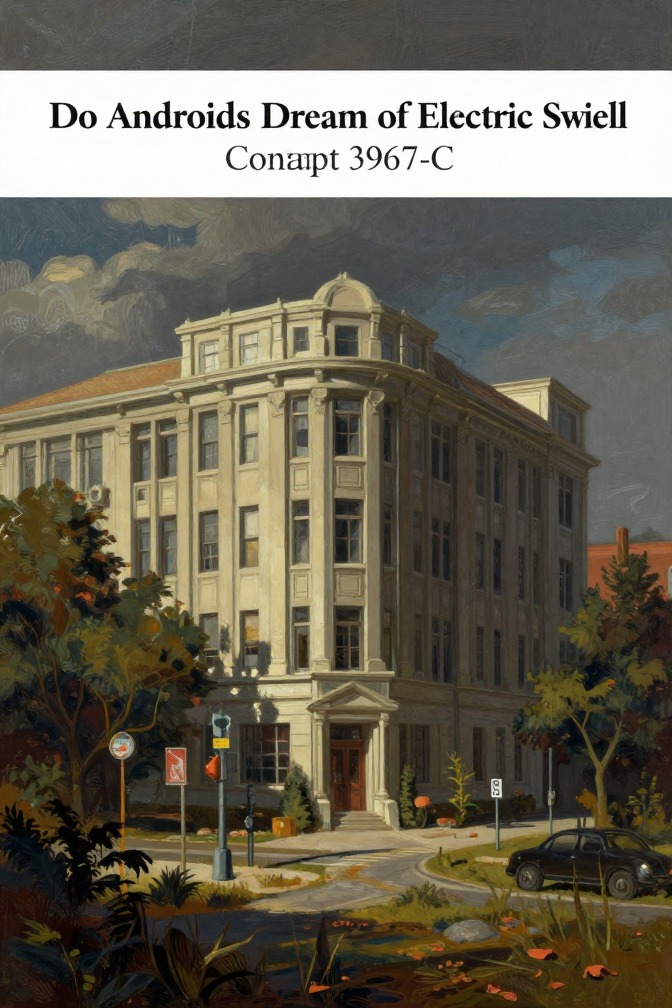
Conapt Building 3967-C is the suburban San Francisco apartment block where the three remaining Nexus-6 androids—Roy Baty, Irmgard Baty, and Pris Stratton—take refuge after the rest of their group has been killed by bounty hunter Rick Deckard. It becomes the site of the novel's climactic confrontation, a decaying, largely abandoned structure that embodies the entropy and isolation of post-apocalyptic Earth.
Earth, in the post-apocalyptic world of Do Androids Dream of Electric Sheep?, is a dying planet blanketed by radioactive dust from World War Terminus, where most animal life has gone extinct and the remaining human population is encouraged to emigrate to colony worlds like Mars. The planet serves as the central setting for the novel's exploration of empathy, humanity, and the consequences of environmental devastation.
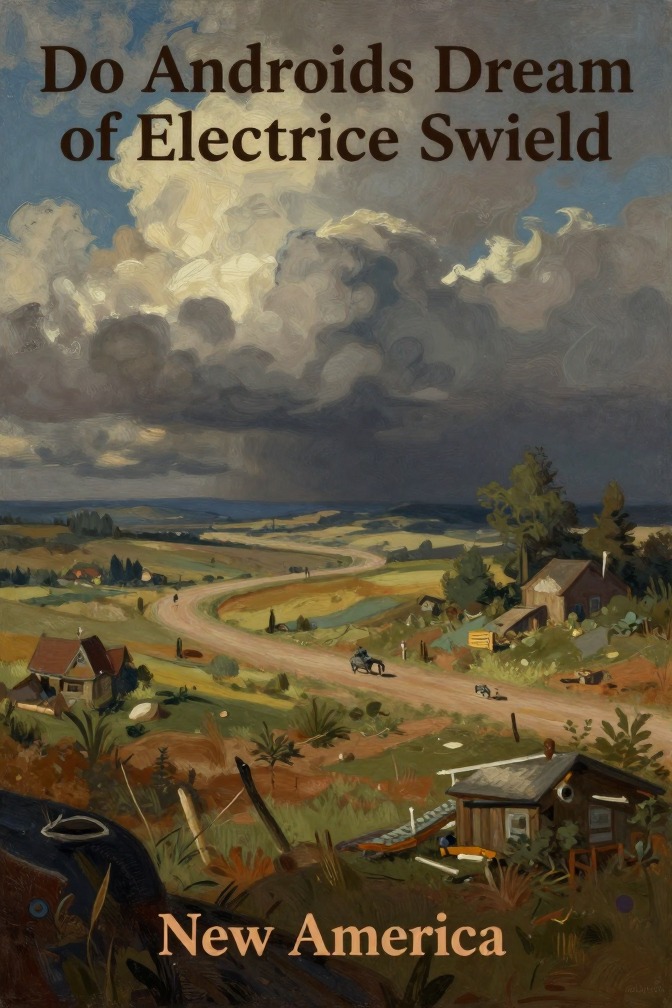
New America is the chief United States settlement on Mars, founded as part of the U.N. colonization program that offered emigrants a free android servant as an incentive to leave radioactive Earth. It represents the promise of a new life free from contamination and the threat of being classified as a "special," but also embodies the colonial power dynamics and the commodification of android labor.
New New York is the chief U.S. settlement on Mars, a colonial city central to the novel's emigration narrative and the backdrop for the android Pris Stratton's life before her return to Earth.
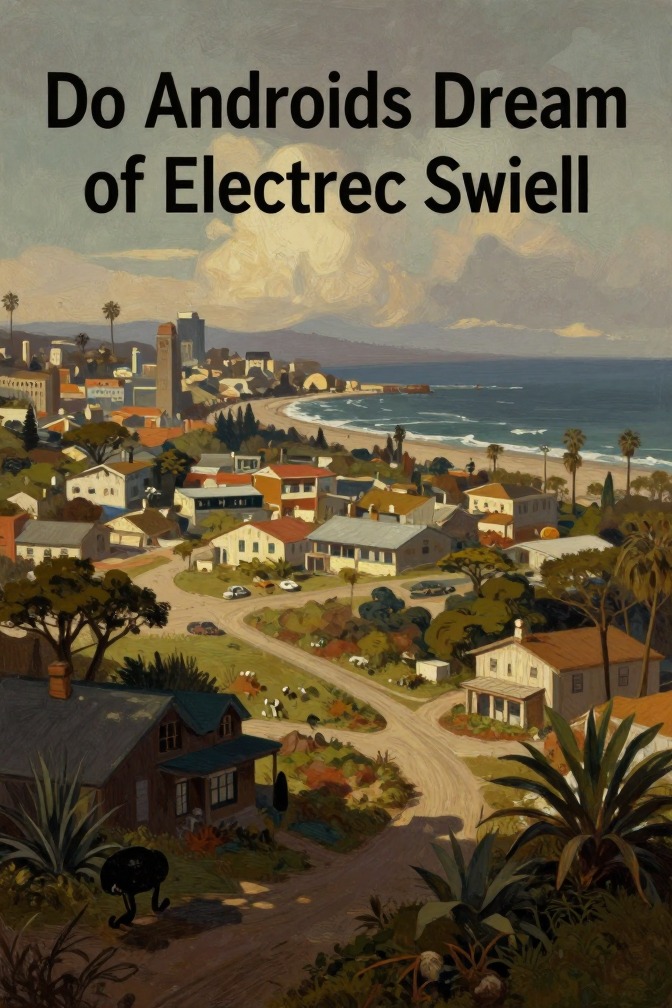
San Francisco is the primary setting of Philip K. Dick's novel, a decaying, dust-choked city on post-apocalyptic Earth where bounty hunter Rick Deckard lives and works, and where the novel's central conflict between humans and escaped androids unfolds.