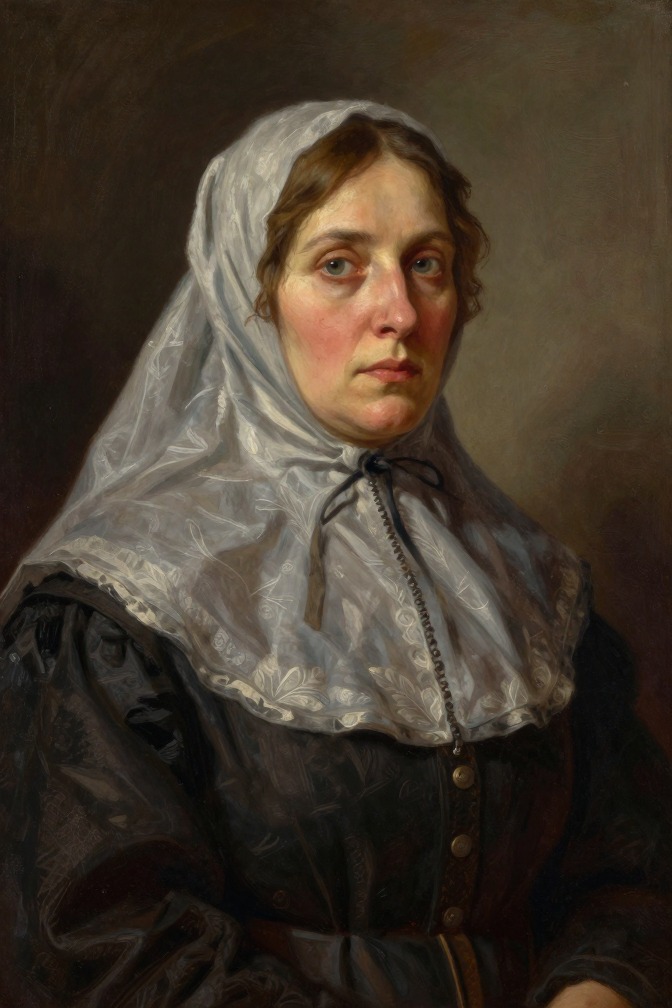
Lydia Shoustova is a young woman imprisoned in the Peter and Paul Fortress for possessing revolutionary papers, whose unjust detention and psychological breakdown illustrate the arbitrary cruelty of the Tsarist political police and the devastating effects of solitary confinement on innocent individuals.
Makar Devkin is a peasant convict condemned to hard labor for an attempted murder and robbery that he attributes to demonic possession, yet he risks his own life to help a fellow villager by secretly revealing a prisoner's identity swap to Nekhludoff.
Makarkin, also known as Makar Devkin, is a convict condemned to hard labor for an attempted murder and robbery that he attributes to a diabolical impulse rather than his own will. His brief but crucial appearance in the novel demonstrates the moral complexity of the criminal population, as he risks his own life to help a fellow villager by secretly revealing a prisoner's identity-swap scheme to Nekhludoff.
Maria Ivanovna is the elder of the two maiden sisters who raised Katerina Maslova, and she embodies the harsher, more exacting side of the household that shaped Maslova's early life.
Matrona Pavlovna is the old servant of Nekhludoff's aunts, a witness to his youthful love for Katusha and a key figure in the events that led to Katusha's seduction and downfall.
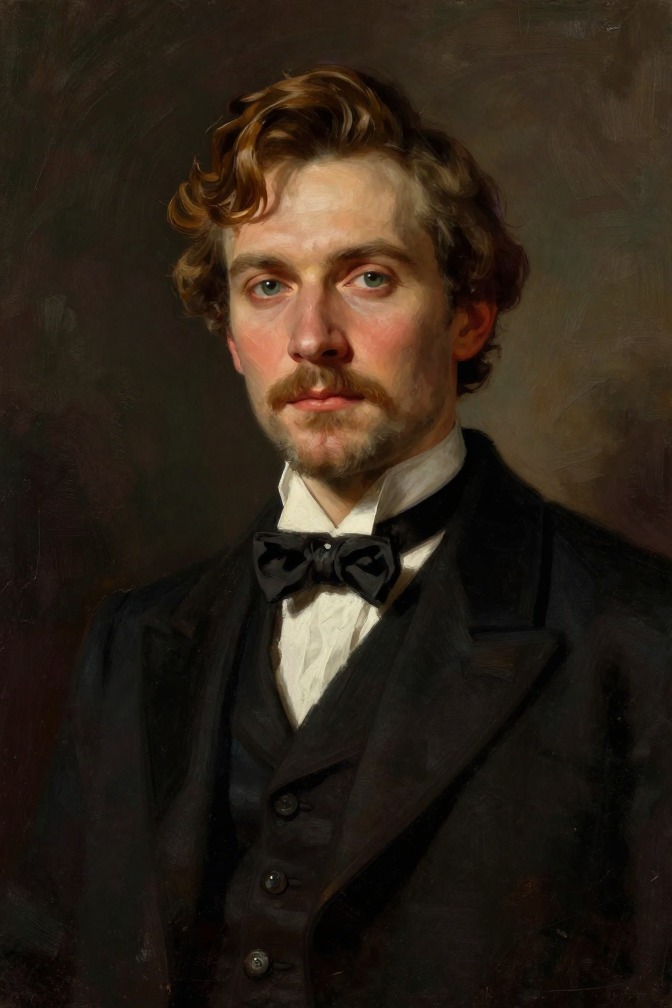
Mitri Menshoff is a young peasant imprisoned for arson after his wife was seduced by a village publican; his case becomes a key example of judicial injustice that Nekhludoff encounters and tries to remedy.
Nabatoff is a peasant-born revolutionary whose practical, cheerful communism and deep attachment to the land make him a distinctive figure among the political exiles. Unlike the doctrinaire ideologues around him, he believes the revolution should preserve the fundamental forms of peasant life while removing the gentry and officials, and he brings an unflagging energy and moral simplicity to every task, whether organizing a prison cell or debating the future of Russia.
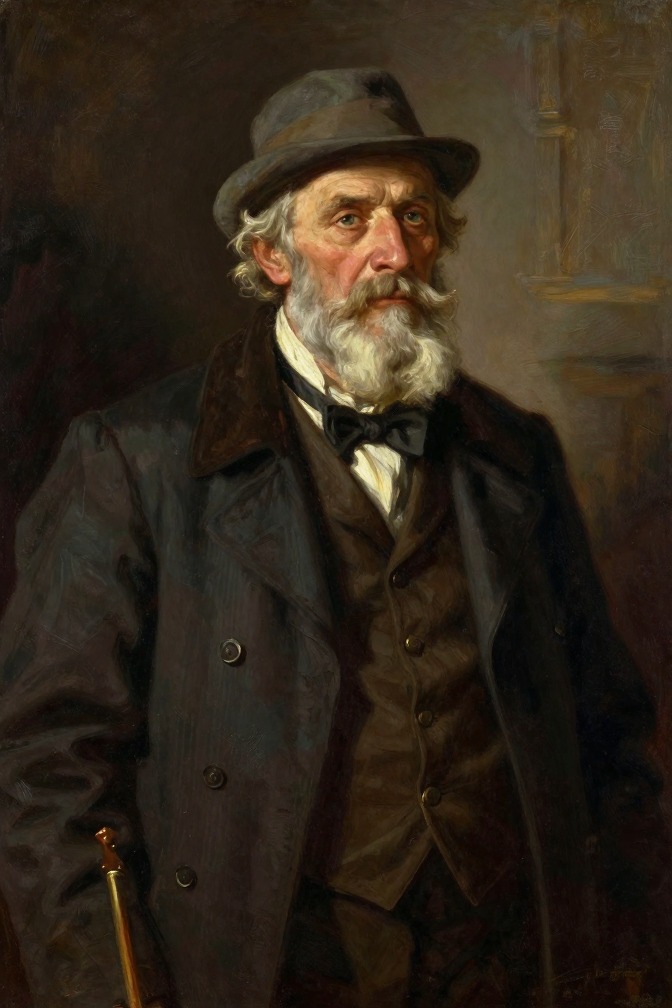
The old man is a mysterious, anarchic tramp whom Nekhludoff encounters twice during his Siberian journey—first on a river ferry, where he delivers a radical sermon rejecting all organized religion and state authority, and later in a prison cell, where he defiantly refuses to obey the inspector and denounces the entire penal system as the work of Antichrist. His brief appearances crystallize the novel's most extreme critique of institutional power and offer a living embodiment of the spiritual freedom Nekhludoff himself is seeking.
Vladimir Vasilievitch Wolf is a senator in the Appeal Department of the Senate, a man who prizes his reputation as un homme tres comme il faut above all else, and whose career has been built on a foundation of moral complacency, financial dishonesty, and a rigid adherence to the forms of law that masks a profound indifference to justice.
The "animal man" is a central concept in Leo Tolstoy's "Resurrection," representing the selfish, instinct-driven aspect of human nature that Dmitri Nekhludoff must overcome to achieve moral and spiritual awakening. It stands in direct opposition to the "spiritual man," and the novel charts Nekhludoff's struggle as he oscillates between these two selves, ultimately finding redemption by subduing his animalistic impulses.
The true grand monde is a recurring concept in Leo Tolstoy's Resurrection, representing the exclusive, self-justifying world of the Russian aristocracy that Prince Dmitri Ivanovitch Nekhludoff comes to reject. It is defined by its members' unquestioned assumption of superiority, their luxurious and idle lives built on the exploitation of the peasantry, and their profound moral hypocrisy, which masks systemic cruelty and injustice. The phrase crystallizes the novel's central critique of a social order that considers itself the pinnacle of civilization while being the source of the very evils Nekhludoff seeks to combat.
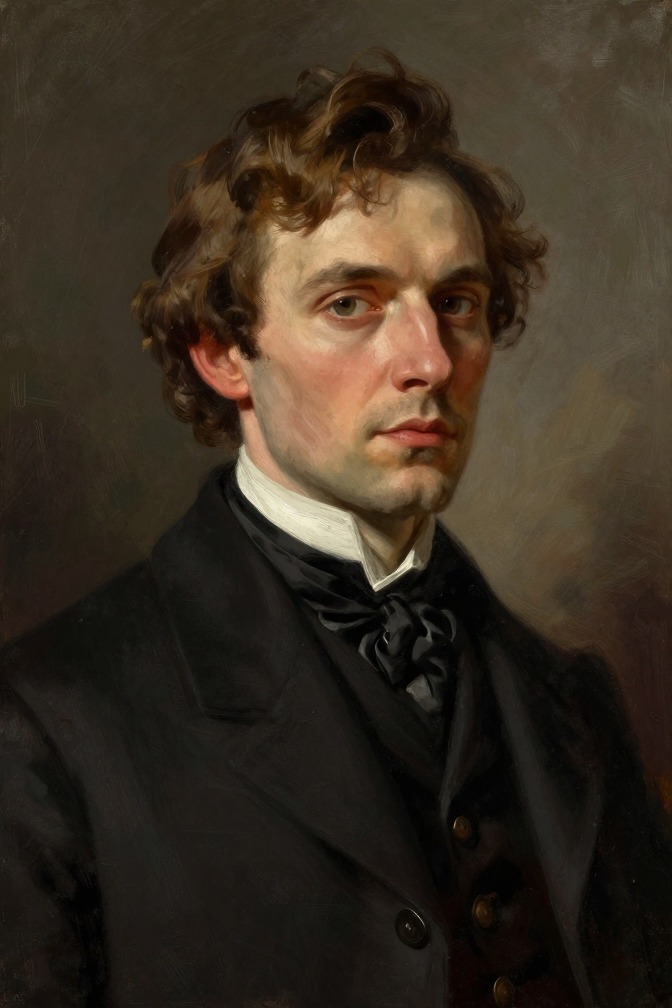
Valdemar Simonson, a political prisoner traveling with the same gang as Katerina Maslova, privately asks Dmitri Nekhludoff for his consent to marry Maslova, explaining that he loves her as a unique human being who has suffered much and wishes to lighten her fate. Nekhludoff, though initially unsettled, gives his approval, recognizing that Simonson's offer frees Maslova from the burden of Nekhludoff's own sacrificial proposal and allows her to choose a path of genuine companionship.
Cleansing of the soul is a recurring spiritual process in Dmitri Ivanovitch Nekhludoff's life, a metaphor for the periodic moral and psychological renewal he undergoes after long periods of moral stagnation, most decisively triggered by his encounter with Katerina Maslova at her trial.
This expression, which crystallizes the moment of Katusha's final disillusionment, contrasts the luxurious, indifferent world of the privileged with the suffering of the abandoned, and marks the psychological turning point that leads to her moral ruin.
Natural love is the fundamental law of human life is a central moral and philosophical principle articulated by Dmitri Ivanovitch Nekhludoff during his journey to Siberia, representing the culmination of his spiritual awakening and his rejection of the institutionalized cruelty he witnesses.
Archangel is a northern Russian government (province) to which the revolutionary Vera Doukhova was exiled after her trial, and where the political prisoner Valdemar Simonson was also sent before being transferred to the Yakutsk region. The place functions in the novel as a site of political exile, a setting that exposes the tsarist regime's practice of isolating dissidents in remote, harsh territories, and as a background for the development of Simonson's idiosyncratic philosophical and religious ideas.
Irkoutsk is the Siberian administrative center to which convicts and exiles are transported after sentencing, serving in the novel as the symbolic and geographical terminus of the penal system that destroys Maslova and thousands like her.
Kourgan is the Siberian town from which the merchant Therapont Emelianovich Smelkoff originates; his sudden death there, after a journey to the provincial capital, triggers the poisoning case for which Katerina Maslova is tried and wrongly convicted. The town functions as the geographical anchor of the crime narrative and, through Smelkoff's wealth and coarse vitality, as a symbol of the predatory commercial class that the novel condemns.
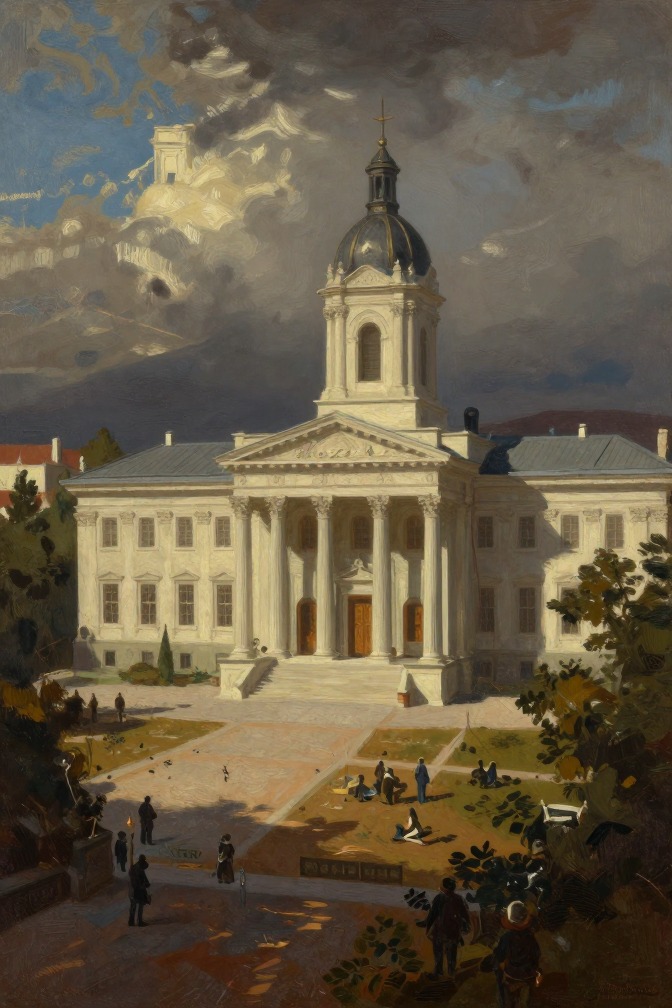
The Law Courts in the novel serve as the central stage for the miscarriage of justice that drives the plot, embodying the corrupt, dehumanizing machinery of the Russian legal system where form trumps truth and the powerful are insulated from accountability.
The Neva River in Petersburg serves as a symbolic boundary in Nekhludoff's moral journey, a site where the oppressive atmosphere of official Petersburg gives way to a moment of relief and reflection after his encounter with the old General who oversees the political prison.
Siberia is the vast eastern territory of the Russian Empire to which convicts, including Katerina Maslova, are exiled and transported, serving as the ultimate destination of the penal system and the geographical and moral horizon of the novel's final movement.
Tomsk is a Siberian city that serves as a crucial waypoint in the novel, where the fates of the main characters converge and undergo decisive transformations. It is the place where Maslova is transferred from the criminal to the political prisoners, where Nekhludoff witnesses the full horror of the penal system, and where the final shape of his and Maslova's future is determined.
The portrait of the Emperor is a recurring symbol of state authority and the official ideology of the Russian Empire, appearing in the courtroom, the church, and the prison, and serving as a constant reminder of the power that judges, condemns, and imprisons.
The Senate decision in Katerina Maslova's case is the judicial ruling that confirmed her conviction for poisoning the merchant Smelkoff, rejecting the appeal and sentencing her to four years of penal servitude in Siberia, a verdict that becomes the central injustice driving Prince Nekhludoff's moral awakening and his determination to atone for his past sins.
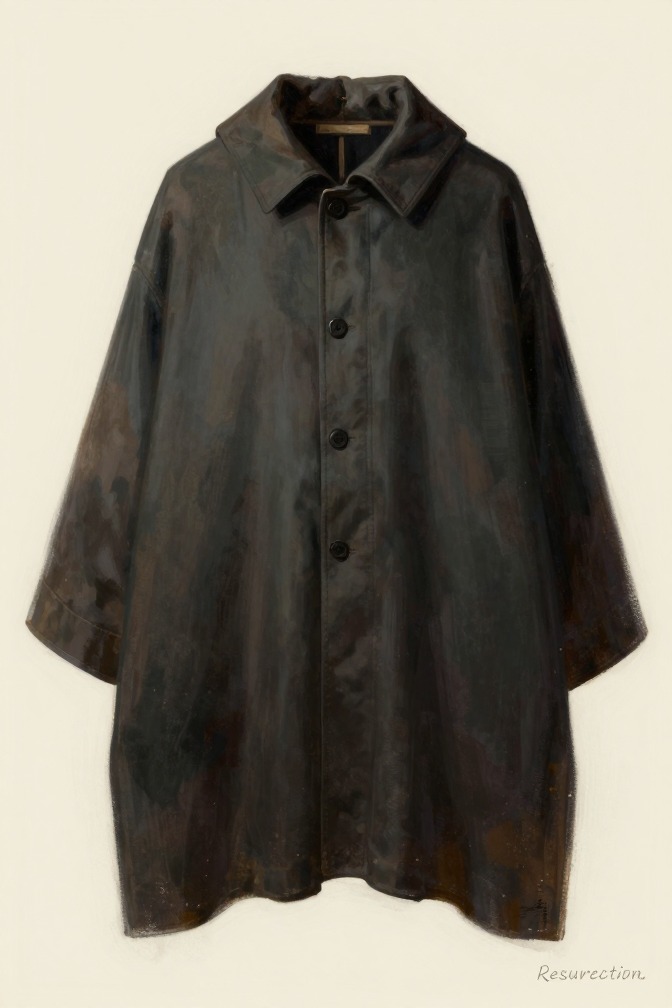
The prison cloak is the standardized grey garment worn by convicts in the Russian penal system, a uniform that strips individual identity and marks the wearer as a criminal. In Tolstoy's novel, it functions as a powerful symbol of degradation, social erasure, and the state's power to define a person's worth, while also becoming a site of contested meaning as characters like Katerina Maslova experience both its dehumanizing force and, paradoxically, a form of protection within the prison community.
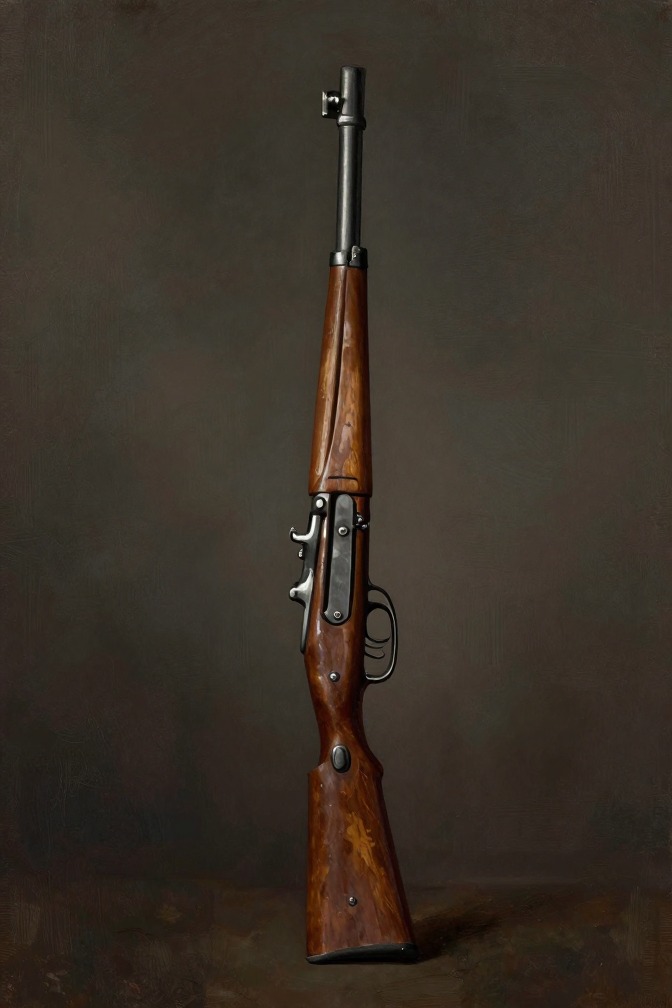
The rifle is a recurring symbol of state authority and violence in *Resurrection*, appearing in the hands of guards, soldiers, and sentinels who enforce the prison system and the convoy of convicts. Its presence marks the boundary between freedom and captivity, and its use—or the threat of its use—underscores the novel's critique of institutional cruelty.
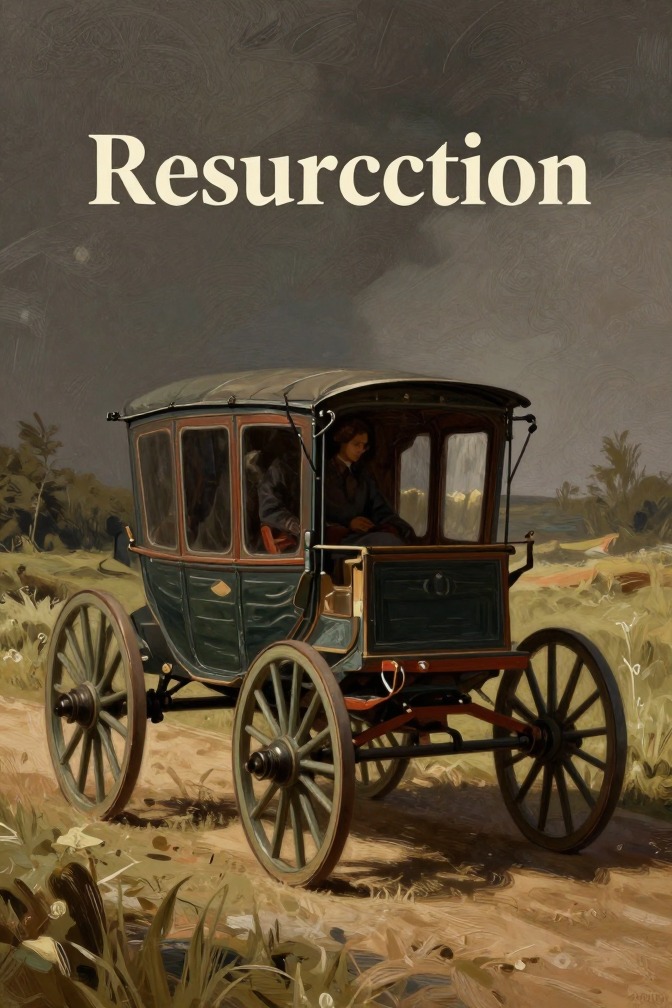
The trap (isvostchik's trap) is a recurring vehicle in the novel, used by Nekhludoff for transportation within Moscow and on his journey to Siberia, and it serves as a concrete marker of his social standing and the changing circumstances of his moral journey.
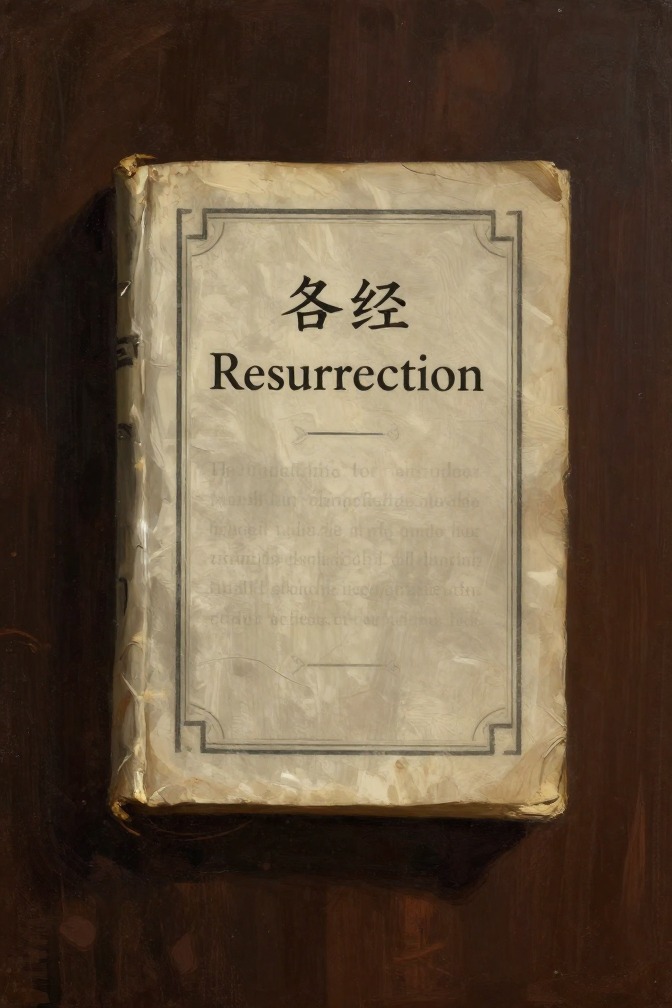
The Bible in Leo Tolstoy's 'Resurrection' functions as a transformative textual catalyst, first appearing as a ritual object within the oppressive prison church service and later becoming the instrument of Nekhludoff's final spiritual awakening, when he reads the Sermon on the Mount and discovers the five commandments that he believes can establish the Kingdom of Heaven on Earth.
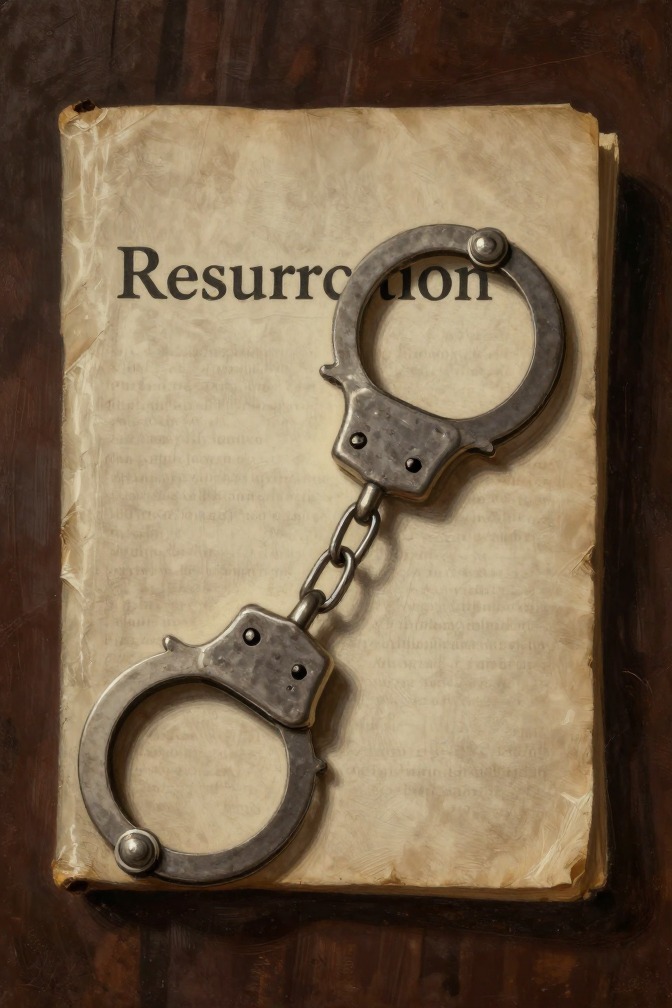
Handcuffs (manacles) are a recurring material symbol in *Resurrection*, used to restrain prisoners during transport and within the prison system. They appear in the novel's opening scenes of the trial and throughout the journey to Siberia, marking the physical degradation and legal subjugation of the convicts. The object's presence—its rattling, its weight, its removal and reapplication—serves as a constant, tangible reminder of the state's power to bind and dehumanize, and becomes a focal point for Nekhludoff's evolving moral consciousness.
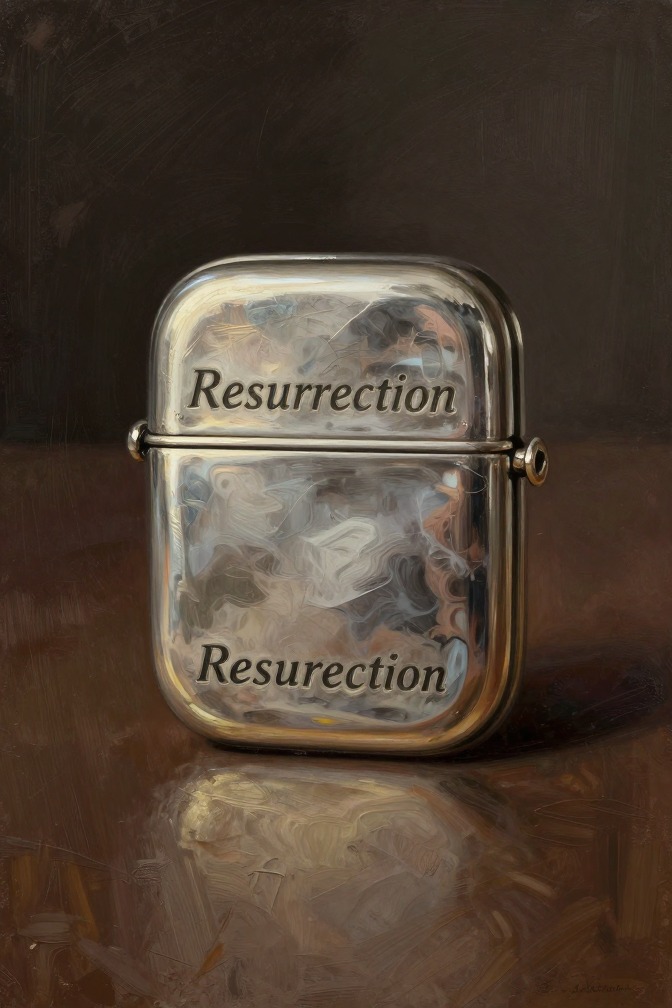
The silver cigarette case is a recurring object in *Resurrection* that marks Nekhludoff's social status, his habitual self-indulgence, and the moral distance between his luxurious life and the suffering he witnesses. It appears in scenes of aristocratic comfort, courtroom tension, and prison visits, serving as a tangible symbol of the worldly habits he must overcome in his spiritual awakening.