Augustus Waters invites Hazel Grace Lancaster to his house to watch the movie V for Vendetta immediately after their first meeting at Support Group, an impulsive gesture that initiates their relationship and sets the stage for their shared exploration of love, mortality, and meaning.
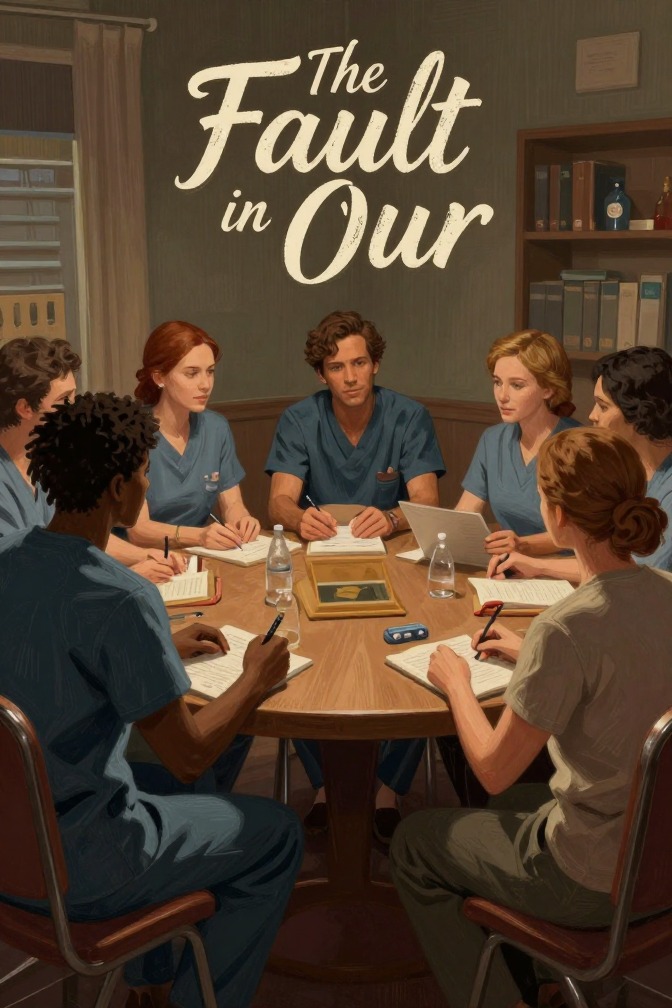
The Cancer Team Meeting decides to allow travel is a pivotal medical conference in which Hazel Grace Lancaster's doctors debate the risks and feasibility of her traveling to Amsterdam to meet Peter Van Houten, ultimately granting permission despite significant concerns, a decision that enables the novel's central journey and deepens the story's exploration of life, risk, and the value of experience in the face of terminal illness.
Hazel Grace Lancaster delivers a eulogy at the funeral of Augustus Waters, reflecting on their love, the nature of infinity, and the meaning of a life lived in the shadow of death.
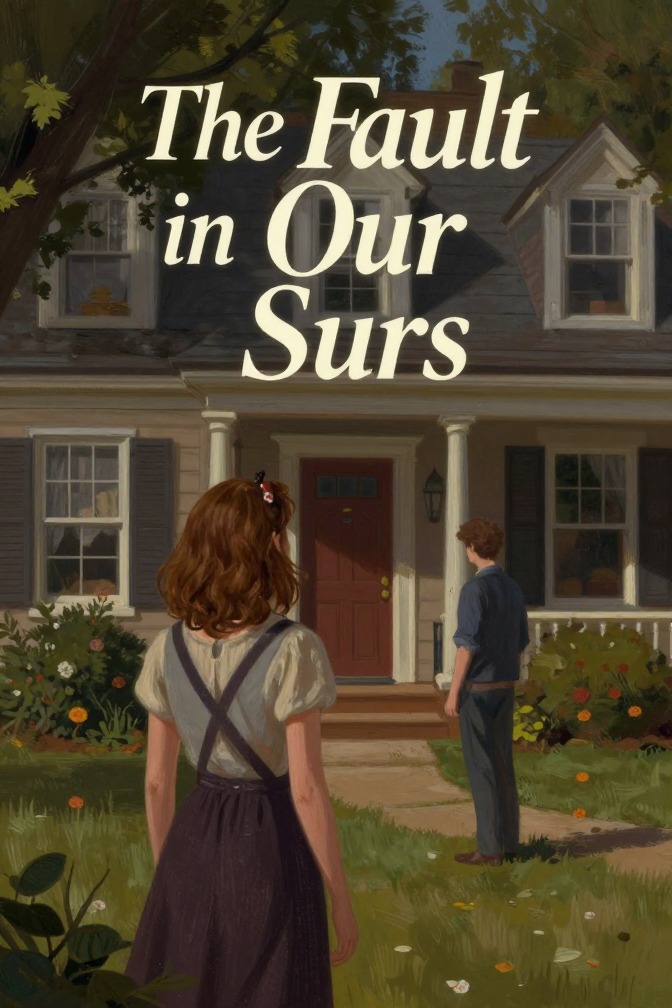
Hazel Grace Lancaster visits Augustus Waters's house for the first time after meeting him at Support Group, where they watch the movie V for Vendetta, share a meal with his parents, and begin their relationship through a book exchange and a charged conversation about metaphor and mortality.
After Augustus Waters's death, Hazel Grace Lancaster searches for a sequel he may have written for her, a search that becomes a final act of love and grief, leading her to discover his true legacy: a letter to Peter Van Houten that redefines heroism as noticing rather than leaving a mark.
Hazel Grace Lancaster, enraged by Peter Van Houten's refusal to answer her questions about the fate of characters from *An Imperial Affliction*, smashes a glass of Scotch out of his hand during their disastrous meeting in Amsterdam, a violent act that crystallizes her desperation and the collapse of her long-held fantasy of closure.
Graham is Isaac's younger brother, a minor character who appears briefly in the novel. He is a wiry, overenergetic ten-year-old who skips across the living room and shouts a joke in an imitation of Isaac's voice during a game of Deception, demonstrating the chaotic, youthful energy that contrasts with the gravity of Isaac's blindness and grief.
Kaitlyn is Hazel's sophisticated, socially active friend from before her cancer diagnosis, who represents the normal teenage world Hazel has been partially separated from. Though their friendship is marked by genuine affection and Kaitlyn's attempts to stay connected, the distance created by Hazel's illness and the unbridgeable gap between their experiences becomes increasingly apparent, culminating in Kaitlyn's crucial insight that helps Hazel find Augustus's final letter.
Lida is a minor character in *The Fault in Our Stars*, a sixteen-year-old girl in long-term remission from appendiceal cancer who attends the same Support Group as Hazel. She embodies the conventional, competitive cancer survivor narrative that Hazel resists, and her brief appearances serve to highlight Hazel's alienation from the platitudes of the cancer community.
In John Green's *The Fault in Our Stars*, metaphor functions as a central philosophical and narrative device, shaping how characters understand their suffering, mortality, and relationships. From Augustus Waters's unlit cigarette—a symbol of holding the killing thing without giving it power—to Hazel Grace Lancaster's self-description as a "grenade," metaphors provide a language for the inexpressible. The novel interrogates the limits of metaphor, contrasting Augustus's belief in symbolic resonance with Hazel's insistence on concrete reality, while ultimately affirming that some truths resist metaphor and must be felt directly.
The Encouragements are the aphoristic, cross-stitched sayings that decorate the Waters family home, serving as a constant, ironic backdrop to Augustus Waters's life and death. They represent a worldview of forced optimism and easy comfort that both Augustus and Hazel Grace Lancaster critique, yet they also become a source of dark humor and, ultimately, a symbol of the platitudes that surround illness and grief.
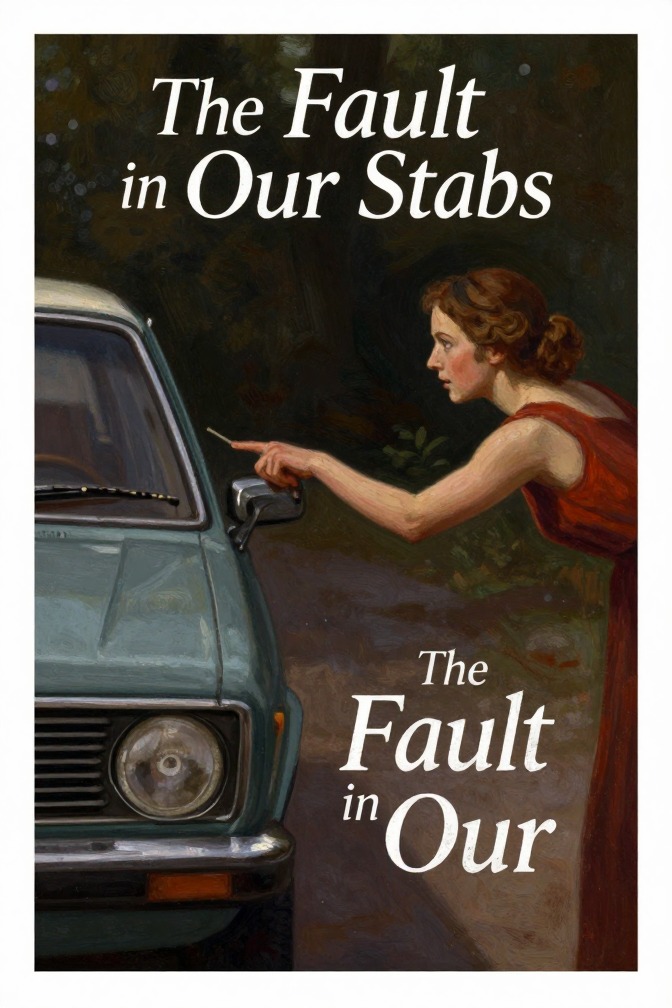
In a defiant act of solidarity and revenge, Hazel Grace Lancaster drives Augustus Waters and Isaac to Monica's house, where Isaac, blind from cancer surgery, eggs his ex-girlfriend's car while Augustus directs him, turning a petty act of vandalism into a symbolic stand against abandonment and the erasure of the sick by the healthy.
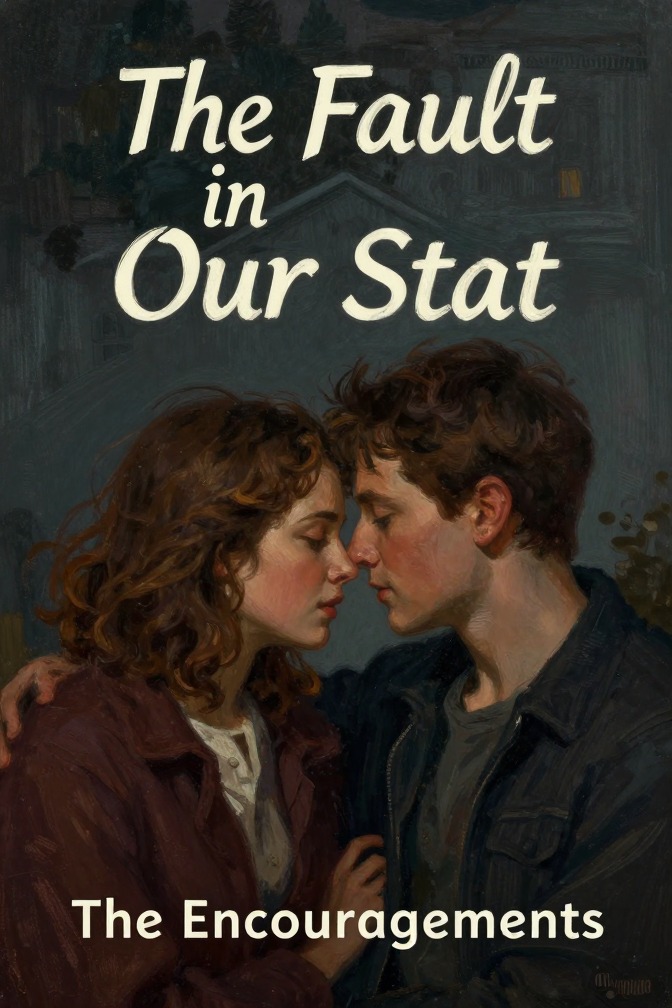
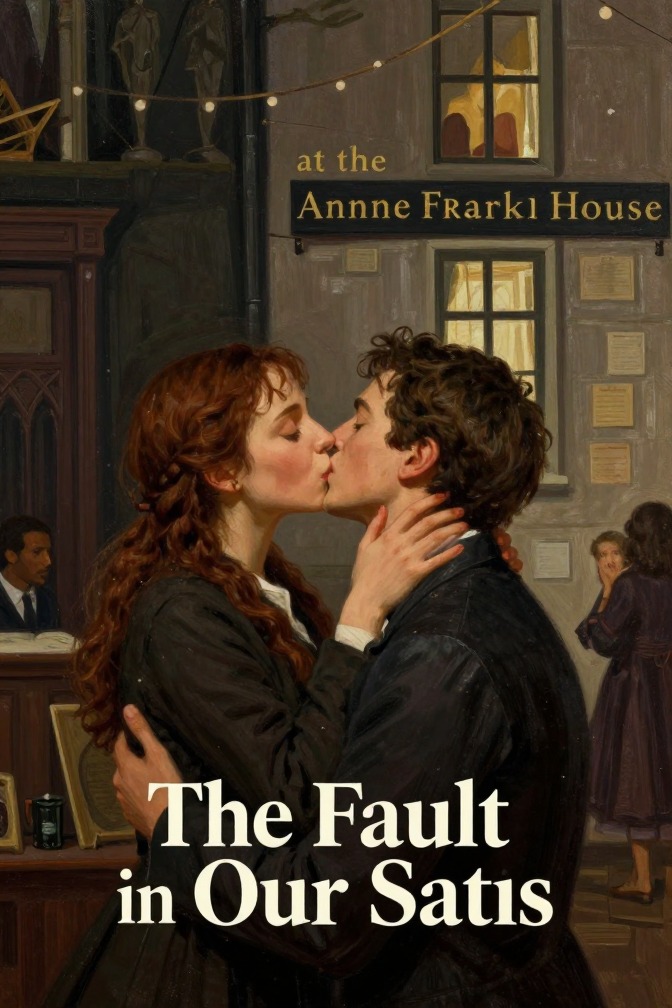
Hazel Grace Lancaster and Augustus Waters share their first kiss at the Anne Frank House in Amsterdam, a moment that transforms their relationship from a careful, guarded friendship into a full romantic commitment, and that is met with spontaneous applause from surrounding strangers.
Hazel Grace Lancaster and Augustus Waters visit the reclusive author Peter Van Houten in Amsterdam, hoping he will reveal what happens to the characters after the unfinished ending of his novel *An Imperial Affliction*. The meeting is a devastating failure: Van Houten is a drunken, cruel, and dismissive alcoholic who refuses to answer their questions, claiming the characters have no life beyond the text and that Hazel's desire for answers is childish. The encounter shatters Hazel's long-held fantasy of resolution, but it also deepens her bond with Augustus, who remains steadfastly supportive.
Always is a private promise between Isaac and Monica that becomes a central symbol of love, commitment, and betrayal in The Fault in Our Stars. The word is first overheard by Hazel during an intense kissing session outside Support Group, and Augustus explains that it is "their thing"—a word they have texted each other millions of times. Later, after Isaac goes blind and Monica abandons him, he confronts Hazel with the broken promise, insisting that "always" was a vow that cannot be broken. The word is then transformed by Augustus and Hazel into their own private code: "Maybe okay will be our always," a quiet, unassuming commitment that replaces grand romantic gestures with a simple, honest affirmation. Always thus moves from a fragile, youthful ideal to a more mature, realistic promise that acknowledges impermanence while still choosing to love.
The line "The risen sun too bright in her losing eyes" from Peter Van Houten's novel *An Imperial Affliction* serves as a central motif in *The Fault in Our Stars*, encapsulating the novel's exploration of mortality, the search for meaning, and the possibility of a transcendent something beyond earthly oblivion. It is quoted by Augustus Waters as his personal definition of God and becomes a touchstone for his and Hazel's shared understanding of life and death.
The world is not a wish-granting factory is a recurring expression in John Green's The Fault in Our Stars, used by Hazel Grace Lancaster and Augustus Waters to articulate their shared understanding that life does not conform to romantic or heroic expectations. The phrase encapsulates the novel's central tension between the desire for meaning, legacy, and happy endings and the indifferent reality of terminal illness, where wishes—whether for a cure, a sequel to a beloved book, or a lasting love—are rarely granted. It functions as a counterpoint to the characters' more hopeful moments, grounding their story in a sober acceptance of limitation and loss.
The expression 'We're all just side effects' encapsulates the novel's central philosophical stance: that cancer, consciousness, and human existence itself are incidental byproducts of larger, indifferent processes. It first appears in Hazel's internal monologue and is later echoed by Augustus, becoming a shared language for their understanding of suffering, identity, and the absence of cosmic meaning.
The Anne Frank House in Amsterdam is the former hiding place of Anne Frank and her family during the Nazi occupation of the Netherlands, now a museum. In John Green's *The Fault in Our Stars*, it becomes the site of Hazel Grace Lancaster and Augustus Waters's first kiss, a moment of profound intimacy and joy set against the backdrop of genocide and loss, transforming the historical site into a space where the young and terminally ill affirm life and love.
Meridian Hills is a residential neighborhood in Indianapolis, Indiana, where Isaac lives in a small ranch house after losing his eyesight to cancer.
The Netherlands serves as the symbolic and literal destination of Hazel and Augustus's journey, representing both the unattainable answers to the questions posed by Peter Van Houten's novel *An Imperial Affliction* and the fragile, beautiful possibility of a life lived beyond the confines of illness. It is the setting for the novel's most transformative events: the confrontation with the author, the consummation of their love, and the confrontation with mortality.
Oranjee is the canal-side restaurant in Amsterdam where Augustus Waters takes Hazel Grace Lancaster for a romantic dinner on their first night in the city, a meal that becomes a pivotal moment in their relationship and is paid for by the reclusive author Peter Van Houten.
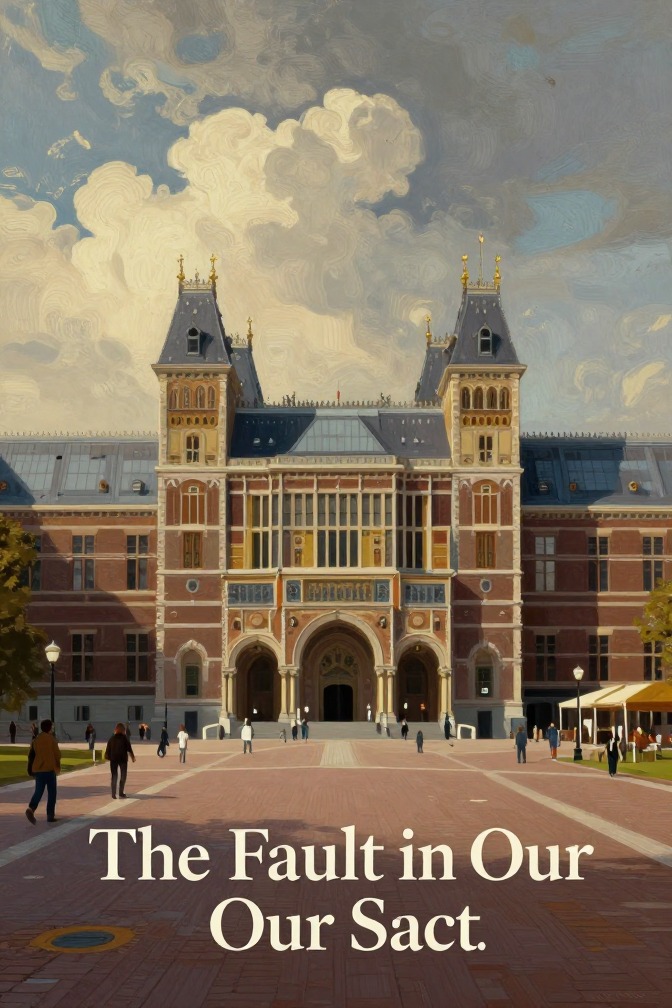
The Rijksmuseum, Amsterdam's national museum, is referenced in *The Fault in Our Stars* as a site of unrealized potential and symbolic absence, representing the gap between the grand, heroic narratives of art history and the unglamorous reality of dying from cancer.
The Basketball Trophies are a collection of memorabilia from Augustus Waters's basketball career, kept in his basement bedroom. They become a central symbol of his lost athletic identity and are violently destroyed by his friend Isaac during a grief-fueled rampage, marking a turning point in the novel's exploration of pain, loss, and the material remains of a life.
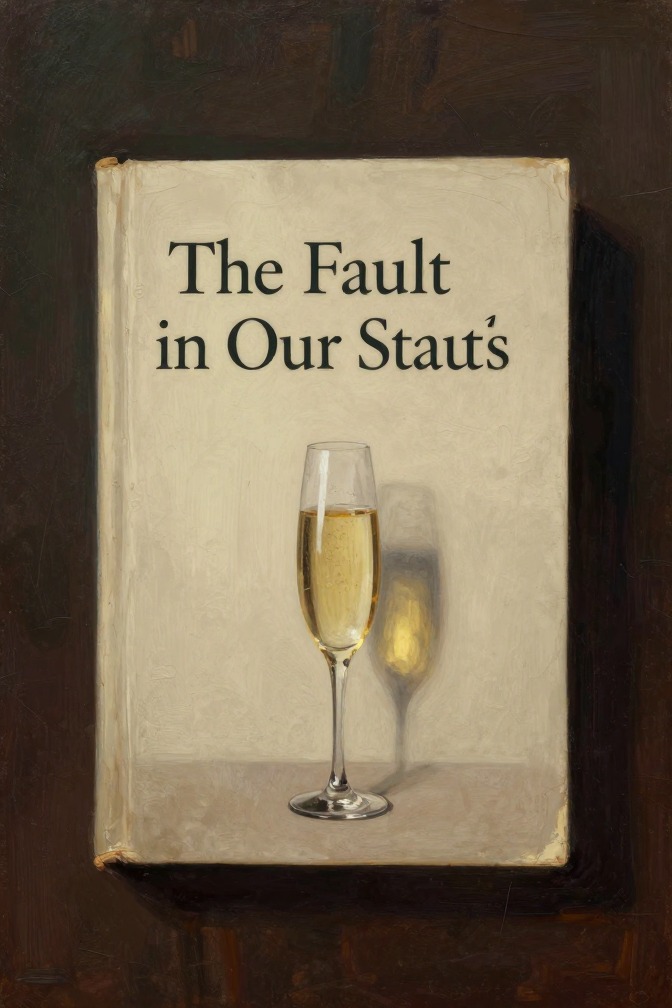
Champagne appears in The Fault in Our Stars as a recurring symbol of celebration, luxury, and the fleeting, precious moments that define Hazel and Augustus's relationship. It is first introduced during their romantic dinner at Oranjee in Amsterdam, where the waiter describes it as 'tasting the stars,' and later appears on their flight home and during a final visit to Funky Bones. The drink embodies the novel's themes of finding joy and meaning within the numbered days of a terminal illness, contrasting the characters' grim realities with moments of transcendent beauty.
Phalanxifor is the experimental drug that saves Hazel Grace Lancaster's life by shrinking her lung tumors and keeping them stable, transforming her from a terminal patient into someone living with a manageable chronic condition, and thereby enabling the love story and Amsterdam trip that form the novel's core.
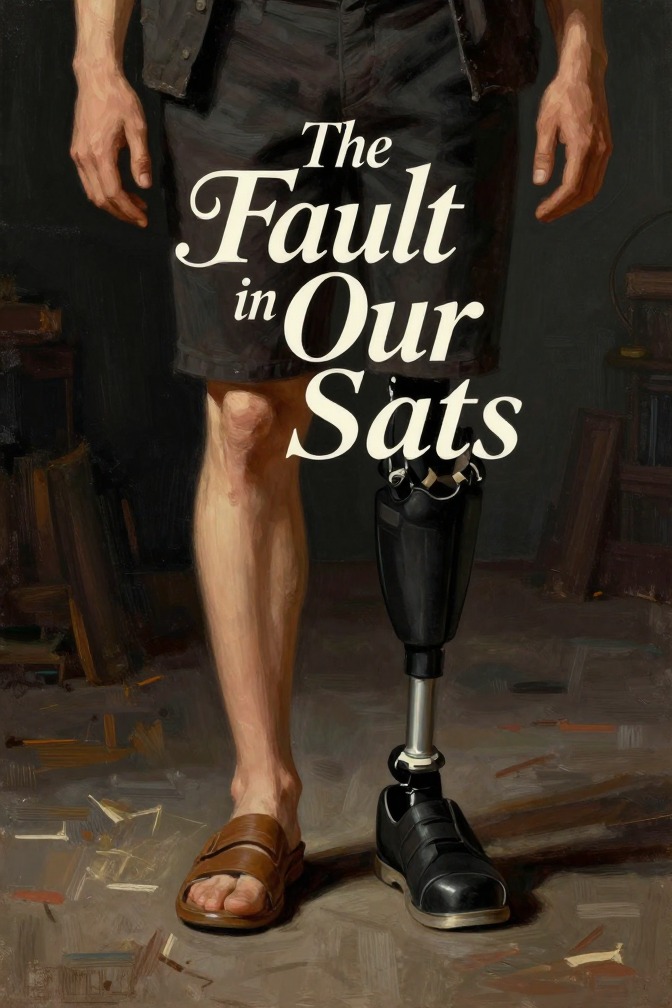
Augustus Waters's prosthetic leg is a physical marker of his osteosarcoma, a symbol of his mortality, and a central object in his relationship with Hazel Grace Lancaster, representing both his vulnerability and his desire for heroism.
The swing set in Hazel Grace Lancaster's backyard is a potent symbol of lost childhood, the passage of time, and the painful gap between past vitality and present illness. It becomes a focal point for Hazel's grief and a catalyst for a shared act of letting go with Augustus Waters.
McDonald's appears briefly in John Green's *The Fault in Our Stars* as the fast-food restaurant where Augustus Waters buys a hamburger before the flight to Amsterdam, an act that becomes entangled with his avoidance of the gate area and the public gaze on Hazel's illness.
The Indiana Pacers, the professional basketball team based in Indianapolis, serve as a recurring cultural touchstone in the novel, primarily through Augustus Waters's past as a player and his family's fandom, and are contrasted with his later disillusionment with the sport.