Torabaz Khan Intersection is a police station in Kabul where Laila and Mariam are detained after their failed attempt to flee to Pakistan in 1994, a site that crystallizes the legal and social powerlessness of women under Mujahideen rule.
The Khalq (Masses) faction of the People's Democratic Party of Afghanistan (PDPA) was the radical Marxist-Leninist branch that seized power in the 1978 Saur Revolution, initiating a period of violent social transformation and brutal repression that destabilized Afghanistan and set the stage for decades of war.
The Northern Alliance was the sole organized military opposition to the Taliban regime in Afghanistan from the late 1990s until the U.S.-led invasion in 2001. Led by the charismatic Tajik commander Ahmad Shah Massoud, the alliance fought to resist Taliban control and later became a key partner of the United States in the war that toppled the Taliban government.
Al-Qaeda is the transnational Islamist militant organization responsible for the September 11, 2001 attacks on the United States, whose presence in Afghanistan under Taliban protection triggered the American-led invasion that toppled the Taliban regime and reshaped the country's future.
The relationship between Mariam and her father, Jalil, is the foundational wound of her life, defined by his shame, her worship, and a final, devastating betrayal that shapes her understanding of love, worth, and belonging. From her earliest memory, Mariam's identity is forged in the crucible of his absence and her mother Nana's bitter accusations, creating a dynamic of desperate longing and inevitable disillusionment that culminates in his refusal to acknowledge her and his subsequent, belated attempt at atonement.
The relationship between Mariam and her mother, Nana, is the foundational wound of Mariam's life, defined by a volatile mixture of fierce, possessive love and bitter, accusatory resentment. Nana, a woman abandoned and disgraced, raises Mariam in isolation, instilling in her a deep sense of shame about her illegitimate birth while simultaneously demanding her absolute loyalty. This bond, forged in the cramped confines of a mud-walled kolba, shapes Mariam's understanding of love, duty, and her own worth, leaving her with a legacy of guilt and a desperate, lifelong hunger for acceptance that she carries into her marriages and her eventual role as a mother figure to Laila and Aziza.
Mariam and Rasheed's marriage is a central, oppressive relationship in the novel, defined by a vast age gap, Rasheed's initial paternalism that curdles into violent control, and Mariam's endurance of decades of physical and emotional abuse, culminating in her act of killing him to save Laila.
Namoos is a central concept in the novel, representing a man's honor and pride, which is inextricably tied to the control and seclusion of the women in his family. It is a patriarchal code that justifies surveillance, confinement, and violence, and its enforcement shapes the lives of Mariam and Laila under Rasheed's rule.
Motherhood is a central, transformative state in A Thousand Splendid Suns, shaping the identities, choices, and sacrifices of both Mariam and Laila. It is portrayed not merely as a biological condition but as a profound, often painful, source of meaning, endurance, and moral agency, ultimately redefining the characters' sense of self and their relationships with others.
2003 marks the year of Laila's return to Kabul, the end of the drought, and her new life as a teacher at the orphanage, symbolizing hope and renewal after decades of war and personal loss.
The Death of Malachi is the fifth murder in the abbey, occurring during the chanting of the 'Sederunt' at matins on the sixth day. Malachi, the librarian, collapses and dies with blackened fingers and tongue, poisoned by the same substance that killed Venantius and Berengar after he touched the forbidden book of Aristotle's Poetics II. His dying words—'He told me ... truly. ... It had the power of a thousand scorpions'—confirm Jorge of Burgos as the orchestrator of the poisonings and reveal that Malachi was a knowing but ultimately expendable agent in Jorge's scheme to protect the library's secrets.
The murder of Severinus of Sankt Wendel, the abbey's herbalist, occurs on the fifth day when Malachi of Hildesheim, acting on Jorge of Burgos's instigation, bludgeons him to death with an armillary sphere in the infirmary. The crime is a direct consequence of Severinus's discovery of the forbidden book—Aristotle's lost second book of the Poetics—which Berengar of Arundel had stolen from the finis Africae and left in the infirmary. Malachi kills Severinus to recover the book, then ransacks the laboratory in a frantic search, but is interrupted by the arrival of Remigio of Varagine, who is himself seeking incriminating Dolcino letters. The murder is immediately blamed on Remigio, who is arrested by Bernard Gui, and the book is subsequently retrieved by Malachi, who later dies from its poisoned pages.
Adelmo of Otranto is a young, gifted illuminator whose death by falling from the Aedificium sets the novel's mystery in motion. His suicide, driven by guilt over a forbidden relationship and the psychological torment inflicted by Jorge of Burgos, reveals the abbey's hidden tensions and the lethal power of its secrets.
Aristotle, the ancient Greek philosopher, is a central intellectual figure in the novel, whose lost second book of the *Poetics*—a treatise on comedy and laughter—becomes the object of a series of murders and the ultimate symbol of the conflict between reason, faith, and the fear of truth.
Aymaro of Alessandria is a cynical, sneering Italian monk at the abbey who voices sharp criticism of the abbey's governance, its foreign-dominated library, and its detachment from the commercial and political realities of fourteenth-century Italy, embodying a worldly, pragmatic opposition to the cloistered, traditionalist faction led by Abbot Abo and the foreign librarians.
Jorge of Burgos is the blind, elderly, and immensely learned librarian of the abbey, a figure of terrifying authority who has secretly controlled the library for decades. He is the story's true antagonist, a fanatical guardian of orthodoxy who murders to suppress Aristotle's lost treatise on comedy, believing that laughter would destroy the fear of God and the order of Christendom.
Remigio of Varagine, the cellarer of the abbey, is a former Dolcinian heretic whose past as a follower of Fra Dolcino is gradually exposed over the course of the novel. His arrest and confession provide a false resolution to the murders, but his character ultimately serves as a tragic example of how the simple and the cowardly are crushed between the millstones of church and empire.
Roger Bacon, the thirteenth-century Franciscan philosopher and scientist, is the intellectual master whom William of Baskerville most venerates. Though dead long before the events of the novel, Bacon's ideas about experimental science, natural magic, and the prolongation of human life provide the philosophical foundation for William's investigative methods and his faith in the power of human reason to uncover the secrets of nature.
The Amphisbaena is a mythical two-headed serpent, one of the many monstrous creatures depicted in the carvings of the abbey church's portal, representing the chaotic and inverted world that stands in opposition to the divine order of the tympanum.
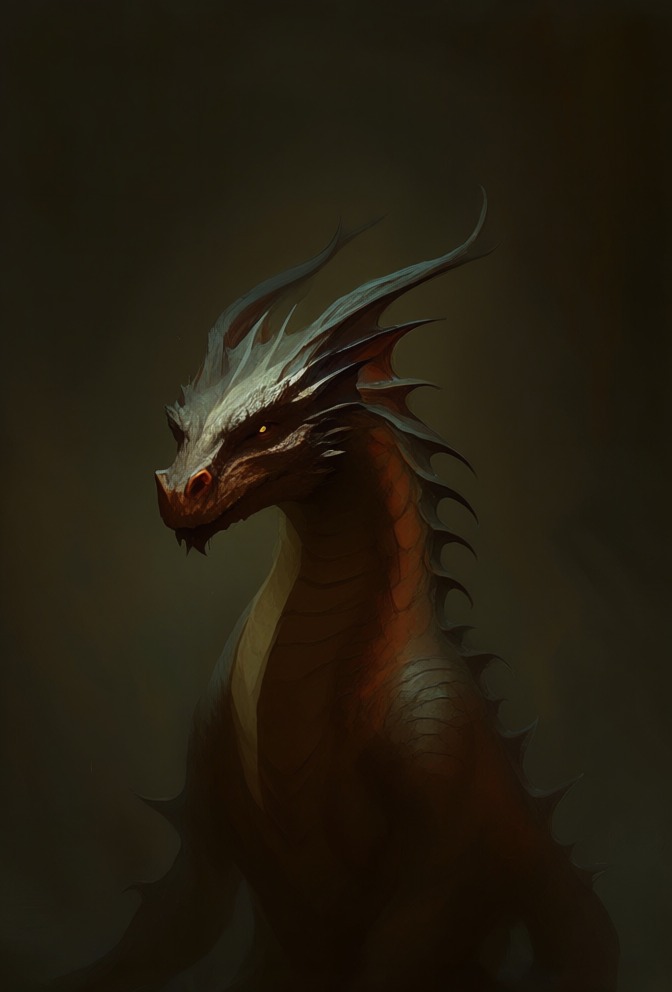
The Dragon is a recurring symbolic and literal creature in *The Name of the Rose*, appearing in the marginal illuminations of Adelmo of Otranto, in the apocalyptic visions that haunt the abbey, and in the architecture of the Aedificium itself. It embodies the monstrous, the diabolical, and the chaotic, serving as a visual and thematic counterpoint to the divine order that the library is meant to preserve.
The Iaculus is a mythical serpent mentioned in the bestiary of monstrous creatures carved on the portal of the abbey church, a creature from the infernal bestiary that serves as a vestibule to the apocalyptic vision of the Seated One in the tympanum.
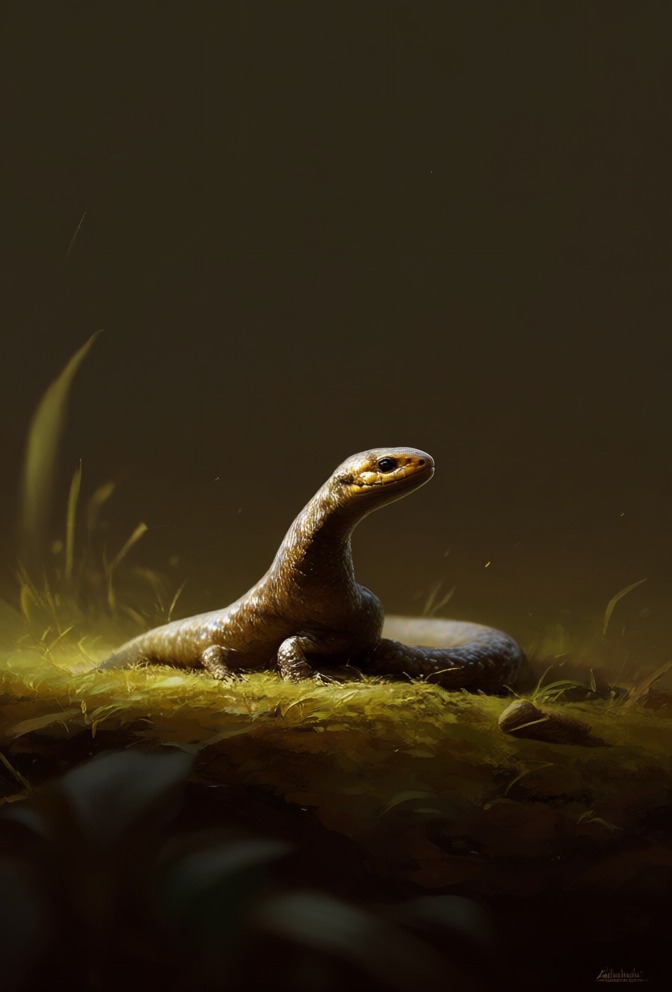
The Salamander is a mythical creature briefly mentioned in the bestiary of monstrous beings carved on the portal of the abbey church, appearing as one of the many hybrid and terrifying figures that populate the entrance to the sacred space, symbolizing the infernal and the unnatural that stand in opposition to the divine order.
Adelmo of Otranto, a young and gifted illuminator, is found dead at the foot of the cliff below the Aedificium on the morning after a snowstorm, an event that triggers William of Baskerville's investigation into the abbey's secrets and sets in motion a chain of murders linked to a forbidden book.
In the climactic confrontation of the novel, William of Baskerville and Adso of Melk penetrate the secret room of the library, the finis Africae, where they find the blind librarian Jorge of Burgos waiting. Jorge reveals that he has been the hidden master of the abbey for decades, manipulating events to protect the only surviving copy of Aristotle's lost second book of the Poetics—a treatise on comedy and laughter that he considers the most dangerous work ever written. In a final act of defiance, Jorge tears the book apart, eats its poisoned pages, and triggers a fire that destroys the entire library, bringing the abbey's world of learning to an apocalyptic end.
The phrase 'primum et septimum de quatuor' (the first and seventh of the four) is the cryptic key that William of Baskerville deciphers from Venantius of Salvemec's zodiacal code, enabling him to unlock the secret entrance to the finis Africae, the most forbidden chamber of the abbey's library. This riddle, inscribed in the apocalyptic verse 'Super thronos viginti quatuor' above a distorting mirror, directs the user to press the first and seventh letters of the Latin word 'quatuor'—the 'q' and the 'r'—to open the hidden door. Its solution marks the climax of William's investigation, leading directly to the confrontation with Jorge of Burgos and the revelation of the lost second book of Aristotle's Poetics.
Béziers is a city in southern France that serves as a historical reference point in Umberto Eco's *The Name of the Rose*, invoked to illustrate the brutal logic of holy war and the indiscriminate violence that characterized the Albigensian Crusade. The city's sack in 1209, ordered by the papal legate Arnald Amalaricus, is cited by Abbot Abo as a model for dealing with heretics, and is then countered by William of Baskerville as a moral warning against the very concept of holy war, thereby crystallizing a central ethical conflict in the novel.
William's glasses, a forked instrument with two glass lenses, serve as a crucial tool for reading and investigation throughout the novel. They are first introduced as a device that allows William to read fine manuscripts despite his aging eyes, and later become a target of theft, a symbol of his intellectual method, and a key to deciphering the hidden messages that lead to the truth.
The black cat and eggs are objects used by Salvatore in a superstitious ritual intended to procure love, which Bernard Gui seizes upon as evidence of witchcraft, leading to the arrest of Salvatore and the peasant girl and contributing to the atmosphere of heresy and fear in the abbey.
The lodestone is a magnetic stone that appears in Severinus of Sankt Wendel's infirmary, where William of Baskerville demonstrates its power to attract iron. It later becomes the conceptual basis for William's plan to navigate the library labyrinth by constructing a magnetic compass, though the plan is never executed.
The Spiritual Franciscans, also known as the Spirituals, were a radical faction within the Franciscan Order in the late 13th and early 14th centuries. They advocated for a strict, literal interpretation of Saint Francis's Rule, emphasizing absolute poverty for both individual friars and the order as a whole, which brought them into direct conflict with the institutional Church and the papacy of John XXII.