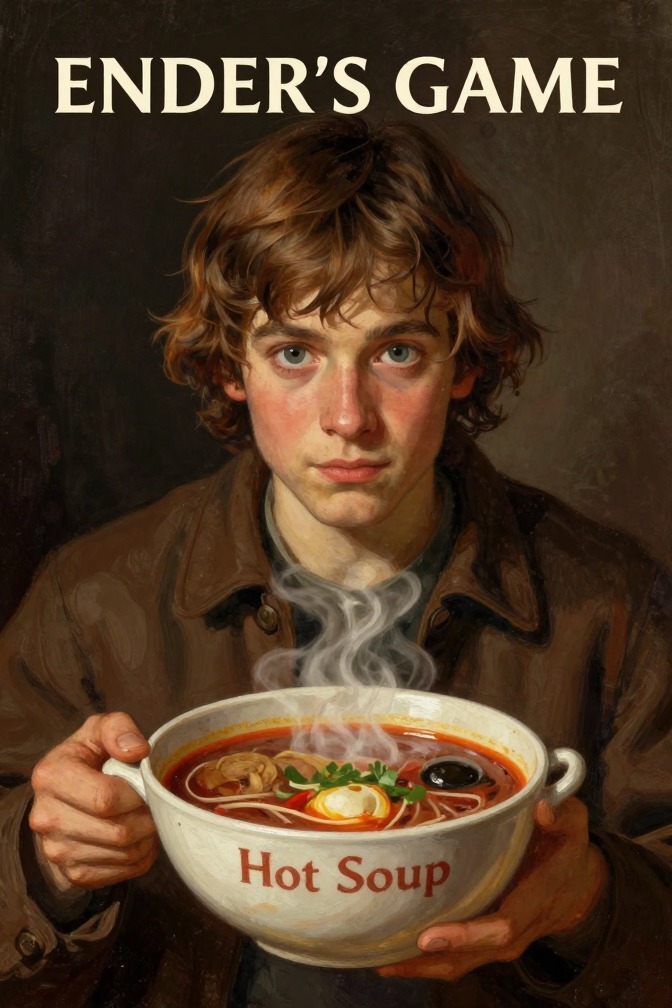
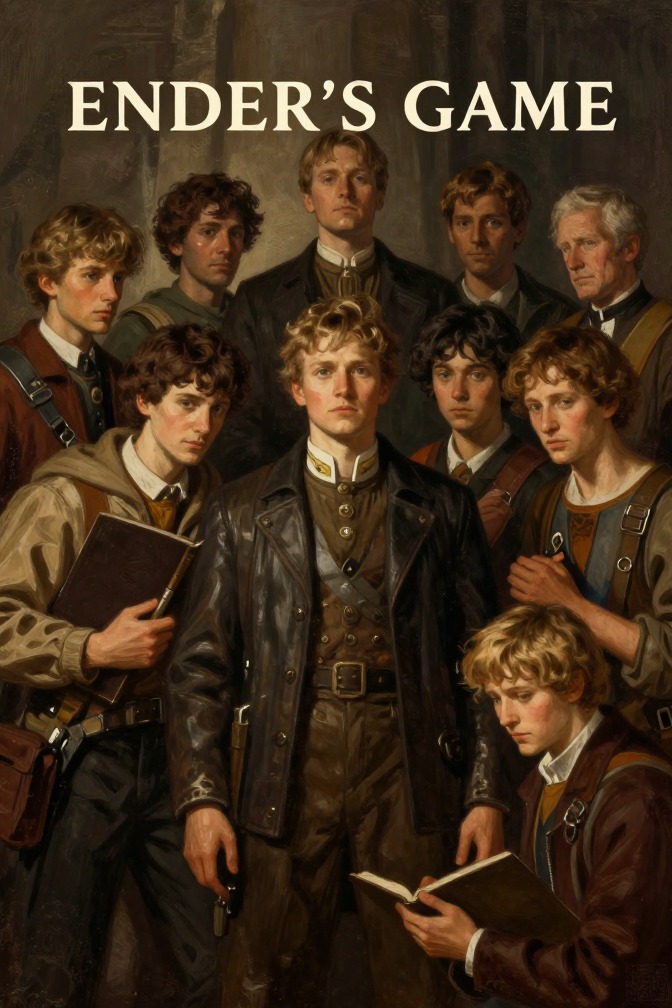
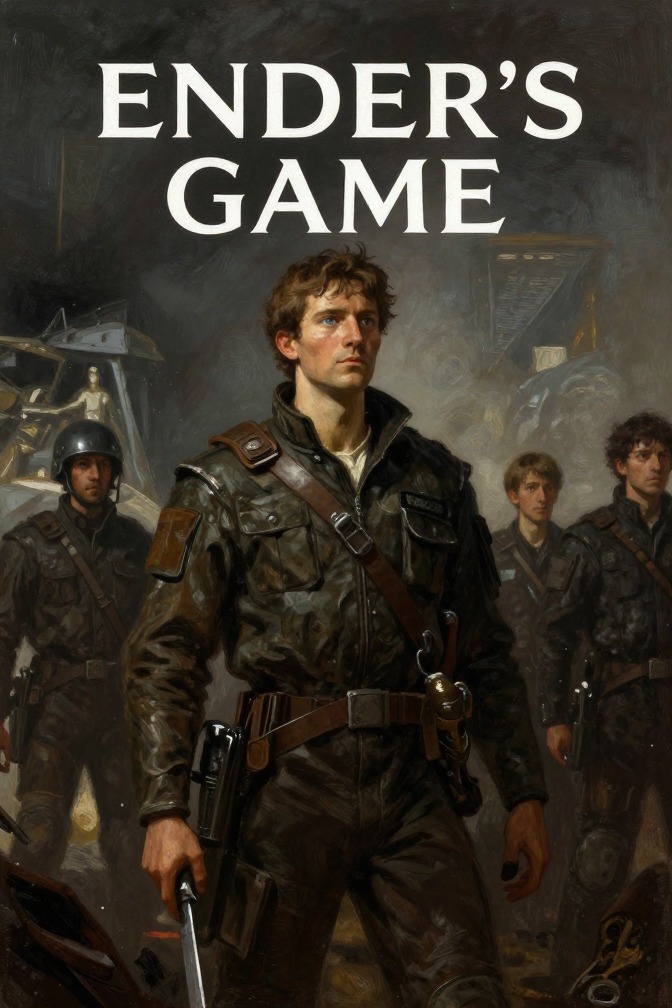
Hot Soup, whose real name is Han Tzu, is a toon leader in Ender Wiggin's Dragon Army during the Battle School, known for his tactical acumen, direct questioning of Ender, and his role in the army's innovative and successful strategies.
Petra Arkanian is the only girl in Salamander Army and later a commander of Phoenix Army, known for her sharpshooting, sharp tongue, and fierce independence. She becomes an early ally and mentor to Ender Wiggin, teaching him marksmanship and the deeper truth that the adults are the enemy. Her arc traces a brilliant soldier who breaks under the relentless pressure of Command School, yet remains a loyal friend and witness to Ender's final victory.
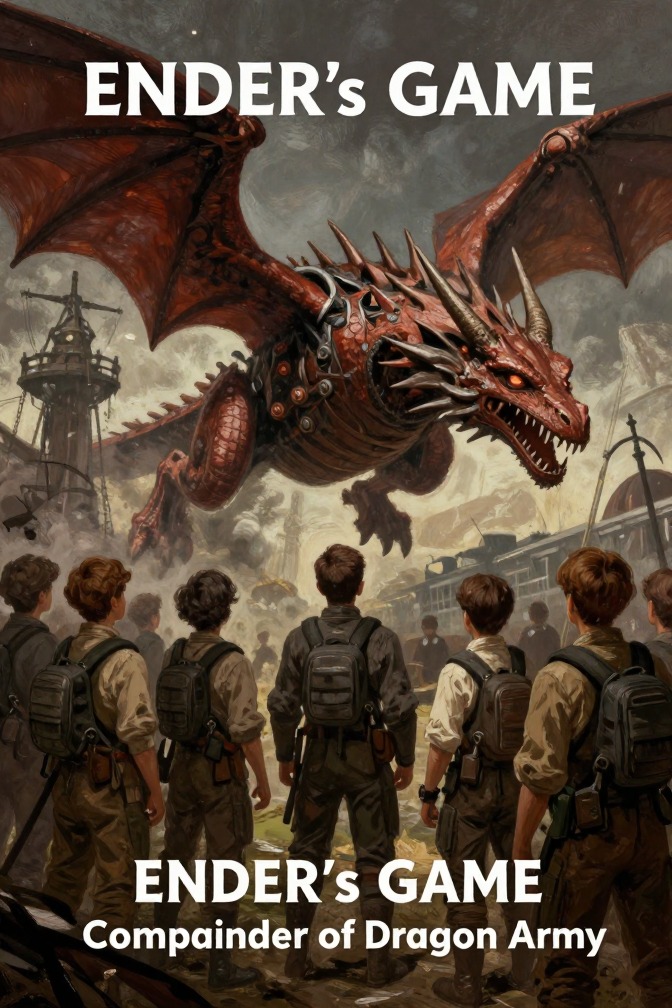
Ender Wiggin is promoted to commander of the newly revived Dragon Army at the Battle School, a pivotal event that transforms him from a celebrated soldier into a leader tasked with forging an untrained, underage army into a competitive force. The promotion marks a deliberate escalation by the teachers, who isolate him from his friends and impose unprecedented challenges, setting the stage for his later command of the real fleet in the Third Invasion.
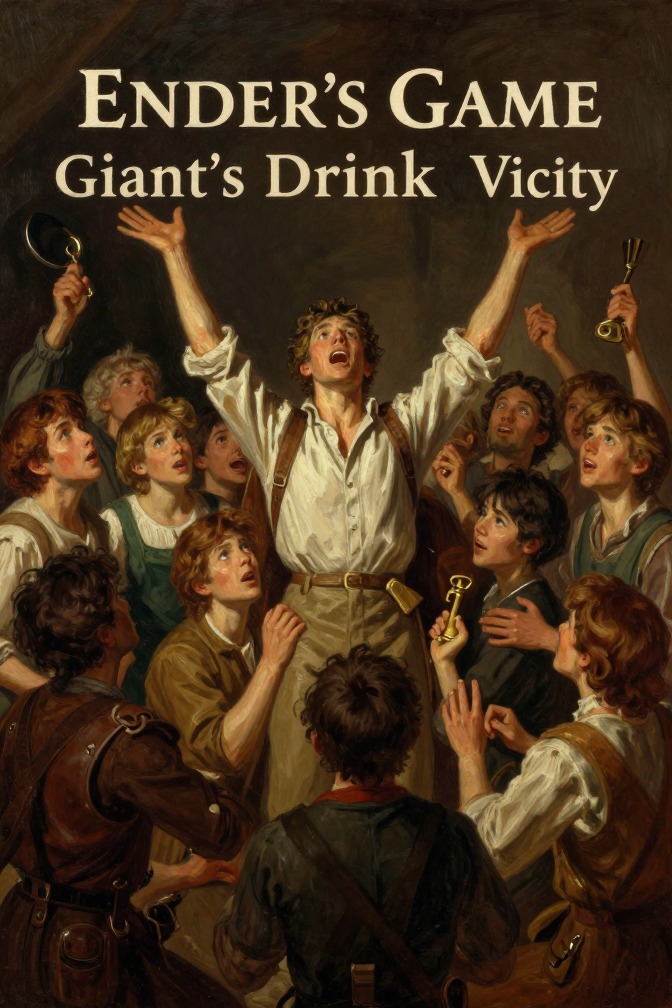
The Giant's Drink Victory is the pivotal moment in Ender Wiggin's psychological journey at Battle School, where he defeats the unbeatable Giant in the mind game by refusing to play by its rules, killing the Giant by burrowing into its eye, and thereby unlocking the path to Fairyland and the End of the World. This event marks a crucial turning point in Ender's development, revealing his capacity for ruthless, unconventional problem-solving and foreshadowing his later willingness to break the rules of the game in the final battle against the buggers.
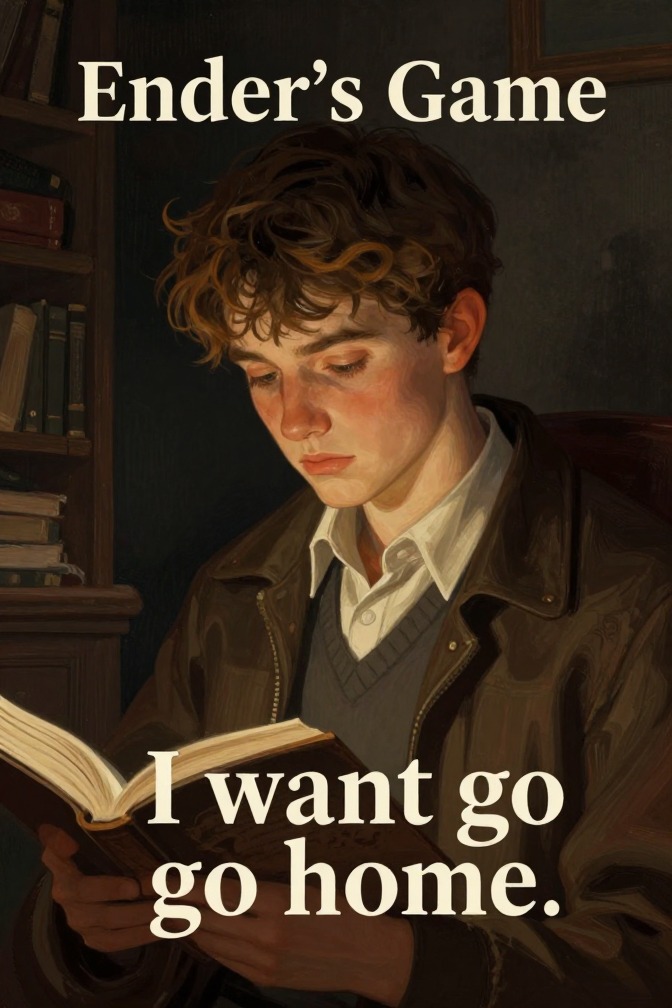
I want to go home is a recurring, emotionally charged expression in Orson Scott Card's Ender's Game, spoken by the protagonist Ender Wiggin at moments of profound distress and longing. It encapsulates his deep desire to escape the brutal, isolating world of Battle School and return to the comfort of his family, particularly his sister Valentine. The phrase evolves from a whispered plea in his first night at school to a symbol of his enduring humanity and his ultimate, bittersweet choice to leave Earth forever.
Condor Army is a Battle School army that first appears in Ender's Game as the opponent in Ender Wiggin's first real battle, where it defeats Salamander Army. Though not a major recurring force, Condor Army serves as a crucial early benchmark, demonstrating the tactical weaknesses of Bonzo Madrid's command and highlighting Ender's emerging strategic insight. Its victory over Salamander, achieved through superior use of the 'stars' and aggressive assault, contrasts with the innovative tactics Ender later develops, marking a turning point in his military education.
The Hegemony is the overarching political authority in Orson Scott Card's Ender's Game, a global government that, alongside the International Fleet, orchestrates the training of child soldiers to combat the alien Buggers. It represents the institutional power that manipulates individuals for the perceived greater good, embodying the novel's central themes of political control, the ethics of war, and the subordination of individual lives to collective survival.
Leopard Army is a newly formed army in the Battle School, commanded by the young and sharp Pol Slattery. It first appears in Ender Wiggin's fourth battle, where its aggressive, mobile tactics initially overwhelm the stolid Salamander Army, but its reckless exposure leads to a draw when Ender, disobeying orders, freezes five Leopard soldiers at the gate. The army's innovative style and its commander's fair-mindedness mark it as a notable opponent in the game's evolving tactics.
The Polemarch is the supreme commander of the International Fleet's military forces, a position traditionally held by a Jew, and a key figure in the political and military structure of the human alliance against the Buggers. The Polemarch's role is central to the novel's exploration of power, manipulation, and the tension between political ambition and military necessity, as the character is involved in the strategic decisions that shape Ender Wiggin's training and the conduct of the Third Invasion.
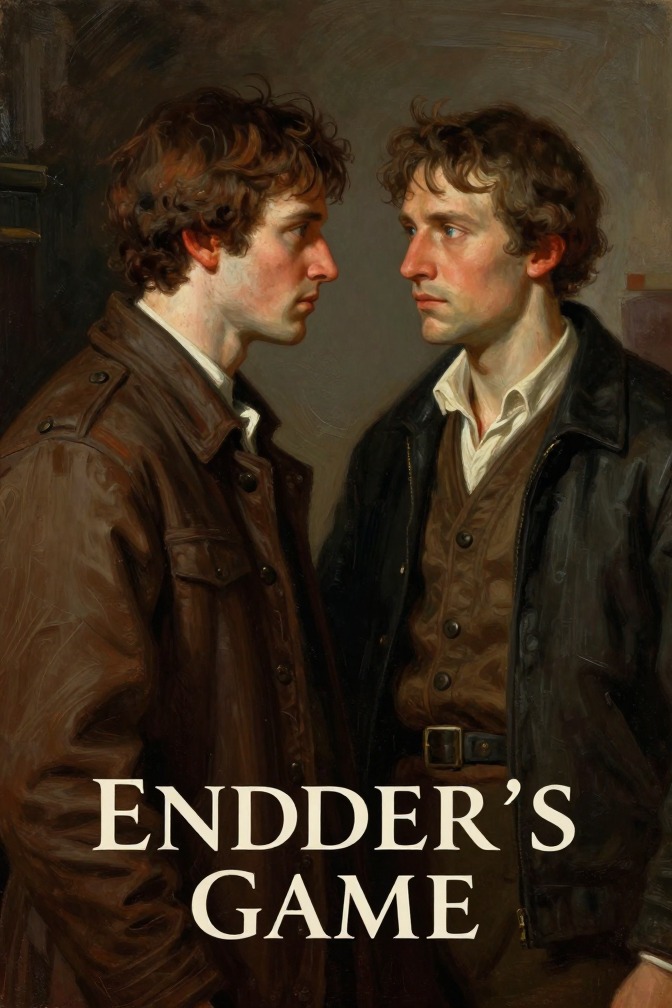
Ender and Bean's relationship is a central command dynamic in Ender's Game, evolving from a tense first encounter to a deep mutual trust that proves crucial in the Battle School and beyond. Bean, the youngest and smallest soldier in Dragon Army, becomes Ender's most valued thinker and eventual successor, embodying the isolation and brilliance that define Ender's own path.
Ender and Graff is the central mentor-pupil relationship in Orson Scott Card's Ender's Game, tracing how Colonel Hyrum Graff recruits, isolates, and manipulates Ender Wiggin to become humanity's military savior, and how their bond evolves from deception to a final, ambiguous affection.
Ender Wiggin's relationship with his parents is a central, painful thread in Ender's Game, defined by state-mandated conception, religious conflict, emotional distance, and the ultimate sacrifice of their son to the International Fleet. His parents, John Paul and Theresa Wiggin, are former religious nonconformists who reluctantly bore a Third child under government orders, and their ambivalence—loving Ender yet resenting the social and personal cost of his existence—shapes his early life and his departure for Battle School. The relationship is marked by a lack of genuine communication, the parents' inability to protect Ender from Peter's cruelty, and their eventual emotional abandonment of him, which contrasts sharply with the deep bond Ender shares with his sister Valentine. This dynamic underscores the novel's themes of childhood exploitation, the dehumanizing nature of the state, and the search for identity and belonging.
Ender and Mazer Rackham is the pivotal teacher-student relationship in Orson Scott Card's Ender's Game, transforming from a brutal physical confrontation into the mentorship that prepares Ender to command humanity's fleet in the Third Invasion. Mazer, the legendary hero of the Second Invasion, becomes Ender's final teacher, pushing him to the brink of physical and mental exhaustion while secretly orchestrating the real war against the buggers. Their relationship culminates in Ender's destruction of the bugger homeworld, after which Mazer reveals the truth: the battles were real, and Ender has committed genocide. This relationship embodies the novel's central themes of manipulation, the cost of genius, and the ethical ambiguity of survival.
Isolation is the central, deliberate strategy by which the International Fleet shapes Ender Wiggin into a weapon, systematically severing him from every human bond so that he can be manipulated into winning the war against the Buggers. From his first day at Battle School, Colonel Graff and his superiors isolate Ender to keep him creative, to make him struggle, and to ensure he never believes anyone will help him—a conditioning that culminates in the ultimate deception of the Third Invasion, where Ender unknowingly commands real fleets and destroys an entire species. This state of engineered loneliness defines Ender's childhood, his relationships, and his tragic moral awakening.
War is the central, all-consuming state that defines the world of Ender's Game, shaping its institutions, its characters, and its moral questions. It is not merely a backdrop but an active force that justifies the ruthless training of children, drives the plot from Earth to the Battle School to the stars, and culminates in an act of genocide that the protagonist commits unknowingly. The novel explores war's evolution from a distant, propagandized threat to a personal, devastating reality, ultimately questioning the very nature of conflict, empathy, and survival.
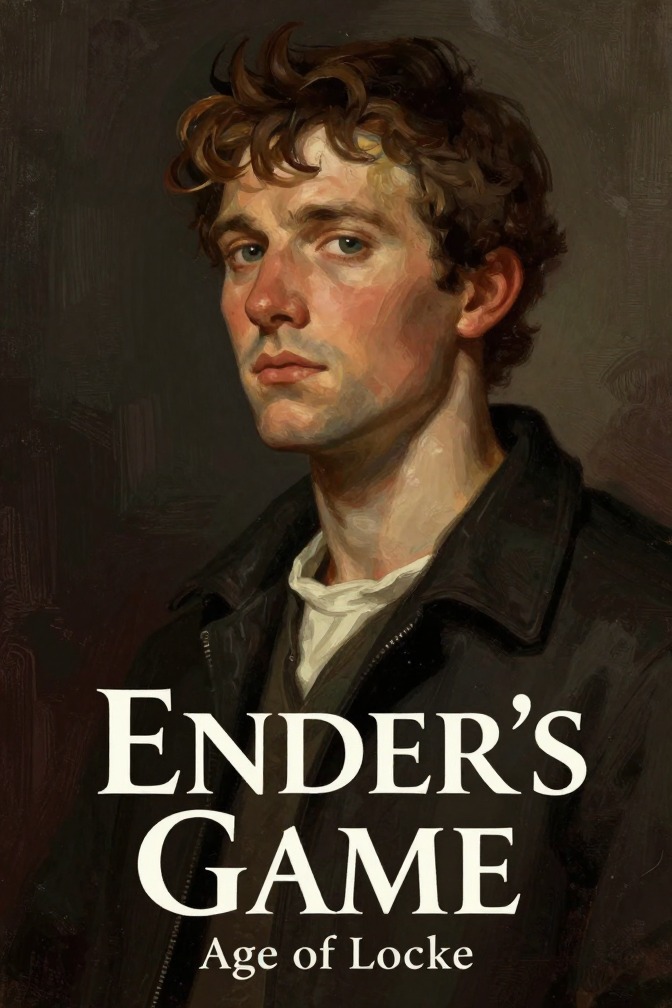
The Age of Locke is the historical period in Orson Scott Card's Ender's Game when the pseudonymous political commentator Locke, secretly the fourteen-year-old Peter Wiggin, rises to global influence and shapes world events, culminating in the Locke Proposal that restructures the International Fleet and the Hegemony after the Third Invasion.
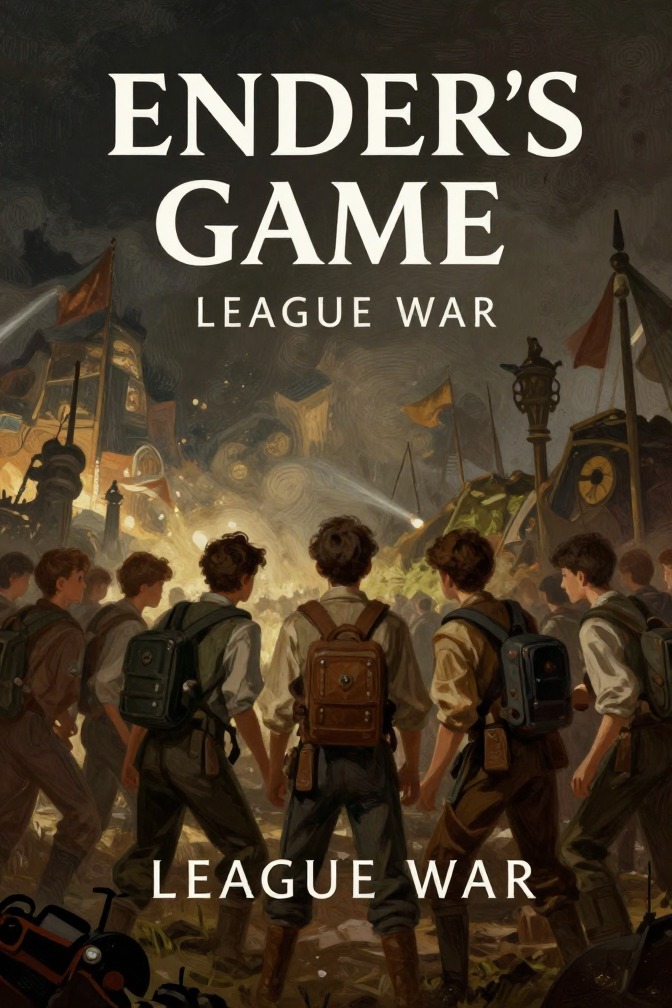
The League War is the brief but devastating conflict that erupts on Eros immediately after the Third Invasion, as the Warsaw Pact and the Hegemony turn on each other following the buggers' destruction. It is the final, ironic coda to humanity's victory, revealing that the unity forged against the alien enemy dissolves within hours, and it forces Ender Wiggin into a state of withdrawal from which he only begins to emerge when his friends find him.
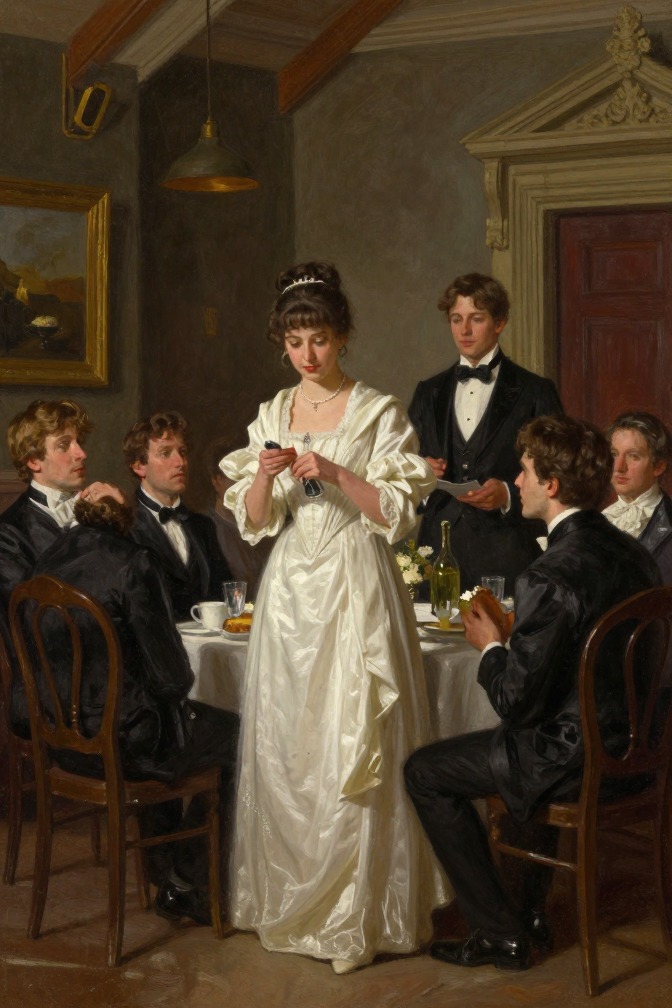
The planning of the ball at the Crown Inn is a pivotal action in Emma, representing a shift from private matchmaking schemes to a public, communal event that exposes the true dynamics of Highbury society. Initiated by Frank Churchill and eagerly taken up by the Westons, the planning process reveals Emma's growing self-awareness, her conflicting feelings about Frank, and the underlying tensions between characters, particularly regarding social rank and personal desires. The ball itself becomes a stage for key confrontations and reconciliations, most notably Mr. Knightley's rescue of Harriet Smith from Mr. Elton's snub, which deepens Emma's understanding of both men's characters.
Harriet Smith is a pretty, good-natured, and uneducated young woman of unknown parentage who becomes the protégée of Emma Woodhouse, serving as a central figure in Emma's misguided matchmaking schemes and as a catalyst for Emma's eventual self-knowledge.
Mr. Perry is the apothecary of Highbury, a trusted medical advisor and a frequent, comforting presence in the lives of the Woodhouse family and the wider community. His professional opinions carry great weight, particularly with the valetudinarian Mr. Woodhouse, and he serves as a barometer of local health and a source of practical wisdom, though his authority is occasionally challenged by those with stronger wills.
Mr. Suckling is a minor but symbolically significant character in Emma, known only through the incessant name-dropping of his sister-in-law, Mrs. Elton. He is the wealthy owner of Maple Grove, a country estate near Bristol, and serves as the primary reference point for Mrs. Elton's social pretensions, representing the vulgar, mercantile gentility against which Emma Woodhouse defines her own superior refinement.
Mrs. Smallridge is a minor but consequential character in Emma, a wealthy acquaintance of Mrs. Elton who ultimately employs Jane Fairfax as a governess for her three young daughters, a position that precipitates the crisis leading to the revelation of Jane's secret engagement to Frank Churchill.
Mrs. Weston gives birth to a daughter, an event that brings joy to her circle of friends and prompts reflections on child-rearing, the nature of spoiling, and the future shape of family life at Hartfield and Randalls.
The unexpected arrival of a pianoforte at the Bateses' modest lodgings, sent anonymously from London, becomes a central mystery that fuels speculation about Jane Fairfax's secret life and her concealed relationship with Frank Churchill.
Box Hill is the site of a disastrous picnic in Jane Austen's *Emma*, where the protagonist's thoughtless mockery of Miss Bates provokes a stern rebuke from Mr. Knightley, precipitating Emma's moral awakening and the novel's decisive turn toward self-knowledge.
Brunswick Square is the London residence of John and Isabella Knightley, serving as a crucial offstage location in Emma that connects the rural world of Highbury to the metropolitan sphere, provides a refuge for Harriet Smith, and functions as a conduit for news and family bonds.
Richmond is the London suburb to which the Churchills relocate in the spring, bringing Frank Churchill within easy riding distance of Highbury and enabling the long-deferred Crown Inn ball to take place. Its proximity—nine miles from Highbury—transforms Frank's visits from impossible to frequent, and it is from Richmond that the news of Mrs. Churchill's sudden death arrives, clearing the way for Frank's engagement to Jane Fairfax to be revealed.
The Crown Inn is the principal inn of Highbury, a modest establishment that becomes the unexpected venue for the village's most anticipated social event—a ball that marks a turning point in the novel's romantic and social dynamics.
Weymouth is the seaside resort where Frank Churchill and Jane Fairfax first met, formed a secret engagement, and where the crucial incident of Mr. Dixon saving Jane from drowning occurred, making it a pivotal location for the novel's concealed romance.
The court-plaister is a small, everyday object that becomes a sentimental relic in Harriet Smith's hands, illustrating the novel's themes of misplaced affection, self-deception, and the power of trivial tokens to carry disproportionate emotional weight.