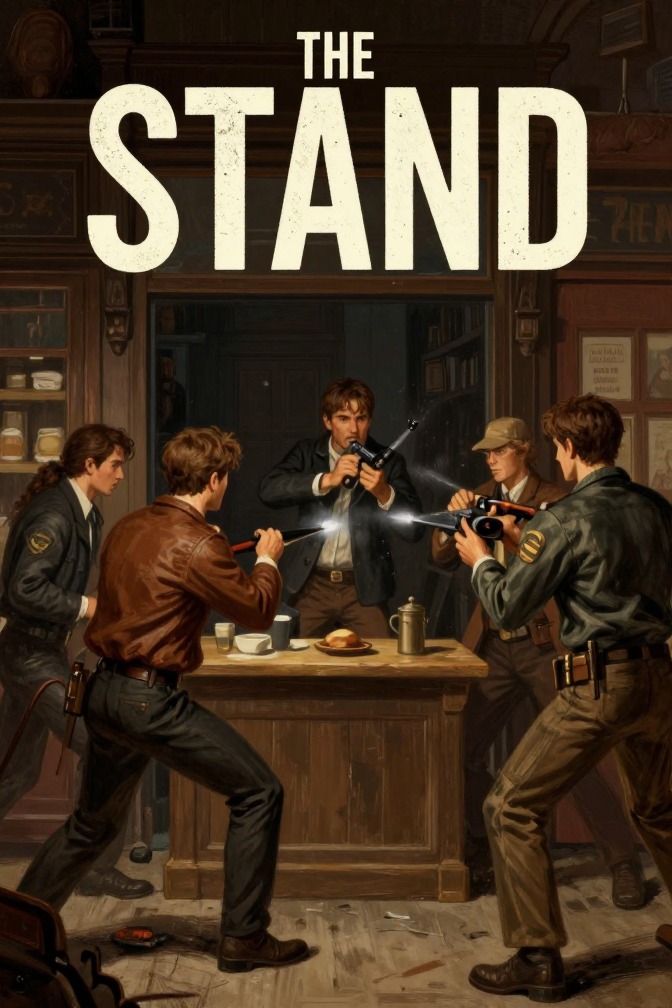
The Burrack store shootout is a violent confrontation in which the small-time criminals Lloyd Henreid and Poke Freeman, already wanted for a multi-state killing spree, attempt to rob a general store in Burrack, Arizona, only to be met with unexpected armed resistance from a customer and the storekeeper, resulting in the deaths of Poke and several civilians and Lloyd's capture.
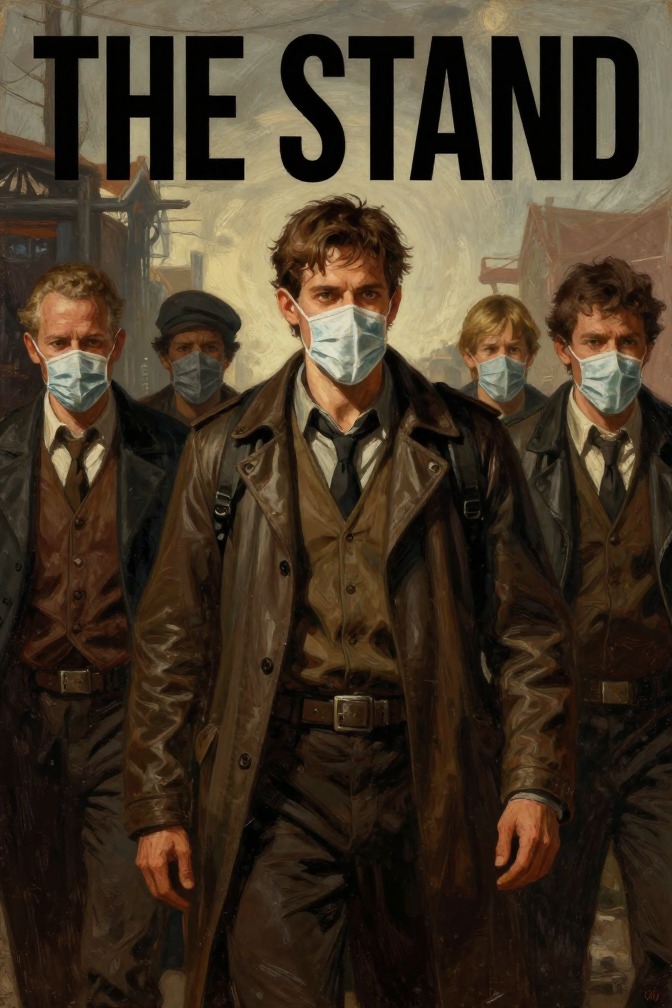
Captain Trips pandemic, also called the superflu or A-Prime flu, is the engineered viral outbreak that kills 99.4% of the world's population in Stephen King's The Stand, setting the stage for the apocalyptic confrontation between the forces of good and evil. Accidentally released from a U.S. military biological warfare facility called Project Blue, the constantly mutating virus spreads with devastating speed, collapsing civilization within weeks and leaving only a handful of immune survivors to choose sides between Mother Abagail's Boulder Free Zone and Randall Flagg's Las Vegas empire.
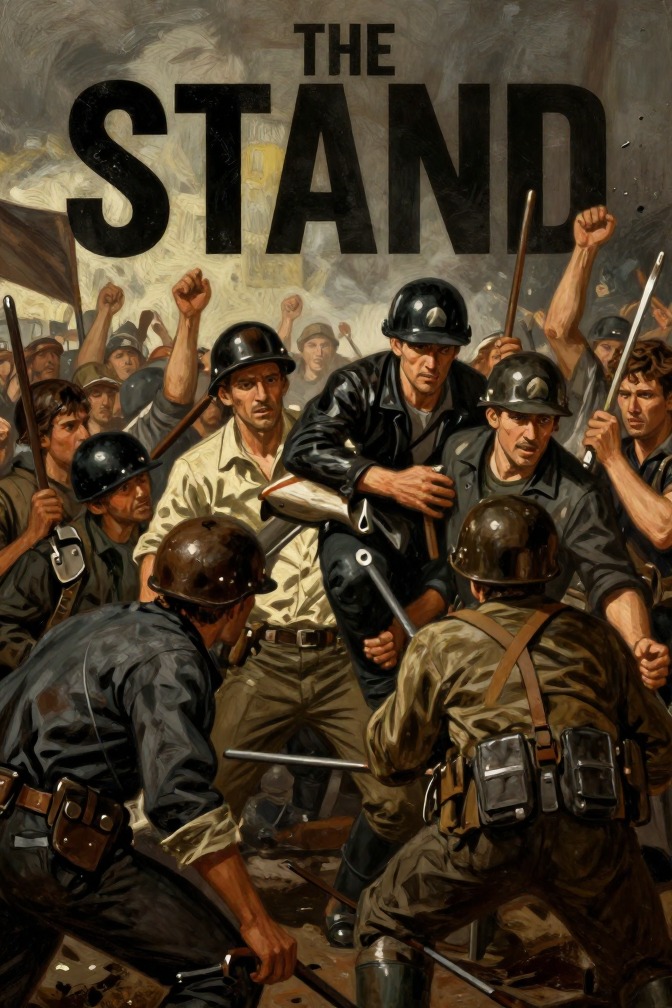
The Kent State massacre was a pivotal event during the collapse of American civil order in the final days of June 1990, when U.S. Army troops under Colonel Albert Philips opened fire on unarmed student demonstrators at Kent State University in Ohio, killing dozens and wounding many more, an act that marked the violent unraveling of the government's containment strategy and triggered further chaos across the country.
The Quarantine of Arnette was the U.S. military's first large-scale attempt to contain the superflu (Captain Trips) after Charles Campion crashed his car into Bill Hapscomb's Texaco station on June 16, 1990. The quarantine, enforced by roadblocks, barbed wire, and armed soldiers, was designed to prevent the disease from spreading beyond the small Texas town. It failed almost immediately because the disease had already escaped through asymptomatic carriers like State Trooper Joe Bob Brentwood, and the military's cover-up—including the murder of journalists in Sipe Springs—could not stop the pandemic. The quarantine marks the point where the government's response shifted from containment to suppression, and it reveals the structural weaknesses that allowed the superflu to become a global catastrophe.
After the nuclear destruction of Las Vegas, Stu Redman, gravely injured and ill, is rescued by Tom Cullen and Kojak. They survive a harrowing winter journey across the Rockies, finally returning to Boulder in January 1991, where Stu is reunited with Fran and learns that his newborn son, Peter, is fighting the superflu but showing signs of recovery.
The Search Committee was a short-lived volunteer body formed in the Boulder Free Zone in August 1990, tasked with finding Mother Abagail after she withdrew into the wilderness. Although it never located her, the committee served as a crucial community-building exercise, gave Harold Lauder a public role that masked his growing treachery, and was formally approved at the Free Zone's first mass meeting.
The Stovington Plague Control Center is a U.S. government facility in Stovington, Vermont, that becomes the secondary base for studying the superflu after the Atlanta center is breached. It is the site where Stuart Redman is held and from which he escapes, and later the destination Harold Lauder and Frances Goldsmith mark on their barn sign, only to find it deserted. The facility represents the failure of institutional authority and the collapse of the old world's scientific and governmental structures.
The United States Army is the military institution that, through its secret biological weapons project Project Blue, accidentally releases the superflu virus known as Captain Trips, triggering the pandemic that wipes out 99.4% of the world's population. Throughout the novel, the Army attempts to contain the outbreak through quarantines, media suppression, and violent cover-ups, but its own ranks are decimated by the disease, leading to a collapse of command and the fragmentation of military authority.
Lloyd Henreid, a small-time criminal rescued from starvation in a Phoenix jail by Randall Flagg, becomes Flagg's devoted right-hand man in Las Vegas. Their relationship is built on Flagg's absolute power and Lloyd's gratitude, fear, and a sense of personal transformation, but it is tested by Flagg's failures and Lloyd's growing doubts.
Larry Underwood and Lucy Swann form a stabilizing romantic partnership in the post-plague world, evolving from a casual sexual relationship into a committed bond defined by mutual care, emotional honesty, and shared responsibility for the orphaned boy Leo Rockway. Their relationship provides Larry with a crucial anchor for his moral growth, allowing him to move beyond his earlier pattern of self-destructive behavior and emotional evasion.
The relationship between Glen Bateman and Kojak begins as a chance encounter in post-plague New Hampshire and deepens into a bond of mutual survival, loyalty, and companionship that endures across a continent-spanning journey, culminating in Kojak's independent decision to stay with the injured Stu Redman rather than continue west with Glen.
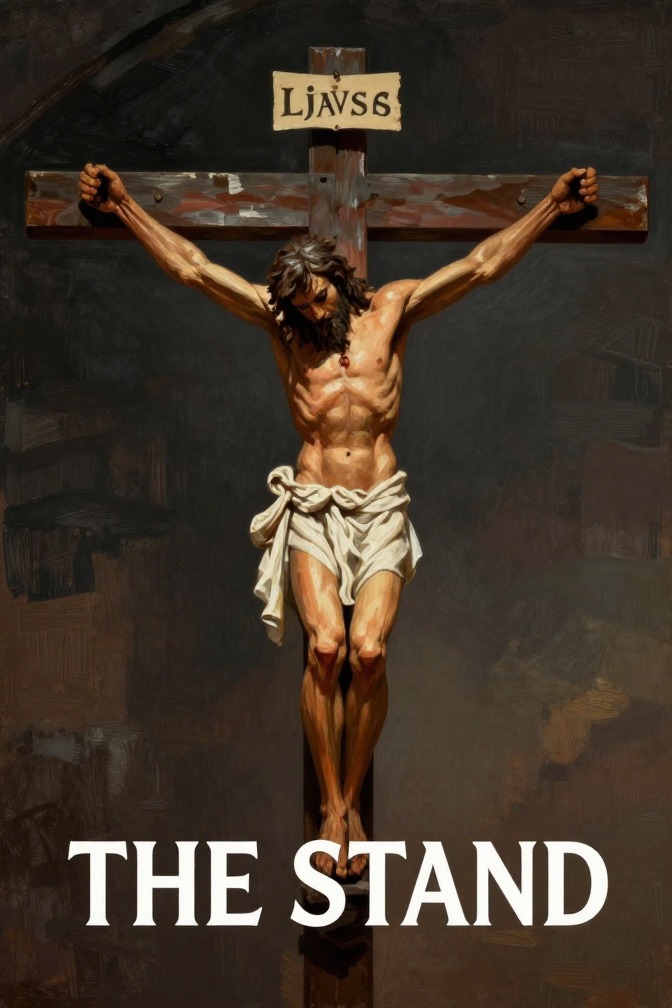
The Crucifixion penalty is the capital punishment imposed by Randall Flagg in his Western domain for disobedience, drug use, or other infractions against his rule. It is a public, ritualized execution designed to instill terror and demonstrate absolute control, as seen in the execution of Hector Drogan and the intended fate of the Free Zone spies.
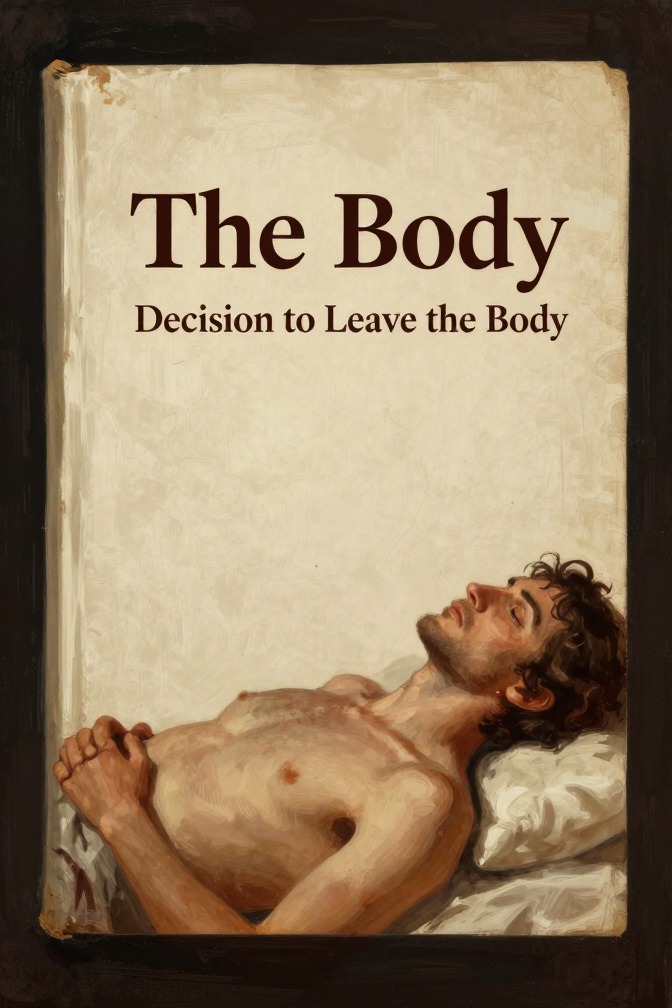
After discovering the body of Ray Brower and confronting Ace Merrill's gang, the four boys decide to abandon their plan to report the body and instead return home in secret, a choice that marks the end of their shared adventure and the beginning of their separate fates.
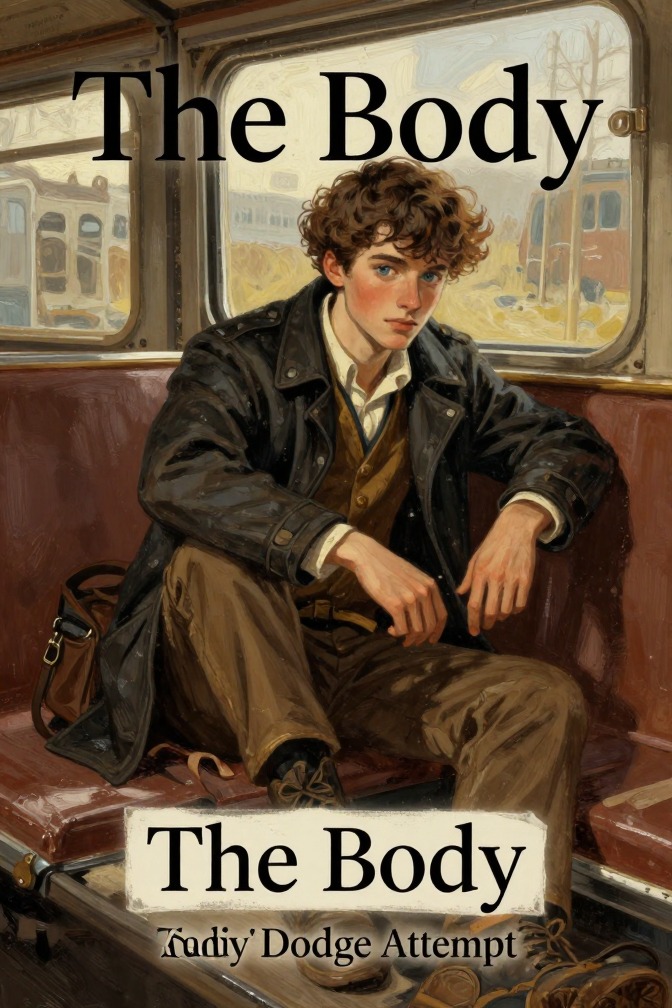
Teddy Duchamp's attempt to dodge a freight train on the GS&WM tracks near Castle Rock is a defining moment of reckless bravado and a near-fatal confrontation that exposes the group's volatile dynamics and Teddy's deep psychological wounds.
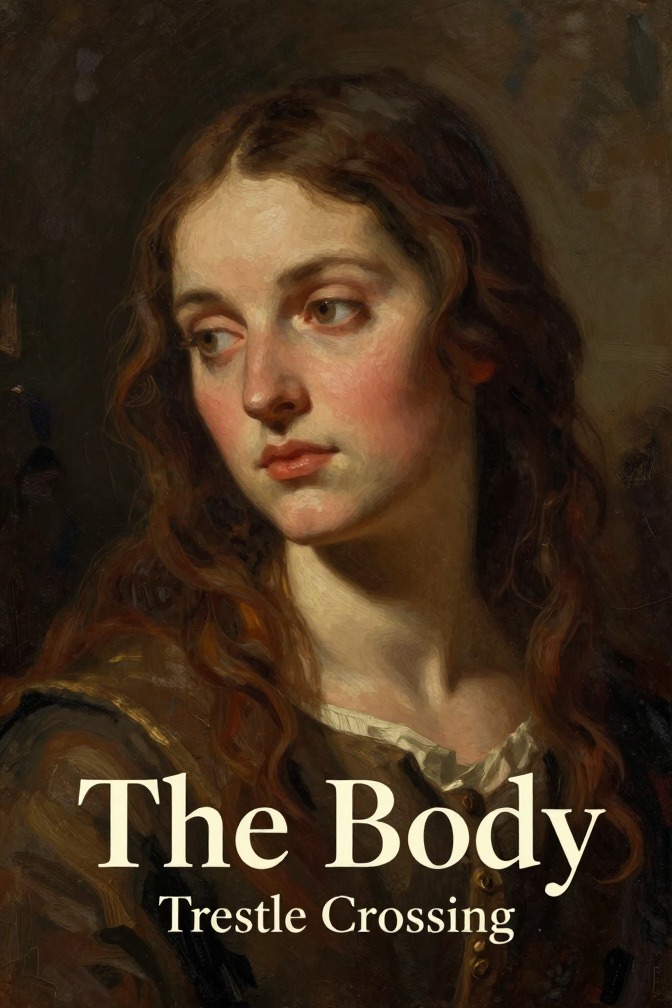
The Trestle Crossing is the pivotal ordeal of the boys' journey to find Ray Brower's body, where Gordon Lachance, Vern Tessio, Teddy Duchamp, and Chris Chambers must cross a narrow, decaying railroad trestle over the Castle River, nearly being killed by an oncoming freight train. This event transforms the adventure from a lark into a confrontation with mortality, forging a bond between the survivors and marking the first moment the group truly faces the stakes of their quest.
Ace Merrill is the leader of Castle Rock's juvenile delinquent gang, a violent and charismatic bully who terrorizes the younger boys and later, as an adult, becomes a faded regular at a local bar.
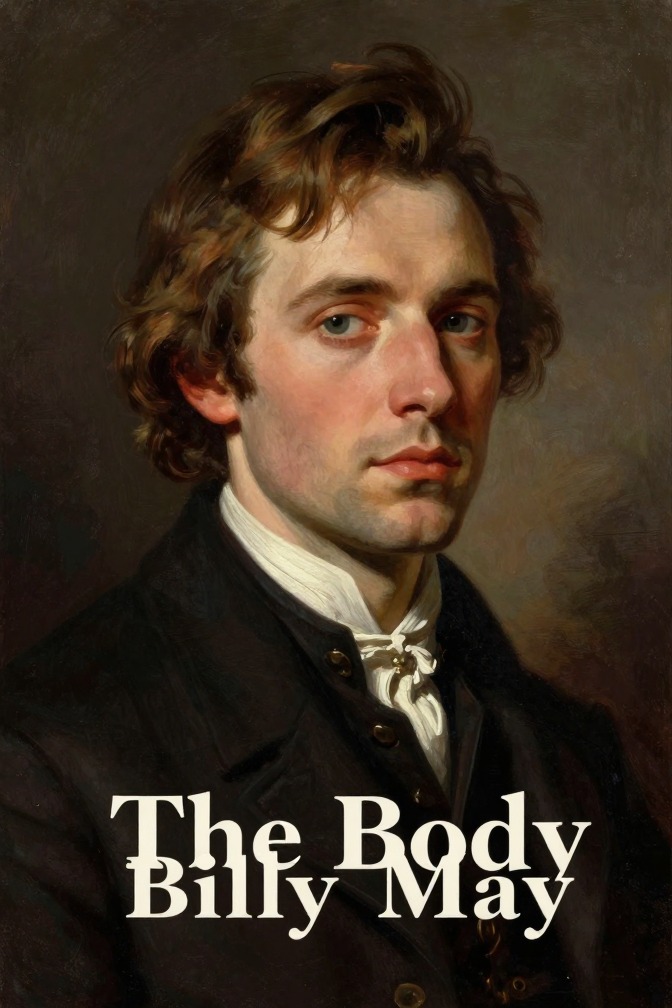
Billy May is a minor character in the embedded story "Stud City," the younger half-brother of the narrator Chico (Edward May) and the son of Sam May and his second wife Virginia. He appears as a frightened, vulnerable child caught in the violent domestic conflicts that erupt after his older brother Johnny's death, and his presence underscores the emotional wreckage left by the family's unspoken secrets.
Chopper is the feared guard dog of the Castle Rock Dump, owned by dump-keeper Milo Pressman. Though the subject of terrifying local legends that portray him as a half-breed hellhound capable of attacking specific body parts on command, Chopper is revealed to be a medium-sized black-and-white mongrel whose actual ferocity falls comically short of his mythic reputation. His encounter with the four boys—Gordon Lachance, Chris Chambers, Teddy Duchamp, and Vern Tessio—during their journey to find the body of Ray Brower exposes the gap between the town's monstrous stories and the dog's clumsy, ineffective reality, while also serving as a catalyst for Teddy Duchamp's explosive defense of his father's honor.
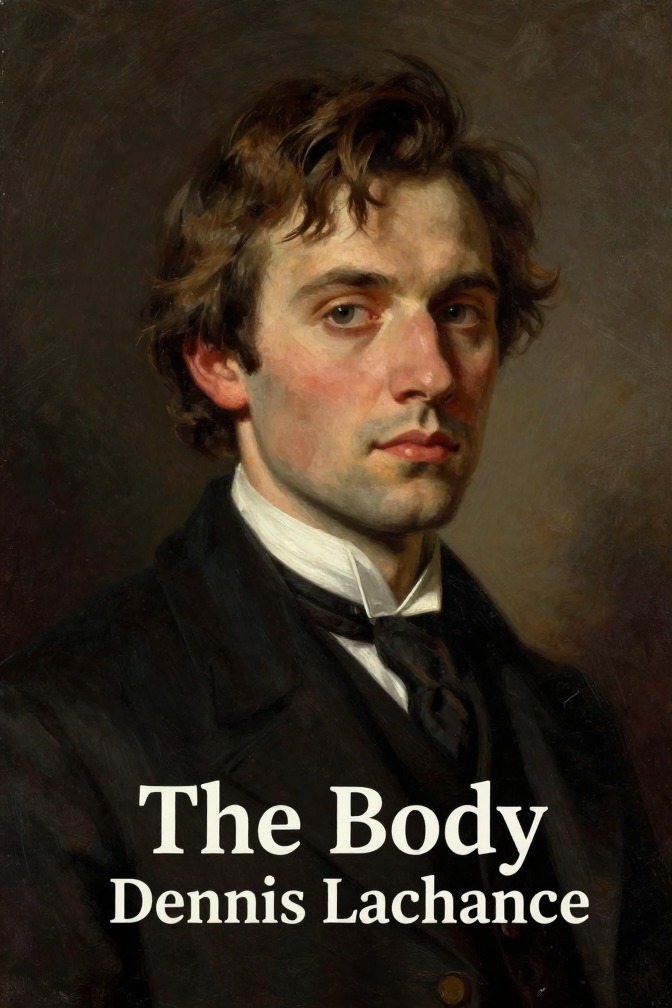
Dennis Lachance is the deceased older brother of narrator Gordon Lachance, whose death in a Jeep accident at Fort Benning, Georgia, in April 1960, casts a long shadow over the Lachance family and shapes Gordon's sense of invisibility and loss throughout the summer of the novel's central adventure.
Johnny is the deceased older brother of Chico (Edward May) in the embedded story "Stud City," a character whose death by a racing car at Oxford Plains Speedway haunts the narrative and shapes Chico's grief, guilt, and conflicted relationship with his stepmother Virginia.
Mr. Chambers is the alcoholic, abusive father of Chris Chambers, whose violent rages and chronic drunkenness define the domestic terror that Chris must endure and ultimately escape. His presence in the story is felt through the bruises and broken bones Chris carries to school, the welfare checks that sustain the family, and the psychological weight of a town that expects Chris to become just like him.
Norman Duchamp is the father of Teddy Duchamp, a World War II veteran who stormed the beach at Normandy and later, in a psychotic episode, burned his son's ears on a cast-iron stove, leading to his institutionalization at Togus VA Hospital. His violent act and subsequent confinement define Teddy's identity and fuel the central conflict of the story, as Teddy's fierce loyalty to his father clashes with the town's perception of him as a 'loony.'
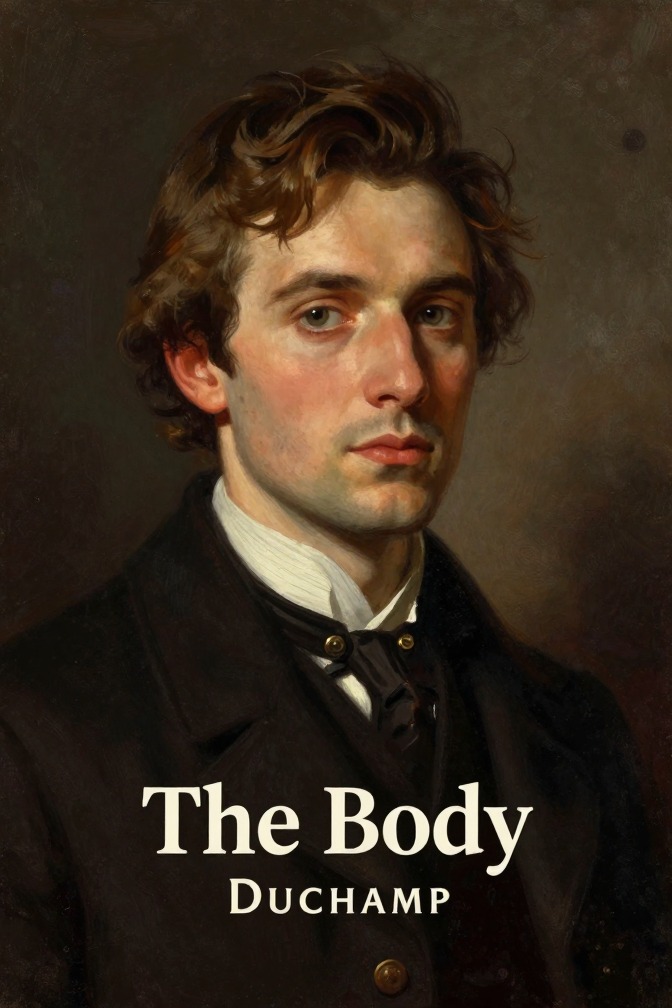
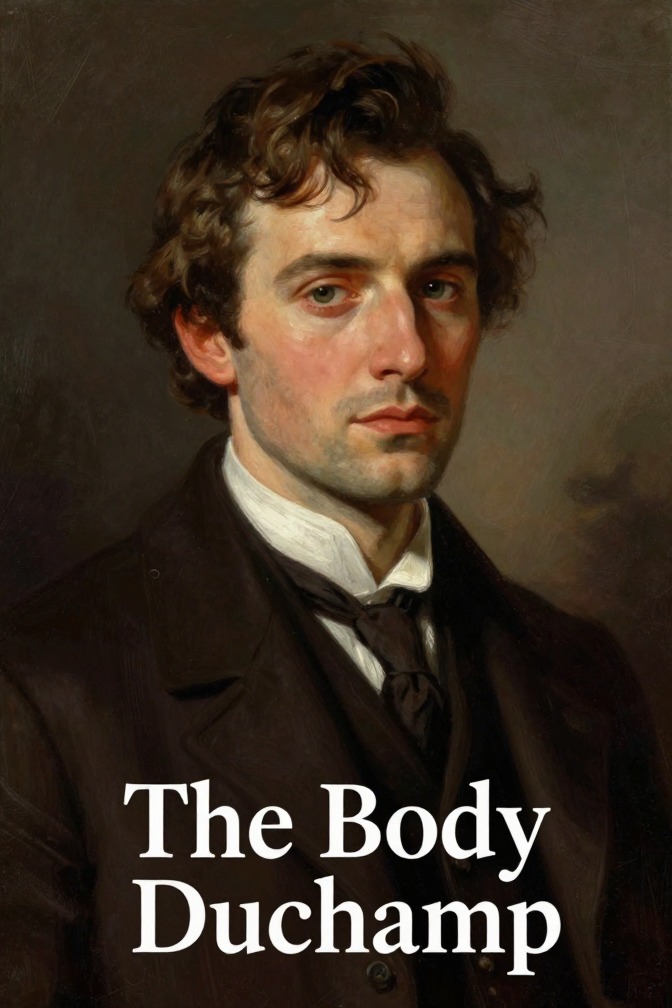
Teddy Duchamp is a deeply damaged and recklessly brave twelve-year-old boy in Castle Rock, Maine, whose life is defined by the horrific abuse inflicted by his father, a Normandy veteran confined to a VA hospital, and whose compulsive risk-taking and fragile pride drive much of the novel's tension and tragedy.
The concept "love has teeth" is a central thematic assertion in Gordon Lachance's adult narration, expressing the idea that genuine love inflicts lasting, unhealable wounds and that words are powerless to close them. It emerges from Gordon's reflection on his friendship with Chris Chambers and the permanent cost of their bond, and it recurs in his meditation on the dead boy Ray Brower and the impossibility of fully communicating the most important experiences.
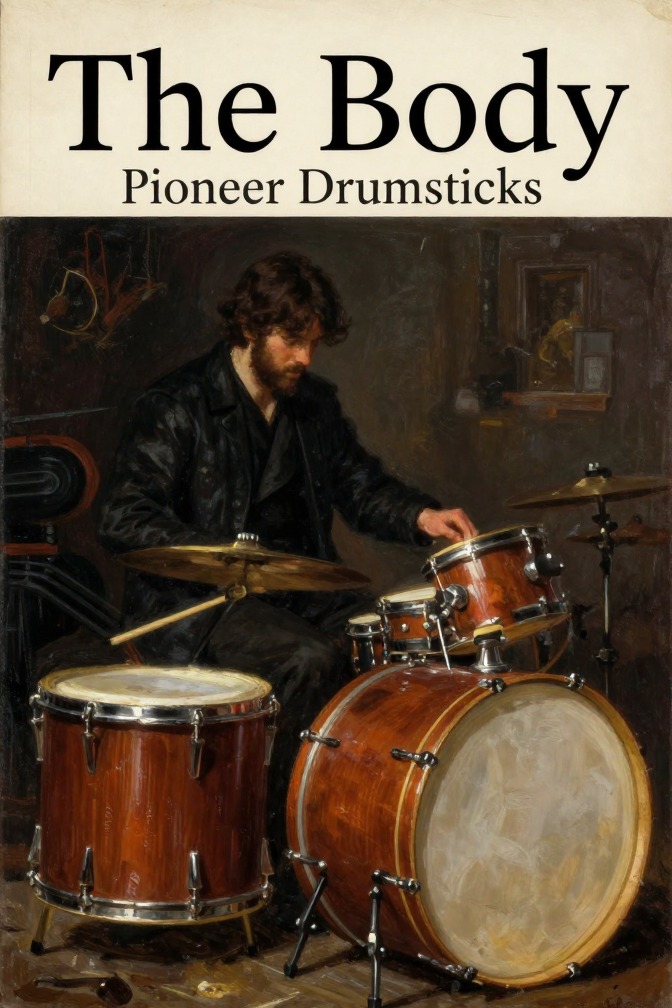
Pioneer Drumsticks are a makeshift campfire meal prepared by Gordon Lachance and his friends during their overnight hike along the GS&WM Railroad tracks to find the body of Ray Brower. The term, coined by Gordon's older brother Dennis, refers to lumps of hamburger pushed onto the ends of green branches and cooked over an open fire. The meal represents a moment of shared competence and boyish self-sufficiency amid the increasingly grim and dangerous journey.
The boogey-man is a childhood fear of a monster lurking under the bed, which Vern Tessio confesses to still experiencing despite being twelve years old, and which Gordon Lachance later connects to the lasting psychological impact of discovering Ray Brower's corpse.
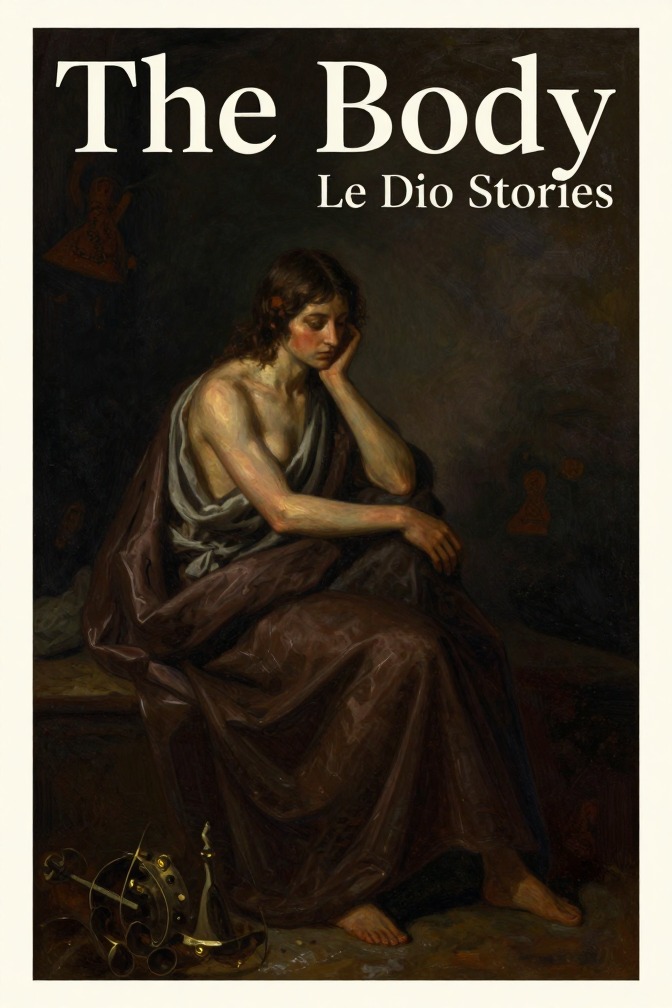
The Le Dio stories are a series of war narratives written by the young Gordon Lachance, set in a fictional French town during World War II and featuring a grim squad of American soldiers fighting house-to-house against the Nazis. They represent Gordon's earliest sustained fictional project, written between the ages of nine and fourteen, and hold a particular, almost obsessive appeal for his friend Teddy Duchamp, who sees in them a validation of his own father's wartime heroism. The stories also mark a crucial stage in Gordon's development as a writer, a phase he later regards with a mixture of embarrassment and grudging respect for their raw, derivative energy.
The night shift is a recurring concept in Gordon Lachance's childhood, representing the universal childhood fear of what lurks in the dark—the monsters under the bed, the ghosts in the closet, and the terrifying unknown that waits when the lights go out. It is a state of vulnerability and dread that the boys both anticipate and dread, a shared experience that binds them in their journey to find Ray Brower's body.
The phrase 'the word is the harm' encapsulates the novel's central paradox about language: that speech, the very medium through which Gordon Lachance makes his living as a writer, is also a force that destroys the fragile, pre-verbal connections that constitute love and authentic experience. The adult narrator articulates this belief in the final pages of his memoir, reflecting on his friendship with Chris Chambers and the impossibility of using words to preserve or even adequately describe the most important things in life.
Truck-dodging is a reckless, compulsive game of survival that Teddy Duchamp plays on the roads of Castle Rock, running in front of speeding trucks on Route 196 and laughing as the windblast ripples his clothes. It is the most vivid symptom of the damage inflicted by his father, Norman Duchamp, a Normandy veteran who burned Teddy's ears on a cast-iron stove plate and was later committed to Togus VA Hospital. Teddy's near-suicidal bravado—his need to prove himself against machines that could kill him—becomes a defining trait that both frightens and fascinates his friends, and it marks him as the character most likely to die young.