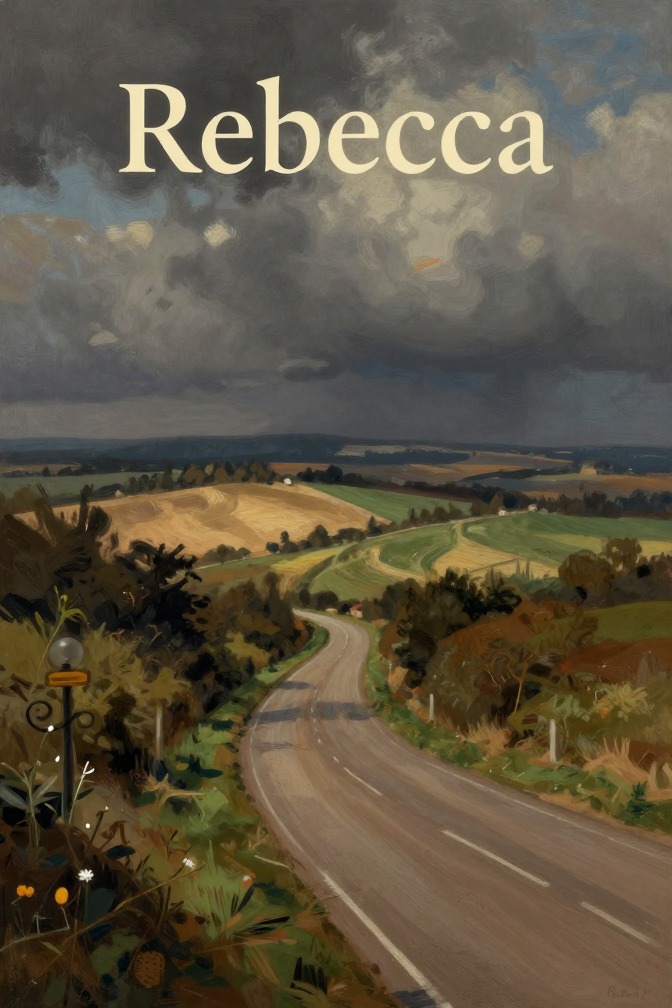
The drive at Manderley is the winding, serpentine road that leads from the lodge gates to the house, a central symbol of the narrator's dream and her memory of the estate. In her opening dream, the drive is choked with grass and moss, narrowed by encroaching woods, and transformed from a broad gravel path into a poor thread of its former self, representing the decay and loss of Manderley itself. The drive's physical state—overgrown, dark, and twisting—mirrors the narrator's psychological journey into the past and the inescapable, triumphant return of nature over human cultivation.
The woods of Manderley are a dense, ancient, and encroaching forest that surrounds the estate, embodying the wild, untamed forces of nature that ultimately reclaim the house after its destruction. They are characterized by their dark, oppressive atmosphere, their ability to obscure and transform the landscape, and their role as a site of both beauty and menace, serving as a constant reminder of the past and the inevitable triumph of the natural world over human cultivation.
The buoy in the cove at Manderley, painted white and green and bearing the name 'Je Reviens', marks the mooring where Rebecca de Winter kept her sailing boat. It is the physical anchor of Rebecca's presence in the bay, and its discovery by a diver investigating a stranded ship leads directly to the revelation of her body in the sunken cabin and the unravelling of Maxim de Winter's secret.
The china cupid is a small ornamental figurine that stands on the writing-desk in the morning-room at Manderley. Its accidental breakage by the second Mrs de Winter, and her subsequent attempt to conceal the fragments, exposes the tense power dynamic between the new mistress and the housekeeper Mrs Danvers, and becomes a catalyst for the narrator's deepening sense of inadequacy and her first open quarrel with Maxim.
The hairbrushes on Rebecca's dressing-table in the west wing are the most intimate and potent relics of her physical presence, objects that Mrs Danvers preserves as sacred fetishes and that the second Mrs de Winter touches in a moment of horrified fascination, discovering the asymmetry of use that betrays a living hand.
The handkerchief is a small, lace-edged cambric handkerchief monogrammed with the letters R de W, which the second Mrs de Winter discovers in the pocket of a mackintosh she borrowed from the flower-room at Manderley. It becomes a potent physical relic of Rebecca de Winter, carrying her scent of white azaleas and a trace of lipstick, and it forces the narrator into a direct, tactile encounter with the predecessor she has never met but whose presence pervades the house.
The slippers are a pair of bedroom slippers that belonged to Rebecca de Winter, preserved by Mrs Danvers in Rebecca's untouched bedroom in the west wing of Manderley. They serve as a tangible relic of Rebecca's physical presence and become a tool of psychological manipulation when Mrs Danvers forces the second Mrs de Winter to touch them, emphasizing the narrator's inadequacy and Rebecca's enduring dominance over the house.
The stranded ship is a German or Dutch steamer that runs aground on the reef in the bay near Manderley during a dense fog, an event that triggers the discovery of Rebecca's sunken sailing boat and the body inside its cabin, thereby shattering the official story of her death and forcing Maxim's confession.
Jack Favell and Rebecca de Winter were first cousins who maintained a long-term, clandestine sexual relationship that Rebecca treated as a game of amusement rather than genuine love, a dynamic that Maxim de Winter discovered and that ultimately contributed to the violent confrontation in the cottage on the night of Rebecca's death.
Maxim de Winter and Colonel Julyan share a formal, respectful relationship rooted in Julyan's role as the local magistrate and his personal regard for Maxim's family. Julyan's conduct during the inquest and its aftermath reveals a man who, while bound by legal duty, extends considerable sympathy and practical support to Maxim, ultimately helping to steer the investigation away from a murder charge.
Maxim de Winter and Jack Favell are locked in a bitter, long-standing hostility rooted in Favell's intimate relationship with Rebecca de Winter and Maxim's determination to expel him from Manderley. Their conflict, which erupts into open confrontation after the discovery of Rebecca's boat, reveals the depth of Maxim's jealousy and the threat Favell poses as a blackmailer who knows—or suspects—the truth about Rebecca's death.
Maxim de Winter and Beatrice Lacy are brother and sister whose relationship is marked by blunt affection, frequent sparring, and a shared but unspoken understanding of the painful past surrounding Rebecca's death. Beatrice is the only close family member Maxim sees regularly, yet their interactions are strained by her tactlessness and his defensive reserve, revealing the deep wounds that Rebecca left on the family.
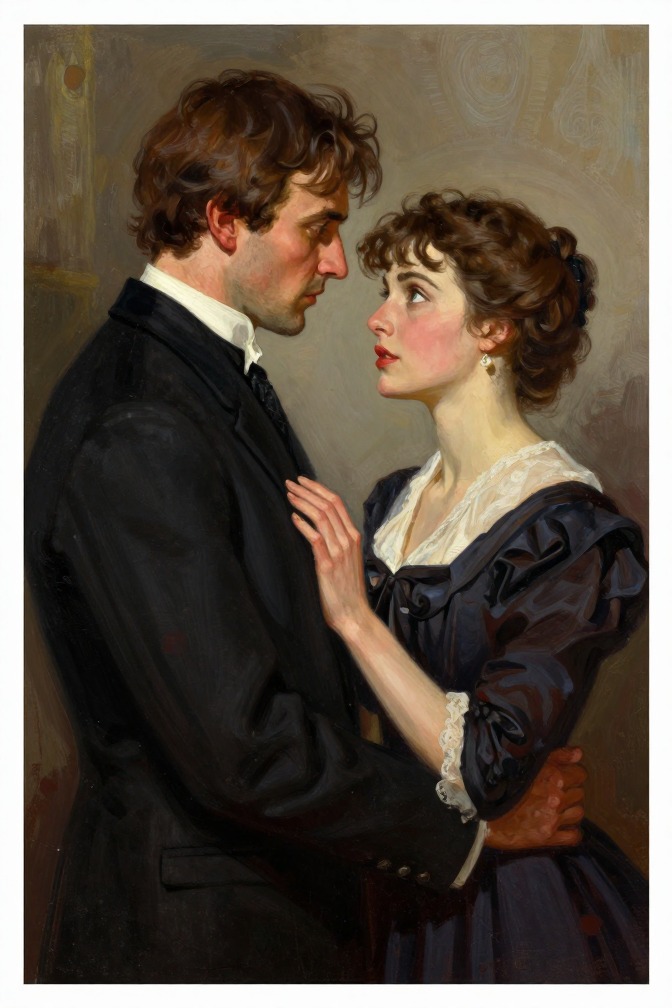
The marriage of Maxim de Winter and the second Mrs de Winter is a central relationship in the novel, defined by a profound asymmetry of power, knowledge, and emotional security. The narrator enters the union with an intense, almost adolescent love, while Maxim, haunted by the secret of his first wife's murder, marries her out of a desperate need to blot out the past. Their relationship evolves from a gulf of misunderstanding and fear, through a crisis of revelation, to a fragile but genuine partnership forged in shared adversity.
The second Mrs de Winter and Rebecca de Winter are locked in a silent, one-sided competition that defines the narrator's experience at Manderley. The narrator, never named, measures herself constantly against the dead first wife, whose beauty, confidence, and social grace seem to fill every room. Rebecca's ghostly presence—her handwriting on pigeonholes, her clothes in the wardrobe, her scent on a forgotten handkerchief—becomes a standard the narrator feels she can never meet. This rivalry is not a direct confrontation but a psychological war waged through memory, objects, and the whispered comparisons of others, culminating in the narrator's devastating realization that she has been cast as a pale substitute for a woman who still rules the house from the grave.
The narrator's inferiority complex is a pervasive psychological state that shapes her experience at Manderley, driving her insecurity, social paralysis, and obsessive comparison to the deceased first wife, Rebecca.
The strained marriage between Maxim de Winter and the second Mrs de Winter is the central relational crisis of the novel, a state of mutual misunderstanding, withheld truth, and emotional isolation that persists for months after their wedding. The narrator, paralyzed by her own insecurity and by the invisible presence of Rebecca, believes Maxim still loves his first wife and married her only out of loneliness; Maxim, in turn, misreads her shyness as boredom and unhappiness. This reciprocal silence creates a gulf between them that is only bridged when Maxim confesses that he never loved Rebecca—and that he killed her.
Autumn in the novel marks a decisive seasonal and emotional shift, arriving prematurely after the storm that breaks the long summer heat and symbolically ending the period of suspense and concealment that has defined the narrator's life at Manderley. Its first signs—chill air, falling leaves, a changed light—appear on the morning after Maxim's confession and the discovery of Rebecca's boat, and the season's imagery of decay, closure, and exposure pervades the final chapters, culminating in the fire that destroys Manderley itself.
New Year is a recurring temporal marker in the narrative, representing the narrator's attempt to impose a clean break from the past and the failure of that attempt. The only direct mention occurs in the narrator's imagined future with Maxim de Winter, where she foresees a Christmas card from Manderley as the final, degrading end of their correspondence—a moment that crystallizes her fear of being forgotten and reduced to a mere formality.
Summer in Rebecca is the season of arrival, of first impressions, and of the brief, deceptive peace that precedes the unraveling of the past. It is the time when the second Mrs de Winter comes to Manderley as a bride, when the gardens are at their most lush and the sea at its most deceptive, and when the oppressive heat and stillness of the season mirror the growing tension and unease within the house. The summer of the novel is not a season of carefree joy but a period of anxious waiting, of forced gaiety, and of the slow, inexorable return of Rebecca's shadow.
Winter in the novel is a season of cold, darkness, and emotional desolation, marking the period of Maxim de Winter's deepest grief after Rebecca's death and the narrator's own sense of isolation and fear. It is the time when the past feels most oppressive and the present most fragile, contrasting sharply with the brief warmth of the Italian honeymoon and the deceptive brightness of the Manderley summer.
Charlie Decker attacks Mr. Carlson with a pipe wrench in the chemistry classroom, an act of violence that escalates from his humiliation at the blackboard and foreshadows the later hostage crisis. This assault, which leaves Carlson with a fractured skull and bone splinters in his brain, marks a critical turning point in Charlie's descent into violence and his confrontation with institutional authority.
After his suspension for assaulting a teacher, Charlie Decker confronts his father Carl in the family garage, where a violent physical fight erupts that breaks the long-standing pattern of paternal abuse and leaves both men permanently estranged.
Charlie Decker's confrontation with Principal Thomas Denver is the pivotal psychological turning point of the hostage crisis, where Decker systematically dismantles Denver's institutional authority, forcing the principal to abandon his bureaucratic script and react as a humiliated, impotent individual, thereby triggering Decker's decision to escalate the situation into a full-scale armed takeover.
Charlie Decker's fight with Dicky Cable at Carol Granger's twelfth birthday party is a formative humiliation that crystallizes his sense of social exclusion, his inability to defend himself, and his early experience of dissociation under stress, directly linking to his later violent acts.
Charlie Decker's psychological torture of Don Grace is a pivotal event in the hostage crisis, where Decker, holding a classroom of students captive, uses the school intercom to systematically humiliate and break down the school psychiatrist, forcing him into a state of hysterical collapse and thereby demonstrating Decker's complete inversion of power.
Charlie Decker shoots and kills his algebra teacher, Mrs. Jean Underwood, in Room 16 of Placerville High School, an act that initiates a hostage crisis and marks the violent culmination of his psychological unraveling.
Charlie Decker shoots Mr. Vance, a history teacher, when Vance opens the classroom door during the hostage crisis, making Vance the second person killed that morning.
After releasing his classmates, Charlie Decker is shot three times by Captain Frank Philbrick when he feigns reaching for a weapon, an act that ends the hostage crisis and leads to his trial and commitment to Augusta State Hospital.
In a pivotal moment of the Placerville High School hostage crisis, Charlie Decker survives a sniper shot from state policeman Daniel Malvern when the bullet strikes the steel padlock he had placed in his breast pocket, an event that transforms his vulnerability into a symbol of his defiance and the absurdity of his situation.
The Placerville High School hostage crisis is the central event of Richard Bachman's novel Rage, in which senior Charles Decker, after a series of escalating psychological and violent acts, takes his Algebra II class hostage in Room 16, kills two teachers, and forces a confrontation that strips bare the hidden lives and resentments of his classmates before ending in his own shooting and institutionalization.