Alecto is one of the three Furies (Erinyes) who appear at the gates of the City of Dis in the Inferno, embodying unrelenting wrath and serving as a threshold guardian that tests the pilgrims' resolve before they can enter the heretics' city.
Asdente is a minor figure in Dante's Inferno, appearing among the soothsayers in the Fourth Bolgia of the Eighth Circle, where he is punished for his presumptuous attempts to foretell the future through magical arts, a sin that Dante's Virgil condemns as a perversion of God's order.
Branca d' Oria is a Genoese nobleman punished in the third division of the Ninth Circle of Hell, Ptolomaea, for the betrayal of his guests and kin. His unique damnation, revealed by Friar Alberigo, involves his soul descending to Hell before his physical death, while a demon inhabits his living body, a fate that underscores the exceptional severity of treachery against those bound by hospitality or family ties.
Charon is the infernal ferryman of the river Acheron in Dante Alighieri's Inferno, a demonic figure who transports the souls of the damned to the shores of Hell, embodying the inexorable justice of divine punishment and serving as the first major guardian the pilgrim encounters after passing through the Gate of Hell.
Dido is the tragic Carthaginian queen whose story of love and suicide is invoked in Dante's Inferno as a figure of lustful passion, and whose fate is later contrasted with the redeemed souls in Purgatory.
Helen of Troy appears in Dante's Inferno among the lustful in the Second Circle, swept by the infernal hurricane as punishment for the carnal sins that, through her beauty, caused catastrophic wars and suffering. Virgil points her out as one of the famous lovers whom Love separated from life, and her presence underscores the poem's condemnation of passion that subjugates reason to appetite.
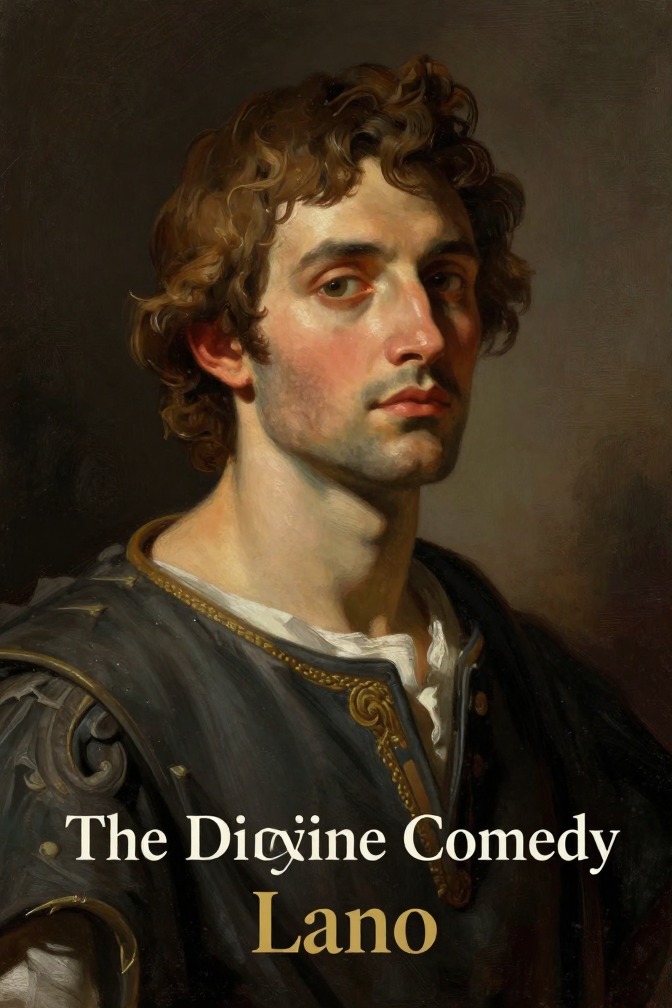
Lano is a minor figure in Dante Alighieri's Inferno, appearing in Canto XIII among the violent against themselves in the Wood of Suicides. He is a fleeting but vivid presence, a naked, scratched soul fleeing through the forest, whose desperate cry for death and whose name, linked to a specific historical battle, mark him as a victim of his own reckless violence and a figure of wasted life.
Megaera is one of the three Furies (Erinyes) who appear at the gates of the City of Dis in the Inferno, serving as a guardian of the heretics' circle and embodying the threat of petrification through the Gorgon Medusa.
Michael Scott is a minor figure encountered by Dante and Virgil in the Fourth Bolgia of the Eighth Circle of Hell, where soothsayers and diviners are punished. He is identified by Virgil as a renowned practitioner of magical illusions, and his presence in the circle of the fraudulent underscores Dante's condemnation of those who pervert God-given intellect for forbidden knowledge.
Nessus is a centaur from classical mythology who appears in the Seventh Circle of Hell as a guide and ferryman across the river of boiling blood, Phlegethon, where the violent against their neighbors are punished.
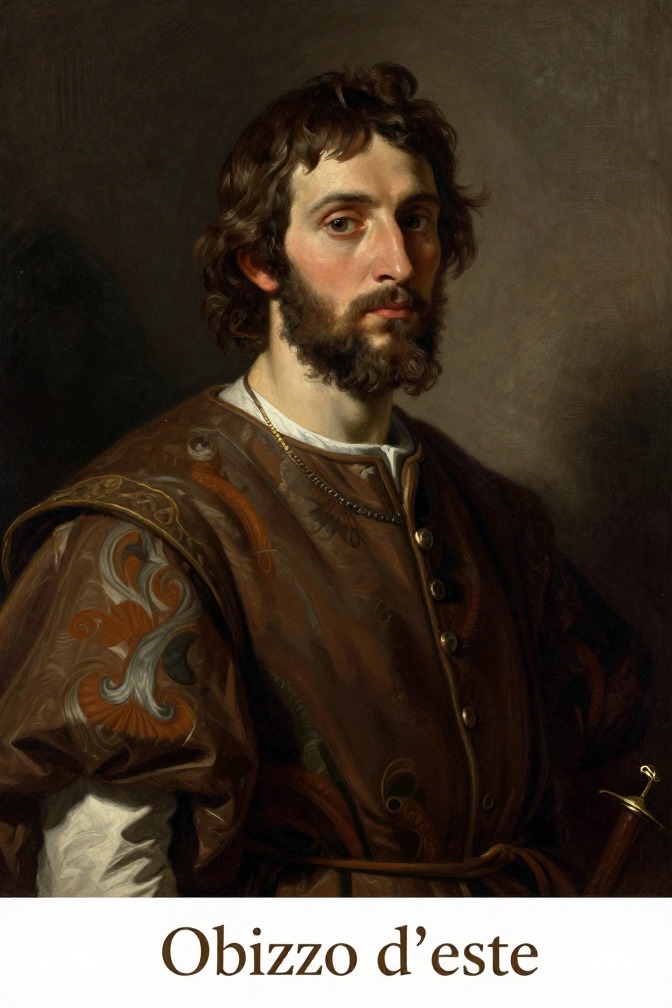
Obizzo d'Este is a damned soul in the Seventh Circle of Dante's Hell, punished among the Violent against their Neighbors in the river of boiling blood. He is identified by the centaur Nessus as a tyrant who was murdered by his own stepson, a detail that underscores the theme of violent betrayal and the contrapasso of being submerged in blood for spilling the blood of others.
Statius, the Roman poet of the Thebaid and the Achilleid, appears in Purgatory as a saved soul who has completed his purgation after centuries of penance for prodigality. His meeting with Virgil and Dante on the fifth terrace of Mount Purgatory becomes a pivotal moment of literary and spiritual recognition, revealing the hidden Christian faith that transformed his life and poetry.
Venedico Caccianimico is a Bolognese pander damned in the first bolgia of Malebolge, where horned demons scourge the seducers and panders. He confesses to having induced the beautiful Ghisola to submit to the Marquis, and his presence among so many fellow Bolognese illustrates the pervasive corruption of his native city.
The Angelic Hierarchies, as revealed by Beatrice in the Paradiso, constitute the ordered ranks of angelic beings that govern the celestial spheres and reflect the divine nature through their varying degrees of vision and love, forming the structural and theological backbone of Dante's cosmos.
The River Lethe is a mythological river in the Earthly Paradise atop Mount Purgatory, whose waters erase all memory of sin, enabling the purified soul to ascend to Heaven with a clean slate.
The Po is the longest river in Italy, flowing from the Alps to the Adriatic Sea. In Dante's Divine Comedy, it serves as a geographical marker for the northern Italian region of Lombardy and is referenced in the context of political and moral decay, particularly in the Purgatorio where Marco Lombardo laments the loss of virtue in the lands it waters.
Heresy, in Dante's Inferno, is the sin punished in the Sixth Circle, a vast cemetery of flaming tombs where heretics and their followers, including Epicureans who denied the soul's immortality, lie condemned for their intellectual rebellion against divine truth.
Incontinence is the first and least blameworthy of the three dispositions that Heaven abides not, according to Virgil's discourse in Inferno XI. It designates sins of unbridled appetite or passion—lust, gluttony, avarice, prodigality, wrath, and sullenness—where the will yields to natural impulses without the deliberate malice of fraud or violence. Dante's moral architecture places the incontinent in the upper circles of Hell (Circles II through V), where they suffer torments that mirror their earthly excesses, and in the corresponding terraces of Purgatory, where the same impulses are purified through contrary discipline. The concept is rooted in Aristotle's Ethics, which Virgil explicitly invokes, and it governs the poem's graduated scale of sin, distinguishing weakness of will from calculated evil.
Sophie Neveu is a DCPJ cryptographer and the estranged granddaughter of Louvre curator Jacques Saunière, whose murder draws her into a night-long hunt for the Holy Grail. Her cryptographic skills, personal history with her grandfather, and discovery of her own Merovingian bloodline make her the central figure through whom the novel's secrets are unlocked.
The Depository Bank of Zurich is a high-security, twenty-four-hour Swiss bank in Paris that provides anonymous safe-deposit box services. It becomes a critical location in the novel when Sophie Neveu and Robert Langdon use a gold key and a deciphered account number to retrieve a rosewood box containing the Priory of Sion's keystone—a marble cryptex designed by Leonardo da Vinci that holds a map to the Holy Grail.
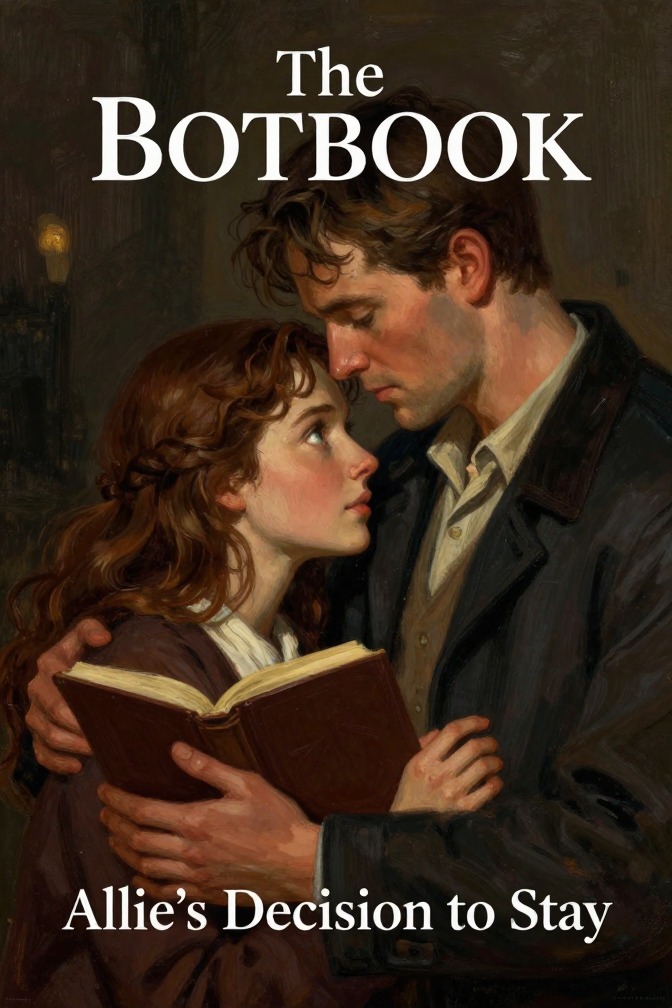
Allie's Decision to Stay is the pivotal event in The Notebook where Allie Nelson, engaged to Lon Hammond Jr., chooses to remain with Noah Calhoun after a three-week separation, defying her mother's earlier interference and the social class barriers that once divided them. This decision, made after a stormy reunion and a confrontation with her fiancé, resolves the novel's central romantic conflict and sets the course for a lifelong marriage, ultimately becoming the foundation of the story Noah reads to Allie in her old age.
Frieda is a pivotal character in Kafka's The Castle, a former barmaid at the Castle Inn and Klamm's lover who becomes K.'s fiancée, only to leave him for the assistant Jeremias. Her arc traces the collision between the castle's hierarchical world and K.'s quest for recognition, embodying themes of desire, betrayal, and the impossibility of escape.
Rahim Khan's revelation is the pivotal disclosure that Hassan was not Ali's biological son but Baba's, making Hassan Amir's half-brother. This truth, revealed in Peshawar in June 2001, shatters Amir's understanding of his past, his father, and his own identity, and sets him on a path to redeem his betrayals by rescuing Hassan's orphaned son, Sohrab.
Nang and namoos (honor and pride) is the foundational code of Pashtun male identity in The Kite Runner, a rigid social framework that governs public reputation, family chastity, and the obligation to defend both through action. The code drives Baba’s lifelong concealment of Hassan as his son, General Taheri’s obsessive guarding of Soraya’s reputation, and the community’s double standard that punishes women for sexual transgression while excusing men. It also shapes Amir’s internal conflict: his failure to live up to this code in the alley becomes the central wound of his life, and his eventual willingness to risk his life for Sohrab represents a belated, personal reclamation of honor on his own terms.
Ivan Nikolaevich Ponyrev, who writes under the pseudonym Homeless, is a poet and a member of the Massolit literary association. He is the first major character introduced in the novel and undergoes a profound transformation from a dogmatic Soviet poet to a tormented witness of supernatural truth, ultimately becoming a disciple of the Master and a historian haunted by the spring full moon.
Koroviev, also known as Fagott and the Checkered One, is a key member of Woland's demonic retinue in The Master and Margarita. He serves as an interpreter, trickster, and master of ceremonies, orchestrating many of the novel's most spectacular and satirical events, from the black magic seance at the Variety Theatre to the haunting of Nikanor Ivanovich Bosoy. His character embodies the carnivalesque spirit of the novel, blending buffoonery with menace, and his actions consistently expose the hypocrisy and corruption of Soviet society.
Mark Ratslayer is a Roman centurion in Pontius Pilate's service, distinguished by his immense height, disfigured face, and brutal efficiency. He appears as the enforcer of Roman authority, first beating Yeshua Ha-Nozri into submission and later commanding the execution on Bald Mountain. His character embodies the physical and moral violence of the empire, yet his own history of suffering—maimed by Germanic warriors—complicates any simple judgment of him as merely evil.
The Master is the unnamed, reclusive author of a novel about Pontius Pilate and Yeshua Ha-Nozri, whose work is rejected by the Soviet literary establishment, leading to his mental breakdown, confinement in a psychiatric clinic, and eventual supernatural release into an eternal refuge with his beloved Margarita.
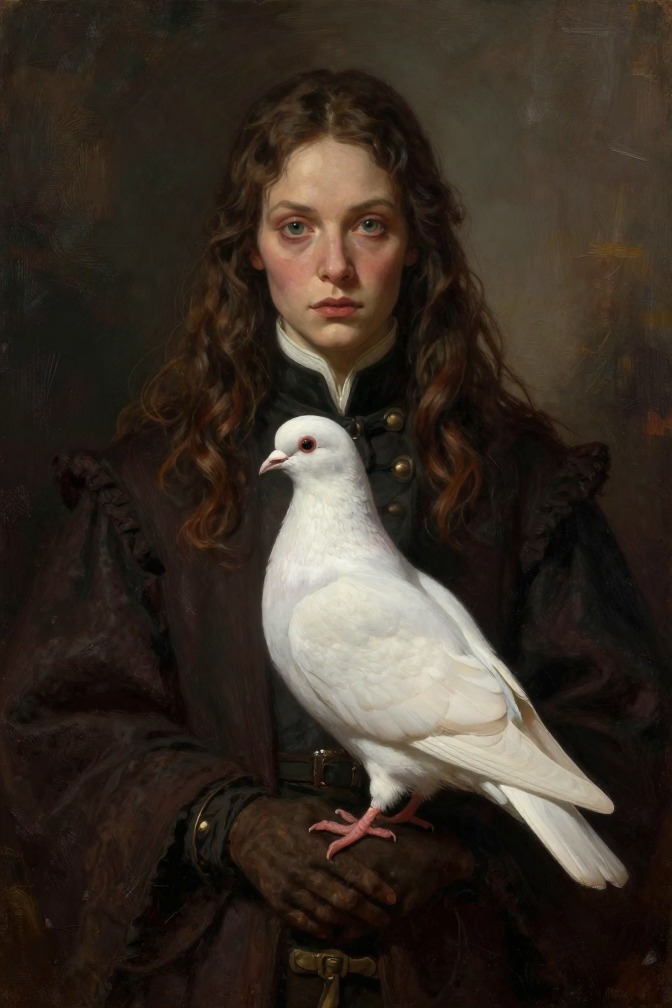
The dove appears as a recurring motif in The Master and Margarita, most notably during Pontius Pilate's interrogation of Yeshua Ha-Nozri, where its flight across the colonnade marks the moment a decisive formula takes shape in the procurator's mind. The bird's presence also punctuates the opening scene at the Patriarch's Ponds and echoes through the novel's symbolic landscape, linking the ancient and contemporary narratives through a shared image of fragile, fleeting life.
Sairy Wilson is a frail, dying woman traveling west with her husband Ivy Wilson, whose quiet dignity, selfless generosity, and profound understanding of human connection make her a brief but luminous presence in the Joads' journey. Though her body is ravaged by illness, she offers the Joads her tent for Grampa's deathbed, her quilt for his shroud, and her Bible page for his epitaph; she later asks Jim Casy for a prayer not as a religious rite but as a way to feel the closeness she once knew when she sang. Her death is anticipated by everyone but Ivy, and her final gift to the Joads is the model of a grace that asks for nothing in return.