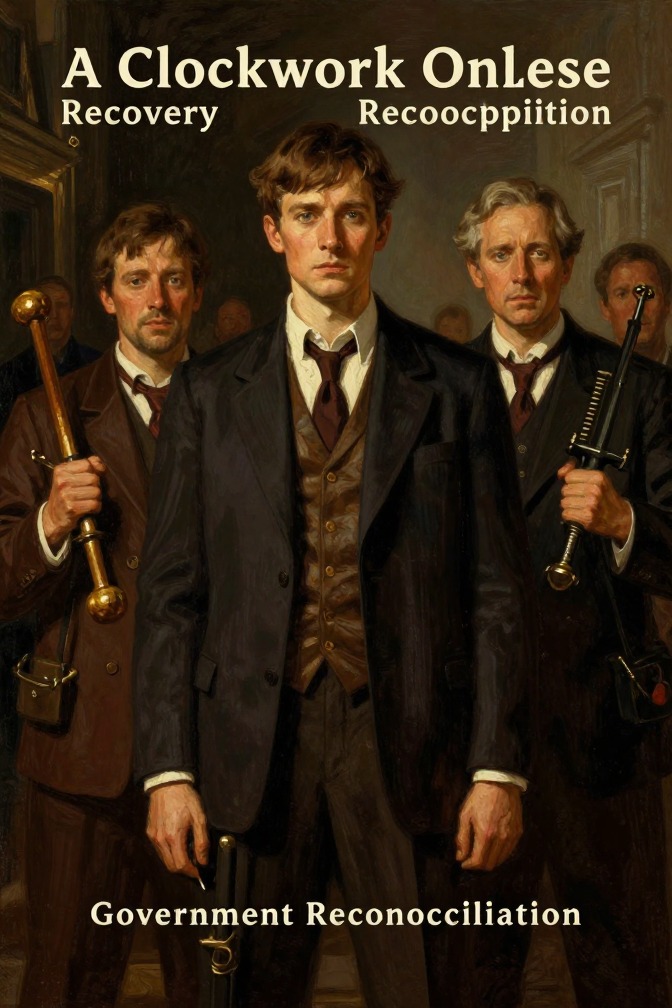
After Alex's suicide attempt, the Minister of the Interior visits him in the hospital, reconciles with him on behalf of the government, and gifts him a stereo, marking Alex's full recovery from the Ludovico Technique's conditioning and his return to his former violent self.
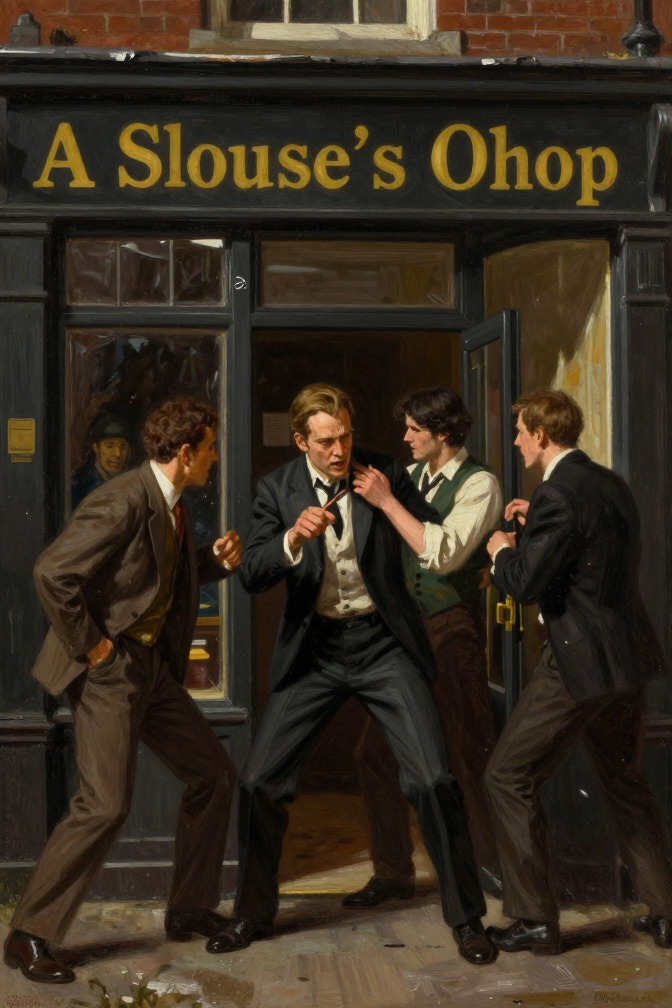
The robbery and assault at Slouse's shop is a key early event in Alex's narration, demonstrating the gang's method of using a 'sammy act' to establish an alibi before committing a violent crime, and showcasing the casual brutality and lack of effective policing that define their world.
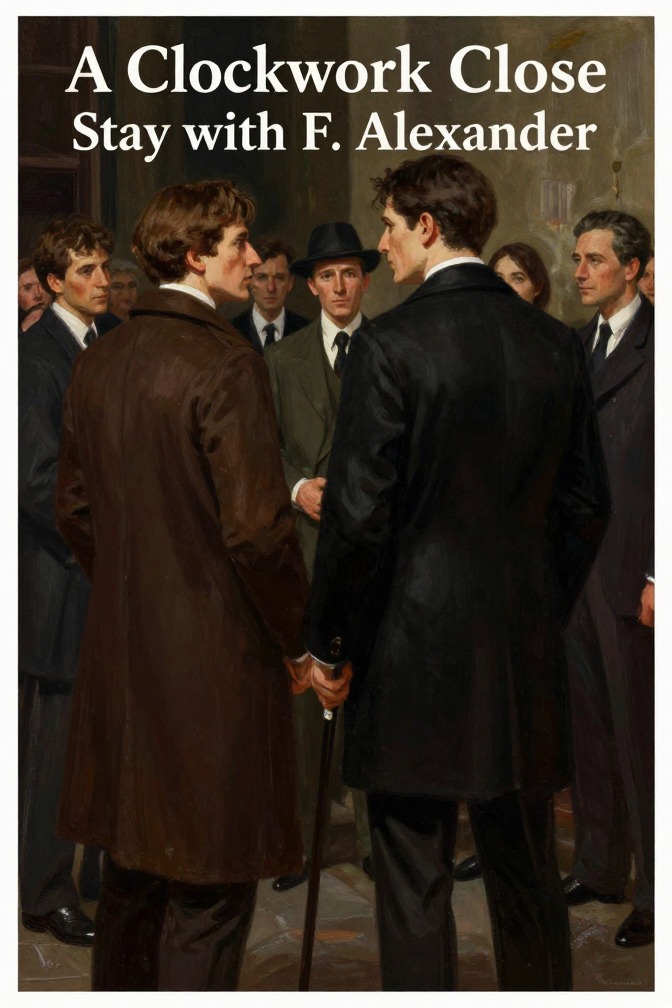
After his release from prison and the Ludovico Technique conditioning, Alex, beaten by the police and rejected by his parents, stumbles back to the cottage called HOME, where the writer F. Alexander takes him in, only to be drawn into a political scheme that exploits his conditioned state.
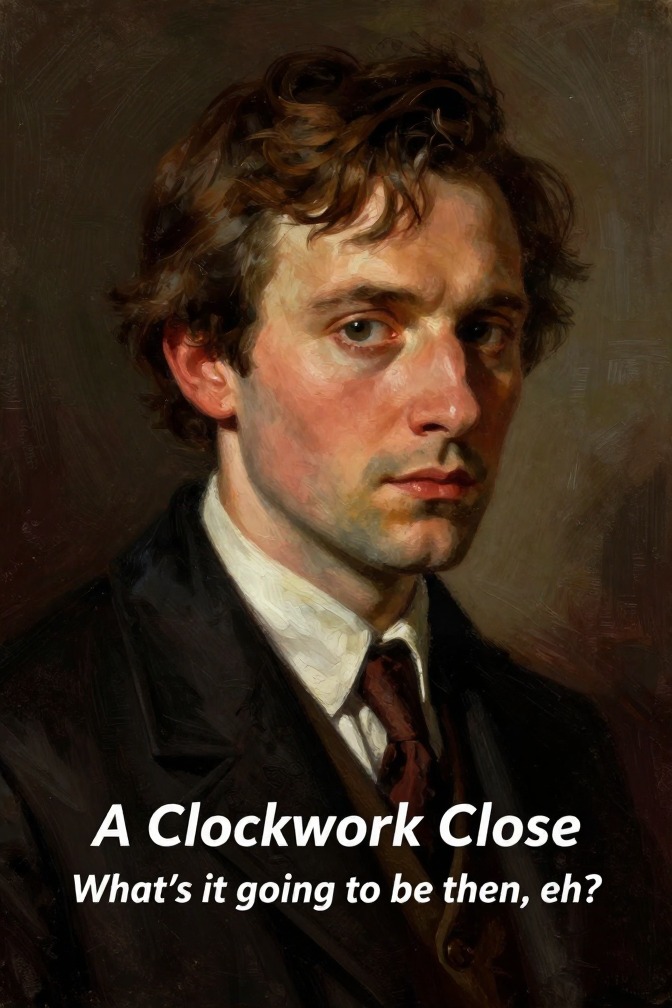
The recurring question "What's it going to be then, eh?" is the novel's structural and thematic refrain, first uttered by Alex in the Korova Milkbar and repeated at key junctures by the prison chaplain, by Alex himself after his release, and finally in the closing pages. It marks the beginning of each major phase of the story—the night of violence, the prison sermon, the morning of freedom, and the final scene with new droogs—and encapsulates the book's central concern with choice, youth, and the mechanical nature of a life without moral agency.
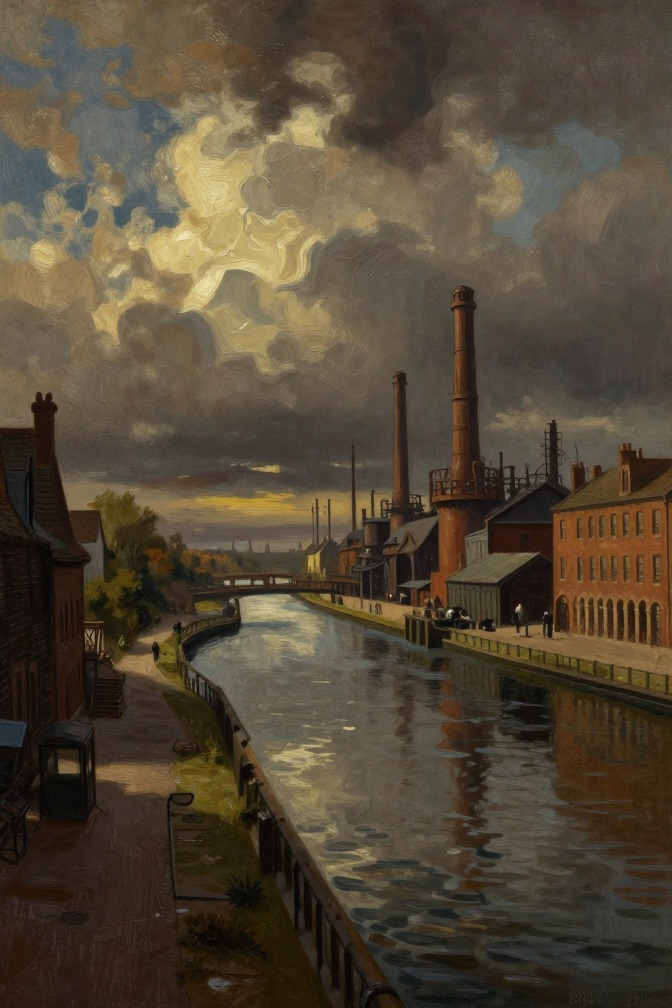
The Industrial Canal is a location in the city where Alex and his droogs dispose of the stolen Durango 95 after running out of fuel, marking the end of their night's rampage and the beginning of their return to the city center.
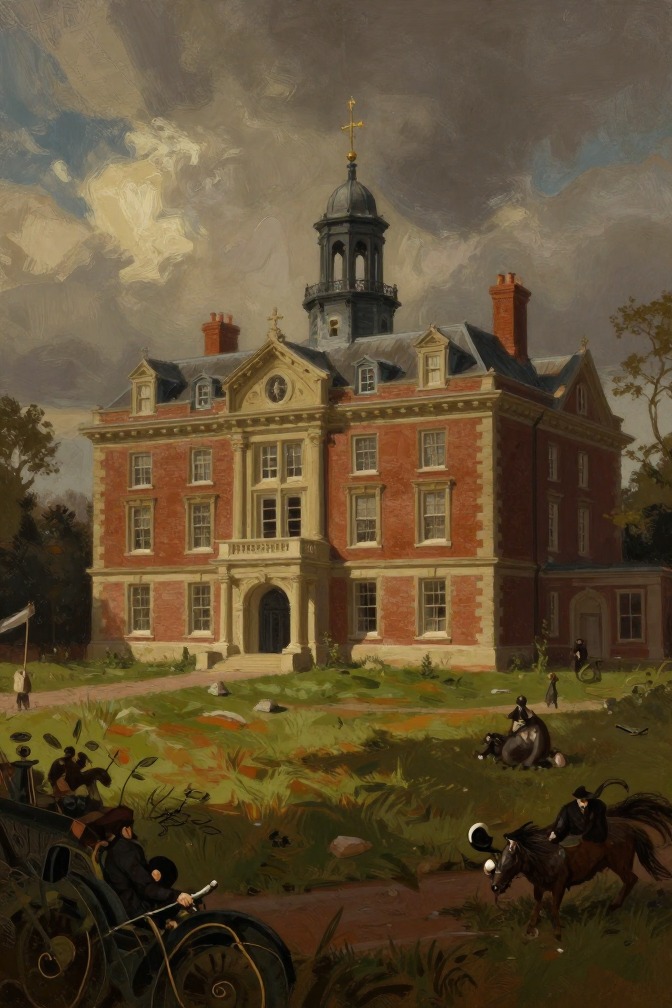
The Manse is the Oldtown home of a wealthy elderly cat-lady, the site of Alex's final solo burglary attempt that ends in murder, his betrayal by his droogs, and his arrest by the police, marking the catastrophic climax of Part One.
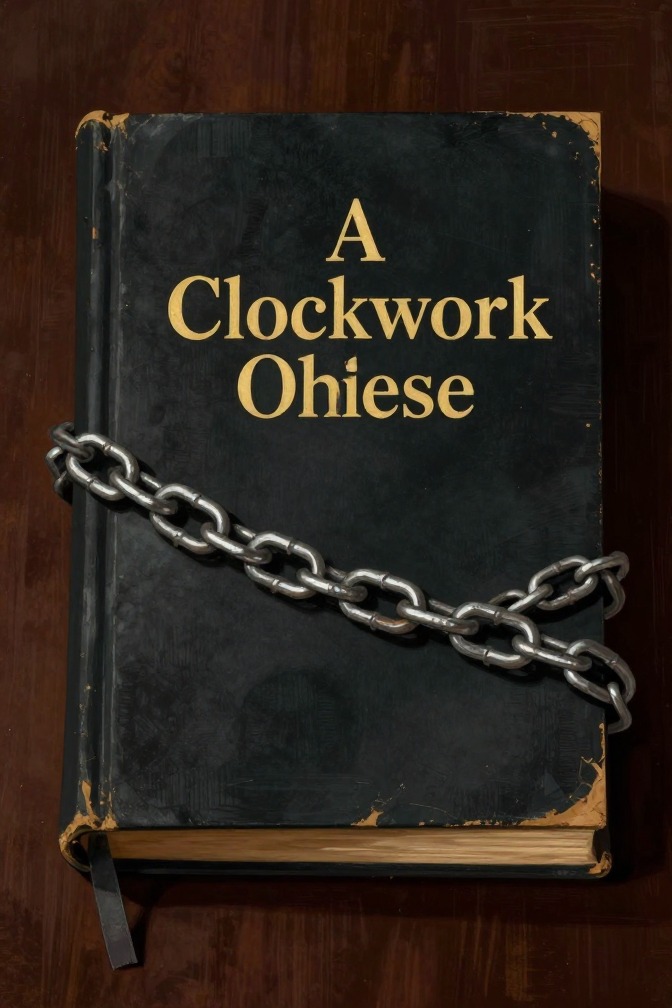
The chain (oozy) is a recurring weapon in Alex's world, used by Dim in gang fights and later turned against Alex himself, symbolizing the brutal, cyclical nature of violence and the shifting loyalties among the droogs.
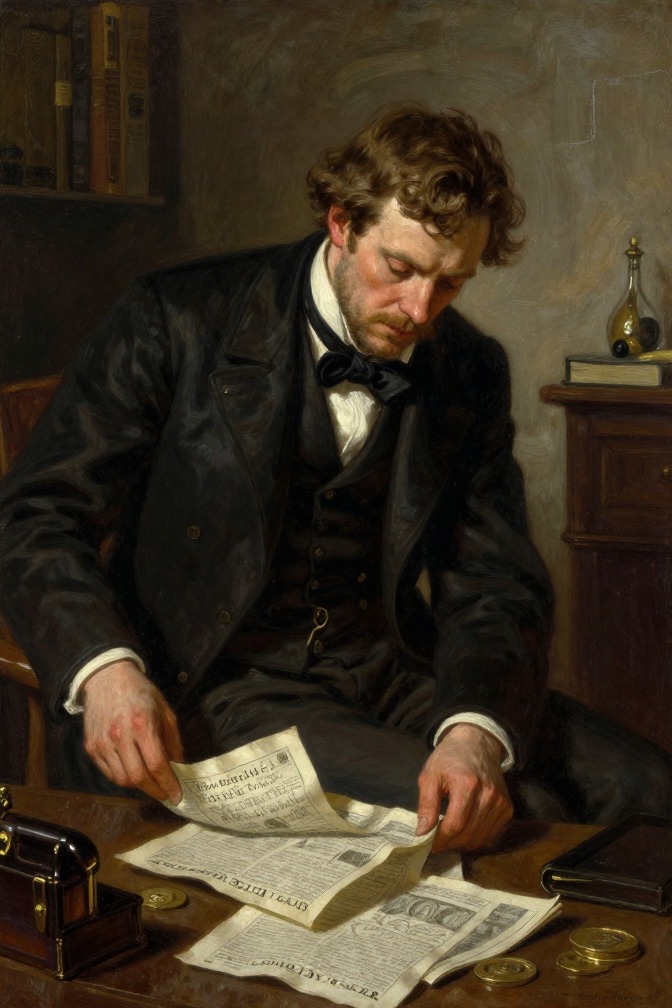
The gazetta (newspaper) in A Clockwork Orange functions as a recurring object that reflects the state-controlled media landscape, the public perception of youth violence, and the political manipulation of Alex's story across the novel's three parts.
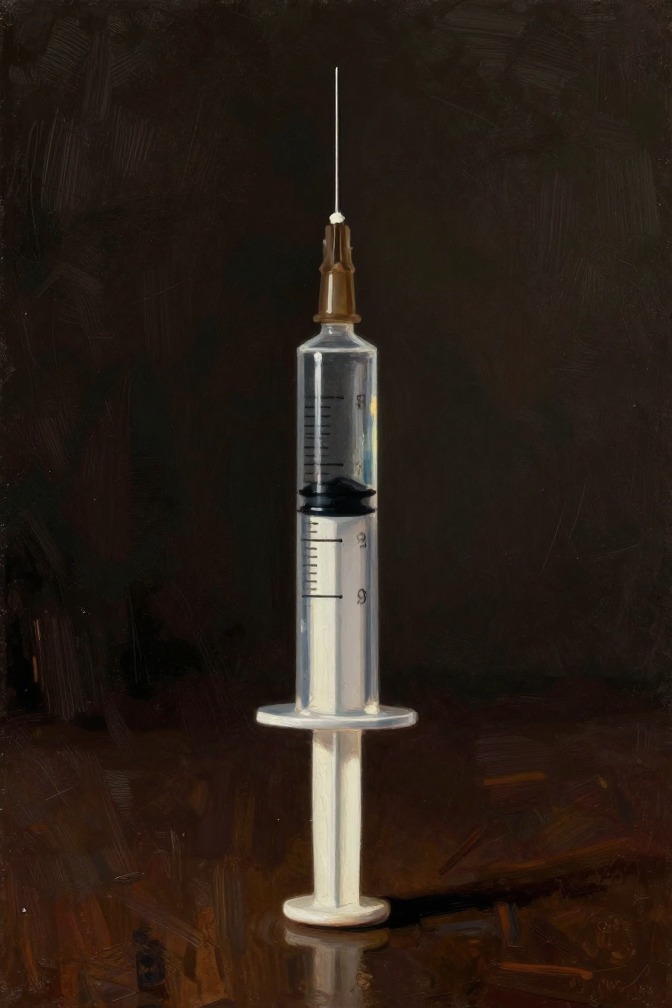
The hypodermic syringe is the central instrument of the Ludovico Technique, the conditioning treatment that forcibly suppresses Alex's capacity for violence and, inadvertently, his love of music. More than a medical tool, it becomes a symbol of the state's power to chemically rewrite human will, transforming a willing subject into a mechanically 'good' citizen while stripping him of authentic moral choice.
The pooshka (gun) in *A Clockwork Orange* is a symbol of state-sanctioned violence and the ultimate coercive power of the government, appearing at key moments to enforce order and suppress dissent, contrasting sharply with the personal, chaotic violence of Alex and his droogs.
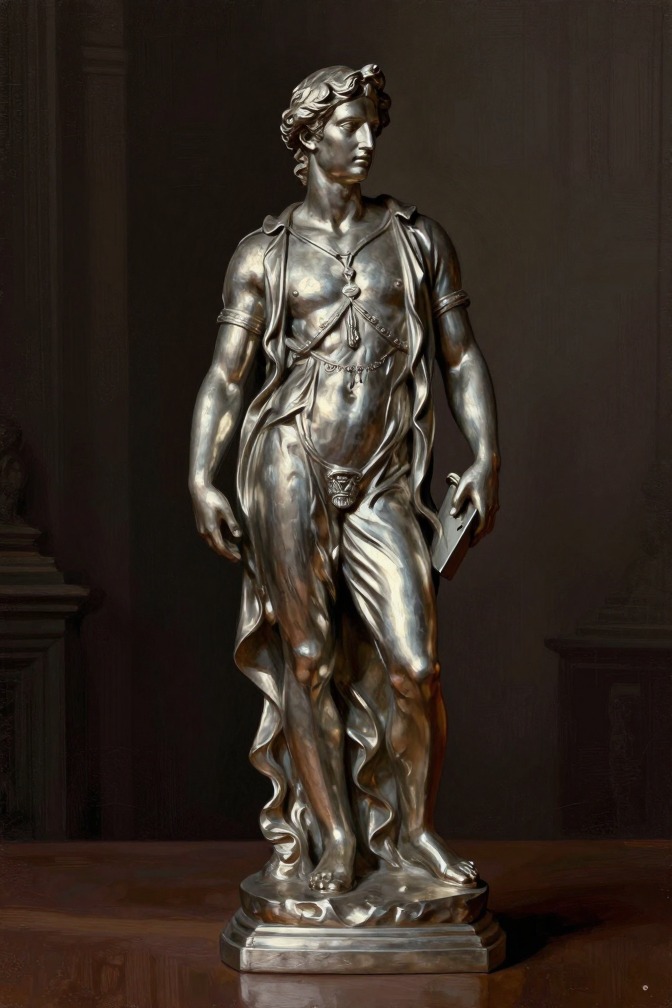
The silver statue is a small figurine of a young girl standing on one leg with her arms outstretched, made of silver, which Alex steals from the hallway of the cat lady's house during the burglary that leads to his arrest and imprisonment.
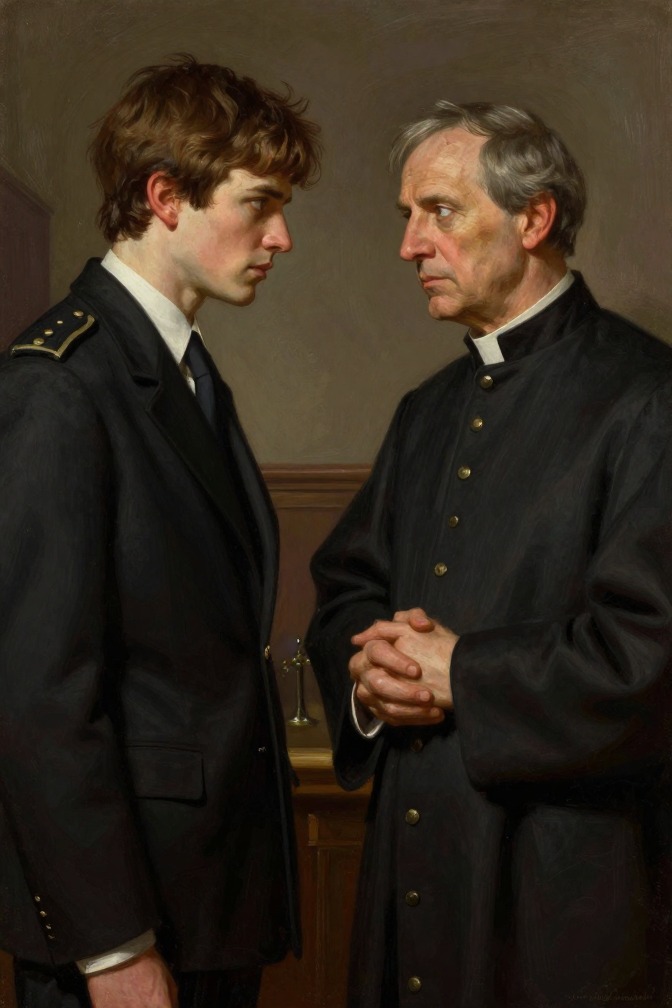
The relationship between Alex and the prison chaplain is a complex and morally fraught dynamic that unfolds within Staja 84F, where the chaplain serves as a figure of institutional religion, a conflicted moral conscience, and an unwitting accomplice to the state's reclamation program. Their interactions reveal the chaplain's deep unease with the Ludovico Technique, his reliance on Alex for prison intelligence, and his ultimate powerlessness to prevent the stripping of Alex's moral autonomy, making him a tragic embodiment of the novel's central question about the nature of goodness and choice.
Dim and Billyboy, once bitter enemies in the ultra-violent youth gang wars of A Clockwork Orange, undergo a startling transformation into fellow police officers, a reversal that underscores the state's cynical co-optation of thuggery and the collapse of Alex's world.
The Drug-laced milk law loophole is a legal gap in the world of A Clockwork Orange that allows the Korova Milkbar to serve milk laced with psychoactive substances, as there is no law against adding new drugs to milk, only against selling liquor without a license. This loophole is central to the story's setting, enabling Alex and his droogs to consume 'milk-plus' with drugs like vellocet, synthemesc, or drencrom for a 'nice quiet horrorshow fifteen minutes' or with 'knives in it' to sharpen themselves for violence, and it establishes the permissive, unregulated environment that facilitates their nightly rampages.
Nadsat is the fictional teenage slang spoken by Alex and his droogs in Anthony Burgess's A Clockwork Orange, a constructed sociolect that blends English with Russian-derived roots, rhyming slang, and invented words, serving both as a marker of youth subculture and as a defamiliarizing device that distances the reader from the novel's violence.
Youth in A Clockwork Orange is a state of being that Alex, the narrator, experiences as a period of violent, amoral energy and animal-like instinct, which he ultimately claims to outgrow by the novel's end, framing his past actions as the mechanical, unthinking behavior of a 'clockwork orange.'
The year 1960 appears in the novel as a temporal marker within a letter carried by the old professor whom Alex and his droogs assault, dating the letter to a period of personal history that the old man still preserves, and thereby contrasting the sentimental past with the violent present of the story.
The Middle Ages are referenced in A Clockwork Orange as a historical period associated with a manner of love thought to be dead, invoked by Dr. Brodsky during the demonstration of Alex's conditioning, and as a distant era of artistic achievement against which Alex measures his own maturity.
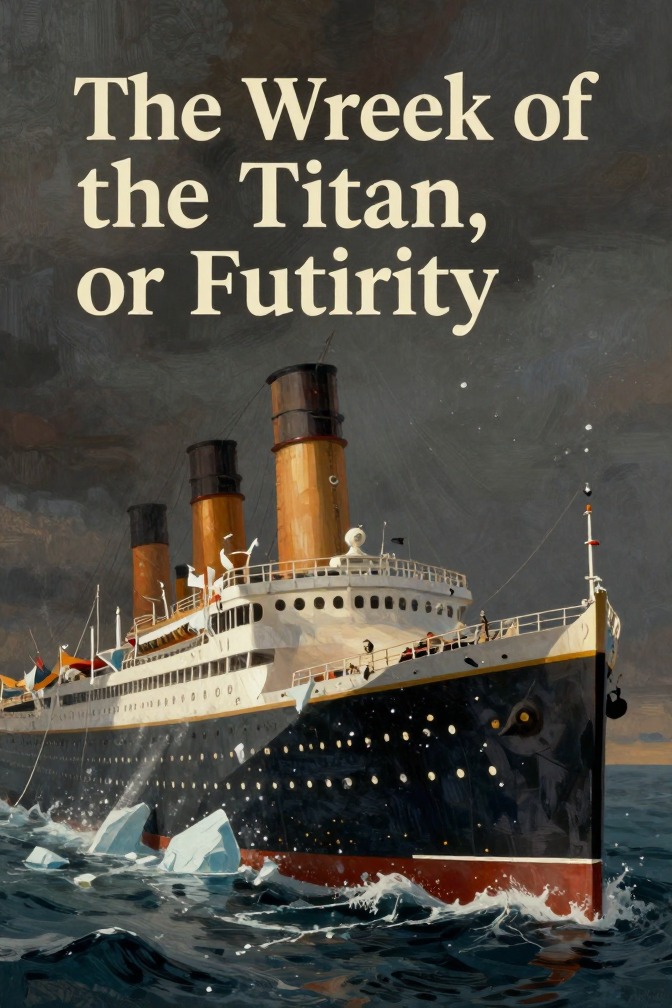
The Iceberg collision of the Titan is the catastrophic central event of Morgan Robertson's novella, in which the supposedly unsinkable steamship Titan, steaming at full speed through fog, strikes an iceberg and sinks within minutes, killing nearly all aboard and setting in motion the story's legal and moral reckonings.
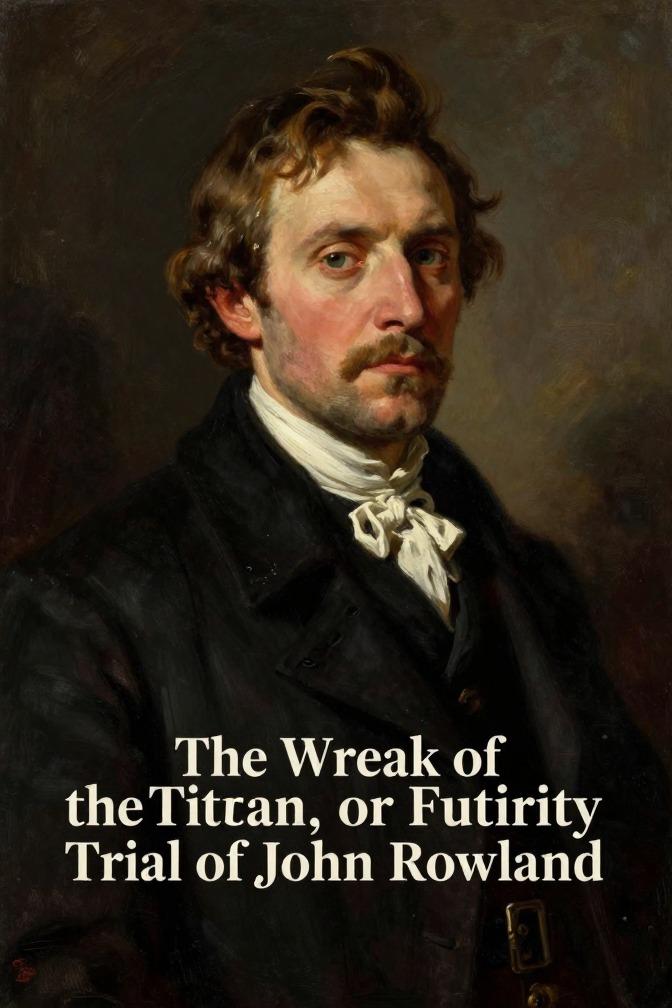
The Trial of John Rowland is the climactic courtroom scene in Morgan Robertson's novella The Wreck of the Titan, where the disgraced former naval officer, accused of kidnapping and harming the child Myra, is dramatically vindicated when the magistrate learns of his heroic rescue of the girl from an iceberg and his fight with a polar bear. The trial exposes the gap between public perception and private heroism, and it marks the turning point in Rowland's rehabilitation, leading to his eventual recovery and reunion with the child.
Full speed in fog is the operational rule adopted by the steamship company for the Titan, mandating that she steam at full speed in fog, storm, and sunshine on the Northern Lane Route, winter and summer. This policy, justified by four stated reasons, directly causes the collision with the Royal Age and the iceberg disaster, and becomes the central object of moral and legal critique in the novella.
Come back to me is a recurring phrase in Morgan Robertson's novella The Wreck of the Titan, or Futility, spoken by Myra Selfridge (née Gaunt) during John Rowland's drug-induced vision and again during the shipwreck, and later echoed in Rowland's memory. It represents the unfulfilled longing and the tragic irony of a love that failed, and it becomes a haunting motif that underscores the novel's themes of loss, redemption, and the inescapable pull of the past.
The broken-down wreck is the captain's dismissive label for John Rowland, the disgraced former naval officer turned common sailor aboard the Titan. The phrase encapsulates the central irony of the novella: the man the captain dismisses as a ruined, drunken failure proves to be the ship's moral center, the one who saves a child, fights a polar bear, and ultimately forces the truth about the ship's reckless speed into the open.
The future is your own is the self-address John Rowland makes to himself at the moment of his greatest worldly success, after he has risen from a one-armed dock lounger to a lucrative government position. The phrase crystallizes the novel's central theme of self-reclamation: it marks the end of his alcoholism, his social disgrace, and his dependence on others, and it asserts that his past suffering was caused by a mistaken estimate of the importance of women and whisky. Yet the novel immediately undercuts this declaration, for within six months he receives a letter from Myra Selfridge that draws him back to her, proving that the future he claimed as his own is still bound to the past he thought he had escaped.
The survival of the fittest is a phrase that John Rowland, the disgraced former naval officer turned sailor, invokes during his drugged delirium on the bridge of the Titan, and it crystallizes his bleak, evolutionary worldview—a worldview that the novella tests and ultimately complicates through his selfless rescue of a child and his own survival against a polar bear.
Gibraltar is a pivotal location in Morgan Robertson's novella The Wreck of the Titan, serving as the first point of contact between the outside world and the survivors of the Titan disaster. It is here that the second boatload of survivors, including sailors and children, arrives, providing crucial information that shapes the narrative's legal and emotional aftermath. The port functions as a threshold between the isolated, life-threatening ordeal at sea and the complex world of insurance disputes, legal proceedings, and family reunions that follows.
The Peerless is the bark that rescues John Rowland and the child Myra from the iceberg after the wreck of the Titan, carrying them to Christiansand and later to London, where its captain, Captain Barry, becomes Rowland's steadfast ally. The vessel symbolizes the turning point in Rowland's fortunes, marking his transition from a drugged, disgraced sailor to a man who, despite losing an arm, begins a new life.
The Southern Lane is the springtime transatlantic shipping route that the survivors of the Titan disaster aim for in their lifeboat, and which Rowland later identifies as the safer alternative to the Northern Lane Route that the Titan had been steaming at full speed through fog.
Mr. Selfridge's financial ruin is a central economic catastrophe in the novella, triggered by the sinking of the Titan and the subsequent invalidation of its insurance policy. As the largest stockholder, he loses his entire fortune of one hundred thousand pounds, a loss that, combined with the death of his son, leads to his fatal heart failure in Mr. Meyer's office.
Rowland's social disgrace is the defining catastrophe of his life, transforming him from a promising United States Naval Academy graduate into a degraded, alcoholic common sailor aboard the Titan. This fall, rooted in his public drunkenness at the President's levee and his subsequent dismissal from the navy, shapes his every action in the novella, from his defiant refusal of the captain's bribe to his heroic rescue of Myra and his eventual redemption through sobriety and civil service.