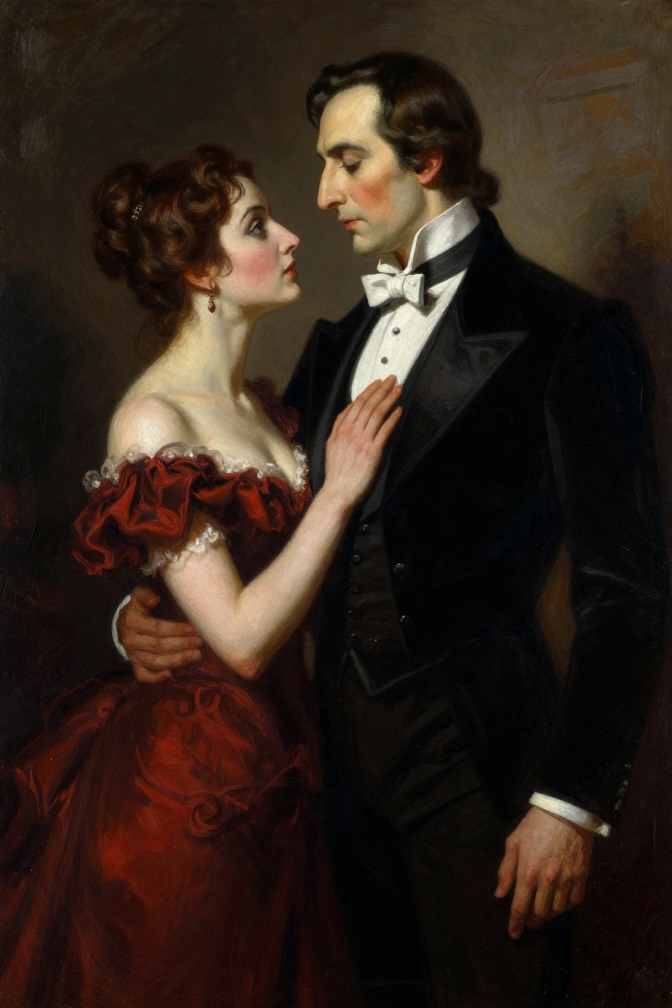
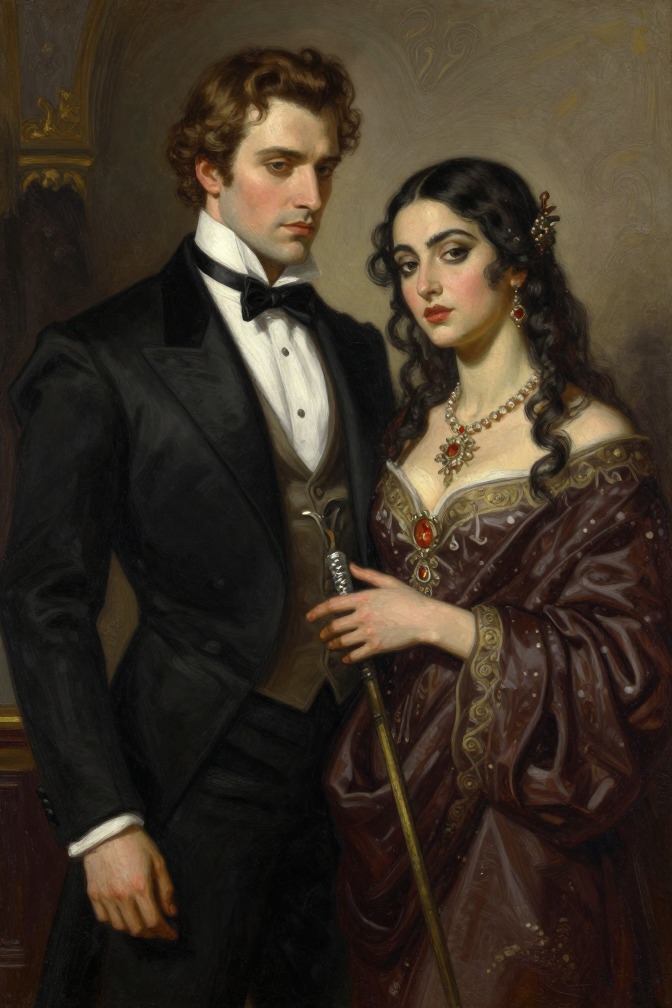
The Setting Sun is the inn at Perros-Guirec where Christine Daae stays on the anniversary of her father's death and where Raoul de Chagny finds her, setting the stage for their reunion and the revelation of the Angel of Music.
The Dark Lantern is a small, portable light source that appears throughout the Persian's narrative of the descent into the Cellars of the Opera. It is the Persian's primary tool for navigating the absolute darkness of Erik's underground domain, and its use—and deliberate disuse—marks the shifting balance between visibility and concealment, safety and terror, as the Persian and Raoul de Chagny venture into the monster's lair.
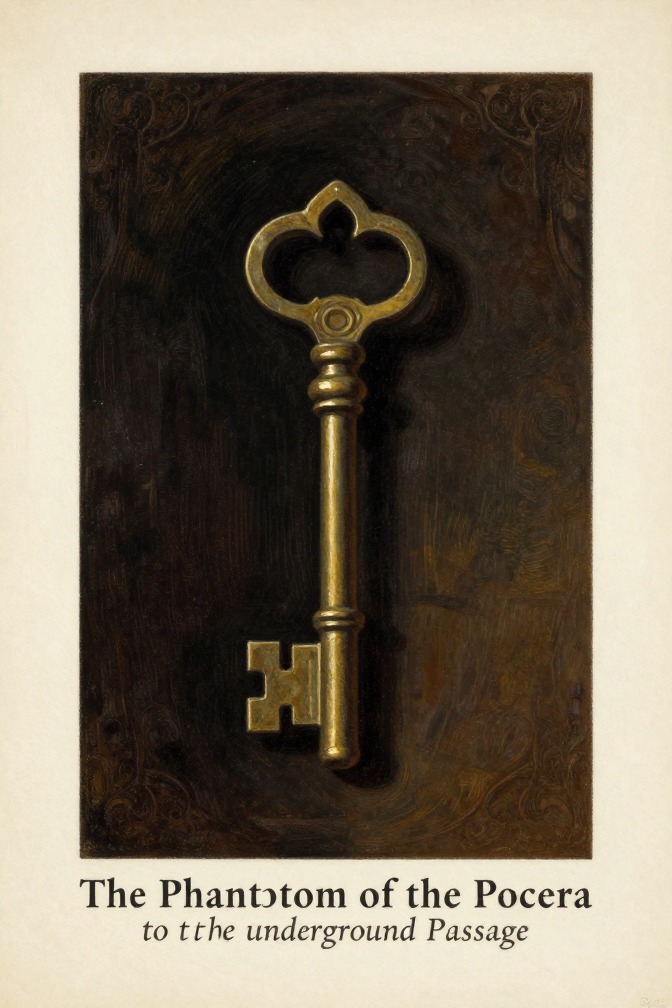
The Key to the Underground Passage is a large key that Christine Daae keeps in her dressing-room, which opens the gate on the Rue Scribe leading to the underground lake and Erik's house. It becomes a crucial object in the lovers' escape plan, symbolizing both freedom and the perilous bond with Erik.
The Revolving Mirror is the secret pivot-point of the Paris Opera House, a full-length glass in Christine Daae's dressing-room that swings on a hidden counterbalance to admit Erik, the Opera Ghost, into her world. It is the physical threshold between the public stage and the private, subterranean realm of the House on the Lake, and its operation—first witnessed by Raoul de Chagny, then deliberately triggered by the Persian—becomes the key to unlocking the novel's central mystery of how Christine vanishes and how her rescuers might reach her.
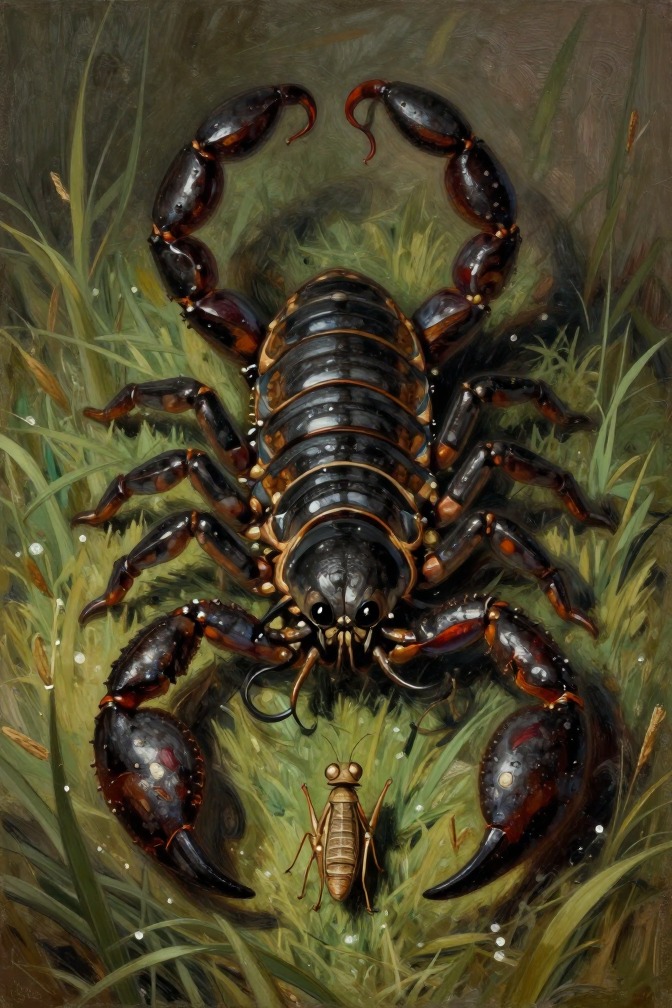
The Scorpion and the Grasshopper are two small bronze figures placed in ebony caskets in the Louis-Philippe Room, which Erik presents to Christine Daae as the instruments of a final, life-or-death choice: turning the scorpion signals her acceptance of marriage to him and saves everyone in the Opera, while turning the grasshopper triggers an explosion that will destroy the entire building and its audience.
The relationship between Erik and Mme. Giry is a unique and functional alliance in which the Opera Ghost secures a loyal, unquestioning servant through a combination of supernatural mystique, personal kindness, and a prophetic promise of glory for her daughter, while Mme. Giry serves as his indispensable intermediary with the Opera's management, handling his box, his payments, and his messages with unwavering devotion.
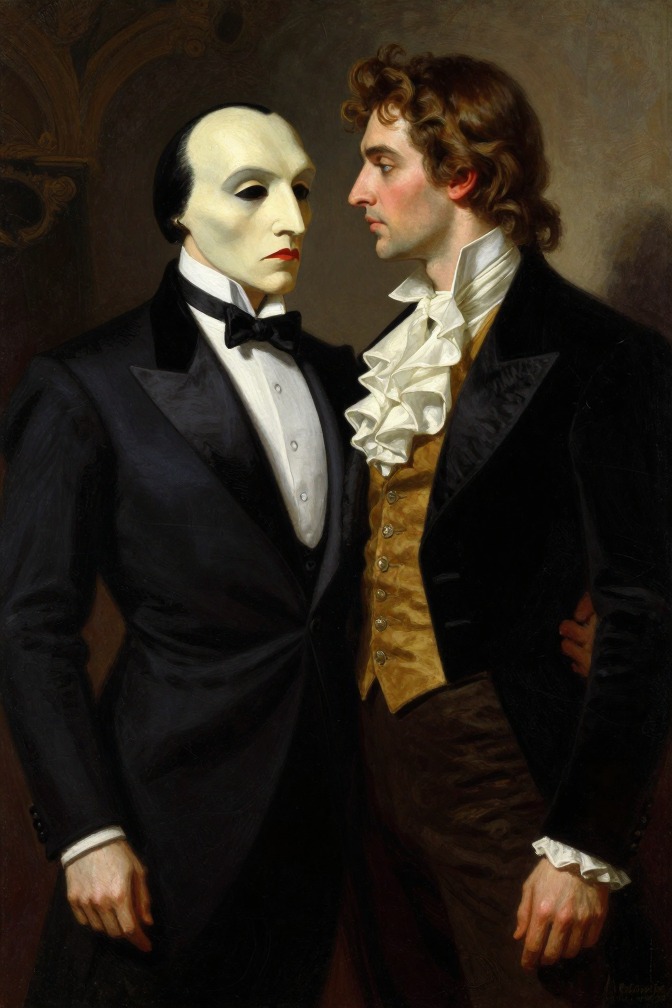
The relationship between Erik and Raoul de Chagny is a central rivalry in Gaston Leroux's The Phantom of the Opera, defined by mutual hatred, jealousy, and a series of confrontations that culminate in Erik's ultimate renunciation. Raoul, the young viscount, becomes Erik's rival for Christine Daae's love, and their conflict drives the novel's climax, leading to Erik's death and the lovers' escape.
The relationship between Raoul de Chagny and the Persian begins as a mysterious intervention and deepens into a desperate alliance to rescue Christine Daae from Erik. The Persian, who knows Erik's secrets, becomes Raoul's only guide through the treacherous cellars of the Opera, arming him and leading him into the torture-chamber, where their bond is tested by shared ordeal and mutual trust.
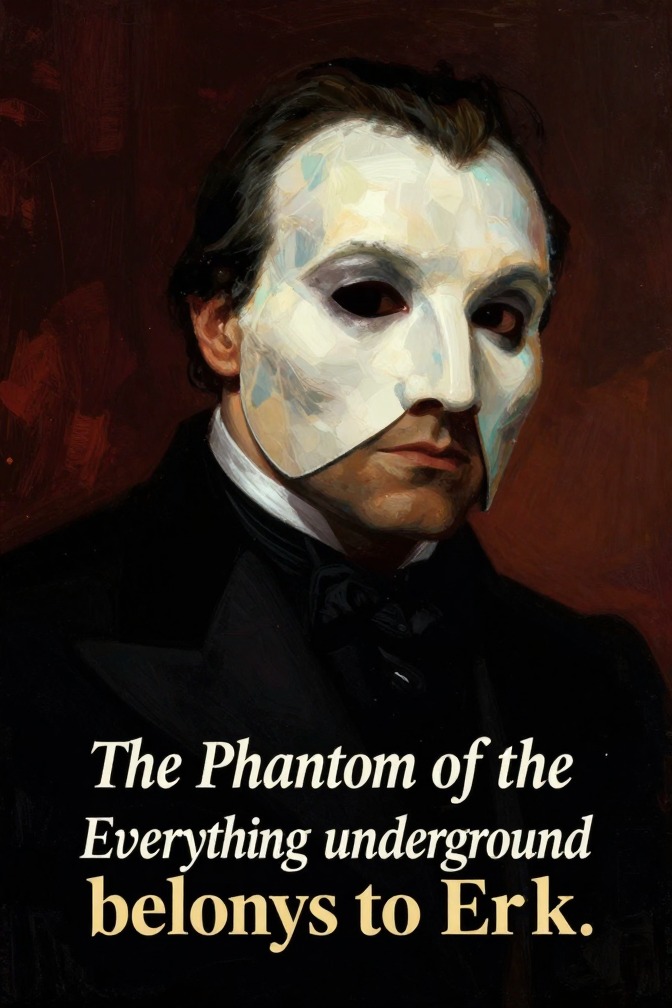
Everything underground belongs to Erik is the rule that defines the Phantom's absolute dominion over the subterranean realm beneath the Paris Opera House, a principle Christine Daae reveals to Raoul de Chagny and which governs the novel's central conflicts and the characters' movements through the cellars.
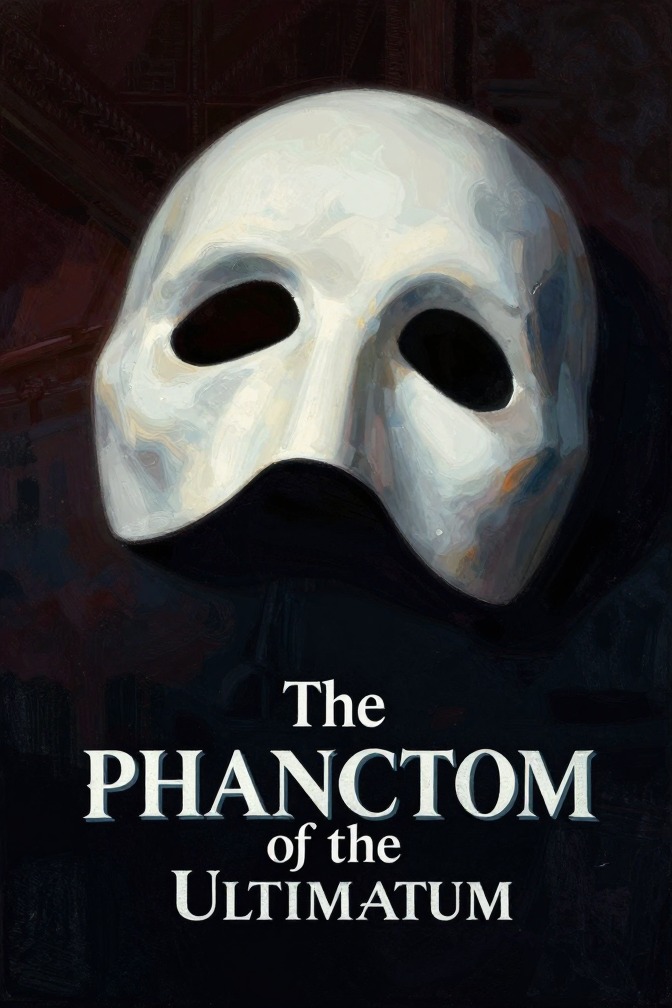
The Ghost's ultimatum is the formal declaration of war issued by the Opera Ghost to the new managers of the Paris Opera House, Firmin Richard and Armand Moncharmin, in which he sets out four non-negotiable conditions that must be met to avoid a curse being placed on the house. This document marks the moment when the ghost's conflict with the management escalates from a series of mysterious incidents into an open, personal confrontation, and it directly precipitates the catastrophic events of the Faust performance, including Carlotta's infamous 'co-ack' and the fall of the chandelier.
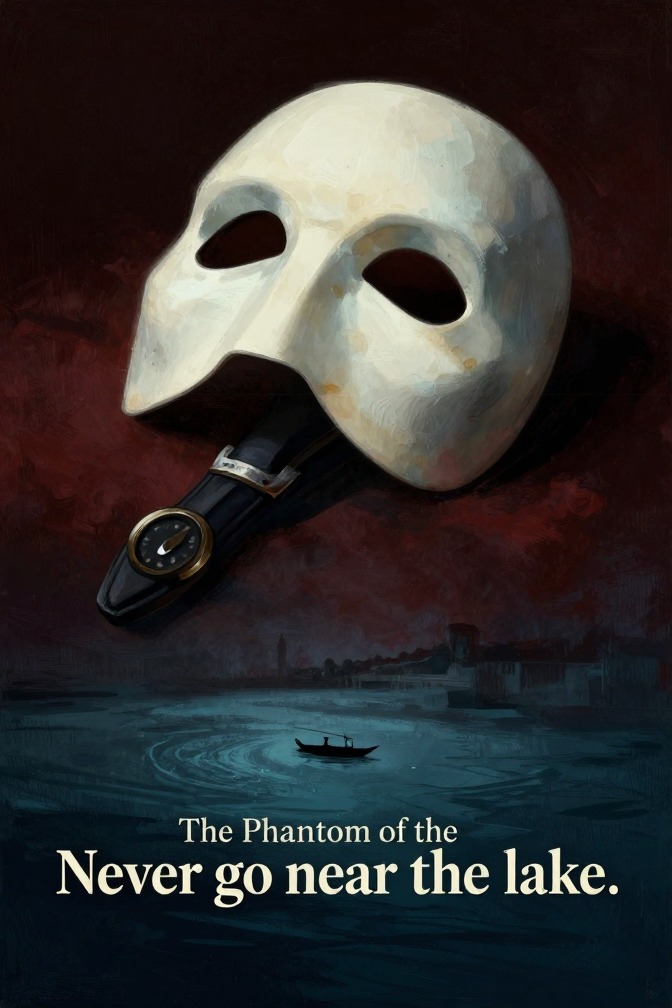
Never go near the lake is a rule of survival in the Paris Opera House's underground domain, articulated by the Persian to Raoul de Chagny as they descend into the cellars to rescue Christine Daae. It warns against approaching the underground lake, which is guarded by the Siren, a deadly trap set by Erik, and it encapsulates the mortal danger of Erik's hidden realm.
Daroga is the Persian title for a chief of police, held by the mysterious Persian who saved Erik's life in Mazenderan and later became his guardian and chronicler in Paris. His narrative forms the core of the novel's revelation of Erik's secrets, and his actions directly shape the rescue of Raoul and Christine.
The Paris Commune is a pivotal historical backdrop in Gaston Leroux's The Phantom of the Opera, shaping the Opera's underground architecture, Erik's secret dwelling, and the novel's themes of political upheaval and hidden power.
The Rosy Hours of Mazenderan is the period in Erik's past, during his service at the court of the Shah of Persia, when he was known as the "trap-door lover" and employed his architectural genius and his skills in strangulation and illusion to entertain the little sultana and to carry out political assassinations. This era, recalled by the Persian in his narrative, defines the full extent of Erik's monstrousness and his capacity for both cruelty and artistry, establishing the template for the torture-chamber that later becomes the central ordeal of the novel.
The Siren is the name given to the mysterious, enchanting voice that rises from the waters of the underground lake beneath the Paris Opera House, a deadly guardian of Erik's secret domain. It is not a supernatural creature but one of Erik's most ingenious inventions, a long reed that allows him to breathe and sing while hidden beneath the water's surface, luring intruders to their doom. The Siren's song nearly kills The Persian, who ventures onto the lake in search of Erik's hidden house, and it is later implicated in the death of Count Philippe de Chagny, whose body is found on the lake's bank. The Siren represents the seductive and lethal power of Erik's artistry, a trap that turns the beauty of music into an instrument of death.
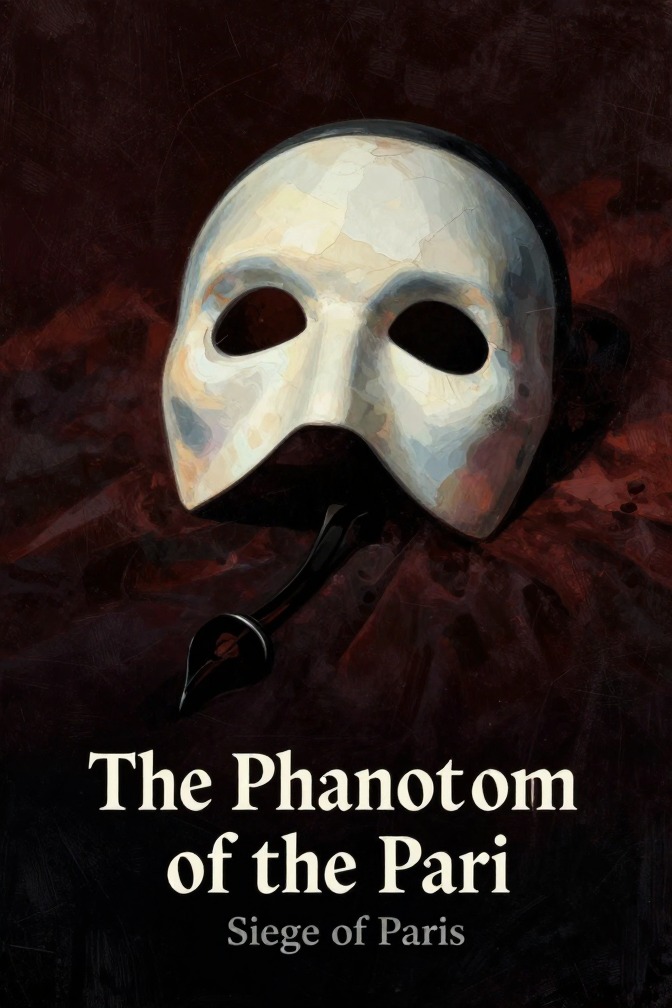
The Siege of Paris (1870–1871) is a historical event referenced in Gaston Leroux's The Phantom of the Opera as the period when construction of the Paris Opera House was interrupted and the building was repurposed as a military storehouse. This event is significant because it created the conditions under which Erik, the Opera Ghost, later built his secret dwelling in the cellars, and it explains the existence of the underground lake and the Communists' Road that feature in the novel's climax.
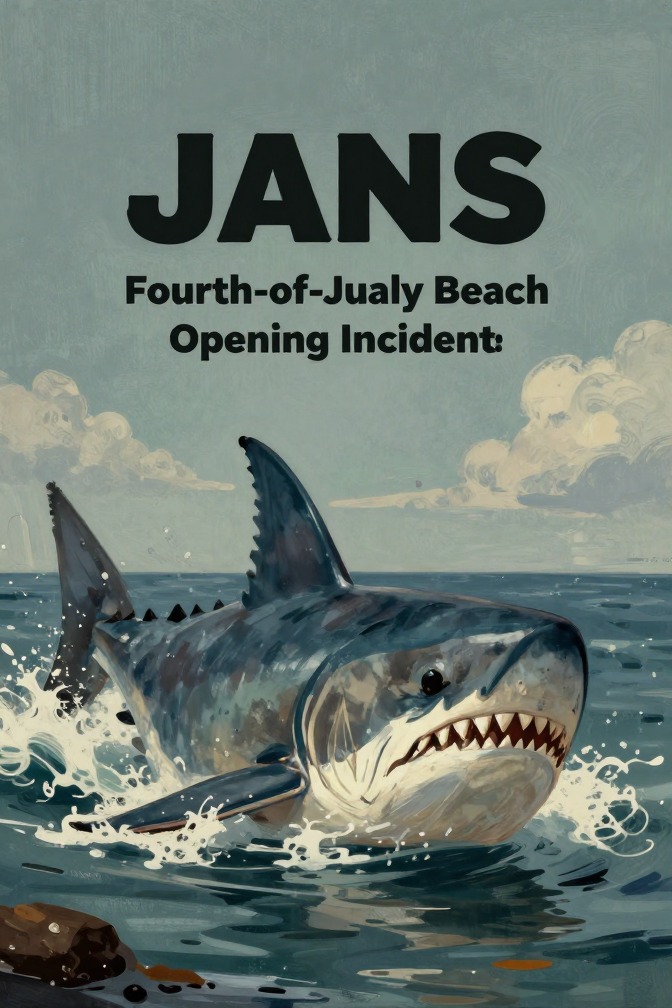
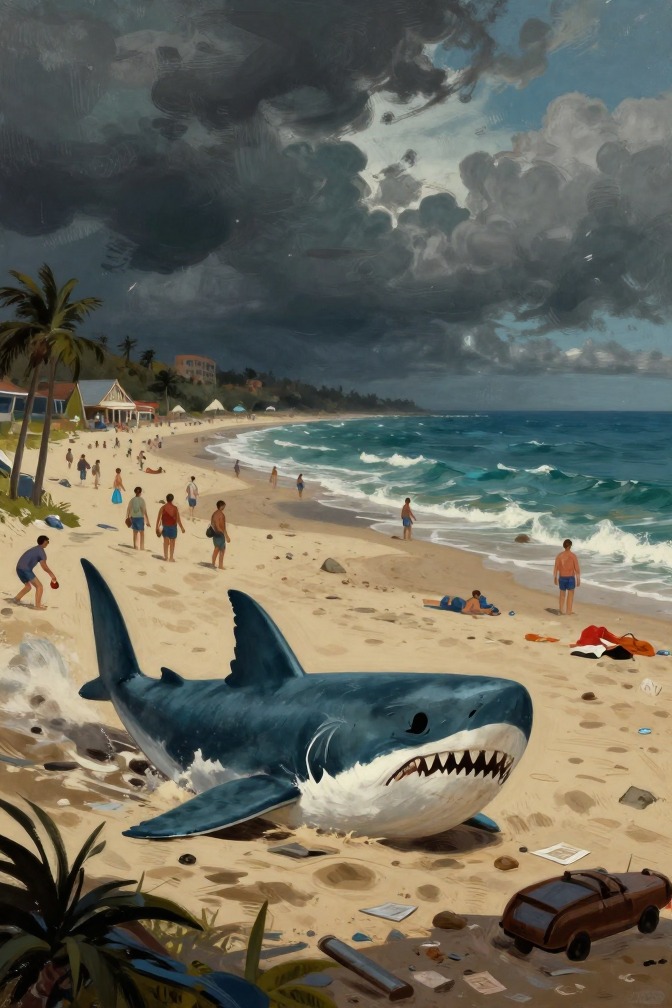
The Fourth-of-July Beach Opening Incident is a pivotal event in which Police Chief Martin Brody, under intense economic and political pressure from Mayor Larry Vaughan and the Board of Selectmen, reluctantly reopens Amity's beaches for the critical holiday weekend. The decision nearly results in a fourth fatality when the great white shark surfaces and stalks a teenage swimmer, Jim Prescott, forcing Brody to order an emergency evacuation and re-close the beaches, thereby confirming the persistent danger and deepening the town's crisis.
Albert Morris is the owner of Amity Hardware, a year-round resident and small-business owner whose economic fortunes are tied to the summer tourist season. He is an early and vocal supporter of Chief Martin Brody's decision to close the beaches after the shark attacks, representing the segment of the local community that prioritizes public safety over the short-term financial pressures exerted by real-estate interests and the selectmen.
Bob Middleton is a television news reporter for WNBC-TV News who arrives in Amity to cover the shark crisis, and his on-the-spot reporting during the Fourth of July weekend beach opening captures the near-fatal attack on a teenage swimmer, forcing Chief Brody to close the beaches again and publicly acknowledge the town's dire situation.
Carl Santos is the coroner of Amity, Long Island, whose official determination of shark attack in the deaths of Christine Watkins, Alexander Kintner, and Morris Cater provides the medical-legal foundation for the town's escalating crisis. His professional authority and his willingness to speak—or remain silent—directly shape the public narrative and the political pressures that Chief Martin Brody must navigate.
Eleanor Vaughan is the reclusive, devoted wife of Amity mayor Larry Vaughan, a woman whose quiet life of needlepoint and television stands in stark contrast to her husband's public ambition and secret financial ruin, and whose few appearances in the novel reveal a gentle, trusting nature that makes her the unwitting victim of his catastrophic dealings with the Mafia.
Martin Brody is the police chief of Amity, a Long Island summer community, whose life and career are shattered when a great white shark begins killing swimmers off the town's beaches. A decent but conflicted man caught between his duty to protect the public and the economic pressures of a town dependent on summer tourism, Brody is forced to confront his own guilt, his faltering marriage, and his deepest fears as he joins a desperate hunt to destroy the shark.
Morris Cater is a 65-year-old jewelry wholesaler from New York City who becomes the third victim of the great white shark off Amity, killed in a brutal attack witnessed by at least fifteen people on the afternoon of June 20, the same day six-year-old Alexander Kintner is also taken. His death, occurring just hours after the first attack and within sight of the public beach, shatters the town's attempt to suppress news of the shark's presence and forces Chief Brody to close the beaches, marking a decisive turning point in the community's confrontation with the predator.
Tom Cassidy is the young man whose date, Christine Watkins, becomes the great white shark's first victim in Peter Benchley's Jaws. His panicked report to the police after discovering her clothes on the beach sets the entire crisis in motion, and his horrified identification of her mutilated remains provides the first concrete confirmation of a shark attack.
The blue shark (Prionace glauca) appears in Peter Benchley's Jaws as a smaller, more common species of shark that serves as a foil to the great white, illustrating the spectrum of shark behavior from the mundane to the monstrous and highlighting the novel's themes of ecological ignorance, human cruelty, and the commodification of marine life.
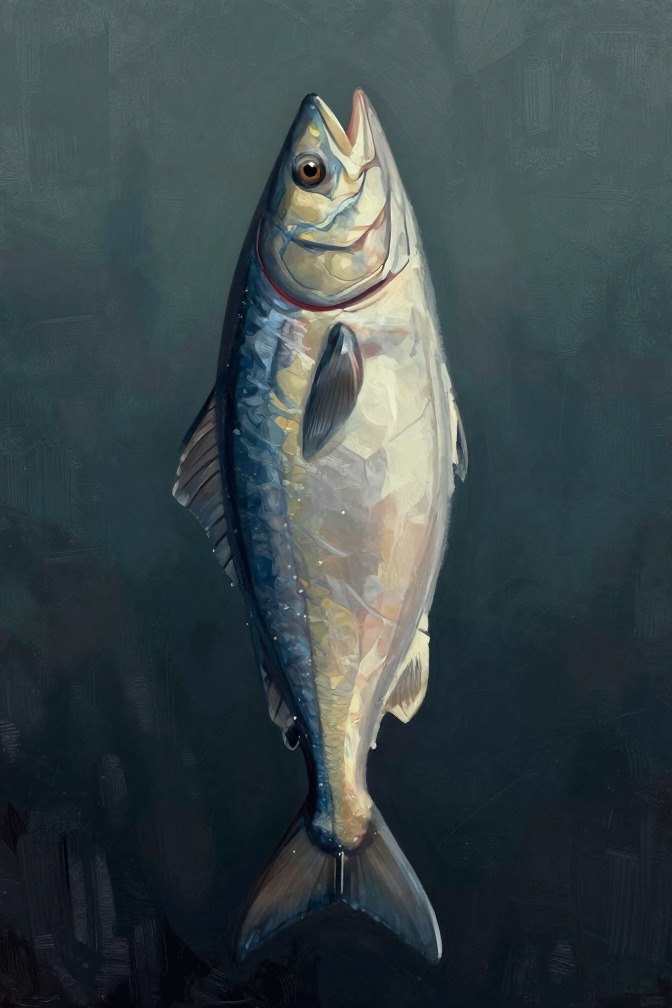
Bluefish are a recurring presence in the waters off Amity, serving as both a common catch for fishermen and a key indicator of the ecological shifts that accompany the great white shark's arrival. Their behavior—schooling in massive numbers, feeding voraciously, and vanishing when a larger predator enters the area—provides a natural barometer for the health and danger of the local marine environment, and their sudden disappearance signals the presence of the great white before it is ever seen.
The Amity beach closures were a series of contested orders by Police Chief Martin Brody to shut down the town's beaches after a series of fatal great white shark attacks, a decision that pitted public safety against the economic survival of the summer resort community and triggered a political crisis involving the mayor, the selectmen, and organized crime.
The Christine Watkins shark attack is the first and foundational violent event of the novel, a nocturnal killing that establishes the great white shark as a lethal presence off Amity and triggers the central conflict between public safety and economic survival.
A Nantucket sleigh ride is a term used by fishermen to describe the dangerous and exhilarating experience of being towed by a large fish, such as a shark or swordfish, after it has been harpooned or hooked. In Peter Benchley's *Jaws*, the term is invoked by two reckless teenagers who plan to hook the great white shark with a flying gaff and clothesline, intending to be dragged across the water in a small skiff. The phrase encapsulates the thrill-seeking, foolhardy attitude toward the shark that contrasts with the professional caution of the hunters.
East Hampton is a wealthy summer resort town on the south shore of Long Island, adjacent to Amity, that serves as a contrasting economic and social benchmark throughout the novel. Its prosperity and desirability as a vacation destination highlight the fragility of Amity's own tourist-dependent economy, and the threat that the shark attacks pose to Amity's survival. The town is frequently mentioned as a place where Amity's merchants, real estate agents, and residents measure their own fortunes against, and as a potential refuge for those fleeing the shark crisis.