The Quatre Dauphins is a tavern in Grasse where the journeyman perfumer Dominique Druot regularly drinks wine, and where Grenouille conducts olfactory experiments on human scent by hiding oil-soaked cloths under the benches.
Rue des Petits Augustins is a narrow Parisian street that appears in the narrative as the route Grenouille takes after committing his first murder, linking the crime scene in the Rue des Marais to the riverbank and his return to the right bank. Its brief but pivotal mention marks the moment of his escape and the beginning of his transformation into a self-aware genius of scent.
Rue Droite is the main east-west artery of Grasse, the town where Jean-Baptiste Grenouille works as a journeyman perfumer and commits his series of murders. It is the address of the wealthy second consul Antoine Richis and his daughter Laure, whose scent Grenouille covets above all others, and it becomes the focal point of the town's fear, the murderer's stalking ground, and the site of Richis's grief-stricken vigil after Laure's death.
Rue Mauconseil is a Parisian street mentioned in Patrick Süskind's *Perfume* as the location of the perfumer Calteau's shop, a rival to Giuseppe Baldini. It is one of the many narrow, densely populated streets in eighteenth-century Paris that contribute to the city's overwhelming stench, a central element of the novel's sensory world.
The Tanneron mountains are a rugged, inhospitable range in Provence that serves as the setting for Antoine Richis's desperate attempt to smuggle his daughter Laure to safety, and for Grenouille's final successful hunt. The mountains' difficult terrain and isolation contrast sharply with the stench and density of Paris, embodying the novel's themes of solitude, pursuit, and the tension between the natural world and human corruption.
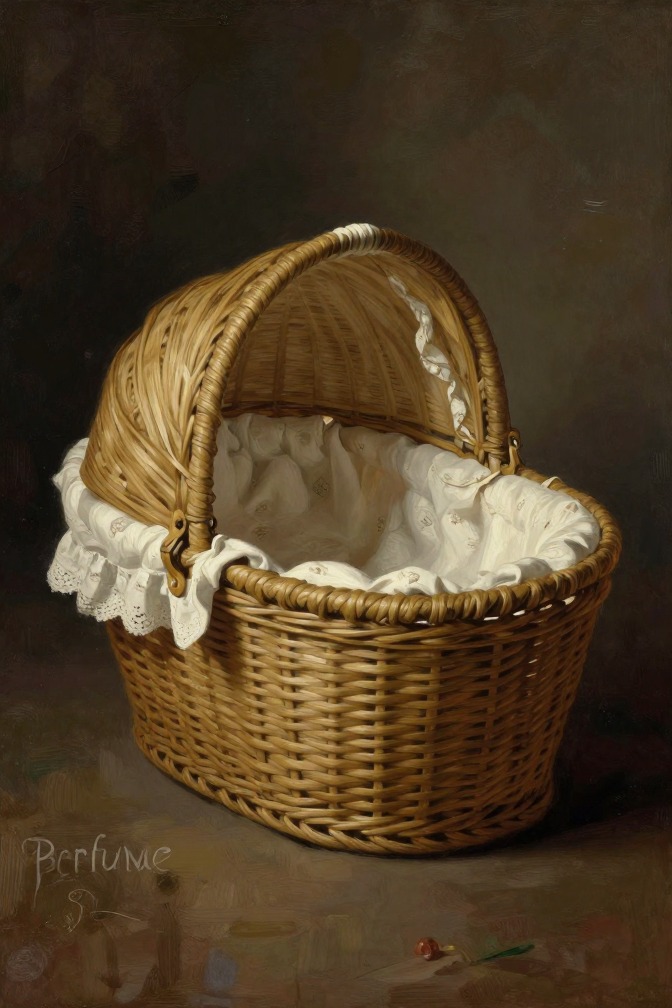
The basket is the humble container that carries Jean-Baptiste Grenouille through his earliest, most precarious moments, linking his birth amid fish offal to his first rejection by a wet nurse and his subsequent handover to the cloister of Saint-Merri. It appears as a market basket, a foundling transport vessel, and a makeshift cradle, embodying the bureaucratic indifference and superstitious fear that surround the infant. More than a mere object, the basket becomes a stage for the first olfactory confrontation between Grenouille and the adult world, and a symbol of the dehumanizing systems that process unwanted children in eighteenth-century France.
The scaffold in Grasse, built for the execution of Jean-Baptiste Grenouille, becomes the site of a spectacular inversion of justice: instead of a brutal punishment, it witnesses a mass orgy triggered by Grenouille's ultimate perfume, leading to his acquittal and the scapegoating of an innocent man.
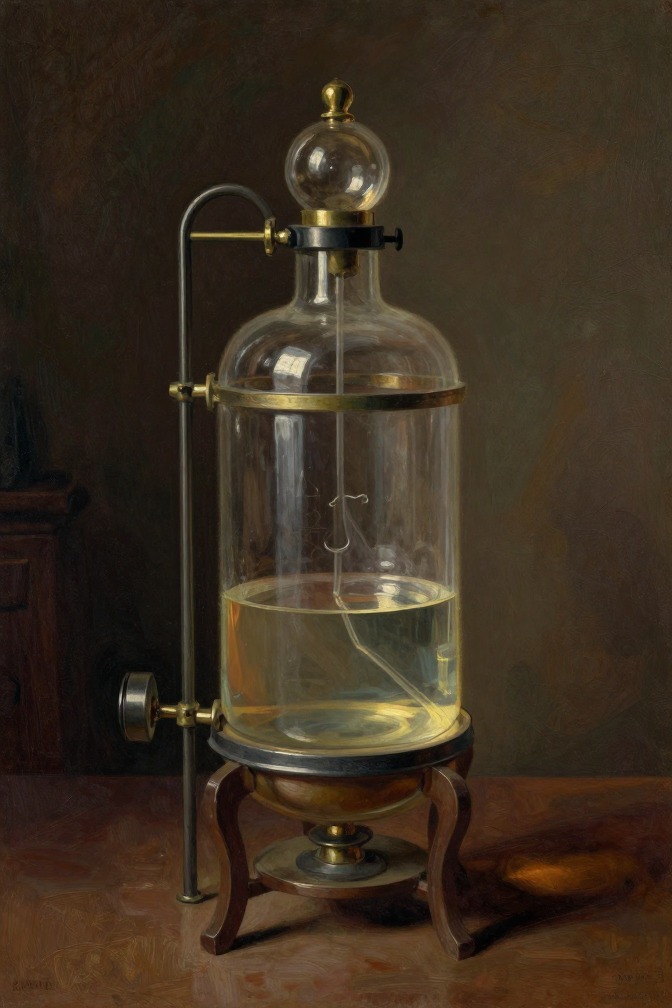
The Moor's head alembic is a copper distilling apparatus used by Giuseppe Baldini in his Parisian laboratory, which becomes the instrument through which Jean-Baptiste Grenouille first learns the art of distillation and experiences the transformative power of extracting a scent's "soul" from matter.
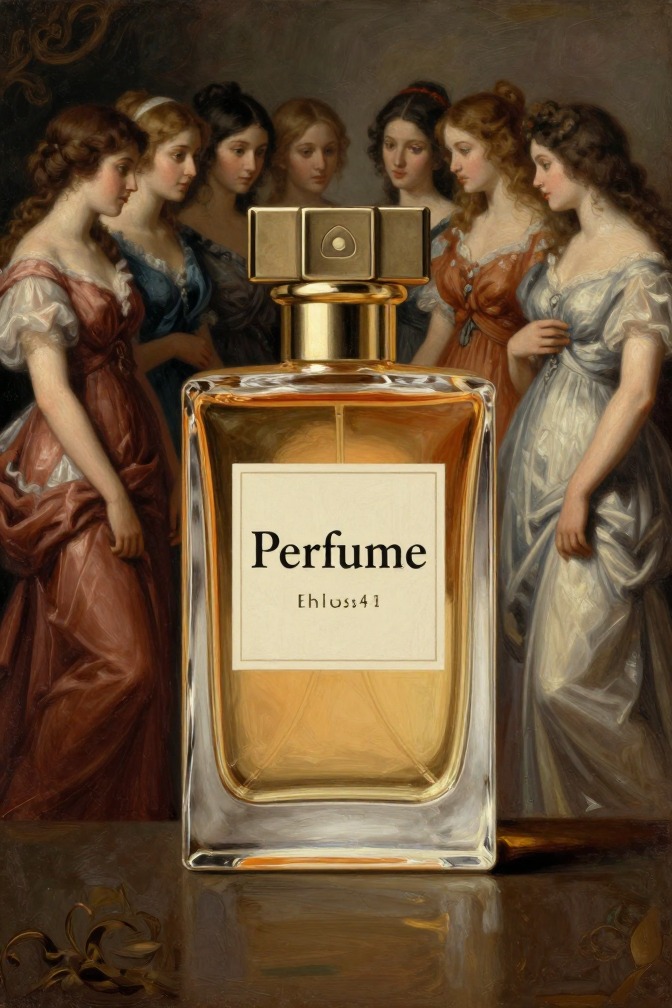
The ultimate perfume is the crowning achievement of Jean-Baptiste Grenouille's life, a scent composed from the distilled auras of twenty-five murdered virgins, designed to command the love of all humanity. It represents the culmination of his genius and his monstrous ambition, yet its possession brings him not fulfillment but existential horror, as it cannot grant him the one thing he lacks: a self he can smell.
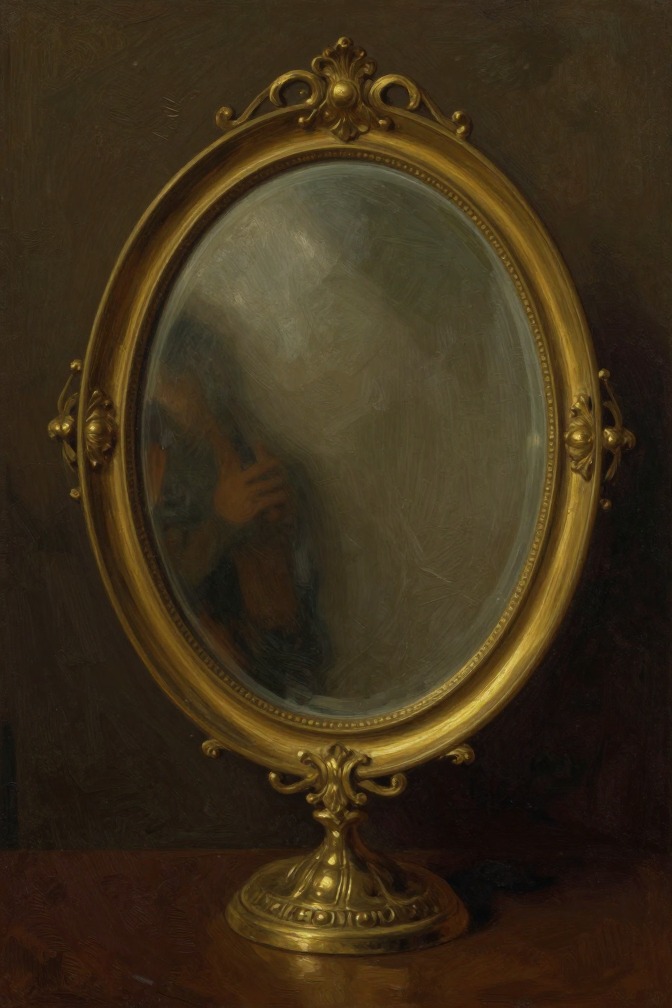
The mirror in Montpellier is the first mirror Jean-Baptiste Grenouille has ever seen, and it confronts him with a shocking revelation: he looks utterly normal, like any other man, yet he remains completely odorless. This moment crystallizes his lifelong crisis of identity—he can imitate humanity through a crafted perfume, but he can never possess the innate human scent that would make him real to himself.
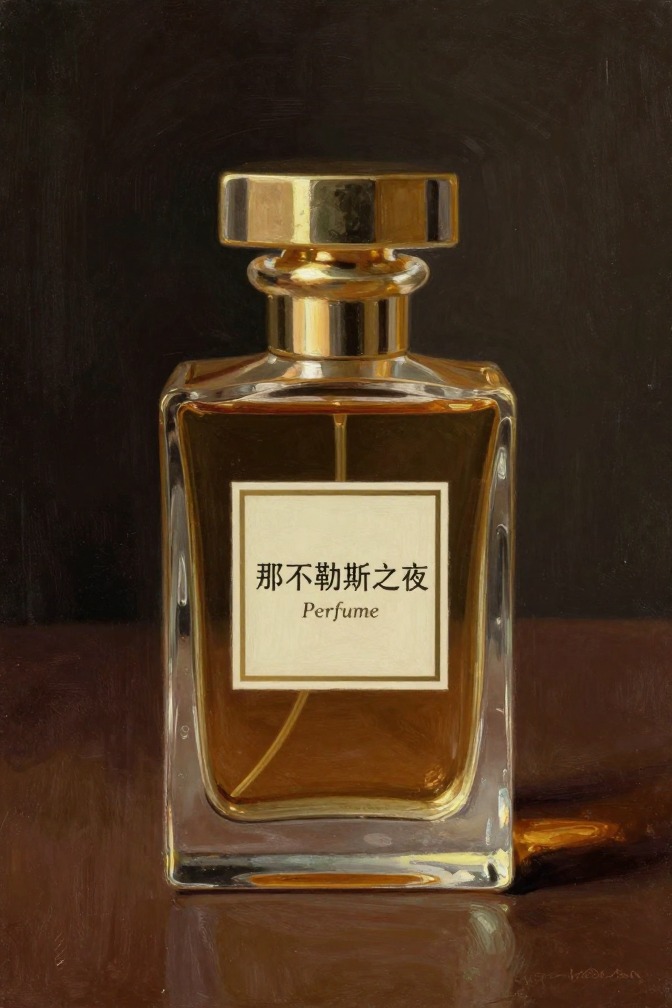
Nuit Napolitaine is the first perfume created by Jean-Baptiste Grenouille under the auspices of Giuseppe Baldini, a scent that instantly transforms Baldini's failing business into a European sensation and marks the beginning of Grenouille's secret domination of the perfume world.
The little book of formulas is the written record of Grenouille's perfume recipes, compiled by Baldini during Grenouille's apprenticeship. It represents the translation of Grenouille's innate, unteachable olfactory genius into the conventional language of the perfumer's craft, and becomes the tangible embodiment of Baldini's stolen success and the foundation of his European empire. Its loss in the collapse of Baldini's house marks the complete erasure of Grenouille's documented legacy and the end of Baldini's fortune.
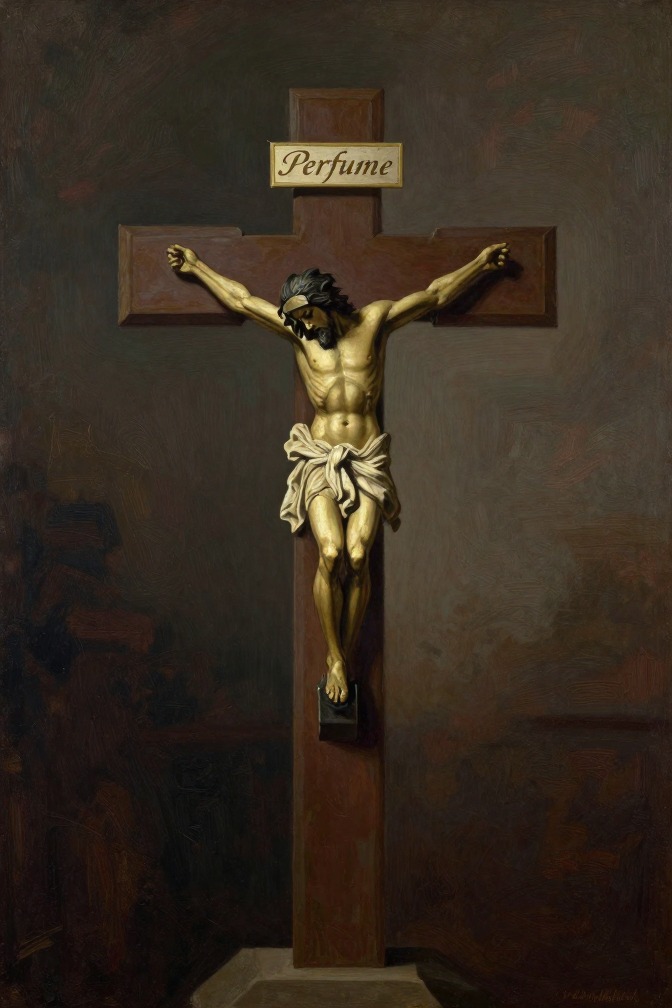
The St Andrew's cross is the wooden execution apparatus built for Jean-Baptiste Grenouille's public execution in Grasse, where he was to be bound and broken with an iron rod; it becomes the central stage for the novel's climactic reversal, as Grenouille's ultimate perfume transforms the scaffold from an instrument of punishment into the focal point of a mass orgy, and later serves as the site where Antoine Richis, instead of avenging his daughter, adopts Grenouille as his son.
The Lodge of the Vital Fluidum was an occult society founded in Montpellier in the summer of 1764 by the Marquis de la Taillade-Espinasse, based on his pseudo-scientific theory of the fluidum letale. It represents the culmination of the marquis's delusional ambition and the credulity of the age, and its fate mirrors the novel's themes of deception, power, and the human longing for transcendence.
The relationship between the aging perfumer Giuseppe Baldini and his assistant Chénier is one of mutual dependence, professional routine, and unspoken decline. Chénier, a veteran journeyman, knows Baldini's creative impotence and the shop's dwindling fortunes, yet he performs his duties with weary loyalty while Baldini maintains a facade of genius. Their dynamic shifts dramatically after Grenouille's arrival, as Baldini's sudden success transforms Chénier from a cynical observer into a busy, unquestioning salesman, ultimately leaving him devastated when Baldini dies and the business collapses.
Grenouille's apprenticeship under Giuseppe Baldini is the pivotal relationship that transforms a feral, self-taught olfactory genius into a master perfumer, providing him with the craft, social camouflage, and technical knowledge he needs to pursue his murderous ambition. This period, spanning from 1753 to 1756, sees Grenouille rise from a despised tanner's helper to the secret creator of Baldini's empire, all while learning the language of perfumery and the art of distillation.
The Fluidum Letale Theory is a pseudoscientific doctrine invented by the Marquis de la Taillade-Espinasse, which holds that the earth constantly emits a corrupting gas that lames vital energies and causes decay, disease, and death; the theory becomes the vehicle for Grenouille's transformation from a cave-dwelling outcast into a socially acceptable human being, and ultimately leads to the marquis's own fatal expedition.
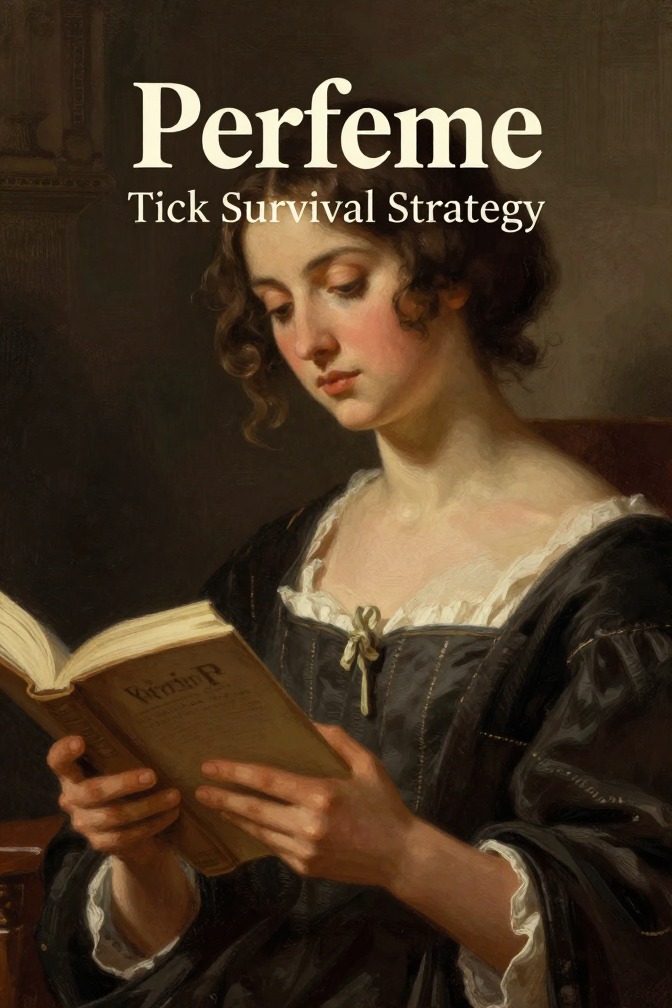
The Tick Survival Strategy is the core behavioral and existential principle that defines Jean-Baptiste Grenouille's life from birth. It is a metaphor for his minimal, defensive, and predatory mode of existence: he reduces his needs to the absolute minimum, remains inconspicuous, and waits with infinite patience for the rare opportunity to seize what he requires, then strikes without hesitation. This strategy, drawn from the narrator's extended comparison of Grenouille to a tick, explains his survival in hostile environments, his lack of emotional needs, his ability to endure years of solitude, and his methodical approach to murder and scent acquisition.
Grenouille's odorlessness is the defining physical and metaphysical condition of Jean-Baptiste Grenouille, the protagonist of Patrick Süskind's *Perfume*. From birth, he lacks any personal scent, a deficiency that sets him apart from all other humans and animals, marking him as an abomination in a world saturated with stench. This absence is not merely a biological oddity but the central paradox of his existence: it makes him invisible and repellent to others, drives his obsessive quest to create the perfect human scent, and ultimately leads to his self-destruction. His odorlessness is the void around which his entire life—and the novel's exploration of identity, power, and love—revolves.
The year 1744 marks a pivotal period in Jean-Baptiste Grenouille's early life, as he develops his extraordinary olfactory abilities while living under the care of Madame Gaillard in the Faubourg Saint-Antoine. During this time, he begins to master the world through scent, learning to speak by naming odours and experiencing a profound, almost suffocating encounter with the smell of wood that shapes his understanding of language and perception.
The year 1756 marks a decisive turning point in Jean-Baptiste Grenouille's life: it is the year he leaves Paris as a journeyman perfumer, begins his seven-year retreat into the solitude of the Plomb du Cantal, and simultaneously witnesses the collapse of the House of Giuseppe Baldini, the very institution that had sheltered and exploited his genius. This single year encapsulates both his liberation from human society and the beginning of his most radical experiment in self-isolation.
In August 1756, after seven years of self-imposed solitude on the Plomb du Cantal, Jean-Baptiste Grenouille descends from the mountain and re-enters human society, an event that marks the end of his hermitic retreat and the beginning of a new phase in his quest for olfactory mastery.
The War of the Spanish Succession (1701–1714) appears in Patrick Süskind's *Perfume* as a nostalgic reference point for the aging perfumer Giuseppe Baldini, who invokes his supposed participation in the conflict to contrast his own lost youth and heroic past with the decadent, novelty-obsessed present of mid-eighteenth-century France.
The Aborted Escape Attempt in the Mediterranean is a pivotal event in which Ned Land, having reached European waters, presses for an immediate escape from the Nautilus, only to be thwarted when Captain Nemo unexpectedly halts the ship in the Bay of Vigo to retrieve sunken treasure, an act that simultaneously reveals the captain's immense wealth and his secret philanthropy, deepening the mystery of his character and postponing the prisoners' bid for freedom.
The Capture by the Nautilus is the pivotal event in which Professor Pierre Aronnax, his servant Conseil, and the Canadian harpooner Ned Land are forcibly taken aboard Captain Nemo's submarine after being thrown overboard from the American frigate Abraham Lincoln, marking their transition from hunters to prisoners and initiating their extraordinary underwater journey.
Captain Anderson is the commander of the Cunard steamer Scotia, which was damaged in a mysterious collision on April 13, 1867, an event that intensified public alarm over the unknown underwater menace and helped precipitate the expedition that led to the discovery of the Nautilus.
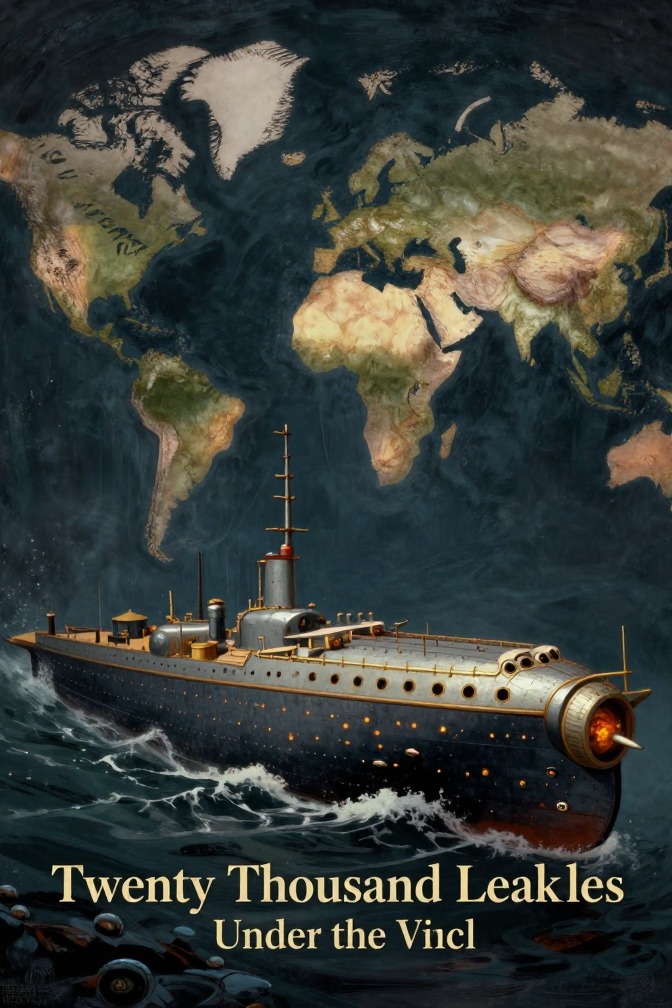
The Nautilus as a Self-Sufficient World is the central concept of Jules Verne's novel, representing Captain Nemo's complete and deliberate separation from terrestrial society. The submarine is not merely a vessel but a fully autonomous ecosystem, a mobile fortress, and a floating archive that supplies all the material, intellectual, and moral needs of its inhabitants. Every element of life aboard—food, clothing, energy, light, medicine, and even the means of defense—is derived from the sea, transforming the ocean into a total environment that sustains a closed, independent civilization. This self-sufficiency is both a practical achievement of engineering and a philosophical statement of radical freedom, yet it also becomes a prison for the unwilling guests, revealing the profound tension between liberation and captivity that defines the Nautilus's world.
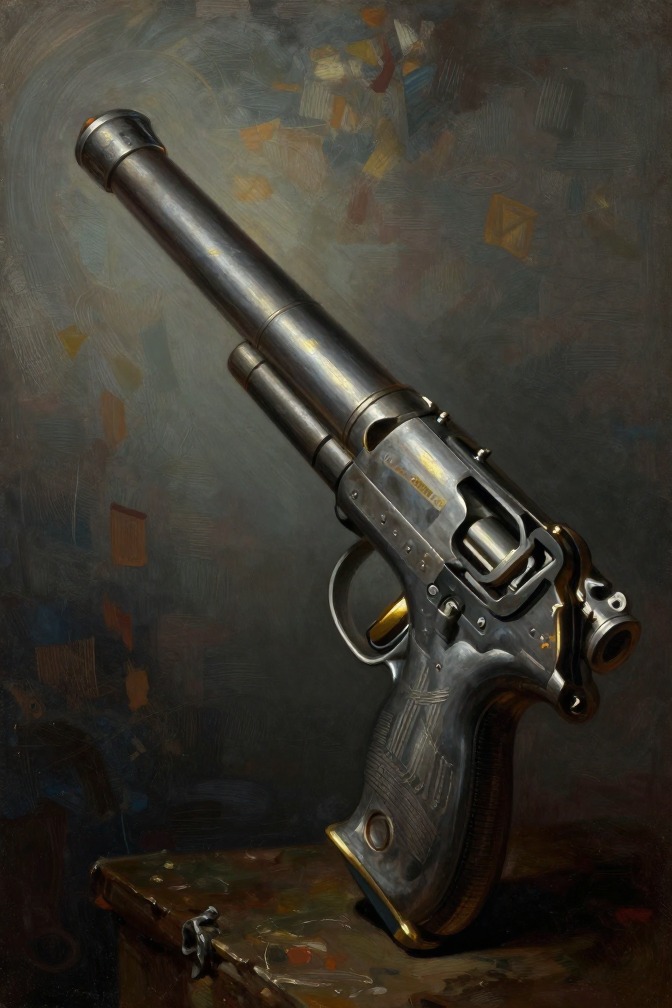
The electric gun is a specialized underwater rifle used aboard the Nautilus, firing glass capsules charged with high-voltage electricity that kill instantly on contact, replacing conventional gunpowder weapons in the submarine's self-contained environment.
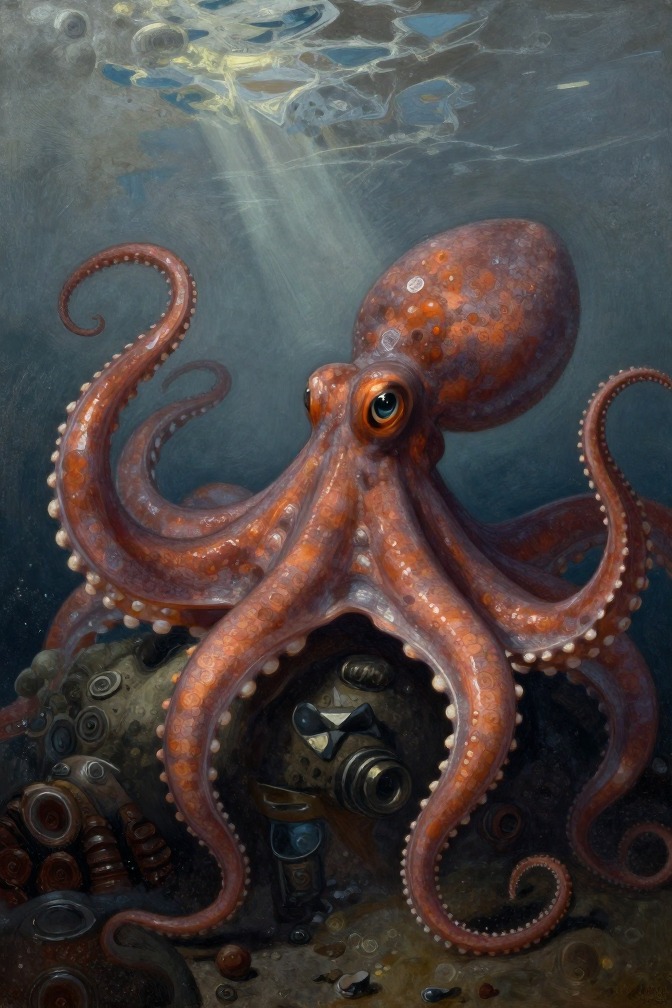
The Battle with Giant Octopuses is a pivotal and harrowing event in Twenty Thousand Leagues Under the Seas, in which the Nautilus is attacked by a school of colossal cephalopods, resulting in the death of a crewman and revealing the depths of Captain Nemo's grief and the crew's vulnerability.
The Treasure of Vigo Bay is a vast hoard of gold, silver, and jewels that Captain Nemo retrieves from the sunken Spanish galleons of 1702, using the Nautilus as his personal treasury to fund his clandestine operations and acts of philanthropy.