The St. Lawrence River is a major North American waterway that flows through Quebec, Canada, and serves as the emotional and geographical anchor for the harpooner Ned Land's homesickness and his desperate desire to escape the Nautilus. Its mention crystallizes the tension between the prisoners' longing for freedom and Captain Nemo's implacable determination to keep them aboard his submarine.
The Rio de la Plata is a major estuary on the southeastern coast of South America, encountered by the Nautilus during its northward journey after escaping the Antarctic ice. Its vast outflow desalinates the sea for leagues, and its waters teem with unique marine life, including electric rays and manatees. The estuary marks a point of tension between the prisoners' desire for escape and Captain Nemo's relentless course.
The Pacific Ocean is the vast, central body of water where the Nautilus begins its underwater voyage and where many of its most significant adventures unfold, serving as both the stage for the initial mystery of the "monster" and the proving ground for Captain Nemo's independence and power.
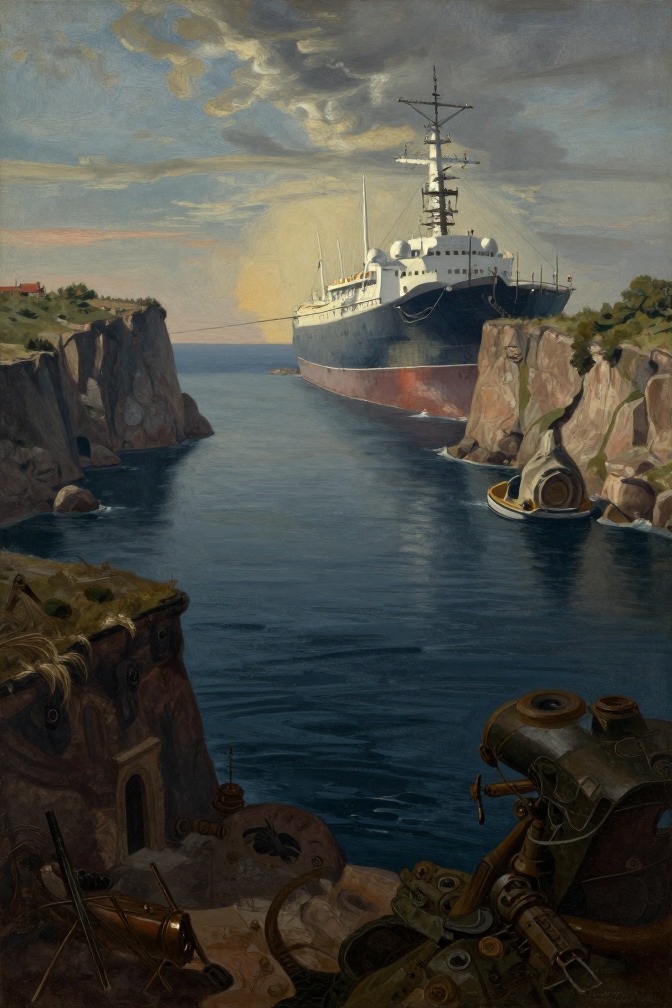
The Bay of Vigo, on the northwest coast of Spain, is the site of a 1702 naval battle in which a Spanish treasure fleet was scuttled to prevent capture by Anglo-Dutch forces. Captain Nemo regularly retrieves gold and silver from the sunken galleons, using the wealth to fund his clandestine operations and support oppressed peoples. The bay thus functions as a key location where Nemo's immense resources, his secret philanthropy, and his implacable hatred of imperialist powers converge.
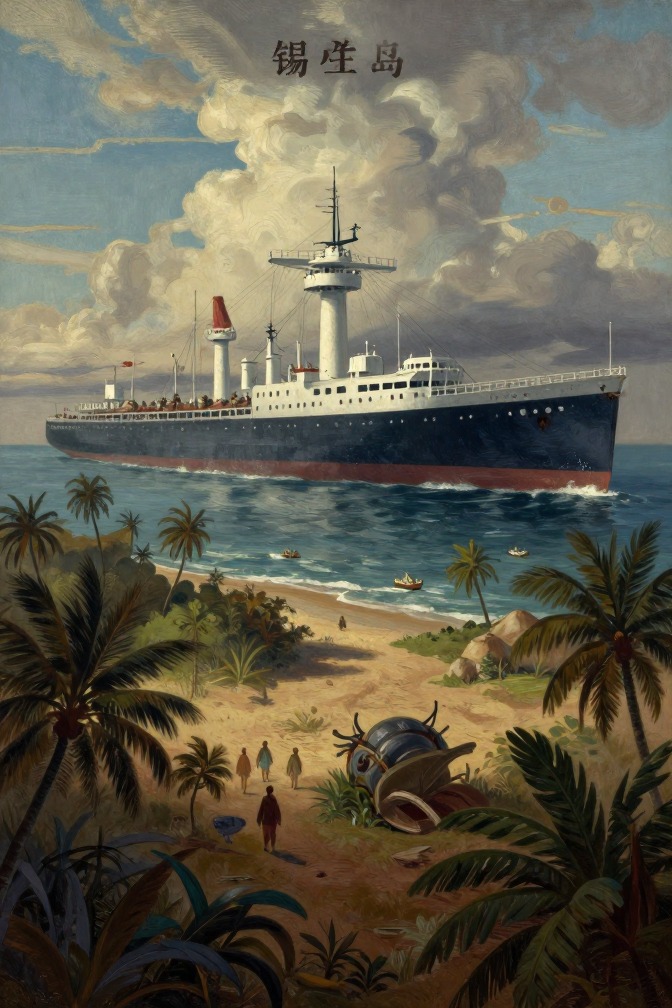
Ceylon (modern-day Sri Lanka) is the island in the Indian Ocean where the Nautilus pauses for a celebrated pearl-fishing expedition, a sequence that reveals Captain Nemo's extraordinary bravery, his deep-seated philanthropy toward the oppressed, and the widening rift between Ned Land's desire for freedom and Aronnax's scientific fascination.
The Strait of Sicily is a narrow underwater ridge connecting Europe and Africa, a geological barrier that the Nautilus crosses during its high-speed transit of the Mediterranean, a passage that reveals the ancient connection between the two continents and the volcanic forces shaping the seafloor.
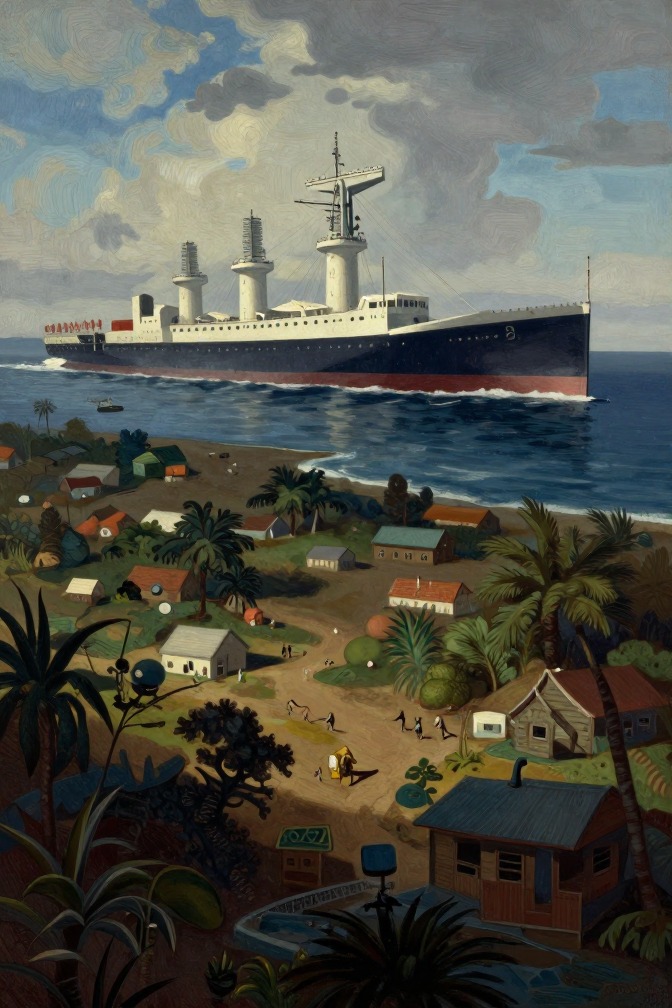
Vanikoro is a remote island in the Pacific where the Nautilus stops during its underwater voyage, revealing the final resting place of the French explorer Count de La Pérouse and his ships, the Compass and the Astrolabe. This episode deepens the novel's themes of historical memory, maritime tragedy, and Captain Nemo's secret knowledge of the world's hidden histories.
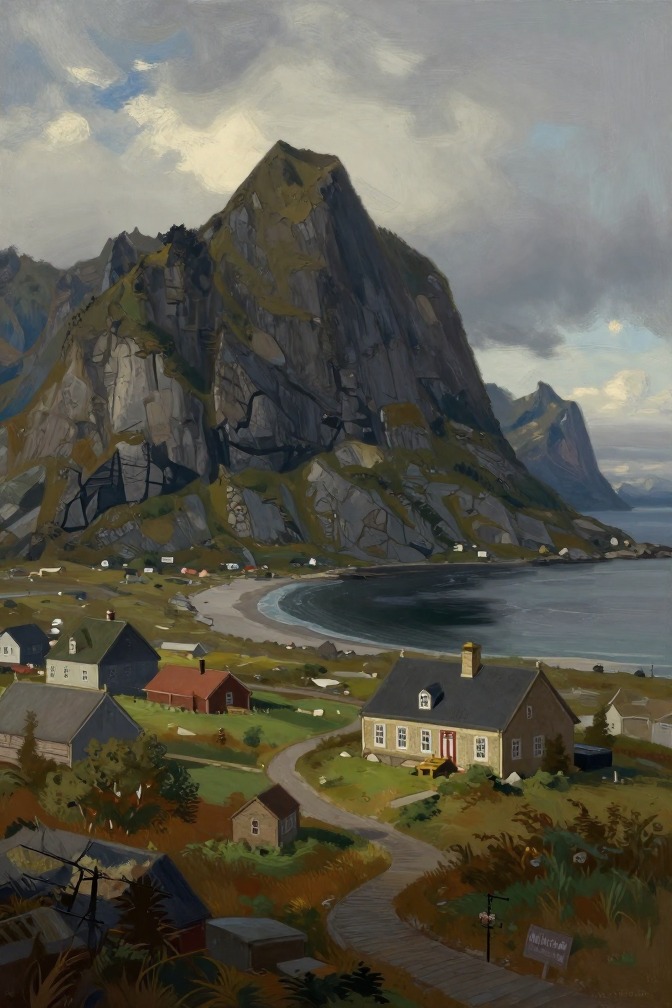
The Lofoten Islands, a Norwegian archipelago off the northwestern coast of Norway, serve as the final refuge for Professor Pierre Aronnax, Conseil, and Ned Land after their harrowing escape from the Nautilus and the Maelstrom. This remote and rugged location, known for its treacherous waters and dramatic peaks, becomes the site where the three men are rescued by local fishermen and where Aronnax composes the narrative of their ten-month, 20,000-league underwater voyage, bringing the story to its conclusion.
El Tur is a bay on the Sinai Peninsula at the northern end of the Red Sea, notable in the novel for its blood-red waters caused by microscopic algae, and for its proximity to the biblical Mount Sinai. It serves as a landmark during the Nautilus's passage through the Gulf of Suez and as a site where Captain Nemo reveals his knowledge of the region's natural history and his connection to the ancient world.
Port Said is the Mediterranean terminus of the Suez Canal, a city that appears in Captain Nemo's conversation as the destination he will reach via his secret Arabian Tunnel, and later serves as a reference point for the Nautilus's position after the sinking of the Avenger.
Fastnet Rock is a lighthouse-bearing islet off the southern coast of Ireland that serves as a crucial navigational landmark in the final stages of the Nautilus's voyage, marking the point where the submersible turns away from European shores and heads toward the climactic confrontation with a warship.
The Atlantic Ocean is the vast, history-laden body of water that serves as the final and most consequential setting of the Nautilus's voyage, a liquid stage where the novel's deepest themes of vengeance, memory, and scientific discovery converge. It is here that Captain Nemo's past is most powerfully revealed, his most terrible act of destruction carried out, and the ultimate fate of the Nautilus sealed.
Guadalupe is a Caribbean island briefly sighted by the Nautilus during its northward voyage through the Atlantic, serving as a geographical marker that underscores the vessel's proximity to populated European colonies and the consequent frustration of Ned Land's escape plans.
The Bay of Biscay is a gulf of the northeast Atlantic Ocean located south of the Celtic Sea and west of France. In Jules Verne's Twenty Thousand Leagues Under the Seas, it is identified as the true source of the Gulf Stream, a discovery attributed to Commander Maury, and serves as a key geographical reference point in the novel's scientific discourse on ocean currents and global climate regulation.
Nova Scotia is a Canadian province that serves as a key geographical reference point in the latter part of the Nautilus's voyage, representing the proximity to Ned Land's homeland and the final, desperate hopes for escape before the narrative's catastrophic conclusion.
St. Paul Island is a remote, rocky island in the Atlantic Ocean, referenced in Jules Verne's *Twenty Thousand Leagues Under the Seas* as a location near the Grand Banks of Newfoundland, where the Nautilus passes during its northward journey after the sinking of the warship. It is part of the treacherous seascape of the North Atlantic, a region dense with shipwrecks and maritime hazards, and its mention underscores the novel's geographical realism and the Nautilus's relentless, haunted voyage through waters heavy with history and catastrophe.
Pelusium is a coastal city in Egypt, briefly sighted by the Nautilus after its passage through the Arabian Tunnel, marking the vessel's entry into the Mediterranean Sea and serving as a geographical milestone in the journey from the Red Sea to European waters.
The skiff is the Nautilus's auxiliary longboat, a light, unsinkable vessel used for excursions, fishing, and escape attempts. It is stored in a cavity on the submarine's topside and can be launched or retrieved while the Nautilus is submerged, serving as a crucial link between the underwater world and the surface.
The British Association for the Advancement of Science is a learned society mentioned in Jules Verne's Twenty Thousand Leagues Under the Seas as one of the major scientific bodies drawn into the public debate over the mysterious sea monster that terrorized shipping in 1866–1867. Its involvement illustrates how the monster question became a transatlantic scientific controversy, with the Association's discussions cited alongside those of the Smithsonian Institution, the Royal Academy of Science in Berlin, and other institutions as the popular press and scholarly journals clashed over the reality and nature of the phenomenon.
The Royal Academy of Science in Berlin is a learned society mentioned in Jules Verne's Twenty Thousand Leagues Under the Sea as one of the major European scientific bodies that engaged in the public debate over the nature of the mysterious sea monster in 1866–1867, representing the institutional voice of academic authority in the controversy.
The Indian Archipelago was a scholarly journal that, during the 1866–67 monster controversy, published discussions on the nature of the mysterious sea creature, representing the scientific debates that inflamed public opinion before the creature was revealed to be the submarine Nautilus.
Captain Nemo and his crew share a bond of absolute loyalty, forged through shared suffering, a common cause of vengeance against oppression, and a life of total independence beneath the sea. The crew, drawn from diverse nationalities, are not mere subordinates but devoted companions who have chosen to sever all ties with the surface world, living and dying together in the Nautilus's self-contained world.
The Daily Ventilation Policy is the routine by which the Nautilus rises to the surface of the ocean each morning to expel stale, carbon-dioxide-laden air and replenish its internal atmosphere with fresh, oxygen-rich sea air, a procedure essential to the survival of everyone on board and a direct consequence of the ship's complete submergence.
The Electrified Hatches Defense is a security system on the Nautilus that uses the ship's electric current to prevent unauthorized entry through the hatches, rendering the platform inaccessible to intruders.
The Sailing the Gulf Stream is a state of the Nautilus's voyage through the great Atlantic current, during which the ship experiences the current's unique properties, encounters a devastating storm, and witnesses the wreckage of ships lost in these treacherous waters, all while the crew's tensions over escape reach a breaking point.
Homesickness is a persistent and increasingly powerful emotional state experienced by Ned Land, the Canadian harpooner, during his imprisonment aboard the Nautilus. It functions as a major narrative driver, creating a constant counter-current to Professor Aronnax's scientific wonder and Conseil's stoic acceptance, and it ultimately motivates the final, desperate escape attempt that concludes the voyage.
July 20, 1866, is the date of the first recorded encounter with the mysterious sea creature that would become known as the narwhale, an event that set in motion the global hunt culminating in the discovery of the Nautilus. On this day, the steamer Governor Higginson, from the Calcutta & Burnach Steam Navigation Co., encountered an enormous moving mass five miles off the eastern shores of Australia, an encounter that provided the first concrete evidence of the phenomenon that would alarm seamen, scientists, and governments worldwide.
July 23, 1866, is the date on which the steamer Christopher Columbus, of the West India & Pacific Steam Navigation Co., sighted the mysterious marine phenomenon in the Pacific seas, confirming the creature's startling swiftness by placing it at a position more than 700 nautical leagues from where the Governor Higginson had encountered it only three days earlier.
November 16, 1867, is the date on which Captain Nemo formally invited Professor Pierre Aronnax, Conseil, and Ned Land to join him on an underwater hunting expedition in the Crespo Island forests, marking a pivotal moment of trust and the beginning of their active participation in the Nautilus's undersea world.
January 1, 1868, marks a moment of reflection and division aboard the Nautilus, as the three prisoners—Professor Pierre Aronnax, his servant Conseil, and the harpooner Ned Land—confront the meaning of a new year in their extraordinary but involuntary underwater captivity. The date crystallizes the fundamental conflict between Aronnax's scientific wonder and Ned Land's desperate desire for freedom, a tension that defines the remainder of their voyage.