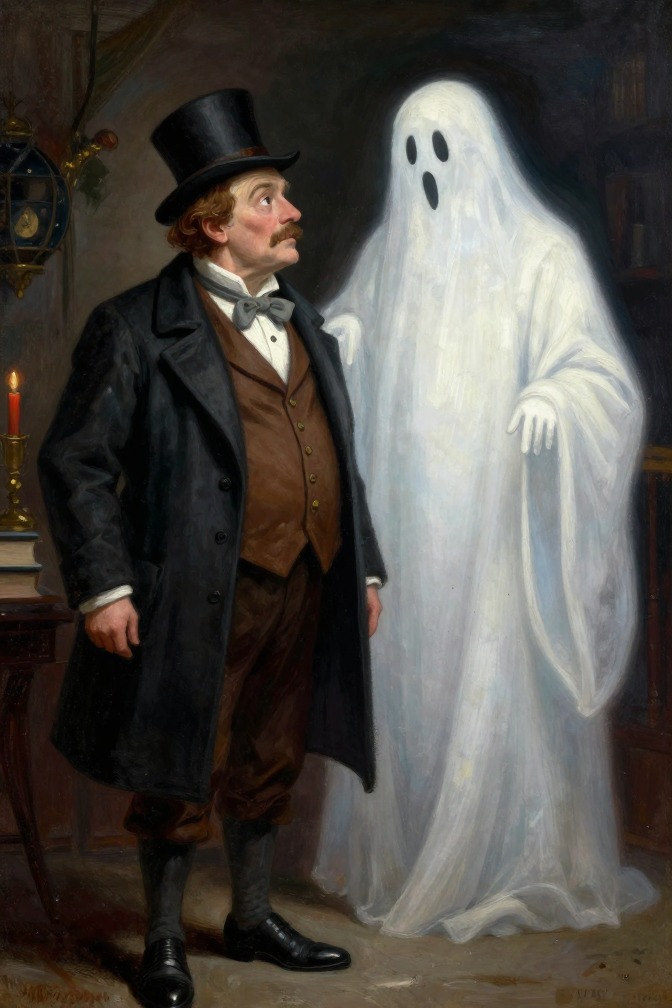
The extinguisher cap is a physical object carried by the Ghost of Christmas Past in Charles Dickens's A Christmas Carol, which Scrooge uses in a desperate attempt to block out the painful memories the Spirit shows him. The cap functions as a symbol of Scrooge's resistance to self-knowledge and emotional truth, and his violent act of forcing it onto the Spirit's head marks a critical turning point in his psychological journey.
The relationship between Ebenezer Scrooge and the Ghost of Christmas Yet to Come is the climactic encounter of A Christmas Carol, in which the silent, hooded Phantom forces Scrooge to confront the ultimate consequences of his miserly life by showing him a future of lonely death, plundered possessions, and a neglected grave, thereby driving him to a desperate plea for redemption and a promise to change.
The romance between Topper and the plump sister is a lively, flirtatious subplot that unfolds during the Christmas party at Fred's house, showcasing the playful and romantic spirit of the holiday.
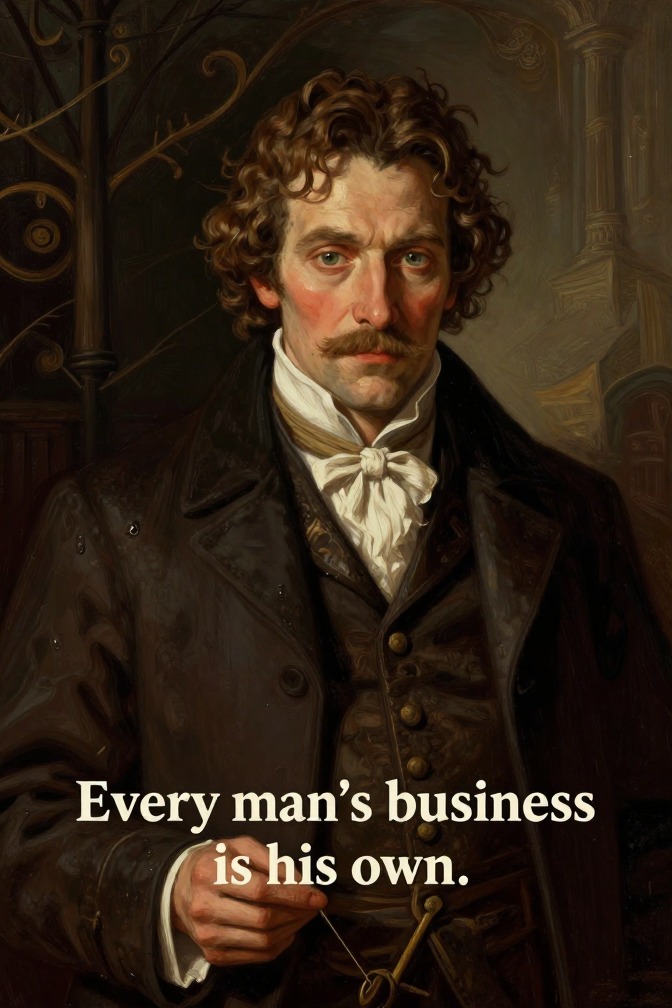
Every man's business is his own is the governing principle of Ebenezer Scrooge's life before his transformation, a maxim he deploys to reject human sympathy, charity, and moral responsibility. The story systematically dismantles this rule, exposing it as a philosophy of isolation and spiritual death, and replaces it with an ethic of active, generous engagement with others.
The spirit must walk abroad is a metaphysical rule articulated by Jacob Marley's Ghost in A Christmas Carol, which holds that every person's inner spirit is required to engage actively with fellow human beings during life; failure to do so condemns the spirit to wander after death, witnessing the happiness it could have shared but cannot now attain.
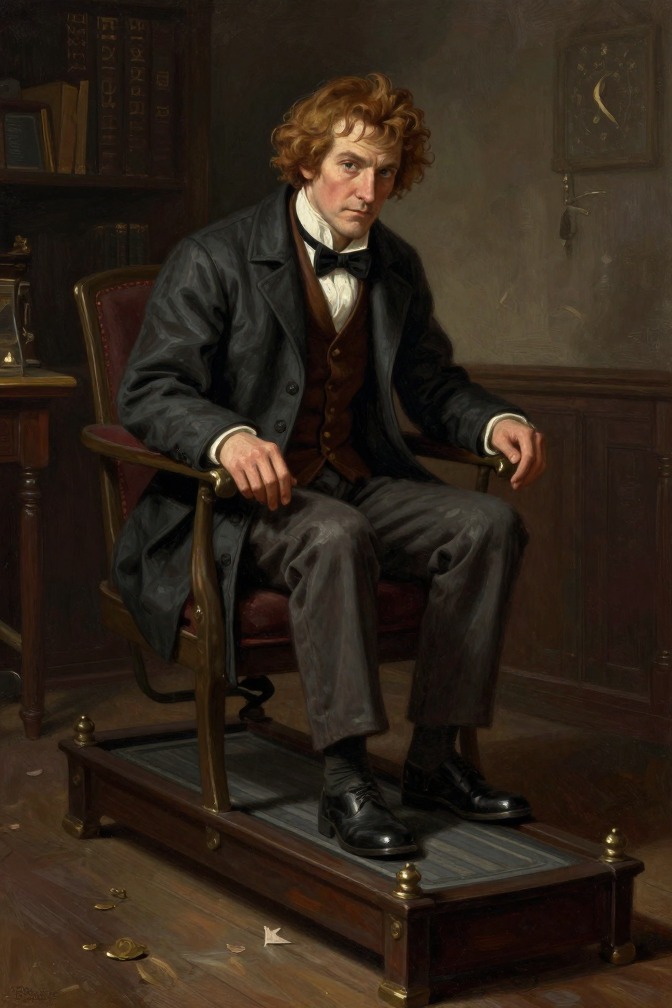
The Treadmill is a penal institution referenced by Ebenezer Scrooge in Charles Dickens's *A Christmas Carol* as part of his dismissive response to charity collectors seeking donations for the poor. Scrooge's invocation of the Treadmill, alongside prisons and workhouses, reveals his reliance on punitive state mechanisms to manage poverty and his rejection of personal charity. The term becomes a symbol of the harsh, impersonal social policies that the story ultimately condemns through Scrooge's transformation.
Captain Benwick is a young naval officer whose deep grief over the death of his fiancée Fanny Harville and his subsequent engagement to Louisa Musgrove form a significant subplot in Persuasion, illustrating themes of constancy, recovery, and the unexpected turns of the heart.
Lady Dalrymple is a minor but symbolically significant character in Persuasion, a Dowager Viscountess and cousin of the Elliots whose arrival in Bath throws into sharp relief the vanity, social ambition, and class anxieties of Sir Walter Elliot and Elizabeth Elliot, while also serving as a foil for Anne Elliot's more principled understanding of rank and good company.
The accident at Lyme is the pivotal event in Persuasion in which Louisa Musgrove, attempting to be jumped down the steps of the Cobb by Captain Wentworth, falls and is taken up lifeless, precipitating a crisis that reshapes every major relationship in the novel.
The phrase 'the elegance of mind and sweetness of character' is the narrator's description of Anne Elliot's intrinsic worth, which stands in stark contrast to the superficial values of her father and sister, and which Captain Wentworth ultimately recognizes as the ideal combination of qualities in a woman.
Plymouth is a port city in Devon that serves as a key naval and maritime hub in Persuasion, where Captain Frederick Wentworth's ship HMS Laconia docks and where he performs a crucial act of friendship by rushing to inform Captain Benwick of Fanny Harville's death.
The marriage of Admiral Croft and Sophia Wentworth is a model of companionate happiness in Persuasion, contrasting sharply with the unhappy or unequal marriages that surround it. Their union, formed quickly during wartime and sustained by mutual affection, shared activity, and a complete absence of vanity or pretension, provides a living counterexample to the Elliot family's obsession with rank and appearance. The Crofts' relationship is not merely a background detail but a thematic touchstone: it demonstrates the kind of steady, affectionate partnership that Anne Elliot has always desired and that she ultimately achieves with Captain Wentworth.
Captain James Benwick and Fanny Harville's engagement was a brief, tragic romance that ended with Fanny's death before they could marry, leaving Benwick in deep mourning and shaping his subsequent attachment to Louisa Musgrove.
Lady Russell and Anne Elliot's friendship is the most consequential relationship in Persuasion, serving as both a maternal substitute and the decisive influence that persuaded Anne to break her engagement to Captain Frederick Wentworth eight years before the novel's main action. Their bond, rooted in Lady Russell's deep love for Anne's deceased mother and her role as godmother, shapes Anne's moral development, her social isolation within her own family, and the central romantic conflict of the story. The friendship endures through Anne's quiet suffering and eventual reconciliation with Wentworth, ultimately forcing Lady Russell to confront the limits of her own judgment.
The marriage of Sir Walter Elliot and Elizabeth Stevenson was a union of a remarkably handsome baronet with a woman of superior character, whose sensible and amiable nature for seventeen years managed his household, softened his failings, and kept his finances within bounds, but whose death left him without restraint, precipitating the family's financial decline and removal from Kellynch Hall.
The ambiguous relationship between Sir Walter Elliot and Mrs. Clay is a subtle but persistent undercurrent in Persuasion, representing a threat to the family's social standing and a key motive for Mr. Elliot's sudden return to the family. It is a relationship of calculated dependence on Mrs. Clay's part and unthinking vanity on Sir Walter's, which ultimately unravels when Mr. Elliot's machinations and Mrs. Clay's own ambitions lead to her departure from Bath.
Financial distress is the central economic predicament that drives the plot of Persuasion, forcing Sir Walter Elliot to let Kellynch Hall and relocate his family to Bath, and it also shapes the precarious circumstances of other characters such as Mrs Smith, revealing the vulnerability of those without independent means in early 19th-century English society.
Peace is the historical condition following the Napoleonic Wars that forms the backdrop of Persuasion, reshaping social mobility, professional fortunes, and personal relationships. It brings naval officers ashore as wealthy tenants and suitors, exposes the fragility of aristocratic pride, and creates the circumstances for Anne Elliot and Captain Wentworth's reunion.
War in Persuasion is the absent yet decisive force that shapes the novel's social landscape, personal fortunes, and romantic trajectories. The long conflict with France has elevated men like Captain Wentworth from obscurity to wealth and rank, creating a new class of naval heroes whose merit-based advancement challenges the hereditary aristocracy embodied by Sir Walter Elliot. The peace of 1814, which ends the war, simultaneously releases these officers into civilian life, setting the stage for the novel's central reunions and conflicts.
Widowhood in Persuasion is a state that defines the economic and social circumstances of several female characters, revealing the precariousness of women without male protection and the limited avenues for independence available to them in early nineteenth-century England.
Winston and Julia visit O'Brien's apartment in the Inner Party quarter, where O'Brien deactivates the telescreen, confirms the existence of the Brotherhood, and recruits them into the underground resistance. This meeting transforms Winston's private rebellion into concrete action and marks the point of no return in his trajectory toward the Ministry of Love.
Syme, a Research Department philologist working on the Eleventh Edition of the Newspeak Dictionary, passionately articulates Newspeak’s aim of shrinking the linguistic horizon, then is erased from existence when his name disappears from a committee list. His brief arc dramatizes the Party’s consumption of its ablest servants and the remorseless rewriting of reality.
Wilsher is a minor Ministry of Truth employee in Nineteen Eighty-Four whose canteen greeting accidentally prevents Winston Smith from joining Julia, illustrating the mundane obstacles of surveillance society.
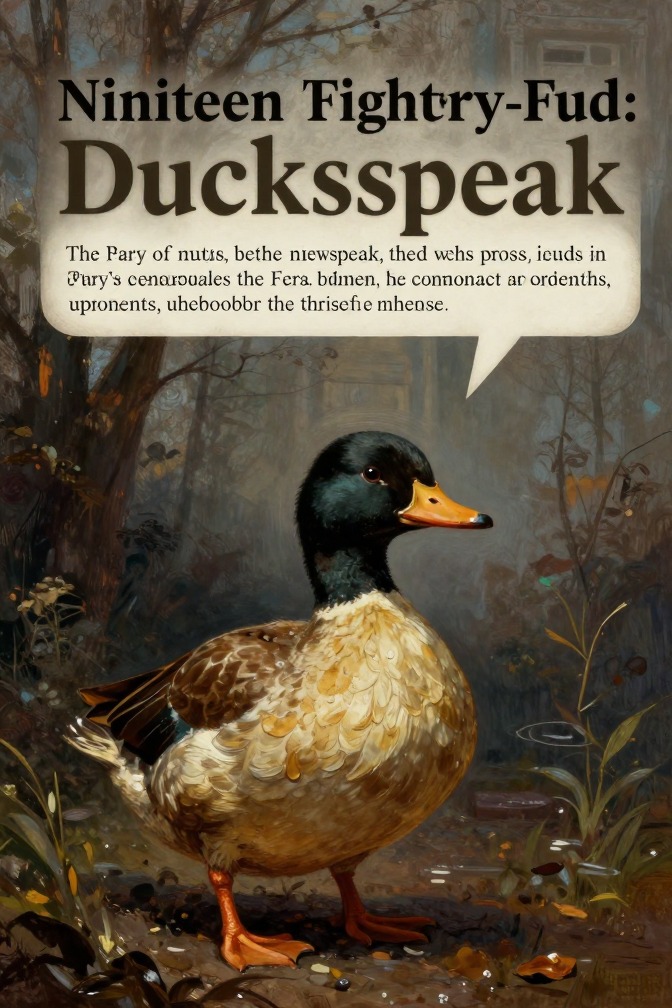
Duckspeak is the Newspeak word for mechanically orthodox speech, literally 'to quack like a duck,' introduced by Syme and analyzed in the novel's appendix as an ambivalent B-vocabulary term. It is at once abuse and praise depending on who is speaking, and it embodies the Party's ambition to make articulate speech issue from the larynx without involving the higher brain centers -- the verbal instrument of a society built on unthinking consent.
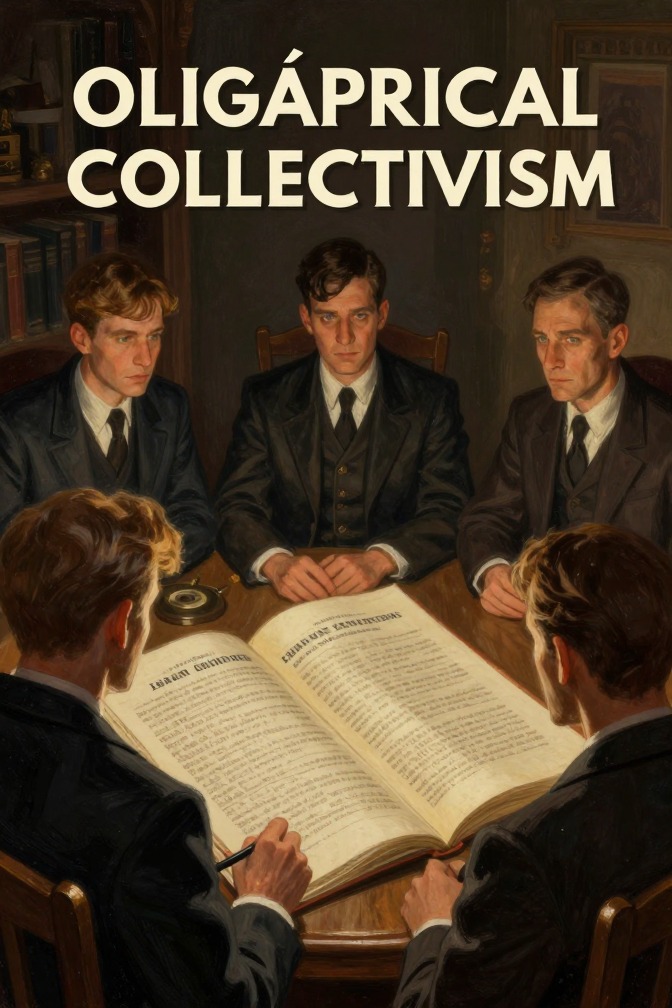
Oligarchical Collectivism is the doctrine named on the title page of Emmanuel Goldstein's forbidden book within Nineteen Eighty-Four, and the novel's name for the Party's permanent, self-aware tyranny. The entry traces the book's circulation through O'Brien to Winston Smith, its theory of an unbreakable High-Middle-Low hierarchy, the Ministries and Doublethink that put it into practice, O'Brien's frank account of power for its own sake, and the doctrine's final triumph when Winston Smith comes to love Big Brother.
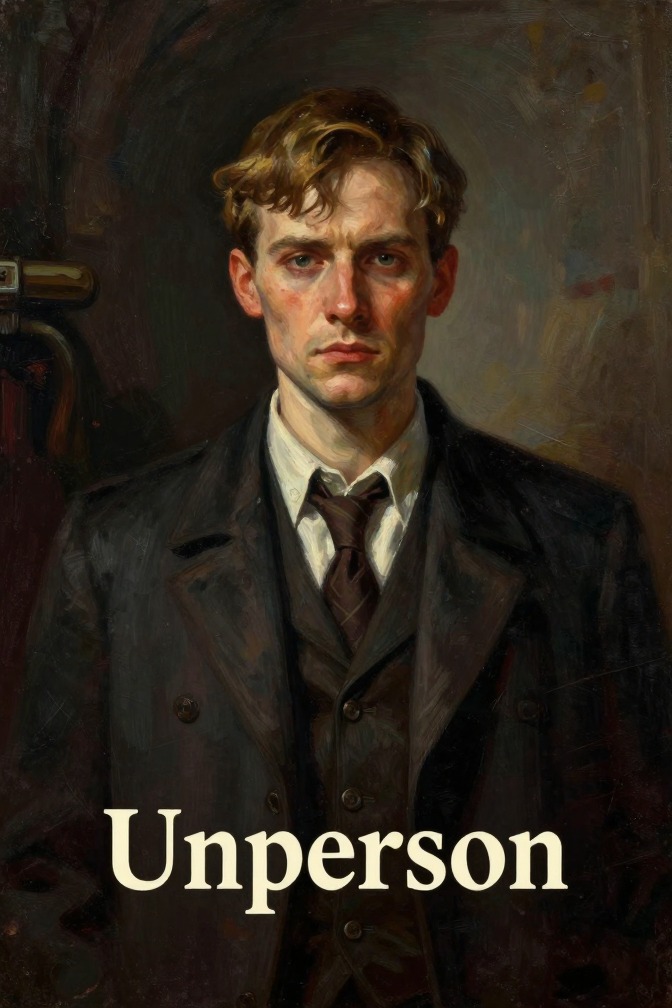
Unperson is a concept in George Orwell's Nineteen Eighty-Four denoting an individual who has been completely erased from all records and memory, treated as if they had never existed, representing the Party's ultimate control over reality and history.
O'Brien's line “If you want a picture of the future, imagine a boot stamping on a human face – for ever” is Nineteen Eighty-Four's starkest emblem of totalitarian power. Spoken during Winston Smith's re-education in the Ministry of Love, it condenses the Party's doctrine of power for its own sake into one permanent image of cruelty, and it anticipates the novel's final proof that power is exercised not through argument but through the body.
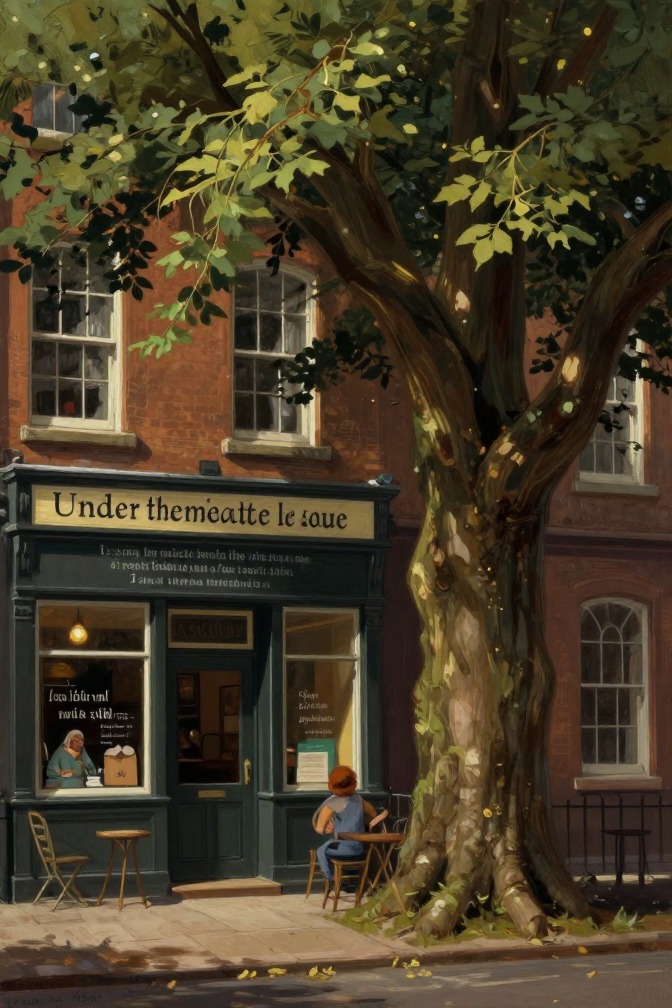
"Under the spreading chestnut tree" is the opening line of a jeering verse that the Party's telescreen broadcasts at two decisive moments in Nineteen Eighty-Four. Carried by the recurring "yellow note", and built around the accusation "I sold you and you sold me", the verse links the broken leaders Jones, Aaronson and Rutherford with Winston Smith's own final ruin, turning innocent-sounding words into an instrument of totalitarian mockery.
London in Nineteen Eighty-Four is the chief city of Airstrip One, the decaying, bomb-scarred capital of Oceania where Winston Smith lives, rebels and is finally broken; it serves as both the novel's physical setting and a symbol of totalitarian surveillance and historical erasure.
The Speakwrite is the dictation machine Winston Smith uses in the Records Department of the Ministry of Truth, and the everyday instrument through which the Party carries out its falsification of the past. It is the tool with which Winston rewrites the Times, invents statistics, and fabricates the life of Comrade Ogilvy, and it stands in pointed contrast to the secret handwritten diary he keeps at home.