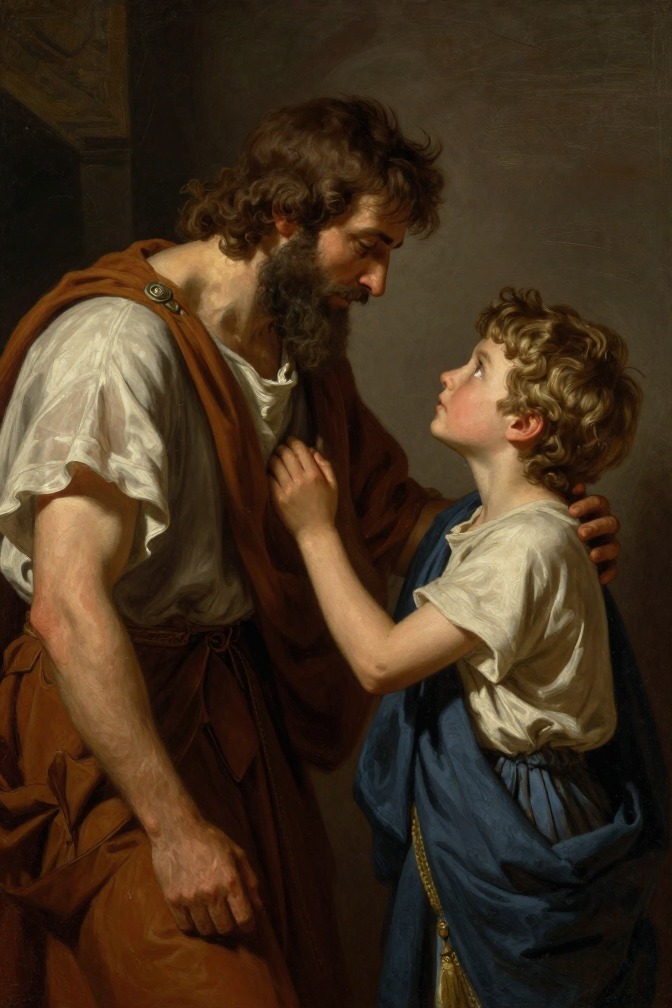
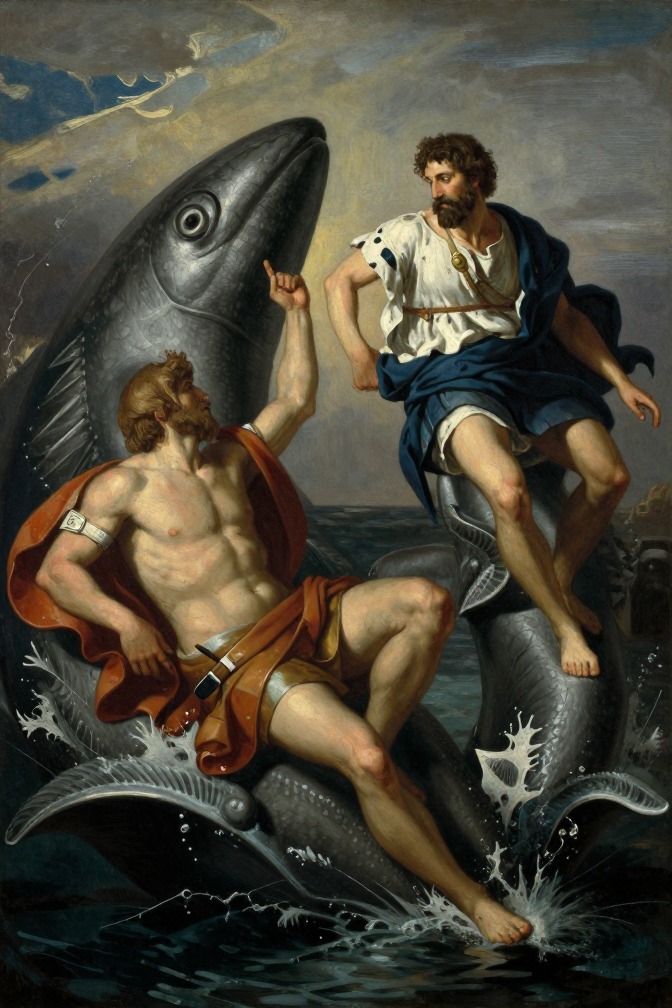
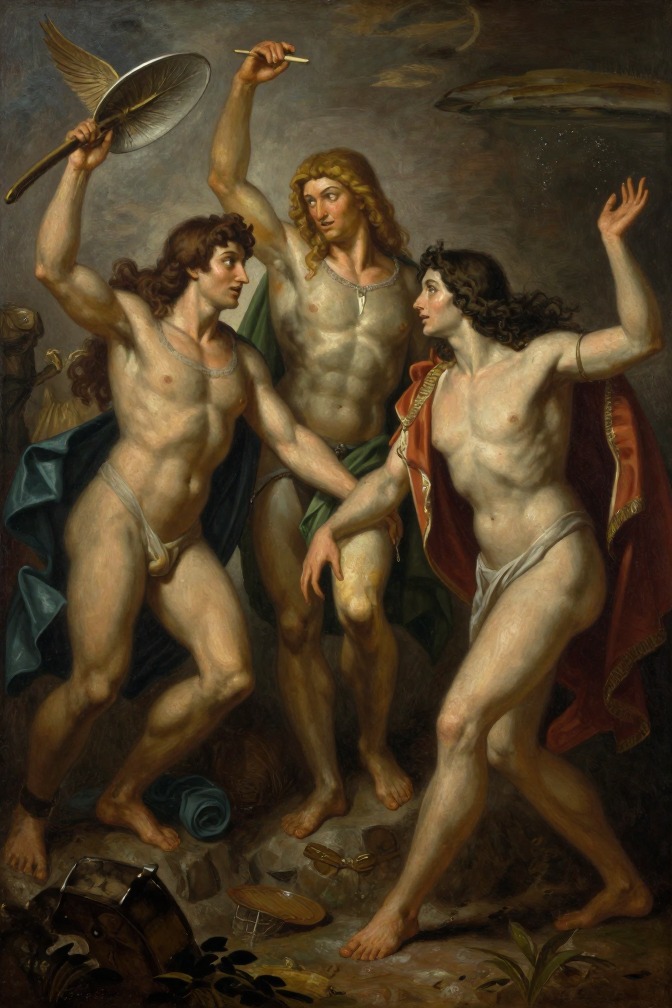
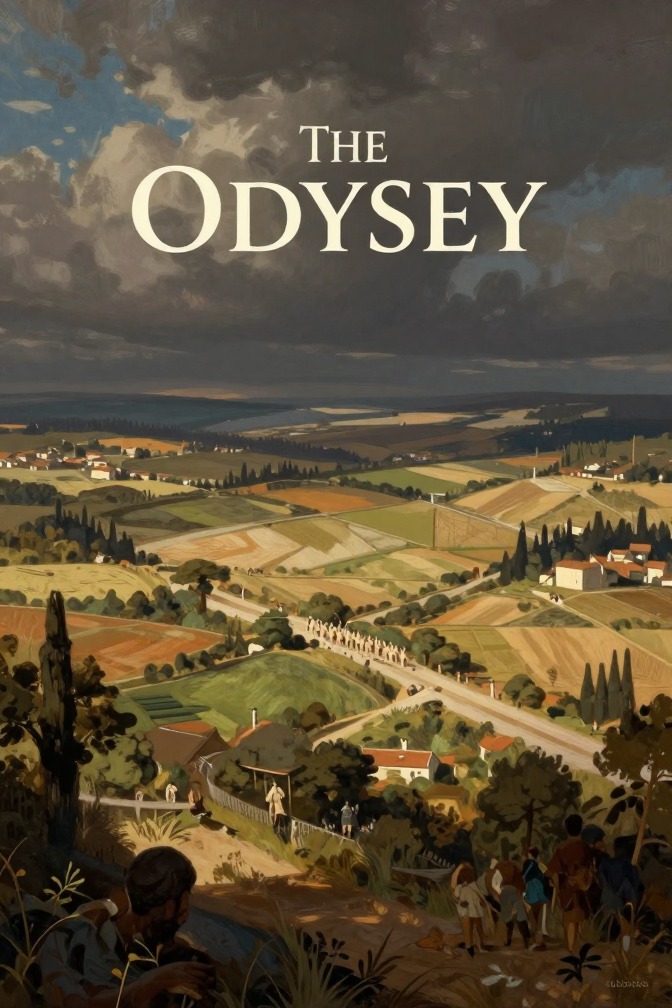
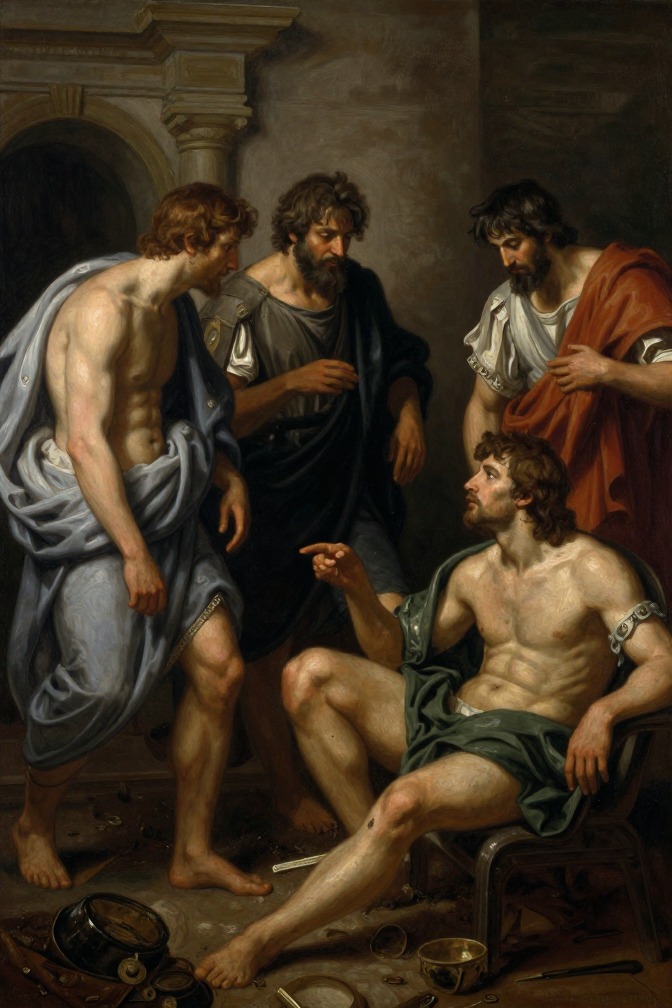
The Father and Son Reunion is the pivotal moment in the Odyssey when Odysseus, after twenty years of absence, reveals his true identity to his son Telemachus at the hut of the swineherd Eumaeus, transforming their relationship from one of grief and helplessness into a partnership for revenge against the suitors.
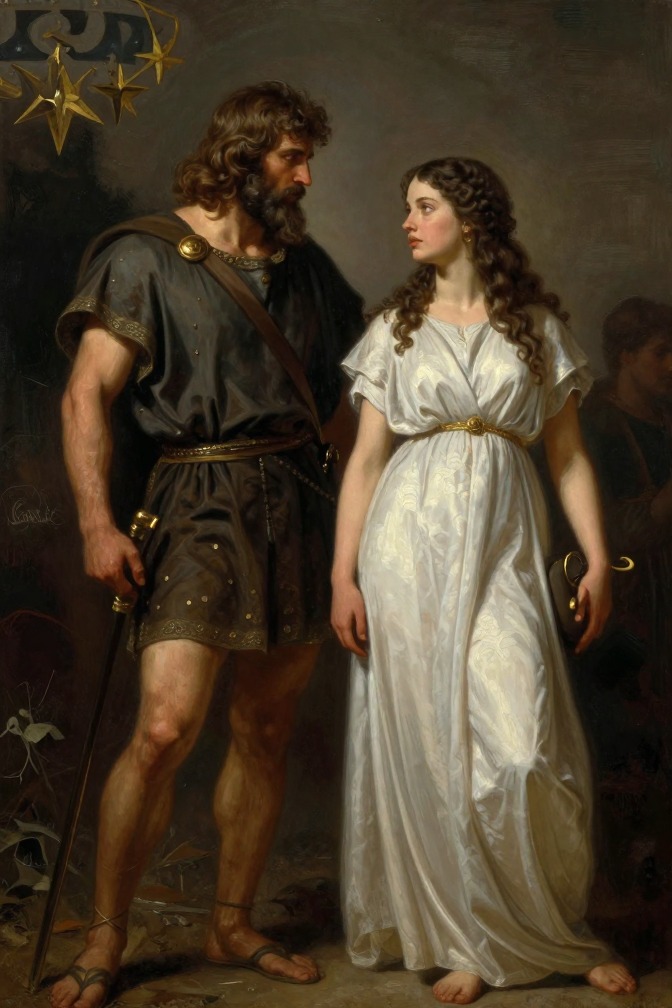
The meeting between Odysseus and Nausicaa is the pivotal event that rescues the hero from the brink of death and secures him the hospitality of the Phaeacians, setting the stage for his final return to Ithaca. After a harrowing shipwreck and two days of swimming, the exhausted and naked Odysseus is discovered on the shore by Nausicaa, the daughter of King Alcinous, whose divinely inspired courage and compassion transform a moment of utter vulnerability into the beginning of his homecoming.
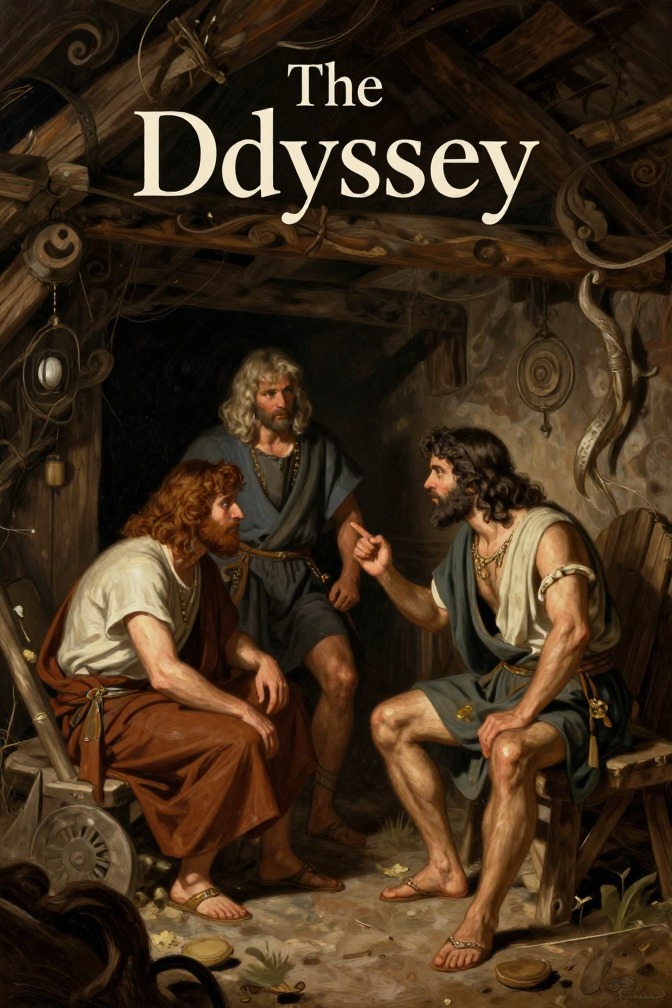
Odysseus at Eumaeus's Hut is the pivotal sequence in which Odysseus, disguised as a beggar by Athena, is sheltered by his loyal swineherd Eumaeus, learns the state of his household, and is ultimately reunited with his son Telemachus, setting the stage for the destruction of the suitors.
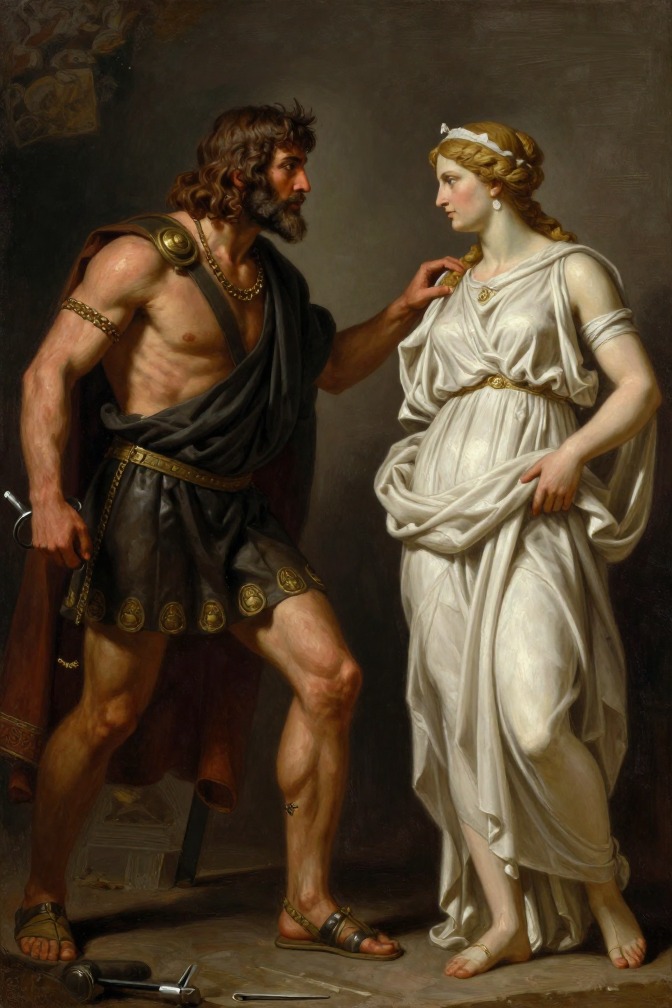
After the Phaeacians return Odysseus to Ithaca, Athena meets him in disguise, reveals his true location, and together they plan the destruction of the suitors. This scene marks the hero's re-entry into his own kingdom and the beginning of the poem's final, vengeful movement.
The passage between Scylla and Charybdis is the most harrowing ordeal of Odysseus's sea journey, a narrow strait where he must choose between a six-headed man-eating monster and a whirlpool that swallows whole ships, losing six of his best men to Scylla's jaws while barely escaping total destruction.
The Sirens Episode is a perilous encounter in Odysseus's journey home, where he and his crew must resist the enchanting song of the Sirens, creatures whose melody lures sailors to their deaths. This event tests Odysseus's cunning and self-restraint, and it serves as a crucial demonstration of his leadership and the theme of temptation versus survival.
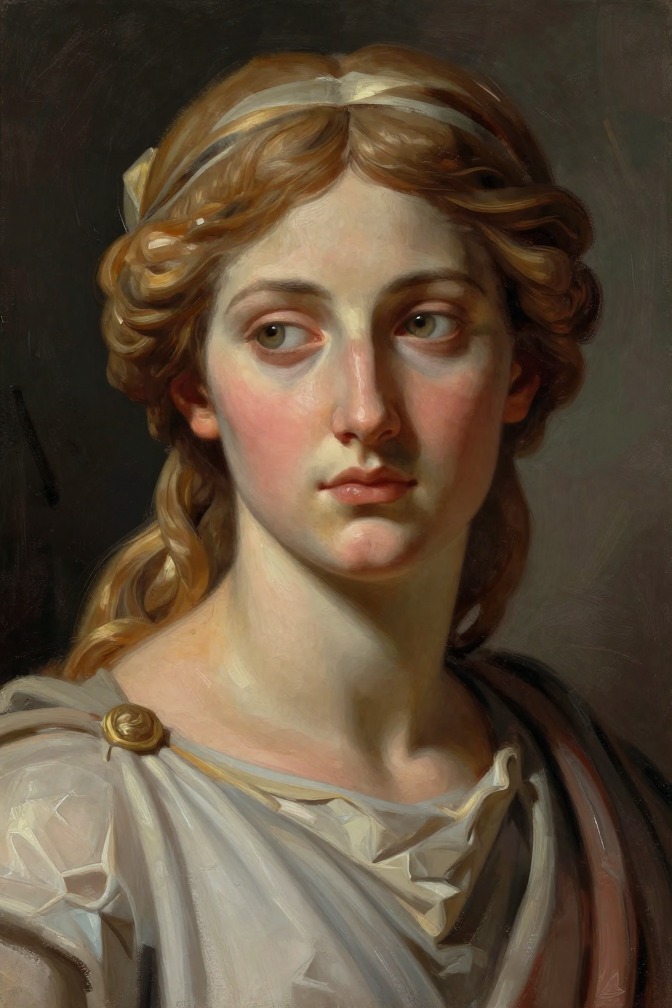
The formulaic epithet "grey-eyed Athene" (or "grey-eyed Athena") is the most frequent and thematically charged descriptive tag for the goddess Athena in the Odyssey. It appears at pivotal moments of divine intervention, marking her as the embodiment of piercing intelligence, strategic clarity, and protective foresight—the quality that most consistently guides Odysseus and Telemachus toward their respective goals.
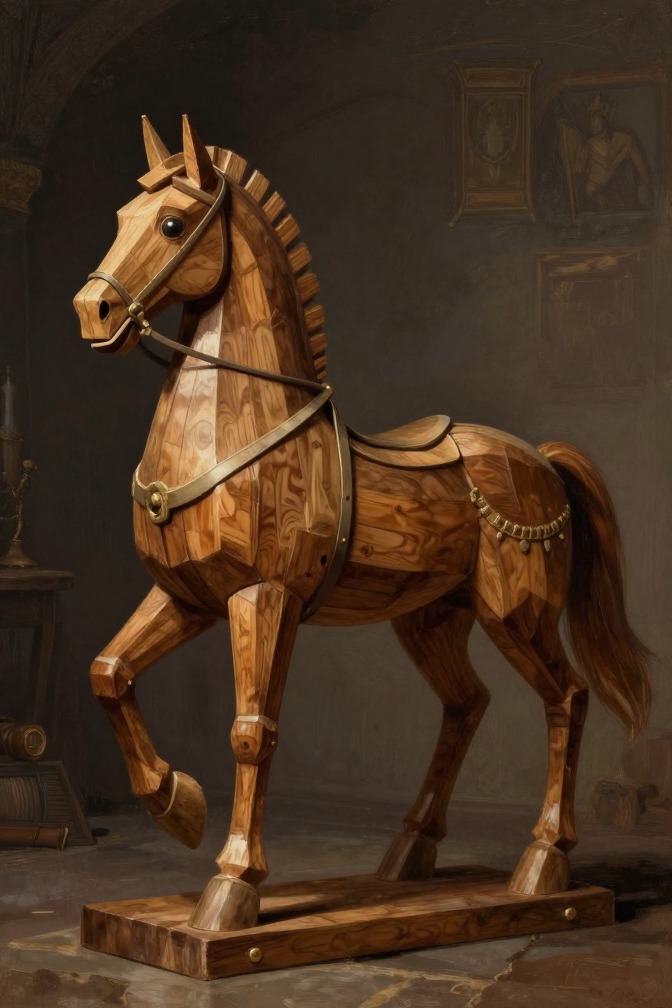
The wooden horse is the central stratagem of the Trojan War in the Odyssey, a massive hollow construction devised by Epeus with Athena's aid and filled with Greek warriors, which the Trojans themselves drag inside their city walls, leading to the sack of Troy. It functions as the ultimate symbol of Odysseus's cunning and the decisive turning point of the war, and its story is performed twice within the poem—once by the bard Demodocus at the Phaeacian court and once by Odysseus himself—each performance triggering a different kind of recognition and emotional response.
Asteris is a small, rocky island in the strait between Ithaca and Same, chosen by the suitors as the site for their ambush against Telemachus. Its strategic position—mid-channel with harbors on either side—makes it the perfect location for a murder plot that ultimately fails, underscoring the suitors' overconfidence and the divine protection surrounding Telemachus.
Egypt is a pivotal foreign land in the Odyssey, serving as a site of Menelaus's prolonged detention and eventual enrichment, a setting for Odysseus's fabricated autobiography of disaster and servitude, and a source of the magical drug nepenthe that Helen uses to suppress grief. The country is consistently portrayed as a place of immense wealth, ancient wisdom, and powerful magic, yet also as a dangerous realm where a traveler can be stripped of his identity and reduced to a beggar.
Euboea is a large island off the coast of central Greece that appears in the Odyssey as a landmark on the homeward voyage of Nestor and Menelaus from Troy, and later as a measure of the Phaeacians' extraordinary seafaring ability. Its brief but strategically placed mentions serve to anchor the poem's geography in the real Aegean world while simultaneously establishing a contrast between ordinary human travel and the superhuman speed of the Phaeacian ships.
Geraestus is a significant landmark in the Odyssey, serving as a crucial waypoint where Nestor and his fleet offer sacrifices to Poseidon after a safe night crossing from Troy, and it is also the site of a key geographical argument in Samuel Butler's controversial theory that the poem was written by a young woman living in Trapani, Sicily.
Marathon is a location in Attica mentioned in the Odyssey as a place visited by Athena after leaving Scheria, and it is also referenced in the context of the suitors' depredations and the idealized landscape of the Phaeacian gardens.
Mimas is a stormy headland off Chios that appears in Nestor's account of the Greek fleet's indecision after Troy, and its name recurs in the Odyssey as a geographical marker for dangerous coastal navigation, reflecting the poem's layered use of real and symbolic seascapes.
Same is one of the four islands whose chieftains besiege Penelope as suitors, a fixed point in the geography of Odysseus's kingdom and a recurring symbol of the external pressure that drains his estate while he is absent.
Zacynthus is one of the Ionian islands that, along with Dulichium, Same, and Ithaca itself, sends its leading men to court Penelope and consume Odysseus's estate, making it a key part of the suitors' geography and a symbol of the pressures on Telemachus's household.
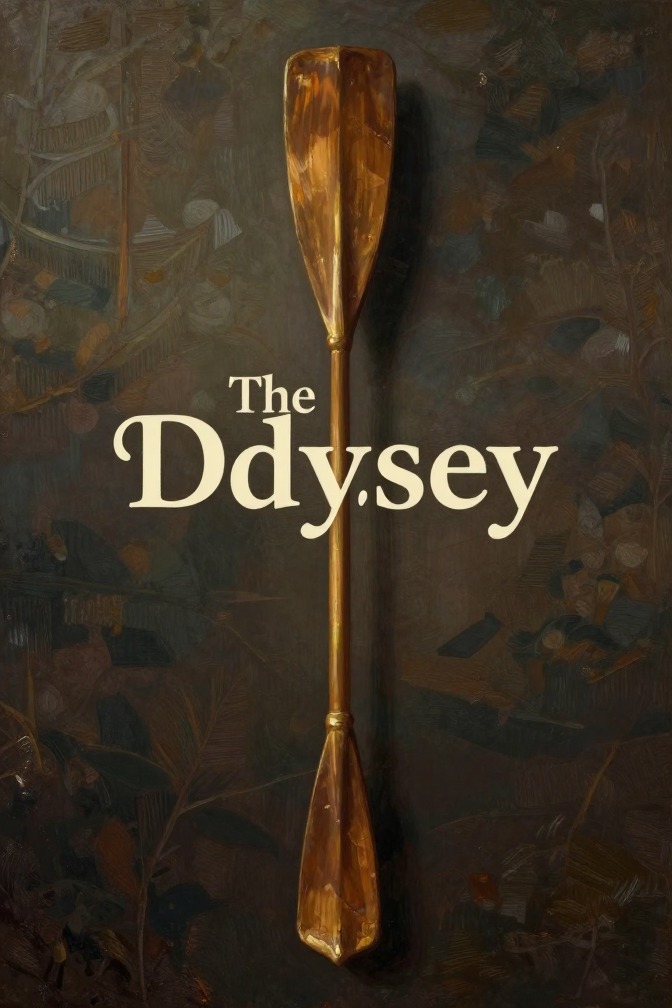
The oar is a prophetic object in Homer's Odyssey, given to Odysseus by the seer Teiresias during his visit to the Underworld. It serves as both a token of a future journey and a symbol of the hero's ultimate fate: after killing the suitors, Odysseus must carry the oar inland until he meets a people who mistake it for a winnowing-fan, there make a final sacrifice to Poseidon, and then await a gentle death from the sea.
The Cimmerians are a mythical people encountered by Odysseus during his journey to the Underworld, described as living in a land of perpetual mist and darkness at the edge of the world, where the sun never shines. Their portrayal establishes a stark geographical and symbolic boundary between the world of the living and the realm of the dead, serving as a threshold for Odysseus's most perilous adventure.
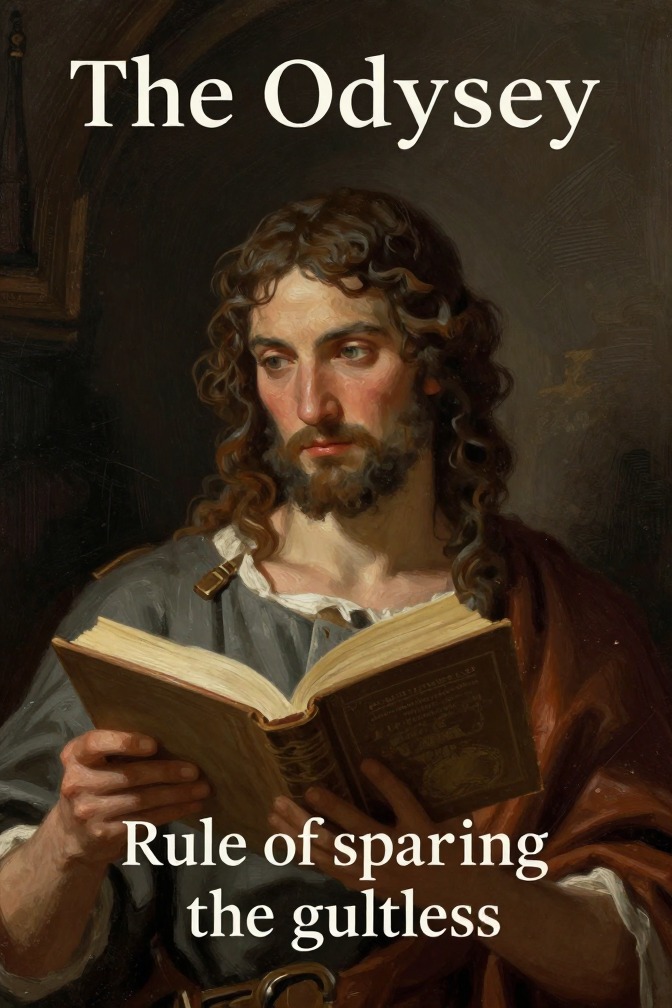
The Rule of sparing the guiltless is a moral and procedural principle in the Odyssey that distinguishes between those who are complicit in wrongdoing and those who are innocent or coerced, dictating that the latter must be spared from punishment. It is most explicitly enacted during the slaughter of the suitors, when Odysseus, at the urging of Telemachus, spares the bard Phemius and the herald Medon, and it is later reaffirmed in the divine peace covenant that ends the poem's cycle of vengeance.
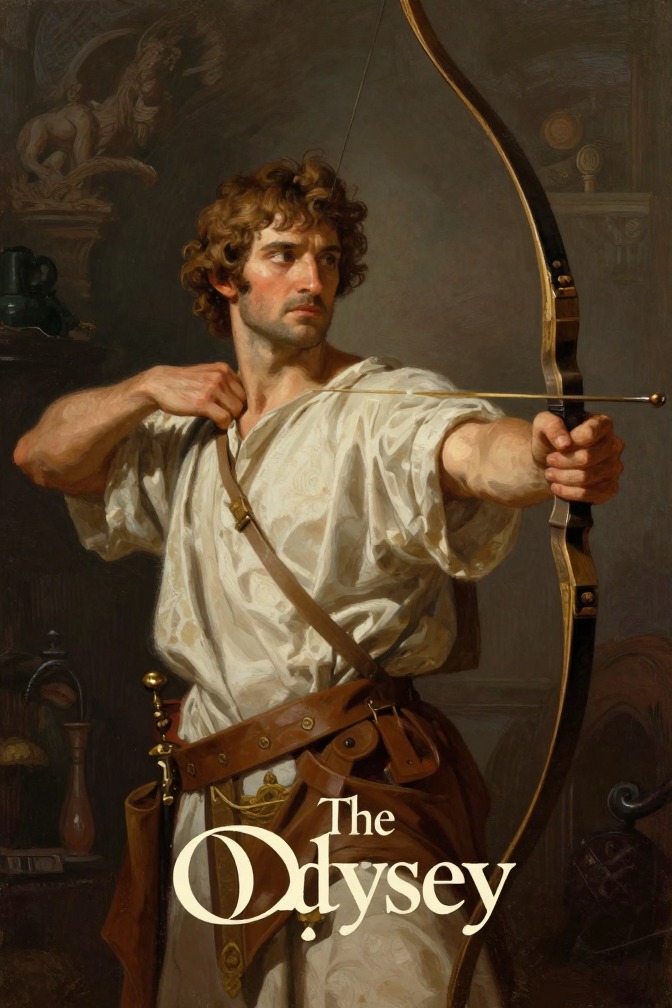
The Rule of the Bow Contest is the decisive trial Penelope devises to choose a new husband among the suitors, requiring them to string Odysseus's great bow and shoot an arrow through twelve axe heads. The contest becomes the mechanism by which Odysseus, still disguised as a beggar, reveals his identity and begins the slaughter of the suitors.
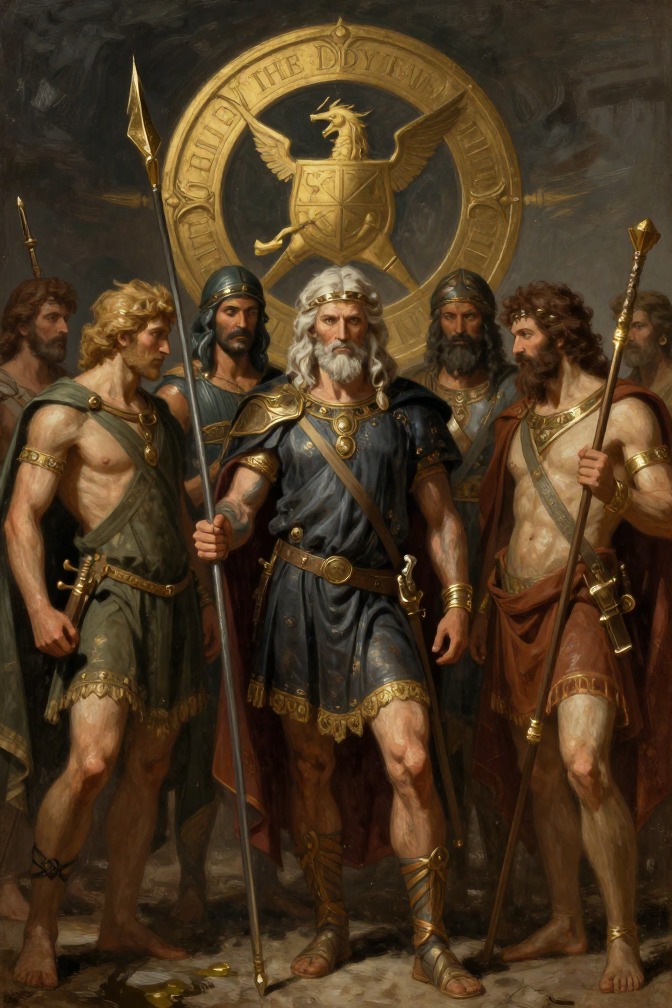
The Suitors' Waste is the sustained, predatory consumption of Odysseus's household resources by the 108 suitors courting Penelope, which drives the economic and moral crisis of the Odyssey and motivates the poem's central acts of revenge and restoration.
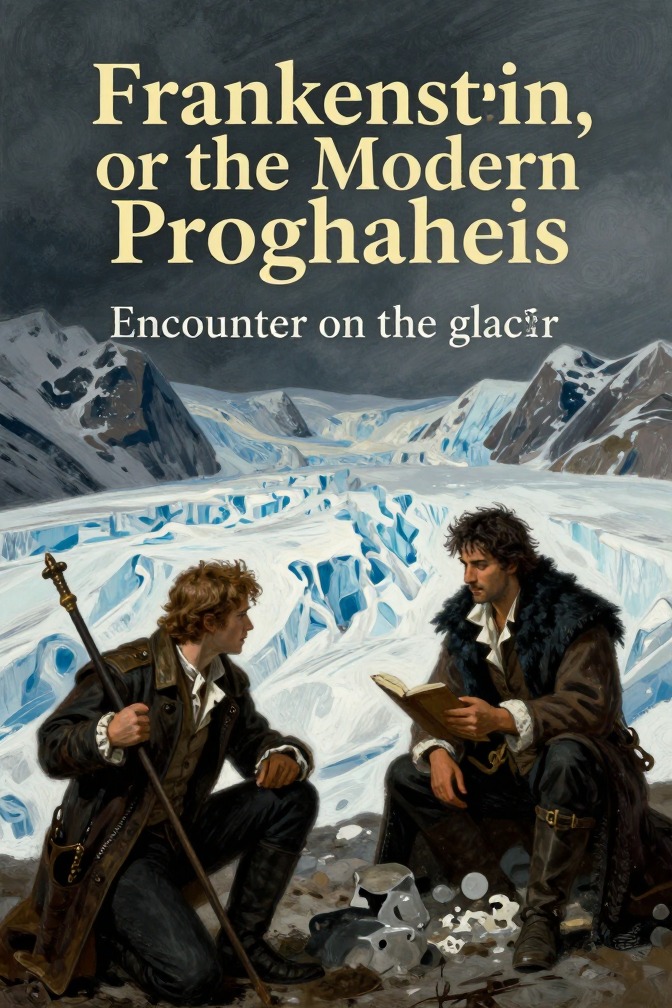
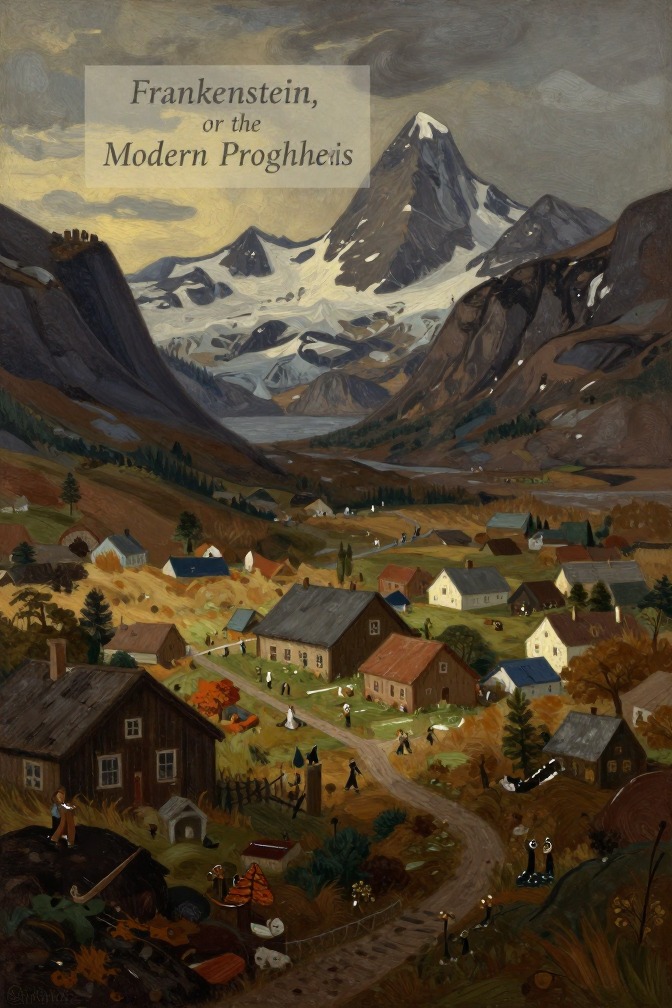
The encounter on the glacier is the pivotal confrontation between Victor Frankenstein and the monster on Montanvert, where the creature narrates his tragic history and demands a female companion, forcing Victor to confront his responsibilities as a creator.
Victor Frankenstein's journey to England, undertaken in the late autumn of 17—, is a pivotal expedition that he conceives as a necessary step to fulfill his promise to create a female companion for the monster, but which instead becomes a descent into deeper isolation, horror, and tragedy as he travels through the Rhine, the Netherlands, and England, ultimately leading to the destruction of the female creature and the murder of his closest friend.
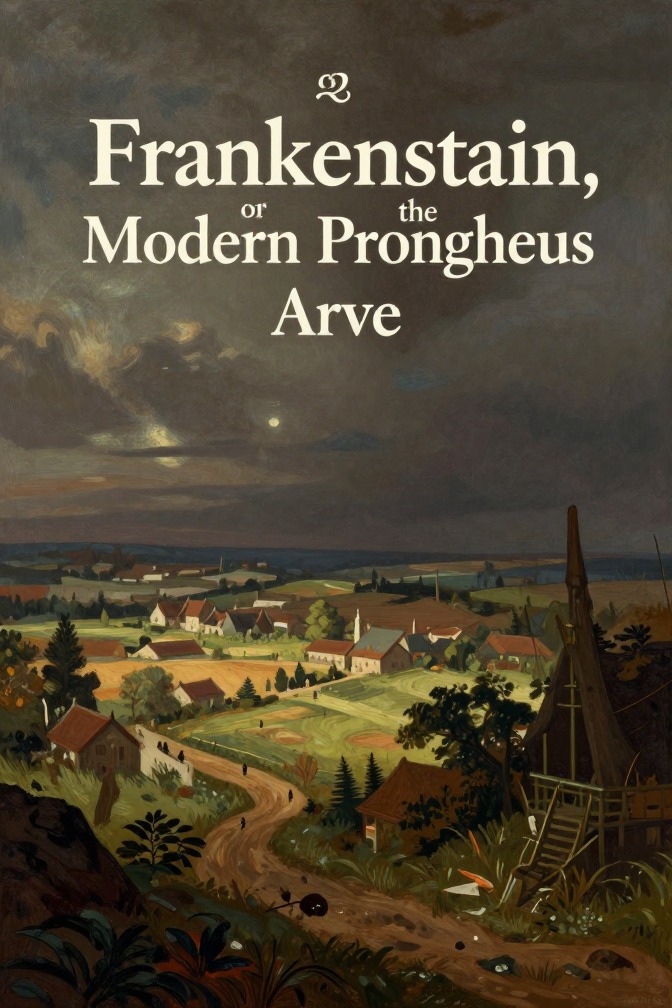
The Arve is the river whose ravine and valley Victor Frankenstein traverses on his journey to Chamounix in August, following the execution of Justine Moritz, and whose sounds and scenery provide a temporary, sublime counterweight to his overwhelming guilt and despair.
Austria is a European nation that appears in Frankenstein as the origin of the dungeons where Safie's father, the Turk, is imprisoned, as the source of the Austrian government that restores part of Elizabeth's inheritance, and as a political entity whose dungeons and power structures shape the fates of several characters.
Chamounix is the Alpine valley in Switzerland where Victor Frankenstein, after the deaths of William and Justine, seeks solace in nature and encounters the monster on the glacier of Montanvert, leading to the creature's narrative of his own suffering and his demand for a female companion.
Constantinople is the distant imperial capital that frames the tragic romance of Felix and Safie in Mary Shelley's *Frankenstein*, serving as the origin of Safie's father's imprisonment, the destination of his escape, and the symbol of the patriarchal oppression from which Safie flees to join her exiled lover in Germany.
Edinburgh, the capital of Scotland, serves as a brief but significant waypoint in Victor Frankenstein and Henry Clerval's journey through Britain, a city whose romantic castle and picturesque environs contrast sharply with Victor's deepening despair and single-minded obsession with his monstrous task.
Greenland appears in Frankenstein as a remote, icy region associated with Robert Walton's early seafaring experience and with the psychological landscape of Victor Frankenstein's nightmares and trauma, serving as a symbol of extreme isolation and the sublime dangers of nature.
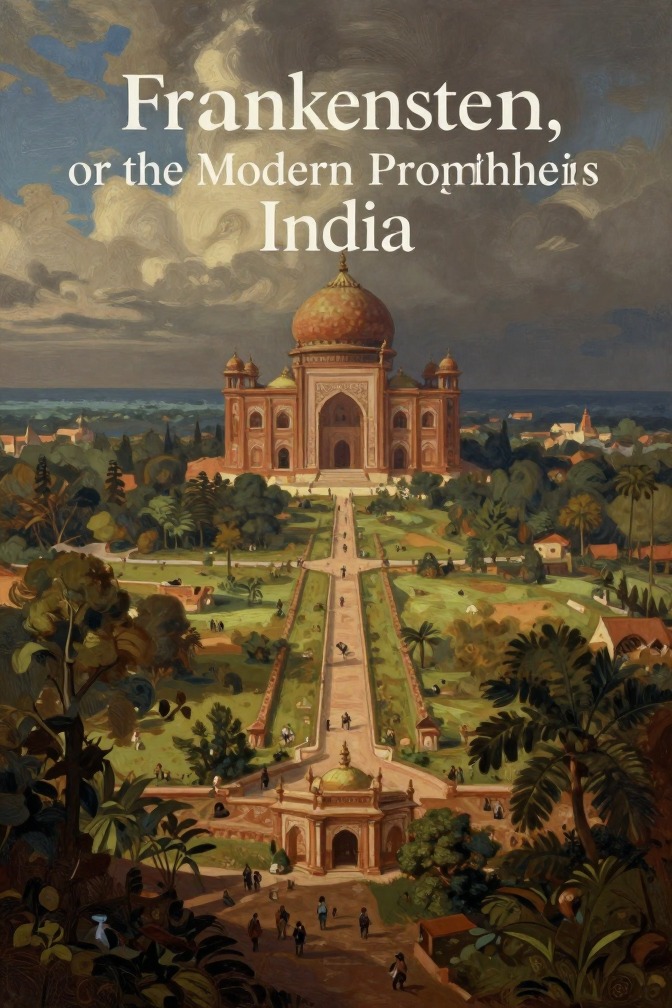
India is a distant but symbolically significant destination in Mary Shelley's Frankenstein, representing the intersection of colonial ambition, romantic idealism, and the tragic consequences of Victor Frankenstein's secret pact with his creature. Though never visited by the protagonist, India appears as the ultimate goal of Henry Clerval's planned expedition and as a counterpoint to the monster's proposed exile in South America, highlighting themes of exploration, cultural encounter, and the pursuit of glory.