Duke Must Be Popular is a political principle in Frank Herbert's Dune, articulated by Thufir Hawat to Paul Atreides, asserting that a ruler's popularity among the Great Houses of the Landsraad arouses the jealousy of the powerful and thereby constitutes a deadly peril. This principle frames the central conflict of the novel, explaining why the Padishah Emperor Shaddam IV and the Baron Vladimir Harkonnen conspire to destroy House Atreides, and it shapes Duke Leto's political strategy and his son Paul's eventual rise to power.
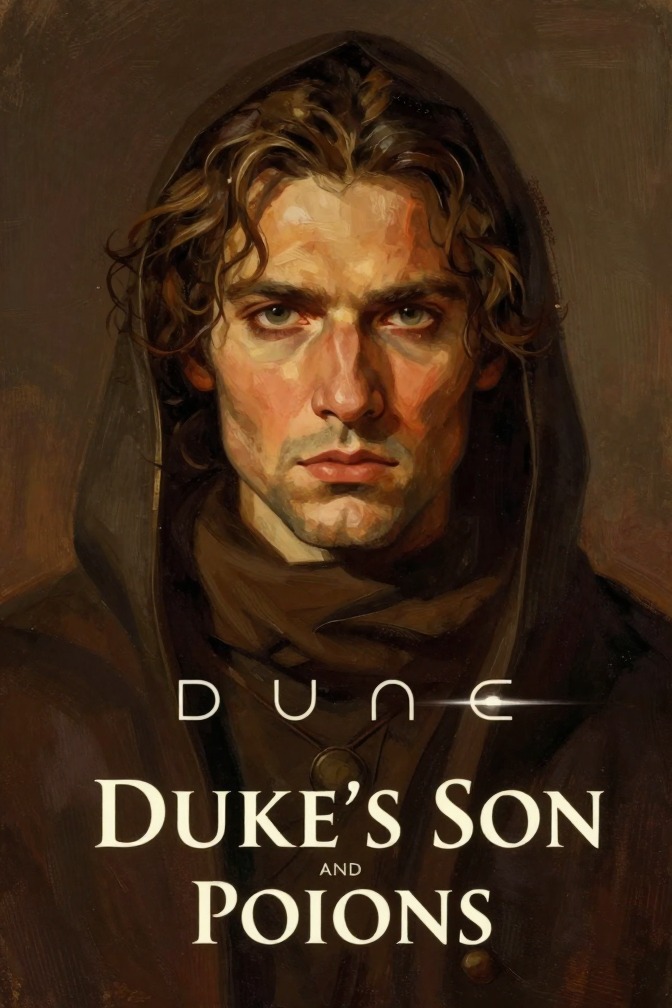
Duke's Son and Poisons is a recurring rule of the Imperium in Frank Herbert's Dune, articulated by the Reverend Mother Gaius Helen Mohiam during Paul Atreides' gom jabbar test. It establishes that a ducal heir must possess comprehensive knowledge of poisons—their types, delivery methods, and antidotes—as an essential survival skill in a society where assassination is a political tool. The rule is first stated as a general principle and then demonstrated through the test itself, which uses a poison-tipped needle as the ultimate threat, and later reinforced by Paul's own knowledge and the practical applications of poison in the plot.
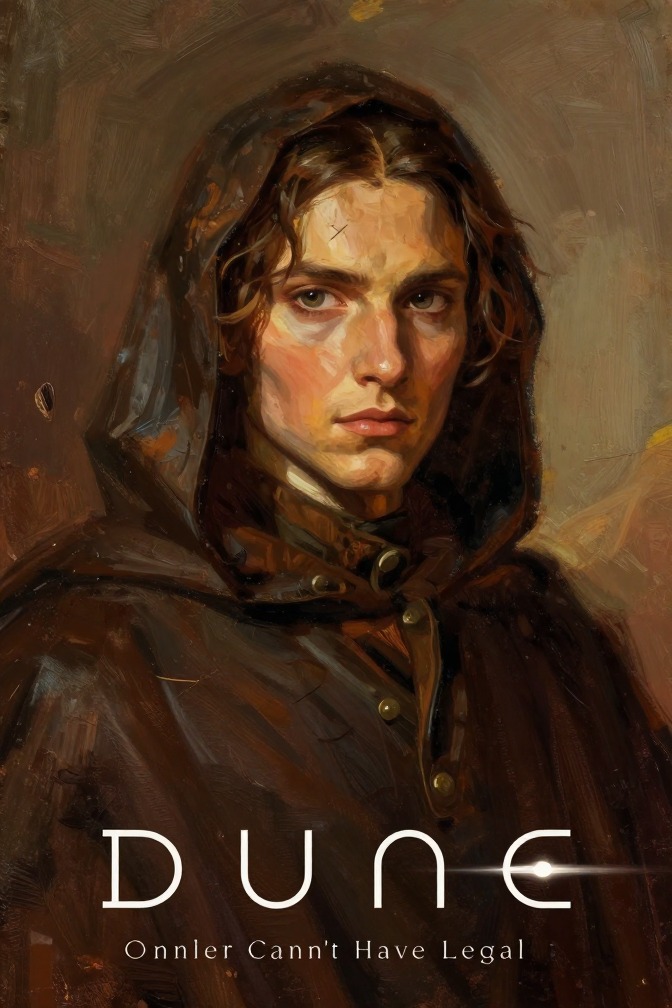
The rule that the Emperor cannot have a legal son is a foundational principle of the Imperium in Frank Herbert's Dune, shaping dynastic politics, the Bene Gesserit breeding program, and the succession crisis that drives the novel's plot. This rule, rooted in the political balance between the Padishah Emperor, the Landsraad, and the Spacing Guild, dictates that the Imperial throne can only pass through the female line, making daughters—especially those trained by the Bene Gesserit—the key to power. The rule's most dramatic consequence is the marriage of Princess Irulan to Paul Atreides, which legitimizes his claim to the throne while leaving Chani as his true consort, a political arrangement that underscores the tension between personal desire and dynastic necessity.
The Faufreluches is the rigid class system of the Imperium in Frank Herbert's Dune, a hierarchical order that assigns every person a fixed place in society. It is a central pillar of the political structure, shaping the lives of Great Houses, commoners, and the Fremen, and its enforcement and subversion are key to the novel's conflicts.
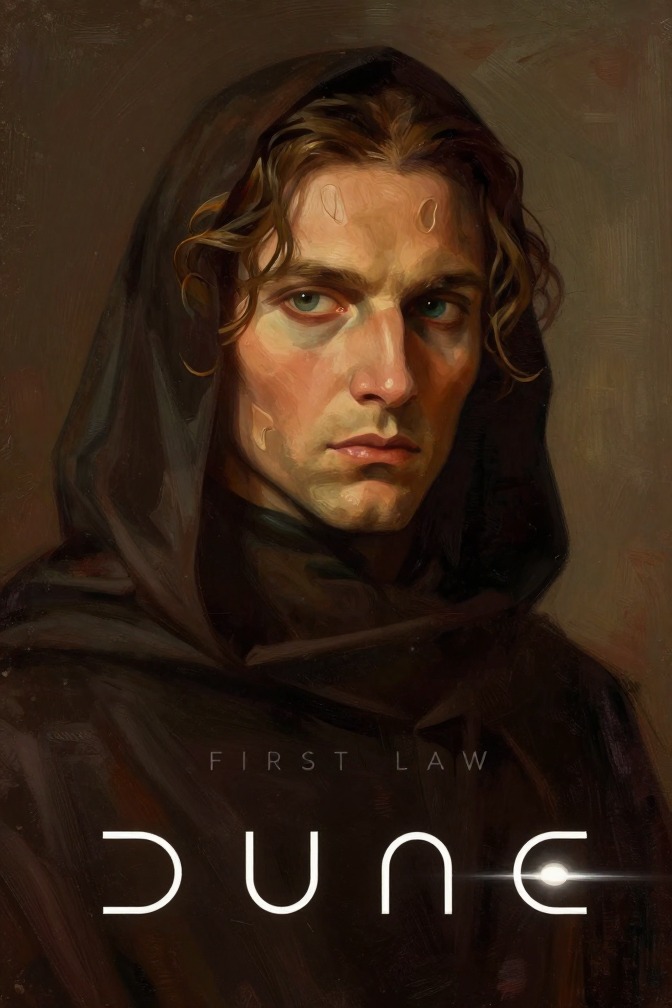
The First Law of Mentat is a foundational principle of Mentat logic in Frank Herbert's Dune, articulated by Paul Atreides during his conversation with the Reverend Mother Gaius Helen Mohiam. It states that a process cannot be understood by stopping it; understanding must move with the flow of the process, join it, and flow with it. This law encapsulates the Mentat's method of holistic, dynamic analysis, contrasting with static or reductive approaches, and it becomes a key element in Paul's intellectual and philosophical development.
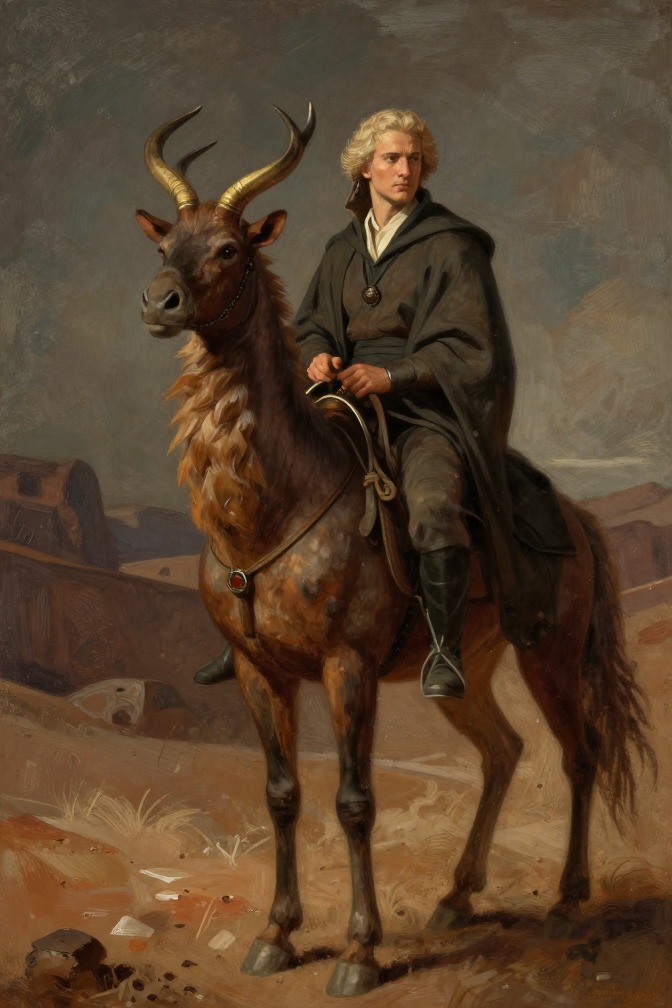
The Fremen rule that every adult must ride a sandworm is the central rite of passage and the defining test of full membership in the tribe. Known as the sandride or the sandrider test, this practice transforms a Fremen from a dependent youth into a self-sufficient warrior who can travel the deep desert, command a maker, and claim the respect of the sietch. The rule is not merely a survival skill but a sacred obligation that separates the Fremen from all other peoples of Arrakis and underpins their military and ecological power.
The Fremen funeral ceremony, as depicted in Frank Herbert's Dune, is a sacred ritual that transforms the death of a tribe member into a communal act of water conservation and spiritual continuity. It is a defining practice of Fremen culture, where the deceased's body is rendered for its water, which belongs to the tribe, and their belongings are distributed among friends and leaders. The ceremony is a profound expression of the Fremen's relationship with death, water, and community, and it plays a crucial role in the novel's exploration of cultural identity and the harsh realities of life on Arrakis.
The Fremen rule that a leader must be able to kill, and that leadership is proven through combat, is a cornerstone of their society, shaping succession, loyalty, and the very identity of their leaders. This principle, rooted in the harsh realities of Arrakis, is tested and ultimately transformed by Paul Atreides, who both embodies and transcends it.
Reverend Mother Memories, also called Other Memory, is the accumulated ancestral awareness that a Bene Gesserit Reverend Mother gains after transforming the Water of Life within her body. It is the defining inheritance of the Sisterhood's most senior adepts, a vast corridor of past lives that grants access to the experiences of every preceding Reverend Mother. In Dune, this phenomenon is central to the Fremen rite of passage, the transformation of Lady Jessica, and the unique nature of her daughter Alia, who receives the memories before birth.
The Sandrider Guide Worm rule is the Fremen technique for steering a sandworm (Shai-Hulud) by planting and manipulating maker hooks in the creature's ring segments, a skill that marks the transition from novice to full Fremen sandrider and is central to Paul-Muad'Dib's mastery of desert power.
The rule that shields must not be activated in the open desert of Arrakis is a fundamental survival law for the Fremen and a critical tactical reality for all who venture onto the sand. A shield's energy field attracts sandworms from great distances, driving them into a killing frenzy and ensuring the death of anyone wearing one. This prohibition shapes Fremen combat, technology, and their entire relationship with the desert, making them uniquely vulnerable to projectile and lasgun attacks but also masters of a weaponless environment that their enemies cannot safely enter.
Stilltent Use is a survival rule of the Fremen of Arrakis, a portable, sealable enclosure of micro-sandwich fabric that reclaims the ambient moisture of its occupants' breath as potable water. It is a cornerstone of desert survival, enabling travel and rest in the open wasteland, and its use is governed by strict water discipline. The rule is demonstrated through the experiences of Paul Atreides and Lady Jessica, who rely on the stilltent for shelter and moisture conservation during their flight into the desert, and it is a key element of the Fremen's mastery over their harsh environment.
Storm Avoid is a survival rule on Arrakis, the desert planet of Frank Herbert's Dune, dictating that travelers must never fly into or be caught in the open during the planet's violent sandstorms, which can reach speeds of seven hundred kilometers per hour and strip flesh from bone. The rule is established through the warnings of the Imperial Planetologist Liet-Kynes and is dramatically tested when Paul Atreides and his mother, Lady Jessica, are forced to fly their ornithopter into a massive storm to escape Harkonnen pursuers, surviving only by riding the storm's vortex.
Caid is a military rank in the Imperium of Frank Herbert's Dune, denoting a Sardaukar officer whose duties primarily involve dealings with civilians, typically as a military governor over a full planetary district. It sits above the rank of Bashar but below that of Burseg in the standardized military classification. The term also appears in the context of the Fremen, who live at the desert edge without a caid or bashar to command them, highlighting their status as a free people outside the rigid class structure of the Imperium.
The Judge of the Change is the Imperial arbiter appointed to oversee the formal transfer of power on Arrakis from House Harkonnen to House Atreides, a role that carries the authority to monitor the change of fief, arbitrate disputes, and enforce the legal forms of the Great Convention. The position is held by the Imperial Planetologist, Dr. Kynes, whose dual loyalties and Fremen identity make him a pivotal and ambiguous figure in the opening of the novel.
The Panoplia Propheticus is the complete body of prophetic legends, rituals, and superstitions that the Bene Gesserit Missionaria Protectiva deliberately seeded across the universe to safeguard its agents and prepare primitive worlds for their influence. On Arrakis, this pre-planted mythology—including the messianic figures of the Lisan al-Gaib and the Mahdi—became the crucial framework that allowed Paul Atreides and his mother, Lady Jessica, to find sanctuary among the Fremen and ultimately transformed Paul into the religious leader Muad'Dib, fulfilling and reshaping the prophecy in ways the Bene Gesserit never intended.
The Watermaster is a Fremen official charged with the ritual measurement, custody, and distribution of water within a sietch community, embodying the tribe's absolute reverence for water as the most precious substance on Arrakis. This role is central to Fremen social structure, religious ceremony, and survival discipline, as water is not merely a resource but the very currency of life, honor, and obligation.
The Month of Caprock is the autumn month in the Fremen calendar of Arrakis, marking the time when Stilgar's troop returns to Sietch Tabr with Paul and Jessica. It is a period of transition, where the desert's harshness and the Fremen's way of life are most evident, and it serves as a backdrop for Paul's integration into the tribe.
Aunt Alexandra's arrival at the Finch household marks a decisive shift in the domestic and social order of the family, introducing a rigid, tradition-bound feminine influence that challenges Scout's tomboy independence and Jem's emerging adolescence, while also embedding the Finch family more deeply into Maycomb's caste-conscious social fabric.
Helen Robinson is the wife of Tom Robinson, a Black man falsely accused of rape in Maycomb. Though she appears only briefly in the narrative, her suffering and the community's response to her embody the social and economic consequences of racial injustice, making her a crucial figure in the novel's exploration of systemic oppression.
Jessie is the unnamed Negro attendant who lives with and cares for Mrs. Henry Lafayette Dubose, serving as the sole witness to the old woman's morphine withdrawal and the enforcer of the daily reading sessions imposed on Jem Finch as punishment for destroying Mrs. Dubose's camellias.
Mr. Link Deas is a minor but morally significant character in Maycomb, a white farmer who quietly defies the town's racial code by employing Helen Robinson after her husband Tom is jailed, and whose brief, principled interventions mark him as one of the few citizens who acts on decency rather than prejudice.
Reverend Sykes is the pastor of First Purchase African M.E. Church in Maycomb, a leader who guides his congregation with moral authority, practical compassion, and a willingness to challenge both his own community and the wider racial order. He welcomes Jem and Scout Finch to his church, organizes a collection for Tom Robinson's family, and delivers sermons that blend theological denunciation with direct, personal accountability.
Uncle Jack Finch is Atticus Finch's younger brother, a doctor from the city who visits Maycomb each Christmas and becomes a key adult figure in Scout's early moral education, particularly through his flawed but instructive handling of her fight with Francis Hancock.
Zeebo is Calpurnia's eldest son, the garbage collector of Maycomb, and a key figure in the African American community who serves as the music superintendent at First Purchase African M.E. Church, where he leads the congregation in the practice of "linin'" hymns. His role bridges the Finch household and the Black community, and his relationship with his mother reveals the depth of Calpurnia's life outside her domestic employment.
The bluejay appears in Harper Lee's To Kill a Mockingbird as a creature explicitly contrasted with the mockingbird, serving as a permissible target for shooting and thereby sharpening the novel's central moral distinction between harmless innocence and aggressive destructiveness.
The Christmas visit to Finch's Landing erupts into violence when Scout, provoked by her cousin Francis Hancock's repeated slur against Atticus as a "nigger-lover," attacks him and is punished by Uncle Jack, an event that deepens Scout's understanding of loyalty, justice, and the cost of defending her father.
V. J. Elmore's is the Maycomb general store where Scout Finch first sees and later acquires the twirling baton that becomes the instrument of Jem Finch's destruction of Mrs. Dubose's camellias, linking a child's modest desire to a pivotal moral crisis in the novel.
The air rifles are Christmas gifts given to Jem and Scout by Atticus, representing a rite of passage into responsibility and a symbol of the moral lessons about power and restraint that Atticus imparts to his children.
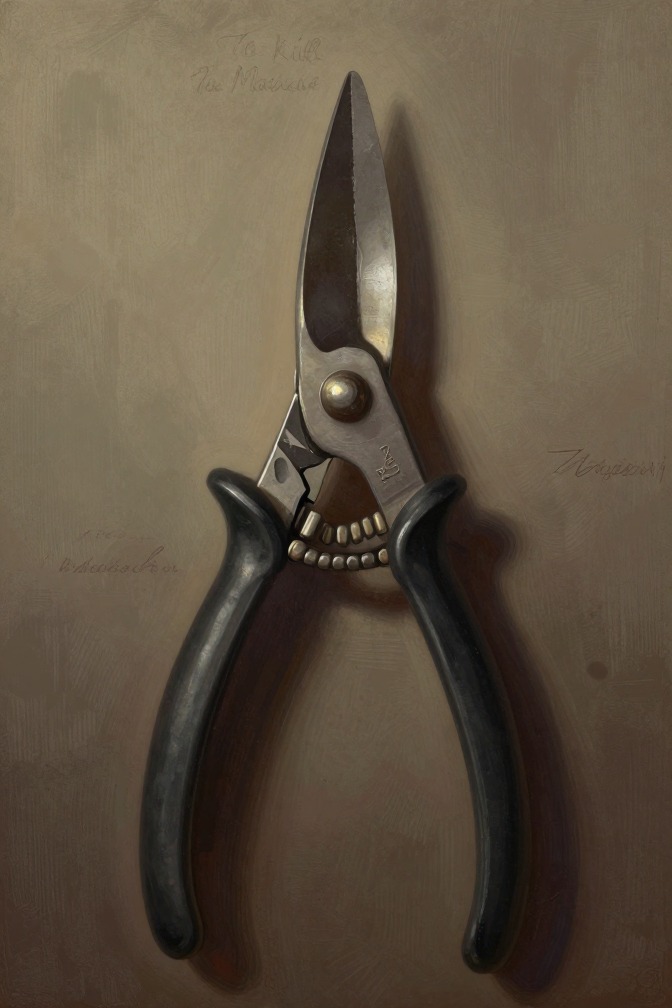
Miss Maudie's hedge-clippers are a humble gardening tool that, through a series of small but telling appearances, become a symbol of her resilience, her sharp humor, and the community's shared ordeal during the fire that destroys her house.