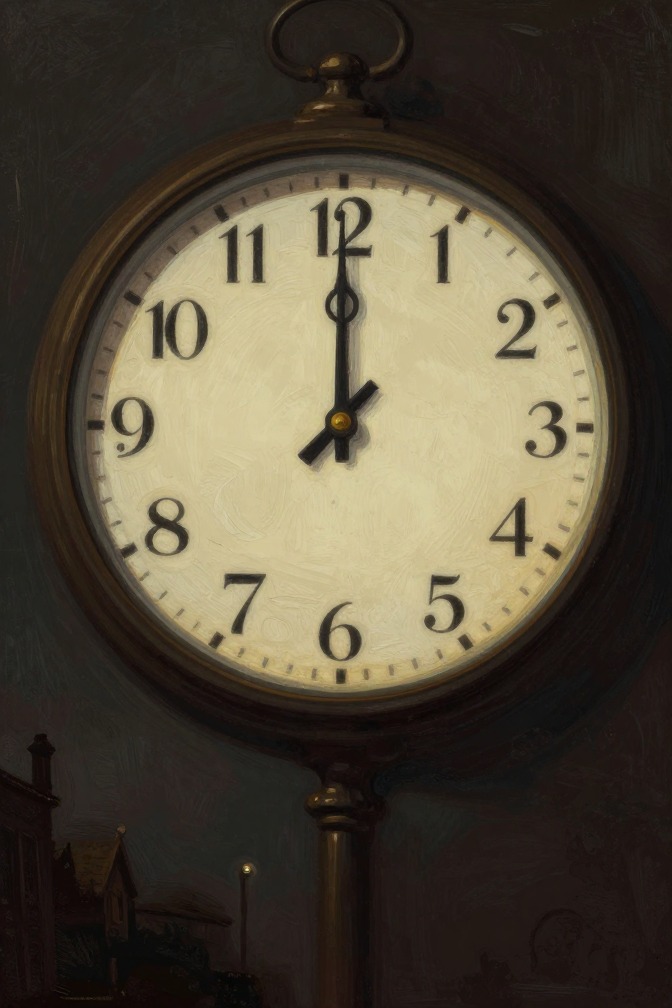
The clocks stopped at 1:17 is the precise moment when the world ended, a single timestamp that marks the catastrophic event that destroyed civilization and created the barren, ash-covered landscape through which the man and the boy journey.
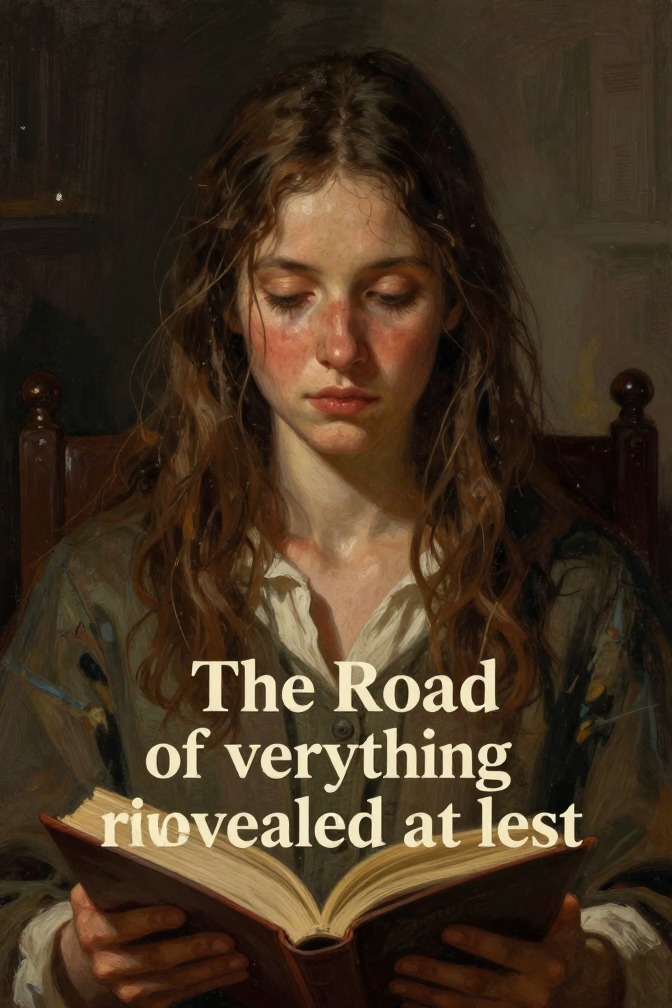
The phrase 'the frailty of everything revealed at last' encapsulates the novel's central revelation: the catastrophic collapse of civilization has exposed the fundamental fragility of all human constructs, systems, and meanings, leaving only the raw, precarious bond between father and son as a last defense against annihilation.
The good guys is a central ethical concept in Cormac McCarthy's The Road, representing the moral identity that the man and the boy strive to maintain in a post-apocalyptic world. It is defined not by power or survival success but by a refusal to commit the atrocities that have become commonplace—cannibalism, murder, and exploitation—and by the commitment to "carry the fire," a metaphor for preserving human goodness, compassion, and hope. The term is tested repeatedly through encounters with the brutalized and the brutal, and it ultimately becomes the boy's inheritance and the basis for his integration into a new family.
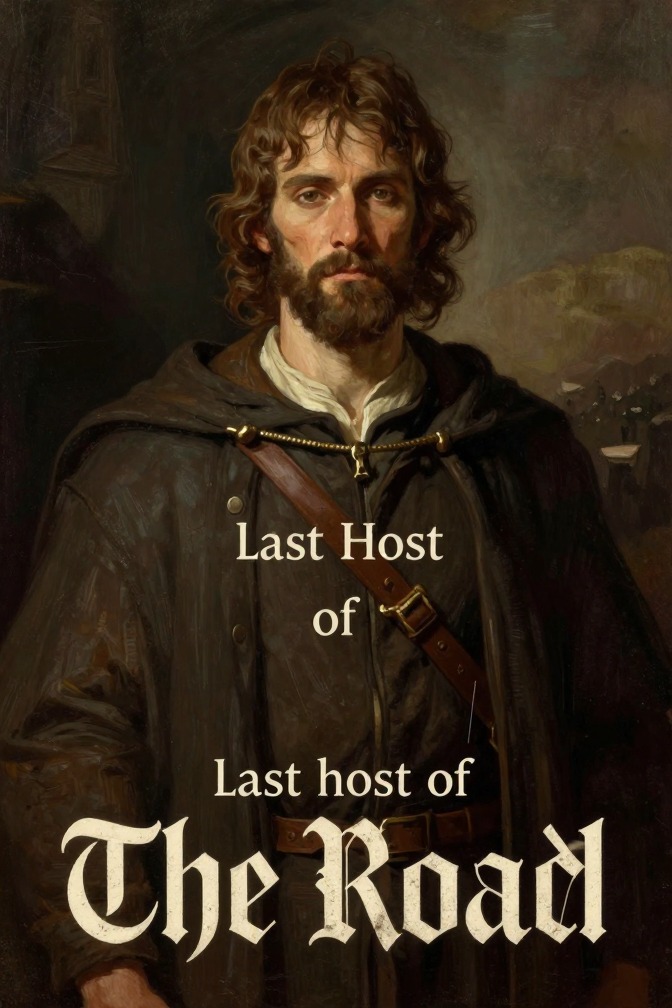
The phrase 'the last host of Christendom' appears in Cormac McCarthy's *The Road* when the man catches a single snowflake and watches it expire in his hand, likening it to the final consecrated wafer of a destroyed civilization. The image condenses the novel's central themes: the extinction of religious meaning, the fragility of grace, and the vanishing of a world whose sacred language has lost its referents.
The sacred idiom shorn of its referents is a phrase from Cormac McCarthy's The Road that encapsulates the collapse of meaning in a post-apocalyptic world, where language loses its connection to the objects and truths it once described, leaving only a hollow shell of words.
The phrase 'the word of God' appears in the novel as the man's declaration that the boy is his warrant, and that if the boy is not the word of God, God never spoke. This identification of the child with divine speech is the novel's most explicit theological claim, and it recurs in the man's whispered prayers, his dreams, and his final instructions to the boy. The phrase anchors the man's belief that the boy carries a sacred significance that transcends the ruined world, and it is tested against the boy's own moral questions and the man's despair.
The binoculars are a recurring tool in *The Road*, used by the man for reconnaissance, surveillance, and the constant vigilance required for survival in the post-apocalyptic wasteland. They serve as an extension of the man's senses, allowing him to scan the barren landscape for threats, signs of life, and navigational landmarks, and their presence in the narrative underscores the themes of watchfulness, the shrinking world, and the desperate search for hope.
The bunker is a hidden underground fallout shelter discovered by the man and the boy in the late stages of their journey south, stocked with vast provisions that represent a miraculous reprieve from starvation and death, yet its discovery also forces them to confront the moral and psychological weight of survival in a dead world.
The Coca Cola is a single, salvaged can of soda that the man finds in a gutted vending machine and gives to the boy, marking one of the few moments of sweetness and shared pleasure in their otherwise barren journey. Its discovery and consumption become a poignant emblem of the lost world's simple joys and the father's desperate wish to give his son a taste of normalcy.
The flare gun is a 37-millimeter bronze signal pistol discovered by the man in a hidden compartment aboard the wrecked sailboat Pájaro de Esperanza, which he swims to and searches off the coast. It becomes a crucial tool for survival, used both as a weapon to drive off an archer who attacks the man and boy and as a symbolic object of hope and celebration when the boy asks to fire it into the dark sky.
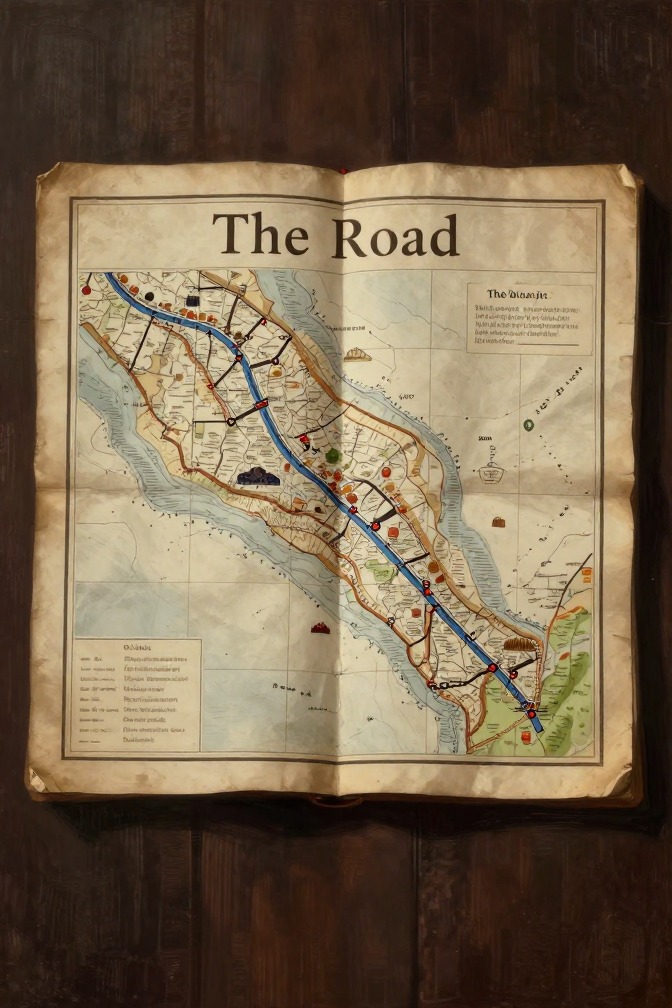
The map is a tattered oil-company roadmap that the man and the boy use to navigate the post-apocalyptic landscape, serving as both a practical tool for survival and a poignant symbol of the lost world. It is a fragile, decaying artifact that the man consults to chart their course southward, measure their progress, and maintain a semblance of direction in a world where the old geography has become meaningless.
The morels are a rare and precious food source discovered by the man and the boy in a dead southern wood, representing a moment of unexpected abundance and natural beauty in the otherwise barren post-apocalyptic landscape. Their discovery and consumption provide a brief respite from starvation and a rare instance of the natural world yielding sustenance, underscoring the novel's themes of survival, the loss of the old world, and the fleeting grace that can still be found in the ashes.
The toy truck is a small yellow toy that the boy carries through the post-apocalyptic wasteland, a rare object of childhood and comfort that appears at key moments of the journey, surviving loss and plunder, and ultimately serving as a symbol of the boy's enduring innocence and the father's love.
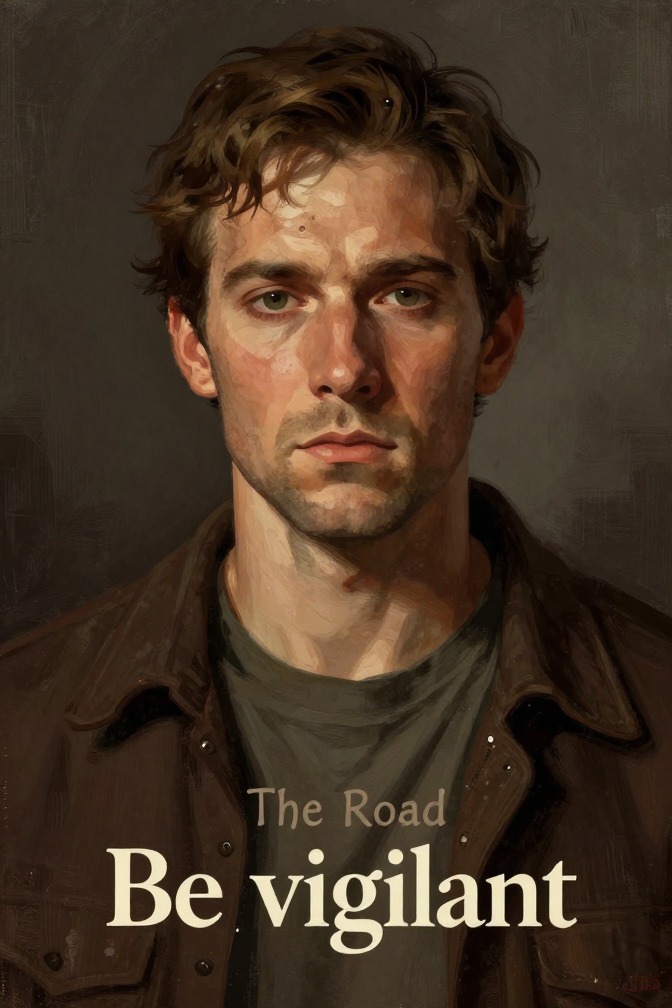
Be vigilant is a core survival rule that the man repeatedly impresses upon the boy throughout their journey through the post-apocalyptic wasteland, shaping the boy's understanding of the world and his own role in it.
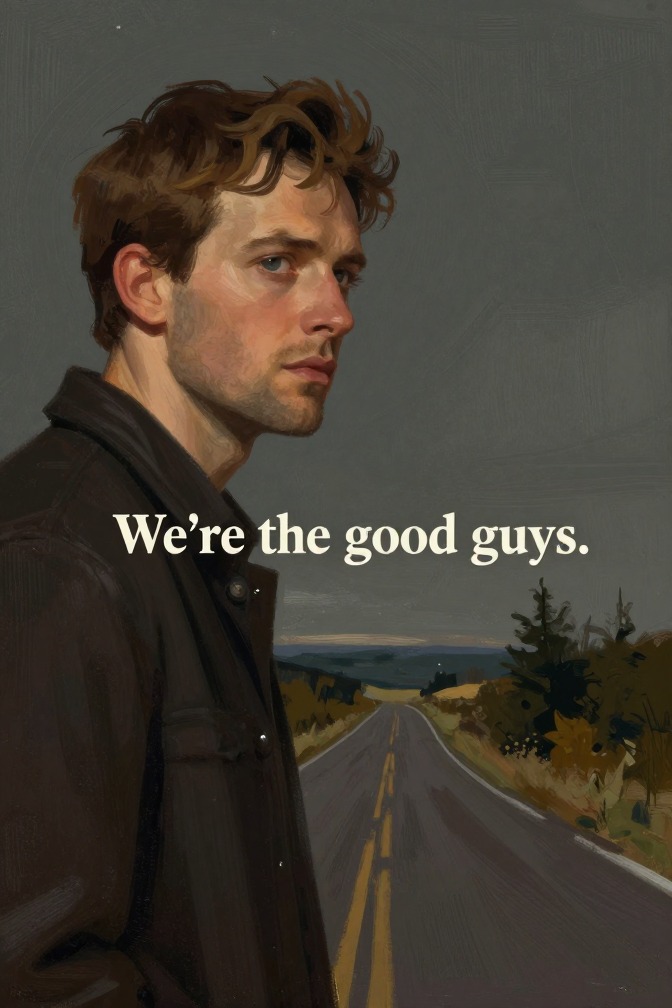
We're the good guys is a moral rule that the man and the boy repeatedly affirm to define their identity and distinguish themselves from the cannibalistic marauders who dominate the post-apocalyptic landscape. It functions as a sacred covenant between father and son, a test of every ethical choice they face, and the core of the boy's compassionate nature that ultimately outlasts his father's death.
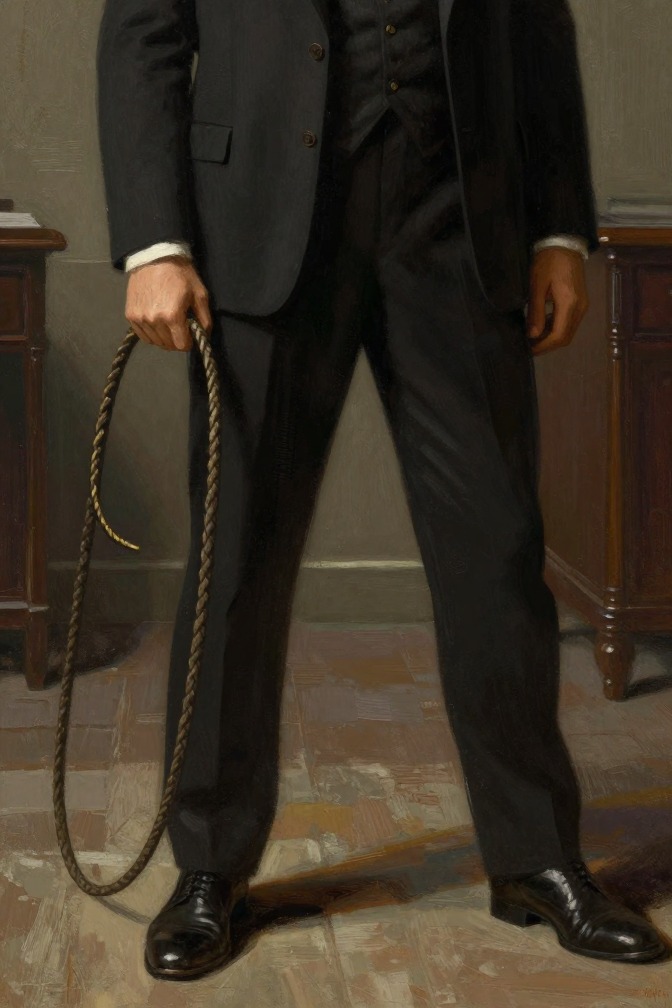
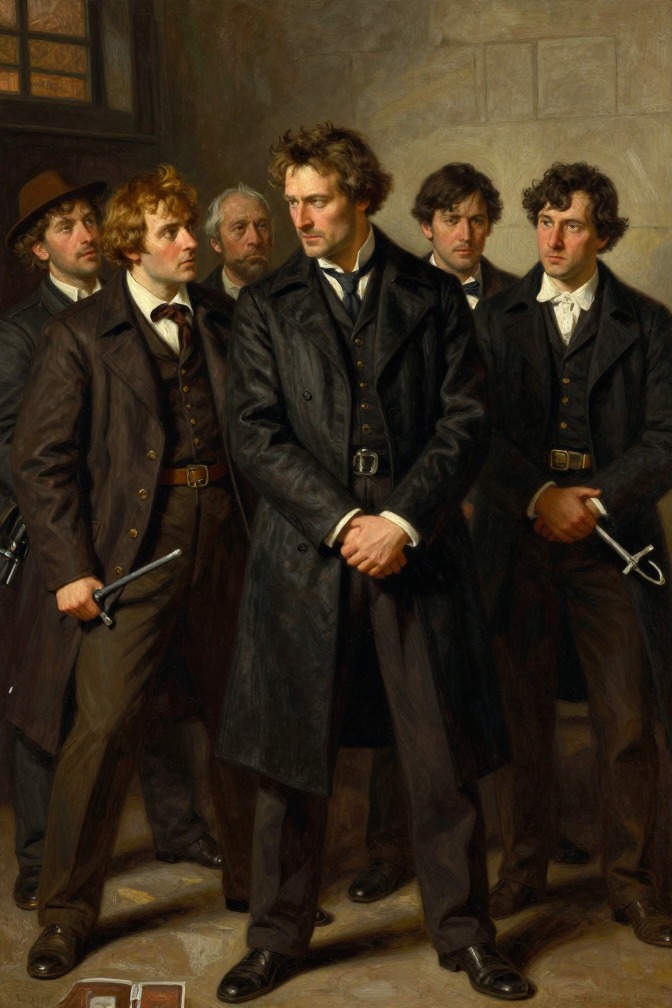
The whip-man scene is a pivotal episode in which Josef K., walking through the bank late one evening, discovers the two policemen who arrested him—Franz and Willem—being flogged in a junk room as punishment for his complaint, and his failed attempt to intervene reveals the court's brutal, inescapable machinery and deepens his entanglement.
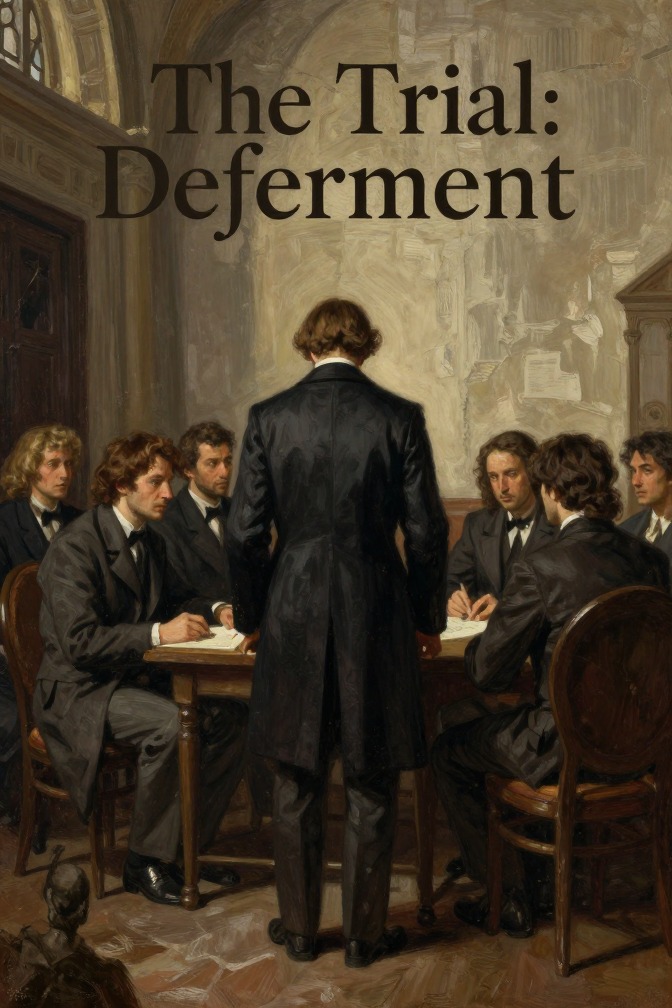
Deferment is one of the three possible outcomes for a defendant in the Court, as explained by the painter Titorelli to Josef K. It is a strategy of keeping the trial permanently in its earliest stages through continuous personal contact with the court, avoiding conviction but never achieving true freedom.
Josef K. is arrested in his boarding house on the morning of his thirtieth birthday by two unidentified warders, an event that initiates the opaque legal proceedings that will consume his life.
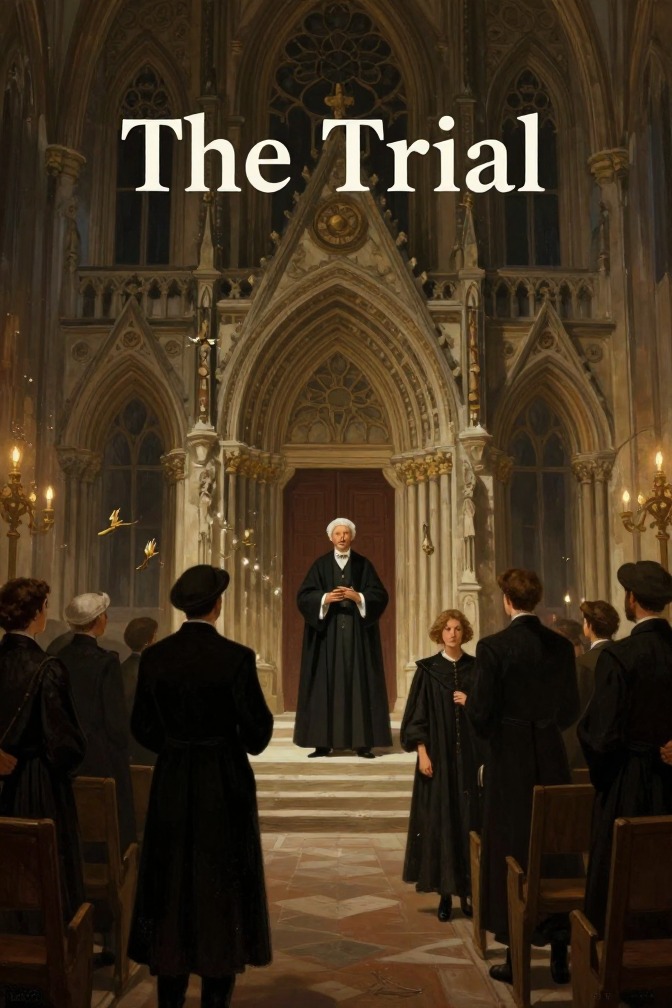
In the Cathedral is the pivotal ninth chapter of Franz Kafka's The Trial, where Josef K., awaiting a vanished Italian business contact, is summoned by name by the prison chaplain in the empty cathedral. The chaplain delivers the parable of the doorkeeper and the man from the country, a dense allegory about the law's inaccessibility and the nature of guilt, and tells K. that his case is going badly and that he is considered guilty. This encounter crystallizes K.'s isolation, his futile search for external help, and the philosophical impasse of his trial, foreshadowing his execution. The chapter is a masterful fusion of narrative and parable, marking the moment when K. confronts the court's ultimate authority and his own self-deception.
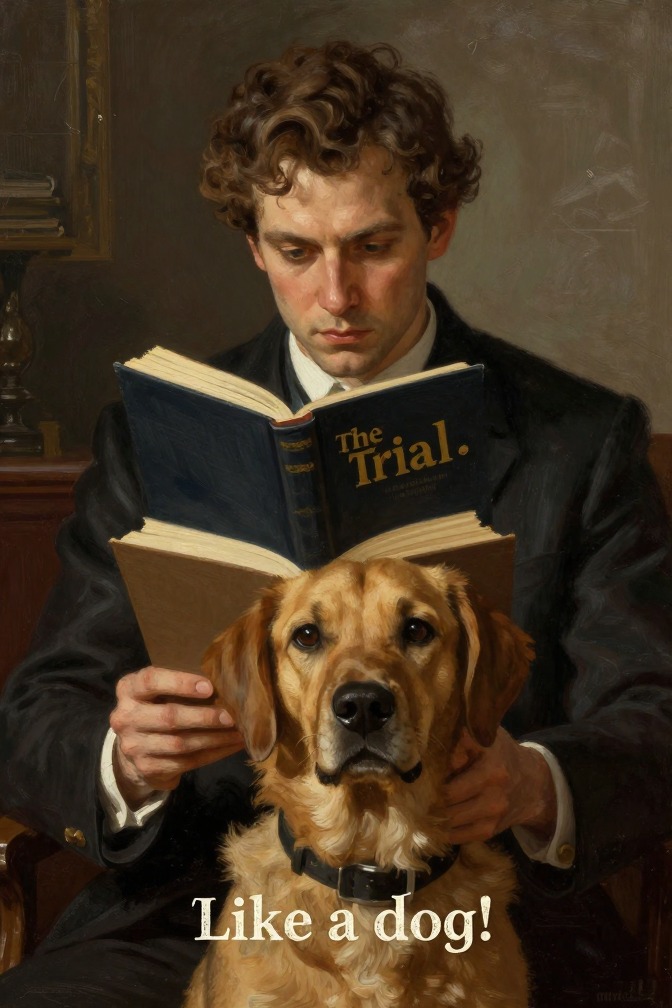
The expression "Like a dog!" is Josef K.'s final utterance in Franz Kafka's The Trial, spoken as he is executed in a quarry on the eve of his thirty-first birthday. It crystallizes the shame and degradation that outlive him, transforming the entire novel's legal and existential struggle into a single, damning verdict on how he has been treated and how he has died.
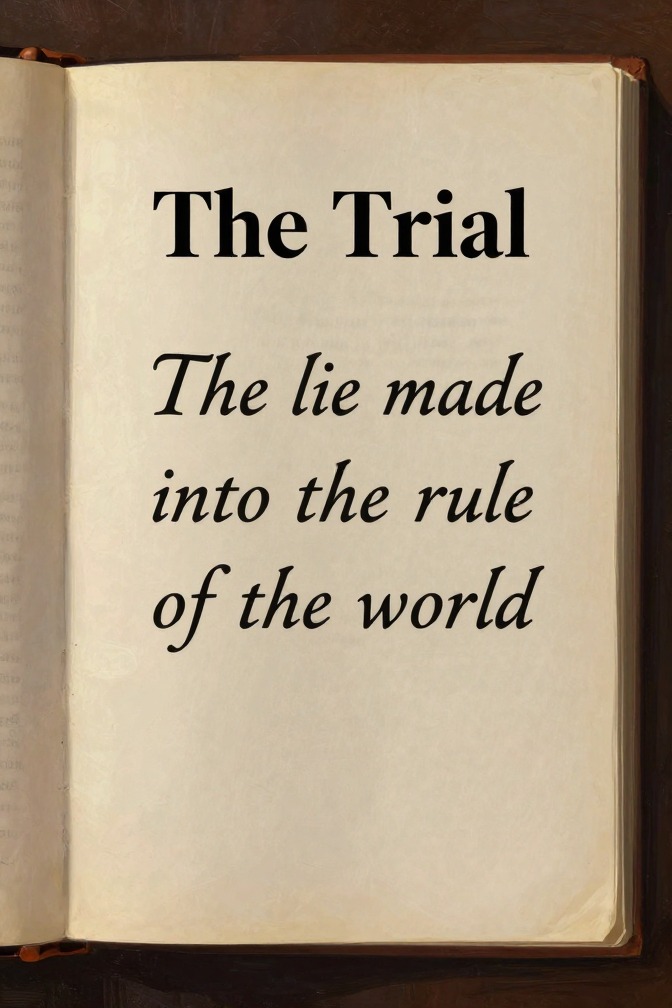
The lie made into the rule of the world is a phrase uttered by Josef K. during his conversation with the prison chaplain in the cathedral, encapsulating his final, despairing interpretation of the court's logic and the nature of the law itself.
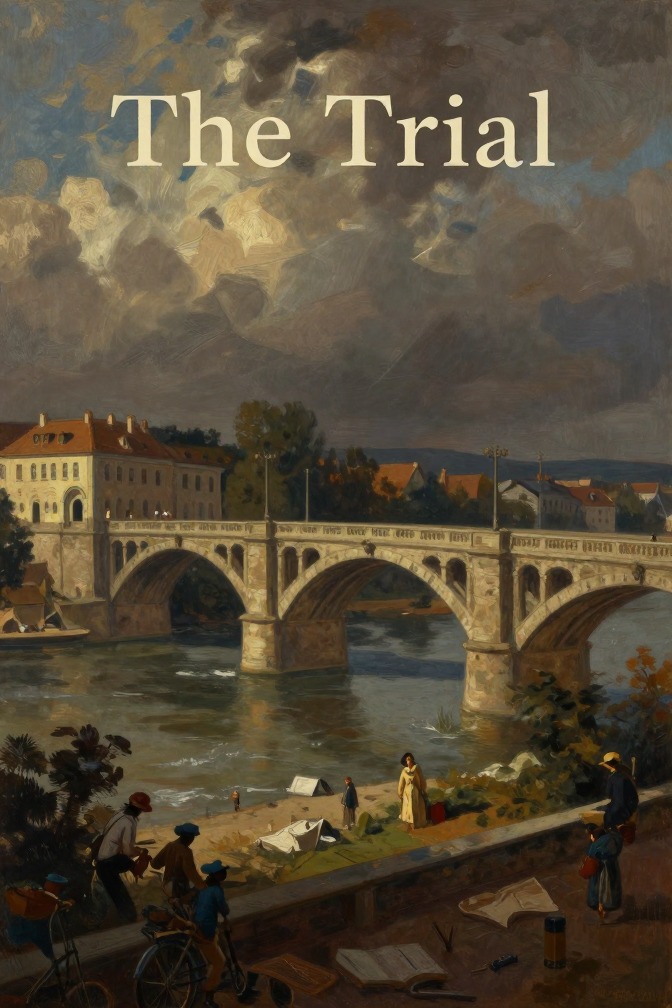
The bridge is a moonlit location in the city where Josef K. is led by his executioners on the night before his thirty-first birthday, and it serves as the final threshold between the built-up city and the isolated quarry where he is killed. It marks the last moment of K.'s life in which he still exercises a degree of voluntary direction over his own movement, and it is the place where he consciously abandons resistance and accepts the necessity of his own death.
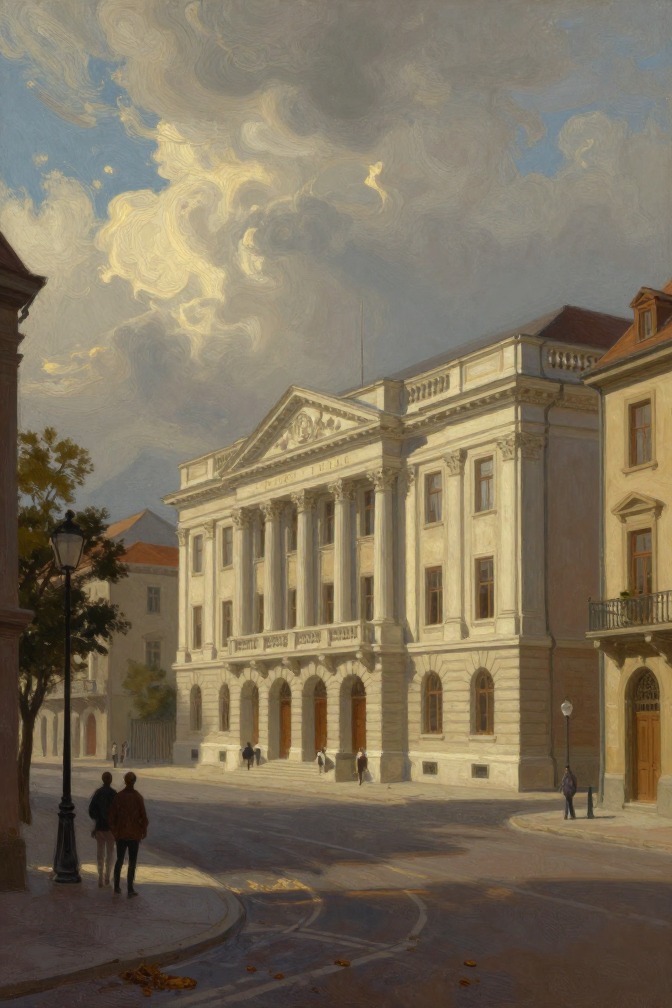
The Court building on Juliusstrasse is the physical seat of the lower court that prosecutes Josef K., a dilapidated tenement in a poor suburb whose attic offices and interrogation room embody the squalor, secrecy, and arbitrary power of the judicial system that ensnares him.
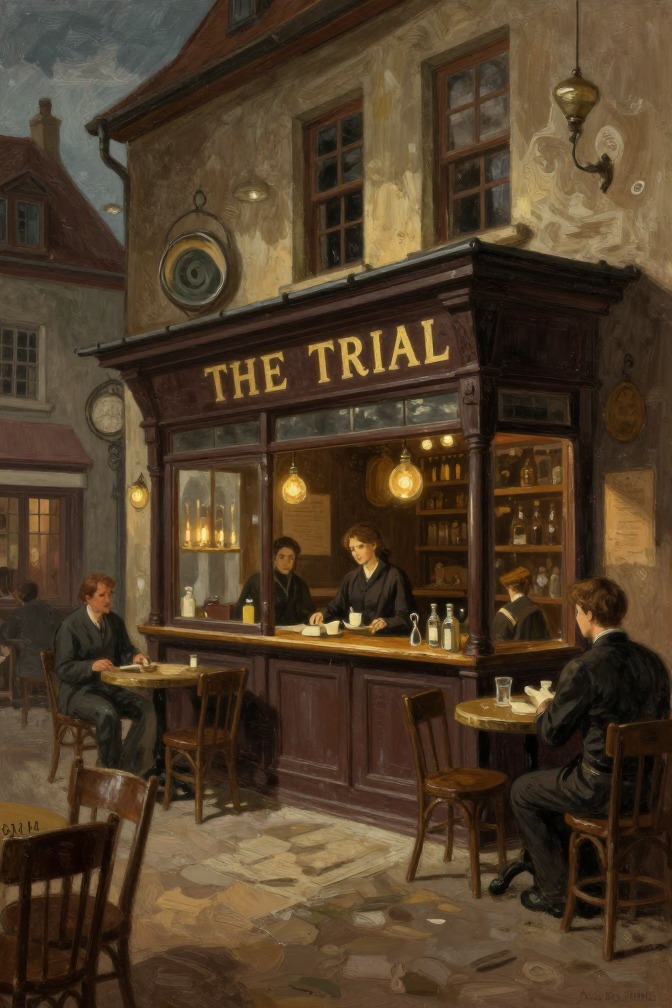
The wine bar where Elsa works is a recurring offstage location in Josef K.'s life, representing the ordinary, sensual world he maintains alongside his trial. It is the place where K. spends his evenings before his arrest, where he visits his lover Elsa, and where he imagines humiliating the student Berthold. The wine bar stands in contrast to the court's oppressive spaces, embodying the normalcy K. tries to preserve as his legal proceedings consume him.
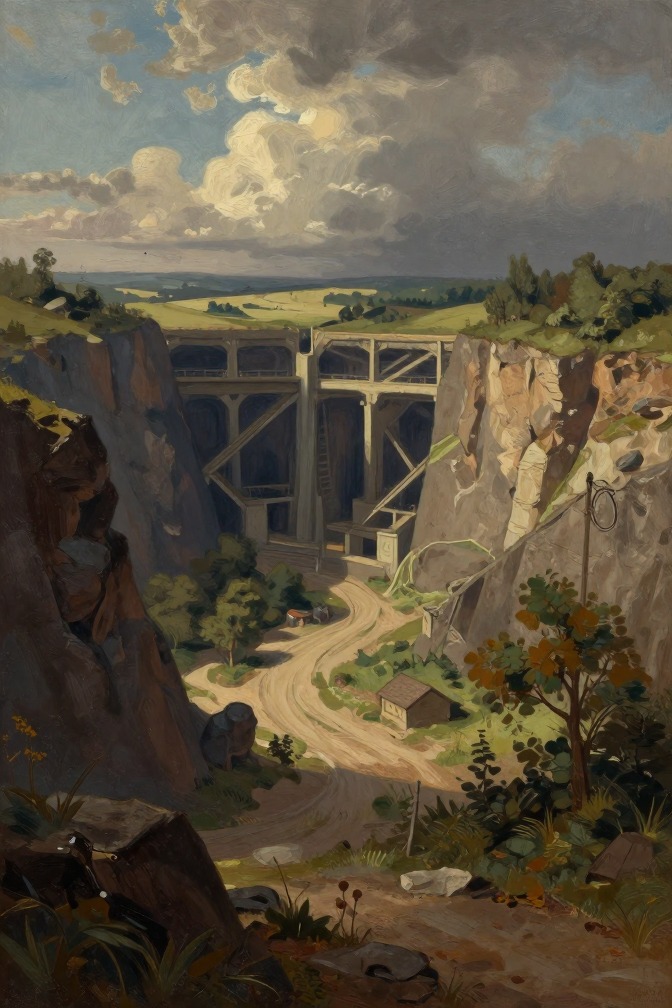
The quarry is the desolate, moonlit location where Josef K. is executed by two men on the eve of his thirty-first birthday, serving as the final, stark setting of the novel and the physical endpoint of his futile legal struggle.
The tourist album is a small, unremarkable object in Franz Kafka's The Trial that becomes a silent witness to Josef K.'s deteriorating state of mind and his final, failed attempt to maintain a semblance of normalcy. It is the guidebook K. carries to the cathedral, where it is violently discarded by the prison chaplain, marking the moment K. is stripped of his last mundane prop and forced to confront the reality of his trial.
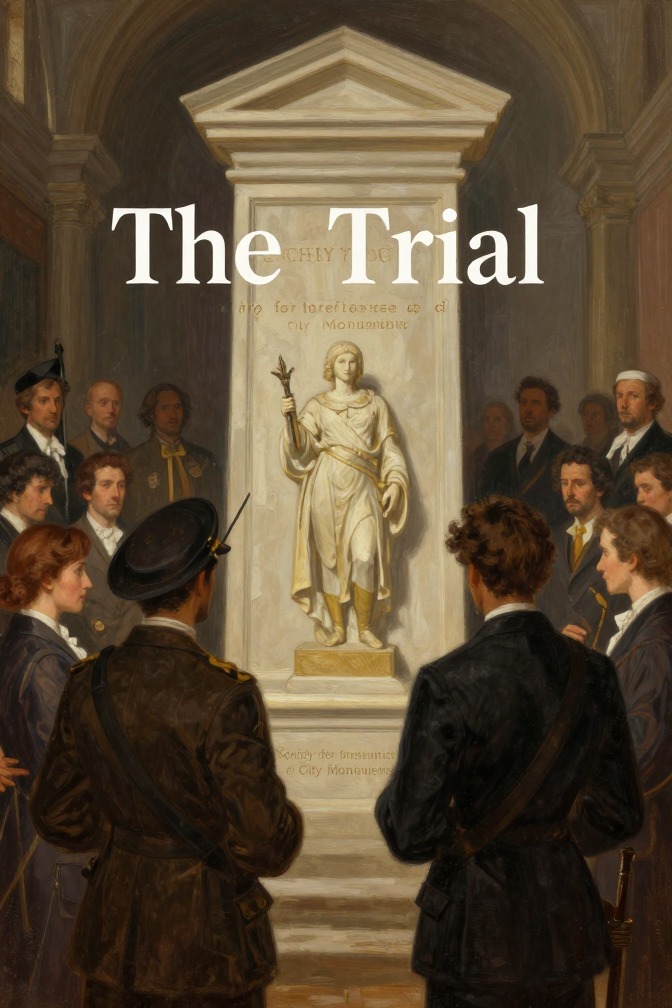
The Society for the Preservation of City Monuments is a civic organization with which Josef K. is associated, and its mention in the novel serves to highlight the bureaucratic and social networks that entangle him, as well as the ironic gap between his public reputation and his private legal predicament.
Office equipment strictly regulated is a rule of the Court that governs the physical layout and furnishings of its offices, mandating a uniform, spartan, and often oppressive environment that reflects the Court's bureaucratic and impersonal nature.
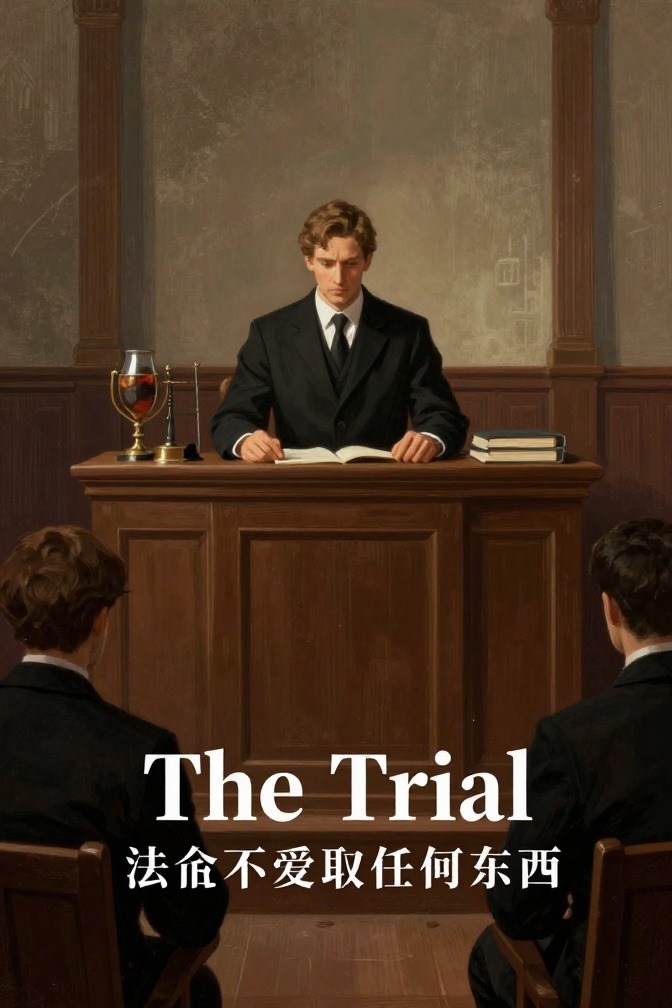
The principle that the Court demands nothing from the accused is a central paradox of Josef K.'s trial, articulated by the prison chaplain in the cathedral. It encapsulates the Court's utter indifference to the individual's guilt or innocence, its refusal to engage with the defendant's efforts at defense, and its operation as an impersonal, self-sustaining system that neither seeks nor requires anything from those it ensnares.
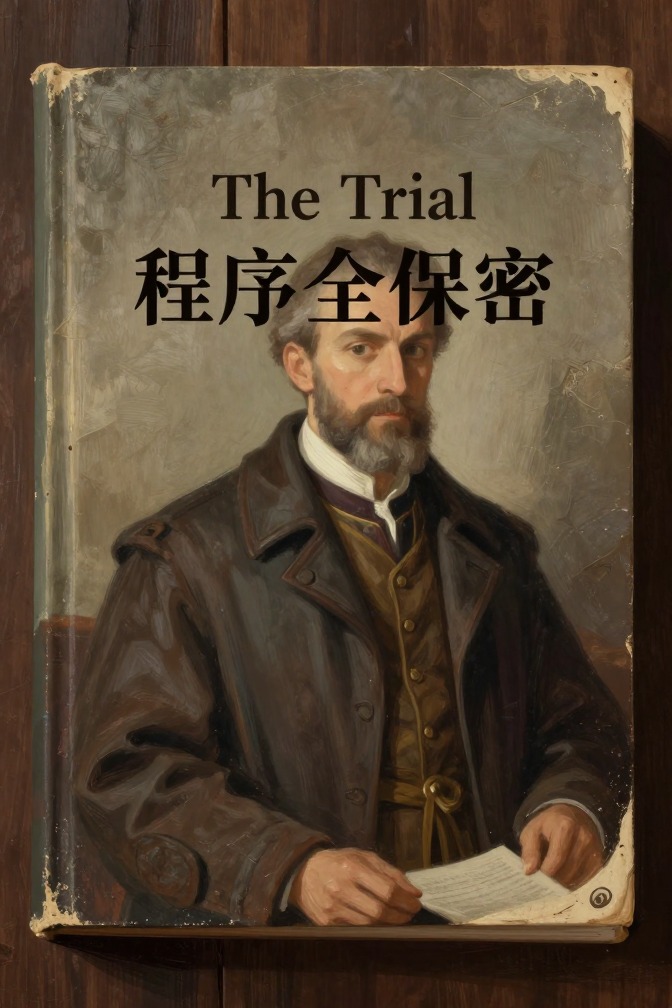
The Full secrecy of proceedings is a foundational rule of the Court in Franz Kafka's The Trial, dictating that all judicial processes, from the initial arrest to the final verdict, are conducted in a manner hidden from the accused, the public, and even many of the court's own officials. This rule systematically disempowers the defendant, Josef K., by denying him access to the charges against him, the evidence used, and the legal basis for his prosecution, transforming the trial into an opaque, inescapable ordeal.