The 1st of March, 1815, is the date on which Napoleon Bonaparte landed in France after his escape from exile on the Island of Elba, an event that triggers the Hundred Days and dramatically reshapes the political landscape of the novel, directly affecting the fates of Edmond Dantes, Villefort, and the entire Restoration regime.
The 21st of February is a recurring date in Alexandre Dumas's The Count of Monte Cristo, marking the pivotal moments of Edmond Dantes's arrest and the beginning of his fourteen-year imprisonment, as well as the date of a later appointment that sets the stage for his return to Parisian society.
The date 25th of April, 1498, is the day on which Cardinal Caesar Spada, fearing assassination by Pope Alexander VI, wrote and concealed the will that would eventually lead Edmond Dantes to the treasure of Monte Cristo.
The three-month period is a recurring temporal unit in The Count of Monte Cristo, marking the duration of Morrel's debt extension, the term of Dantes' initial service on The Young Amelia, and the interval between Albert de Morcerf's invitation to Monte Cristo and the count's arrival in Paris. It functions as a structural beat that measures hope, obligation, and transformation.
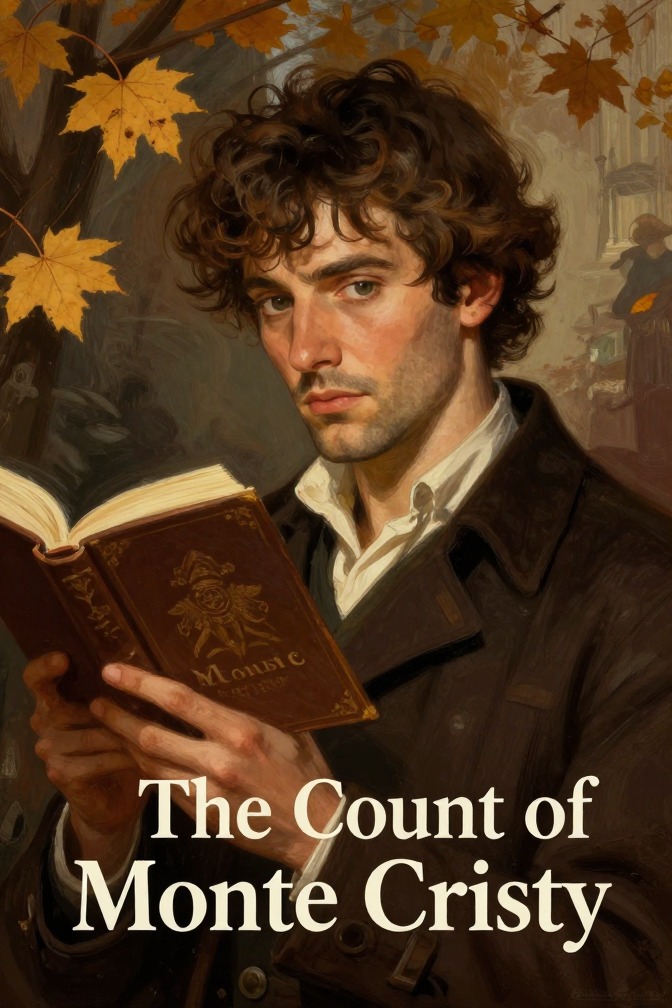
Autumn in *The Count of Monte Cristo* is not merely a seasonal backdrop but a chronotope of culmination, decay, and the approach of final reckoning. It frames the novel's most decisive acts of vengeance, the collapse of the Villefort and Morcerf houses, and the ultimate departure of the Count, while its imagery of falling leaves and fading light mirrors the moral and emotional desolation that precedes the final turn toward hope.
The Carnival in Rome is a recurring temporal setting that frames several key episodes in the novel, most notably the execution of Andrea Rondolo and Peppino, the subsequent revelry, and Albert de Morcerf's romantic intrigue and eventual kidnapping by the bandit Luigi Vampa. It serves as a period of heightened social license, where the usual rules of decorum are suspended, allowing for both public spectacle and private danger.
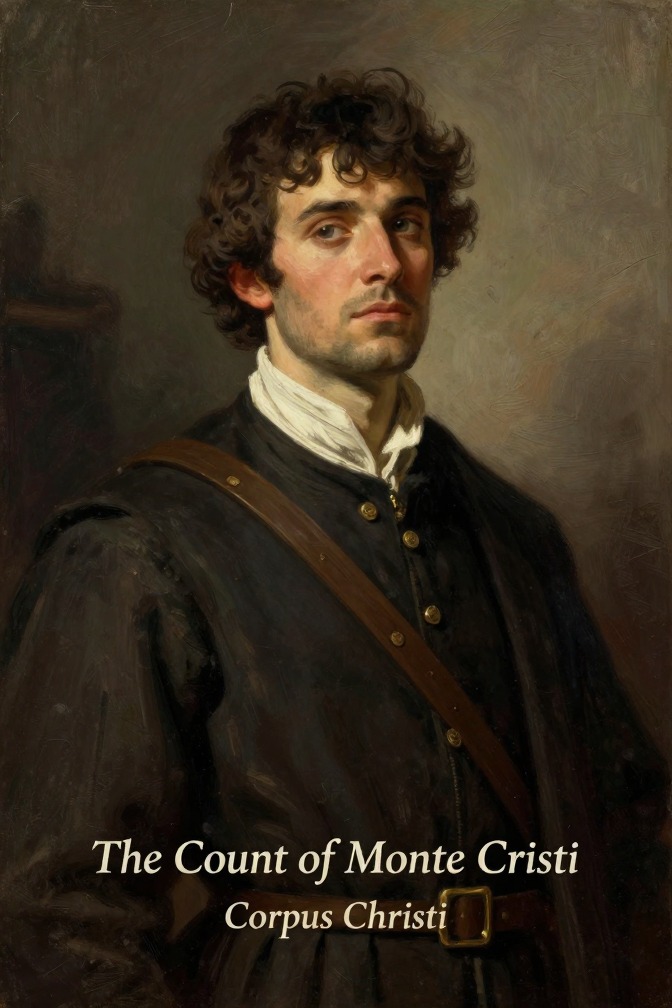
Corpus Christi is a recurring religious festival in Alexandre Dumas's The Count of Monte Cristo, marking a sacred moment in the narrative's calendar. It is most prominently the setting for the Count's fabricated recollection of meeting Madame de Villefort and Valentine at Perugia, a crucial step in his psychological manipulation of the poisoner. The festival also anchors the novel's broader temporal structure, contrasting the sacred, ritualistic time of the Catholic calendar with the secular, linear time of revenge and social intrigue.
Summer in The Count of Monte Cristo is a season of decisive action, transformation, and culmination. It marks the beginning of Edmond Dantes' imprisonment, the period of his escape and treasure discovery, the setting for the Carnival of Rome, and the final resolution of the novel's central conflicts. The season is consistently associated with heat, intensity, and the ripening of long-laid plans, serving as a temporal backdrop for the most critical events in the narrative.
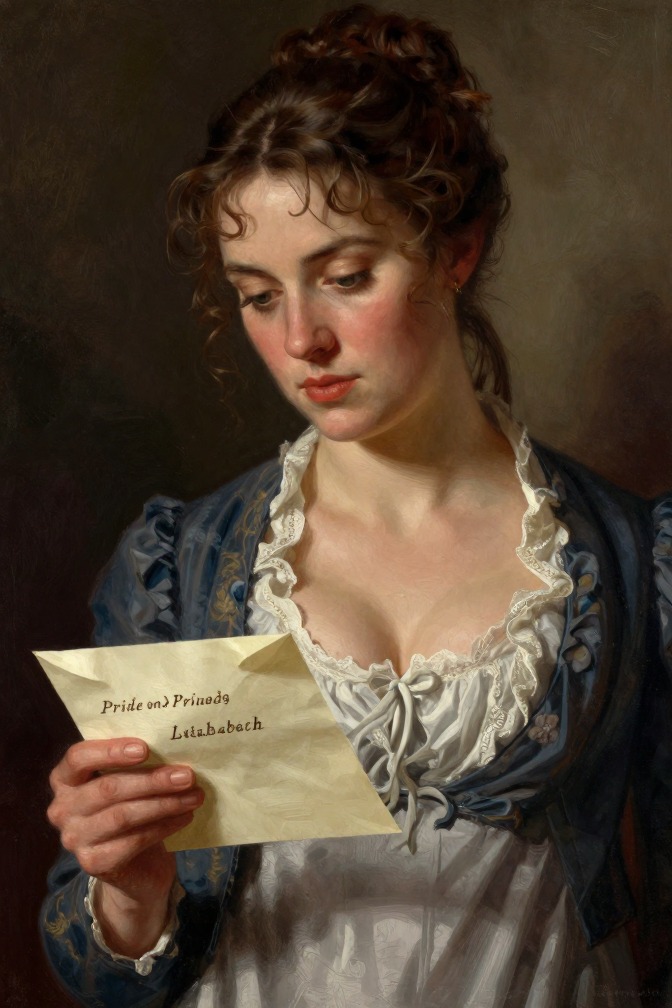
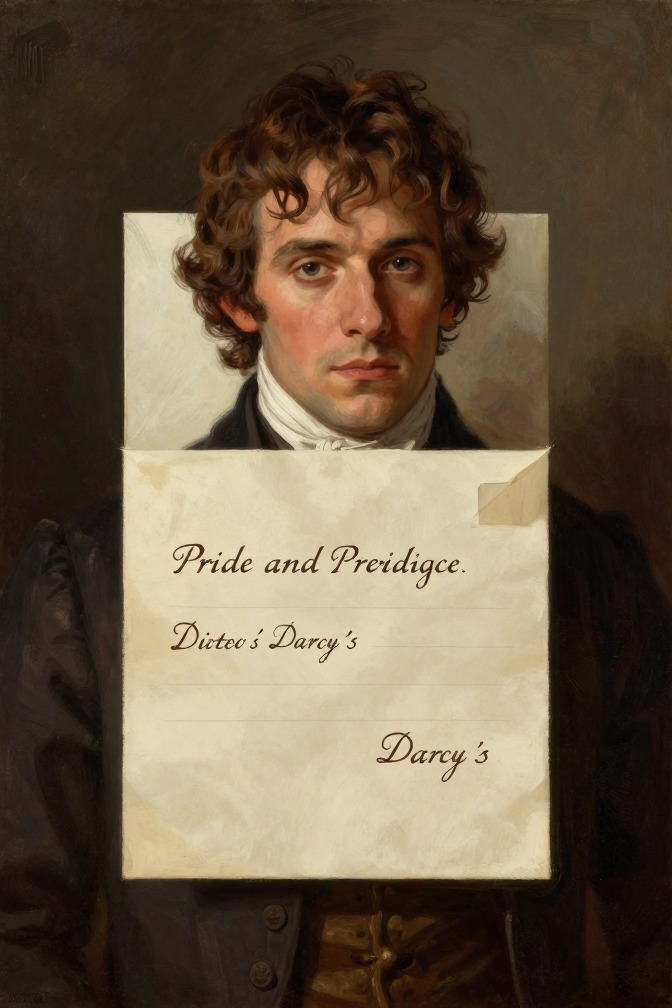
Darcy's letter to Elizabeth is the pivotal document of the novel, a long, closely written letter delivered after Elizabeth's furious rejection of his first proposal. It contains two separate, detailed explanations: first, his account of separating Charles Bingley from Jane Bennet, which he justifies by his genuine belief in Jane's indifference and the impropriety of her family; second, a devastating refutation of George Wickham's character, revealing Wickham's mercenary rejection of the living, his subsequent dissipation, and his attempted elopement with Darcy's fifteen-year-old sister, Georgiana. The letter forces Elizabeth into a painful, humiliating re-examination of her own judgement, shattering her prejudices and initiating her profound moral and emotional growth.
Mr. Hurst is a minor character in Pride and Prejudice, the indolent and wealthy husband of Louisa Hurst, whose sole interests are eating, drinking, playing cards, and sleeping, and who serves as a flat embodiment of the fashionable but vapid society of Netherfield Park.
Charlotte Lucas's declaration "I am not romantic, you know; I never was" is the most explicit statement of the pragmatic philosophy that governs her choice of a husband, and it crystallizes one of the novel's central tensions between romantic love and marriage as an economic institution.
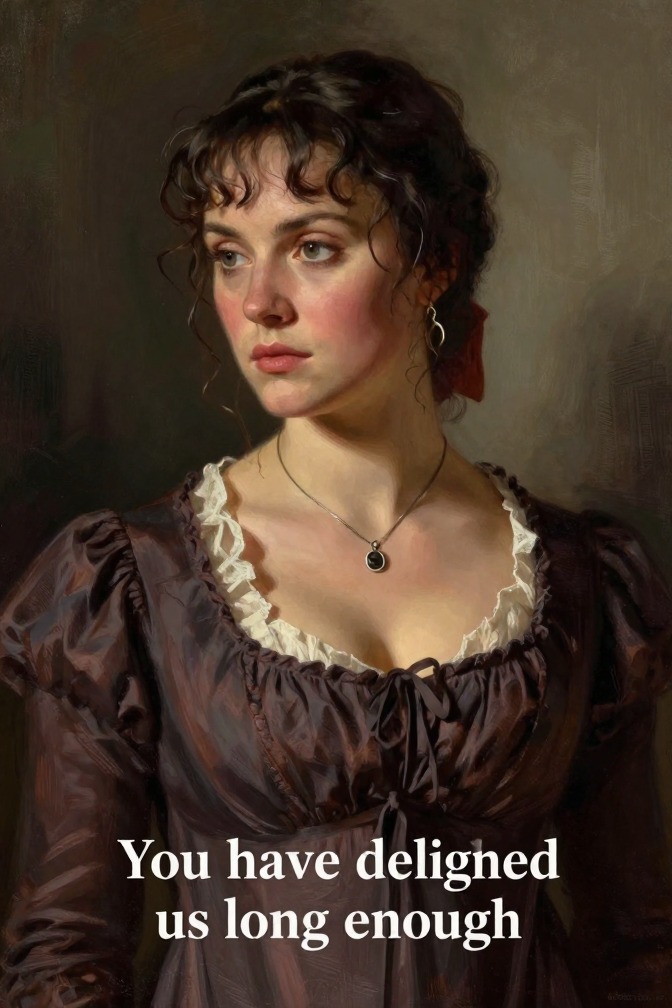
Mr. Bennet's remark "You have delighted us long enough" is a pivotal moment of paternal intervention at the Netherfield ball, cutting short Mary Bennet's affected performance and exposing the family's social awkwardness with characteristic dry wit.
Gretna Green is the Scottish border village that serves as the intended destination of Lydia Bennet and George Wickham's elopement, and its name becomes a shorthand for the scandal, the threat of a clandestine marriage, and the social disgrace that nearly destroys the Bennet family. Though the couple never actually reaches the village, the mere mention of Gretna Green—first in Lydia's boastful letter and later in the anxious speculations of her family—anchors the novel's darkest crisis and exposes the fragility of reputation and the consequences of imprudence.
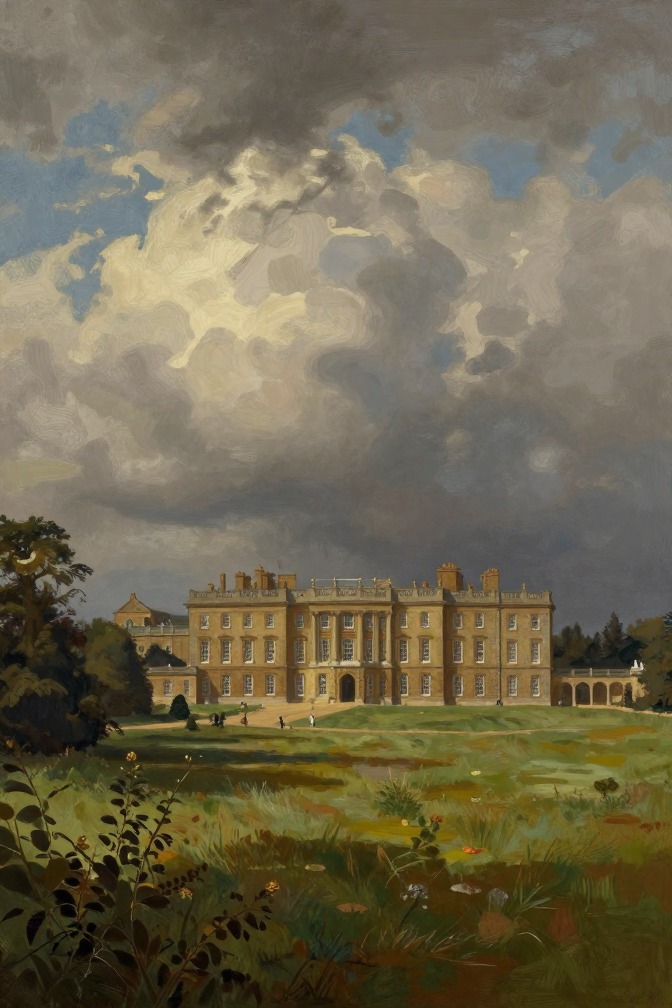
Netherfield Park is the leased Hertfordshire estate that becomes the central social stage of the novel, where the arrival of its wealthy tenant, Charles Bingley, ignites the marriage plots and where key encounters between Elizabeth Bennet and Fitzwilliam Darcy reshape the course of the story.
Darcy's letter is the pivotal document in Pride and Prejudice, a two-sheet letter hand-delivered to Elizabeth Bennet the morning after his rejected first proposal. It contains his detailed defense against her two principal accusations: that he unjustly separated Charles Bingley from Jane Bennet, and that he cruelly wronged George Wickham. The letter forces Elizabeth to confront the fallibility of her own judgment, precipitates a profound moral and emotional re-evaluation, and marks the decisive turning point in her feelings toward Darcy.
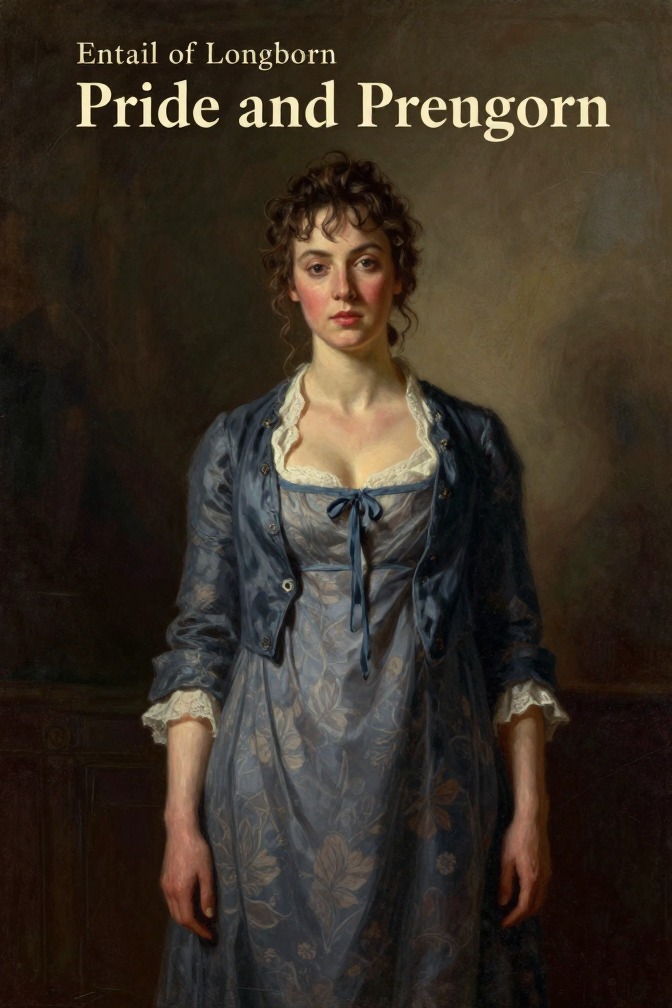
The Entail of Longbourn is the legal mechanism that determines the inheritance of the Bennet family estate, a central plot device that drives the novel's economic anxieties, marriage plots, and social commentary. By restricting the estate to male heirs only, the entail renders the five Bennet sisters virtually destitute upon their father's death, making their marriages a matter of financial survival and exposing the precarious position of women in a patriarchal society.
Lydia Bennet and George Wickham form a reckless, scandalous union that nearly destroys the Bennet family's reputation and serves as a crucial catalyst for Elizabeth Bennet's self-awareness and Darcy's decisive intervention. Their elopement, driven by Lydia's heedless infatuation and Wickham's mercenary opportunism, exposes the fragility of female reputation in Regency society and forces the novel's central characters to confront the consequences of pride, prejudice, and moral negligence.
The relationship between Mr. Bennet and Elizabeth Bennet is the novel's most intellectually and emotionally significant parent-child bond, defined by mutual affection, shared wit, and a deep understanding that ultimately enables Elizabeth's independent choice in marriage and prompts Mr. Bennet's rare moment of self-reproach.
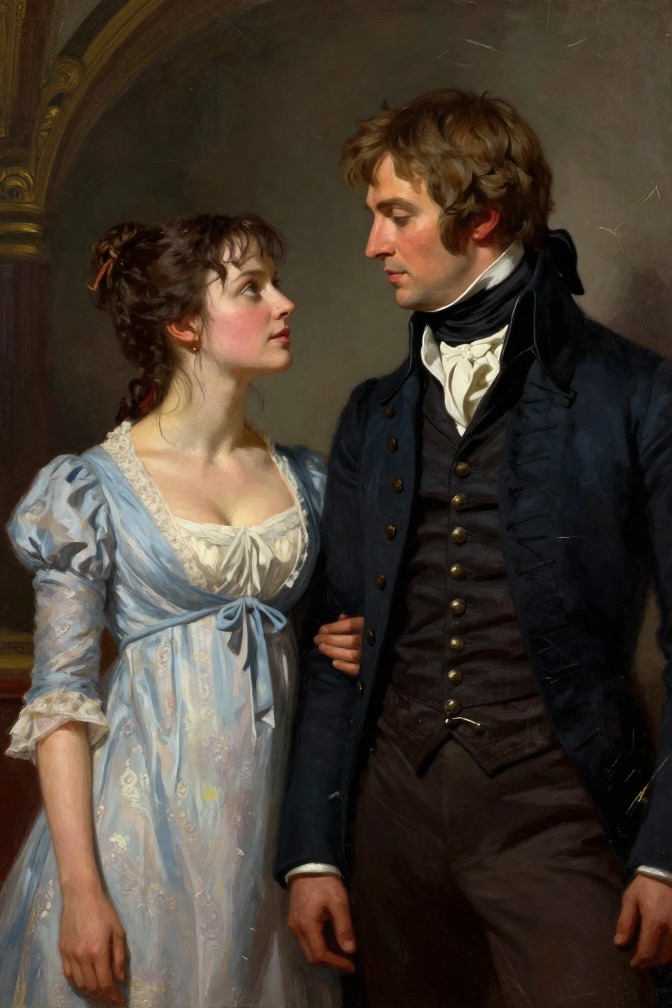
The first proposal refusal convention is a social and literary pattern in which a woman is expected to reject a man's initial offer of marriage as a display of modesty, even if she intends to accept him later. In Pride and Prejudice, this convention is invoked, tested, and ultimately subverted through the proposals of Mr. Collins and Mr. Darcy, revealing the tension between social performance and genuine feeling.
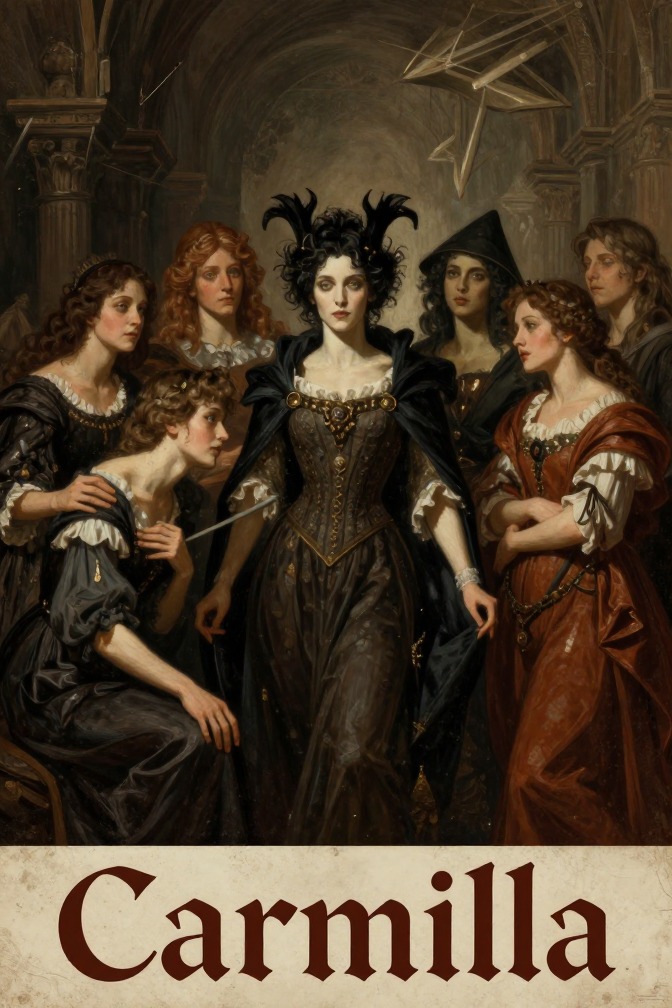
The Purchase of the Charm is a brief but significant episode in which Carmilla and Laura each buy an amulet against the oupire from a traveling mountebank, an act that reveals Carmilla's contradictory attitudes toward the supernatural threat and foreshadows the charm's ambiguous role in the story.
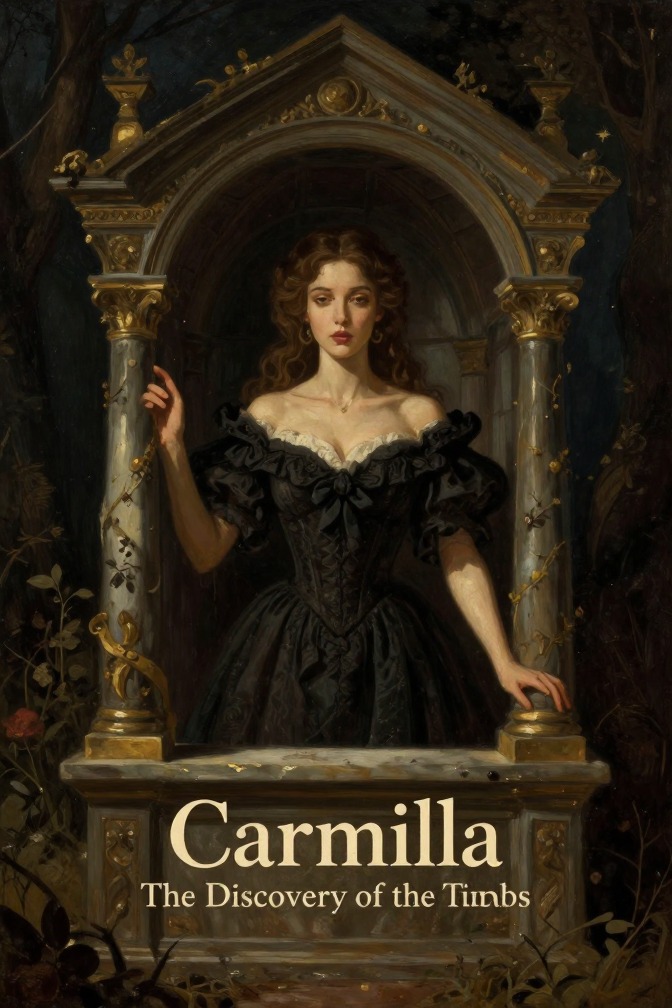
The discovery of the long-lost tomb of Mircalla, Countess Karnstein, in the ruined chapel of Karnstein, is the decisive turning point that transforms the hunt for the vampire from a desperate personal quest into a legally sanctioned, methodical execution, and it is accomplished through the esoteric knowledge of Baron Vordenburg, whose ancestor had deliberately concealed the grave a century and a half earlier.
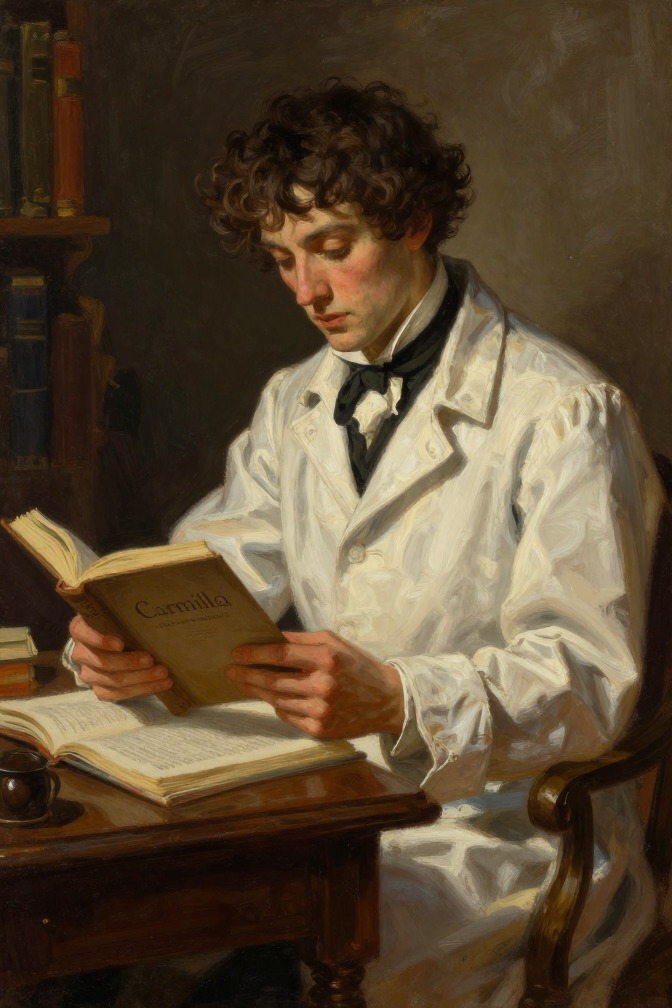
The Doctor's Examination is the pivotal medical scene in Sheridan Le Fanu's Carmilla, where Doctor Spielsberg discovers the telltale puncture marks on Laura's throat, confirming the vampire's attack and setting the stage for the novel's supernatural resolution.
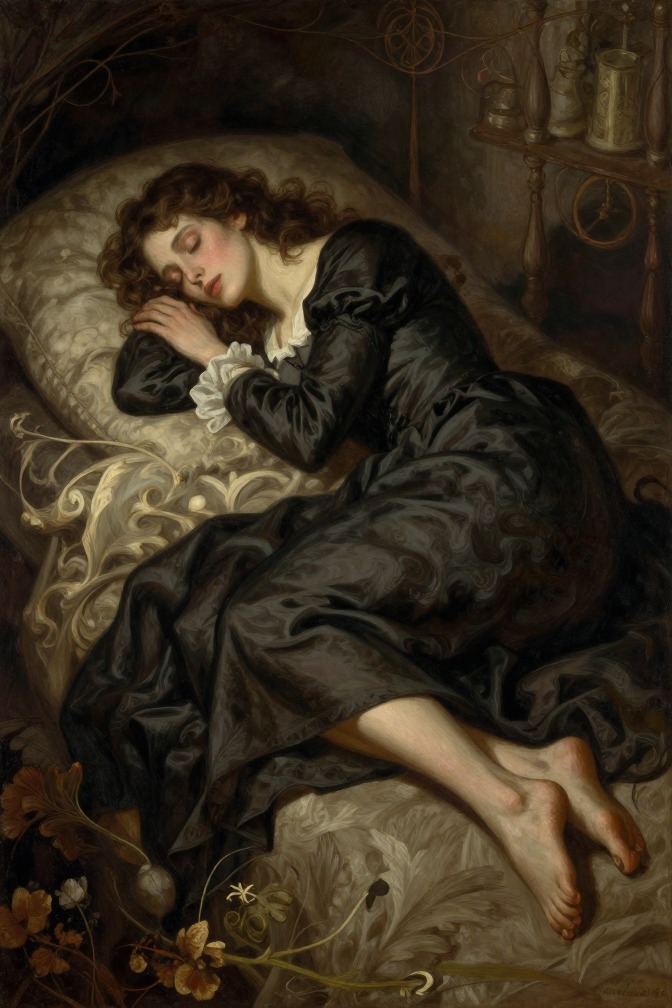
Sleepwalking is the explanation Laura's father proposes to account for Carmilla's mysterious nocturnal disappearances from her locked room, a theory that temporarily resolves the household's alarm but ultimately proves inadequate against the evidence of vampiric activity.
The term 'oupire' is the local Styrian peasant name for the vampire, a supernatural predator that drains the life of its victims through nightly visitations, and it represents the central horror of the novella, linking the folk superstition of the region to the aristocratic, predatory figure of Carmilla.
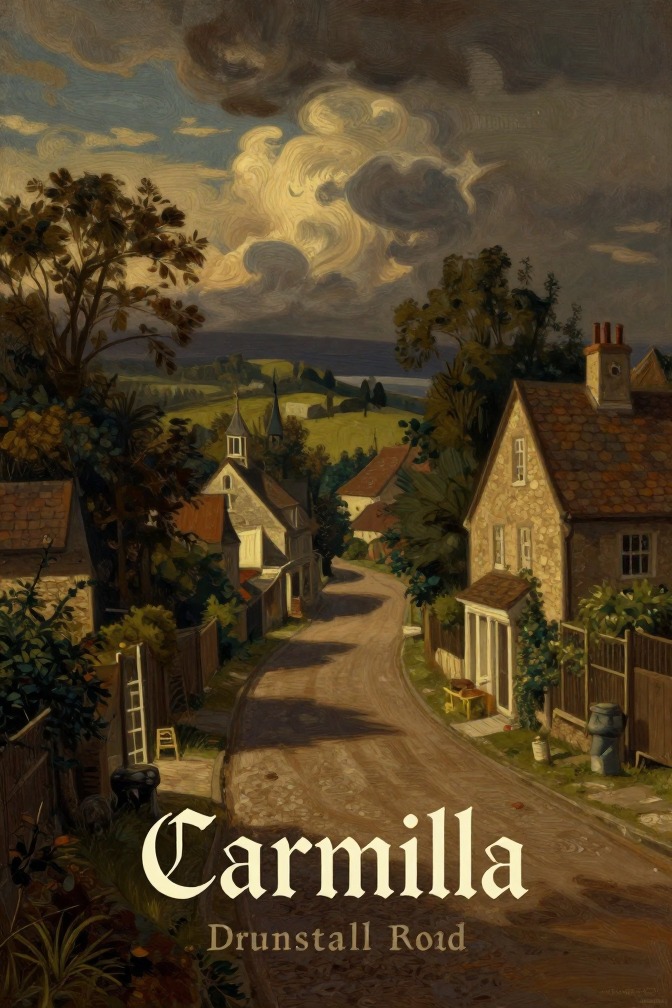
The Drunstall road is a minor but significant location in Sheridan Le Fanu's Carmilla, serving as the route by which General Spielsdorf approaches the Karnstein ruins and the point where he begins his narrative of Bertha's death. Its mention marks a transition from the domestic setting of Laura's schloss to the haunted ground of Karnstein, and it is where the General's story of the vampire is first introduced.
Baron Vordenburg's papers are a collection of journals, tracings, and notes compiled by the Baron's ancestor, a Moravian nobleman who had been the lover of the vampire Mircalla, Countess Karnstein; these documents ultimately guided the party to the long-concealed tomb of the vampire and provided the key to her destruction, while also revealing the origin of the vampire plague and the ancestor's conflicted motives for hiding the grave.
The Inquisition is the formal legal proceeding, held in the Chapel of Karnstein, that officially condemns and executes the vampire Mircalla, Countess Karnstein, after her tomb is discovered. It represents the culmination of the novel's supernatural horror, transforming private vengeance into a public, judicial act that restores order to the region.
General Spielsdorf served as the guardian and uncle of Bertha Rheinfeldt, a young woman he loved as a daughter and whose mysterious death at the hands of the vampire Carmilla transformed him from a cordial old soldier into a vengeful hunter.
Napoleon announces the abolition of the name 'Animal Farm' and its reversion to 'The Manor Farm', completing the pigs' full-circle return to the human system they once rebelled against.
The Purge is the systematic, terror-driven series of forced confessions and executions carried out by Napoleon and his dogs on Animal Farm, marking the definitive end of the original revolutionary ideals and the establishment of a totalitarian regime based on fear and unquestioning obedience.