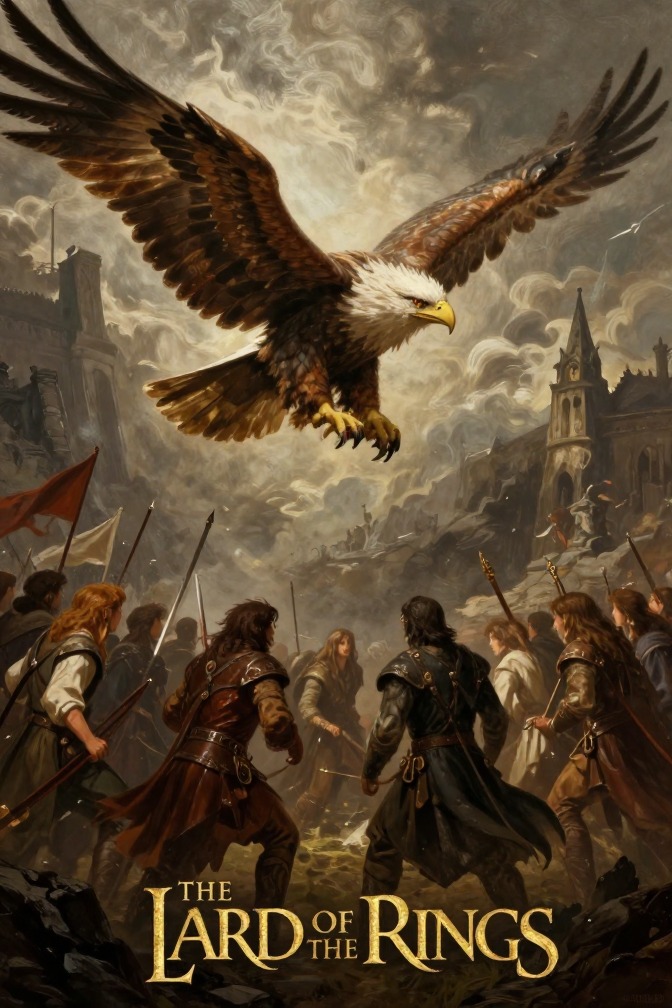
The Arrival of the Eagles is the climactic intervention in the Battle of the Black Gate, where Gwaihir the Windlord, his brother Landroval, and their vassals from the northern mountains descend upon the Nazgûl, breaking the siege of the Captains of the West and heralding the final overthrow of Sauron after the destruction of the One Ring.
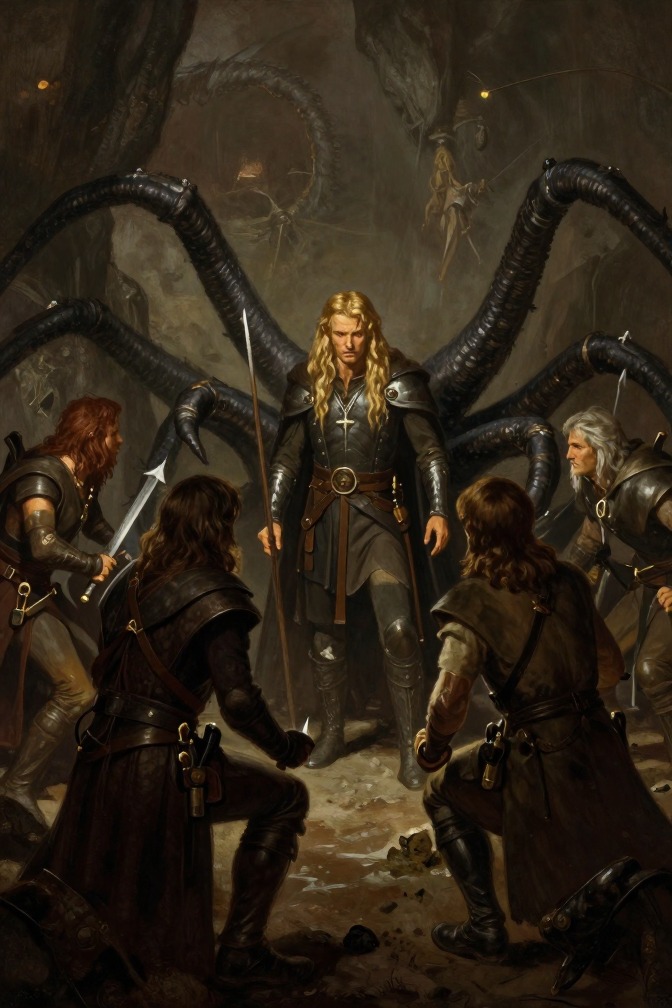
The Attack of Shelob is the pivotal ambush in which the great spider Shelob, guided by Gollum's treachery, stings Frodo Baggins in the tunnel of Cirith Ungol, leaving him for dead and forcing Samwise Gamgee to take up the Ring alone.
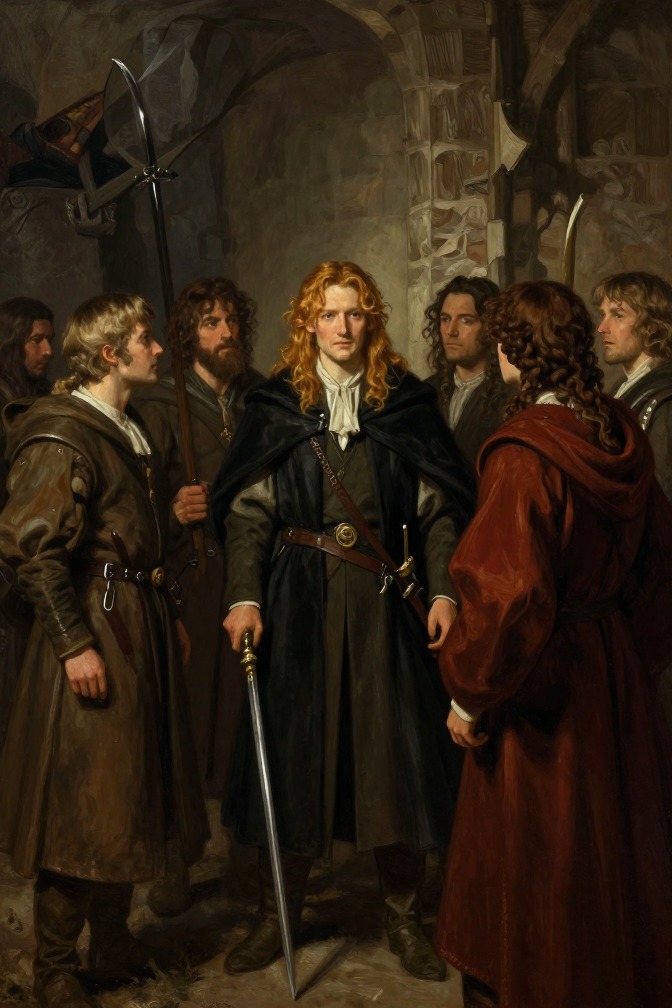
The Breaking of the Fellowship is the pivotal event in Book Two, Chapter 10 of The Lord of the Rings, where Frodo Baggins, overwhelmed by the Ring's growing power and the corruption it has already begun to work within the Company, resolves to continue the Quest alone. After Boromir succumbs to the Ring's temptation and attacks him, Frodo uses the Ring to escape, then climbs Amon Hen, where he experiences a vision of the war engulfing Middle-earth and feels the direct gaze of Sauron. In that moment of crisis, he chooses to take the Ring and depart secretly, but Samwise Gamgee, having guessed his intention, intercepts him at the boats and insists on accompanying him. The event marks the dissolution of the Nine Walkers as a unified group, scattering them into separate paths: Frodo and Sam east toward Mordor, Merry and Pippin captured by Orcs, Boromir mortally wounded, and Aragorn, Legolas, and Gimli left to pursue the captives.
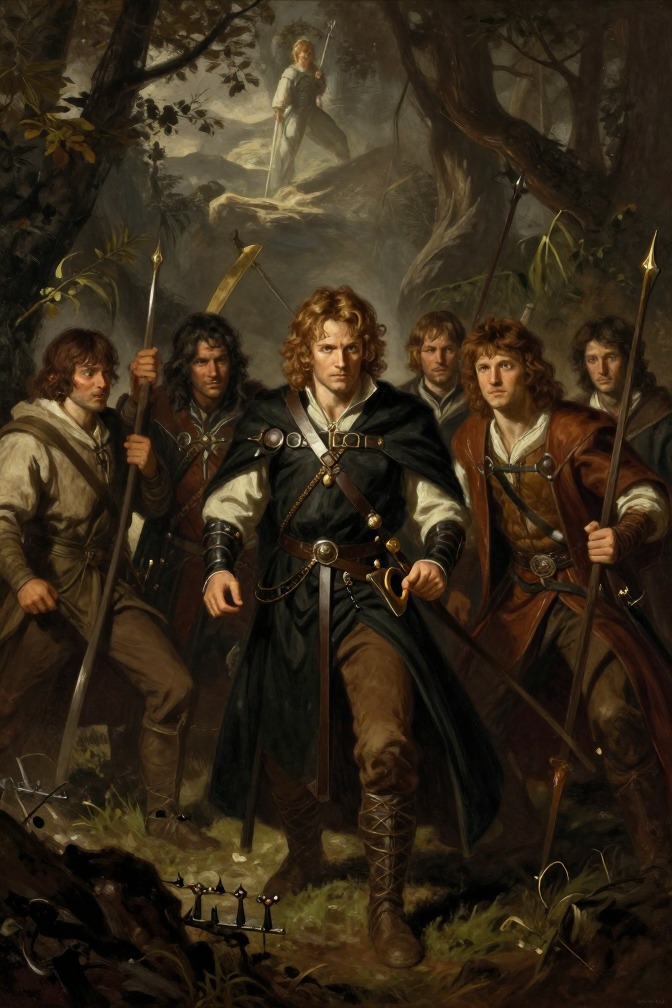
The Flight to the Ford is the climactic pursuit sequence in which Frodo Baggins, wounded by the Witch-king on Weathertop, rides Glorfindel's white horse Asfaloth toward the Ford of Bruinen while the Nine Black Riders close in, only to be saved by a magical flood summoned by Elrond and enhanced by Gandalf that sweeps the Ringwraiths away.
Samwise Gamgee, believing Frodo dead from Shelob's sting, takes the Ring and resolves to continue the Quest alone, but overhears Orc captains revealing that Frodo is still alive and has been taken prisoner to the tower of Cirith Ungol; abandoning his solo mission, Sam storms the tower, fights through its orc defenders, and rescues Frodo from the topmost chamber, after which they escape together past the Watchers and the Nazgûl.
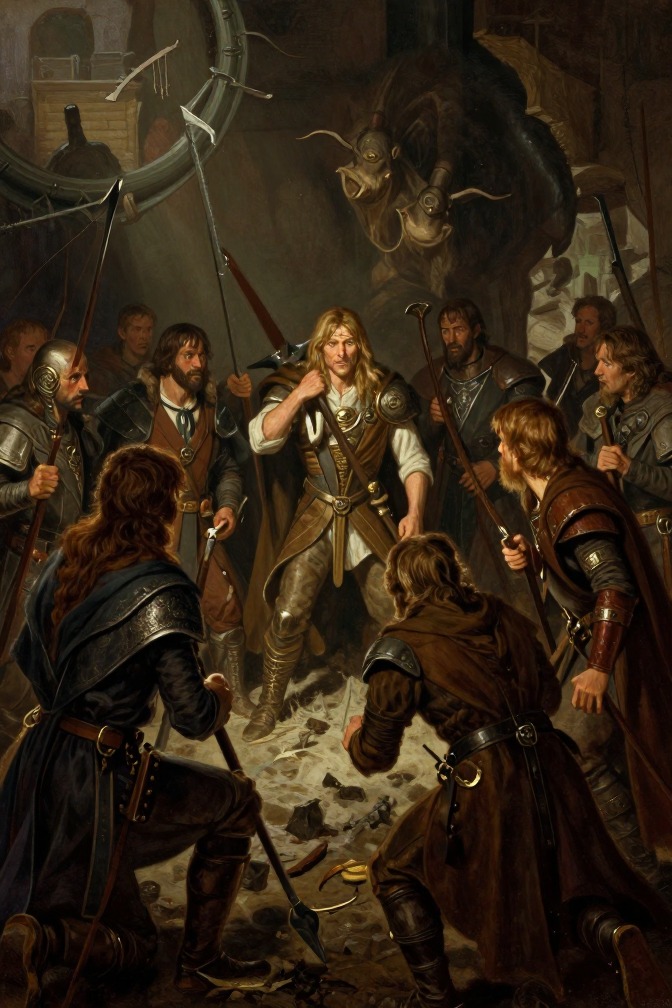
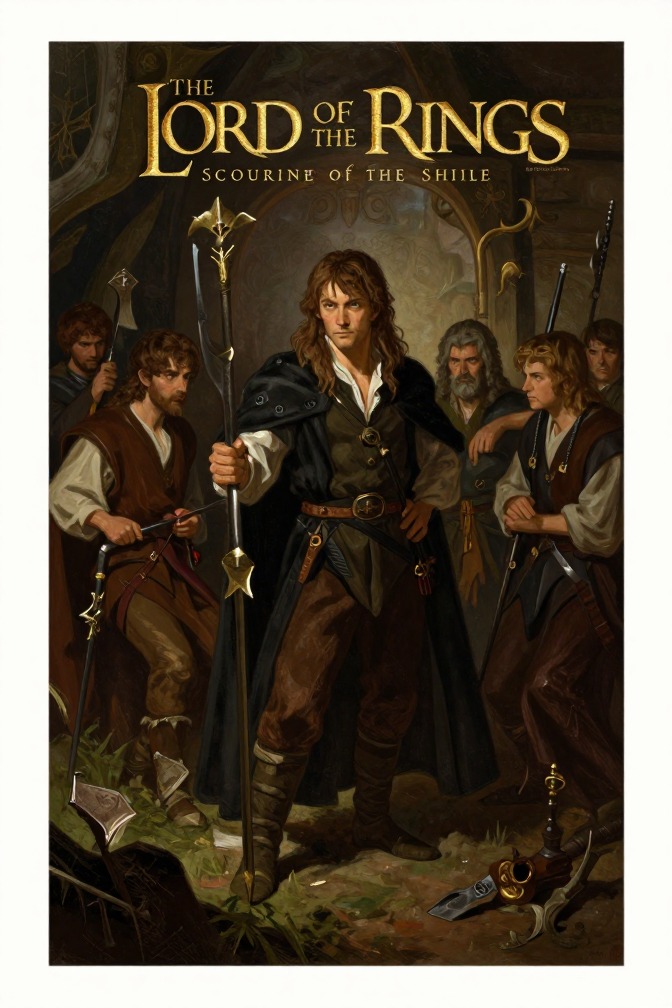
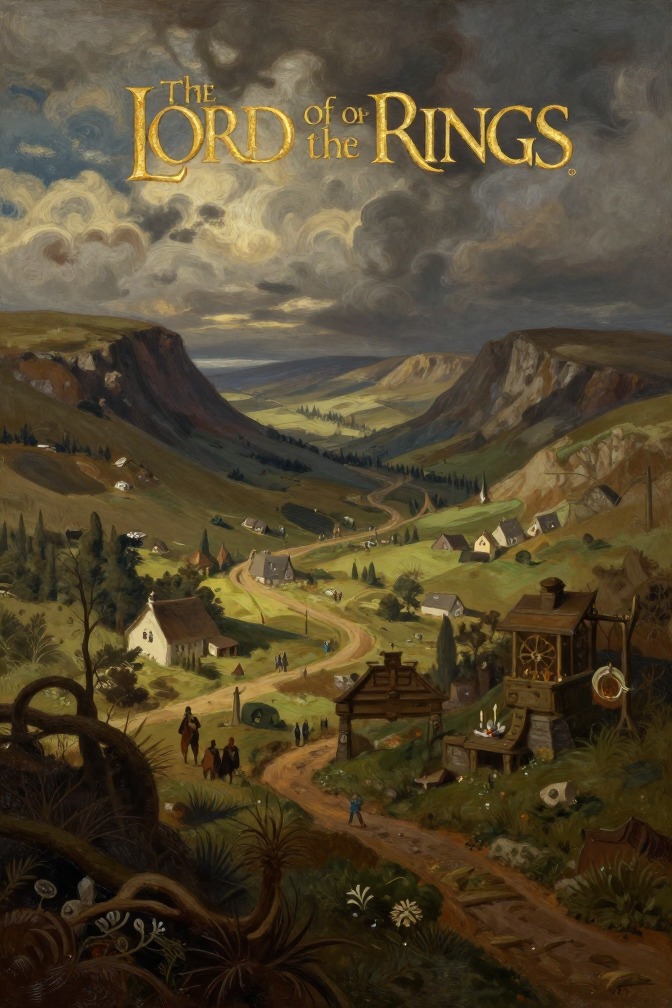
The Scouring of the Shire is the penultimate chapter of The Lord of the Rings, in which Frodo, Sam, Merry, and Pippin return to their homeland to find it under the oppressive rule of Lotho Sackville-Baggins and his master, Saruman (Sharkey). The hobbits raise a rebellion, fight the Battle of Bywater, overthrow the ruffians, and confront Saruman, who is killed by Wormtongue. The chapter serves as a final test of the hobbits' growth and a cleansing of the Shire, restoring peace and preparing for the story's conclusion.
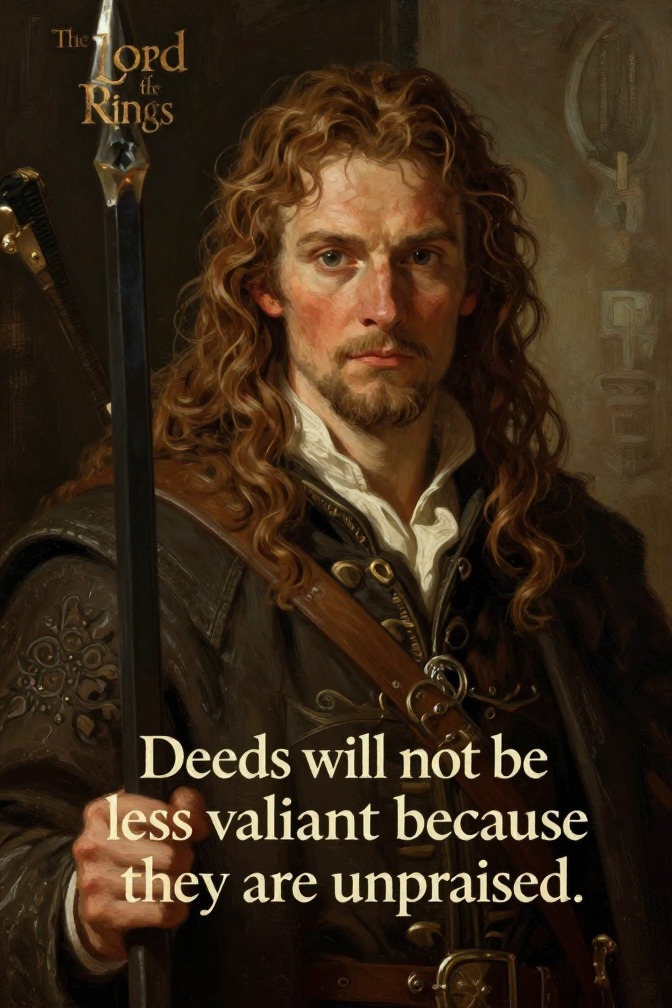
Aragorn speaks this line to Éowyn in Dunharrow, on the eve of his departure through the Paths of the Dead, as a direct answer to her bitter complaint that she is always left behind to mind the house while the Riders win renown. The saying crystallizes the book's central ethic of unacknowledged sacrifice, and it is immediately tested by Éowyn herself, who defies it by riding to war in disguise and performing the very deed—the slaying of the Witch-king—that no man could achieve, yet which brings her no renown, only a broken arm and a near-fatal wound.
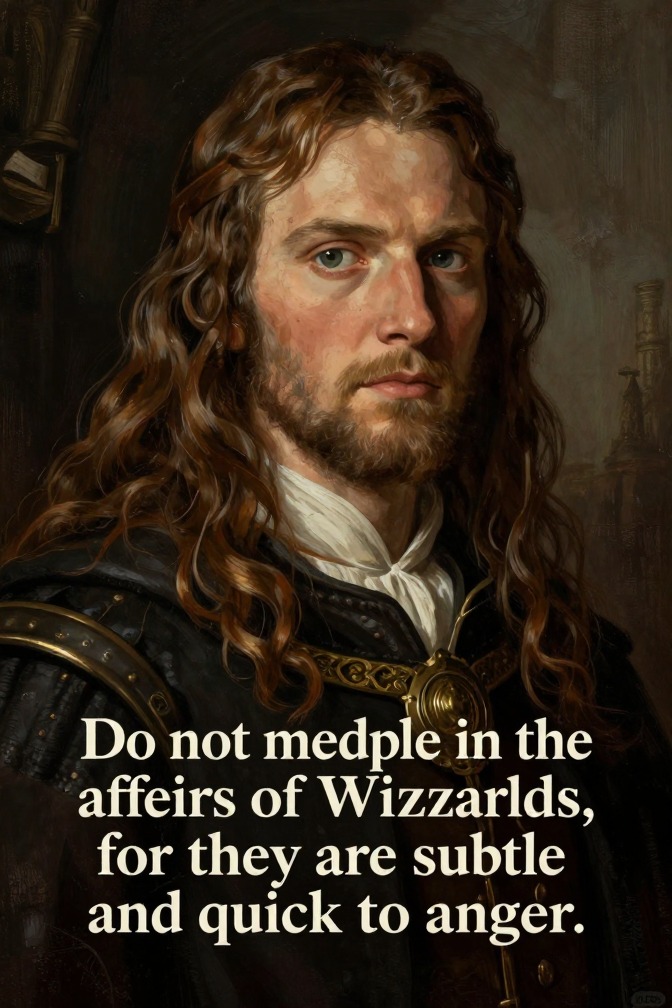
This entry examines the proverb 'Do not meddle in the affairs of Wizards, for they are subtle and quick to anger,' a piece of folk wisdom that recurs throughout The Lord of the Rings. It is first spoken by the Elf Gildor Inglorion to Frodo Baggins, and later quoted by Meriadoc Brandybuck to Peregrin Took. The saying encapsulates a central theme of the work: the perilous and unpredictable nature of the great powers that shape Middle-earth, and the wisdom of humility for lesser beings caught in their conflicts. The entry traces the proverb's appearances, its context, and its ironic resonance with the actions of the hobbits, who repeatedly disregard its advice.
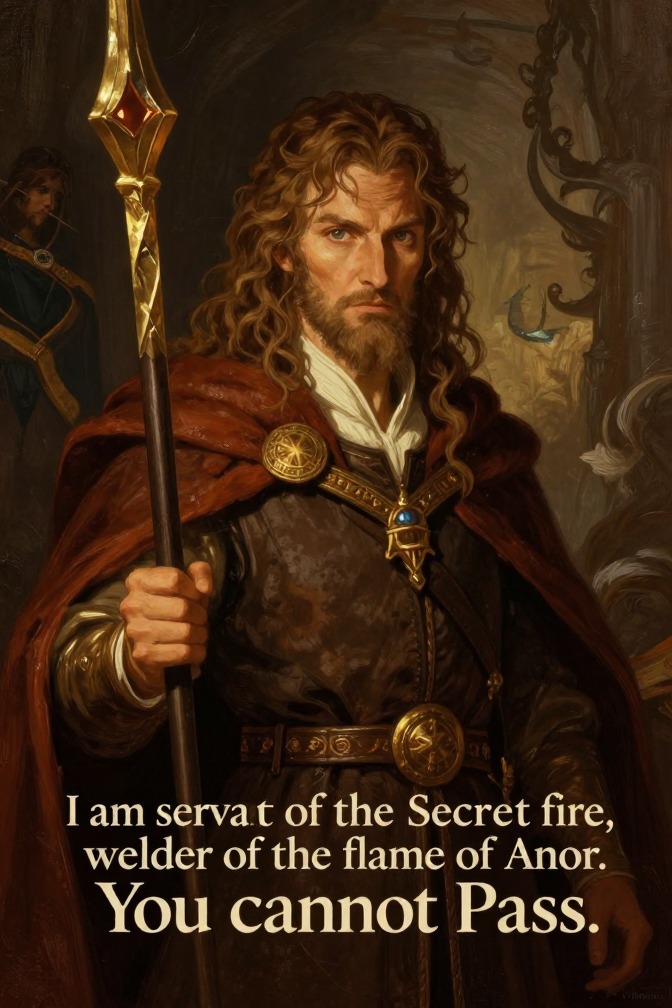
Gandalf's defiant declaration on the Bridge of Khazad-dûm, where he reveals his identity as a servant of the Secret Fire and wielder of the flame of Anor, and confronts the Balrog with the command 'You cannot pass.' This moment marks the climax of the Fellowship's flight through Moria, Gandalf's ultimate test of will against a primordial evil, and the pivotal sacrifice that leads to his fall and subsequent rebirth as Gandalf the White.
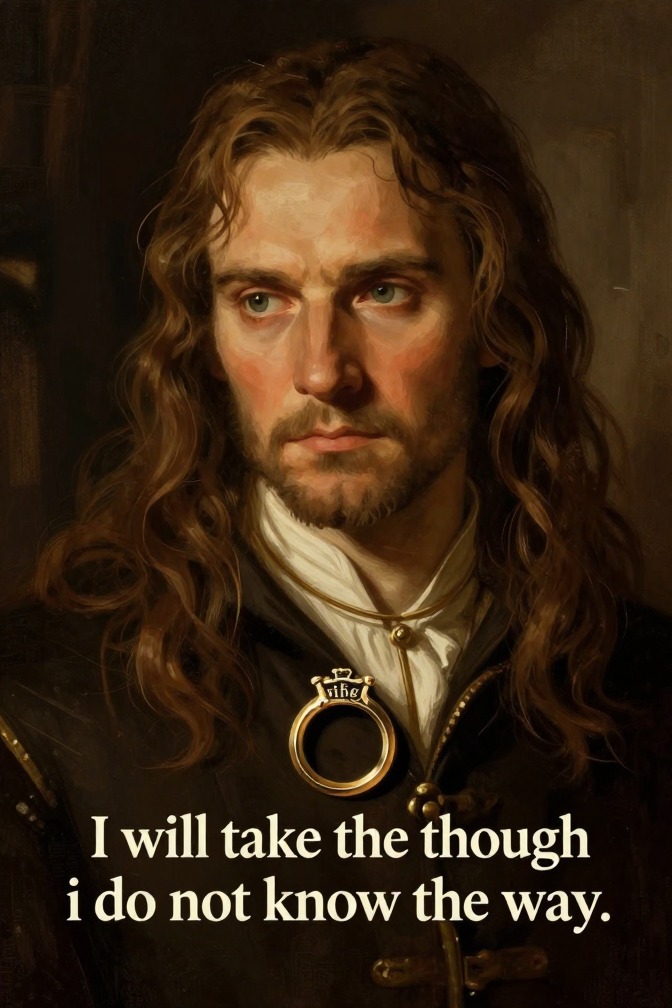
Frodo Baggins's declaration at the Council of Elrond, 'I will take the Ring, though I do not know the way,' is the pivotal moment of the entire legendarium, transforming a private burden into a public quest and setting the course for the War of the Ring. This utterance, made against the counsel of the Wise and in the face of overwhelming despair, embodies the hobbit's courage and the theme of small hands doing great deeds.
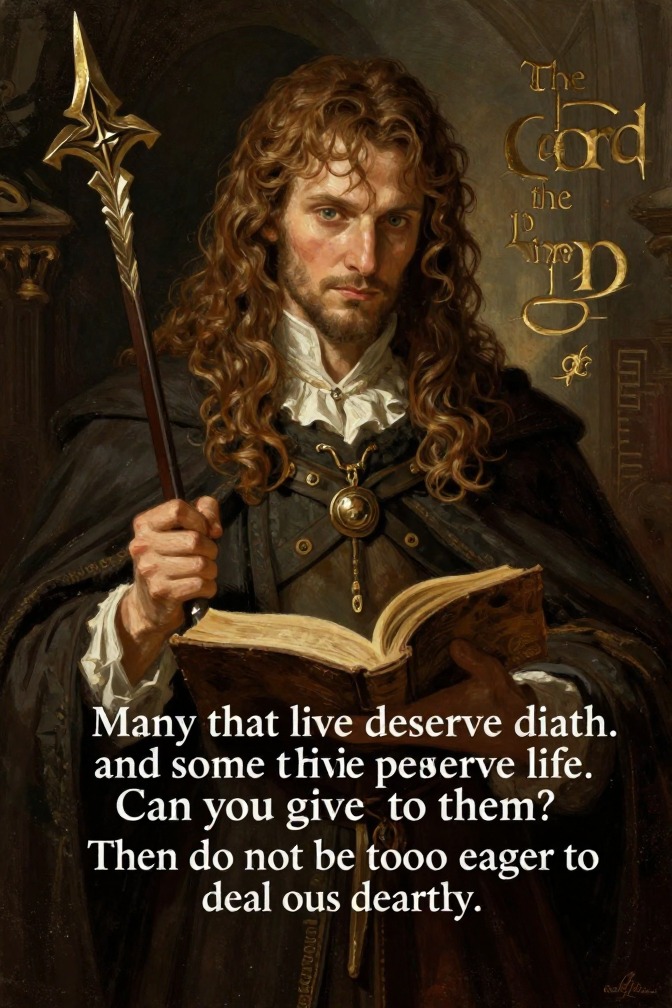
Gandalf's rebuke to Frodo—'Many that live deserve death. And some that die deserve life. Can you give it to them? Then do not be too eager to deal out death in judgement'—is the ethical fulcrum of The Lord of the Rings, a radical assertion that mercy, not retributive justice, must govern the use of power, and that even the most wretched creature may serve a purpose beyond mortal sight. The utterance transforms Frodo's attitude toward Gollum, sets the moral terms for the entire Quest, and is retrospectively vindicated when Gollum's intervention at the Cracks of Doom proves indispensable to the Ring's destruction.
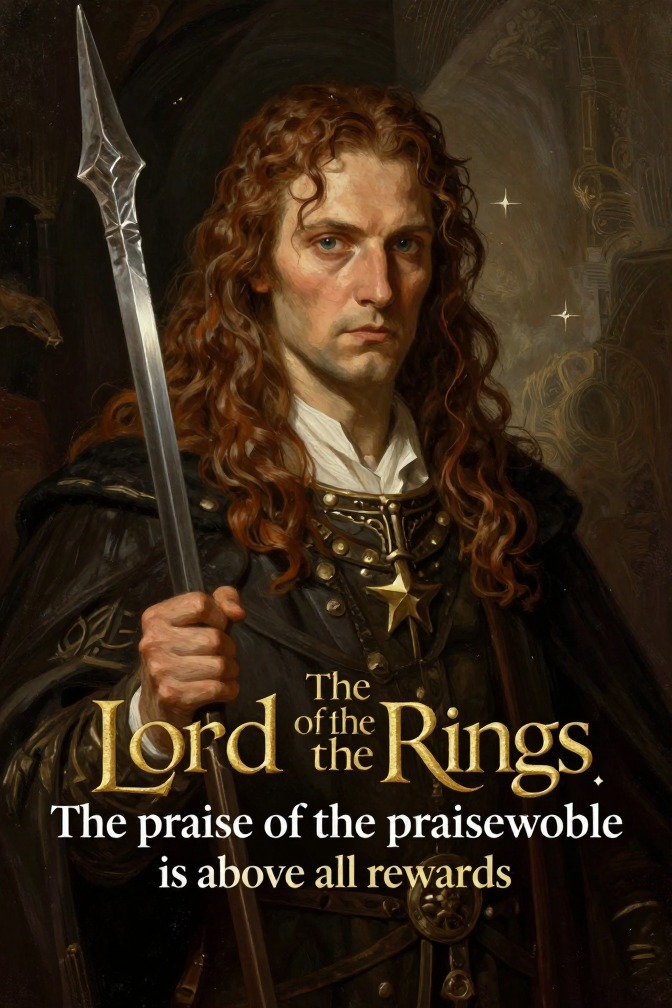
The praise of the praiseworthy is above all rewards is a maxim spoken by Faramir to Samwise Gamgee in the cave of Henneth Annûn, after Sam has just declared that Faramir's refusal to take the One Ring proved his 'quality' to be 'the very highest'. The phrase crystallizes the ethical code of Gondor's nobility, distinguishing genuine virtue from the mere pursuit of reward, and it is immediately tested and validated by Faramir's own conduct in the same scene.
Gandalf's defiant command to the Balrog on the Bridge of Khazad-dûm, a moment of supreme self-sacrifice that seals his fall and marks the moral and magical boundary between the free peoples and the ancient evil of Morgoth.
The Adorn is a river in the western reaches of Rohan, flowing from the White Mountains to join the Isen. It marks the boundary of the West-mark and is the site of the stronghold of Freca, a Dunlendish lord who challenged King Helm Hammerhand.
Amon Hen, the Hill of Sight, is a sacred hill in Gondor's ancient borderlands, crowned with the Seat of Seeing, where Frodo Baggins experiences a vision of the War of the Ring and is nearly discovered by Sauron's Eye, leading to his decision to break the Fellowship and continue the Quest alone.
Amon Lhaw, the Hill of Hearing, is one of the three peaks at the southern end of Nen Hithoel, the lake formed by the Anduin below the Argonath. Together with Amon Hen (the Hill of Sight) and the island of Tol Brandir, it forms a triad of ancient watch-posts built by the Men of Númenor. In the days of the great kings, a high seat was maintained on its summit, from which sentinels could survey the lands eastward toward Mordor. By the time of the War of the Ring, the hill had become a haunted and desolate place, its ancient purpose forgotten, its slopes patrolled by Orcs and its summit touched by the searching Eye of Sauron.
The Baranduin, known to Hobbits as the Brandywine, is the great river forming the eastern border of the Shire, a crucial geographical and symbolic boundary that separates the sheltered Hobbit lands from the wider, more perilous world of Middle-earth.
Caras Galadhon, the City of the Galadhrim, is the heart of Lothlórien, a city built high in the mallorn-trees where Celeborn and Galadriel dwell. It is a place of timeless beauty and potent Elven magic, serving as a crucial refuge and turning point for the Fellowship of the Ring after their ordeal in Moria.
Dimrill Dale, also called Azanulbizar in the Elvish tongue and Nanduhirion by the Elves, is the deep-shadowed valley that lies between the arms of the Misty Mountains, beneath the peaks of Caradhras, Celebdil, and Fanuidhol. It is the site of the Mirrormere (Kheled-zâram), the spring of the River Silverlode, and the eastern approach to the Dwarf-kingdom of Moria. The valley is central to the history of Durin's Folk, being both the place where Durin first looked into the Mirrormere and the location of the terrible Battle of Azanulbizar between the Dwarves and the Orcs. In the War of the Ring, the Fellowship of the Ring passed through the dale after their escape from Moria, and it was from this valley that the Company began its journey south into Lothlórien.
Doriath, the Hidden Kingdom of King Thingol in Beleriand, is the most storied and tragic realm of the Elves in the First Age, a forested land protected by the magical Girdle of Melian where the love of Beren and Lúthien unfolded and the Silmaril was won, only to be destroyed in the final ruin of the Elder Days.
Enedwaith is a region in Eriador, lying between the Greyflood and the Isen rivers, that served as a sparsely populated buffer zone between the North-kingdom of Arnor and the South-kingdom of Gondor. Its strategic importance in the Third Age is defined by its role as a contested borderland, a route for invasion, and a site of ruin and abandonment, particularly through the destruction of the ancient town of Tharbad and the flooding that followed the end of the Watchful Peace.
Ered Engrin, the Iron Mountains, is a vast mountain range in the far north of Middle-earth, serving as the original fortress of Morgoth in the Elder Days. Though largely destroyed in the War of Wrath, its legacy as the source of primeval evil and its association with Morgoth's iron legions cast a long shadow over the geography and history of the Third Age, making it a foundational location of dark power.
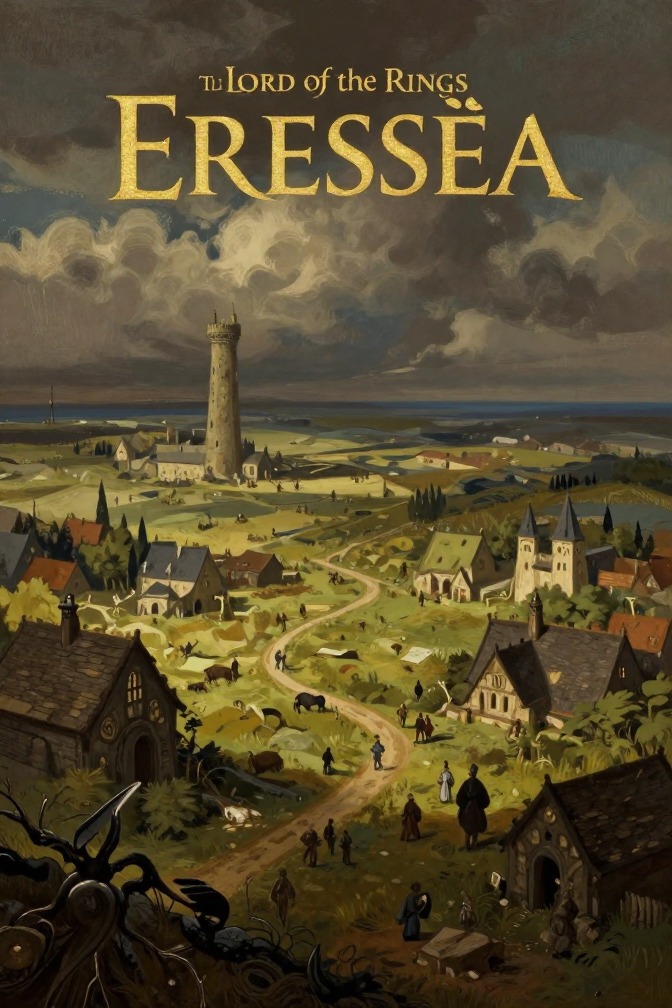
Eressëa, also known as Tol Eressëa, is the Lonely Isle, a location in the Uttermost West that served as a way-station for the Elves on their journey to Valinor and later as a dwelling place for the Noldor exiles. It is a land of memory and legend, intimately connected to the history of the Elves and the Númenóreans, and its name evokes a sense of loss and unattainable beauty for those left behind in Middle-earth.
Forlindon is the northern region of Lindon, the Elvish land west of the Blue Mountains in Middle-earth, serving as the remnant of the ancient realm of Beleriand after its destruction in the War of Wrath. It is the domain of the High Elves, particularly those of the Noldor and Sindar, and is the site of the Grey Havens (Mithlond), from which Elven-ships depart for the Uttermost West. Forlindon is a land of peace and fading memory, a last refuge of the Eldar in the Third Age, and its significance lies in its role as the final threshold between Middle-earth and the Undying Lands.
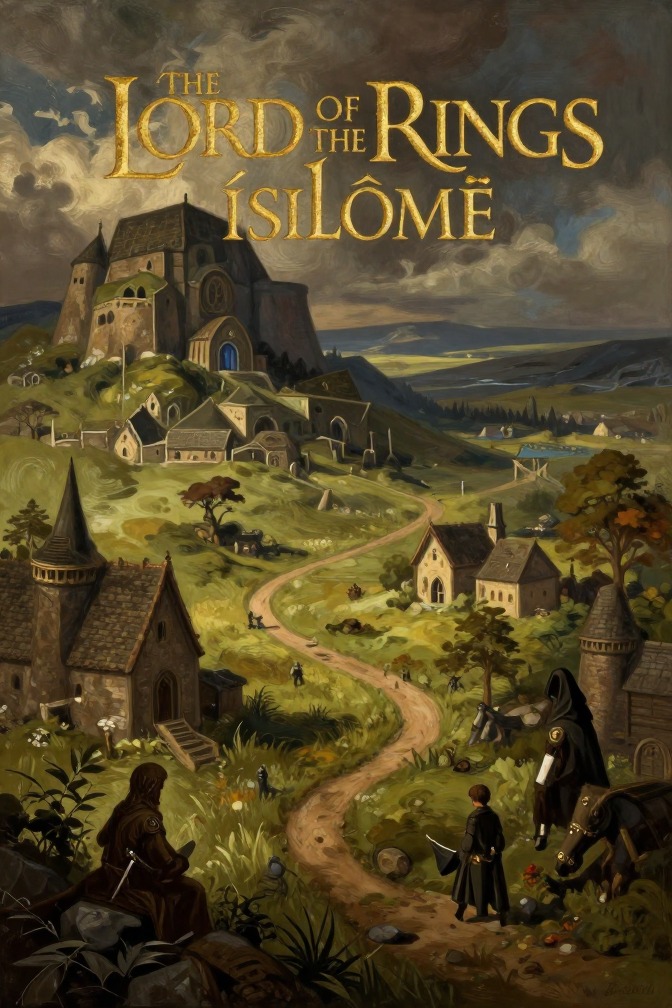
Hísilómë is the Sindarin name for the land of Hithlum, a region in the far north of Beleriand during the First Age. It is a land of mist and shadow, bounded by the Ered Wethrin mountains and the Great Sea, and is most famously associated with the long and sorrowful exile of the Noldor under Fingolfin and Fingon. The name itself, meaning 'Mist-shadow', reflects its defining geographical and atmospheric character, and it serves as a crucial setting for the early wars against Morgoth, the arrival of Men, and the tragic fates of several key Elven houses.
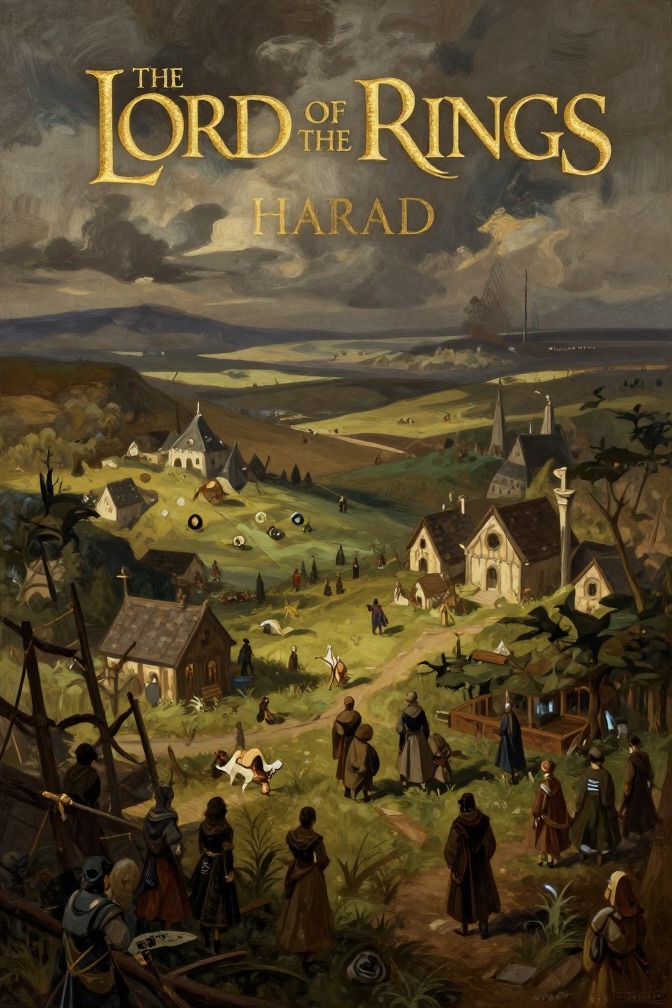
Harad is a vast, hot region south of Gondor, inhabited by the Haradrim, a people often in conflict with the West and allied with Sauron. It is a land of fierce warriors, strange beasts like the Mûmakil, and a culture that the narrative presents as alien and menacing, yet also touched by moments of pity and complexity.
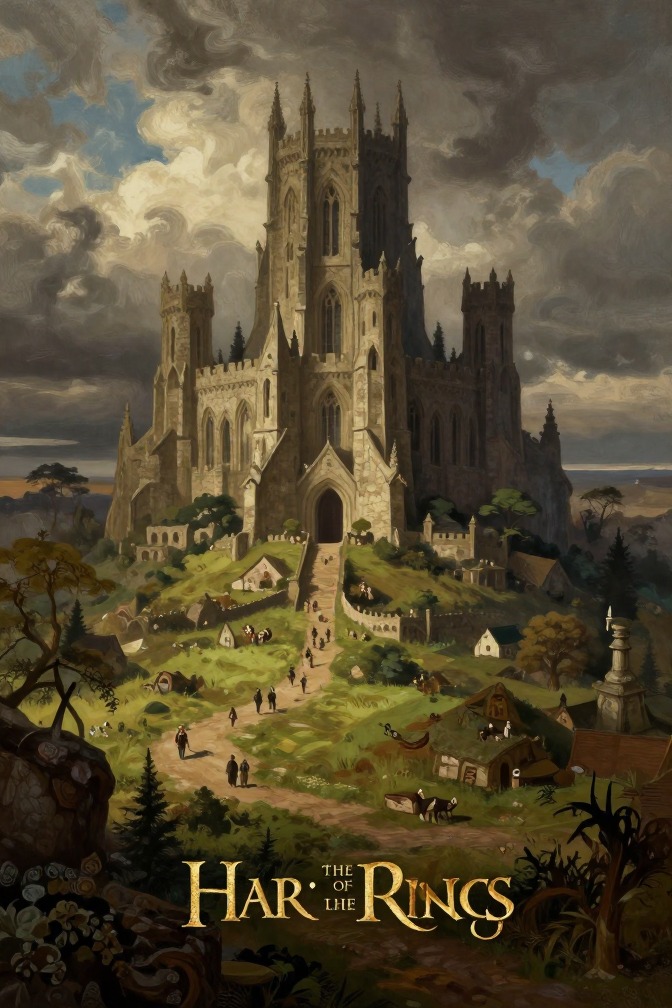
Harlindon is the southern region of Lindon, the Elvish realm west of the Blue Mountains in Middle-earth, serving as a remnant of the ancient kingdom of Beleriand and a haven for the Noldor and Sindar Elves who remained in the Westlands during the Third Age.
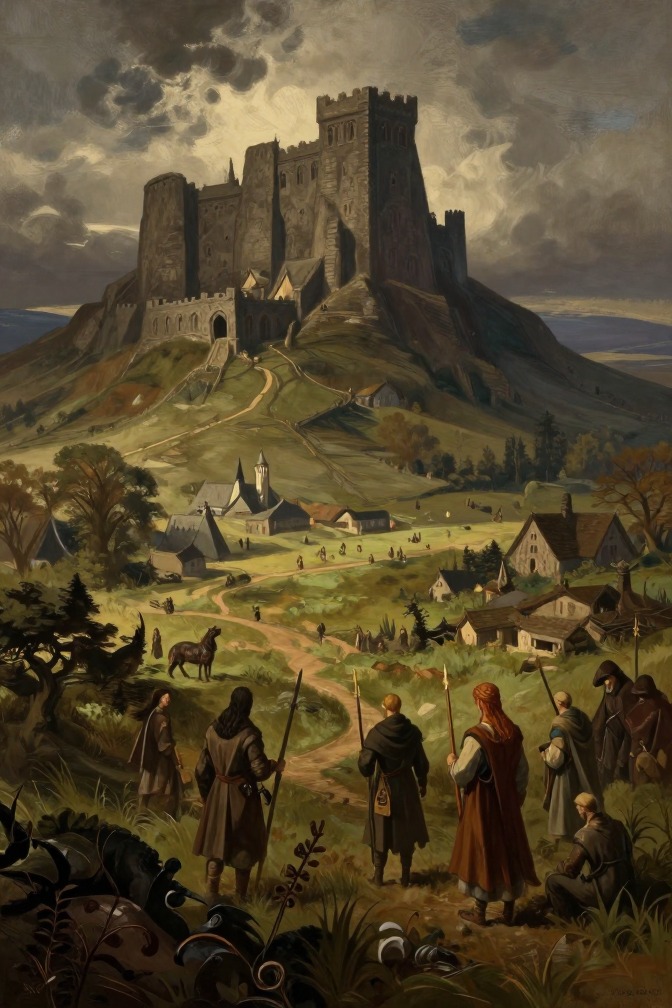
Himring is a hill in the far north of Beleriand, the fortified realm of Maedhros, son of Fëanor, during the First Age. It is remembered in the Third Age primarily through the Lay of Leithian, recited by Aragorn to the hobbits on Weathertop, which recounts Beren's journey past its slopes into the haunted region of Dorthonion. The name appears in the table of contents of *The Lord of the Rings* as a chapter title within Book One, and the hill's strategic position and tragic history—as a bastion of the Noldor that ultimately fell to Morgoth—are evoked in the narrative's allusions to the ancient wars of Beleriand.
Kheled-zâram, also called the Mirrormere, is a deep, dark lake in the Dimrill Dale beneath the Misty Mountains, holding profound symbolic and historical significance for the Dwarves as the place where Durin first saw a crown of stars reflected in its waters.
Lossarnach is a fertile southern fief of Gondor, known for its flower-filled valleys and as the home of Lord Forlong the Fat, who led a contingent of two hundred men to the defense of Minas Tirith during the War of the Ring.