The treasure chest is the physical culmination of Santiago's quest, a chest of Spanish gold coins, precious stones, and artifacts buried at the abandoned church in Andalusia, whose discovery confirms the novel's central philosophy that the journey itself is the true reward.
Santiago and the Gypsy woman is the relationship between the shepherd Santiago and the old woman who interprets his recurrent dream of treasure in Tarifa. Their brief encounter sets Santiago on the path to his Personal Legend, establishing the dream as a call to adventure and introducing the principle that the universe conspires to help those who pursue their destiny.
Beginner's luck, also called the principle of favorability, is a recurring concept in Paulo Coelho's The Alchemist that describes the initial success and encouragement the universe grants to someone who has just committed to pursuing their Personal Legend. It is presented as a universal law: when a person first decides to follow their destiny, forces conspire to give them a taste of success, whetting their appetite and confirming that the path is correct. This principle is introduced by Melchizedek, the king of Salem, and is later invoked by Santiago as he navigates the challenges of his journey, serving both as a motivational tool and as a foreshadowing of the severe tests that await at the end of every quest.
The prohibition of alcohol in the lands of Islam is a religious rule that Santiago encounters immediately upon arriving in Tangier, and it serves as both a cultural shock and a recurring thematic touchstone throughout his journey. The rule is first stated by the young Arab who befriends him in the bar, and it later becomes a point of contrast with the alchemist's more flexible interpretation of what is truly evil. The prohibition underscores the tension between religious law and personal destiny, and it is ultimately subverted by the alchemist's act of sharing wine with Santiago in the desert, a moment that redefines the nature of transgression and spiritual freedom.
The Prohibition of arms at oasis is a sacred rule in the desert tradition of *The Alchemist*, declaring that oases are neutral territories where no weapons may be carried, a law enforced by the tribal chieftains to protect women, children, and refugees during tribal wars.
Omens are the central guiding mechanism of the novel, a system of signs through which the universe communicates with those pursuing their Personal Legend. Melchizedek teaches Santiago that God has prepared a path for everyone and that one must learn to read the omens left along the way. Throughout his journey, Santiago learns to interpret the flight of birds, the behavior of animals, and the events of daily life as messages from the Soul of the World, and his ability to do so determines his success or failure.
The fifth day of creation is a theological concept referenced in Paulo Coelho's The Alchemist, representing a state of perfect harmony and stasis in the universe before the creation of humanity, which introduced the capacity for change, love, and the transformation of the Soul of the World.
Anthony Marston, a young and reckless aristocrat, becomes the first victim of the unknown murderer on Indian Island, dying instantly from potassium cyanide poisoning during the tense aftermath of the gramophone accusation.
General Macarthur is the third victim on Indian Island, killed by a blow to the back of the head with a life preserver while sitting alone by the sea, his death confirming that the island's murders are deliberate and that the killer is among the guests.
The staged death of Justice Lawrence Wargrave is the pivotal deception of the Indian Island murders, a calculated performance in which the judge—the true mastermind—fakes his own murder to become an invisible observer, enabling him to eliminate the remaining guests and complete his grand design of extra-legal execution.
Rogers, the butler on Indian Island, is found murdered with a chopper in the wash-house, his death corresponding to the seventh verse of the nursery rhyme and reducing the number of china figures on the dining table to six.
Vera Claythorne, the last survivor of the ten guests on Indian Island, hangs herself in her bedroom after shooting Philip Lombard, completing the nursery rhyme's final verse and becoming the last victim of the island's elaborate murder scheme.
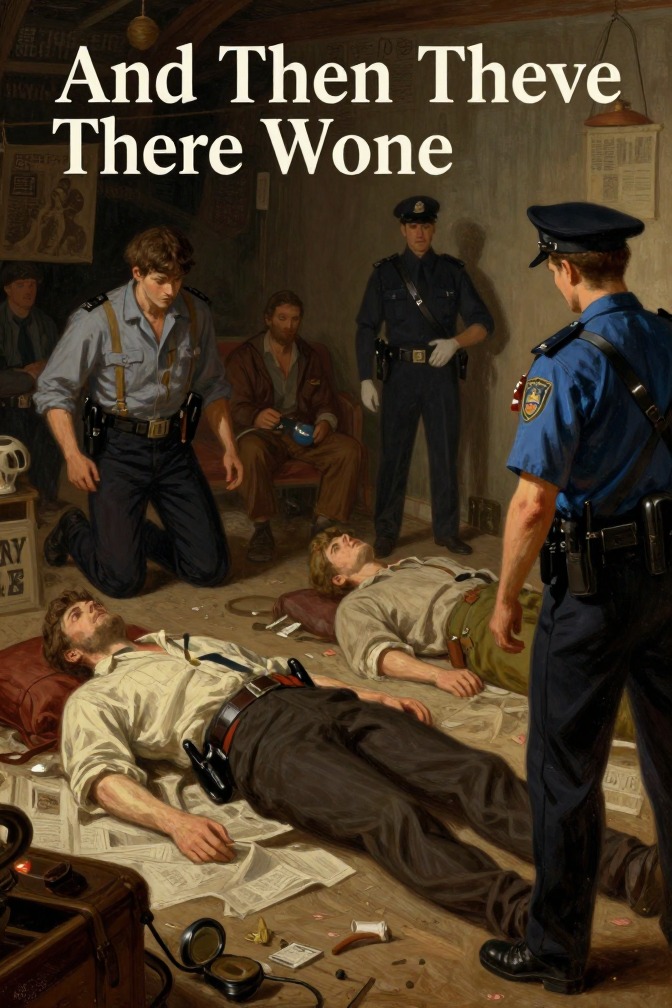
The Discovery of Bodies by Police is the final event of Agatha Christie's And Then There Were None, in which the authorities arrive on Indian Island to find ten corpses and no living soul, confronting an apparently insoluble mystery.
The biblical proverb 'Be sure thy sin will find thee out' functions as a central thematic and structural device in Agatha Christie's And Then There Were None, encapsulating the novel's premise of inescapable retribution. Recited by the pious Emily Brent and echoed in the judge's final confession, the phrase underscores the moral logic of the entire plot: each of the ten guests is lured to Indian Island to face punishment for past crimes that the law could not touch, and the proverb's promise of inevitable discovery becomes the narrative's driving force and its grim conclusion.
U.N. Owen is the pseudonymous identity of the unknown host who lures ten guests to Indian Island and orchestrates their deaths as a form of vigilante justice against individuals who have escaped legal punishment.
Indian Island is the isolated, privately owned island off the Devon coast where the entire plot of And Then There Were None unfolds. Originally purchased by the American millionaire Elmer Robson, who built a luxurious modern house on it, the island was later bought by the mysterious U. N. Owen. Its complete isolation from the mainland—accessible only by a motor boat that cannot land in a southeasterly gale—makes it the perfect setting for a series of meticulously planned murders that the law cannot touch, transforming it from a glamorous retreat into a sealed death trap.
The chopper (axe) is the weapon used to murder Thomas Rogers, the butler, on the morning of August 10th, and it also serves as a symbolic instrument in Lawrence Wargrave's childhood fascination with killing and his adult execution of justice.
The motor boat is the sole physical link between Indian Island and the mainland, and its failure to arrive on the morning after the first deaths confirms the guests' isolation and the murderer's control over their fate.
Lawrence John Wargrave, a retired judge known as a 'hanging judge,' is the mastermind behind the Indian Island murders, driven by a sadistic love of killing and a fanatical sense of justice to execute those beyond the law's reach.
4 January 1917 is the date on which General John Gordon Macarthur deliberately sent his wife's lover, Captain Arthur Richmond, to his death during the First World War, an act of murder that the law could never touch and that becomes the basis of the accusation against him on Indian Island.
August 10th is the pivotal day on Indian Island when the murderer's plan accelerates, claiming three victims—Rogers, Emily Brent, and the staged death of Justice Wargrave—and marking the point where the survivors' suspicion turns into open terror and the first organized countermeasures fail.
August 12th is the day the rescue party from the mainland finally reached Indian Island, discovering the ten dead bodies and the unsolved mystery, and it is also the day when the police investigation began to piece together the events, revealing that the killer had vanished without a trace.
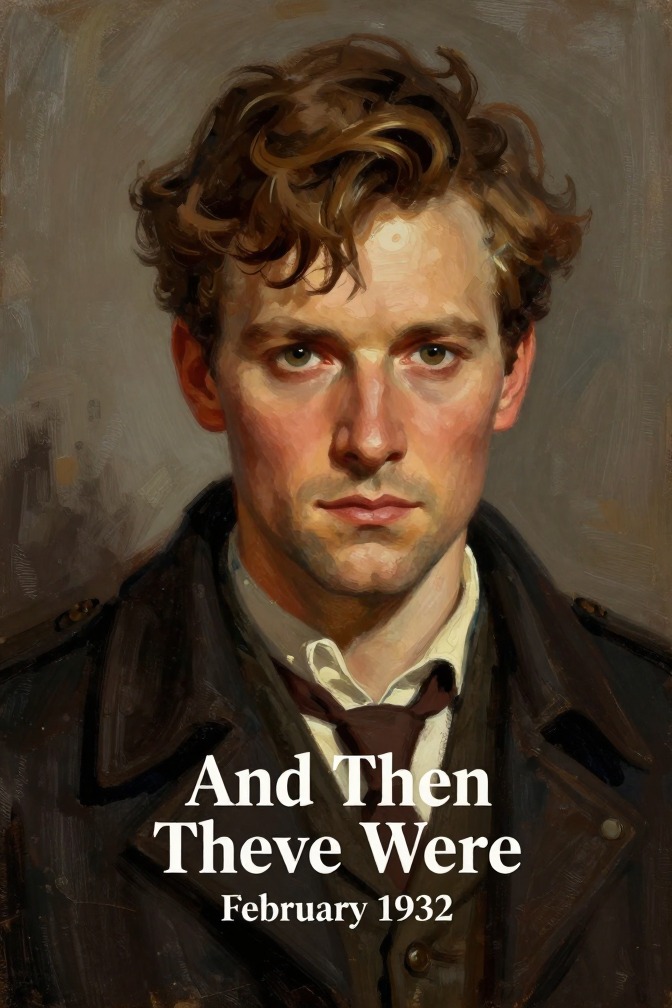
February 1932 is the date on which Philip Lombard was accused of causing the deaths of twenty-one members of an East African tribe, an event that forms one of the central accusations in the gramophone record played on Indian Island and that Lombard himself later admits to without remorse.
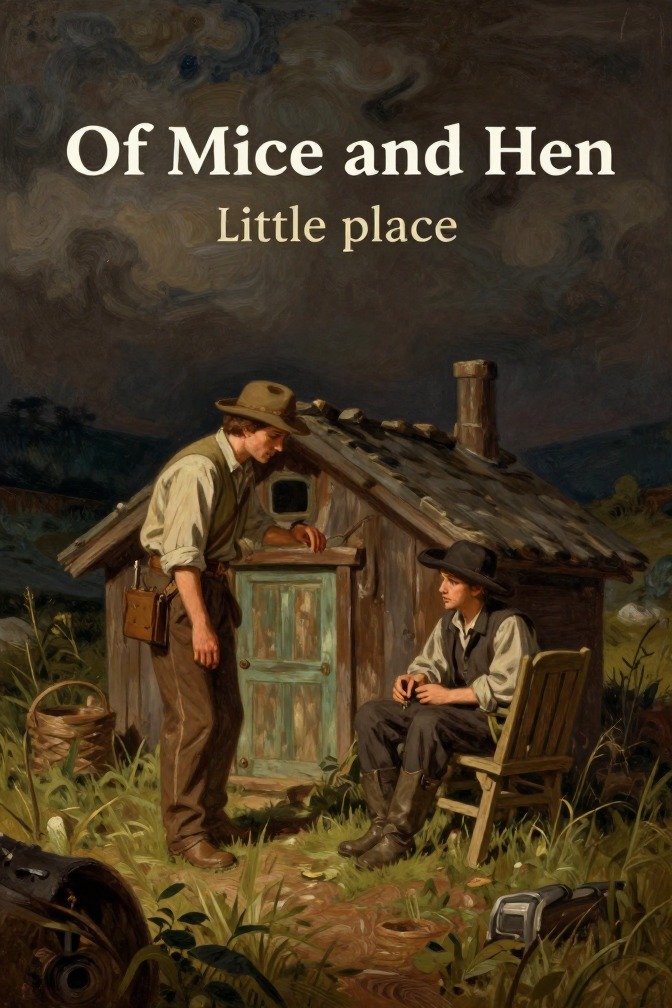
The little place is the central dream-object of George Milton and Lennie Small, a small farm they hope to own one day, representing their shared vision of independence, security, and mutual care in the harsh world of itinerant ranch workers. It is the emotional and symbolic core of their relationship, the promise that sustains them through poverty and loneliness, and its final, irrevocable loss marks the tragic climax of the novel.
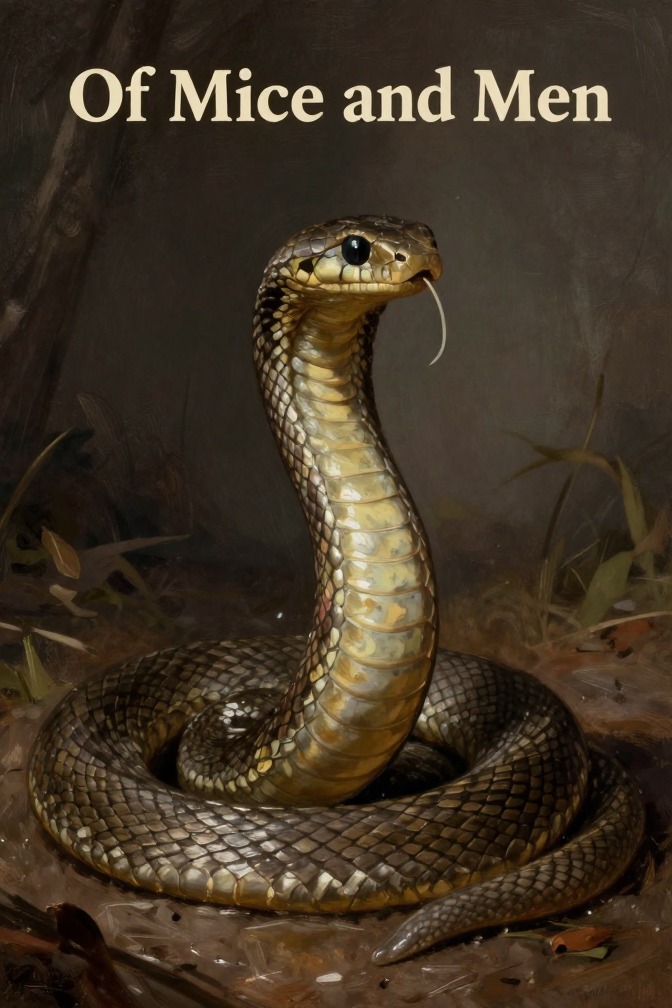
The water snake appears twice in the opening scene of the novel, gliding up the Salinas River pool and being swallowed by a heron, then reappearing after the wind dies, only to retreat when Lennie arrives. Its brief, cyclical presence establishes the pool as a place of natural predation and fragile peace, foreshadowing the violence that will close the story at the same spot.
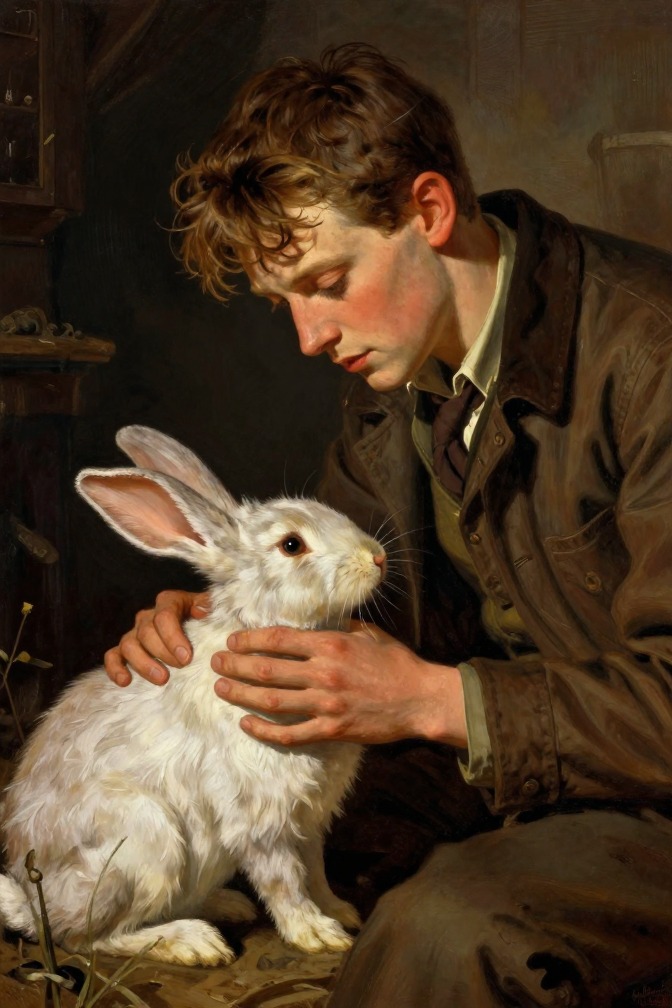
Lennie Small's hallucination of a giant rabbit is a pivotal psychological event in the final chapter of John Steinbeck's *Of Mice and Men*, in which Lennie's guilt, fear, and desperate hope for the future are externalized through a talking rabbit that berates him for his failures and predicts George's abandonment. This vision, following the hallucination of Aunt Clara, crystallizes Lennie's internal conflict and foreshadows the story's tragic resolution.
Carlson's Luger is the pistol George Milton uses to kill Lennie Small at the Salinas River pool, transforming from a mundane ranch object into the instrument of a mercy killing that ends the dream of the little farm.
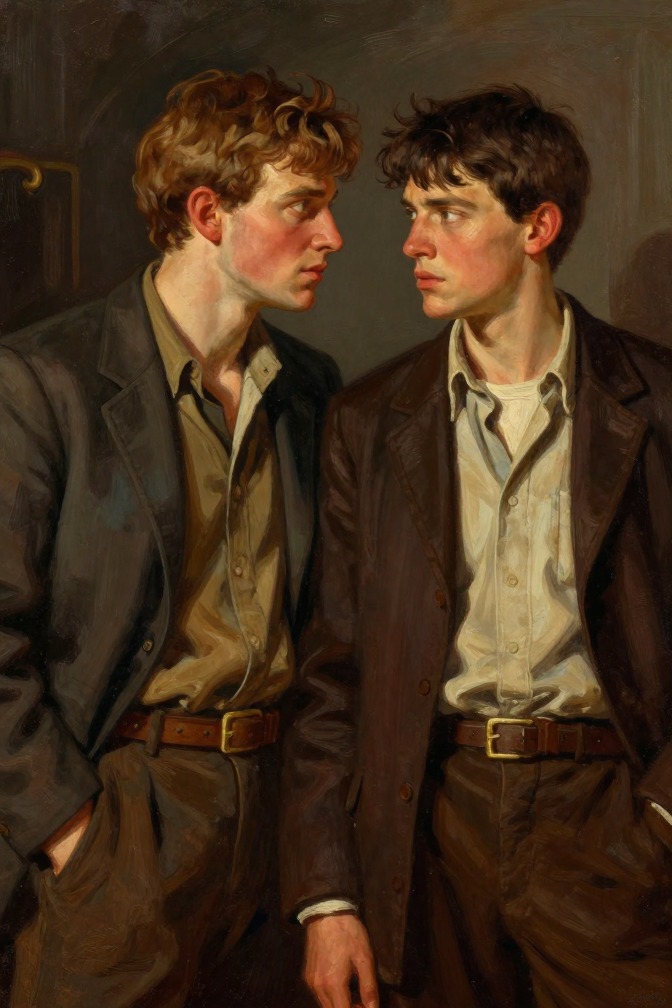
George and Lennie's relationship is the emotional and structural core of the novel, a bond of mutual dependence and shared dreaming that is ultimately shattered by a mercy killing. Their friendship, rare among itinerant ranch hands, is defined by Lennie's childlike trust and George's protective care, and it is tested by Lennie's repeated, unintentional acts of violence. The relationship culminates in George's agonizing decision to shoot Lennie himself, an act that both fulfills and destroys their shared dream.
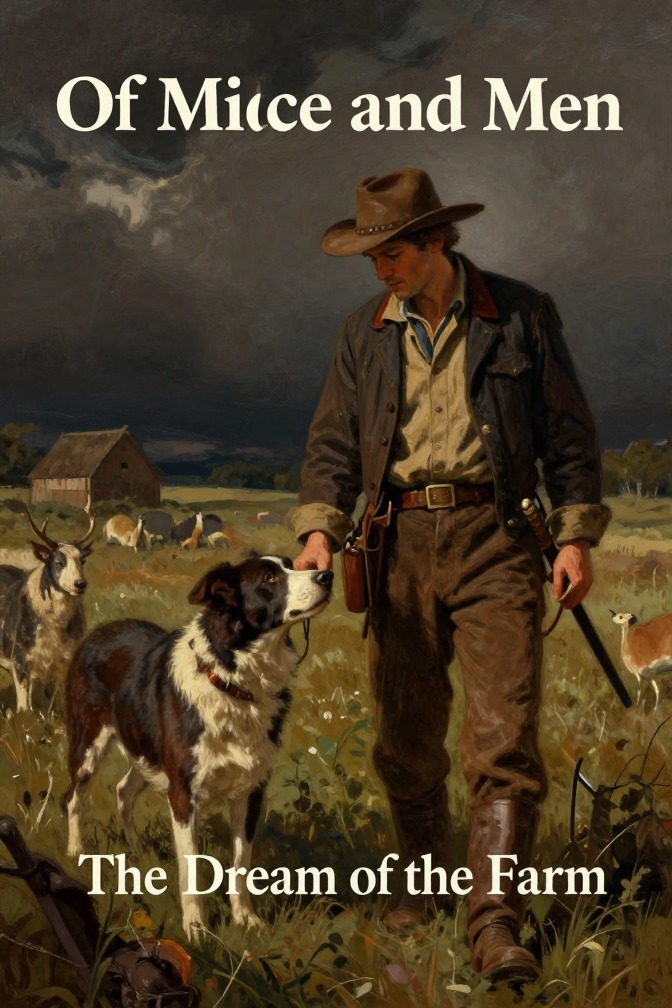
The Dream of the Farm is the central, recurring vision of a self-sufficient smallholding that George Milton and Lennie Small share throughout their itinerant life, and it becomes the emotional and narrative core of the novel's final scene. In the moments before George shoots Lennie beside the Salinas River, the dream is recited one last time—not as a plan for the future, but as a ritual of comfort and a prelude to mercy. The dream's final invocation transforms it from a shared aspiration into a tragic farewell, revealing the depth of the bond between the two men and the impossibility of their vision in a world of rootless labor.
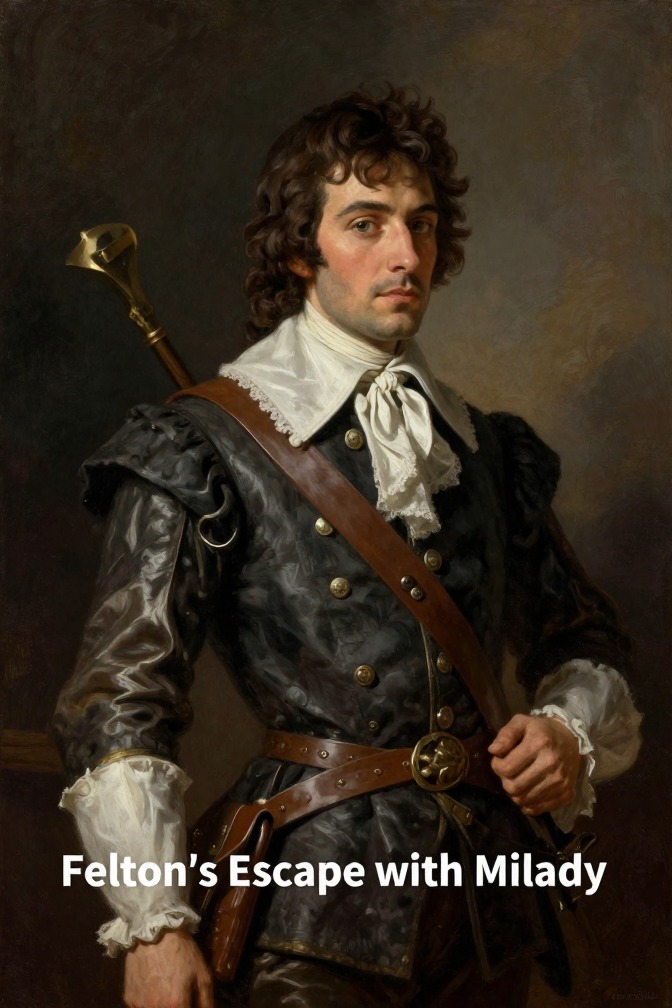
Felton's Escape with Milady is the pivotal action in which the Puritan lieutenant John Felton, having been seduced and manipulated by Milady de Winter, orchestrates her flight from Lord de Winter's castle prison on the night of August 22, 1628, using a rope ladder and a pre-arranged boat, an event that directly enables the assassination of the Duke of Buckingham and sets the final tragedy in motion.