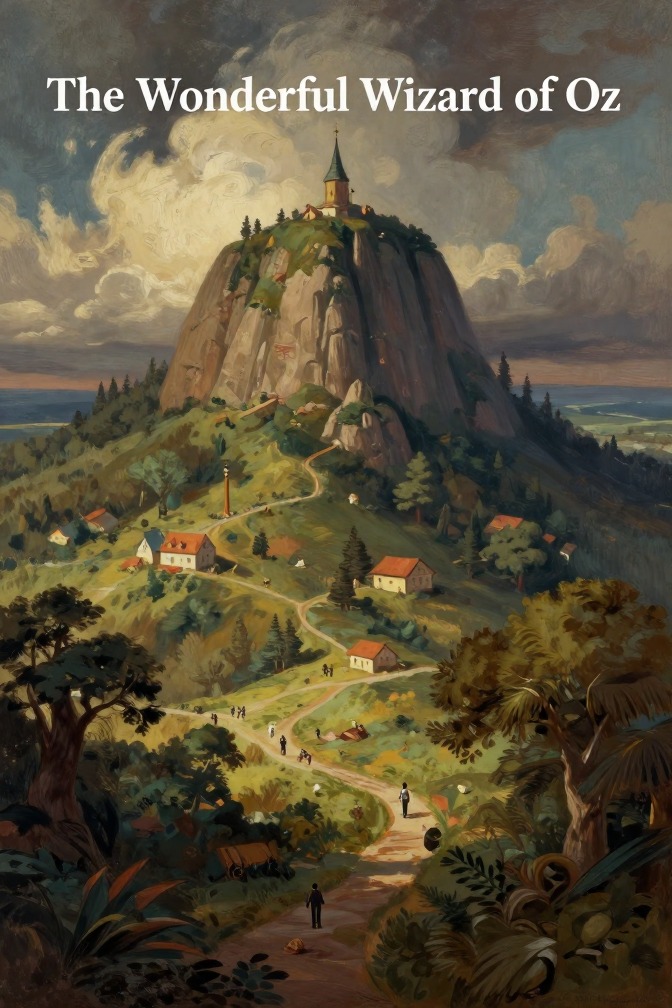
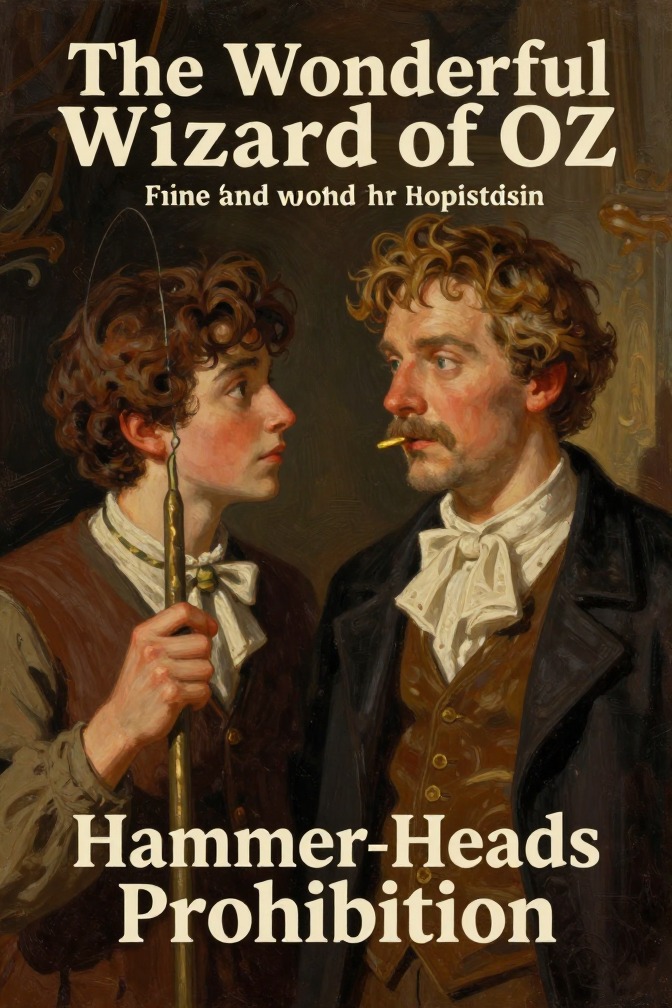
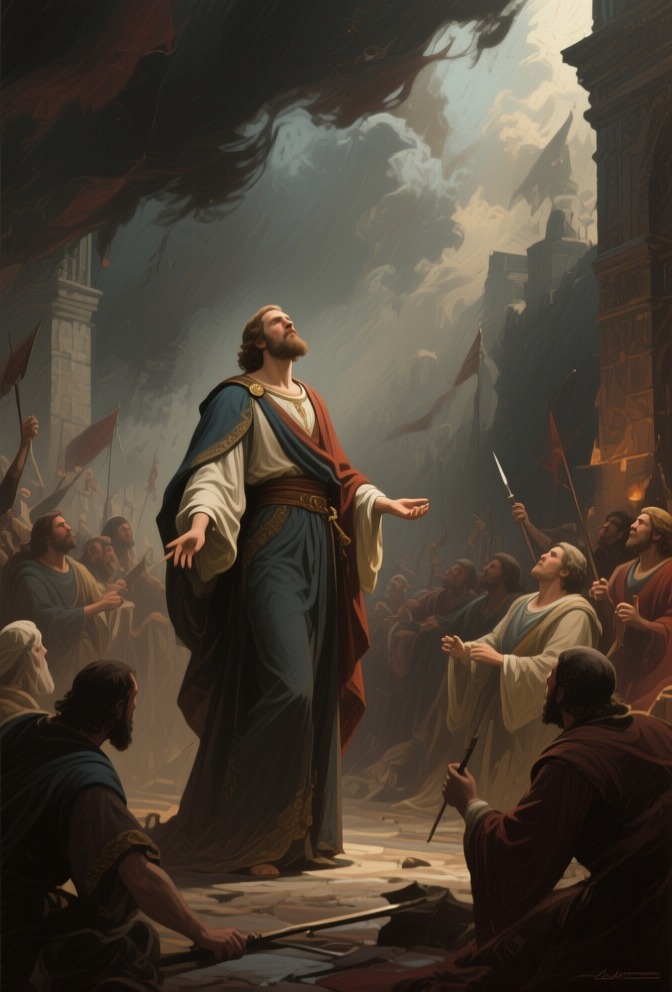
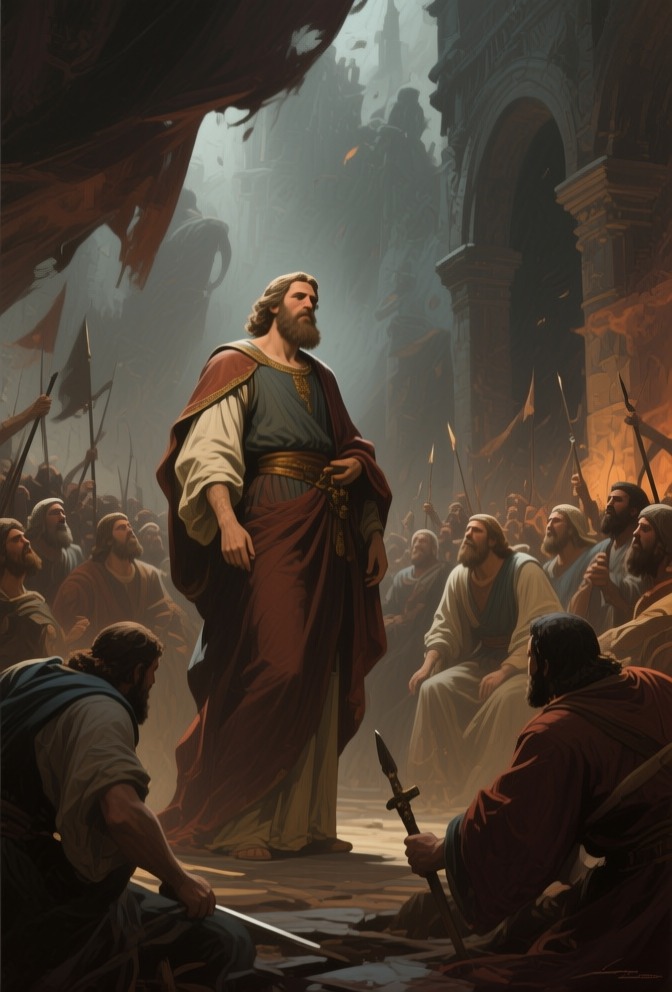
Hammer-Head Mountain is a steep hill in the Land of Oz, inhabited by the armless Hammer-Heads who use their extendable, flat-topped heads to violently repel any traveler attempting to cross, serving as a formidable barrier on the journey to the Quadling Country.
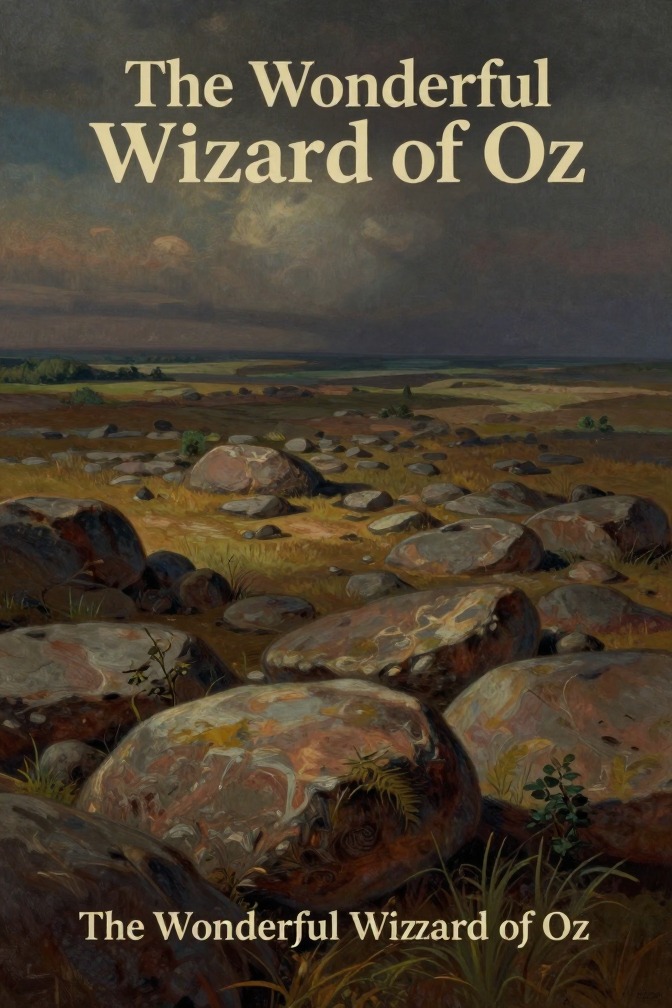
The Rocky Plain is a barren, rocky expanse in the Land of Oz where the Winged Monkeys drop the Tin Woodman after capturing him, leaving him battered and dented until the Winkies rescue and repair him.
The Tall Tree is the location in the Winkie Country where the Winged Monkeys deposited the Scarecrow's clothes after dismantling him, and where Dorothy and her companions later recovered them.
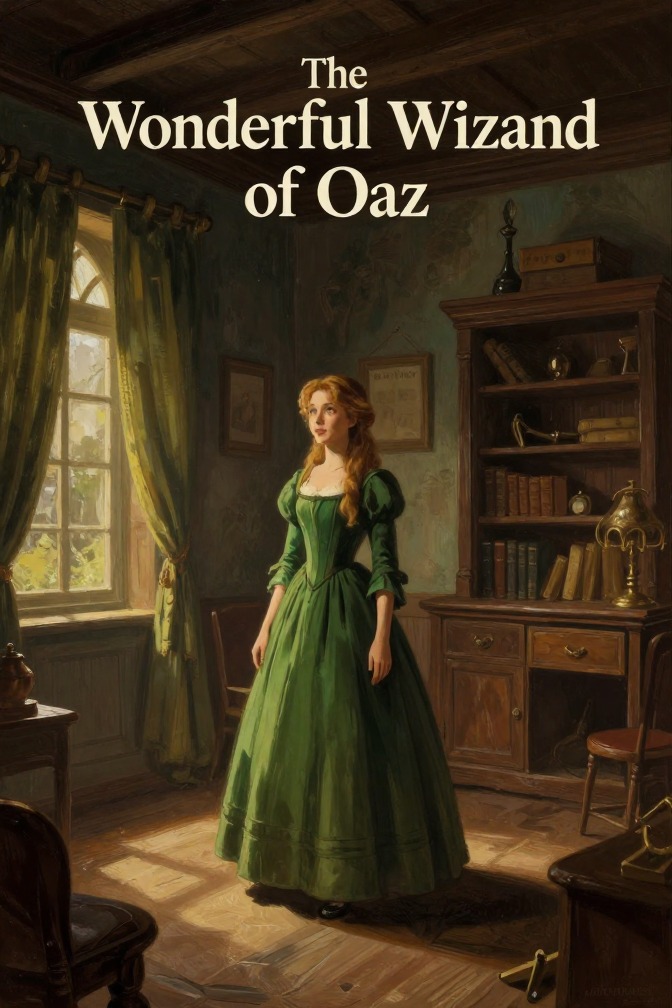
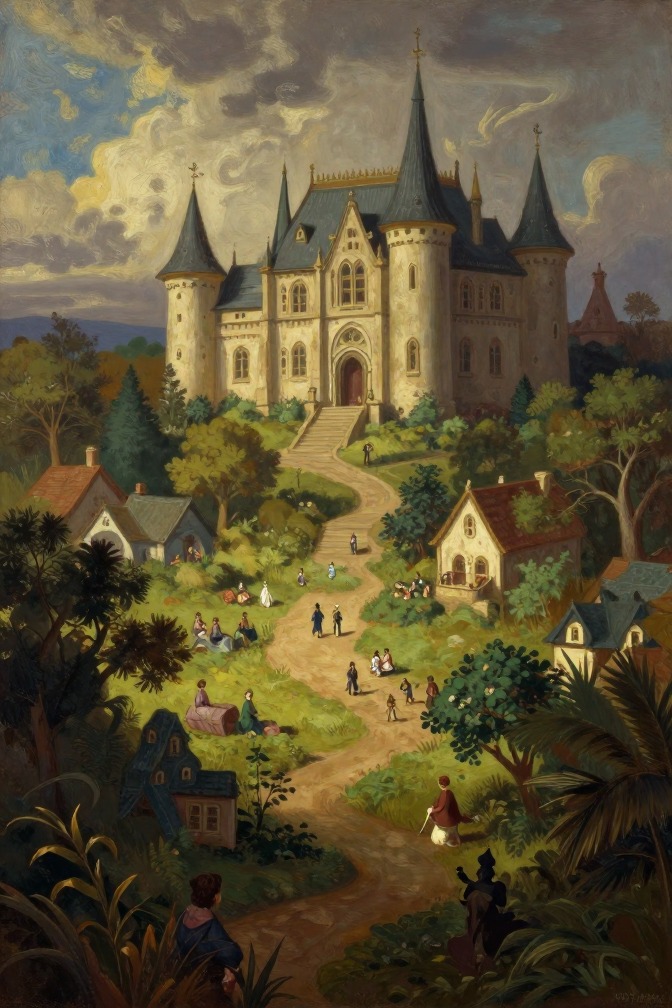
The Green Maiden's Room is a luxurious guest chamber in Oz's Palace within the Emerald City, where Dorothy stays during her first visit. It is a space of comfort and enchantment, featuring a soft bed with green silk sheets, a perfumed fountain, green flowers, and a wardrobe of perfectly fitting green dresses, embodying the city's emerald-themed opulence and the Wizard's deceptive hospitality.
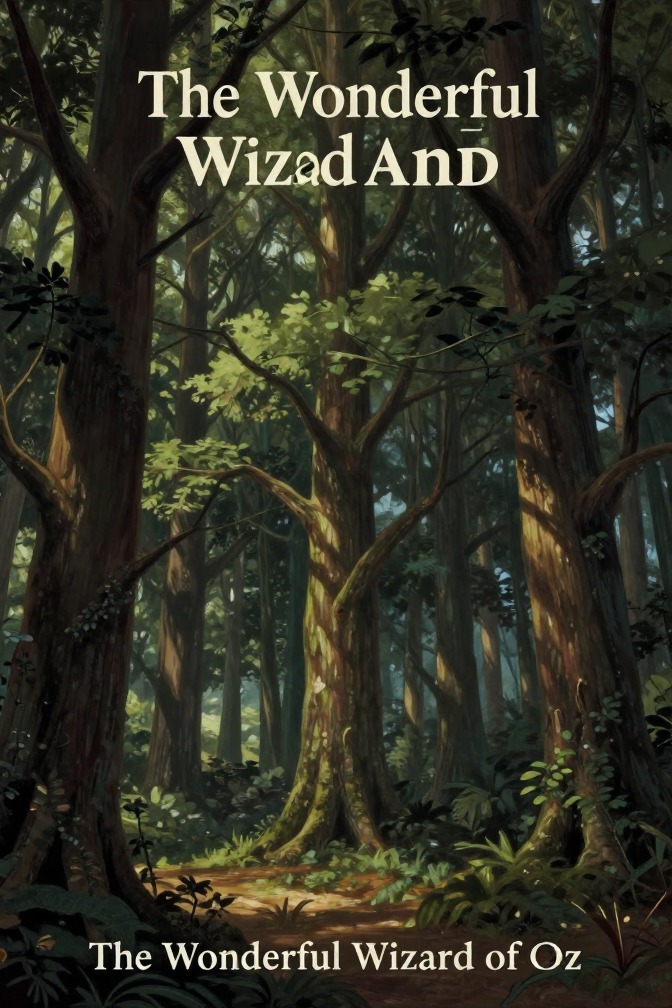
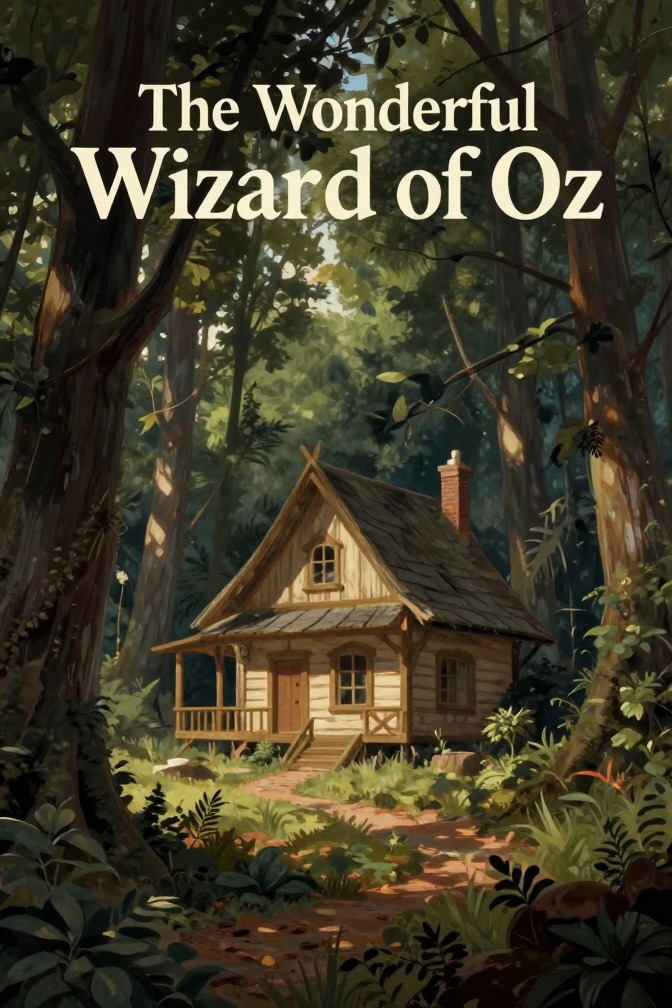
The Forest Hut is a small, rustic cottage built of logs and branches, located deep within the forest along the yellow brick road. It serves as a crucial shelter for Dorothy and her companions on their first night of the journey, and it is also the place where the Tin Woodman's oil-can is stored, enabling his rescue. The hut represents the transition from the civilized Munchkin country into the wilder, more dangerous parts of Oz, and its humble, functional nature contrasts with the magical and opulent settings the travelers later encounter.
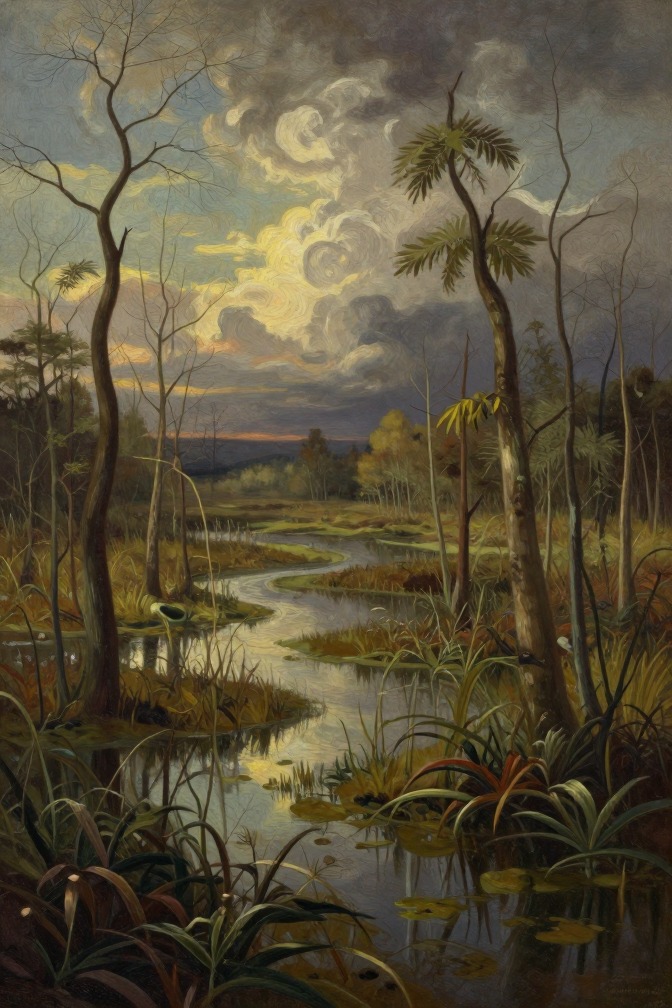
The Swamp is a disagreeable, boggy region encountered by Dorothy and her companions after leaving the China Country, marking a transitional landscape of physical difficulty and narrative contrast on their journey south to seek Glinda's help.
The Quadling Country is the southern region of the Land of Oz, ruled by the Good Witch Glinda, and serves as the final destination of Dorothy's journey, where she learns the secret of the Silver Shoes and returns to Kansas.
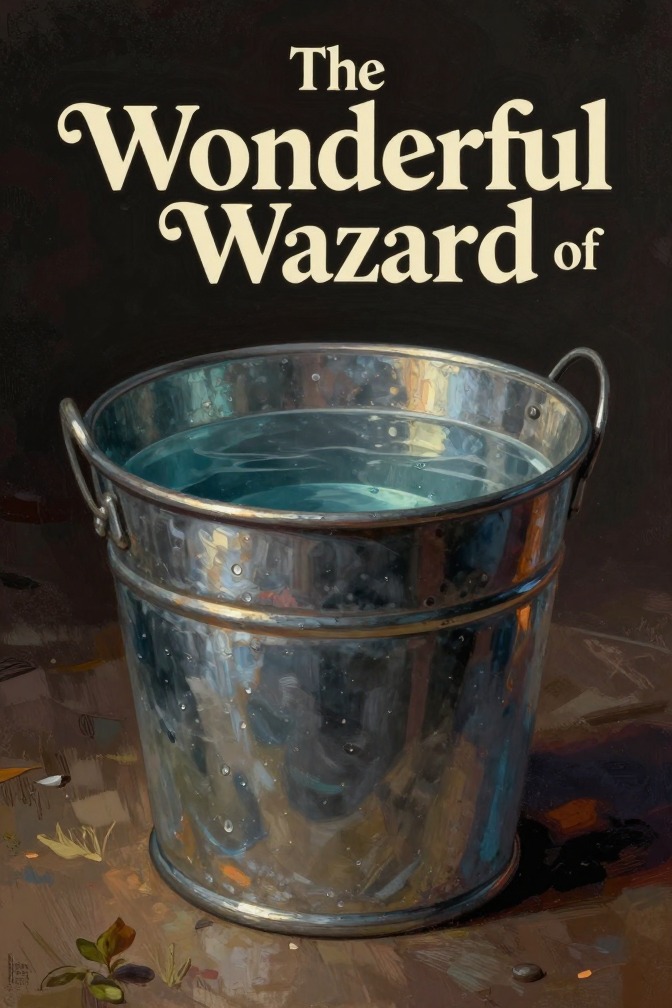
The Bucket of Water is the mundane object that unexpectedly destroys the Wicked Witch of the West, revealing the Witch's fatal vulnerability to water and serving as the climax of Dorothy's captivity in the Witch's castle.
The Mouse Whistle is a small charm given to Dorothy by the Queen of the Field Mice after the Tin Woodman saves the Queen's life, enabling Dorothy to summon the mice for aid whenever needed.
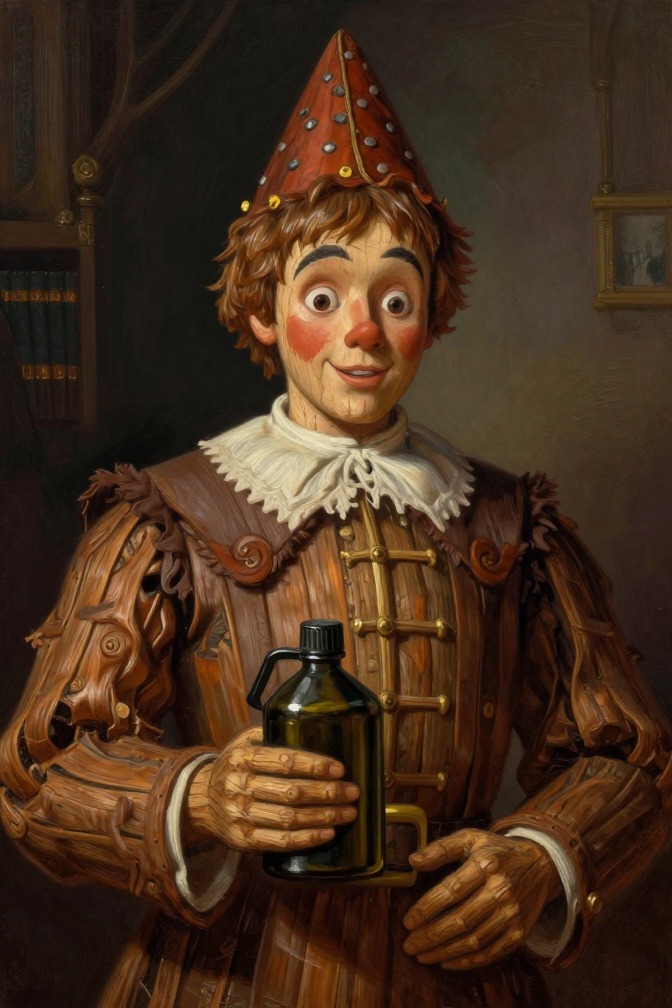
The Oil-can is a small but essential object carried by Dorothy and her companions, used to lubricate the Tin Woodman's joints and prevent him from rusting, and it becomes a recurring symbol of the group's interdependence and the practical care that sustains their journey.
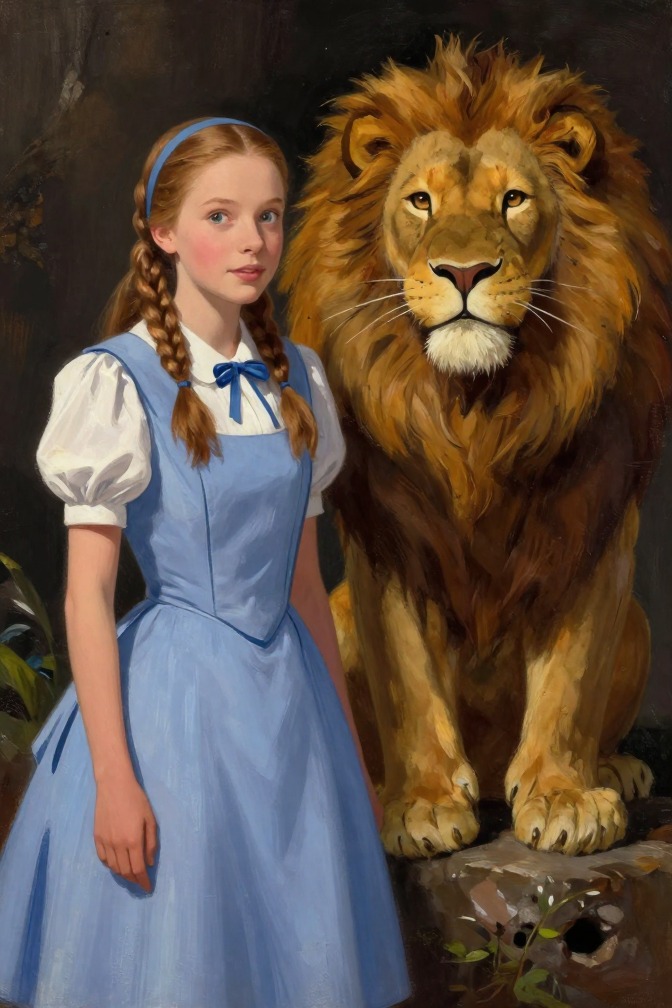
Dorothy and the Cowardly Lion form a deep, protective bond that begins with a confrontation and evolves into mutual care, with Dorothy defending the Lion from his own fears and the Lion offering her physical protection and emotional comfort during their journey through Oz.
The relationship between Dorothy and the Tin Woodman begins when she rescues him from a year-long rusted immobility in the forest, and he joins her quest to the Emerald City. Throughout their journey, Dorothy acts as his caretaker, oiling his joints and wiping his tears, while the Tin Woodman protects her with his axe and demonstrates a profound, heartless kindness that shapes their mutual loyalty. Their bond culminates in a tearful farewell, where Dorothy kisses him goodbye before using the Silver Shoes to return to Kansas.
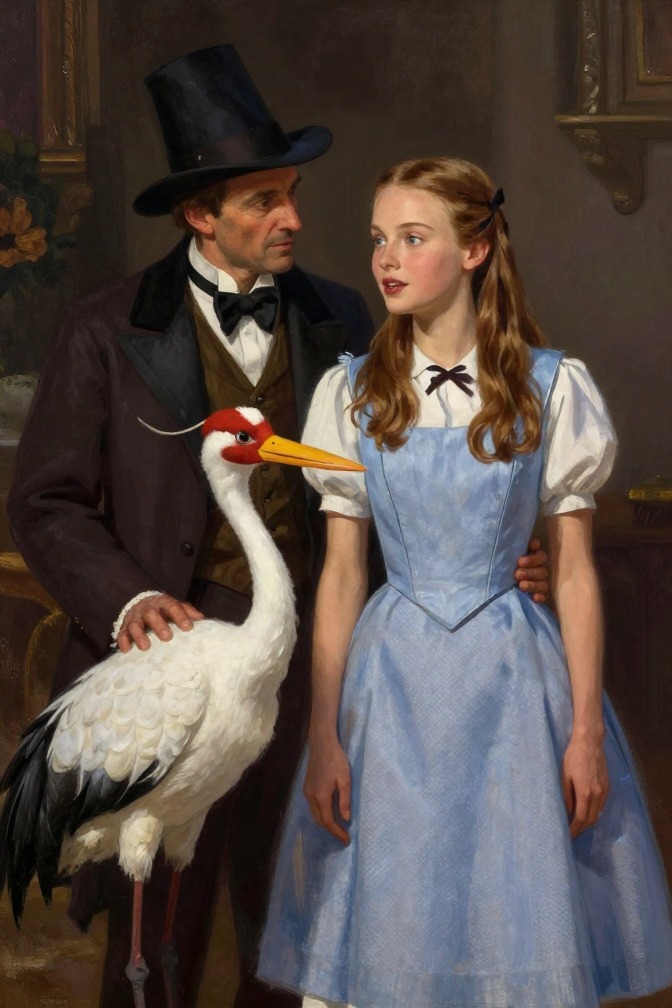
Dorothy and the Stork form a brief but decisive rescue relationship when the Stork retrieves the Scarecrow from the middle of a river, saving him from being stranded forever and allowing the party to continue their journey to the Emerald City.
Dorothy and Boq share a brief but significant encounter in the Munchkin Country, where Boq, a wealthy Munchkin, hosts Dorothy for the night, celebrates her as a sorceress, and provides her with crucial information about the journey ahead.
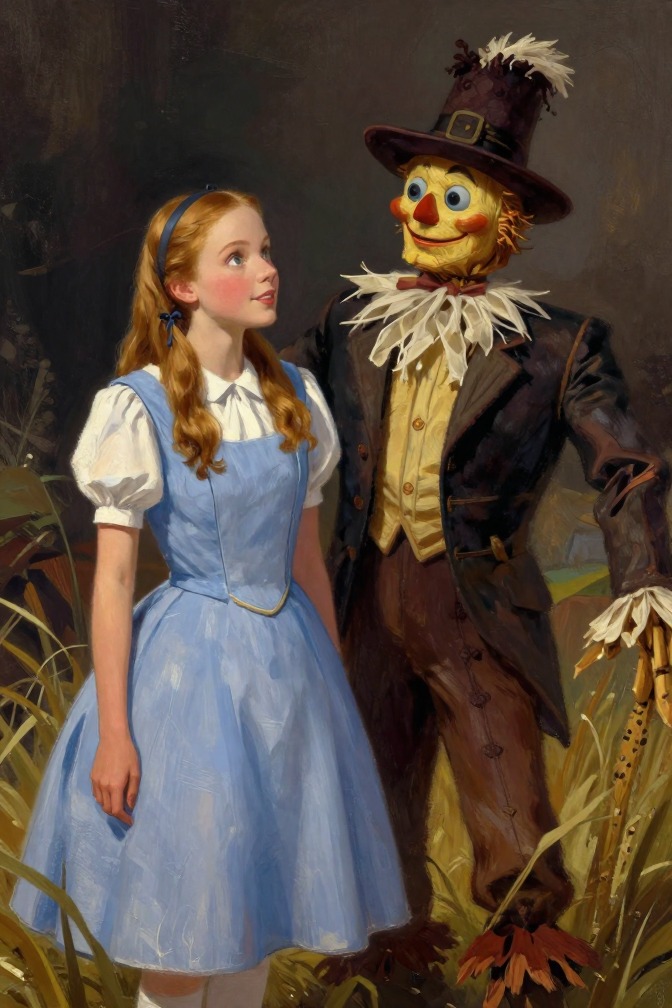
The relationship between Dorothy and the Scarecrow begins with a chance encounter in a cornfield and deepens into a loyal, mutually supportive friendship that drives the central quest of the story. Dorothy rescues the Scarecrow from his lonely pole, and he accompanies her to the Emerald City, seeking brains from Oz. Throughout their journey, they rely on each other's strengths—Dorothy's practical kindness and the Scarecrow's growing cleverness—and their bond is cemented by shared adventures, rescues, and a final, emotional parting.
Dorothy and Glinda's relationship is the culminating alliance of the novel, in which the Good Witch of the South, possessing true magical power and benevolent wisdom, finally reveals the secret of the Silver Shoes and grants Dorothy's wish to return to Kansas, while also securing the futures of her companions.
The Hammer-Heads' Prohibition is a territorial rule enforced by the armless, flat-headed creatures of the Hammer-Head Mountain, who violently prevent any traveler from crossing their hill to reach the Quadling Country.
The Tin Woodman's Need for Oil is a recurring physical rule in L. Frank Baum's *The Wonderful Wizard of Oz* that governs the Tin Woodman's existence: his tin joints rust when not oiled, causing him to freeze in place, and he must carry an oil-can at all times to prevent this. This rule is introduced during his rescue, demonstrated through his own carelessness, and becomes a defining constraint that shapes his behavior, his emotional life, and his interactions with the world.
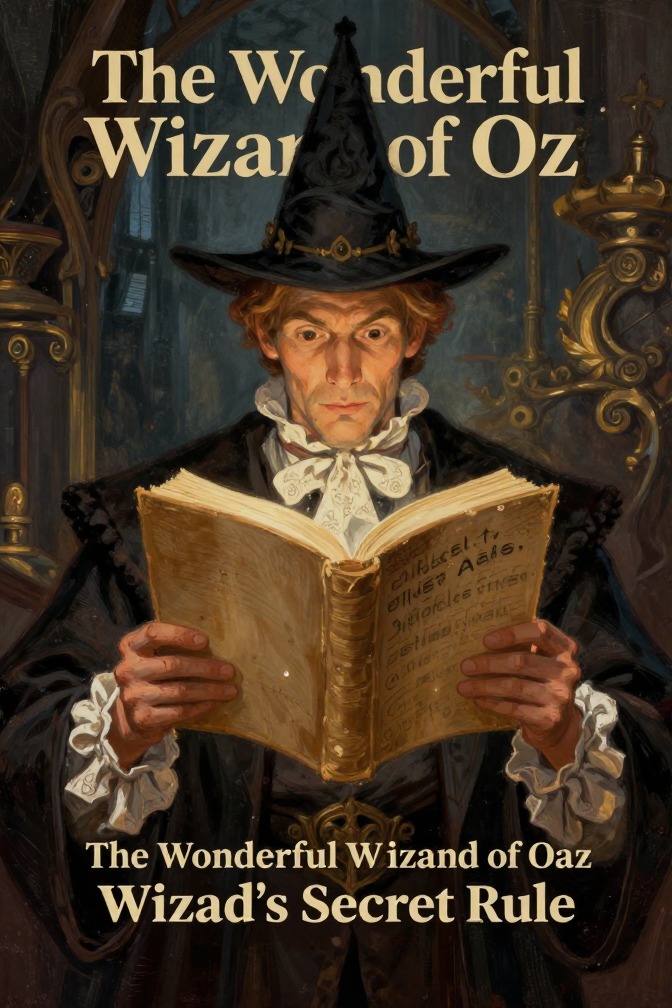
The Wizard's Secret Rule is the condition imposed by Oz on Dorothy and her companions after they discover he is a humbug, requiring them to conceal his true identity as a common man and ventriloquist from the people of the Emerald City, a pact that preserves his fraudulent authority and shapes the political order of Oz.
Cowardice is the defining trait of the Cowardly Lion, a central character in L. Frank Baum's The Wonderful Wizard of Oz, who believes himself to be a coward despite his size and strength, and whose quest for courage drives his character arc and thematic resolution.
Heartlessness, in the context of The Wonderful Wizard of Oz, is the defining condition of the Tin Woodman, a state of being without a heart that he experiences as a profound emotional and existential loss, driving his quest to the Emerald City and shaping his meticulous, compassionate behavior.
Rust is a recurring physical and symbolic condition in L. Frank Baum's *The Wonderful Wizard of Oz*, primarily afflicting the Tin Woodman and representing the vulnerability of mechanical existence, the loss of emotional capacity, and the need for constant maintenance. It functions as both a practical obstacle and a metaphor for the paralysis that results from neglect, whether of one's body or one's heart.
Aunt Lydia begins writing the Ardua Hall Holograph, a secret manuscript in which she defends her life, confesses her crimes, and plots the destruction of Gilead from within, making this act the narrative and moral engine of the novel.
Aunt Lydia's decision to cooperate with Commander Judd and participate in the execution of a fellow prisoner marks the pivotal moment when she chooses survival and power over moral integrity, setting the course for her long and ruthless career within Gilead.
The car bomb that killed Neil and Melanie, the adoptive parents of Daisy (later revealed as Baby Nicole), is the pivotal event that shatters her ordinary life, forces her into the underground, and sets in motion the mission that will ultimately lead to the collapse of Gilead.
Aunt Lorna is a minor Aunt in Gilead who serves on the wedding-preparation team for high-ranking girls, measuring brides for their dresses and managing the logistical details of their arranged marriages. Though she occupies a subordinate, non-dominating role within the Aunt hierarchy, her presence in the narrative underscores the institutional machinery that transforms young women into compliant wives.
The pigeon (or dove) appears in The Testaments as a recurring symbol of communication, sacrifice, and spiritual transcendence, most prominently in the epigraph from Ecclesiastes that frames the novel's themes of hidden truth and eventual revelation, and in the memorial statue erected for Becka (Aunt Immortelle) that features two birds on the shoulder of a Pearl Girl.
Agnes Jemima discovers her true parentage through the Bloodlines Genealogical Archives at Ardua Hall, learning that her biological mother is a fugitive Handmaid and Mayday operative, and that she has a half-sister, Baby Nicole, who has been smuggled into Gilead.
The Establishment of the Aunts' System was the foundational event in which Aunt Lydia, along with Aunt Elizabeth, Aunt Helena, and Aunt Vidala, were recruited by Commander Judd to create the institutional framework for controlling women in Gilead, a system that would grant them power within a separate female sphere while binding them to the regime through coercion and complicity.
Aunt Lydia inserts a microdot containing a cache of incriminating documents into Nicole's arm, using the scarified GOD/LOVE tattoo as a hiding place, transforming Nicole into a carrier pigeon for the evidence that will help bring down Gilead.