Shunammite and Agnes Jemima are school friends at the Vidala School whose relationship is defined by shifting power dynamics, envy, and betrayal, reflecting the social hierarchies and moral corruption of Gilead.
Women Must Not Strike Men is a foundational rule of Gilead that codifies female physical submission to male authority, permitting women to use violence only in state-sanctioned executions such as Particicutions. The rule is enforced through education, religious doctrine, and social conditioning, and its violation carries severe consequences.
March 21 is a calendrical date that, in the world of The Testaments, marks the first full moon after the spring equinox, anchoring the annual Spring Equinox Grace ceremony at Ardua Hall. This fixed point in the liturgical calendar becomes the occasion for Aunt Lydia's public prayer for the return of Baby Nicole, revealing the regime's propaganda machinery and her own private calculations.
The Dodo is a bird who presides over the Caucus-race on the bank of the pool of tears, inventing the race to dry the soaked party and then declaring that everyone has won and all must have prizes, thereby establishing a logic of collective reward that defines Wonderland's absurd social order.
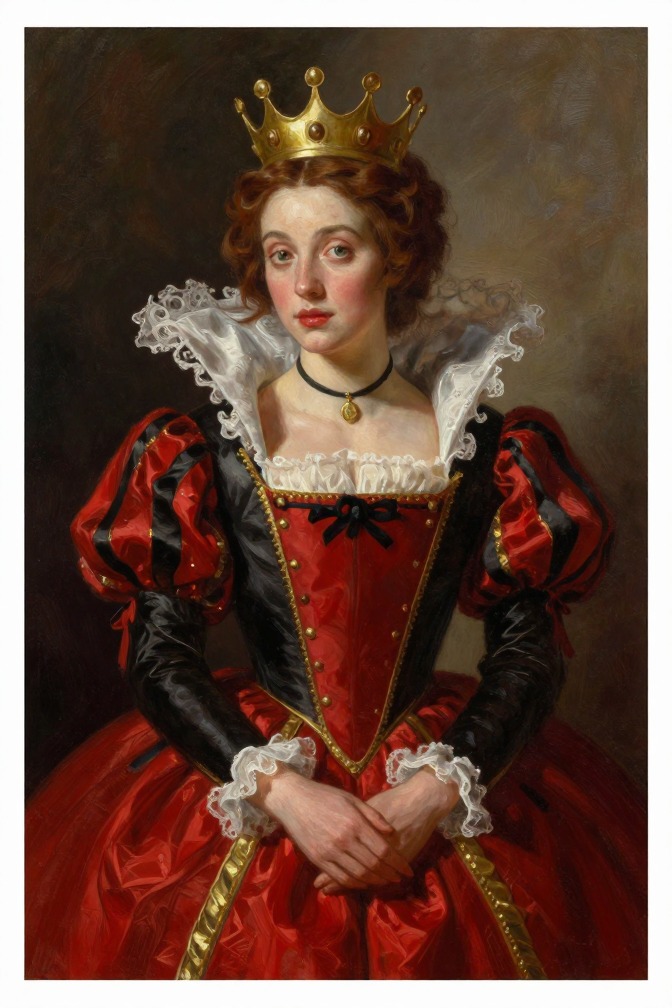
The Queen of Hearts is the tyrannical monarch of Wonderland whose defining characteristic is her immediate and arbitrary order to behead anyone who displeases her, embodying the absurd and threatening nature of the authority Alice encounters.
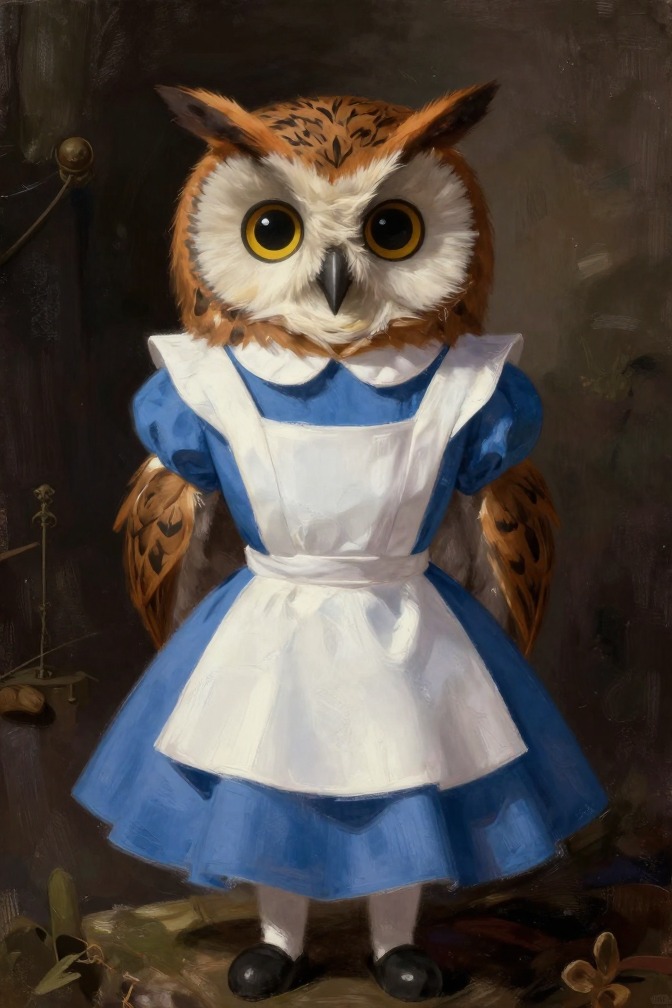
The Owl is a minor creature mentioned in Alice's garbled recitation of "I passed by his garden" during the trial scene, where it shares a pie with the Panther in a nonsensical verse that underscores the breakdown of language and meaning in Wonderland.
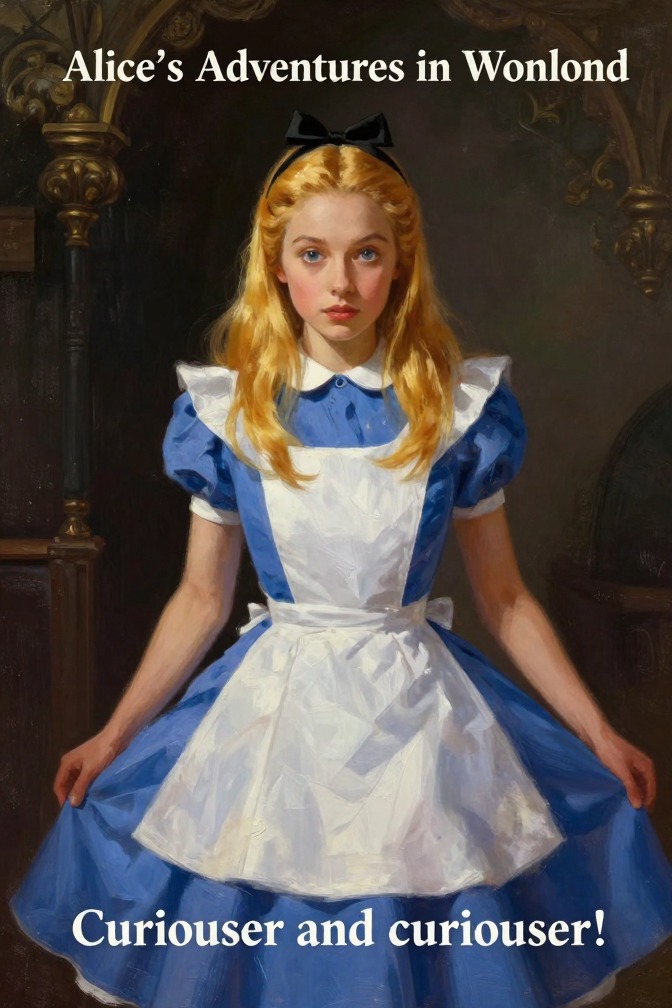
Alice's exclamation "Curiouser and curiouser!" is the first verbal marker of her transformation in Wonderland, crystallizing the moment she realizes that the rules of language, size, and identity have all become unstable. The phrase, a deliberate grammatical error, recurs throughout the narrative as a signature of her disorientation and defiance, and it ultimately frames the entire adventure as a dream in which the familiar is perpetually made strange.
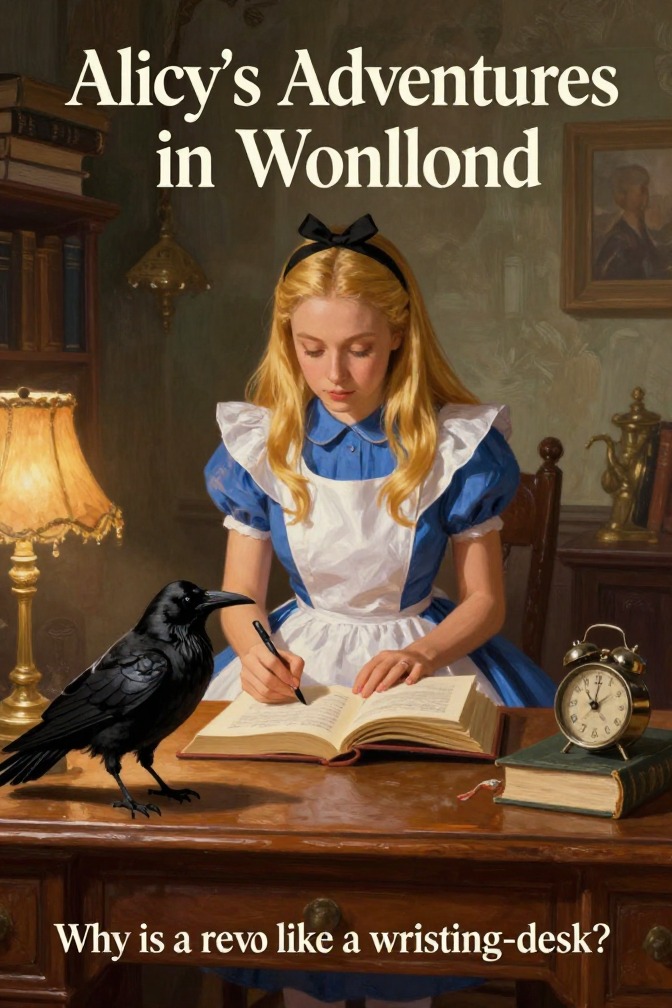
The riddle "Why is a raven like a writing-desk?" is the most famous unanswered question in Wonderland, posed by the Hatter at the Mad Tea-Party and later echoed in the trial, embodying the story's core logic of absurdity, the failure of language to communicate, and the inversion of meaning itself.
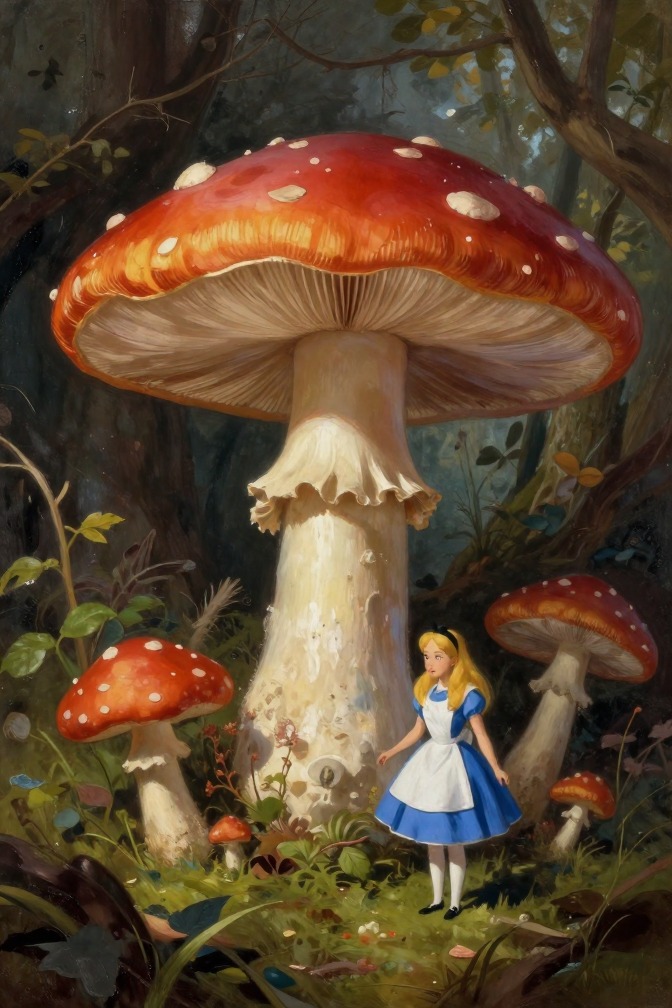
The mushroom is a pivotal location in Wonderland where Alice meets the Caterpillar, receives the crucial advice that different sides of the mushroom will make her grow taller or shorter, and uses this knowledge to control her size throughout her adventures.
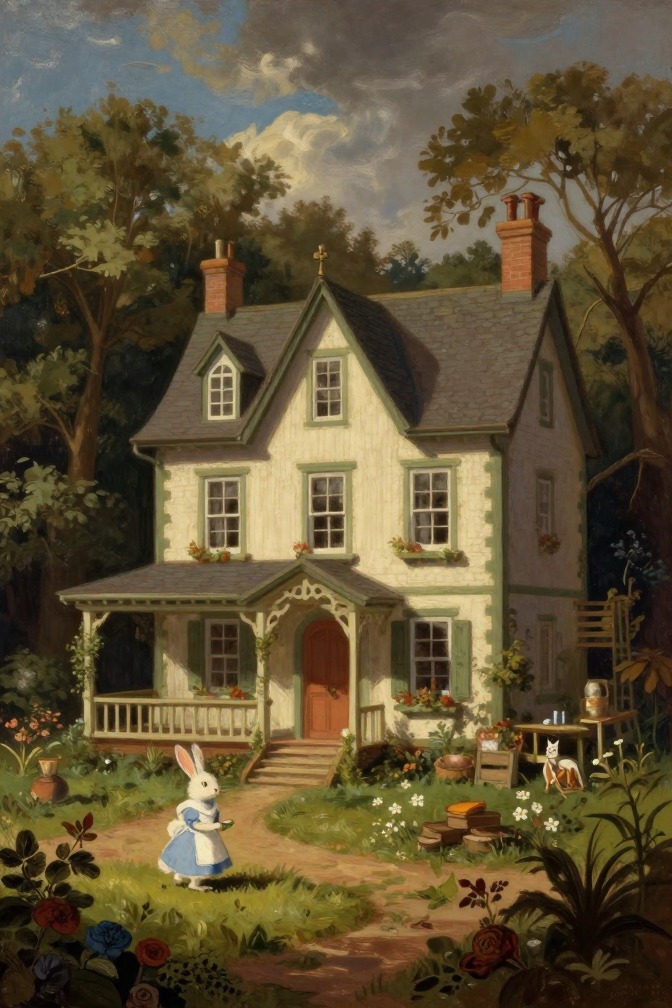
The White Rabbit's house is a neat, tidy dwelling in Wonderland where Alice, mistaken for the housemaid Mary Ann, experiences a dramatic and uncomfortable growth spurt after drinking an unlabeled bottle, leading to a chaotic confrontation with the Rabbit and his servants.
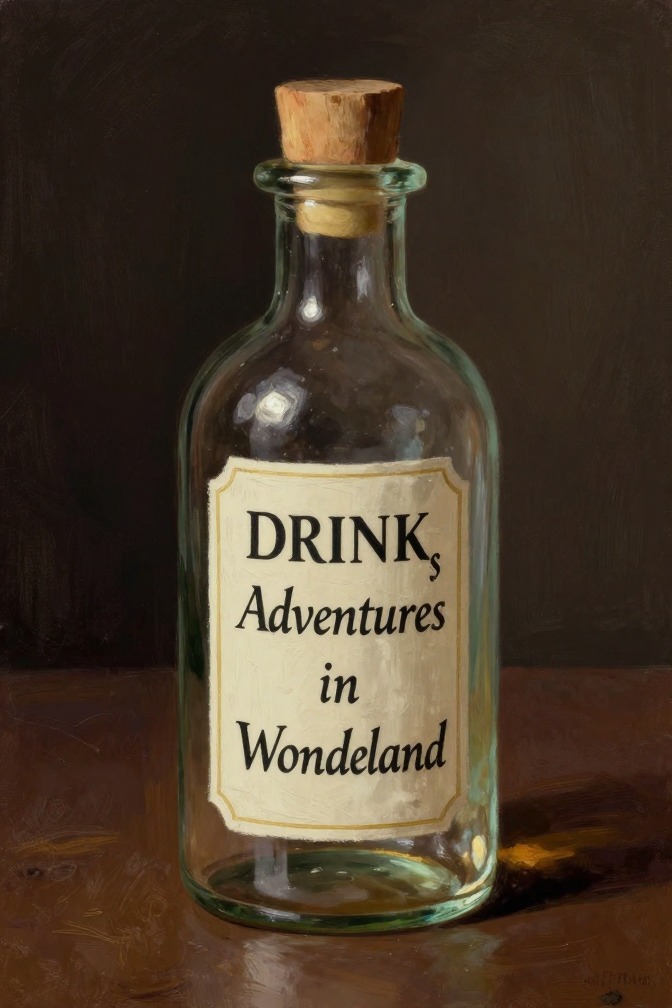
The DRINK ME bottle is the first magical object Alice encounters in Wonderland, a small bottle labeled "DRINK ME" that appears on the glass table in the hall and causes her to shrink to ten inches high, initiating the pattern of size-changing that governs her entire adventure.
The verses are a cryptic, unsigned poem introduced as a piece of evidence during the trial of the Knave of Hearts, whose apparent meaninglessness and lack of clear authorship become a central point of contention in the courtroom.
March is the month in which the Hatter quarreled with Time at the Queen of Hearts' concert, causing Time to stop at six o'clock and condemning the Hatter and the March Hare to an endless tea-party; it also marks the temporal setting of Alice's journey, which takes place on a single day in May, and the month in which the story's dream begins and ends.
The Harboring of The Just Judges is the act by which Jean-Baptiste Clamence, the self-styled judge-penitent, comes into possession of the stolen van Eyck panel and keeps it hidden in his Amsterdam room, transforming a famous art theft into a personal emblem of his dominion over judgment and innocence.
Confession in Albert Camus's *The Fall* is the central, paradoxical act through which the narrator, Jean-Baptiste Clamence, transforms self-accusation into a tool of domination, constructing a "judge-penitent" identity that allows him to judge others by first condemning himself.
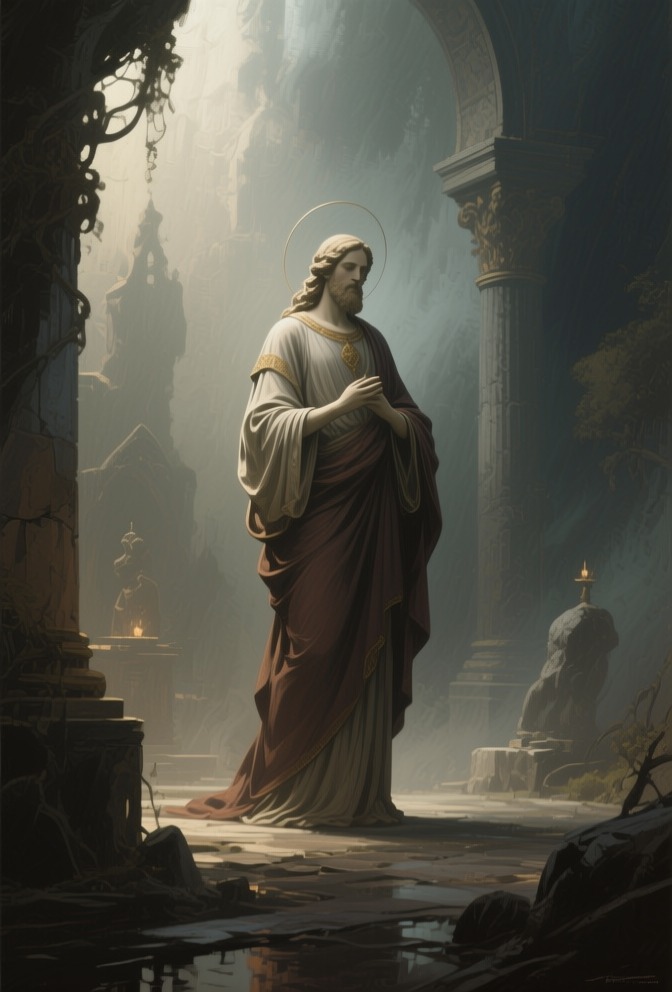
In Albert Camus's *The Fall*, God is a central yet paradoxical concept, invoked by the narrator Jean-Baptiste Clamence not as a source of faith or salvation, but as a figure whose absence defines the modern condition. God's sole usefulness, Clamence argues, would be to guarantee innocence, a function that has been abandoned, leaving humanity to face judgment without a law. The concept is explored through Clamence's reinterpretation of Christ's crucifixion, his rejection of divine judgment in favor of human condemnation, and his ultimate usurpation of a god-like role as the judge-penitent who dominates a world without grace.
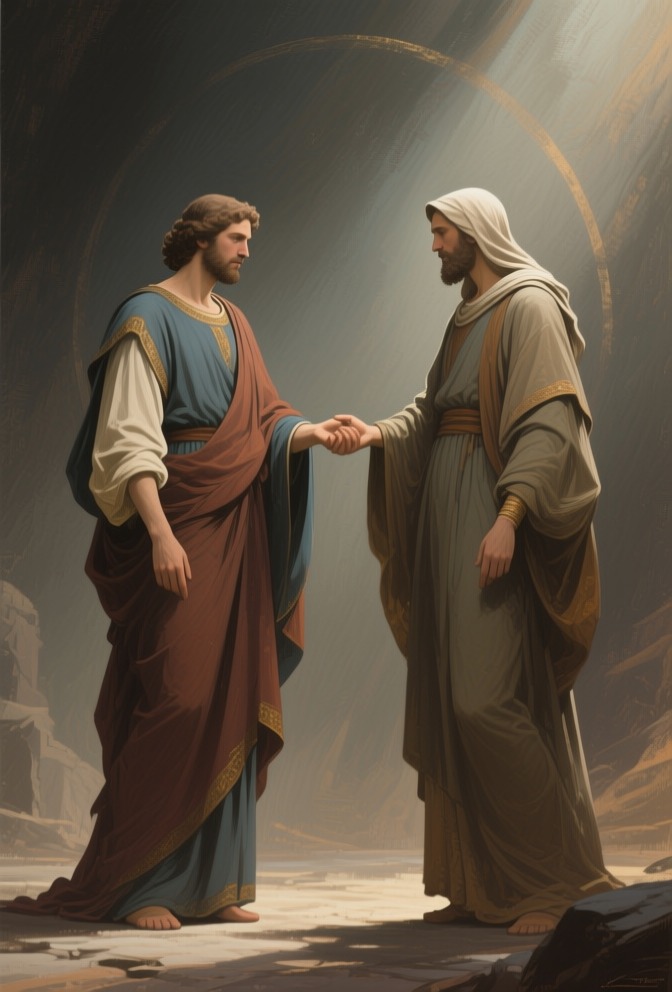
Peter, the apostle who denied Christ, serves in Jean-Baptiste Clamence's monologue as a key figure of cowardice, irony, and the human inability to bear the weight of freedom and judgment.
Rachel is a biblical figure invoked by Jean-Baptiste Clamence in *The Fall* to articulate the unbearable weight of collective guilt and the impossibility of innocence. Clamence reinterprets her weeping for her children—slaughtered because of Christ—as a model for the universal, inescapable condemnation that defines human existence, and he uses her lament to justify his own role as a judge-penitent who judges all to escape judgment himself.
The democracy of guilt is a central concept in Albert Camus's *The Fall*, articulated by Jean-Baptiste Clamence as a social and psychological condition in which universal guilt replaces individual innocence, creating a collective that judges and condemns itself without appeal, thereby making everyone both judge and penitent.
The fog in Amsterdam is a central atmospheric and symbolic element in Jean-Baptiste Clamence's monologue, representing the moral and existential obscurity of the modern condition, the blurring of guilt and innocence, and the dreamlike, suspended state of a world without clear judgment.
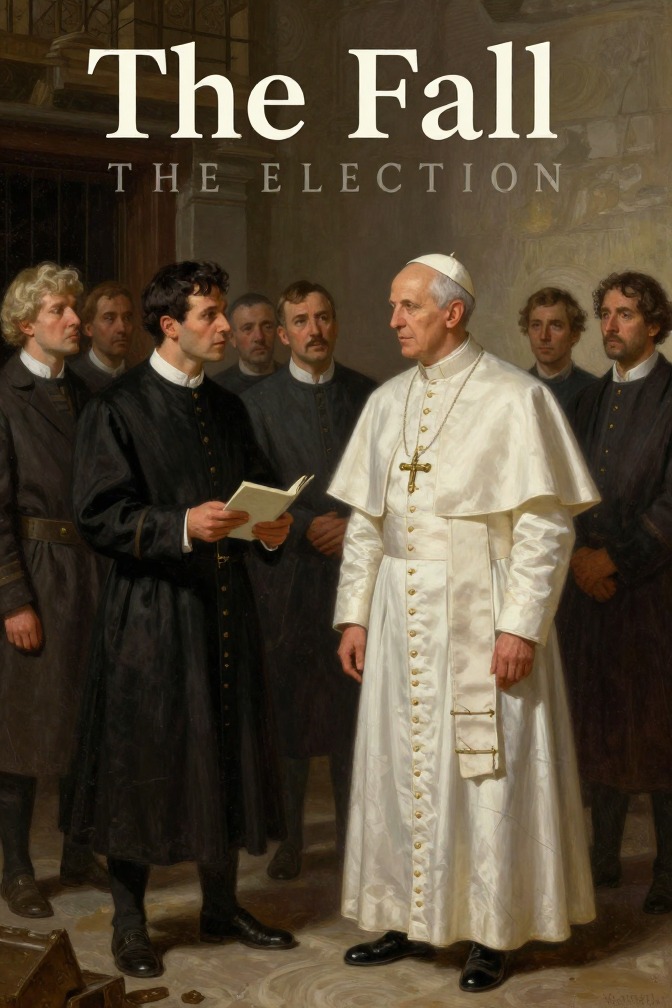
The Election as Pope in the Prison Camp is a pivotal event in Jean-Baptiste Clamence's narrative, occurring during his internment near Tripoli in World War II. In a camp of suffering and deprivation, a young Frenchman named Du Guesclin, driven by a profound melancholy and a vision of a new kind of spiritual leader, proposes that the prisoners elect a pope from among themselves—someone who embodies both vices and virtues and who will keep alive the community of their suffering. Clamence, half in jest, raises his hand when asked who has the most failings, and is elected. He exercises this pontificate for several weeks, administering to the group and making difficult decisions, including the distribution of water. The event culminates in Clamence drinking the water of a dying comrade, an act he justifies by his duty to survive for the others, an act that closes a circle and reveals the birth of empires and churches under the sun of death. This episode is a microcosm of Clamence's later philosophy of universal guilt and the need for a master, and it directly prefigures his self-appointed role as a judge-penitent.
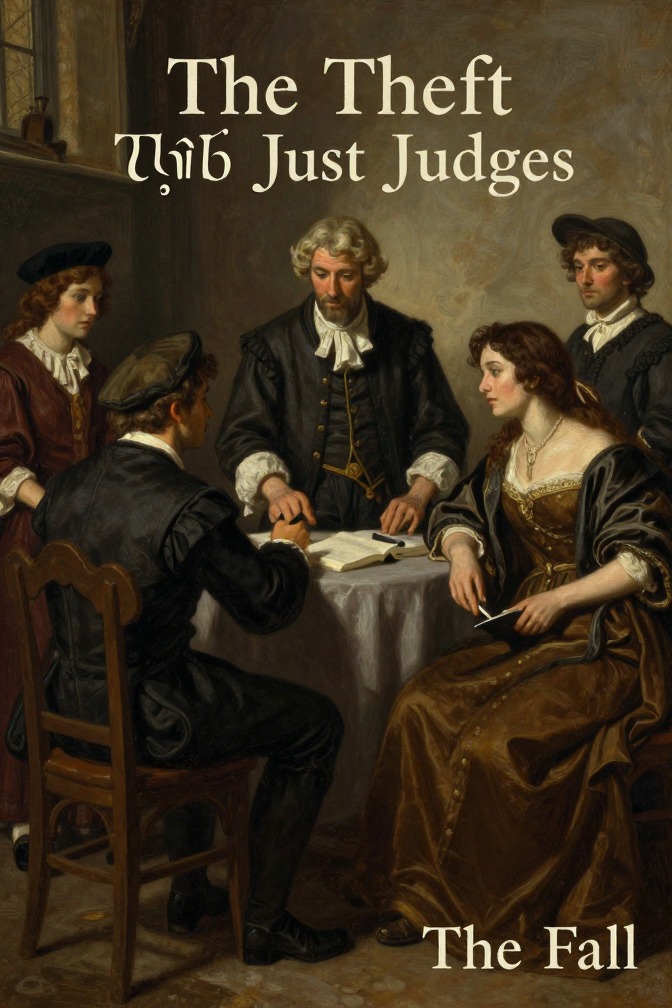
The Theft of 'The Just Judges' is a pivotal event in Jean-Baptiste Clamence's narrative, where a stolen panel from the van Eyck altarpiece, 'The Adoration of the Lamb,' ends up in his possession, serving as a symbol of his usurped authority and his role as a judge-penitent who dominates through hidden knowledge.
Every man testifies to the crime of all the others is a central philosophical axiom articulated by Jean-Baptiste Clamence in Albert Camus's The Fall, serving as the foundation of his self-appointed role as a judge-penitent and encapsulating the novel's thesis of universal guilt.
Jean-Baptiste Clamence declares himself 'the end and the beginning,' a self-proclaimed lawgiver who has found a way to dominate by reversing the relationship between judgment and confession.
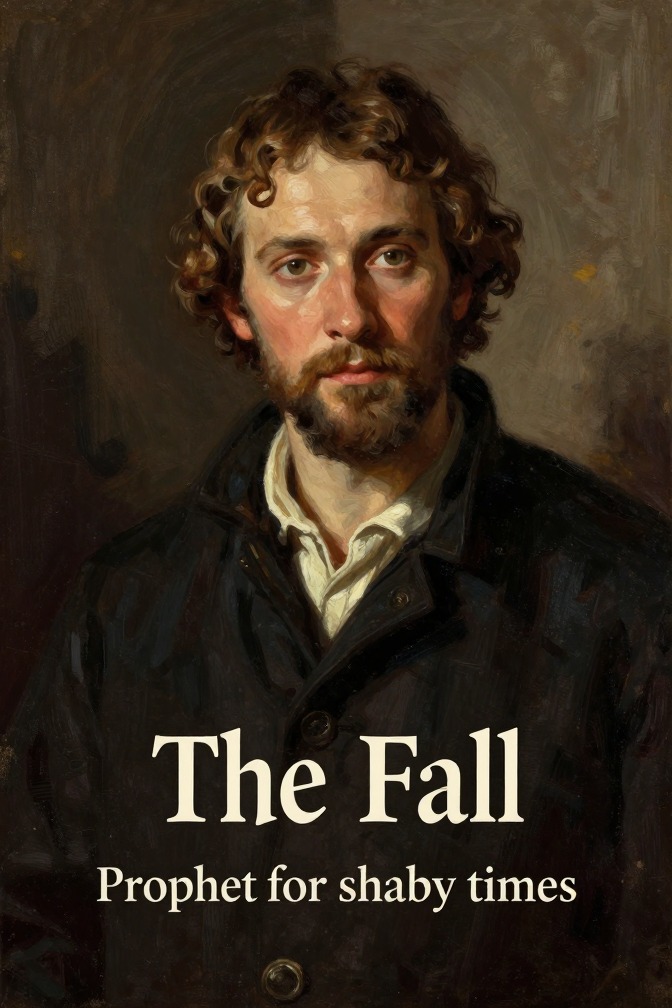
Jean-Baptiste Clamence, the narrator of Albert Camus's *The Fall*, describes himself as a 'prophet for shabby times'—an empty prophet without a messiah, who has taken refuge in a desert of stones, fogs, and stagnant waters in Amsterdam, where he practices the profession of judge-penitent. This self-designation encapsulates his final, ironic stance: a man who, having failed to live up to his own ideals and having discovered the universal guilt of humanity, now preaches a law of condemnation from a position of self-proclaimed superiority, yet without any genuine message of salvation or hope.
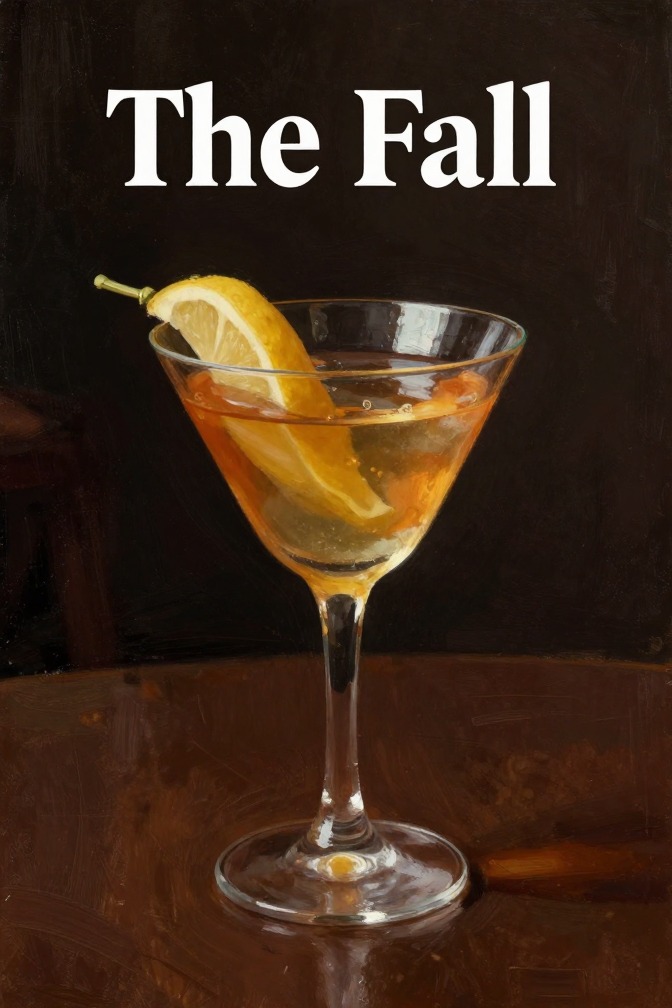
The apéritif is a recurring metaphor in Jean-Baptiste Clamence's monologue, representing the trivial, self-serving emotional stimulation that people seek from tragedy and death to break the monotony of their lives.
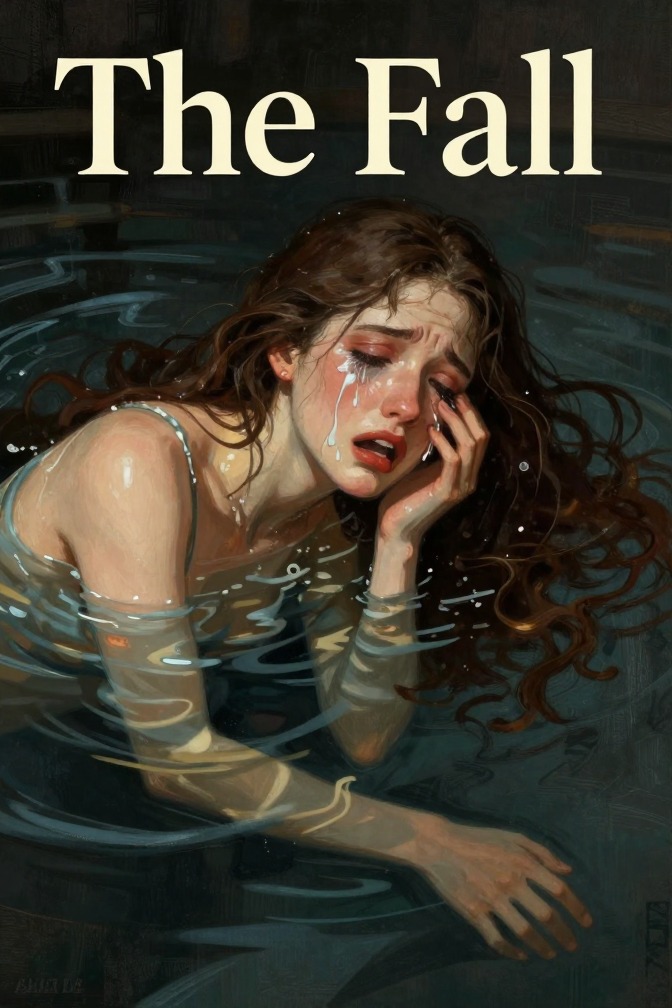
The cry of the drowning woman is the pivotal, repressed event in Jean-Baptiste Clamence's past that shatters his self-image as a virtuous man and triggers his moral collapse, becoming the obsessive, unanswerable accusation that haunts him across continents and years.
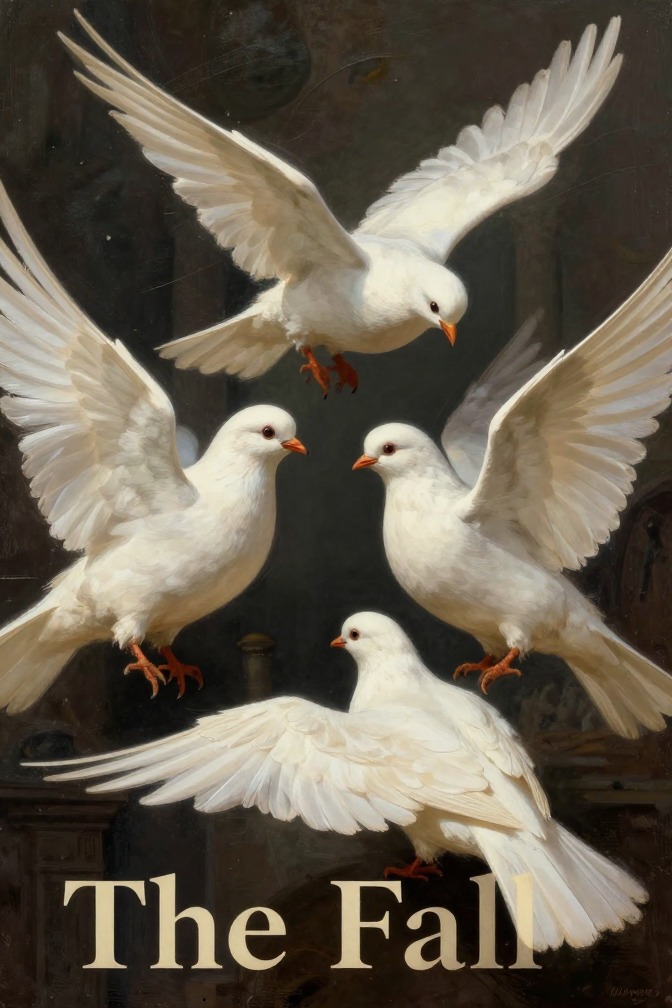
The doves are a recurring symbolic image in Jean-Baptiste Clamence's monologue, representing the elusive, suspended state of innocence, judgment, and salvation in the modern world. They appear as invisible multitudes filling the sky of Holland, waiting to descend but finding no resting place, and ultimately become the snow that covers Amsterdam in a fleeting moment of purity.
The Du Guesclin type is a term used by Jean-Baptiste Clamence to describe a young French prisoner of war in a North African camp, whose fervent faith and self-sacrificing idealism lead to the election of Clamence as a mock pope, an episode that reveals the dynamics of guilt, authority, and the birth of empires under the sun of death.
The good life is a recurring concept in Jean-Baptiste Clamence's monologue, representing the ideal of happiness and self-forgiveness that he believes has been lost in the modern world, and which he contrasts with his own compromised existence.