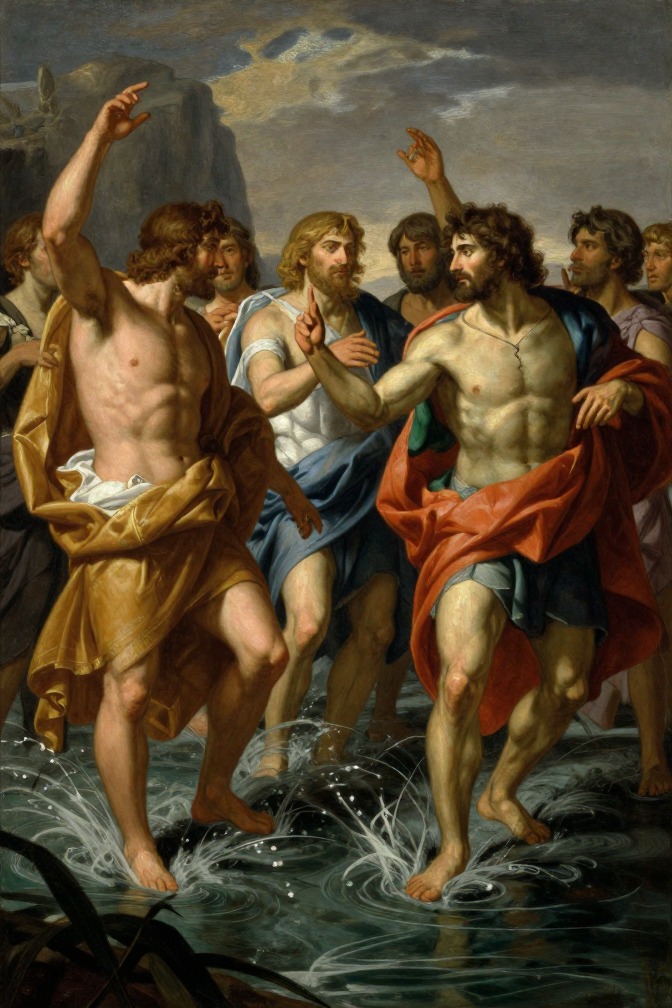
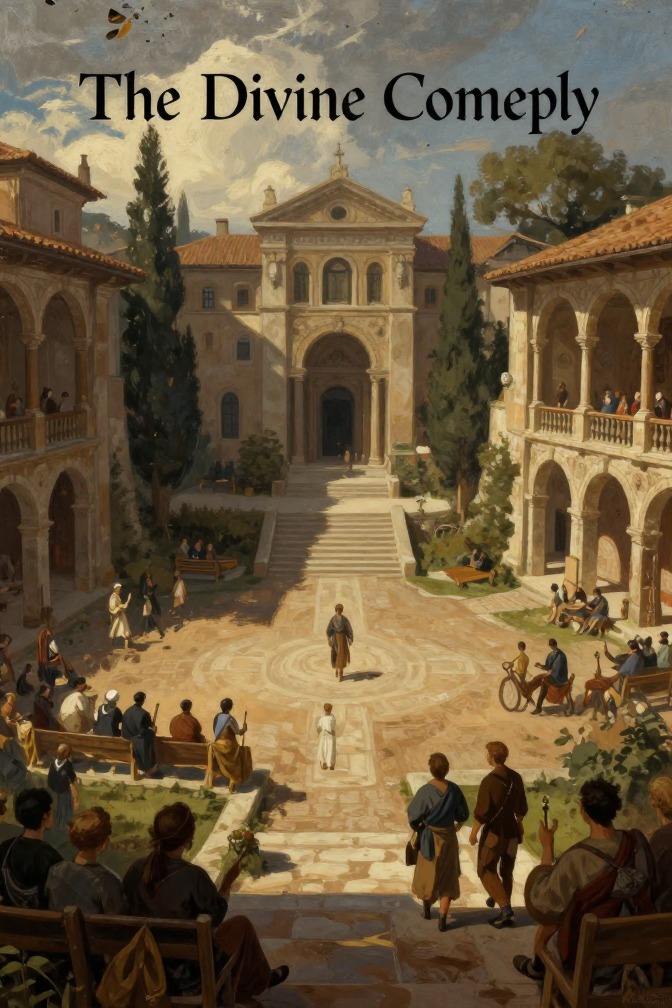
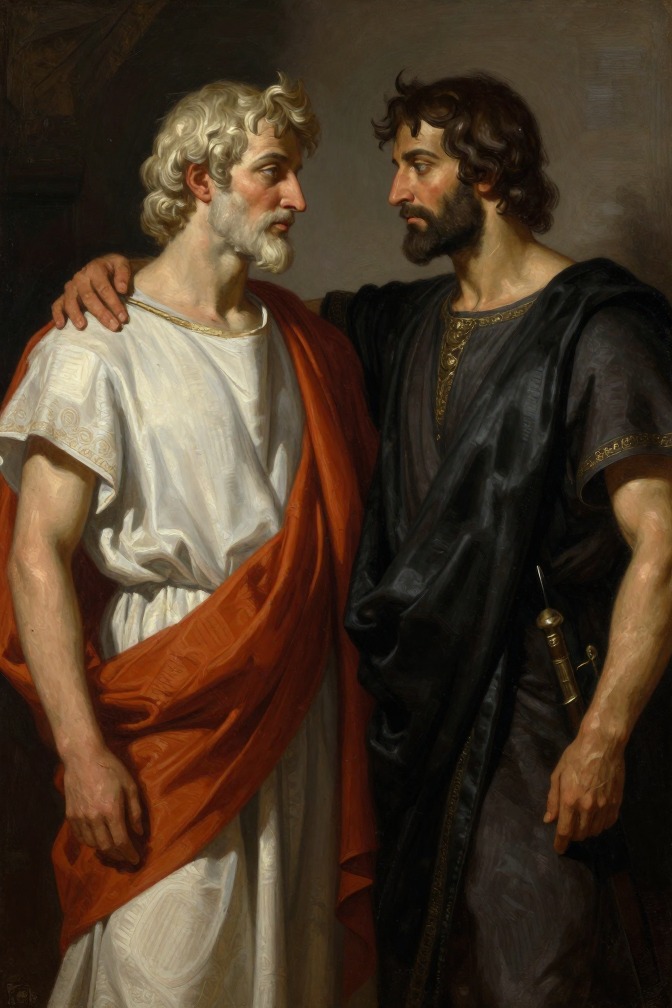
The Descent into the Ninth Circle and the Frozen Lake is the climactic descent into the lowest region of Dante's Hell, Cocytus, a frozen lake that punishes traitors. This event marks the final stage of the journey through the infernal realm, where the extremes of cold replace the fires of the upper circles, and where Dante encounters the ultimate embodiments of treachery, including Count Ugolino, Archbishop Ruggieri, and Lucifer himself.
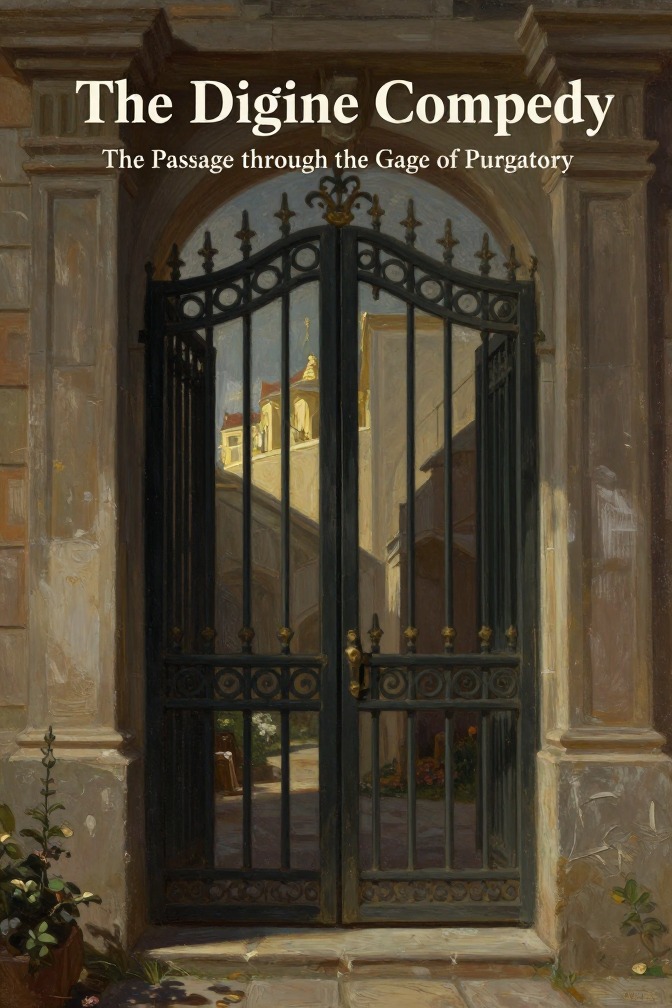
The Passage through the Gate of Purgatory is the ritual threshold of Dante Alighieri's purgatorial journey, where an angelic gatekeeper inscribes seven P's (peccata) on his forehead with a sword, opens the door with two keys, and warns that those who look back will not return, marking the formal beginning of the penitential ascent.
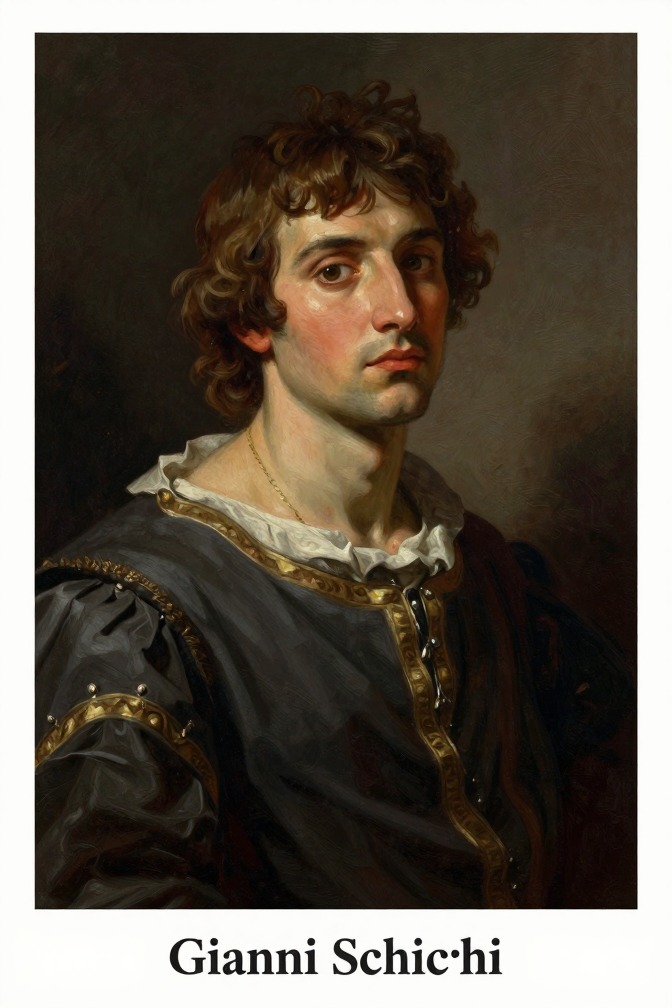
Gianni Schicchi is a damned soul in the Eighth Circle of Dante's Inferno, punished among the Falsifiers for his fraudulent impersonation of a dead man to forge a will. He appears in Canto XXX as a raving, bestial figure who attacks another sinner, embodying the contrapasso of identity theft through his own monstrous transformation.
Sassol Mascheroni is a minor figure in Dante Alighieri's *Inferno*, a Florentine traitor condemned to the frozen lake of Cocytus in the Ninth Circle of Hell. He is mentioned only in passing by another damned soul, Camicion de' Pazzi, who identifies him as a shade more worthy of punishment than even the most infamous traitors of the Caina region. His brief appearance serves to illustrate the depth of treachery among Florentines and the specific, unforgiving nature of divine justice in the lowest reaches of Hell.
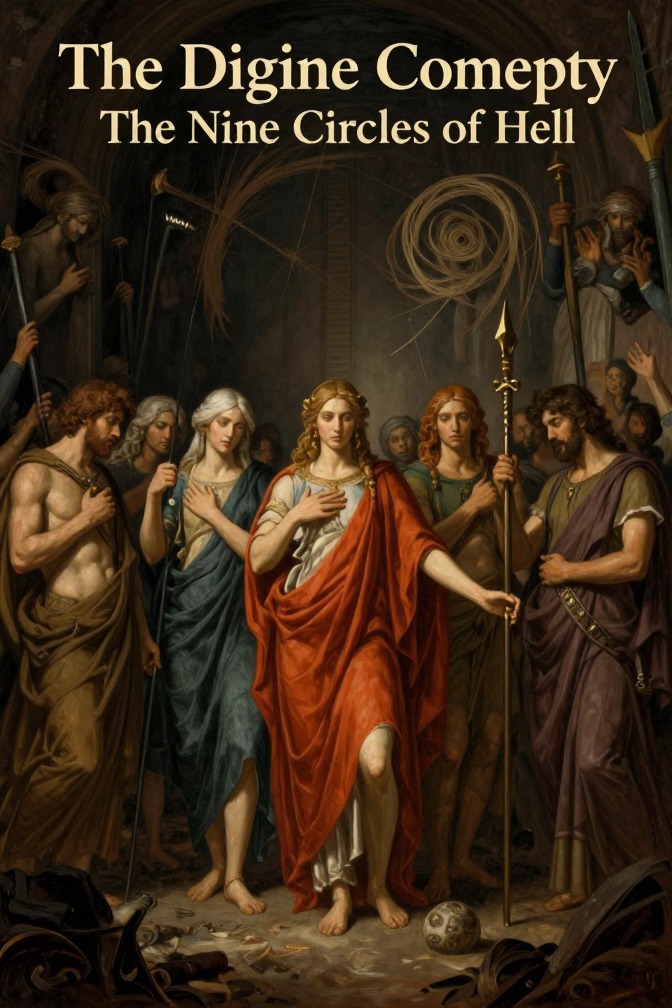
The Nine Circles of Hell form the architectural and moral framework of Dante Alighieri's Inferno, a graduated funnel of punishment descending from the vestibule of the indifferent through nine concentric terraces to Lucifer at the frozen center of the earth, each circle housing sinners whose contrapasso mirrors their earthly transgressions.
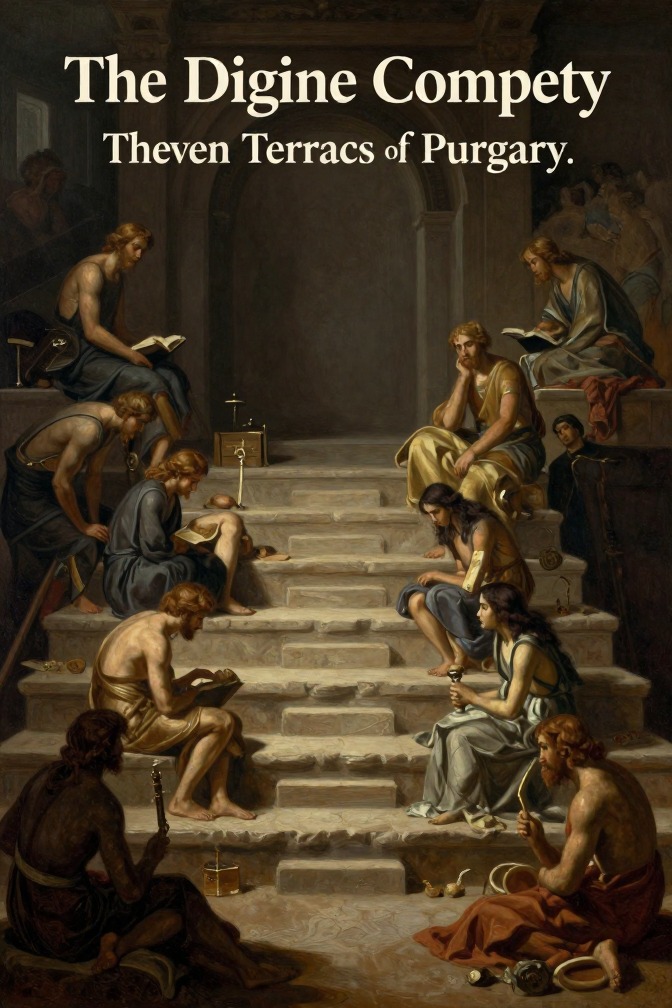
The Seven Terraces of Purgatory form the central architectural and moral framework of Dante Alighieri's Purgatorio, a mountain of purification where souls ascend through seven concentric ledges, each dedicated to purging one of the seven deadly sins. This structure transforms the traditional concept of purgatorial suffering into a systematic, hope-filled journey of moral reformation, culminating in the Earthly Paradise.
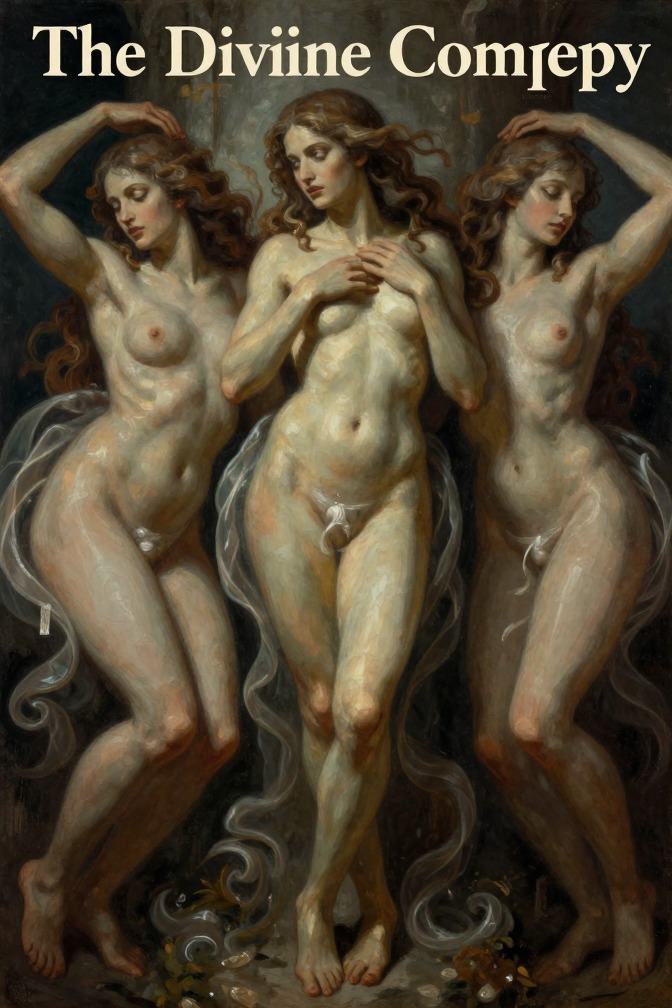
The Sirens appear in Dante's Purgatorio as a figure of deceptive temptation, encountered by the dreaming Dante in a vision that reveals the seductive power of worldly pleasure and the necessity of spiritual vigilance.
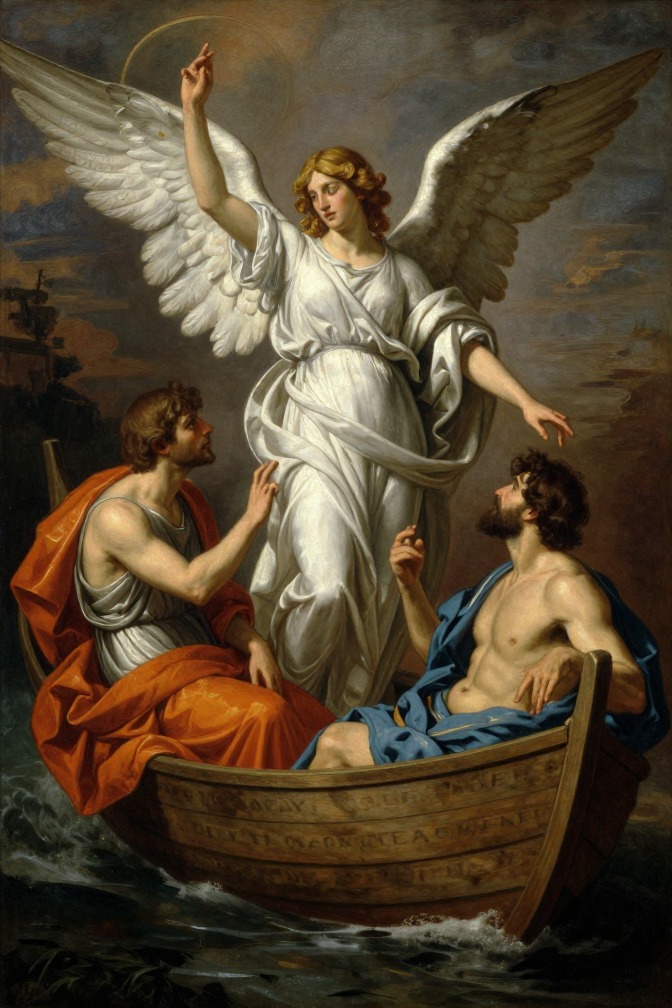
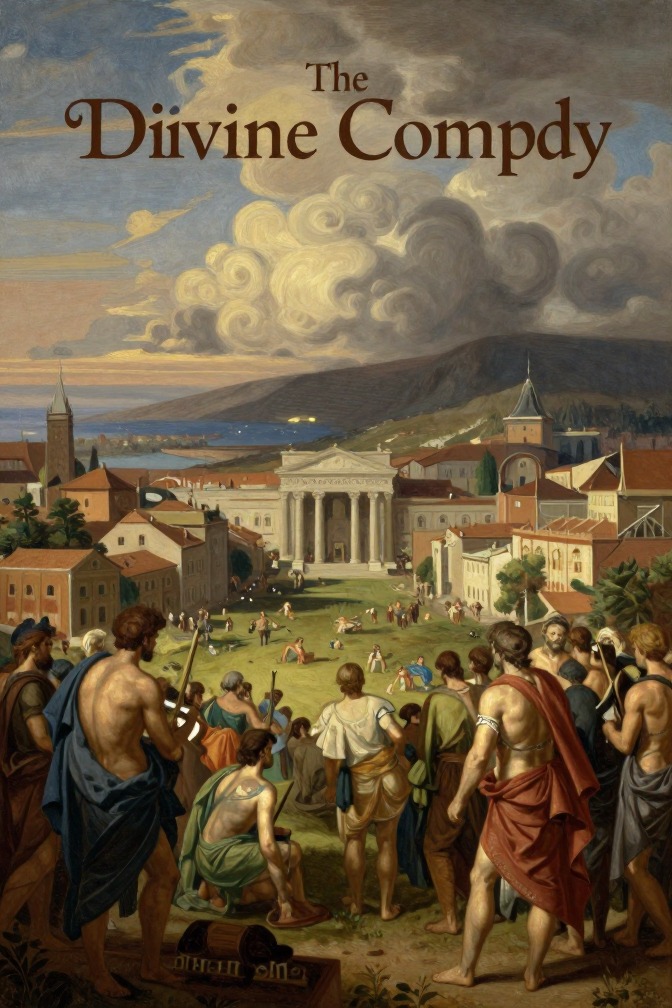
The Angel Boat and Casella is the arrival of a celestial pilot ferrying newly absolved souls to the shores of Mount Purgatory, where Dante Alighieri encounters his old friend Casella and is moved by his song, only to be rebuked by Cato of Utica for lingering.
The Crossing of the Styx and Filippo Argenti is a pivotal event in Dante Alighieri's Inferno, Canto VIII, in which the poet and his guide Virgil cross the marshy river Styx on the boat of the wrathful ferryman Phlegyas, encounter the Florentine nobleman Filippo Argenti immersed in the mire, and witness his violent punishment by the other wrathful souls, before arriving at the gates of the city of Dis, where they face their first major supernatural opposition.
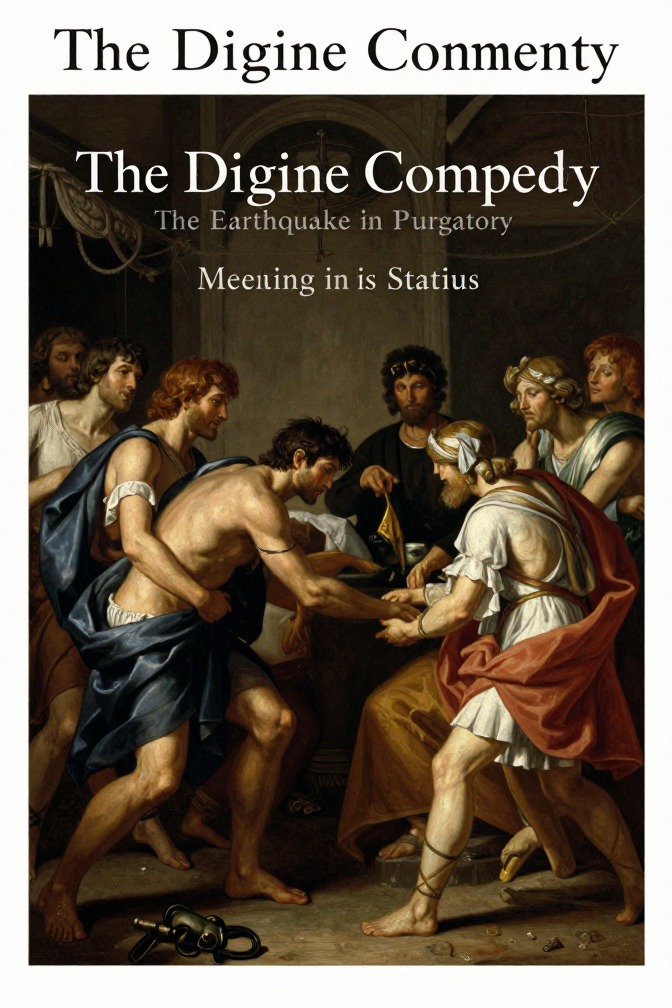
The Earthquake in Purgatory and the Meeting with Statius is a pivotal event in Dante Alighieri's Purgatorio (Cantos XX–XXI) where a sudden earthquake and a universal cry of "Gloria in excelsis Deo" interrupt the penitential routine on the Fifth Terrace, revealing that a soul has completed its purgation and is free to ascend. This seismic rupture introduces the Roman poet Statius, who explains that the mountain trembles only when a purified will chooses a higher state, and who then joins Dante and Virgil as a third pilgrim, forever altering the poem's poetic and theological dynamics.
In the tenth and final Bolgia of Malebolge, Dante and Virgil witness the punishment of falsifiers and forgers, a grotesque gallery of disease, madness, and mutual recrimination that includes the counterfeit coiners Master Adam and the Greek liar Sinon, the mad impersonators Gianni Schicchi and Myrrha, and the alchemists Capocchio and Griffolino, whose torments illustrate the Inferno's most elaborate and visceral application of contrapasso.
The Earthly Paradise, also known as the Terrestrial Paradise or Garden of Eden, is the summit of Mount Purgatory and the final destination of Dante's purgatorial journey before his ascent to Heaven. It is a sacred, self-sustaining forest untouched by earthly weather, where the innocence of humanity before the Fall is restored, and where Dante is reunited with Beatrice, undergoes confession and purification in the rivers Lethe and Eunoe, and witnesses the allegorical pageant of the Church Triumphant.
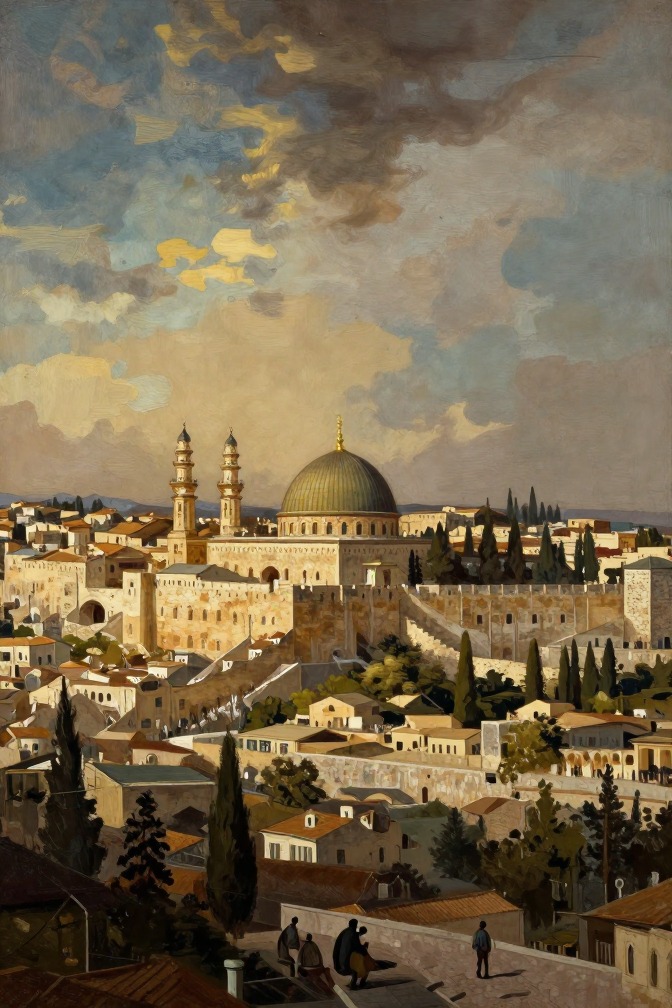
Jerusalem is the earthly city that serves as the geographical and spiritual antipode of Mount Purgatory in Dante's cosmology, marking the point where the sun sets when it rises over Purgatory and functioning as the center of the inhabited world from which the entire journey's spatial coordinates are derived.
Jupiter, the sixth heaven of Paradise, is the sphere of the just and righteous rulers, where the souls of those who administered justice on earth form a celestial eagle that speaks with a single voice, embodying divine justice and the mystery of salvation beyond human comprehension.
The Third Terrace of Mount Purgatory is the circle where the sin of Wrath is purged, a place of acrid smoke that blinds and chokes the penitent, who learn to replace angry impulses with the meekness of the Lamb of God.
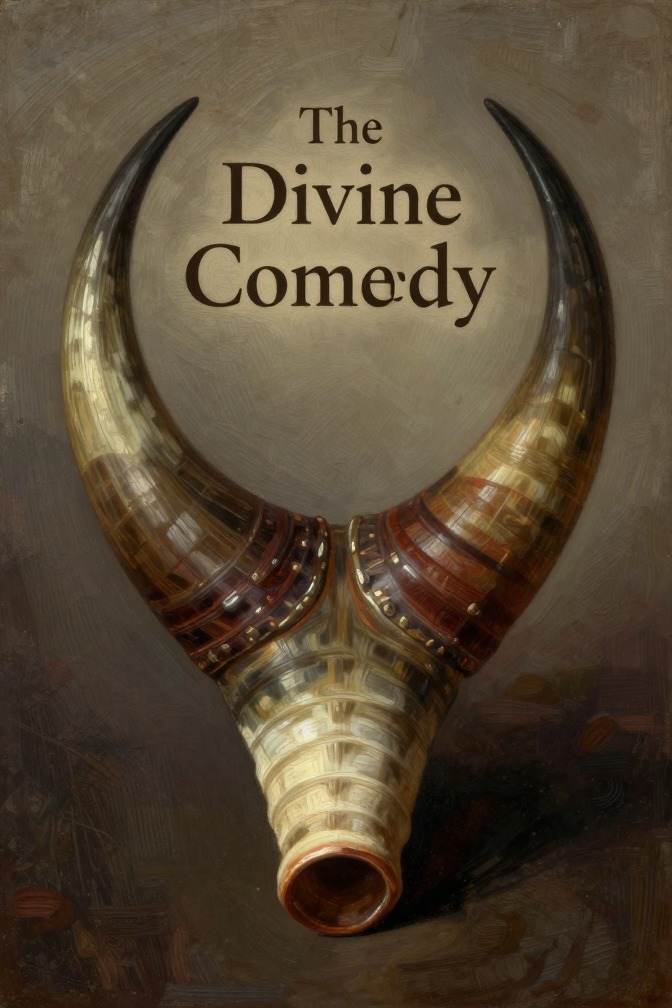
The Horn of Nimrod is a giant's horn that appears in Canto XXXI of Dante's Inferno, serving as a symbol of the confusion of languages and the pride that led to the Tower of Babel. Its blast is so powerful that it would make every thunderclap seem faint, and it is the only means by which the giant Nimrod can express himself, as his speech is unintelligible to all.
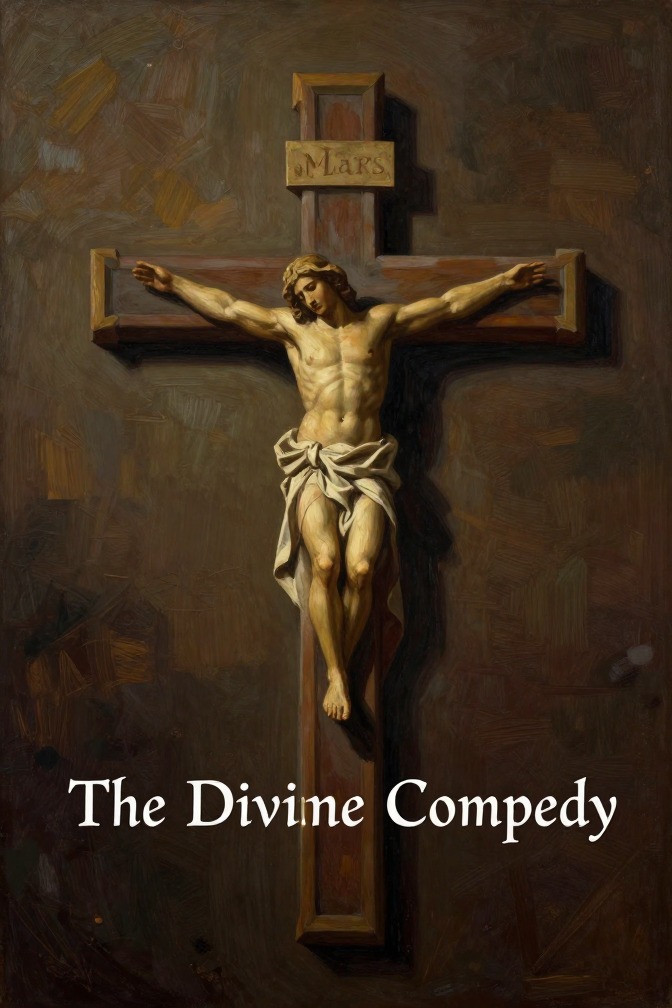
The Cross of Mars is a celestial sign formed by the souls of martyrs and crusaders in the fifth heaven of Paradise, appearing as a luminous cross within which the figure of Christ flashes, and from which the spirits of warrior-saints sing a melody that surpasses earthly music.
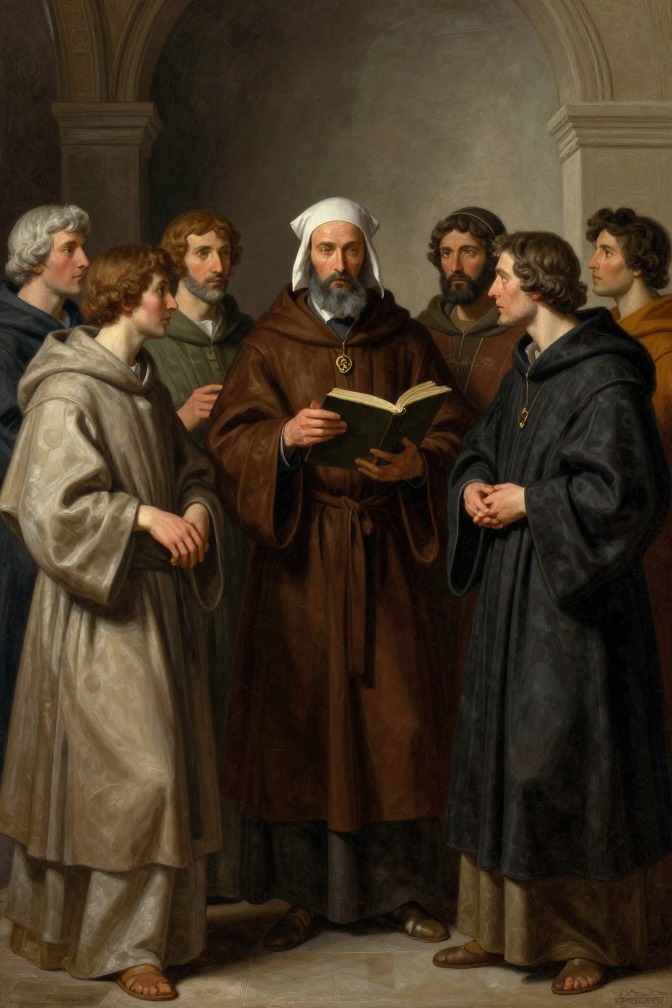
The Benedictine Order, founded by St. Benedict of Nursia in the 6th century, is a monastic community whose Rule and contemplative ideal are presented in Dante's *Paradiso* as a lost standard of spiritual discipline, contrasted with the corruption of the contemporary Church. St. Benedict himself appears in the Heaven of Saturn to lament the order's decline, while the poem's political theology uses the order's history to critique the fusion of spiritual and temporal power.
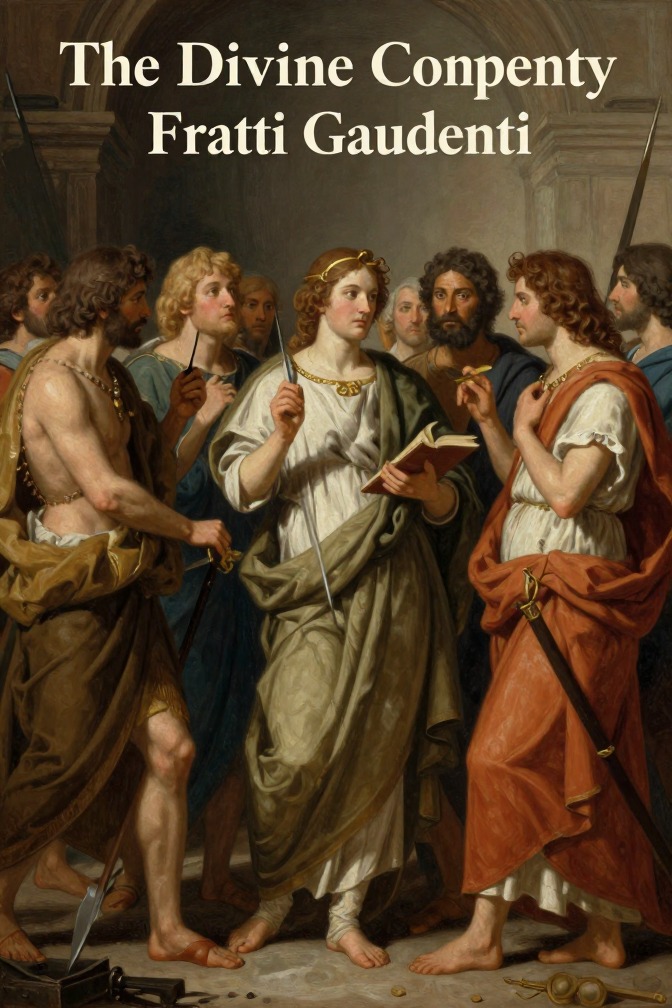
The Frati Gaudenti were a religious order of knights in Bologna, known for their hypocritical piety and involvement in civic peacekeeping, which Dante condemns in the Sixth Bolgia of Hell.
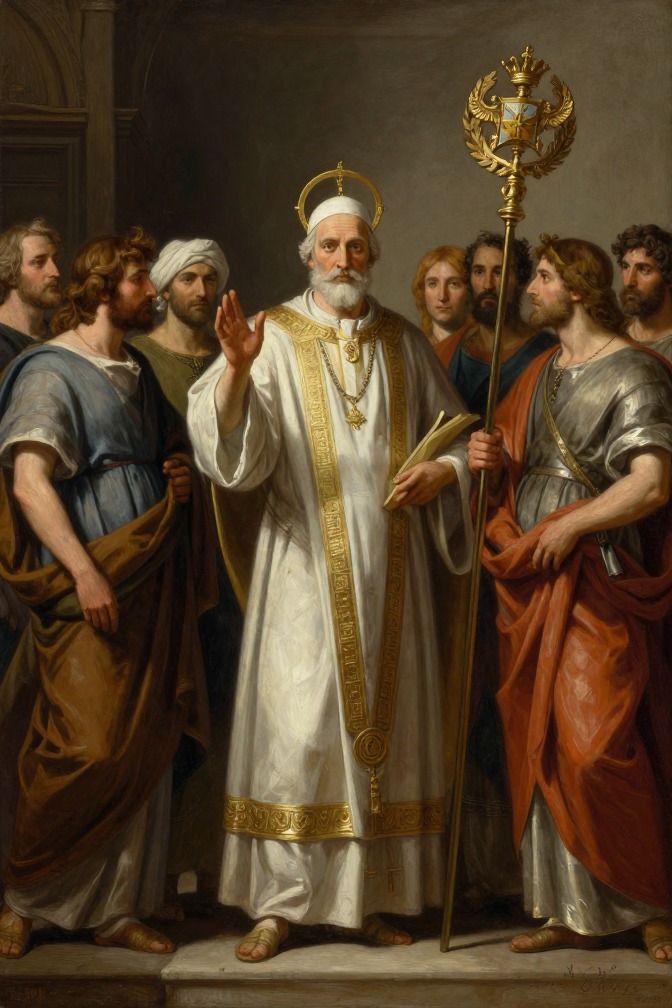
The Papacy, as depicted in Dante Alighieri's Divine Comedy, is a central and deeply ambivalent institution. It is the divinely ordained authority for spiritual governance, holding the keys to salvation, yet it is also the source of the most grievous corruption in Christendom. Dante's journey reveals a Papacy that has betrayed its apostolic foundations, becoming a tool for avarice, political manipulation, and simony, a betrayal that Dante condemns with unmatched ferocity, particularly in the Inferno and Paradiso.
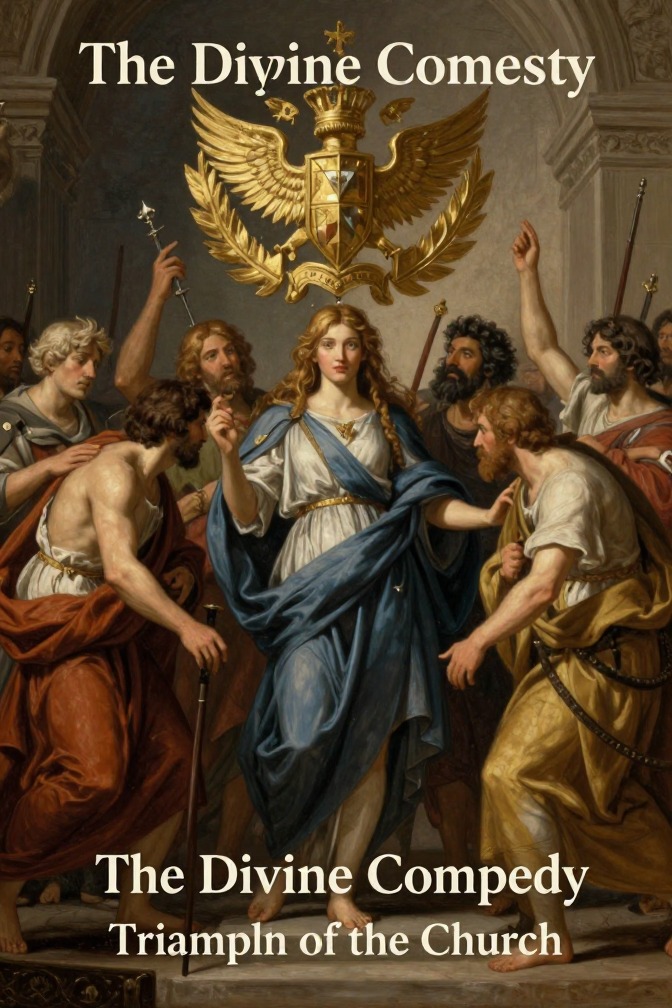
The Triumph of the Church is the grand allegorical procession that appears in the Earthly Paradise in Purgatorio, representing the Church's historical and spiritual journey from its foundation through corruption and toward eventual redemption, culminating in the revelation of Beatrice and the prophecy of a restored divine order.
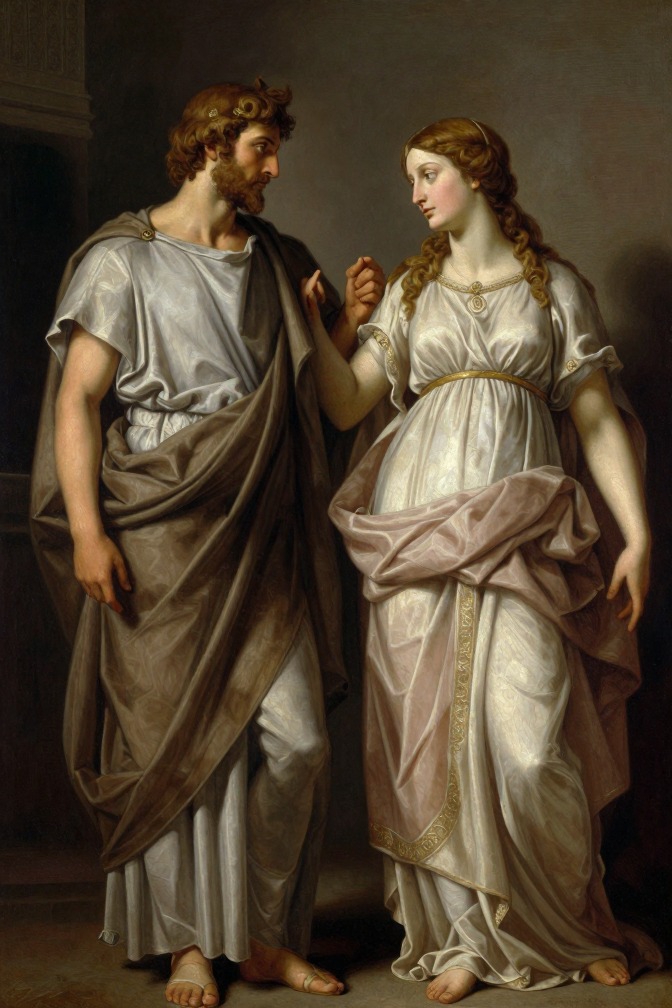
Dante and Beatrice is the central relationship of The Divine Comedy, defining the poet's spiritual journey from error to salvation. Beatrice, Dante's idealized beloved, descends into Hell to summon Virgil as Dante's guide, appears in the Earthly Paradise to rebuke and forgive him, and leads him through Paradise to the vision of God. Their bond transforms from courtly love into a vehicle of divine grace, making Beatrice the agent of Dante's redemption and the embodiment of theology and revelation.
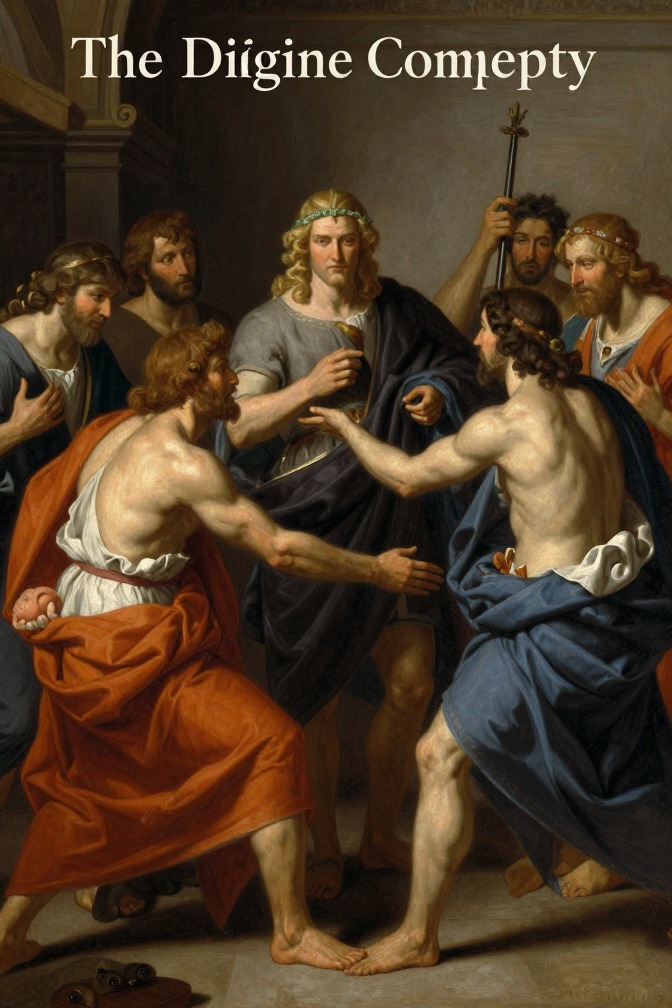
Dante and Forese Donati, reunited on the Sixth Terrace of Purgatory among the Gluttonous, share a deeply personal encounter that reveals their former life in Florence, the redemptive power of Forese's wife Nella's prayers, and the prophetic condemnation of Florentine women's immodesty.
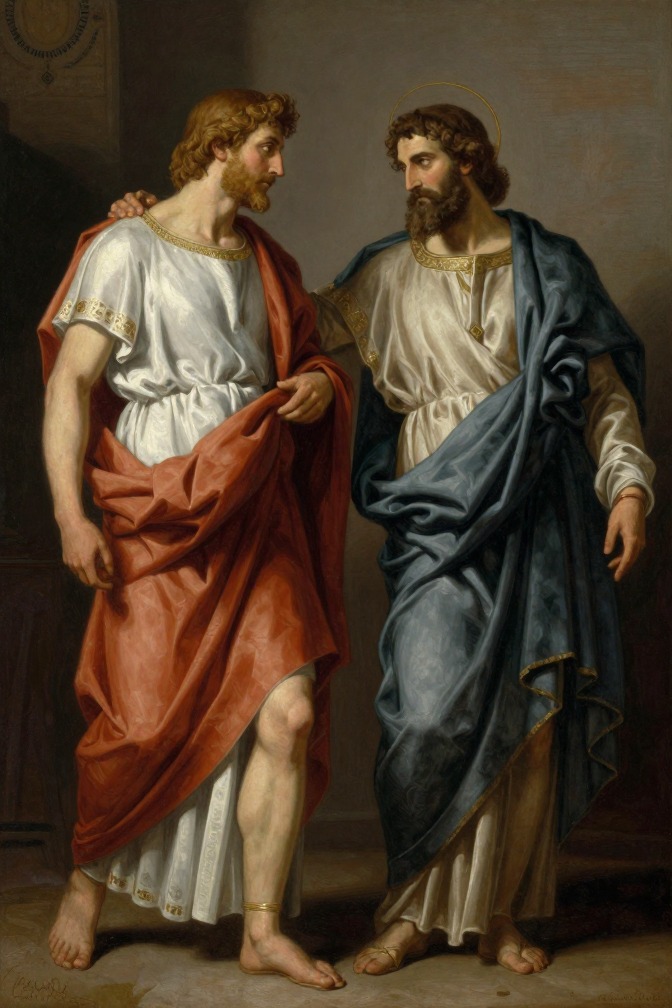
St. James and Dante is the relationship between the apostle Saint James and the pilgrim-poet Dante Alighieri, culminating in Dante's examination on the virtue of Hope in the Heaven of the Fixed Stars, where Saint James serves as the examiner and Beatrice as Dante's advocate.
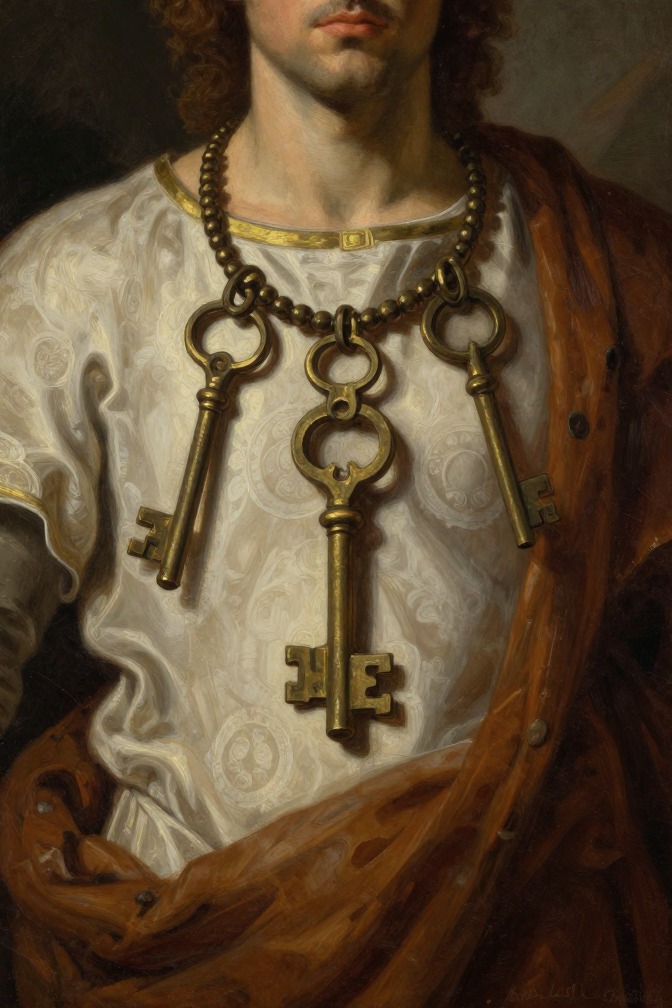
The Keys of St. Peter are the two symbolic keys entrusted by Christ to the Apostle Peter, which in Dante's Purgatory are held by the angelic gatekeeper at the entrance to Purgatory proper. They represent the power to bind and loose, the authority of the Church to grant absolution, and the theological distinction between the grace of confession (the gold key) and the discernment required for true repentance (the silver key). Their appearance marks the transition from Ante-Purgatory to the seven terraces of purification and establishes the sacramental framework within which Dante's own purgation will unfold.
Theft is the fraudulent appropriation of another's property, punished in the Seventh Bolgia of Malebolge in Dante's Inferno. The thieves undergo a grotesque and continuous metamorphosis, their bodies merging with serpents in a contrapasso that mirrors the violation of personal boundaries inherent in their sin.
The Hour of Prime is the first canonical hour of the Divine Office, marking the beginning of the day in the monastic schedule. In Dante's Purgatorio, it is the moment when the souls of the slothful are spurred to action by the Angel of God, who chants 'Beati mundo corde' and commands them to enter the refining fire. This hour embodies the transition from night to day, from spiritual lethargy to active purification, and serves as a threshold between the seventh terrace and the Earthly Paradise.
The Airport escape in limousine is the sequence in which Robert Langdon, Sophie Neveu, and Sir Leigh Teabing evade the Kent police at Biggin Hill Airport by hiding in Teabing's stretch Jaguar limousine while the police search the empty Hawker jet, then drive away to continue their quest for the Holy Grail.
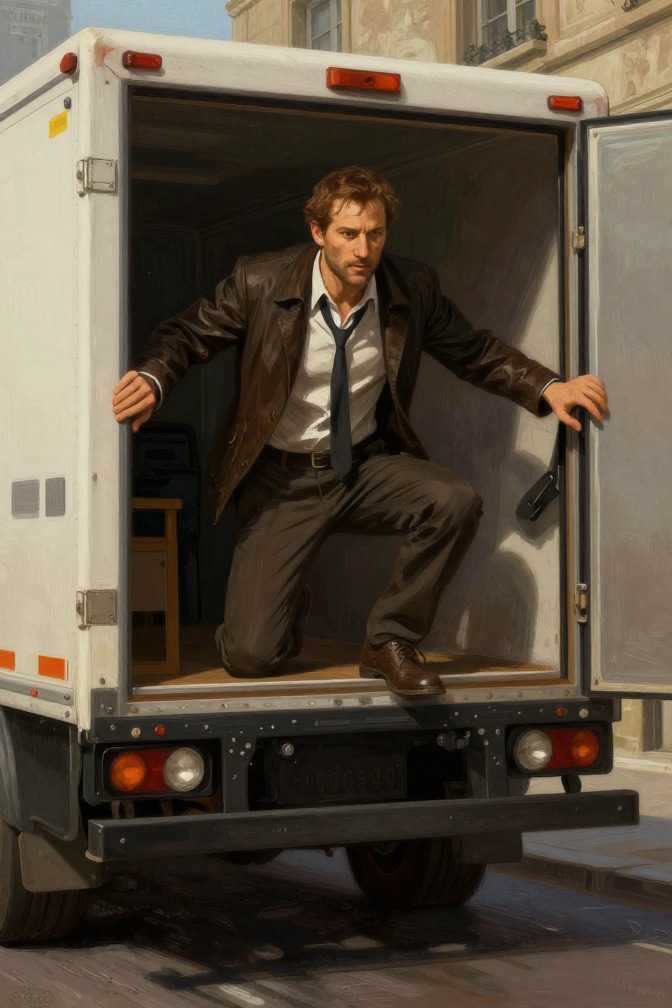
The confrontation at the Depository Bank of Zurich escalates when bank president André Vernet, having helped Langdon and Sophie escape the Louvre, turns on them at gunpoint in a wooded area outside Paris, demanding the return of the rosewood box containing the keystone. A gunshot, a struggle over the box, and a quick-thinking maneuver by Langdon allow them to escape in the armored truck, leaving Vernet injured and the box in their possession.
After retrieving the keystone from the Depository Bank of Zurich, Robert Langdon and Sophie Neveu escape the bank in an armored truck driven by bank president André Vernet, who initially helps them but later turns on them at gunpoint, forcing a desperate struggle that ends with Langdon and Sophie fleeing in the truck with the keystone.