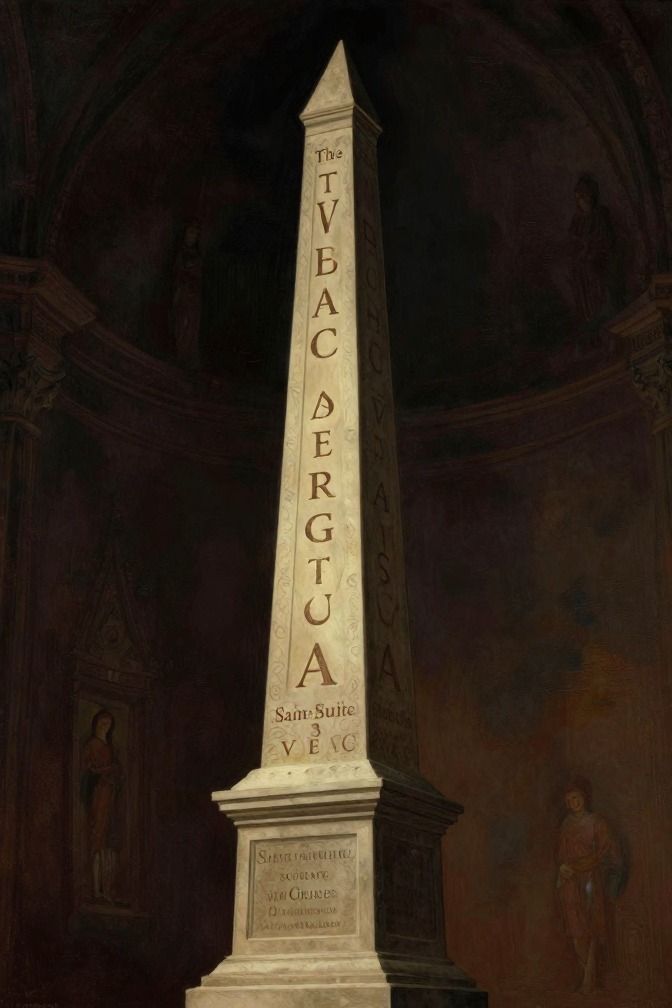
The Saint-Sulpice Obelisk is a colossal Egyptian obelisk located in the Church of Saint-Sulpice in Paris, serving as the physical marker of the ancient Parisian meridian, the Rose Line. It becomes the focal point of Silas's search for the Priory of Sion's keystone, which he believes is hidden beneath it, and its discovery triggers a chain of events that reveals the brotherhood's deception and the nun Sister Sandrine's secret role as a sentry.
Bezu Fache is the captain of the French Judicial Police (DCPJ), the rough equivalent of the FBI. Known by the epithet "Le Taureau" (the Bull), he is a stern, imposing, and deeply religious man who becomes the primary investigator into Jacques Saunière's murder and initially targets Robert Langdon as his chief suspect.
The Priory of Sion, according to the novel, had a long-standing plan to reveal the truth about the Holy Grail—specifically, the marriage of Jesus Christ to Mary Magdalene and their royal bloodline—at a prophesied moment in history known as the End of Days. This plan was a central charge of the brotherhood, but it was ultimately abandoned by Grand Master Jacques Saunière, a decision that led to his murder and the events of the novel.
Opus Dei's celibacy vow is a central tenet of the organization's numerary members, requiring complete abstinence from sexual relations as a form of spiritual devotion and sacrifice. The vow is depicted in the novel as a demanding discipline that shapes the lives of characters like Silas, who embraces it as a welcome release from a traumatic past, and is contrasted with the organization's broader hierarchy of commitment levels.
The cryptex, a marble cylinder designed by Leonardo da Vinci and built by Jacques Saunière, remains locked throughout most of the novel, its five-letter password unknown to the protagonists. Its sealed state drives the central quest, as the characters must decipher a series of clues—a numeric code, an anagram, a poem, and a riddle about a knight's tomb—to unlock it and access the map to the Holy Grail.
1185 is the year the Temple Church in London was consecrated by Heraclius, Patriarch of Jerusalem, marking the establishment of a key site for the Knights Templar and the Priory of Sion, which later becomes central to the novel's Grail quest.
The year 1307 marks the coordinated mass arrest and execution of the Knights Templar, a pivotal event in the novel's alternate history of the Holy Grail. Pope Clement V and King Philippe IV of France orchestrated the operation on Friday, October 13, using sealed orders to simultaneously round up Templars across Europe on charges of heresy, devil worship, and other blasphemies. The purge, which the novel presents as a calculated power play to seize the Templars' treasure and suppress the secret of Jesus Christ's bloodline, gave rise to the enduring superstition of Friday the 13th as an unlucky day.
The 13th century is the historical period in which the Fibonacci sequence was introduced to Europe by the mathematician Leonardo Fibonacci, a sequence that becomes a crucial clue in the novel's central mystery.
The year 1668 is the date of the architectural design of Château Villette, the lavish estate of Sir Leigh Teabing, which serves as a crucial safe haven and the site of a major confrontation in the novel.
The year 1950 serves as a pivotal historical marker in *The Da Vinci Code*, representing the moment when the Temple Church's long-held status as a crypt was officially disproven during a renovation, a revelation that directly challenges the protagonists' initial interpretation of Saunière's poem and forces them to reconsider the location of the knight's tomb.
The 1980s serve as a crucial temporal backdrop in The Da Vinci Code, marking the decade when the Priory of Sion's secret history entered the mainstream through the publication of Holy Blood, Holy Grail, and when the modern Church's conflict with Opus Dei intensified, setting the stage for the novel's central conspiracy.
The 4th century is the pivotal era in which the Roman Emperor Constantine the Great, a lifelong pagan, unified the Roman Empire under Christianity by convening the Council of Nicaea in 325 A.D., voting to establish Jesus as the divine Son of God, commissioning a new Bible that omitted gospels emphasizing Christ's human nature, and fusing pagan symbols and rituals into Christian tradition—a series of actions that, according to the novel, suppressed the sacred feminine and set the stage for the Church's centuries-long campaign to conceal the true nature of the Holy Grail.
Sunday is the Christian day of worship, a weekly holy day whose origins, according to the novel, lie in the pagan veneration of the sun. The narrative repeatedly invokes Sunday as a marker of institutional religious practice, from the opening prologue on a Saturday night to the climactic events that unfold on a Saturday morning, with Sunday looming as the day of official Church services and the day after the main action concludes.
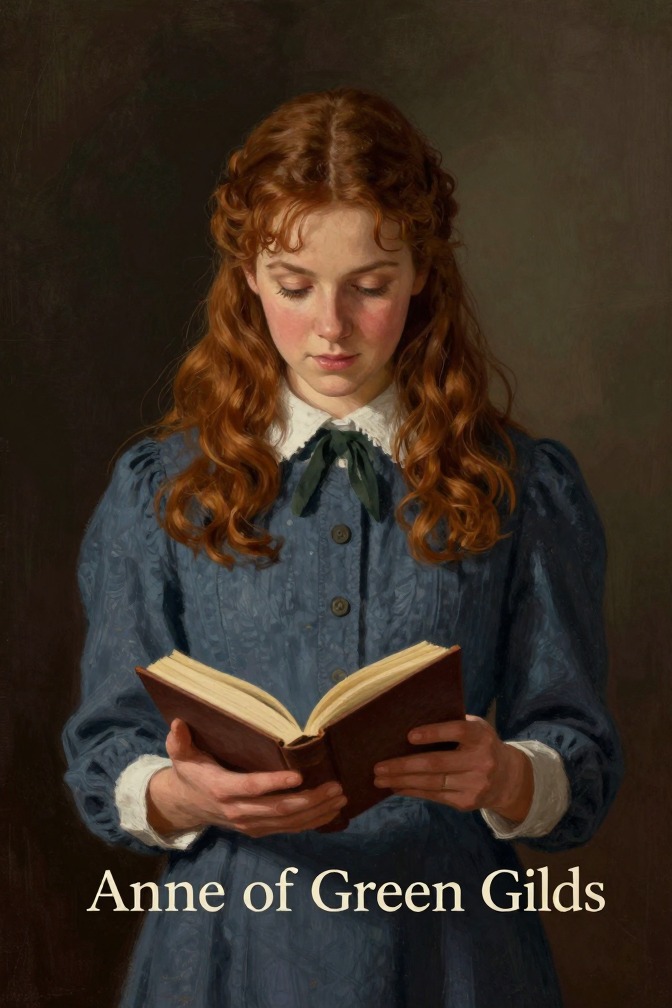
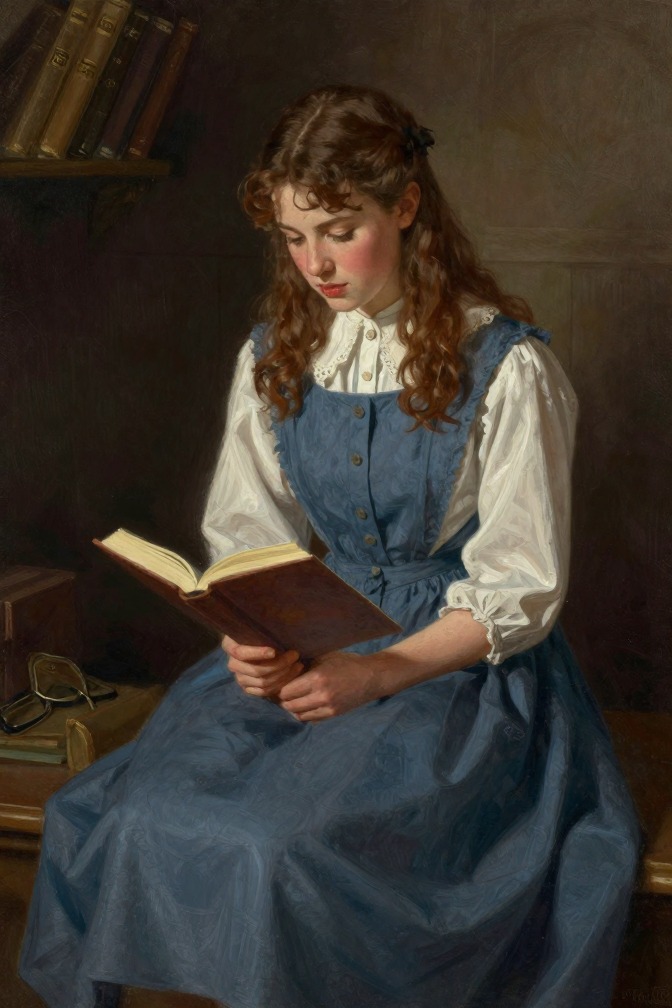
Anne Shirley decides to give up the Avery scholarship and her plan to attend Redmond College in order to stay at Green Gables and teach at the Avonlea school, a self-sacrificing choice made after learning that Marilla Cuthbert is threatened with blindness and that the family has lost its savings in the Abbey Bank failure.
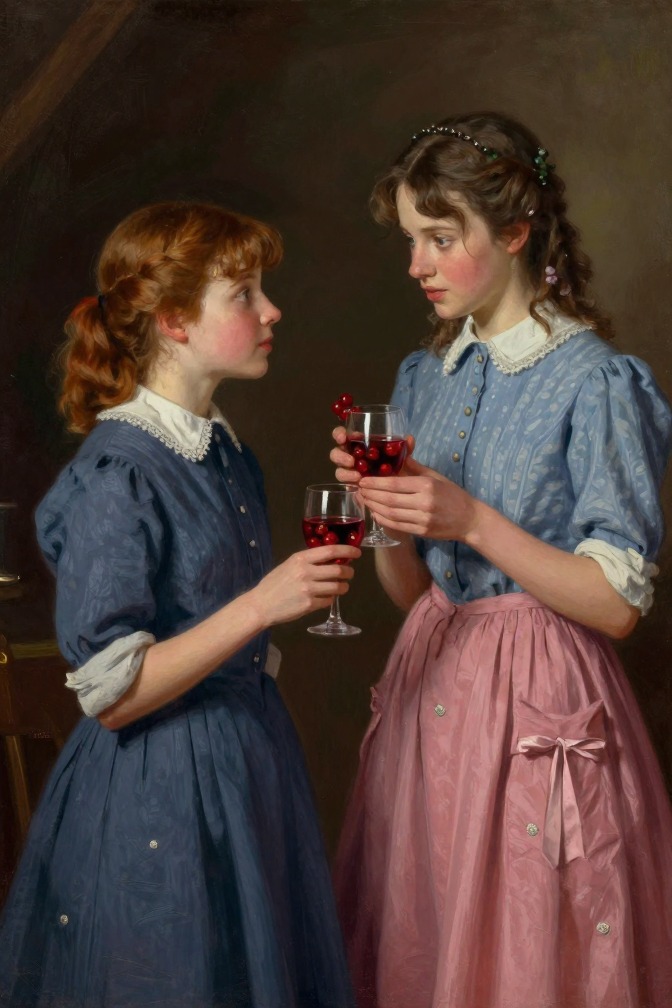
Anne Shirley, intending to host a proper tea for her bosom friend Diana Barry, mistakenly serves her Marilla Cuthbert's homemade currant wine instead of raspberry cordial, causing Diana to become intoxicated and leading to a severe rift between the two families that tests Anne's friendship and her place in Avonlea.
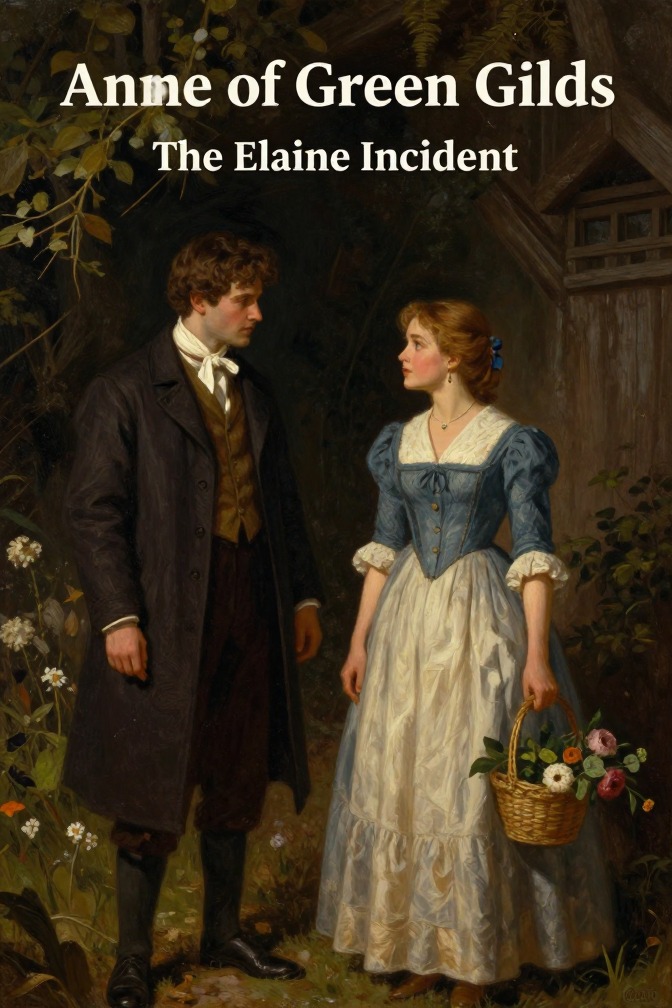
Anne playing Elaine and being rescued by Gilbert is a pivotal event in Anne of Green Gables where Anne's romantic imagination leads to a dangerous mishap on the pond, resulting in her rescue by Gilbert Blythe and a crucial turning point in their relationship.
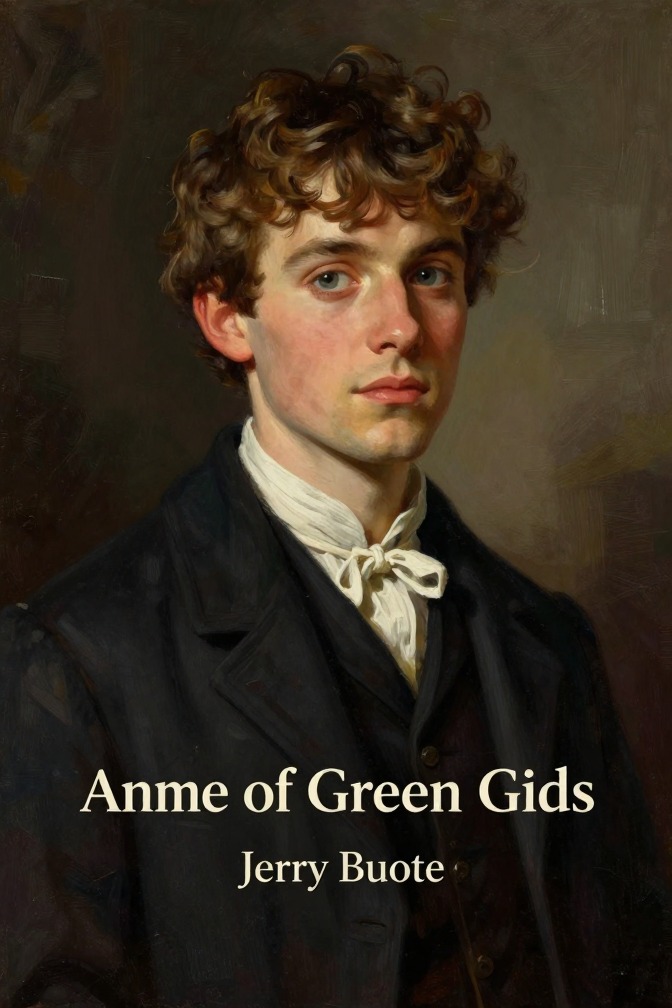
Jerry Buote is the hired boy at Green Gables, a minor character whose presence underscores the farm's need for male labor and whose cheerful demeanor contrasts with the household's emotional crises.
Mr. Bell is the Avonlea Sunday-school superintendent and a local trustee whose long, uninspired prayers and rigid piety serve as a foil to Anne Shirley's imaginative, heartfelt spirituality, while his practical authority—granting prizes for pigs and presiding over school discipline—anchors the conservative institutional order that Anne must navigate.
Mr. Wright (Eben Wright) is a minor Avonlea resident whose house serves as the boarding place for the schoolmaster, Mr. Phillips, and whose property and family are woven into the daily life and gossip of the Avonlea schoolchildren.
Mrs. Peter Blewett is a minor but pivotal character in Anne of Green Gables, whose brief appearance in the sixth chapter nearly derails Anne Shirley's future. A small, shrewish-faced woman with a reputation as a 'terrible worker and driver,' she is introduced as a potential new guardian for Anne after the Cuthberts' request for a boy results in a girl being sent. Her cold, calculating offer to take Anne off Marilla Cuthbert's hands, and her ungracious reaction when Marilla hesitates, serve as the catalyst that forces Marilla to recognize her own growing attachment to the child and ultimately decide to keep her at Green Gables.
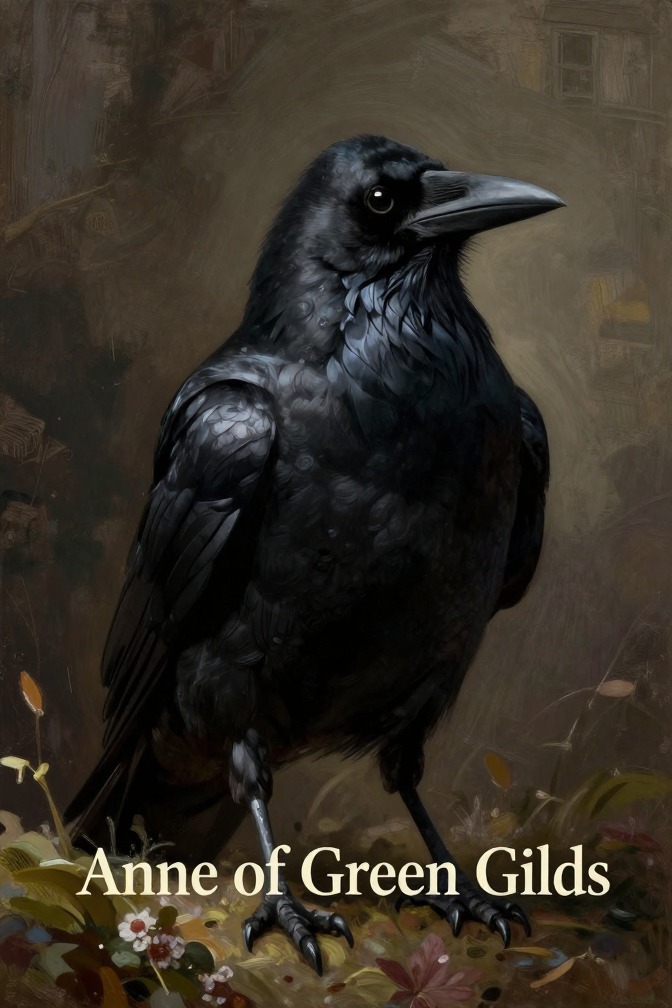
The crow is a recurring natural presence in Anne of Green Gables, appearing in the landscape of Avonlea and serving as a minor but persistent element of the environment that Anne observes, names, and integrates into her imaginative world.
The Elaine Incident is a pivotal summer episode in which Anne Shirley, playing the drowned lily maid Elaine from Tennyson's poem, nearly drowns when the flat boat leaks and sinks, and is rescued by Gilbert Blythe, leading to a crucial moment of reconciliation that Anne rejects.
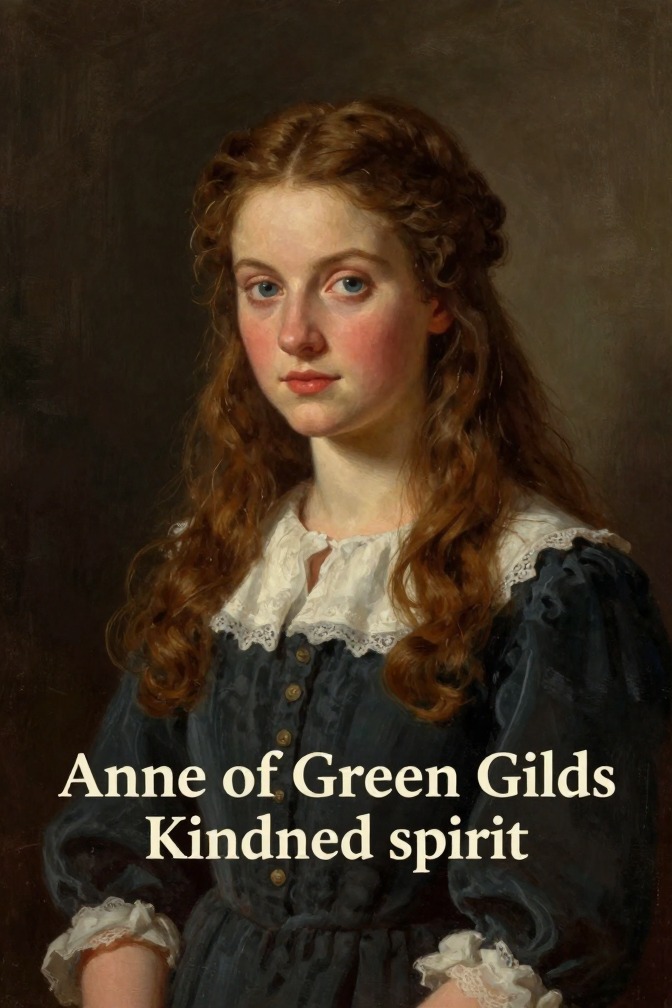
Kindred spirit is a central concept in Anne of Green Gables, denoting an intuitive, soul-deep connection between two people who share a fundamental understanding of each other's inner world, imagination, and emotional life. For Anne Shirley, who has spent her childhood longing for a true friend, the discovery of a kindred spirit is the highest form of human relationship, one that validates her own intense way of experiencing the world. The term becomes Anne's personal measure of character, applied to those rare individuals—Matthew Cuthbert, Diana Barry, Mrs. Allan, Miss Josephine Barry—who recognize and respond to her imaginative, passionate nature without ridicule or correction.
Bright River is the small railway station in Prince Edward Island where Matthew Cuthbert first meets Anne Shirley, the orphan girl mistakenly sent instead of the boy he and Marilla had requested. This unremarkable junction becomes the threshold of Anne's new life, the place where a clerical error—a message miscommunicated through a chain of neighbors—transforms into the central event of the novel: the arrival of a vivid, talkative, red-haired child who will reshape Green Gables forever.
Orchard Slope is the Barry family farmstead, located across the brook from Green Gables, and serves as the home of Anne Shirley's beloved bosom friend, Diana Barry. It is a place of warm hospitality, domestic order, and occasional tension, where Anne experiences both the heights of friendship and the depths of social disgrace, and where her courage and resourcefulness ultimately win her a place in the Barry household's regard.
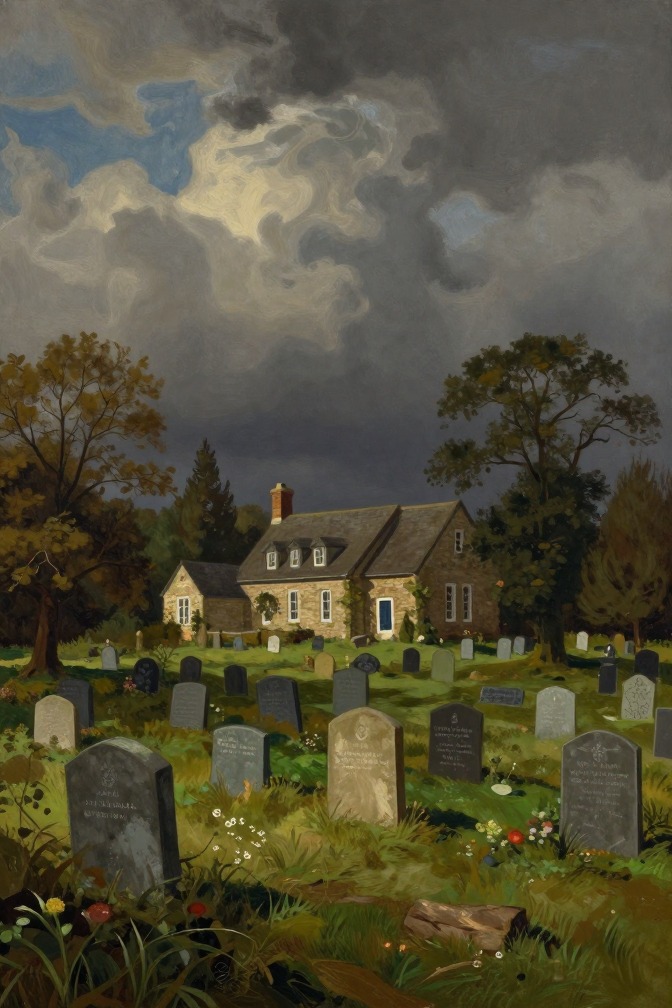
The Avonlea graveyard is the small, peaceful burial ground where Matthew Cuthbert is laid to rest after his sudden death from heart failure, and where Anne Shirley tends his grave with a slip of the white Scotch rosebush his mother brought from Scotland, making it a site of grief, memory, and the beginning of her acceptance of loss.
The White Sands Hotel is a seaside resort on Prince Edward Island that serves as a site of social performance, cultural encounter, and personal triumph for Anne Shirley, most notably during the concert where she overcomes stage fright and delivers a celebrated recitation.
The liniment cake is a disastrous culinary creation by Anne Shirley, made for a tea party honoring the new minister and his wife, Mrs. Allan. It becomes a memorable object lesson in Anne's ongoing struggle with carelessness and the gap between her romantic imagination and the demands of practical life, ultimately strengthening her bond with Mrs. Allan.
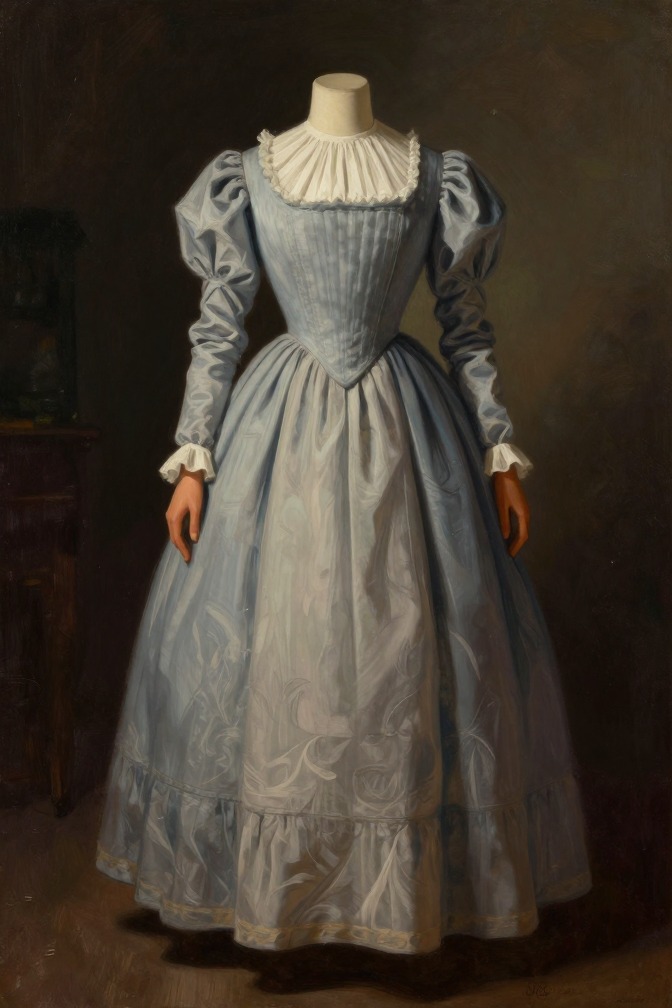
The puffed sleeves dress, a brown gloria gown with elaborate puffed sleeves given to Anne by Matthew Cuthbert as a Christmas gift, symbolizes Matthew's quiet, transformative love and Anne's long-held desire for beauty and belonging, marking a pivotal moment in her integration into Green Gables and her community.
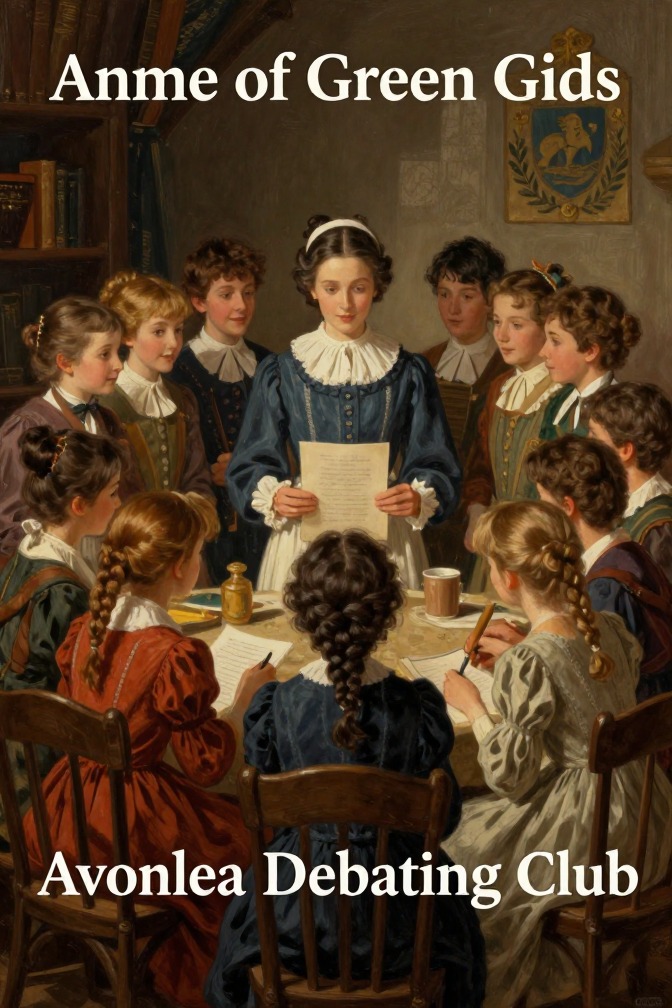
The Avonlea Debating Club is a community organization that provides a structured social and intellectual outlet for the young people of Avonlea, hosting concerts and entertainments that serve as key milestones in Anne Shirley's social development and her growing rivalry with Gilbert Blythe.