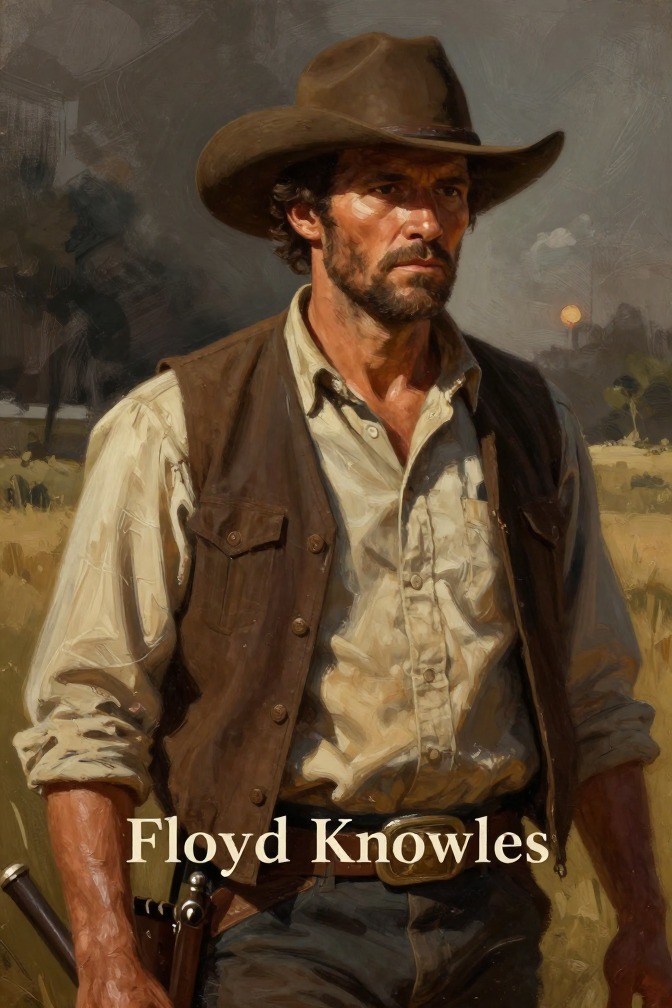
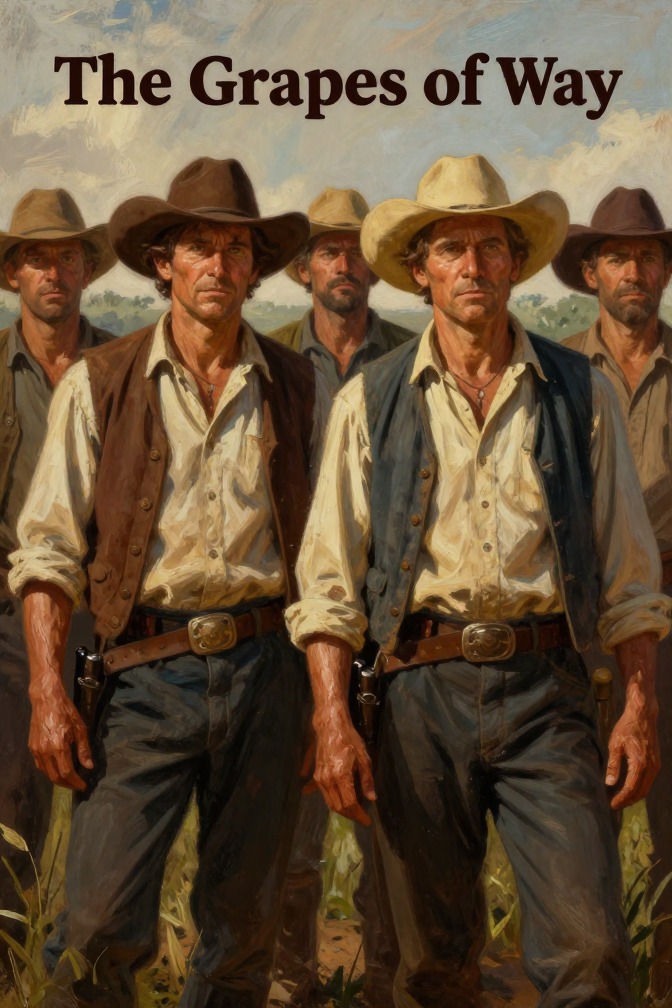
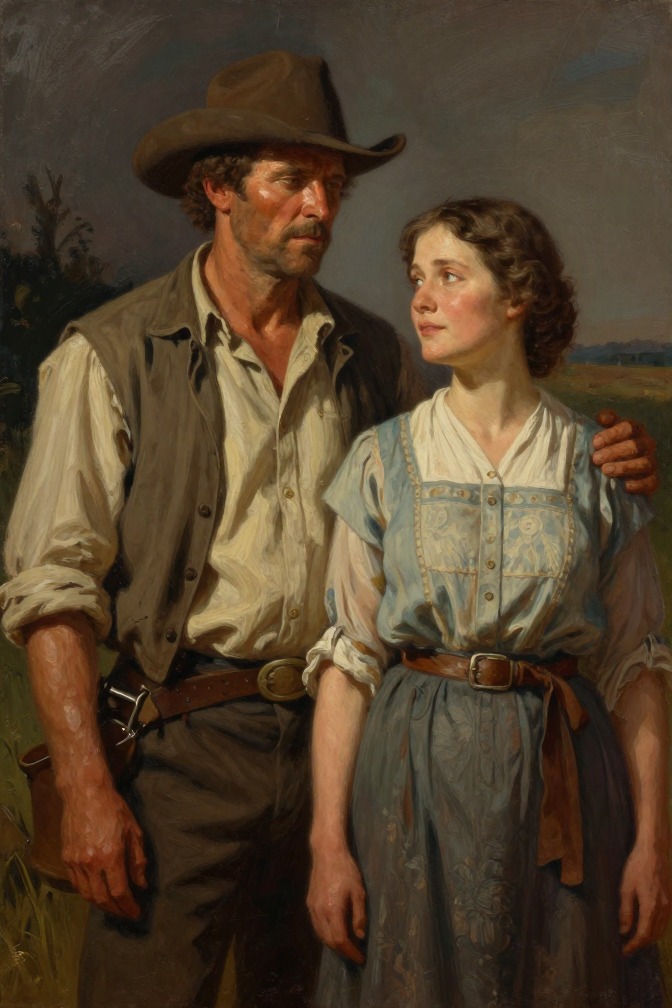
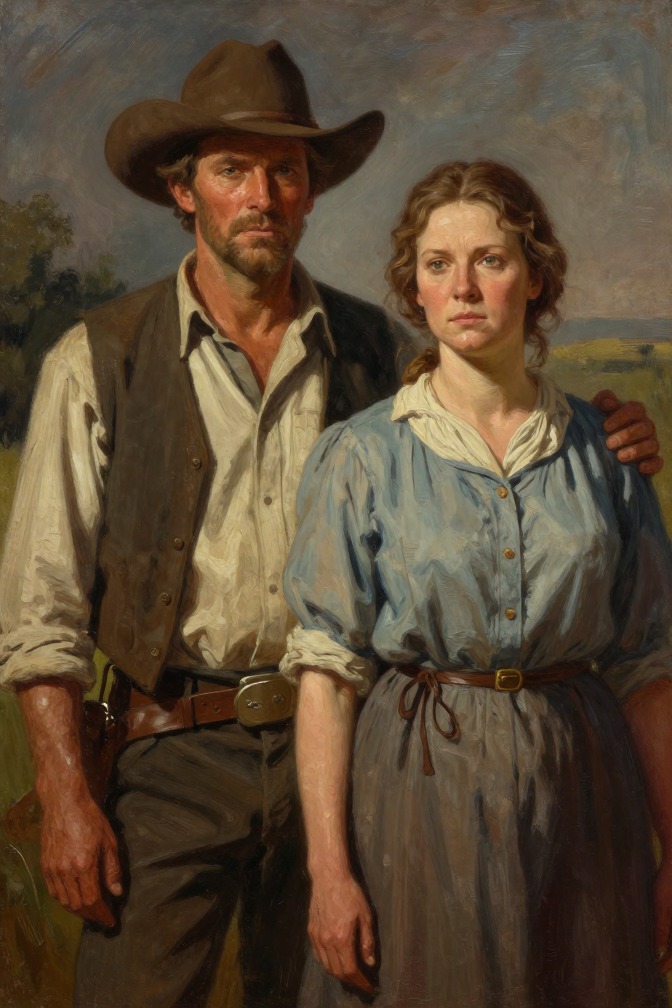
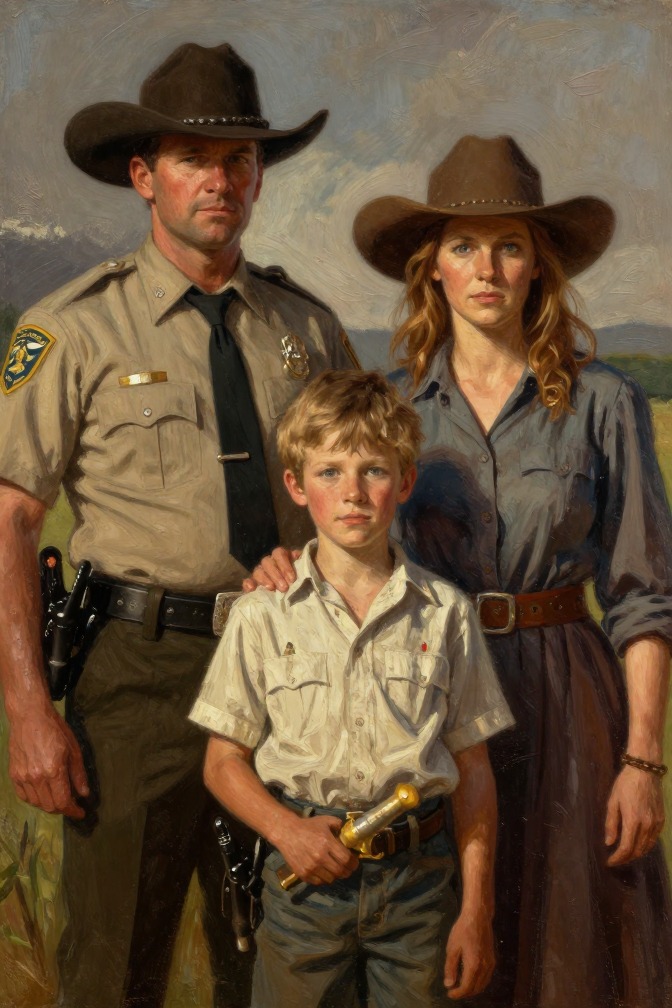
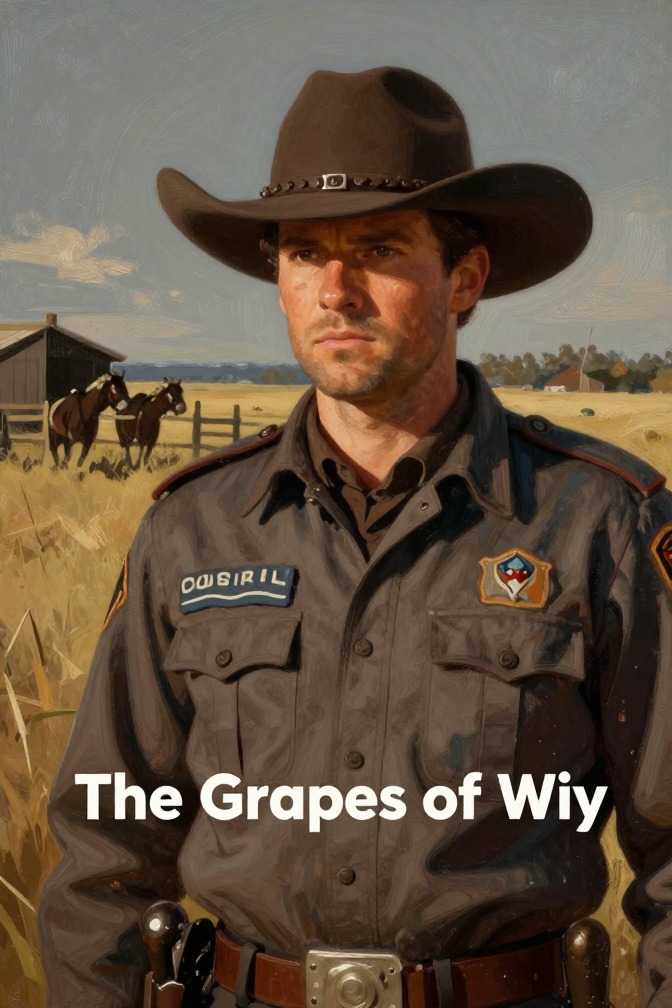
Floyd Knowles escapes is a pivotal action in The Grapes of Wrath in which a migrant worker, after being falsely accused of inciting trouble by a labor contractor and a deputy sheriff, punches the deputy and flees into the willows, triggering a chain of violence that leads to Jim Casy's arrest and Tom Joad's fatal assault on a vigilante.
Mr. Thomas is a small farmer in California's San Joaquin Valley who, despite his personal decency and desire to pay fair wages, is forced by the Farmers' Association and the Bank of the West to cut his workers' pay from thirty to twenty-five cents an hour, and who secretly warns the Joads and their neighbors of an impending vigilante attack on the Weedpatch government camp's Saturday night dance, revealing the coercive power of corporate agriculture over individual landowners.
Mr. Wainwright is a minor but significant character in the latter part of The Grapes of Wrath, representing the quiet dignity and practical anxieties of the migrant families who, like the Joads, struggle to maintain their moral codes and family structures in the face of economic collapse and social displacement. He is the father of Aggie Wainwright and the husband of Mrs. Wainwright, and his primary narrative function revolves around his concern for his daughter's reputation and future, which leads him to seek a formal understanding with the Joads regarding the relationship between Aggie and Al Joad. His character embodies the tension between traditional values of family honor and the harsh, destabilizing realities of migrant life.
Mrs. Wainwright is a stout, practical, and deeply compassionate migrant woman who, alongside her husband Mr. Wainwright and daughter Aggie, shares a boxcar with the Joad family during the flood at the end of John Steinbeck's *The Grapes of Wrath*. She emerges as a crucial ally to Ma Joad, providing essential aid during Rose of Sharon's stillbirth and embodying the novel's central theme that shared hardship dissolves the boundaries of the individual family, forging a larger, communal bond of mutual survival.
Ruthie Joad is the second-youngest child of the Joad family, a twelve-year-old girl who, over the course of the journey from Oklahoma to California, undergoes a rapid and often painful transition from a mischievous, boastful child into a fiercely protective and increasingly hardened young person, her development marked by acts of cruelty, loyalty, and a growing awareness of the family's precarious social standing.
Uncle John, the guilt-ridden brother of Pa Joad, is a haunted figure whose life is defined by the tragic death of his young wife and the consuming sense of sin that followed. Throughout the Joads' journey to California, he oscillates between silent withdrawal and explosive, self-destructive behavior, serving as a dark counterpoint to the family's struggle for survival and a vessel for the novel's exploration of guilt, loneliness, and the corrosive weight of the past.
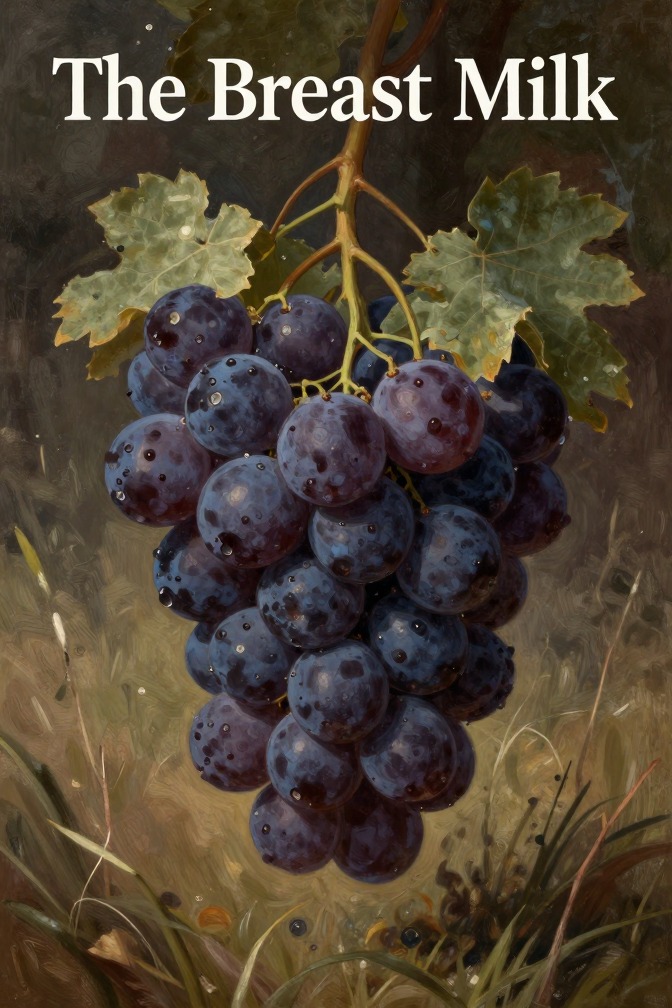
The Breast Milk is the central symbolic act of John Steinbeck's The Grapes of Wrath, occurring in the novel's final scene when Rose of Sharon, having just given birth to a stillborn child, nurses a starving stranger with her breast milk. This gesture, at once maternal, erotic, and sacrificial, transforms personal tragedy into a radical act of communal sustenance, crystallizing the novel's movement from individual loss to collective survival and from the broken family to the larger human family.
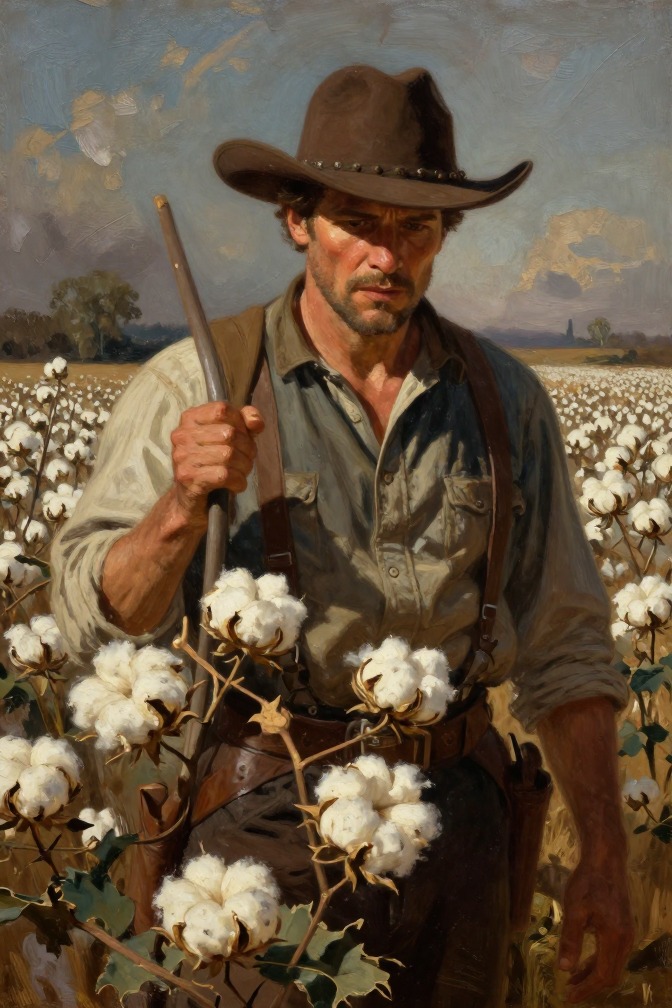
The Cotton Picker is a recurring concept in John Steinbeck's The Grapes of Wrath, representing both a specific form of agricultural piecework and a symbol of the systemic exploitation of migrant labor in California. It embodies the desperate competition for work, the crushing economics of low wages, and the physical toll exacted on families, while also serving as a site of potential collective action and resistance.
The Monster is the central economic and ideological force in John Steinbeck's The Grapes of Wrath, a composite entity representing the bank, the finance company, and the corporate agricultural system that dispossesses tenant farmers and drives them westward. It is not a single villain but an impersonal, self-perpetuating mechanism that demands profit above all human needs, reducing land to a commodity and people to surplus labor. The Monster's logic pervades every level of the novel, from the eviction of the Joads to the wage cuts at the Hooper ranch, and its presence transforms the migrants' individual losses into a collective crisis. Steinbeck uses the Monster as a structural metaphor for capitalism's inhumanity, showing how institutions made by men escape human control and become agents of destruction.
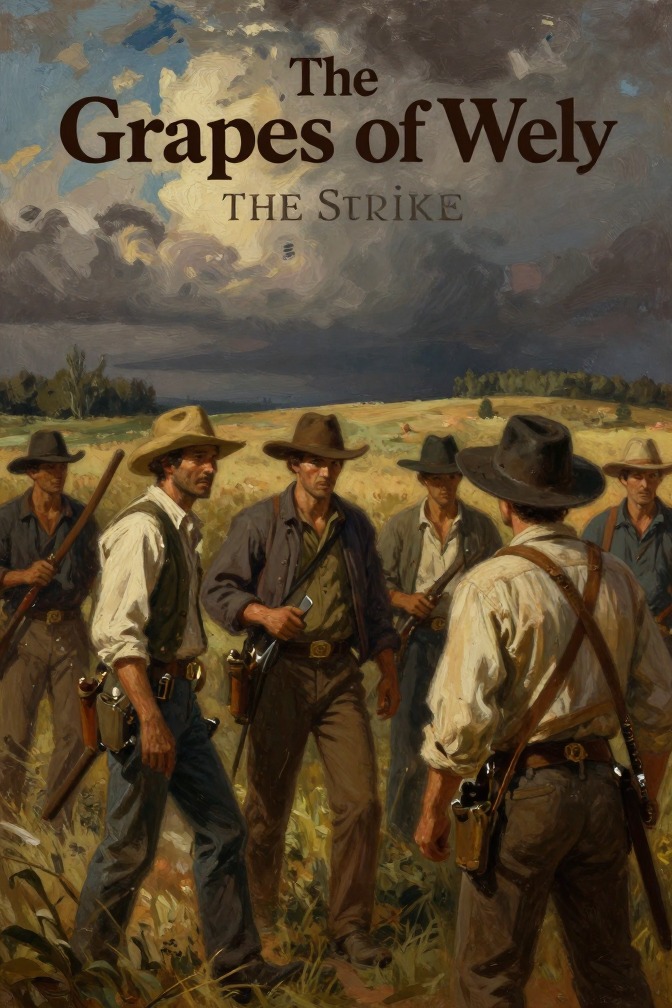
The Strike in The Grapes of Wrath is the organized refusal of migrant peach pickers to accept exploitative wages at the Hooper ranch, a confrontation that crystallizes the novel's central conflict between labor and capital. It is the event that directly leads to the murder of Jim Casy, Tom Joad's retaliatory killing of a vigilante, and Tom's transformation into a fugitive committed to collective action. The strike exposes the systemic mechanisms—handbills, wage cuts, armed deputies, and strikebreakers—by which California's industrial agriculture maintains a surplus labor pool, and it marks the point at which the Joad family's personal struggle for survival becomes inseparable from the broader class war.
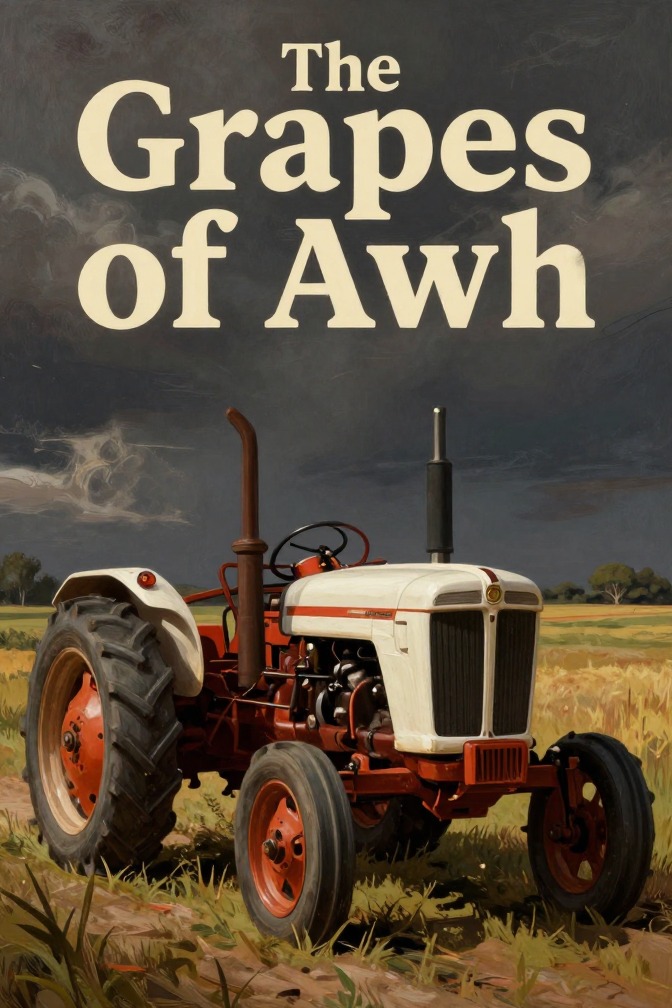
The Tractor is the central symbol of industrial agriculture in John Steinbeck's The Grapes of Wrath, representing the mechanized force that dispossesses tenant farmers from their land. It functions as a literal machine of eviction and a metaphorical monster—an extension of the bank's inhuman logic—that destroys homes, communities, and the human relationship to the earth.
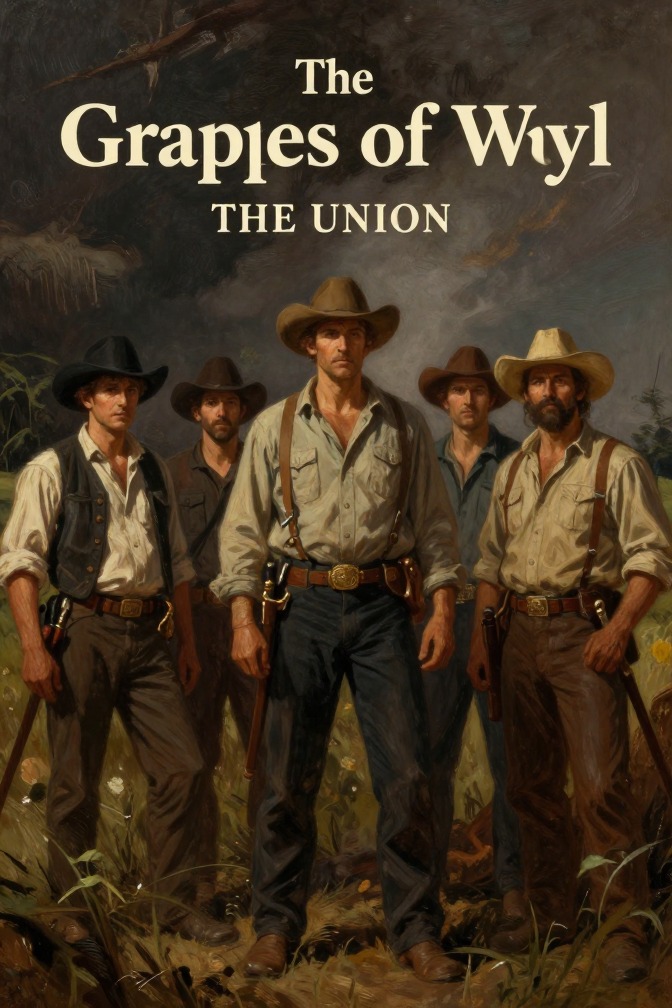
The Union, as a concept in The Grapes of Wrath, represents the collective organization of migrant workers as a response to systemic exploitation by corporate agriculture. It emerges not as a formal institution but as a latent possibility, a threat that the powerful seek to crush through violence, blacklisting, and co-optation, while the migrants themselves are torn between the desperate need for immediate survival and the long-term necessity of solidarity. The novel traces the painful, halting movement from isolated, competing individuals toward a shared consciousness, a process that is both the story's central political argument and its most contested terrain.
The Vigilantes are the armed, extra-legal groups of local citizens and deputies who enforce the interests of California's large landowners and banks against the Dust Bowl migrants. They appear throughout the novel as a recurring, faceless force of repression—burning camps, beating strikers, and murdering organizers—embodying the organized violence that meets the migrants' quest for work and dignity.
Bats appear in The Grapes of Wrath as creatures of the abandoned human world, moving into empty houses after the tenant families have been driven off the land. Their presence marks the final stage of domestic decay: once the doors are no longer shut against the light, bats cease to hover at the thresholds and instead take up residence in the rafters, their droppings becoming part of the smell of vacancy. In a single earlier scene, bats also flicker through the firelight of a camp, part of the natural night that continues around the displaced people. The bat is thus a small but precise index of how quickly a lived-in home reverts to wild, unclaimed space.
The gopher is a small burrowing rodent that appears in the opening chapter of The Grapes of Wrath as a minor but significant element of the natural world, its presence marking the early stages of ecological collapse. In the drought-stricken Oklahoma landscape, gophers trigger small avalanches in the water-cut gullies, their movements contributing to the erosion that foreshadows the larger disaster. The creature recurs in the novel as a point of comparison for human behavior, linking the dispossessed migrants to the animal kingdom's instinct for survival and concealment.
The grasshopper appears in The Grapes of Wrath as a minor but recurring creature, its presence marking key moments of tension, violence, and the harshness of the migrant journey. It is crushed by Tom Joad in the truck cab, observed in the roadside grass alongside the land turtle, and its absence from the Dust Bowl landscape underscores the ecological devastation.
The jackrabbit appears in The Grapes of Wrath as a recurring creature of the open, drought-stricken land, embodying the desperate flight and fragile survival that define the migrant experience. It is caught in headlights, killed by passing vehicles, and scuttles through the dust alongside the Joads' journey, marking the harshness of the road and the thinning line between life and death.
The prairie dog appears in The Grapes of Wrath as a minor but resonant creature, mentioned by Muley Graves as one of the small animals he has been forced to trap and eat after being evicted from his land and left to survive alone on the Oklahoma plains.
The raccoon appears in The Grapes of Wrath as a minor but telling element of the natural world, its presence marking moments of stillness and observation amid the Joads' journey. It is not a developed character but a creature of the wild, heard or glimpsed in the margins of the narrative, contributing to the novel's rich ecological texture.
Santa Rosa, New Mexico, is a pivotal waypoint on the Joad family's westward journey along Route 66, where a connecting-rod bearing failure forces a multi-day repair stop that tests the family's unity and resourcefulness.
The orange handbill is a recurring object in *The Grapes of Wrath* that symbolizes the false promises and systemic deception used to lure Dust Bowl migrants to California. Distributed by large agricultural interests, these brightly colored advertisements promised high wages and abundant work, but in reality served to create a surplus labor pool that drove down wages and enabled exploitation. The handbill appears at key moments in the Joads' journey, first as a source of hope, then as a bitter lesson in the gap between propaganda and reality.
The shovel is a recurring object in John Steinbeck's *The Grapes of Wrath* that moves from a tool of labor to an instrument of violence and back to a tool of labor, marking key transitions in Tom Joad's life and in the family's struggle for survival.
The Winchester rifle, a lever-action .38 caliber weapon, appears in The Grapes of Wrath as a practical tool for survival and a symbol of the Joad family's dwindling autonomy. It is first mentioned as an essential item to bring on the journey west, and later becomes a means of protection and a marker of Tom Joad's dangerous, hunted status after he kills a vigilante.
The Central Committee is the elected self-governing body of the Weedpatch government camp, composed of one representative from each of the camp's five sanitary units. It makes and enforces camp laws, maintains order without external police, and manages communal resources, embodying the novel's vision of democratic, cooperative self-rule among displaced migrant families.
Hooper Ranches, Incorporated is the corporate agricultural entity that operates the peach orchard where the Joads work as strikebreakers, embodying the industrialized, exploitative farming system that reduces human labor to a commodity and crushes collective resistance through wage cuts, armed guards, and company-store debt.
Jim Casy, the former preacher who abandoned organized religion for a philosophy of universal human solidarity, becomes the de facto leader of a strike by peach pickers at the Hooper ranch, a role that directly leads to his murder by vigilantes and, in turn, galvanizes Tom Joad's transformation into a committed activist.
Ma Joad and Rose of Sharon share a mother-daughter relationship that evolves from Ma's protective, stabilizing authority into a profound, wordless communion, culminating in Rose of Sharon's sacrificial act of breastfeeding a starving stranger—a moment Ma enables and sanctifies, transforming her daughter's grief into a gesture of collective survival.
Pa Joad and Ma Joad are the husband-and-wife heads of the Joad family, whose relationship undergoes a profound shift in power and authority as the family is driven off their land and forced to migrate to California. Initially, Pa holds the nominal role of family leader, but as the journey strips him of his economic purpose and confidence, Ma increasingly becomes the family's emotional and practical center, wielding a quiet but decisive authority that Pa ultimately accepts.
The Joad family's relationship with deputy sheriffs is a central, escalating conflict in *The Grapes of Wrath*, embodying the systemic hostility between California's entrenched power structure and the displaced migrant workers. From the first encounter at the Needles river camp to the armed roadblock outside Bakersfield and the violent suppression of the peach pickers' strike, the deputies function as the enforcers of an economic order that criminalizes poverty and hunger. This relationship transforms the Joads from bewildered newcomers into hardened survivors, and it directly precipitates the novel's most violent acts: Jim Casy's fatal arrest and Tom Joad's retaliatory killing of a vigilante.
The California border patrol represents the institutional enforcement of exclusionary policies against Dust Bowl migrants, functioning as a legal barrier that transforms the promise of the West into a controlled, hostile border. Through agricultural inspection stops, license checks, and physical turnbacks, the patrol embodies the state's effort to regulate the flow of desperate families and to criminalize their movement.