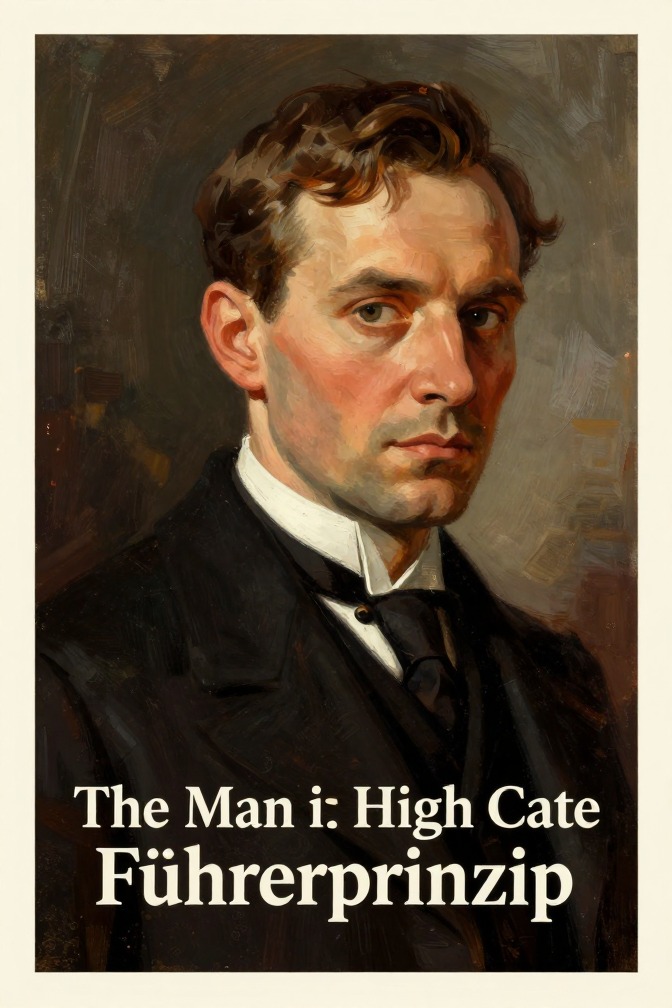
The Führerprinzip, or Leadership Principle, is the foundational Nazi doctrine of absolute hierarchical authority, which in the novel is articulated by Joe Cinnadella as a justification for his worldview and actions, and is critically examined through the political machinations of the German Reich.
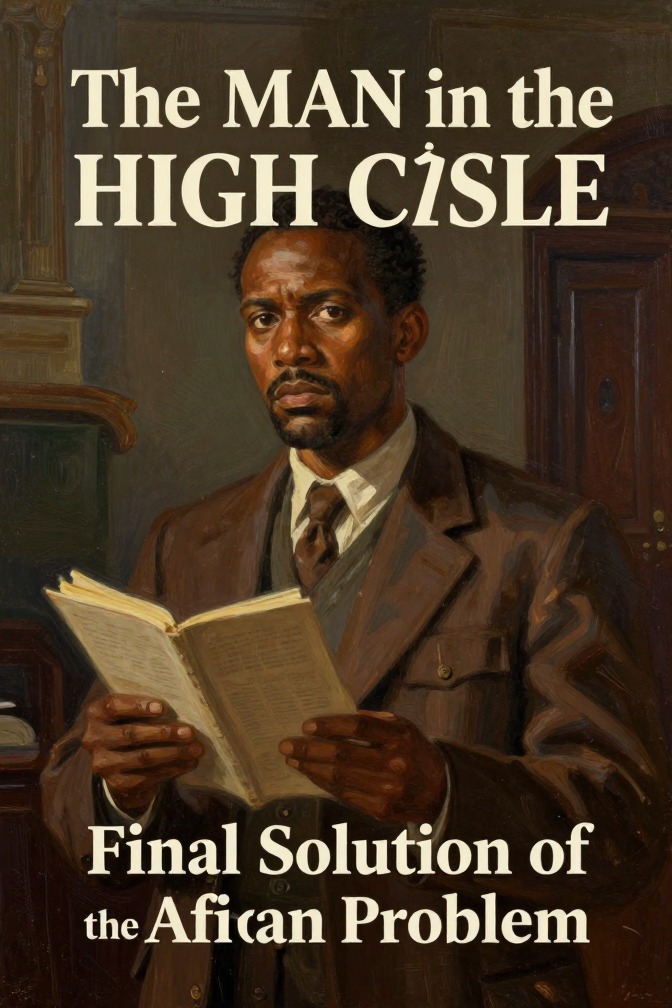
The Final Solution of the African Problem was the Nazi regime's genocidal project to exterminate the indigenous population of Africa, a vast and ruinous undertaking that, by the late 1950s, had been declared "almost" achieved, leaving the continent a depopulated wasteland and serving as a stark symbol of the regime's psychotic, abstract, and ultimately self-defeating ideology.
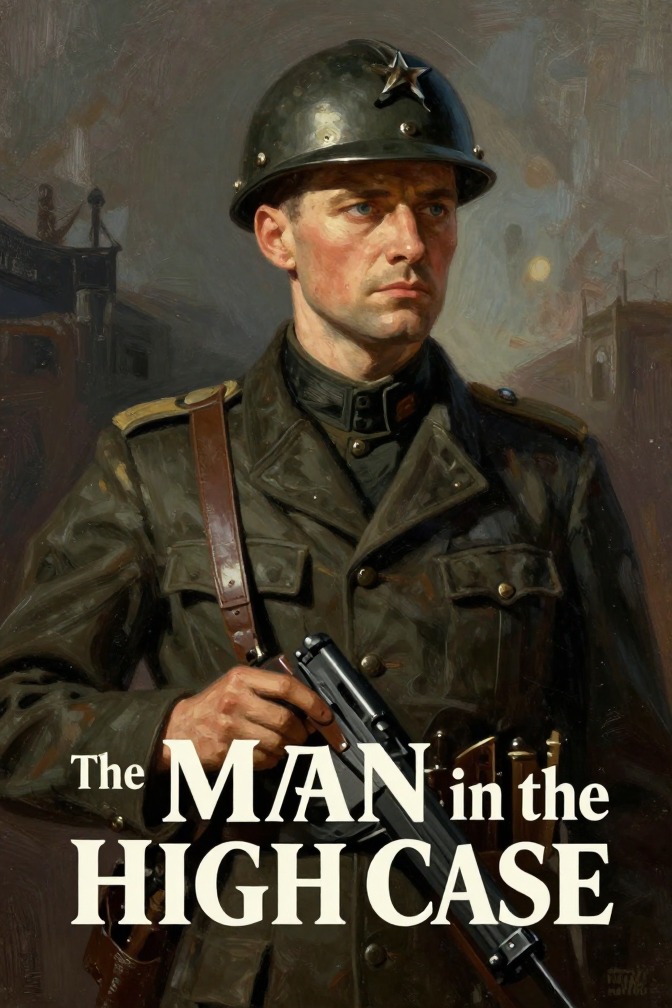
Wabi is a central Japanese aesthetic concept in Philip K. Dick's The Man in the High Castle, denoting a beauty found in simplicity, imperfection, and austerity. It is first invoked by Robert Childan as he perceives the Kasouras' apartment, and later explicitly contrasted with the related concept of wu by Paul Kasoura when he evaluates the Edfrank jewelry. Wabi represents a mode of perception and value that stands in opposition to the novel's dominant theme of historicity, offering a glimpse of harmony and the Tao that both fascinates and eludes the white American characters.
The Great Depression is the severe worldwide economic downturn of the 1930s that serves as a crucial historical pivot in the novel's alternate timeline, where its unresolved aftermath and the assassination of Franklin D. Roosevelt directly enabled Axis victory and the subsequent division of the world.
World War II in this alternate history ended with the Axis powers victorious, reshaping global power structures and the lives of the characters. The war's outcome is the foundational premise of the novel, influencing every aspect of the depicted world, from the political dominance of Germany and Japan to the personal traumas and social hierarchies experienced by the characters.
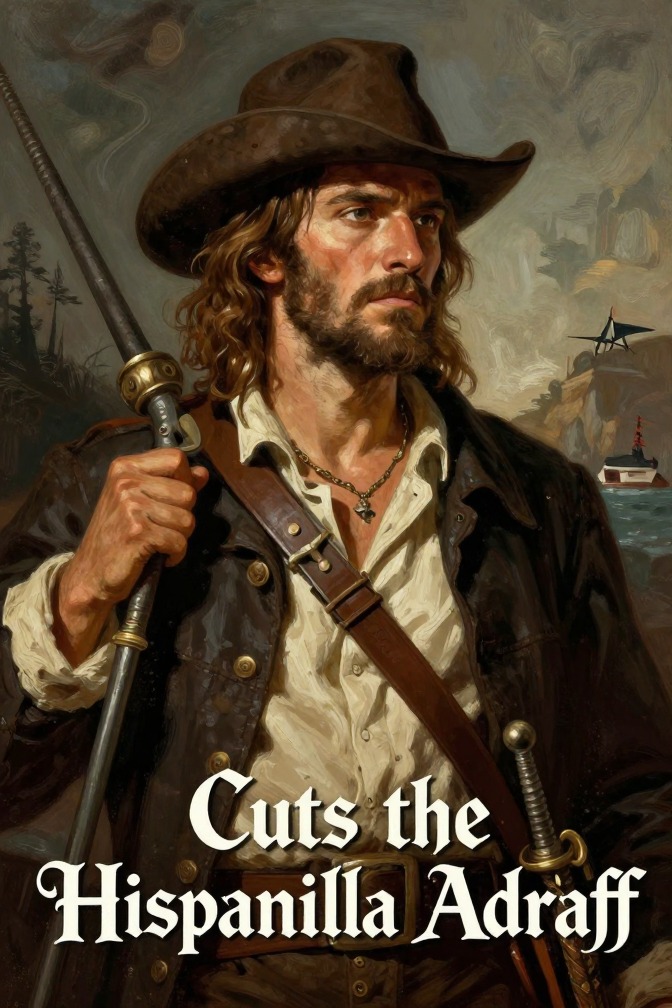
Jim Hawkins's daring night expedition to cut the Hispaniola adrift is a pivotal act of individual initiative that cripples the mutineers' escape plans and sets the stage for the final confrontation over the treasure.
Abraham Gray, the carpenter's mate aboard the Hispaniola, is a minor but pivotal character in Treasure Island whose quiet loyalty and decisive actions help turn the tide against the mutineers. Initially one of the crew, Gray is the only honest hand to openly defy Long John Silver's conspiracy, and his courage in the stockade battle and his later role in the treasure hunt mark him as a steadfast ally. His eventual rise to mate and part owner of a ship underscores the novel's theme of moral reward.
Ben Gunn is a marooned sailor on Treasure Island whose three years of solitary survival, secret discovery of Flint's treasure, and eventual alliance with Jim Hawkins and the loyal party prove decisive in the outcome of the treasure hunt and the defeat of the mutineers.
Mr. Dance is the revenue officer whose timely arrival with his mounted men at the Admiral Benbow Inn saves Jim Hawkins and his mother from the pirates, kills Blind Pew, and sets the plot in motion by escorting Jim to Dr. Livesey with the captain's papers.
The Mutiny on the Hispaniola is the pivotal conspiracy in Robert Louis Stevenson's Treasure Island, orchestrated by the ship's cook Long John Silver, who secretly leads a crew of former pirates under Captain Flint to seize the treasure for themselves. The mutiny transforms the voyage from a gentleman's adventure into a desperate struggle for survival, forcing the loyal party—Captain Smollett, Squire Trelawney, Dr. Livesey, and young Jim Hawkins—to abandon the ship and fortify a stockade on Treasure Island. Its revelation, overheard by Jim in the apple barrel, exposes the treachery that drives the novel's central conflict and sets the stage for the battles, betrayals, and shifting alliances that follow.
Fifteen Men on the Dead Man's Chest is the recurring sea song in Robert Louis Stevenson's Treasure Island, first sung by the old buccaneer Billy Bones at the Admiral Benbow Inn and later adopted by Long John Silver and the mutineers. Its refrain, 'Yo-ho-ho, and a bottle of rum,' becomes a leitmotif of piracy, death, and the lure of treasure, echoing through key moments of the narrative from the inn to the island's final hunt.
Bristol is the bustling English port city where Squire Trelawney outfits the Hispaniola for the treasure voyage, and the place where the novel's central antagonist, Long John Silver, is first encountered at his tavern, the Spy-glass. It serves as the crucial point of departure for the adventure and the final destination upon the crew's return, framing the entire narrative as a journey that begins and ends in this commercial hub.
The Admiral Benbow is the coastal inn kept by Jim Hawkins's father, where the old buccaneer Billy Bones takes up lodging and sets the entire treasure hunt in motion.
The Hispaniola is the two-hundred-ton schooner that carries the treasure-hunting expedition to Treasure Island, and its capture, loss, and recapture form the central pivot of the novel's action. Purchased and fitted out by Squire Trelawney through his friend Blandly, the ship becomes the stage for the mutiny led by Long John Silver, and its fate—from the crew's corruption to Jim Hawkins's solo recapture—determines the survival of the loyal party and the ultimate success of the voyage.
The pirate code is the informal legal system governing the buccaneers of Treasure Island, a set of customary rules that regulate everything from the election of captains to the issuance of the Black Spot, and whose invocation and manipulation by Long John Silver reveals the fragile, self-serving nature of pirate 'law' in contrast to the external legal authority of the British state.
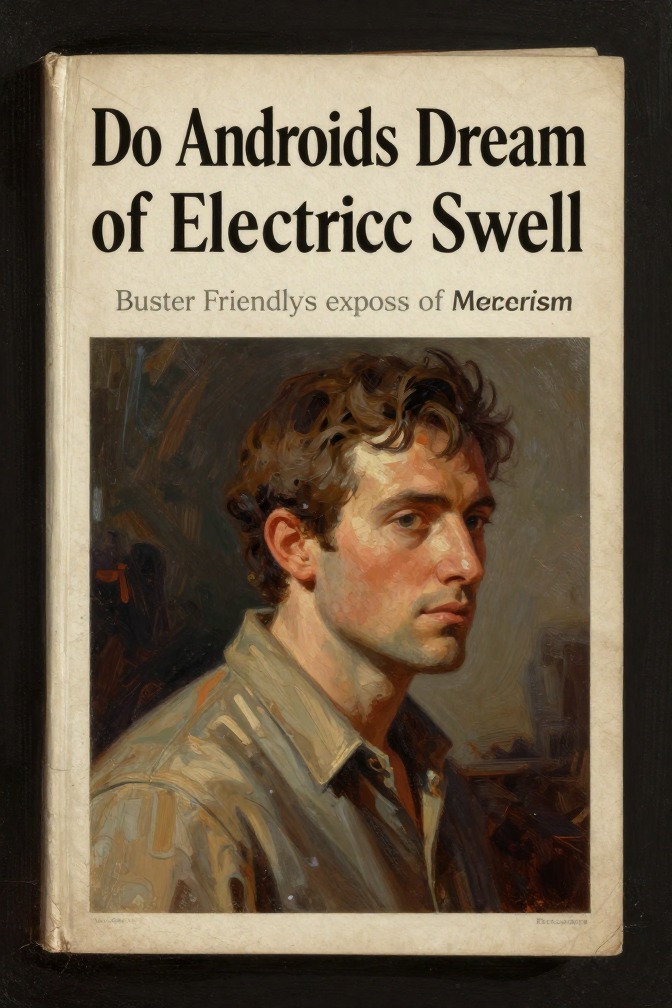
Buster Friendly's exposé of Mercerism is a televised revelation that the entire Mercerist religion—its iconic figure Wilbur Mercer, the landscape of his ascent, the rocks thrown at him, and even the blood he sheds—is a fabricated hoax produced on a Hollywood sound stage by a former bit player named Al Jarry, a disclosure that threatens to dismantle the core belief system of humanity on Earth and the colony worlds.
The death of Rick Deckard's goat is a retaliatory act by the android Rachael Rosen, who pushes the newly purchased black Nubian goat off the roof of Deckard's apartment building, destroying the symbol of his moral recovery and professional success and deepening his existential crisis.
Rick Deckard's arrest at the opera house is a pivotal crisis in which the bounty hunter, attempting to test the android Luba Luft, is himself arrested by a corrupt police officer, revealing a parallel android-run police apparatus and nearly costing Deckard his life.
Radioactive dust is the pervasive, slow-acting environmental contamination left by World War Terminus that drives the novel's central conflicts: it forces mass emigration, creates a class of genetically damaged 'specials,' makes real animals nearly extinct, and shapes the moral and economic landscape of a dying Earth.
The synthetic memory system is a technology used by the Rosen Association to implant false personal histories into Nexus-6 androids, enabling them to believe they are human and thus evade detection by empathy-based tests like the Voigt-Kampff scale. Its existence blurs the line between authentic human experience and programmed identity, raising profound questions about selfhood, memory, and the nature of consciousness in the novel.
Mors certa, vita incerta is a Latin expression meaning 'Death is certain, life is uncertain,' used by Hannibal Sloat, the owner of the Van Ness Pet Hospital, as a philosophical remark that encapsulates the bleak, entropic worldview pervading post-apocalyptic Earth in Philip K. Dick's novel.
The Penfield mood organ is a device that allows its user to dial up any desired emotional state, from professional alertness to ecstatic bliss to six-hour self-accusatory depression, and it is central to the daily life of Rick and Iran Deckard, revealing the novel's concern with the technological management of authentic feeling in a world drained of life.
Role-taking Blockage in the Undeteriorated Schizophrenic is an academic article written by Lurie Kampff eight years before the events of the novel, which established the theoretical foundation for distinguishing human schizophrenics from androids by arguing that the diminished empathic faculty found in human mental patients is superficially similar to but fundamentally different from the role-taking blockage exhibited by humanoid robots, thereby justifying the use of the Voigt-Kampff Empathy Test as a reliable diagnostic tool in police work.
The cycle of life is a central concept in Philip K. Dick's Do Androids Dream of Electric Sheep?, representing the eternal, repetitive pattern of ascent, death, and rebirth that defines the Mercerite faith and, by extension, the novel's philosophical structure. It is the fundamental rhythm of existence, experienced through fusion with Wilbur Mercer, and it provides a framework for understanding suffering, mortality, and the possibility of renewal in a world devastated by World War Terminus.
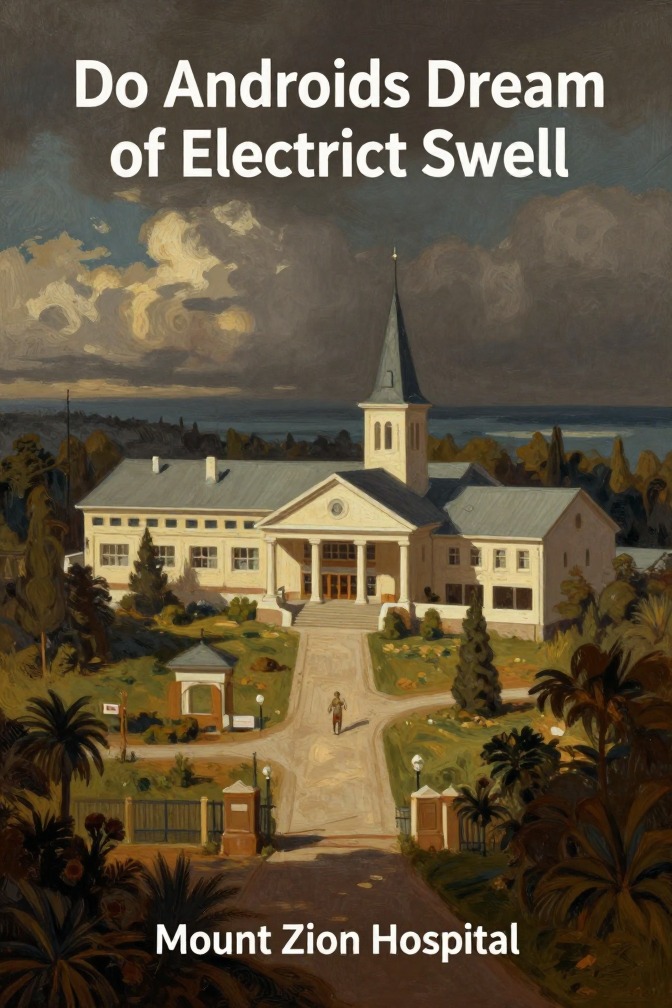
Mount Zion Hospital is the San Francisco medical facility where bounty hunter Dave Holden is hospitalized after being shot by the Nexus-6 android Max Polokov, and where Rick Deckard later attempts to contact him for advice and support following his own traumatic day of retiring six androids.
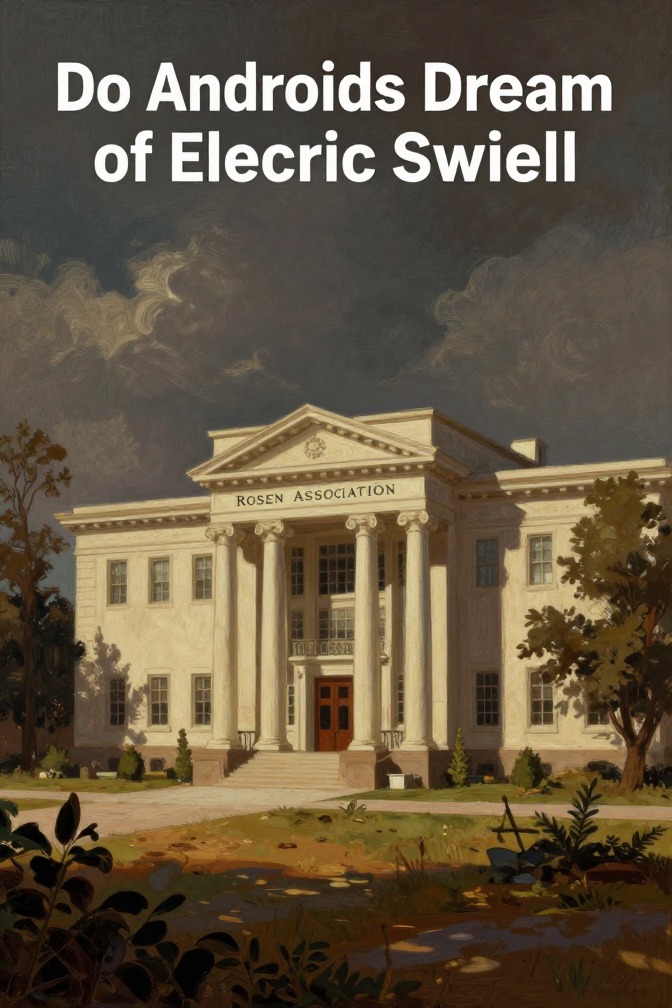
The Rosen Association Building in Seattle serves as the headquarters of the system's largest manufacturer of humanoid robots, a corporate fortress where the line between human and android is deliberately blurred and where the fate of the Voigt-Kampff empathy test is decided.
The Van Ness Pet Hospital is a deliberately misnamed repair shop for false animals, run by the aging Hannibal Sloat in a dust-eroded San Francisco. It serves as the workplace of the chickenhead John Isidore, whose inability to distinguish real from electric animals leads to a crisis when he accidentally lets a genuine cat die, forcing the shop to confront the moral and economic weight of living creatures in a world where animal life is sacred and scarce.
Scrappy is the Rosen Association's electric owl, a sophisticated artificial animal that embodies the corporation's immense wealth and deceptive power. It serves as a central bargaining chip in the Rosens' attempt to blackmail bounty hunter Rick Deckard into suppressing the Voigt-Kampff test's failure to distinguish a Nexus-6 android from a human, and its eventual revelation as a fake underscores the novel's themes of authenticity, illusion, and the commodification of life.
Dave Holden, the senior bounty hunter for the San Francisco Police Department, and Max Polokov, a Nexus-6 android, are linked by a violent encounter that sets the plot in motion: Polokov shoots Holden with a laser, wounding him severely and forcing his replacement by Rick Deckard.
John Isidore and Irmgard Baty form a relationship marked by Irmgard's consistent kindness and protective advocacy toward the chickenhead, contrasting sharply with the coldness of Pris Stratton and the manipulative pragmatism of Roy Baty. Irmgard is the only android who treats Isidore with genuine warmth, defends him against Pris's contempt, and expresses concern for his emotional state, making their bond the most humane connection Isidore experiences during the androids' brief stay in his building.