Le vrai grand monde is a French phrase meaning "the true great world" or "the real high society," used by Prince Ivan Korchagin in Tolstoy's Resurrection to designate the exclusive aristocratic circle to which he and his family belong. The expression encapsulates the novel's critique of a social elite that considers itself the only authentic, refined society while remaining utterly indifferent to the suffering of the millions it exploits and condemns.
Natural love is the fundamental law of human life is a central moral and philosophical principle articulated by Dmitri Ivanovitch Nekhludoff during his journey to Siberia, representing the culmination of his spiritual awakening and his rejection of the institutionalized cruelty he witnesses.
Ekaterinburg is a Siberian city where the gang of prisoners, including Katerina Maslova, halted during their journey, and where Nekhludoff first encountered the political exiles who would profoundly reshape his understanding of justice and human suffering.
The Hotel Mauritania is the lodging-house in the provincial town where the merchant Smelkoff died under suspicious circumstances, and the site where the alleged poisoning and theft that led to Katerina Maslova's trial and conviction took place.
Kourgan is the Siberian town from which the merchant Therapont Emelianovich Smelkoff originates; his sudden death there, after a journey to the provincial capital, triggers the poisoning case for which Katerina Maslova is tried and wrongly convicted. The town functions as the geographical anchor of the crime narrative and, through Smelkoff's wealth and coarse vitality, as a symbol of the predatory commercial class that the novel condemns.
Kousminski is the large, black-earth estate inherited by Dmitri Ivanovitch Nekhludoff from his mother, where he first attempts to implement his moral convictions about land ownership by offering to lease the land to the peasants at a reduced rent, an act that leaves him dissatisfied and ashamed.
Nijni Novgorod is a major Volga river port and commercial city that serves as a key transit point for prisoners being transported to Siberia in Tolstoy's Resurrection. It is the place where the convict gang, including Katerina Maslova, is transferred from rail to barge, and where Nekhludoff makes a failed attempt to visit her before the journey continues.
Perm is the Siberian city where the gang of prisoners, including Katerina Maslova, arrives after a long and arduous journey by rail and steamboat, and where Nekhludoff finally succeeds in obtaining permission for Maslova to continue her journey with the political prisoners, a change that dramatically improves her conditions and marks a turning point in her moral and emotional transformation.
Skorodno is a village in the Krapivinskia district of the Toula Government, the home village of the peasant Simeon Kartinkin, one of the three prisoners tried alongside Katerina Maslova for the poisoning of the merchant Therapont Emelianovich Smelkoff. It appears in the novel as a geographical marker of Kartinkin's origin and as a place name that recurs in the peasants' talk about their own land and labor, anchoring the story's rural world in a specific, impoverished locality.
Toula is a provincial government in central Russia, the home region of several key characters in *Resurrection*, including the peasant Simeon Kartinkin and the estates of Nekhludoff's aunts. It serves as a geographical anchor for the novel's exploration of rural poverty, the injustices of the legal system, and the social chasm between the landed gentry and the peasantry.
The portrait of the Emperor is a recurring symbol of state authority and the official ideology of the Russian Empire, appearing in the courtroom, the church, and the prison, and serving as a constant reminder of the power that judges, condemns, and imprisons.
The Senate decision in Katerina Maslova's case is the judicial ruling that confirmed her conviction for poisoning the merchant Smelkoff, rejecting the appeal and sentencing her to four years of penal servitude in Siberia, a verdict that becomes the central injustice driving Prince Nekhludoff's moral awakening and his determination to atone for his past sins.
The prison cloak is the standardized grey garment worn by convicts in the Russian penal system, a uniform that strips individual identity and marks the wearer as a criminal. In Tolstoy's novel, it functions as a powerful symbol of degradation, social erasure, and the state's power to define a person's worth, while also becoming a site of contested meaning as characters like Katerina Maslova experience both its dehumanizing force and, paradoxically, a form of protection within the prison community.
The rifle is a recurring symbol of state authority and violence in *Resurrection*, appearing in the hands of guards, soldiers, and sentinels who enforce the prison system and the convoy of convicts. Its presence marks the boundary between freedom and captivity, and its use—or the threat of its use—underscores the novel's critique of institutional cruelty.
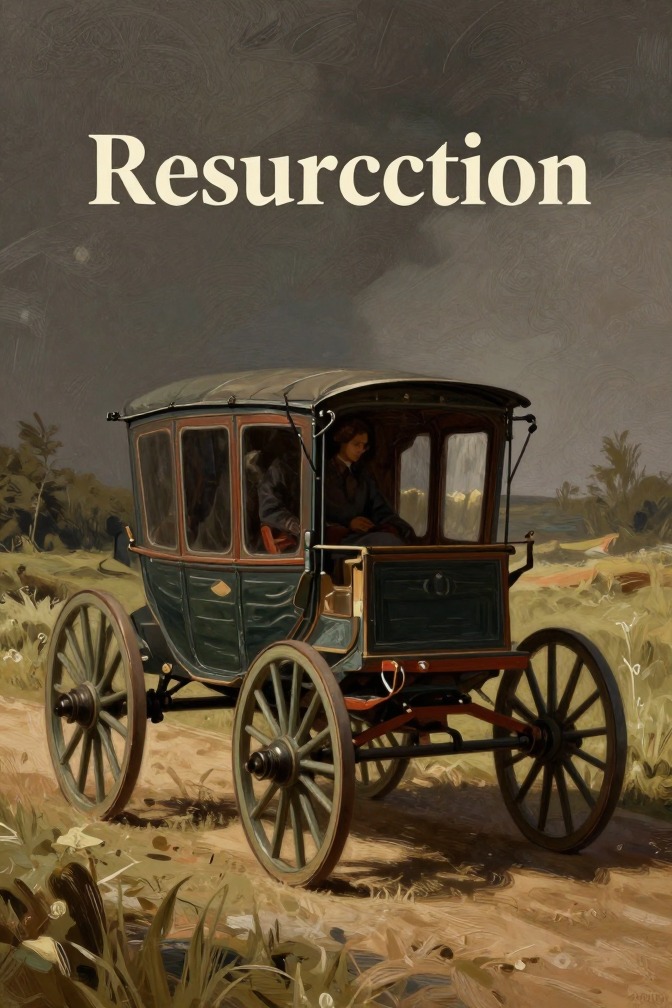
The trap (isvostchik's trap) is a recurring vehicle in the novel, used by Nekhludoff for transportation within Moscow and on his journey to Siberia, and it serves as a concrete marker of his social standing and the changing circumstances of his moral journey.
Handcuffs (manacles) are a recurring material symbol in *Resurrection*, used to restrain prisoners during transport and within the prison system. They appear in the novel's opening scenes of the trial and throughout the journey to Siberia, marking the physical degradation and legal subjugation of the convicts. The object's presence—its rattling, its weight, its removal and reapplication—serves as a constant, tangible reminder of the state's power to bind and dehumanize, and becomes a focal point for Nekhludoff's evolving moral consciousness.
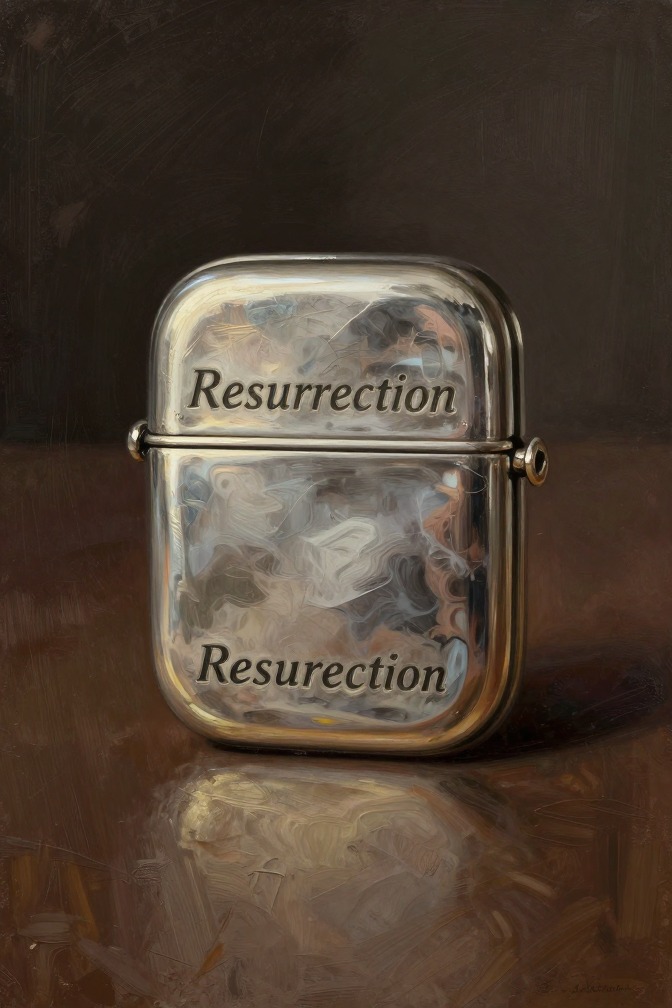
The silver cigarette case is a recurring object in *Resurrection* that marks Nekhludoff's social status, his habitual self-indulgence, and the moral distance between his luxurious life and the suffering he witnesses. It appears in scenes of aristocratic comfort, courtroom tension, and prison visits, serving as a tangible symbol of the worldly habits he must overcome in his spiritual awakening.
The Decembrists are a historical group of Russian revolutionaries who attempted to overthrow the autocracy in 1825; in Tolstoy's *Resurrection*, they serve as a recurring reference point for political martyrdom, moral idealism, and the failure of the state to reform, shaping the narrative's critique of the judicial and penal systems.
The Holy Synod is the supreme governing body of the Russian Orthodox Church, depicted in Tolstoy's *Resurrection* as a bureaucratic institution that enforces religious orthodoxy through state power, persecutes dissenters, and perpetuates a hollow, ritualistic faith that serves the interests of the ruling class rather than the spiritual needs of the people.
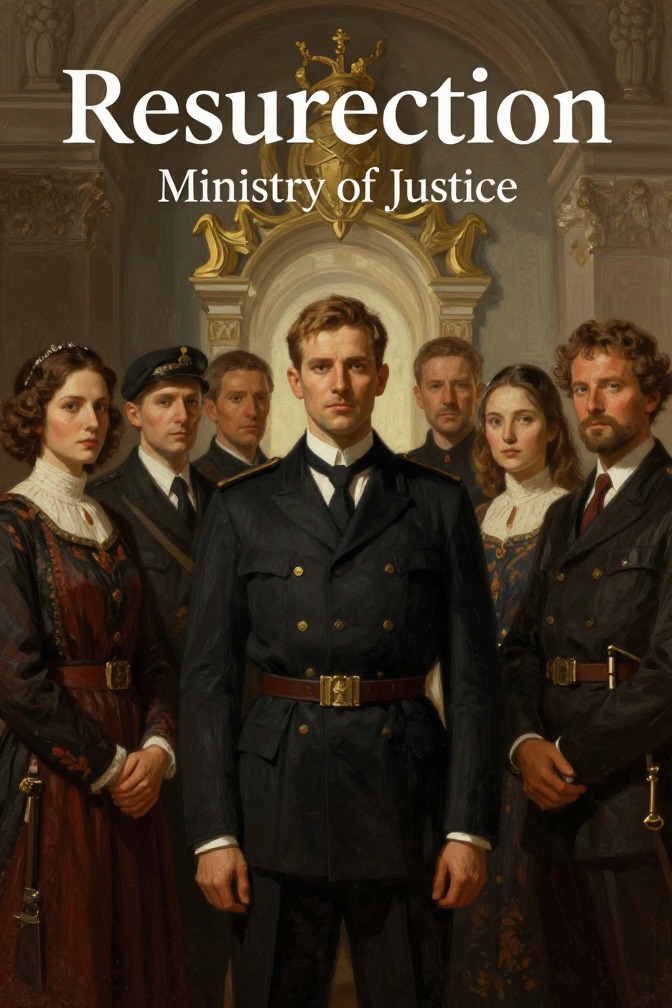
The Ministry of Justice in *Resurrection* is the central bureaucratic apparatus that administers the Russian Empire's criminal law system, and the novel portrays it as a fundamentally corrupt, self-serving institution that perpetuates injustice rather than delivering it. Through the trial of Katerina Maslova and the subsequent appeals process, the Ministry is shown to be staffed by careerist officials—judges, prosecutors, senators, and ministers—who are indifferent to the truth and concerned only with their own advancement, salaries, and social position. The Ministry's operations, from the indictment to the Senate's final rejection of Maslova's appeal, are depicted as a hollow ritual that systematically destroys innocent lives while protecting the privileged. Nekhludoff's encounters with the Ministry's representatives, from the public prosecutor Breve to Senator Wolf and the Ministerial official Toporoff, reveal an institution where legal forms are used to mask cruelty, and where the concept of justice has been replaced by the mechanical application of statutes designed to uphold the existing class hierarchy.
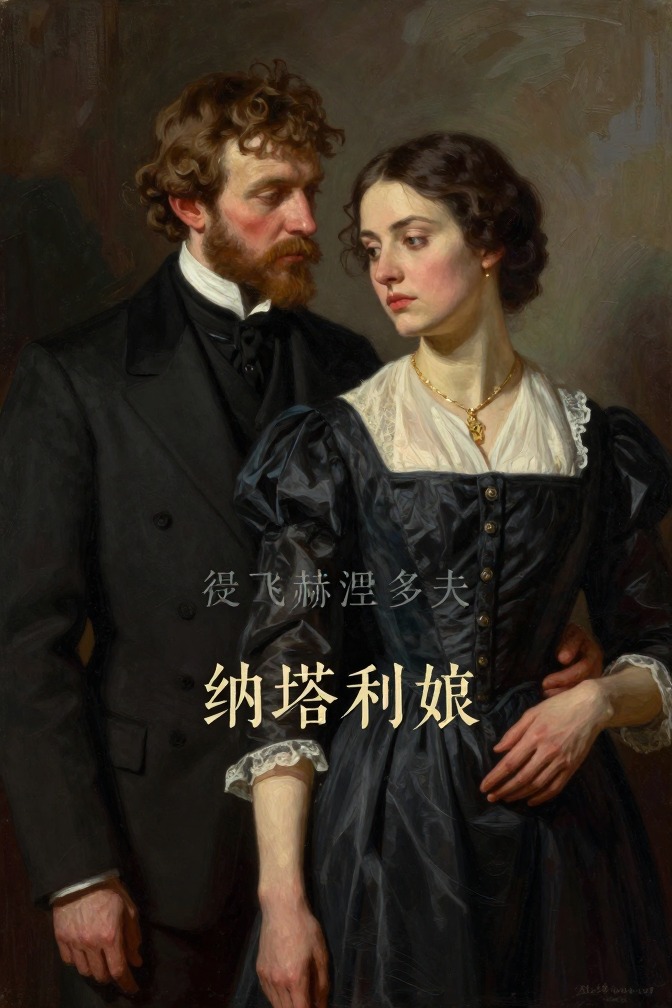
The relationship between Dmitri Ivanovitch Nekhludoff and his sister Nathalie Ivanovna Rogozhinsky is a central emotional thread in the novel, tracing a trajectory from a deep, shared childhood bond rooted in moral idealism to a painful estrangement caused by Nathalie's marriage to a narrow-minded, self-assured man, Ignatius Rogozhinsky. Their final meeting before Nekhludoff's departure for Siberia reveals the irreparable damage done to their intimacy, as Nathalie has become a slave to her husband's values, while Nekhludoff's own moral awakening has made him a stranger to the world she now inhabits.
Maslova and Simonson form a relationship of mutual respect and moral purpose during the Siberian march, culminating in Simonson's proposal of marriage and Maslova's decision to join him, which ultimately frees Nekhludoff from his self-imposed obligation.
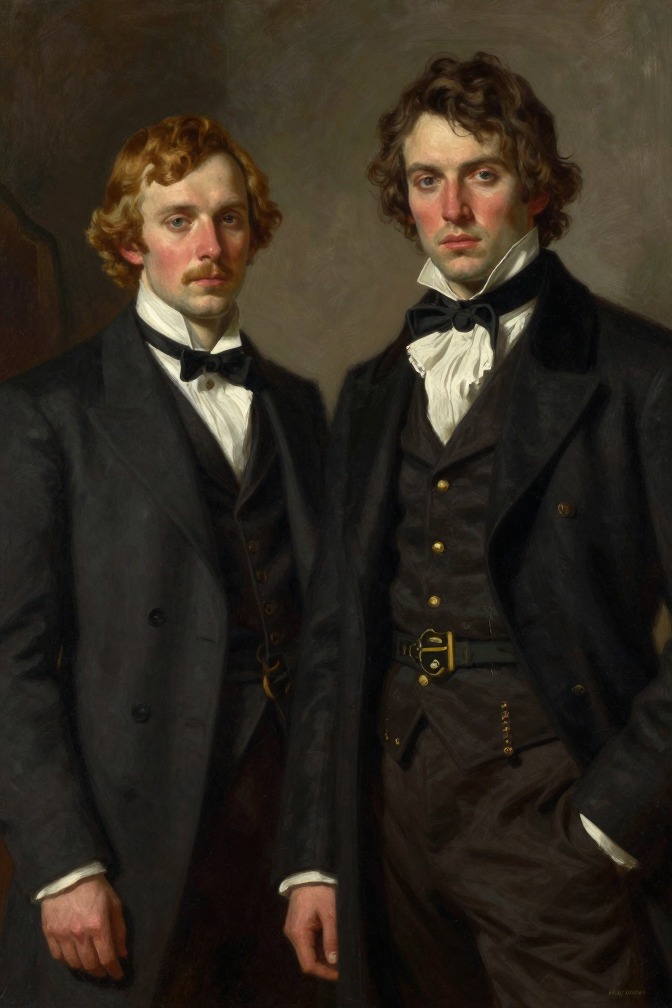
The relationship between Nekhludoff and Rogozhinsky is a tense, ideological conflict between two men from the same aristocratic class who have taken diametrically opposed paths: Nekhludoff, undergoing a moral awakening, seeks to renounce his privileges and atone for his sins, while Rogozhinsky, a self-assured and conservative judicial official, defends the existing social order and the institution of private property. Their confrontation crystallizes the novel's central debate about justice, guilt, and the possibility of personal and social redemption.
Kryltzoff and Mary Pavlovna share a deeply tender, unspoken bond within the political prisoner group, where his hidden love for her is masked by gratitude and friendship, while she cares for him with devoted, chaste compassion, culminating in her offer to marry him so she can remain at his side as he dies.
The relationship between Dmitri Ivanovitch Nekhludoff and Selenin is a story of a once-intimate student friendship that, over the course of a decade, becomes a painful encounter with a stranger. Their reunion in the Senate chamber after Maslova's trial reveals the profound moral and spiritual distance that has grown between them, as Selenin, now a high-ranking public prosecutor, has accommodated himself to the very system of lies and official cruelty that Nekhludoff has come to reject. The brief, tense conversation that follows exposes the chasm between a man who has chosen the path of conscience and one who has chosen the path of career, leaving both men saddened and estranged.
The Second Commandment: Do Not Commit Adultery, as articulated in Matthew 5:27-32, is a central moral law in the novel *Resurrection*, condemning not only the physical act of adultery but also the lustful gaze that precedes it. This commandment is the ethical standard against which Prince Dmitri Ivanovitch Nekhludoff's betrayal of Katerina Maslova is measured, and its violation sets in motion the novel's entire plot of sin, guilt, and spiritual awakening.
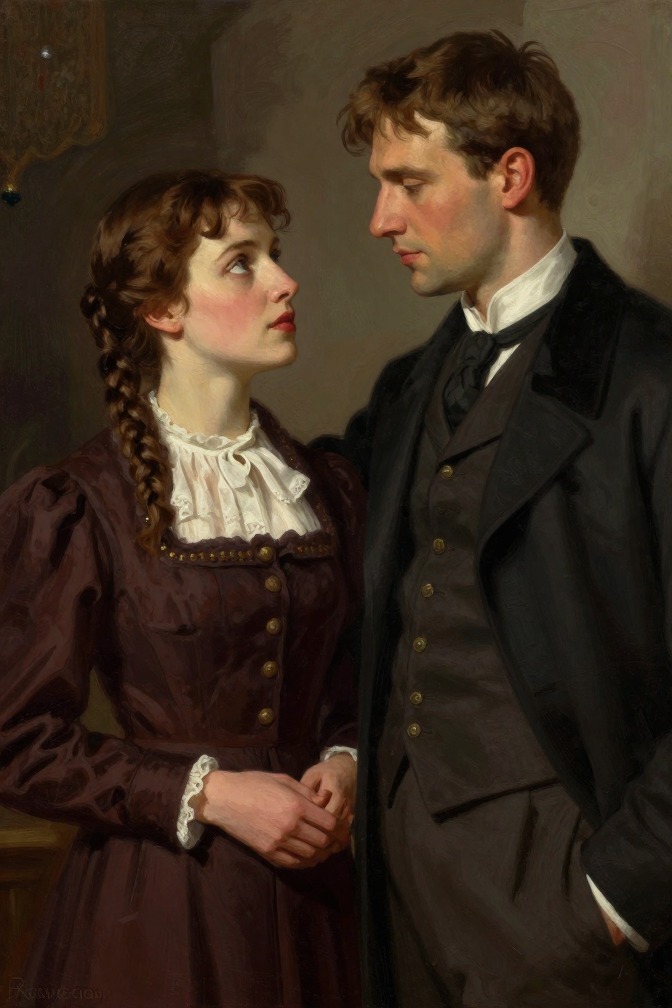
Nekhludoff's marriage decision is the pivotal moral crisis of the novel, the moment when his awakening conscience collides with the social and personal consequences of his past sin. After recognizing Katerina Maslova in the prisoners' dock, he resolves to atone by offering her marriage, a decision that forces him to confront his own depravity, the hypocrisy of his class, and the possibility of genuine redemption.
Political prisoner exile in *Resurrection* is the systematic state practice of banishing revolutionaries, sectarians, and political offenders to Siberia, often after prolonged pretrial detention and without fair trial. The novel exposes this exile as a brutal, arbitrary mechanism that destroys innocent lives, separates families, and spreads depravity, while the exiles themselves—figures like Vera Doukhova, Mary Pavlovna Schetinina, Valdemar Simonson, and Anatole Kryltzoff—represent a morally superior counter-world whose suffering and idealism challenge the legitimacy of the entire tsarist order.
The date 17 August marks the day on which the political prisoner Petlin, long believed to have already reached the Kara mines, wrote a note on a prison wall revealing that he had been sent off alone with criminal convicts and that his companion Neveroff had hanged himself in the lunatic asylum in Kazan. This discovery, made by Nabatoff during the gang's march, shocks the political prisoners and triggers Kryltzoff's anguished recollection of the execution of Lozinsky and Rozovsky, deepening the novel's meditation on state violence and the destruction of the best among men.
A week is a recurring temporal unit in the novel that marks the intervals between Nekhludoff's decisive actions and the periods of waiting that punctuate his moral awakening. It serves as a measure of both the bureaucratic delays in Maslova's case and the rhythm of Nekhludoff's inner transformation.