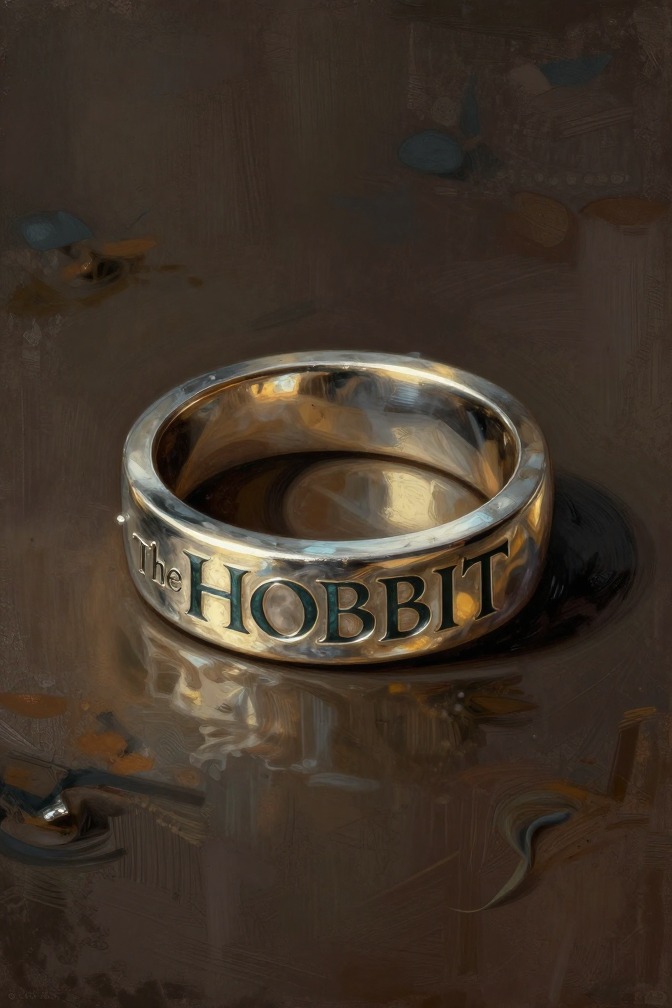
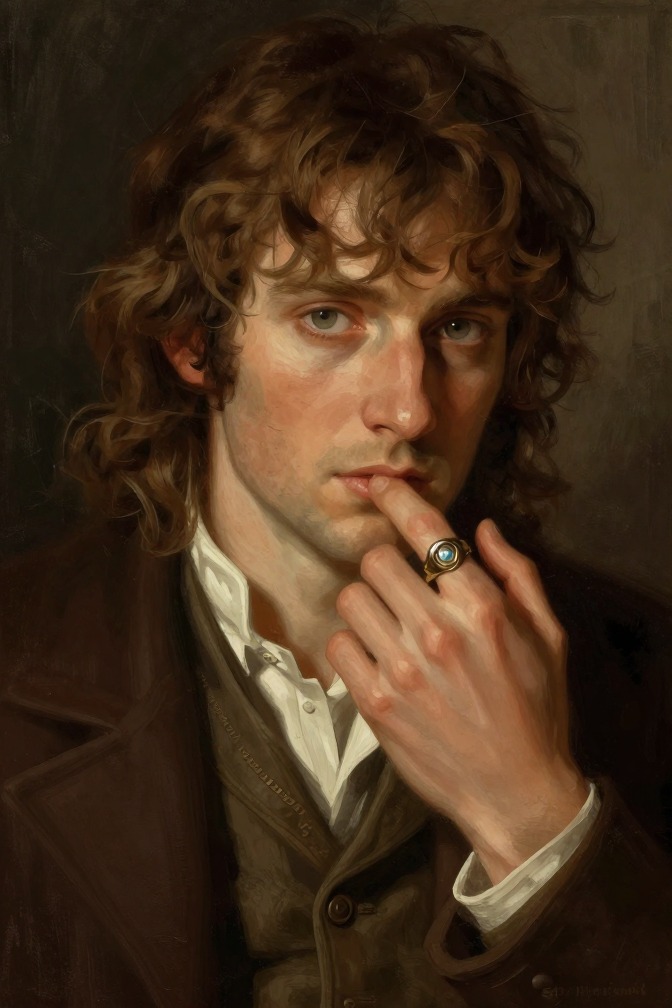
The One Ring is a golden ring of power that grants invisibility to its wearer, discovered by Bilbo Baggins in the goblin tunnels beneath the Misty Mountains. It becomes a decisive instrument in his adventures, enabling his escape from Gollum and the goblins, and later aiding his rescue of the dwarves from the spiders of Mirkwood. The ring also marks a turning point in Bilbo's career, introducing a hidden, magical dimension to his character and setting the stage for the larger conflicts of Middle-earth.
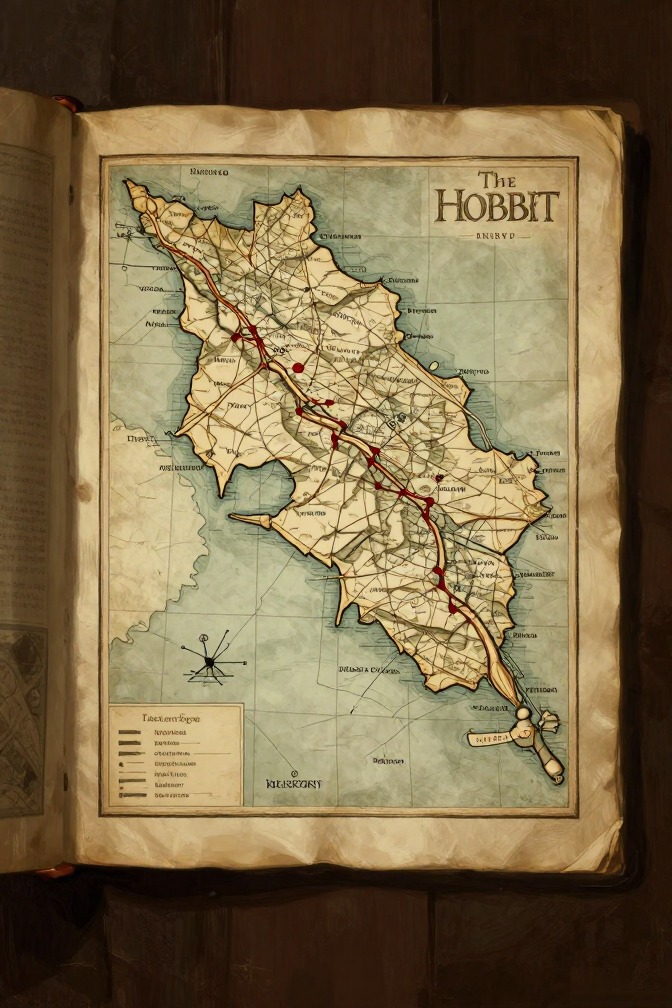
Thror's Map is the parchment plan of the Lonely Mountain that Gandalf gives to Thorin Oakenshield during the Unexpected Party, setting the entire quest in motion. It marks the secret side-door, bears moon-letters read by Elrond that reveal the key to opening it, and becomes the dwarves' central navigational guide through the Desolation of the Dragon to the treasure of Thror.
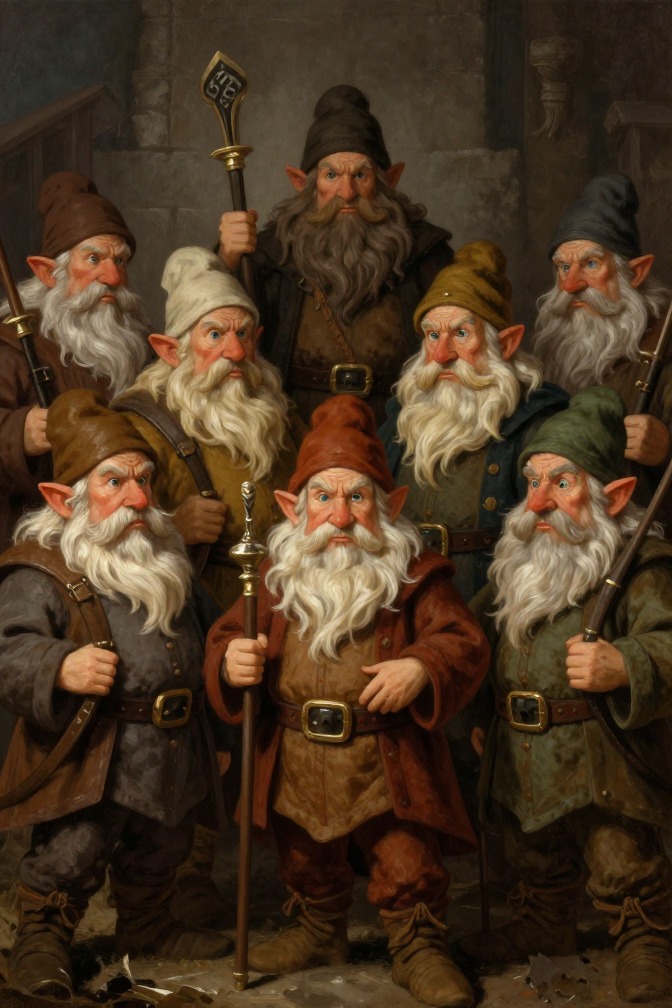
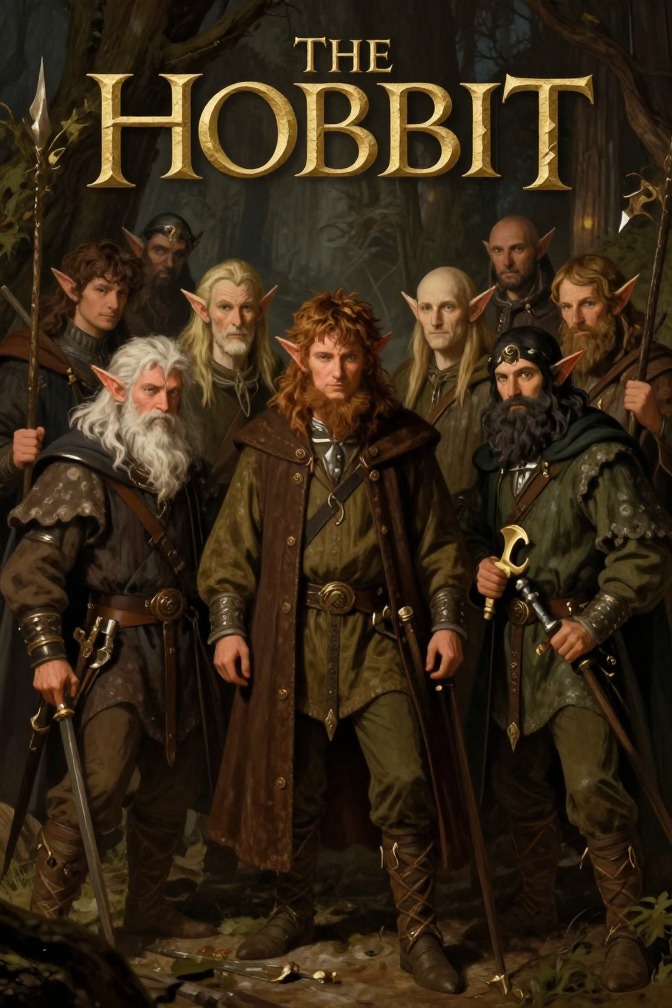
The Dwarves of the Iron Hills are a warlike, well-armed clan of dwarves from the northeast, led by Dain, who march to the Lonely Mountain to aid Thorin Oakenshield during the siege, and whose arrival precipitates the Battle of Five Armies.
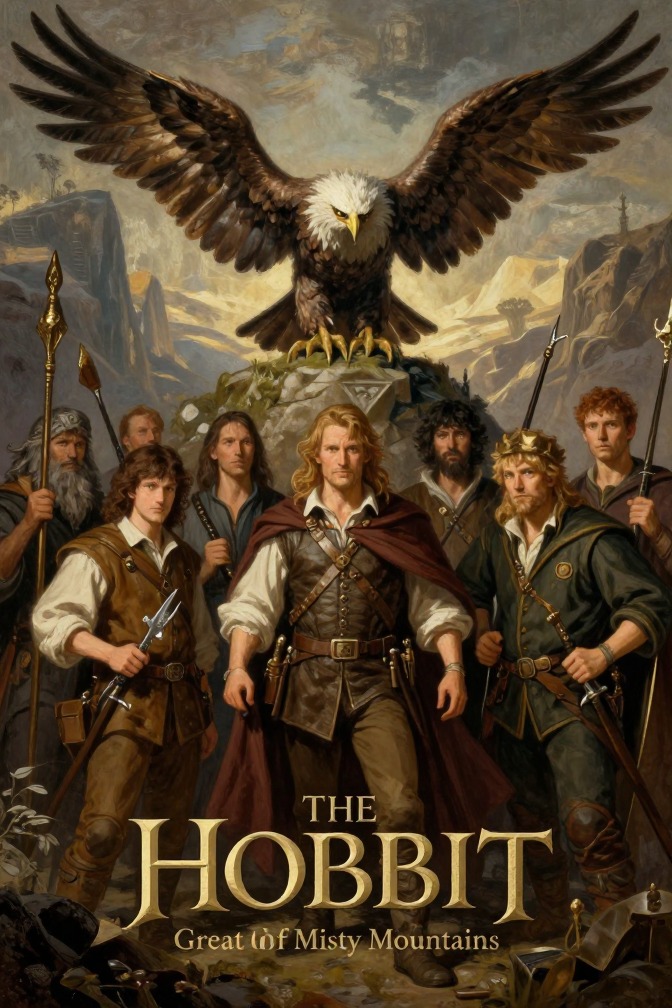
The Great Eagles of the Misty Mountains are a race of ancient, noble birds who serve as both rescuers and allies to the protagonists, intervening at critical moments to save the company from destruction and later participating in the Battle of Five Armies.
The Wood-elves are the sylvan folk of Mirkwood, ruled by the Elvenking, who live in a great cave palace and are wary of strangers, especially dwarves. They capture Thorin and his company, imprison them, and later march to the Lonely Mountain after Smaug's death, ultimately joining the Battle of Five Armies alongside Men and Dwarves against the goblins.
Bard, the grim-voiced bowman of Lake-town and descendant of Girion, Lord of Dale, slays the dragon Smaug with a single black arrow, striking the bare patch on the dragon's left breast that Bilbo Baggins had discovered. This act destroys both the dragon and the town of Esgaroth, but it frees the treasure of the Mountain and sets in motion the political and military conflicts that follow.
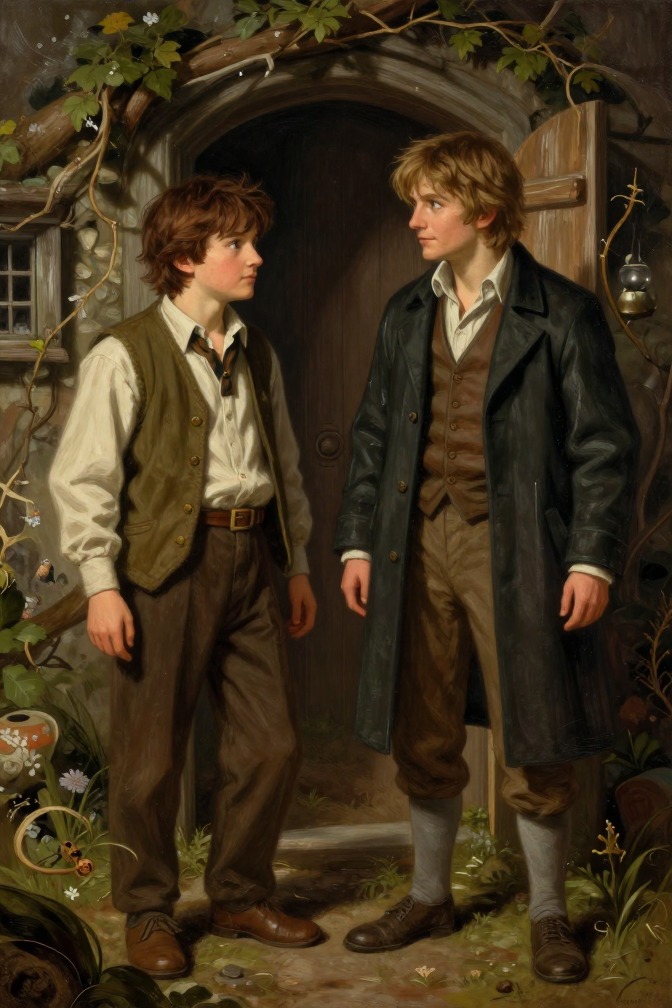
Bilbo Baggins's relationship with Bag-End, his hobbit-hole under The Hill, is the foundational anchor of his identity and the central symbol of the comfortable, respectable home life he must leave behind and ultimately return to, transformed. The physical description of Bag-End, the emotional pull it exerts throughout the quest, and the changed circumstances of his homecoming together define the arc of his adventure as a journey away from and back to a place that is both the same and profoundly different.
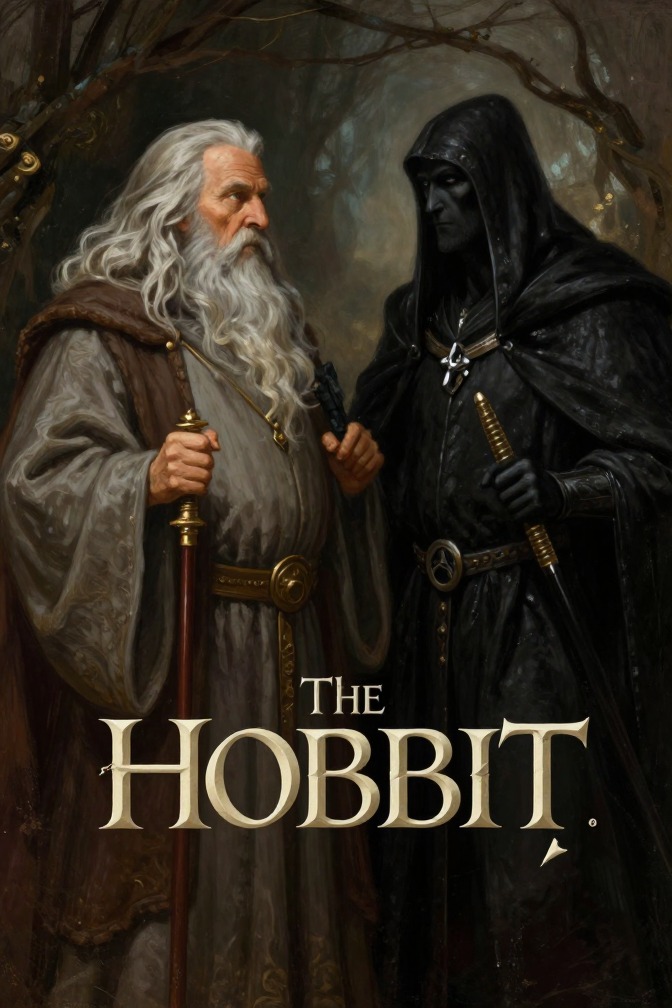
Gandalf's enmity with the Necromancer is a long-running, offstage conflict that shapes the larger geopolitical context of The Hobbit, revealing the wizard's hidden priorities and the dark forces stirring beyond the immediate quest.
Girion, the last Lord of Dale, is the direct ancestor of Bard the Bowman, who slays the dragon Smaug and reclaims his ancestral heritage. This bloodline, established through the narrative of Dale's ruin and Bard's heroic shot, provides the moral and legal foundation for Bard's claim to a share of the treasure and his subsequent kingship.
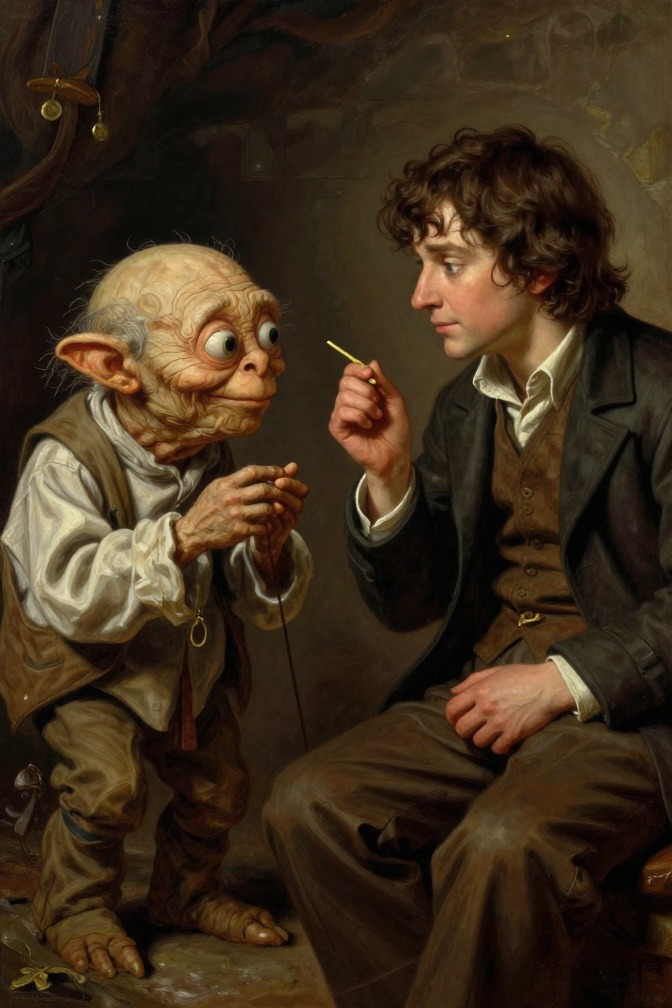
The riddle game between Gollum and Bilbo Baggins is a pivotal contest of wits in the dark tunnels beneath the Misty Mountains, where the hobbit wins the right to escape by posing an accidental question that reveals his possession of the magic ring, an object that will transform his identity and the fate of Middle-earth.
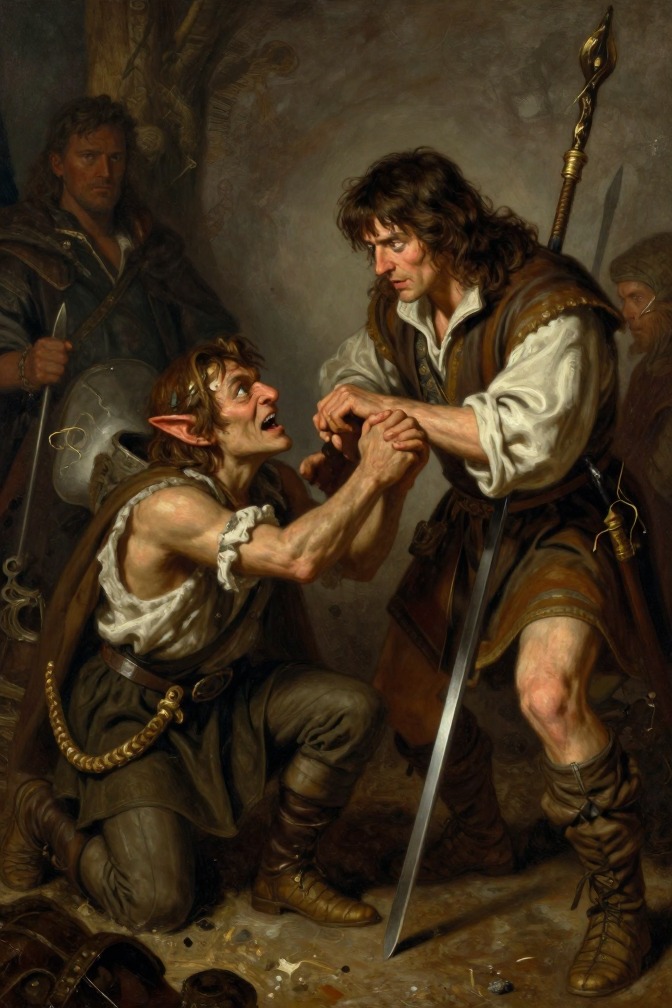
The Great Goblin captures Thorin and Company after they take shelter in a cave in the Misty Mountains, leading to their imprisonment in Goblin-town and a violent confrontation that ends with the Great Goblin's death at Gandalf's hand.
The relationship between the Lake-men and Thorin and Company begins with enthusiastic mutual aid and celebration, but rapidly deteriorates into bitter conflict over the dragon's treasure, culminating in a siege and near-battle before the common threat of the goblin army forces a temporary, uneasy alliance.
Roäc, the ancient chief of the ravens of the Lonely Mountain, serves as a crucial messenger between Thorin Oakenshield and the outside world after Smaug's death, delivering news of the dragon's fall, warning of approaching armies, and carrying Thorin's call for aid to his kinsman Dain in the Iron Hills.
Thorin Oakenshield's obsession with the Arkenstone, the Heart of the Mountain, is a central and tragic force in the latter part of The Hobbit, driving his actions, corrupting his judgment, and ultimately leading to his death. This single gem, more than the entire dragon-hoard, comes to embody his identity as the rightful King under the Mountain, and his inability to part with it or see it used as a bargaining chip precipitates the siege of the Mountain, the near-battle with the Elves and Men, and his final, fatal sortie.
Thrain is the father of Thorin Oakenshield, and their relationship is defined by loss, inheritance, and a tragic separation that shapes Thorin's quest and character.
The Arkenstone claim is the central legal and emotional dispute in the latter part of The Hobbit, representing Thorin Oakenshield's absolute assertion of ownership over the great white gem known as the Heart of the Mountain, a claim that drives the siege, the near-battle among the free peoples, and ultimately Thorin's own tragic downfall.
The Elvenking's magic doors are a security feature of the Wood-elves' underground palace, designed to prevent any prisoner from escaping once brought inside. The doors are enchanted so that no one can pass through them without the king's permission, making the halls a secure prison for captives like Thorin Oakenshield and his company.
The Moon-letters rule is a magical property of rune-letters invented by the Dwarves, which renders them invisible under ordinary light and visible only when the moon shines behind them, with the most cunning sort requiring a moon of the same shape and season as when they were written.
The Ring's invisibility is a magical property of the golden ring Bilbo Baggins finds in the goblin tunnels, which renders its wearer unseen by others. This power becomes a decisive tool for survival and stealth, transforming Bilbo from a reluctant burglar into a resourceful agent of the quest, while also introducing themes of hidden identity and moral ambiguity.
Dragon-sickness is a moral and psychological affliction that overtakes those who come under the spell of a dragon-guarded treasure, manifesting as an obsessive, possessive greed that distorts judgment, erodes loyalty, and ultimately leads to ruin. In *The Hobbit*, it afflicts Thorin Oakenshield after the death of Smaug, transforming him from a proud but honorable leader into a paranoid, war-mongering figure who values gold above friendship and life itself. The sickness also claims the Master of Lake-town, who steals gold meant for his people and dies alone in the Waste. Bilbo Baggins, by contrast, resists the sickness, choosing modest reward and home over hoarded wealth, a choice that defines his moral victory.
The Elvenking's Realm is the woodland domain of the Wood-elves in Mirkwood, ruled by a powerful and wary king who dwells in a great cave-palace. It is a realm of ancient magic, distrust of strangers, and deep forests, playing a crucial role in the quest of Thorin and Company as both a place of imprisonment and a source of aid in the final conflict.
Enchanted Sleep is a magical state of unconsciousness induced by contact with the enchanted stream in Mirkwood, which afflicts Bombur after he falls into the water and leaves him in a deep slumber for days, oblivious to the party's worsening hunger and peril, until he awakens suddenly with no memory of the intervening events.
The Kingdom under the Mountain is the ancient dwarf realm beneath the Lonely Mountain, founded by Thrain the Old and ruled by Thror, Thorin Oakenshield's grandfather. Its wealth and power attracted the dragon Smaug, who destroyed the kingdom and drove the dwarves into exile. The quest to reclaim it drives the entire narrative, and after Smaug's death and the Battle of Five Armies, Thorin dies, but his cousin Dain becomes the new King under the Mountain, restoring the kingdom.
The confrontation on the spiral staircase of Sagrada Família is the climactic physical struggle between Robert Langdon and Admiral Luis Ávila, in which Langdon, having just discovered Edmond Kirsch's password, must fight for his life against the man who murdered his friend. The encounter ends with Ávila falling to his death down the central shaft, allowing Langdon and Ambra Vidal to escape and complete their mission to release Kirsch's discovery to the world.
Allamah Syed al-Fadl, one of the three religious leaders who met with Edmond Kirsch at Montserrat, is abducted, driven deep into the desert outside Dubai, and left to die. His body is discovered by a teenage dune-buggy driver, and his death is initially reported as a suicide, but the circumstances strongly suggest murder connected to the suppression of Kirsch's discovery.
Robert Langdon and Ambra Vidal, having fled the Guggenheim Museum after Edmond Kirsch's assassination, travel to Barcelona and descend into the crypt of Sagrada Família, where they discover that Kirsch's password is the final line of William Blake's prophetic poem The Four Zoas, cleverly encoded with an ampersand ligature to reach exactly forty-seven characters.
After Edmond Kirsch is assassinated at the Guggenheim Museum Bilbao, Robert Langdon and Ambra Vidal flee the building with the help of Kirsch's synthetic intelligence, Winston, to escape both the assassin and the Guardia Real, beginning their quest to release Kirsch's discovery to the world.
The killing of Guardia Real agents Rafa Díaz and Fonseca inside Sagrada Família marks the climax of Admiral Luis Ávila's mission to silence Edmond Kirsch's associates, transforming the basilica into a deadly trap where two highly trained royal bodyguards are murdered and Robert Langdon is forced into a desperate fight for survival.
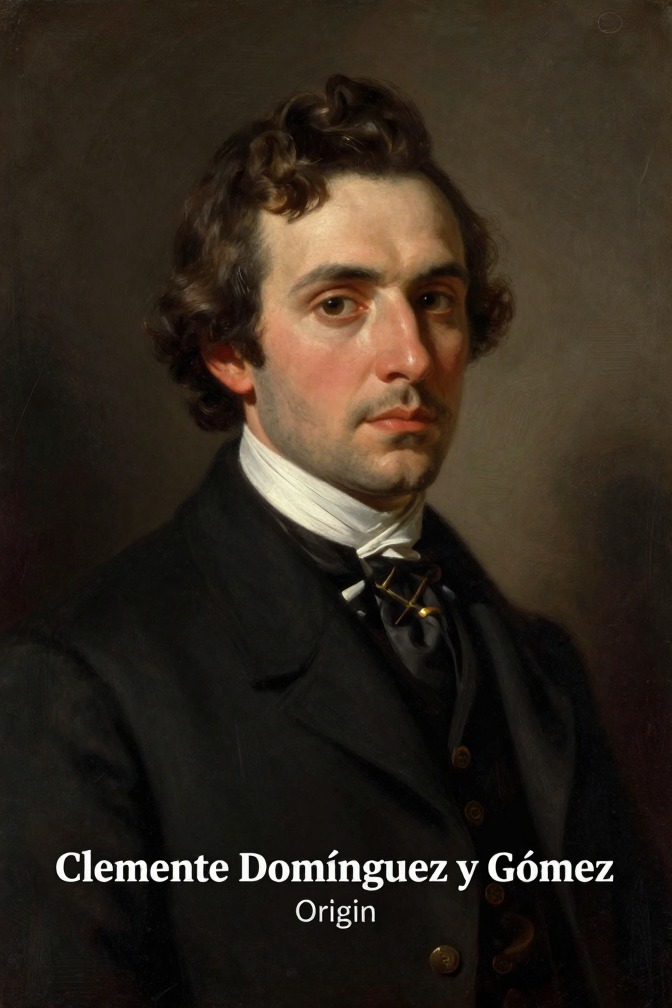
Clemente Domínguez y Gómez, the founder and first antipope of the Palmarian Church, claimed a divine vision in 1975 that crowned him Pope Gregory XVII, establishing a breakaway ultraconservative Catholic sect that rejected the Vatican's liberal reforms and amassed a fortress-like compound, vast wealth, and a following of thousands.
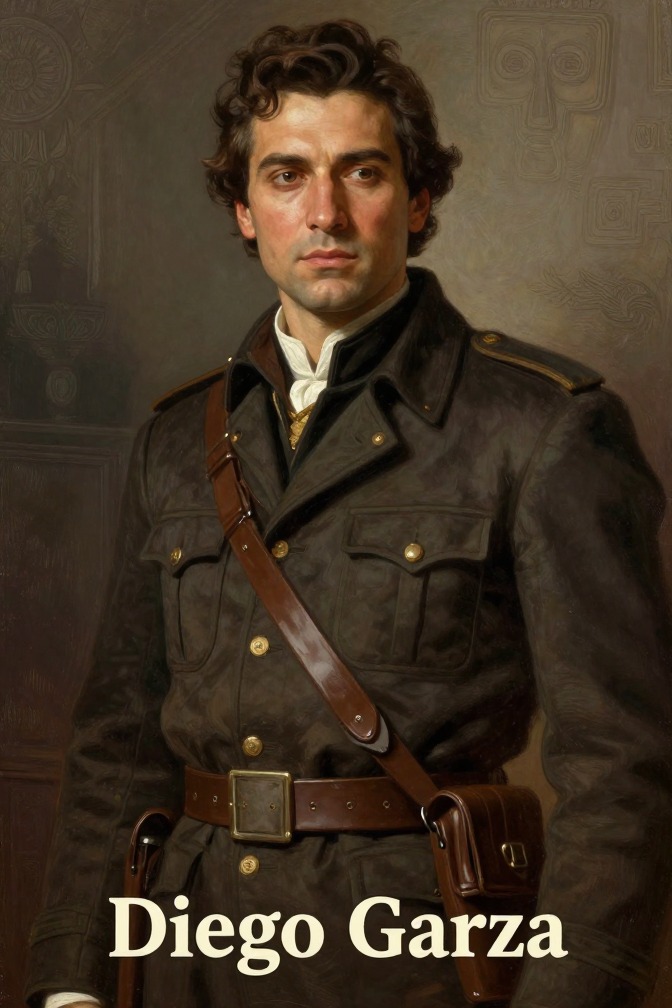
Commander Diego Garza is the head of Spain's Guardia Real, a seasoned security official whose arrest and subsequent release form a key subplot in the night's conspiracy. His loyalty to the royal family is tested as he is falsely accused of framing Bishop Valdespino, only to be exonerated when the true orchestrator of the assassination is revealed.