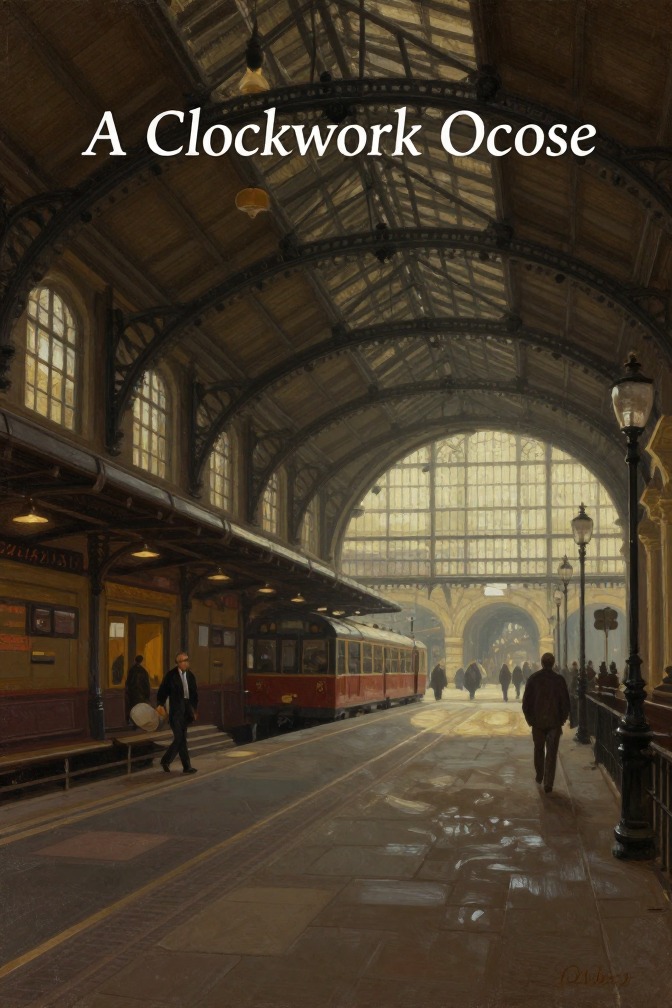
The Train Station is a recurring location in A Clockwork Orange, serving as a transitional space that marks key moments in Alex's journey between freedom and captivity, youth and maturity.
The Bible is a recurring object in A Clockwork Orange, serving as a tool for Alex's feigned religious reform in prison and as a source of violent imagery that triggers his conditioned sickness after the Ludovico Technique.
The Ninth Symphony record is a pivotal object in A Clockwork Orange, representing Alex's profound love for classical music and becoming the instrument of his psychological torture during the Ludovico Technique, ultimately serving as the symbol of his restored capacity for violence and the novel's central irony about free will.
The pooshka (gun) in *A Clockwork Orange* is a symbol of state-sanctioned violence and the ultimate coercive power of the government, appearing at key moments to enforce order and suppress dissent, contrasting sharply with the personal, chaotic violence of Alex and his droogs.
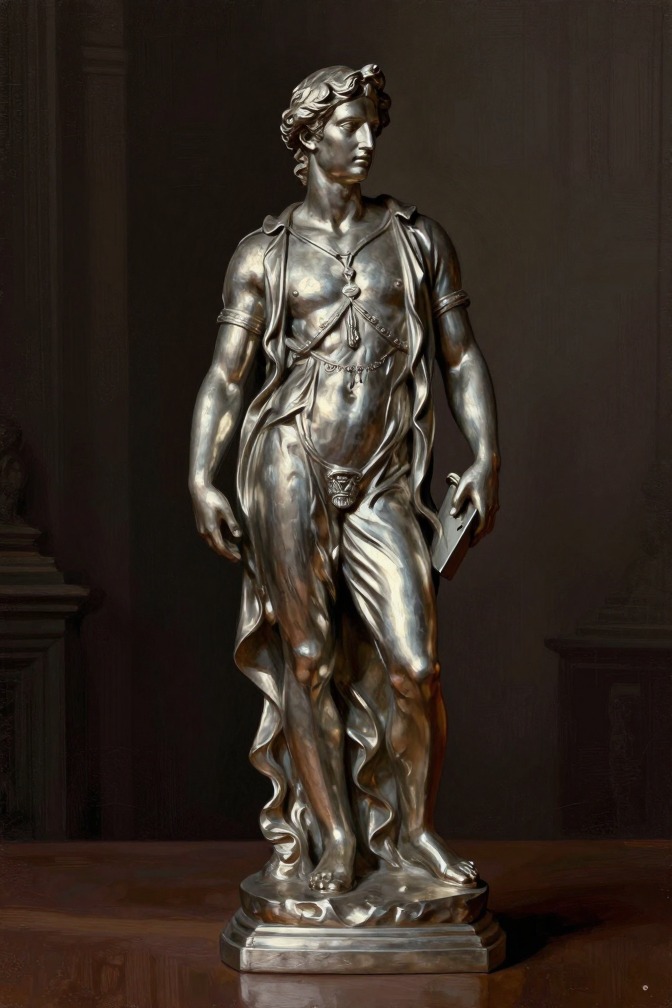
The silver statue is a small figurine of a young girl standing on one leg with her arms outstretched, made of silver, which Alex steals from the hallway of the cat lady's house during the burglary that leads to his arrest and imprisonment.
The Ministry of the Interior is the government body in Anthony Burgess's *A Clockwork Orange* that authorizes and oversees the Ludovico Technique, a controversial conditioning treatment designed to eliminate criminal behavior in prisoners. It represents the state's shift from punitive justice to a mechanistic, behaviorist approach to crime control, and its actions become a central political issue in the novel's exploration of free will, morality, and totalitarianism.
Alex and Georgie's relationship is a central dynamic in the first part of *A Clockwork Orange*, beginning as a leader-follower bond within their gang of droogs and evolving into a direct challenge to Alex's authority, culminating in a violent confrontation that reasserts Alex's dominance but also foreshadows the gang's eventual betrayal.
The Compulsory labor law is a statutory requirement in the dystopian society of A Clockwork Orange that mandates all able-bodied citizens not exempted by childhood, pregnancy, or illness to engage in paid employment, serving as a mechanism of state control over individual autonomy and a backdrop against which Alex's criminal leisure and later coerced 'reclamation' are measured.
Nadsat is the fictional teenage slang spoken by Alex and his droogs in Anthony Burgess's A Clockwork Orange, a constructed sociolect that blends English with Russian-derived roots, rhyming slang, and invented words, serving both as a marker of youth subculture and as a defamiliarizing device that distances the reader from the novel's violence.
Staja (State Jail) is the prison system in the dystopian society of A Clockwork Orange, where the protagonist Alex is incarcerated after his arrest. It represents the state's punitive approach to crime, characterized by overcrowding, brutal conditions, and a failure to reform inmates, ultimately serving as the backdrop for Alex's selection for the experimental Ludovico's Technique.
The 1939-45 War, or World War II, appears in A Clockwork Orange as a source of violent imagery used in the Ludovico Technique's conditioning films, specifically through German-made footage of Nazi atrocities set to Beethoven's Fifth Symphony, which triggers Alex's profound physical and moral distress.
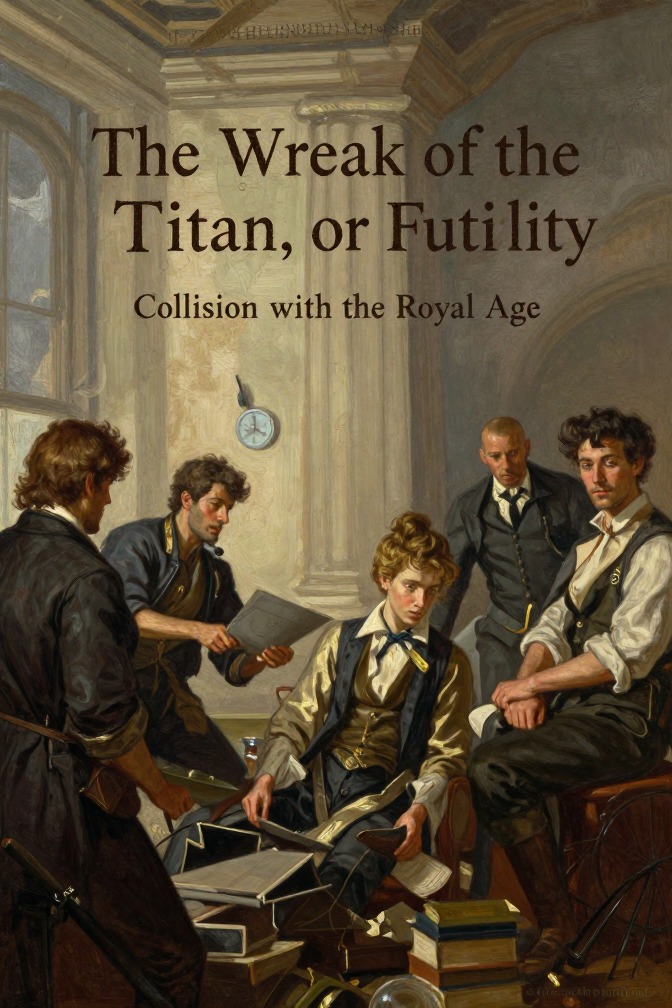
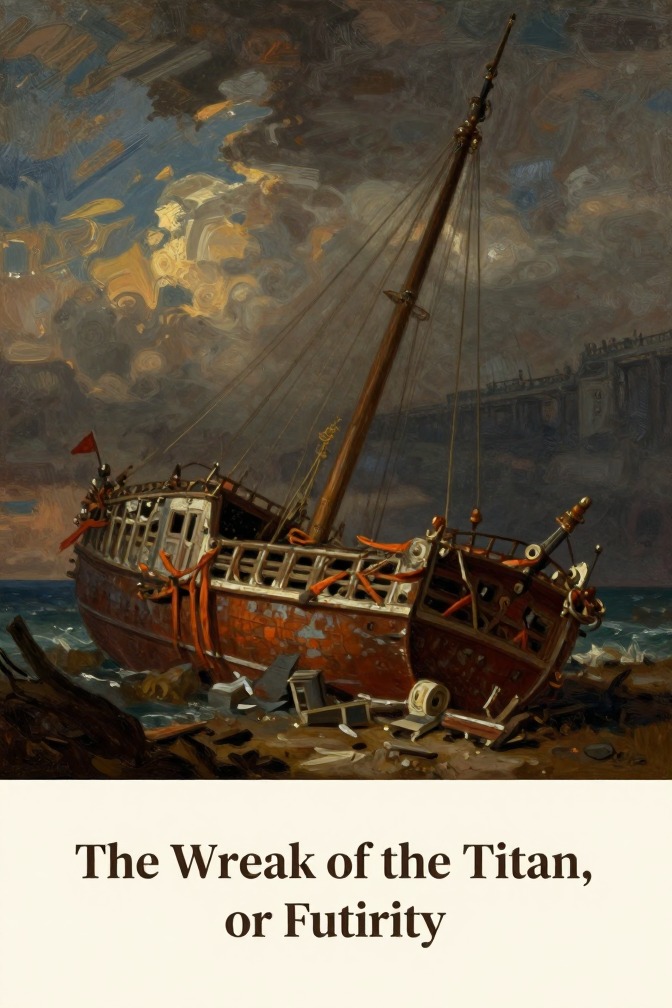
The Collision with the Royal Age is the pivotal event in Morgan Robertson's novella The Wreck of the Titan, in which the supposedly unsinkable steamship Titan, steaming at full speed through a dense fog on the Northern Lane Route, cuts a smaller ship in half on the first night out from New York. The collision, witnessed from the crow's-nest by John Rowland, sets in motion the central conflict of the story: Rowland's refusal to accept the captain's bribe to remain silent, his subsequent drugging and discrediting, and the eventual legal confrontation at Lloyds that exposes the company's negligence and leads to the ruin of Captain Bryce and Mr. Austen. The event also foreshadows the Titan's own destruction by an iceberg, as both disasters stem from the same reckless policy of full speed in fog.
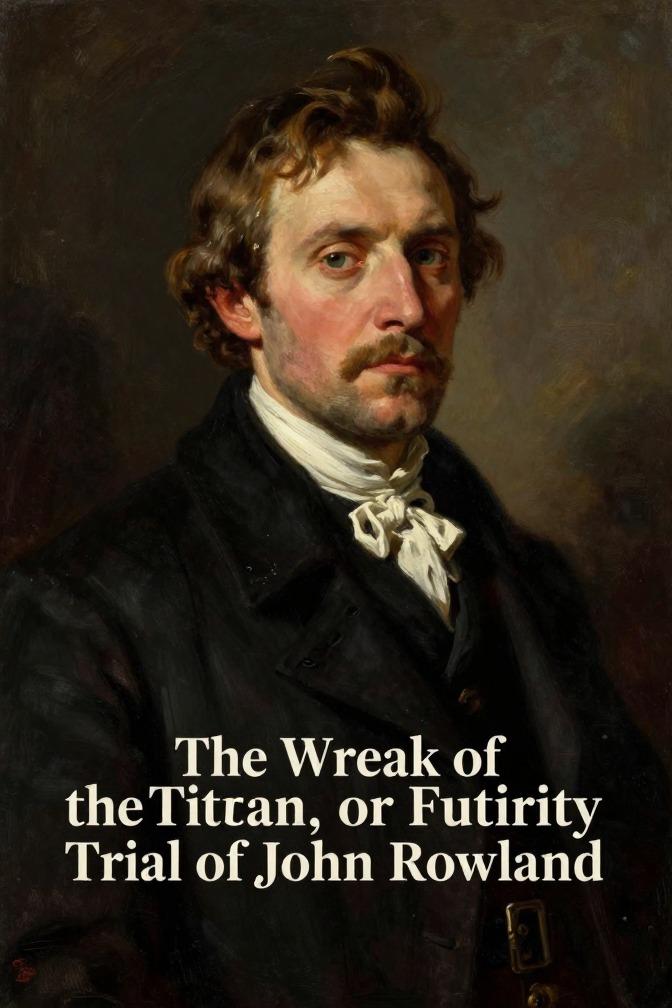
The Trial of John Rowland is the climactic courtroom scene in Morgan Robertson's novella The Wreck of the Titan, where the disgraced former naval officer, accused of kidnapping and harming the child Myra, is dramatically vindicated when the magistrate learns of his heroic rescue of the girl from an iceberg and his fight with a polar bear. The trial exposes the gap between public perception and private heroism, and it marks the turning point in Rowland's rehabilitation, leading to his eventual recovery and reunion with the child.
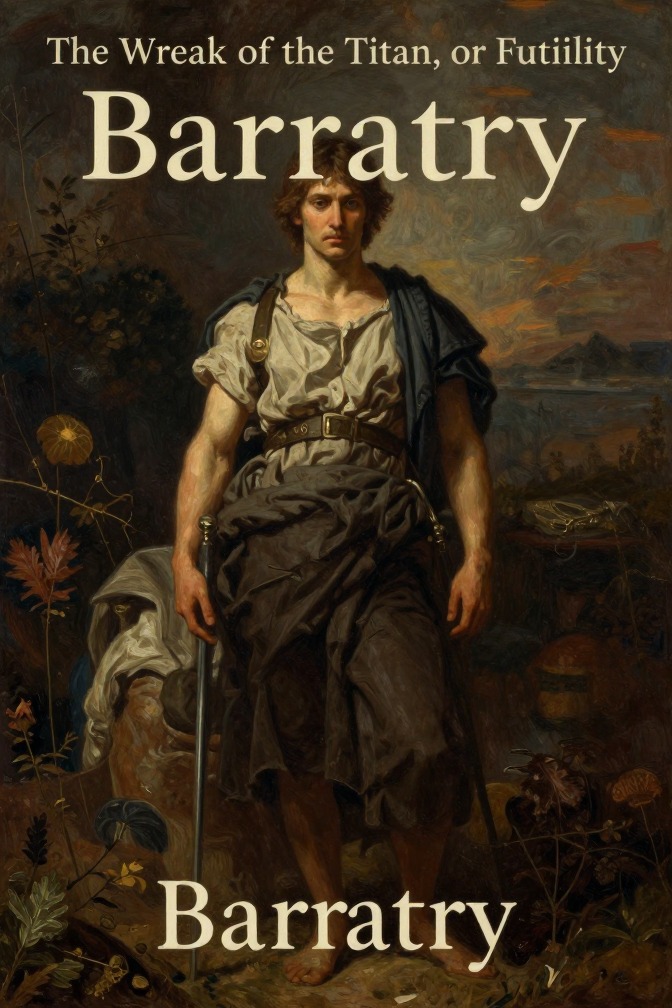
Barratry is a legal concept central to the climax of Morgan Robertson's novella, where it becomes the decisive legal weapon that voids the Titan's insurance policy and exposes the culpability of Captain Bryce and First Officer Austen. The term, defined as an unlawful act by a captain or crew causing damage or loss, is strategically invoked by John Rowland to shift the blame from the underwriters to the ship's part-owner officers, ultimately leading to their ruin and the financial salvation of the Selfridge family.
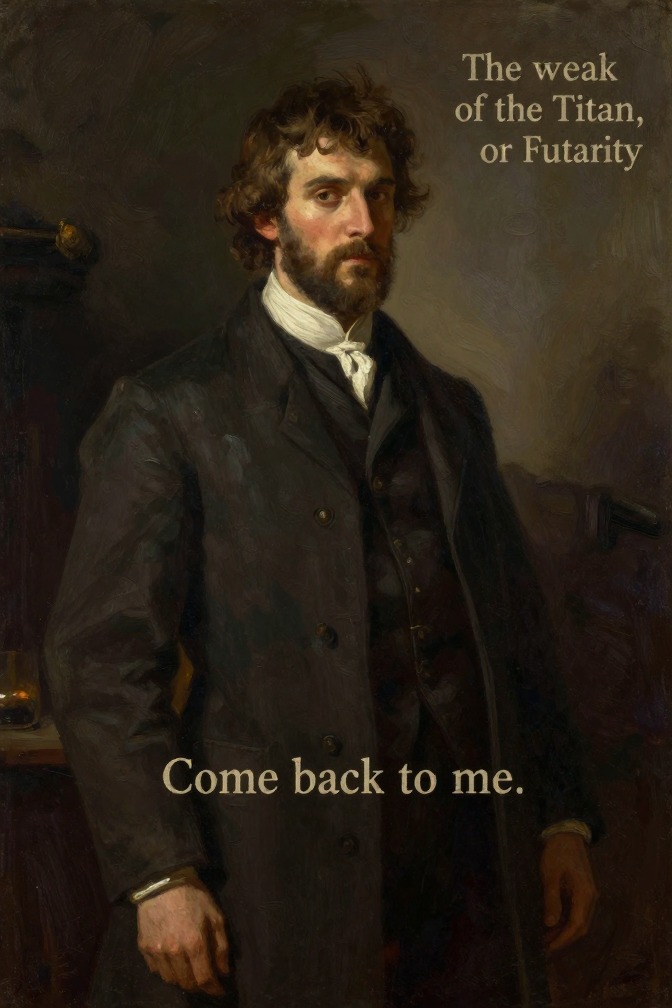
Come back to me is a recurring phrase in Morgan Robertson's novella The Wreck of the Titan, or Futility, spoken by Myra Selfridge (née Gaunt) during John Rowland's drug-induced vision and again during the shipwreck, and later echoed in Rowland's memory. It represents the unfulfilled longing and the tragic irony of a love that failed, and it becomes a haunting motif that underscores the novel's themes of loss, redemption, and the inescapable pull of the past.
The broken-down wreck is the captain's dismissive label for John Rowland, the disgraced former naval officer turned common sailor aboard the Titan. The phrase encapsulates the central irony of the novella: the man the captain dismisses as a ruined, drunken failure proves to be the ship's moral center, the one who saves a child, fights a polar bear, and ultimately forces the truth about the ship's reckless speed into the open.
The future is your own is the self-address John Rowland makes to himself at the moment of his greatest worldly success, after he has risen from a one-armed dock lounger to a lucrative government position. The phrase crystallizes the novel's central theme of self-reclamation: it marks the end of his alcoholism, his social disgrace, and his dependence on others, and it asserts that his past suffering was caused by a mistaken estimate of the importance of women and whisky. Yet the novel immediately undercuts this declaration, for within six months he receives a letter from Myra Selfridge that draws him back to her, proving that the future he claimed as his own is still bound to the past he thought he had escaped.
The survival of the fittest is a phrase that John Rowland, the disgraced former naval officer turned sailor, invokes during his drugged delirium on the bridge of the Titan, and it crystallizes his bleak, evolutionary worldview—a worldview that the novella tests and ultimately complicates through his selfless rescue of a child and his own survival against a polar bear.
The Atlantic Ocean is the central stage of Morgan Robertson's 1898 novella The Wreck of the Titan, or Futility, serving as the vast, indifferent arena where the supposedly unsinkable steamship Titan meets its catastrophic end. It is the setting for the ship's record-breaking voyage, the fatal collision with an iceberg, and the subsequent ordeal of John Rowland and the child Myra on a drifting ice floe. The ocean's immensity and unpredictability underscore the novella's themes of human hubris, the limits of technology, and the fragile nature of life.
London is the setting for the climactic legal and financial confrontations of the novel, where the fates of the Titan's officers, the underwriter Mr. Meyer, and the Selfridge family are decided, and where John Rowland's testimony and sacrifice reach their peak.
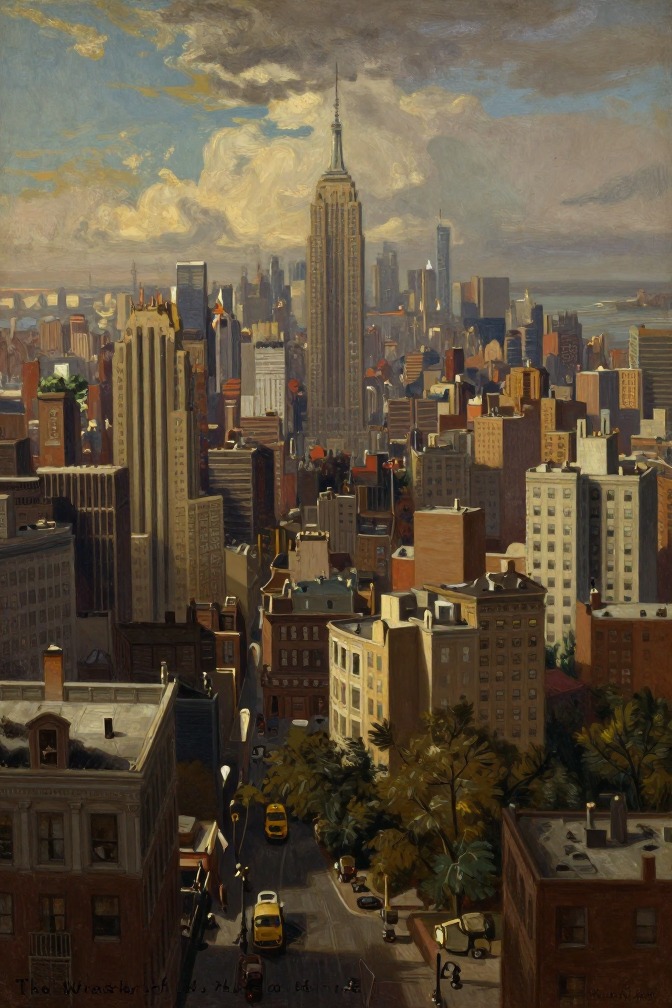
New York City is the pivotal urban setting in Morgan Robertson's novella, serving as the point of departure for the doomed Titan, the site of Rowland's final redemption and arrest, and the symbolic contrast between civilized society and the natural world.
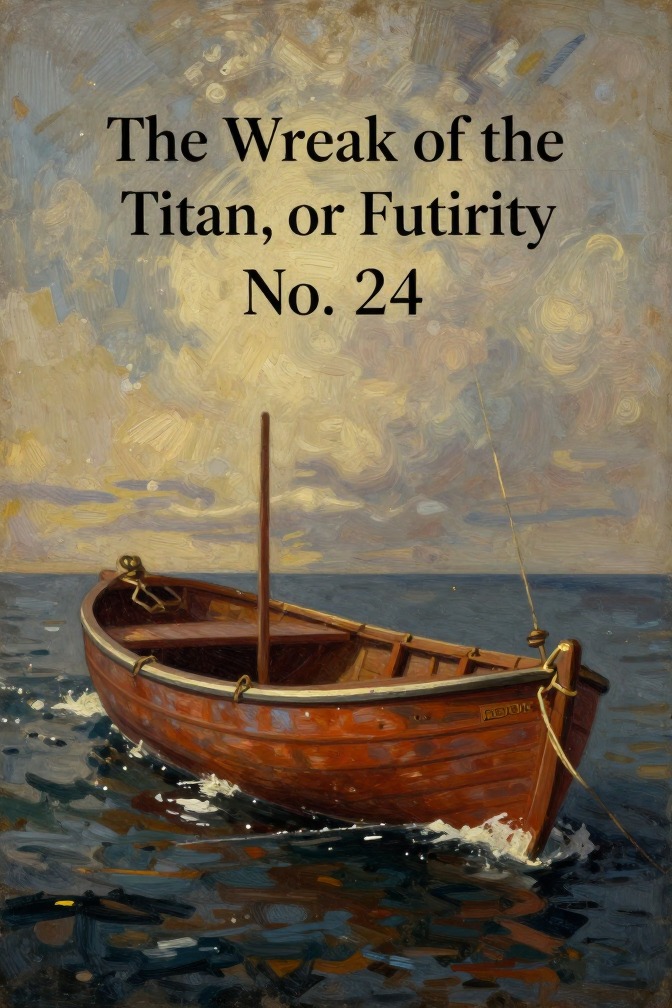
Lifeboat No. 24 is the only boat successfully launched from the Titan during its fatal collision with an iceberg, and it becomes the vessel that carries Myra Selfridge to safety while John Rowland and her daughter are left stranded on the ice. Its role is pivotal: it separates the mother from the child, drives the novel's central rescue narrative, and ultimately leads to the emotional reunion on Broadway.
Lloyds is the immense London-based association of underwriters, brokers, and shipping-men that serves as the headquarters of marine insurance and intelligence in Morgan Robertson's The Wreck of the Titan. Originating from Edward Lloyd's coffeehouse in the late seventeenth century, it has grown into a powerful corporation that tabulates the records of every English master and mate, announces shipwrecks within thirty minutes, and becomes the central arena where the novel's climactic confrontation over the Titan's loss unfolds.
The Royal Navy is the professional standard against which the officers of the Titan are measured, and its institutional prestige frames the novel's central tragedy. The novella repeatedly invokes the Royal Navy as a benchmark of competence and honor, only to contrast it with the moral failures of the Titan's own officers, who are described as its pick yet commit perjury, conceal a collision, and drug a lookout. The Royal Navy thus functions as an ironic ideal, highlighting the corruption and hubris that lead to the disaster.
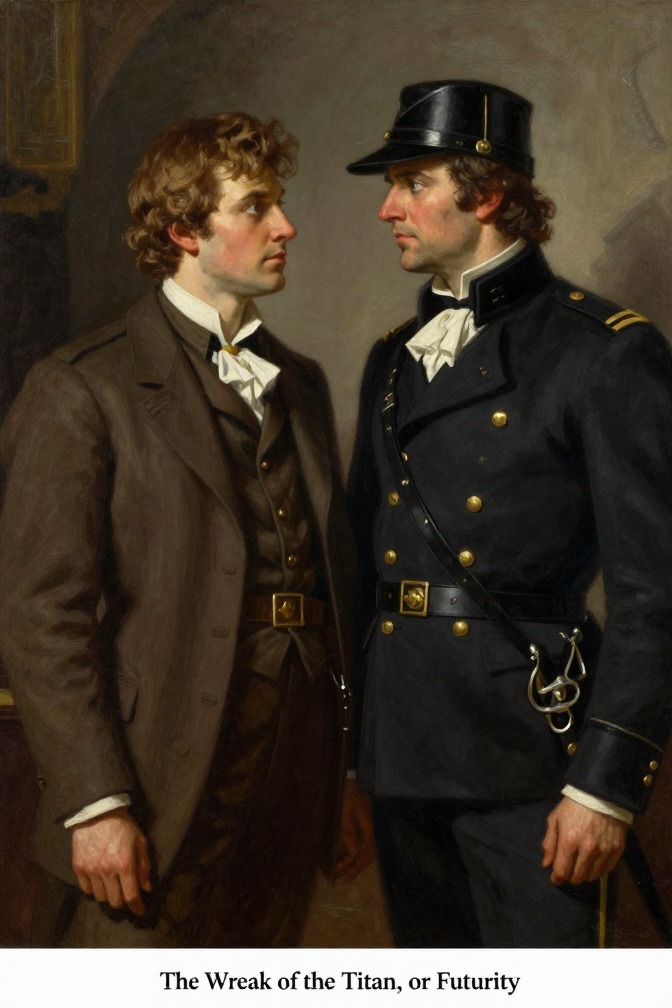
The adversarial relationship between John Rowland and Captain Bryce is a central conflict in Morgan Robertson's 'The Wreck of the Titan,' rooted in Rowland's refusal to accept a bribe for silence about the Titan's collision with the Royal Age, escalating through Bryce's attempts to discredit and drug Rowland, and culminating in a dramatic confrontation at Lloyds where Rowland's testimony and moral stance expose Bryce's perjury and lead to his professional ruin.
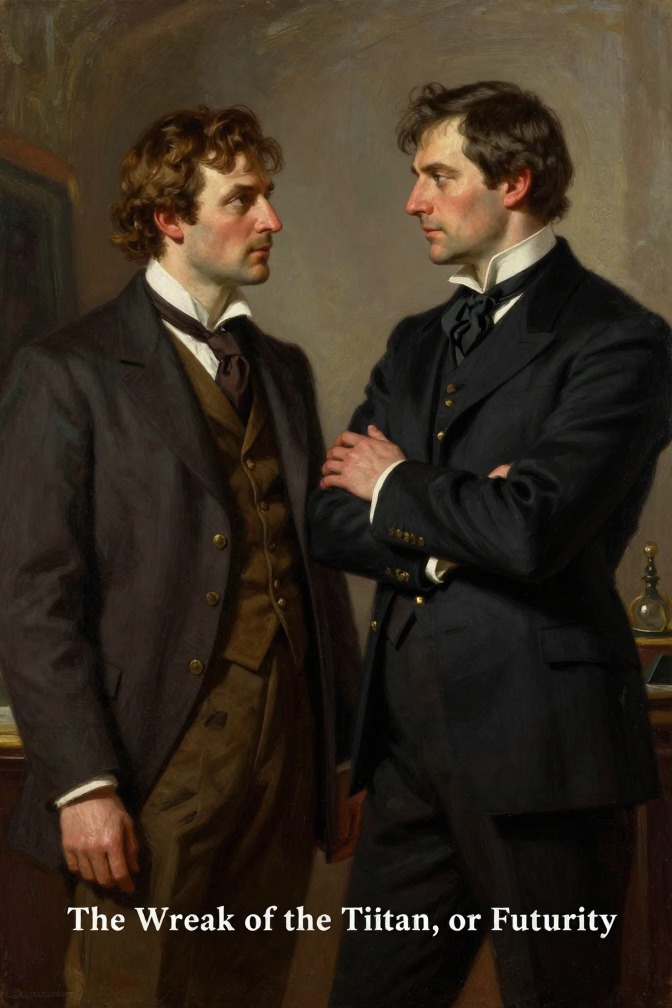
The business conflict between Mr. Meyer and Captain Bryce is a central legal and financial struggle in Morgan Robertson's 'The Wreck of the Titan,' pitting the underwriter who insured the doomed steamship against the captain who concealed a fatal collision. Their confrontation at Lloyds exposes the captain's perjury and the company's negligence, ultimately leading to Bryce's ruin and Meyer's threatened bankruptcy, while also revealing the moral compromises of the maritime insurance industry.
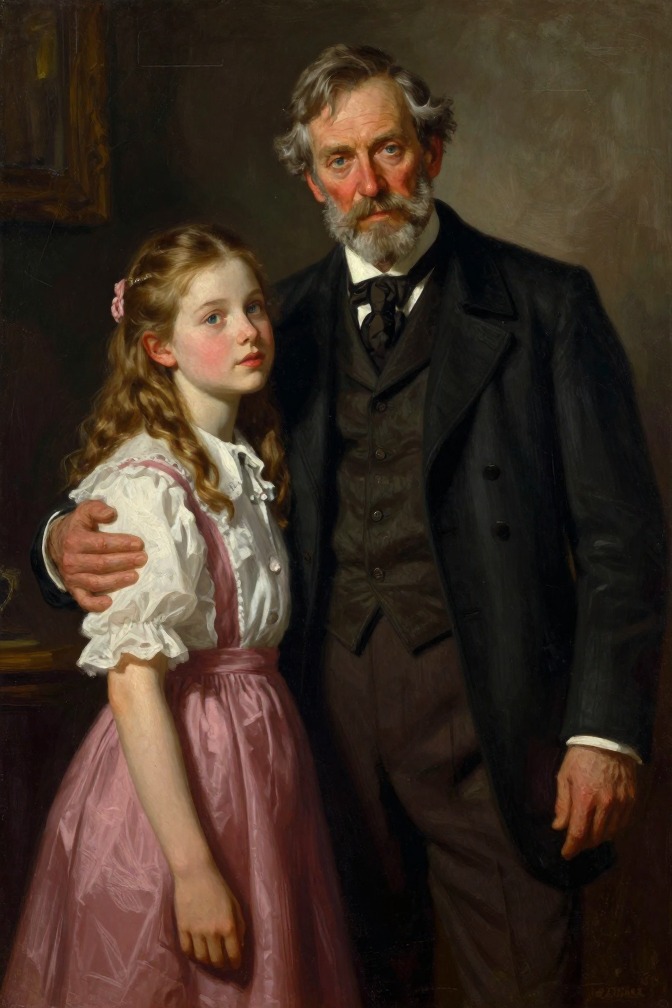
The grandfather-granddaughter relationship between Mr. Selfridge and Myra is a late-blooming bond that emerges from the wreck of the Titan, transforming an old man's grief into a moment of recognition and love, only to be cut short by his sudden death from the shock of financial ruin.
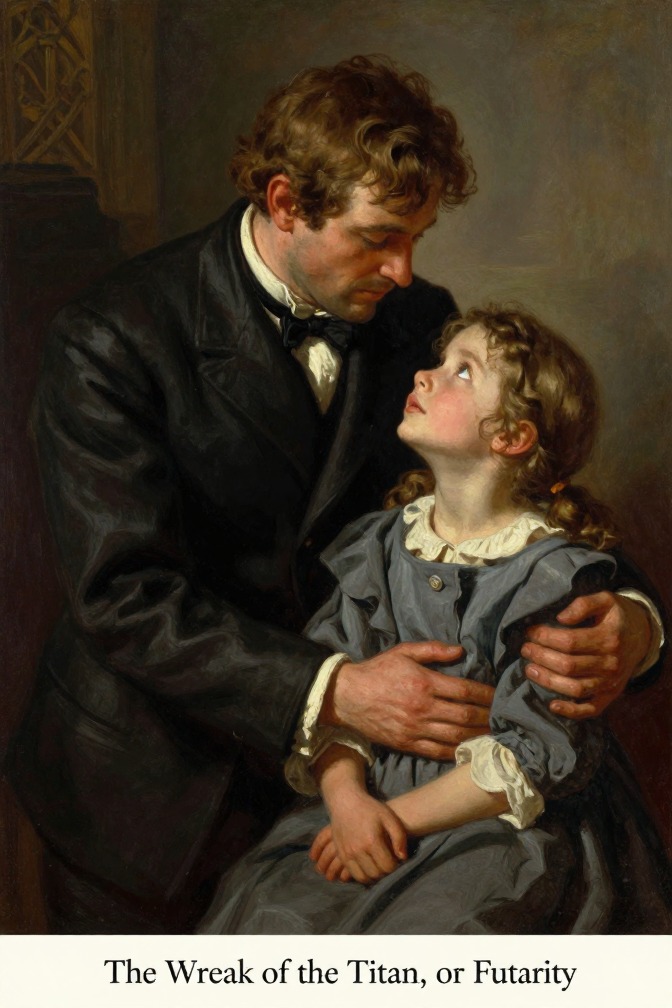
The rescuer-survivor relationship between John Rowland and the child Myra is the emotional and moral core of The Wreck of the Titan, transforming a disgraced, alcoholic ex-naval officer into a selfless protector who risks his life, loses an arm, and ultimately reunites the child with her mother, while also catalyzing his own redemption and sobriety.
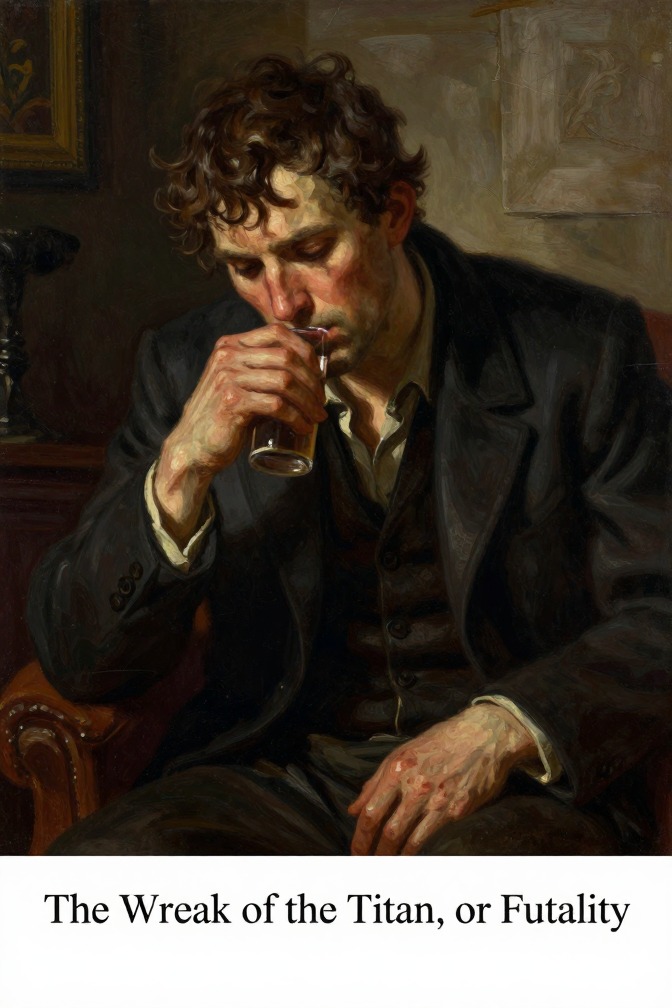
John Rowland's alcoholism is a defining trait that shapes his fall from a promising naval officer to a degraded sailor, his vulnerability to the captain's drugging scheme, and his eventual redemption through sobriety, marking a central arc of personal decline and recovery in the novella.
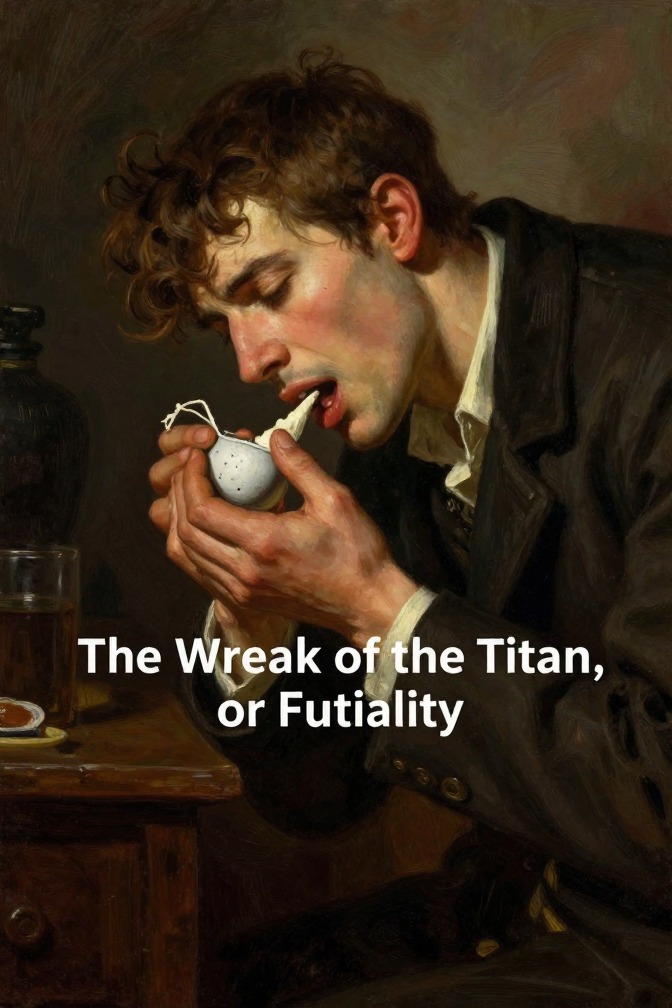
Rowland's hasheesh intoxication is a pivotal state in the novella, engineered by Captain Bryce and First Officer Austen to discredit his testimony about the collision with the Royal Age. The drugging, administered via his tea, induces vivid hallucinations, physical agony, and a dreamlike vision of Myra Gaunt, but ultimately fails to prevent Rowland from saving the sleepwalking child Myra Selfridge just before the Titan strikes an iceberg. The episode exposes the officers' criminal negligence and becomes a key legal weapon against them, while also catalyzing Rowland's spiritual crisis and eventual recovery.